

C0045 on 2015-2020 Kia Sorento: Left Rear Wheel Speed Sensor Circuit Explained
Code C0045 on a 2015-2020 Kia Sorento means there's a fault with the left rear wheel speed sensor circuit. This usually requires replacing the left rear wheel speed sensor or, if the magnetic encoder is damaged, the entire rear wheel hub assembly. The sensor itself is relatively inexpensive, but the wiring harness is also a very common point of failure and should be inspected first.
- C0045 disables your ABS and stability control systems, so drive with increased caution until it's fixed.
- The most likely cause is a failed left rear wheel speed sensor, which is an affordable part.
- Before replacing any parts, use a scan tool with live data to confirm the fault is with the left rear wheel.
- Always inspect the wiring for damage before replacing the sensor.
- If the sensor and wiring are good, the issue may be the wheel hub assembly, which contains the magnetic ring the sensor reads.
What's Unique About the 2015-2020 Kia Sorento
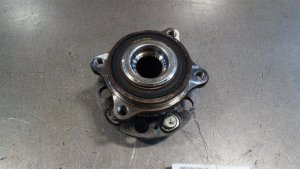
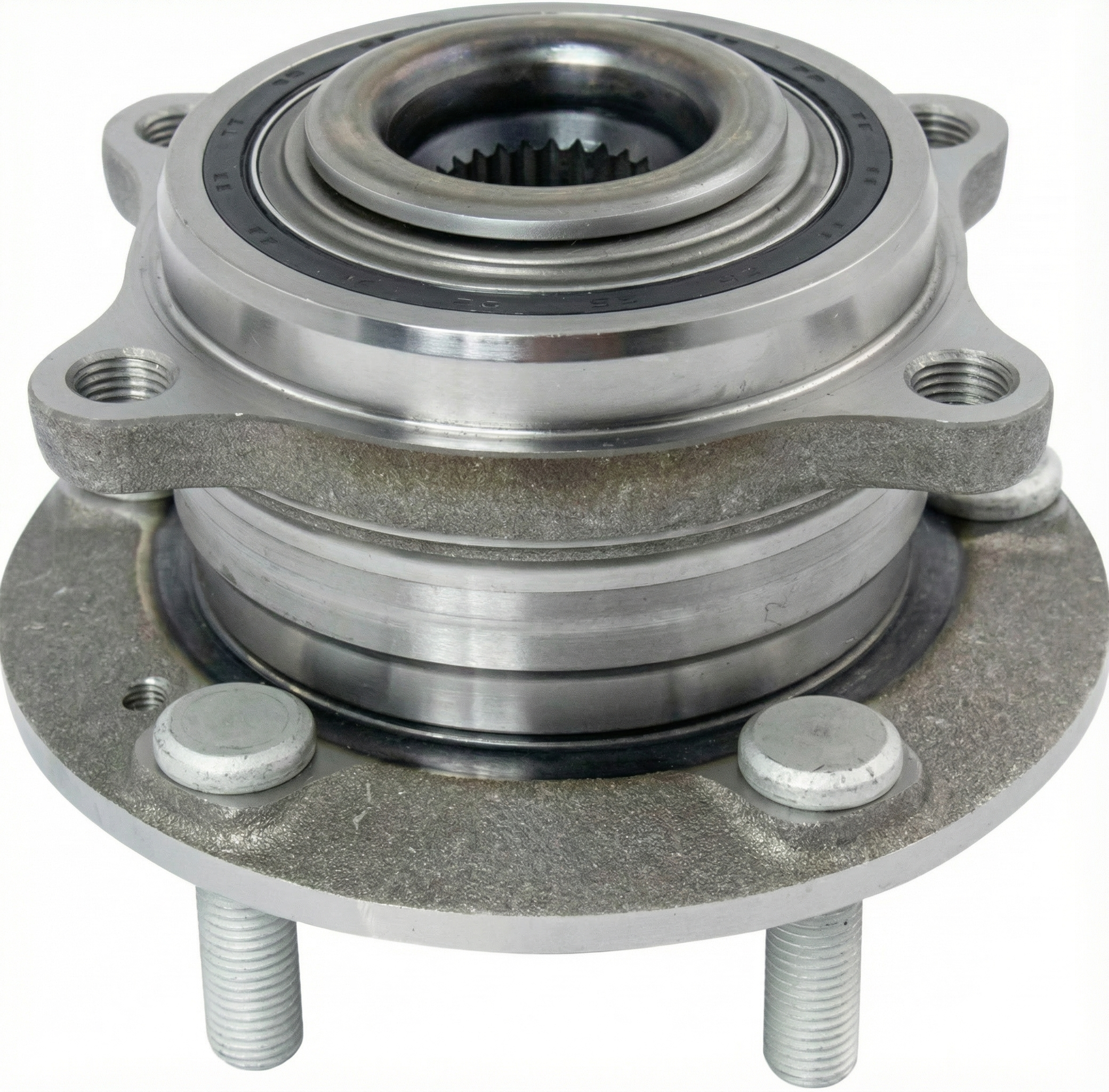
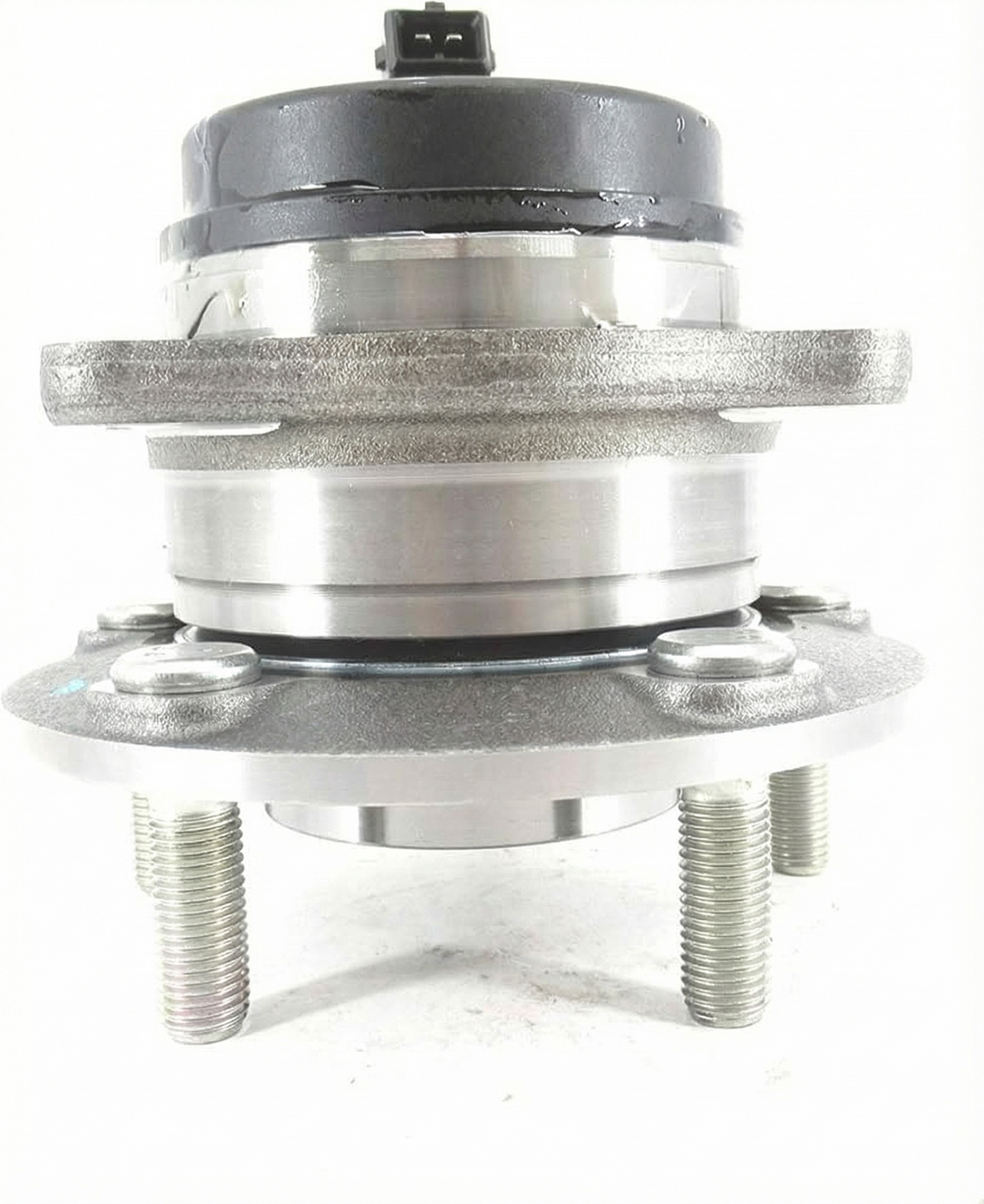
On this generation of Kia Sorento, the magnetic encoder ring that the wheel speed sensor reads is integrated into the rear wheel hub and bearing assembly. This means that while a faulty sensor is common, the problem can also be a damaged encoder ring or a failing wheel bearing. In those cases, the entire wheel hub assembly must be replaced, as the ring is not sold separately. The wiring harness leading to the sensor is also a frequent failure point, often chafing against suspension components.
Generation note: The 2015-2020 range covers two Sorento generations: the end of the second generation (XM, 2015 model year) and the third generation (UM, 2016-2020 model years). The fundamental cause and repair strategy are similar for both, as they both integrate the sensor's magnetic ring into the rear wheel hub assembly. However, always verify the exact part number for your specific model year, as there can be differences between 2WD and AWD models.
Symptoms You May Notice
- ABS warning light illuminated on the dashboard
- Traction Control (TCS) or Electronic Stability Control (ESC) warning light illuminated
- Cruise control may be inoperative
- Advanced Driver-Assistance Systems (ADAS), if equipped, may be disabled
- Brake pedal may feel different or pulsate at low speeds if the signal is noisy.
- Replacing the wheel speed sensor without first inspecting the wiring harness for damage, which is a very common failure point.
- Replacing the sensor when the actual fault is a cracked or damaged magnetic encoder ring on the wheel hub assembly.
- Replacing the wheel hub assembly without first testing the sensor and wiring with a multimeter or capable scan tool.
Most Likely Causes
- Failed Left Rear Wheel Speed Sensor 🔴 High Probability → Shop ABS Wheel Speed Sensor The sensor is exposed to harsh environmental conditions like water, salt, and road debris, which can lead to internal failure or corrosion over time.
How to confirm: Use a scan tool to monitor live data from all four wheel speed sensors while driving. If the left rear sensor shows 0 MPH or an erratic reading while the others report speed correctly, the sensor is the likely culprit.
Typical fix: Replace the left rear wheel speed sensor. This involves removing the wheel and a single bolt holding the sensor in the knuckle.
Est. part cost: $30-$80 - Damaged Wiring or Connector 🟡 Medium Probability The wiring harness running to the wheel hub can be damaged by road debris, improper servicing, or chafing against suspension components, causing an open or short circuit. Connectors are also susceptible to corrosion from road salt and water intrusion.
How to confirm: Visually inspect the entire length of the wiring from the sensor to where it enters the vehicle body. Check the connector for corrosion, moisture, or bent pins. Use a multimeter to check for continuity and shorts in the wiring between the sensor connector and the ABS module connector.
Typical fix: Repair the broken or shorted section of wire. Clean or replace the corroded connector or pigtail. In some cases, the harness section (Part No. 91920-C5000 for 2WD) may need replacement.
Est. part cost: $15-$100 - Damaged Wheel Hub / Bearing Assembly ⚪ Low Probability → Shop Hub Assembly The magnetic encoder ring is built into the hub assembly. A failing wheel bearing can introduce excessive play, damaging the ring or altering the sensor's air gap. Rust can also build up and crack or delaminate the ring.
How to confirm: After confirming the sensor and wiring are good, inspect the wheel hub. Check for any physical play or roughness when spinning the wheel. Visually inspect the magnetic encoder ring (visible after removing the sensor) for cracks, rust, debris, or damage.
Typical fix: Replace the entire rear wheel hub and bearing assembly. The magnetic ring is not serviced separately.
Est. part cost: $100-$250
Rare But Worth Checking
- Faulty ABS Control Module (HECU): → Shop ABS Control Module This is very rare for a single sensor code and should only be considered after all other possibilities have been ruled out. However, this generation of Sorento has been subject to recalls for ABS module (HECU) issues that can cause electrical shorts and fire risk, so a failure is not impossible.
- Software/Programming Issues: While more common on other makes, NHTSA ODI #10382746 notes a case where a dealer was instructed to erase codes including C0045 and re-program software to address intermittent electrical faults.
Diagnosis Steps
- Connect a diagnostic scan tool capable of reading ABS codes to confirm C0045 is the active code.
- Access the live data stream on the scan tool and monitor the speeds of all four wheels while driving slowly or spinning the wheels with the vehicle raised.
- Confirm that the Left Rear (LR) wheel speed sensor reads 0 MPH or has an erratic signal compared to the other three wheels.
- Safely raise and support the vehicle. Remove the left rear wheel.
- Perform a thorough visual inspection of the wheel speed sensor, its connector, and the wiring harness for any signs of physical damage, chafing, or corrosion.
- If the visual inspection passes, disconnect the sensor and use a multimeter to test for power, ground, and signal continuity at the connector, following the service manual procedure.
- If the sensor and wiring test good, remove the sensor (usually a single 10mm bolt) and inspect the magnetic encoder ring on the wheel hub assembly for cracks, rust, or metallic debris.
- Check the wheel bearing for any play (by rocking the tire at the 12 and 6 o'clock positions) or roughness when spinning, as a failing bearing can cause this code.
- Replace the component identified as faulty.
Parts You'll Likely Need
- Rear ABS Wheel Speed Sensor
(OEM #58980-C5000)— This is the most common failure point for a C0045 code. It is a direct replacement part for 2016-2020 models.
Trusted brands: Kia (OEM), Bosch, Standard Motor Products (SMP), Delphi, Autopart Premium
OEM price range: $80-$150
Aftermarket price range: $30-$80 - Rear Wheel Hub and Bearing Assembly
(OEM #52750-C5000)— Required if the integrated magnetic encoder ring is damaged or if the wheel bearing itself has failed, causing the sensor to misread. This part fits 2015-2020 Sorento.
Trusted brands: Kia (OEM), Timken, SKF, MOOG, GSP
OEM price range: $200-$300
Aftermarket price range: $100-$180
Related Codes That Often Appear With This One
- C0046 — This code is for 'Left Rear Wheel Speed Sensor Performance/Erratic Signal'. It can appear alongside C0045 and often points towards a problem with the magnetic tone ring or a failing wheel bearing causing signal fluctuations, rather than a complete circuit failure.
- C0050 — This is the corresponding code for the right rear wheel. Seeing both C0045 and C0050 together might suggest a wiring issue common to both rear wheels or a problem with the ABS module itself.
- P0463 / P069E — While primarily fuel system related, NHTSA ODI #11399819 shows these codes can sometimes appear simultaneously with C0045 during complex electrical or communication faults.
Technical Service Bulletins (TSBs) & Recalls
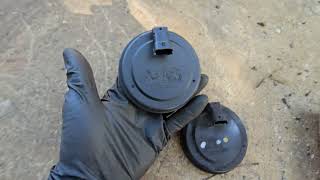
- Service Campaign SC148: For 2011-2015 2WD Sorento models 🎬 Watch: Quick DIY diagnosis and fix for ABS lights in coastal states, Kia issued a procedure to inspect, clean, seal, or replace rear wheel speed sensor housing covers due to potential water intrusion from seawater, which could cause various ABS/ESC codes.
Platform-Specific Known Issues
- A known issue on some Kia models is water intrusion into the rear wheel speed sensor housing covers, especially in coastal states, which can interrupt the signal. Kia issued a service campaign (SC148) for earlier Sorento models (2011-2015) to inspect, clean, and seal these covers.
- On similar GM platforms, a persistent C0045 after replacing the hub can be traced to corrosion in a major bulkhead connector in the passenger footwell (e.g., Corvette C184 connector). While not documented for Kia specifically, it highlights that the fault can be far from the wheel itself.
Mechanic-Grade Diagnostic Values
- Active Wheel Speed Sensor Signal Output (Voltage) — expected: A pulsing DC square wave when the wheel is spun. The frequency of the pulse increases with wheel speed.. Failure: A missing, constant, or erratic voltage signal when the wheel is spinning indicates a faulty sensor or wiring issue.
- Active Wheel Speed Sensor Reference Voltage — expected: 5V or 12V DC at the sensor connector with the key on.. Failure: A missing reference voltage points to a problem in the wiring harness or the ABS control module, not the sensor itself.
- Passive Wheel Speed Sensor Resistance — expected: Approximately 640-660 Ohms (Note: This is for older passive sensors, but provides a baseline for what a resistance reading looks like). The 2015-2020 Sorento uses an active sensor, which cannot be reliably tested with a resistance check.. Failure: An open circuit (infinite resistance) or a short (zero resistance).
Hidden / Shadow Codes Worth Checking
- C0045 06: Left Front Wheel Speed Sensor Circuit Low Voltage/Open. This sub-code specifies that the fault is due to low voltage or an open circuit. (see via A professional scan tool like the Kia GDS or an advanced aftermarket scanner.)
- C0045 18: An erratic wheel speed sensor signal is detected. This points more towards a damaged tone ring, a failing wheel bearing, or interference rather than a clean electrical break. (see via A professional scan tool like the Kia GDS or an advanced aftermarket scanner.)
- C0045 5A: A missing wheel speed sensor signal is detected. This indicates a complete loss of signal, often from a disconnected sensor or a complete break in the wiring. (see via A professional scan tool like the Kia GDS or an advanced aftermarket scanner.)
Scan Tool Commands That Help
- Kia GDS (Global Diagnostic System): Actuator Test — The GDS tool can forcefully activate the ABS hydraulic unit to test its function, which can help rule out a faulty HECU after sensor and wiring issues have been eliminated.
- Kia GDS (Global Diagnostic System): Live Data / Fault Code Searching — This is the primary function used to view wheel speed sensor data from all four wheels in real-time to confirm the fault is isolated to the left rear. It also provides access to proprietary manufacturer codes and sub-codes.
- Kia GDS (Global Diagnostic System): Resetting Adaptive Values — After replacing a major component like the ABS module (HECU), the GDS tool is used to perform adaptive learning and calibration procedures that are not possible with generic scanners.
Wiring & Ground Locations
- ABS Control Module (HECU) — In the engine bay, typically mounted on the ABS pump assembly near the driver's side frame rail.. This is the destination for the wheel speed sensor signal. All wiring tests for continuity, shorts to ground, or shorts to power will terminate at the connector for this module. A poor ground for the module itself can cause a variety of phantom codes.
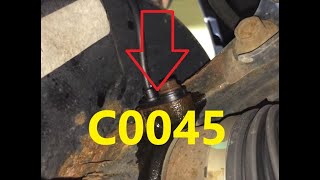
- Rear Wheel Speed Sensor Connector — Located in the left rear wheel well, where the sensor pigtail connects to the main body harness. You may need to pull back the fender liner to access it.. This is the most common location for corrosion and wiring damage due to its exposure to the elements. It's the first place to test for power, ground, and signal when diagnosing the circuit.
Real Owner Repair Stories
- Reddit user, r/MechanicAdvice (2011 Kia Sorento AWD) — Traction control light on, code C1206 (Rear left wheel speed sensor).
❌ Tried (didn't work) Replaced the left rear wheel speed sensor with a new one from Amazon., Cleaned the sensor teeth on the CV axle with a wire brush and brake cleaner.
✅ What actually fixed it The user did not post a final fix, but their diagnostic process was valuable. They confirmed the old and new sensors had correct resistance (640-660 ohms). After cleaning the sensor area, the problem expanded to include codes for the right side (C1207, C1209), strongly suggesting the root cause was a wiring harness issue or a problem with the ABS module, not the sensor or hub. - NHTSA ODI #11219167 — An owner reported that the ABS stability code C0045 was caused by a broken left rear wheel speed sensor encoder ring. The repair required replacing both the speed sensor and the rear hub assembly.
- NHTSA ODI #11165895 — A report describes a service center recommending the replacement of the left rear hub bearing assembly to resolve a C0045 code, noting that warning lights would sometimes extinguish after several minutes.
OEM Part Supersession History
58960-P2100→58960-P2101— Unknown, likely a revision for durability or manufacturing improvement.
Heads up: This part is for the newer 2021-2025 Sorento but shows a typical supersession pattern. It's critical to verify the correct part number for the 2015-2020 generation, as later parts may not be backward compatible.
Model Year Variations Within This Range
- 2015 vs 2016-2020: The 2015 model year is the final year of the second generation (XM), while the 2016 model year marks the beginning of the third generation (UM). The 2016+ models are larger, have different engine options (e.g., a 2.0L turbo), and a redesigned chassis and interior. While the principle of the ABS sensor and integrated hub is the same, FWD vs. AWD rear hub assemblies are different, and part numbers for sensors and hubs must be verified for the specific year and drivetrain.
Diagnostic Flowchart
Other Known Issues on This Vehicle
Issues unrelated to this code that are worth knowing about as an owner of this generation:
- Theta II GDI Engine Failure 🔴 High — Widespread across 2.0L and 2.4L GDI engines. Can occur at various mileages. A manufacturing defect left metallic debris in the engine, leading to blocked oil passages, bearing wear, and eventual engine seizure or fire. (Ref: Multiple recalls (e.g., SC147, 17V-224) and a major class-action lawsuit settlement provide lifetime warranties and reimbursements for affected vehicles.)
- ABS Module / HECU Fire Risk 🔴 High → Shop ABS Control Module — Affects a large number of Kia/Hyundai vehicles, including the 2014-2015 Sorento. An internal brake fluid leak can cause an electrical short in the Hydraulic Electronic Control Unit (HECU), leading to a fire risk even when parked. (Ref: NHTSA recalls 20V-519 and 21V-331. Owners are often advised to park outside until the recall repair (fuse replacement and/or module inspection) is performed.)
- 3.3L V6 Lambda II Engine Issues 🟠 Medium — Most prevalent in 2016-2017 models. Issues with head bolt threads can lead to coolant leaks, overheating, and potential loss of power. (Ref: NHTSA investigation PE23-018. Kia initiated warranty extension campaigns (WTY035, WTY039) to 15 years/180,000 miles for affected vehicles.)
- Tow Hitch Harness Fire Risk 🔴 High — Affects 2016-2022 models with an OEM or dealer-installed tow hitch wiring harness. Debris and moisture can short the module's circuit board, causing a fire. (Ref: Recall SC249. Owners are advised to park outdoors and away from structures until the harness module is repaired or replaced.)
- High-Pressure Fuel Pipe Leak 🔴 High — Affects vehicles that had engines replaced under previous recalls. The high-pressure fuel pipe may have been damaged or misaligned during service, leading to a fuel leak and fire risk. (Ref: Recall SC172. Requires inspection and potential replacement of the fuel pipe.)
- Premature Headlight Burnout 🟡 Low — Some owners report frequently replacing headlight bulbs. This is sometimes attributed to wiring harness issues causing excessive amperage to the bulbs.
Used vs. New Parts: Buying Guide for This Vehicle
When a used part is the smart pick: A used wiring harness pigtail from a junkyard can be a cost-effective solution if only the connector is damaged and you are comfortable with splicing wires. A complete used hub assembly is generally not recommended due to the unknown wear on the bearing.
Donor-vehicle mileage cap: roughly under 80000 miles for the part to have meaningful remaining life.
What to inspect on the donor part:
- For a wiring pigtail, ensure there is no visible corrosion on the pins and that the plastic isn't brittle.
- Check that the locking tab on the connector is intact.
- Inspect the wires for any signs of chafing, previous repairs, or heat damage.
OEM-only on this vehicle (don't cheap out):
- While not strictly 'OEM-only', it is highly recommended to use either an OEM Kia hub assembly or a premium aftermarket brand (like Timken, SKF, MOOG) that is an OE supplier. Cheap, unbranded hub assemblies often use lower-quality bearings and encoders that can fail prematurely.
Aftermarket brands forum-validated for this vehicle:
- Hub Assemblies: Timken, SKF, MOOG, GSP
- Sensors: Bosch, Standard Motor Products (SMP), Delphi
Brands owners have reported issues with on this vehicle:
- Unbranded, no-name wheel hub assemblies and sensors from online marketplaces are a gamble and often lead to repeat failures.
Real Owner Stories
Aggregated from forums and TSBs cited above. Mileages and costs reflect what owners reported in those sources.
2015 Kia Sorento 2WD
Symptoms: ABS and ESC warning lights illuminated; potential water intrusion in coastal environment.
What fixed it: Inspected, cleaned, and sealed the rear wheel speed sensor housing covers per Service Campaign SC148.
Source hint: Service Campaign SC148
Kia Sorento (Similar Platform)
Symptoms: C0045 code persisted even after the wheel speed sensor and the hub assembly were replaced.
What fixed it: Diagnosing and repairing the wiring harness and intermediate connectors between the sensor and the ABS module.
Source hint: CorvetteForum - 'Replaced Wheel Speed sensor and Still Getting C0045 code'
Documented NHTSA Reports
Symptoms: ABS and stability warning lights; code C0045.
What fixed it: According to NHTSA ODI #11219167, a broken encoder ring required replacing both the sensor and the rear hub assembly. Another report, NHTSA ODI #11165895, noted that the solution for some involved replacing the L/R hub bearing assembly, though other references suggested varied fixes.
Related OBD-II Codes
Frequently Asked Questions
Does Service Campaign SC148 apply to my 2015 Kia Sorento?
Why is my cruise control not working along with the ABS light?
Can I just replace the magnetic ring on the rear wheel hub?
Is there a specific part number for the wiring harness if it's damaged?
Could my C0045 code be related to the major Kia engine recalls?
Why does my brake pedal pulsate at low speeds when the ABS light is on?
Helpful Videos
Used OEM Parts in Stock
New Aftermarket Parts Available


The information in this article is provided for general reference and educational purposes only. Vehicle specifications, procedures, and part compatibility can vary by production date, trim level, and region. Always consult your vehicle's factory service manual and verify part numbers before purchasing or performing repairs. Safety-critical components such as airbags, seat belts, and braking systems should be installed by a qualified professional.
- Kia Sorento:
- 🧭 Diagnostic Flowchart
- 🎬 Helpful Videos
- 🛍️ Shop This Part
- What's Unique About the 2015-2020 Kia Sorento
- Symptoms You May Notice
- Most Likely Causes
- Rare But Worth Checking
- Diagnosis Steps
- Parts You'll Likely Need
- Related Codes That Often Appear With This One
- Technical Service Bulletins (TSBs) & Recalls
- Platform-Specific Known Issues
- Mechanic-Grade Diagnostic Values
- Hidden / Shadow Codes Worth Checking
- Scan Tool Commands That Help
- Wiring & Ground Locations
- Real Owner Repair Stories
- OEM Part Supersession History
- Model Year Variations Within This Range
- Other Known Issues on This Vehicle
- Used vs. New Parts: Buying Guide for This Vehicle
- Real Owner Stories
- 2015 Kia Sorento 2WD
- Kia Sorento (Similar Platform)
- Documented NHTSA Reports
- Related OBD-II Codes
- Frequently Asked Questions
- 🎟️ Get 5% Off