

C0045 on 2007-2012 Lexus ES: Left Rear Wheel Speed Sensor Circuit Fault Causes and Fixes
This code indicates a problem with the left rear wheel speed sensor circuit. The most common fix is replacing the faulty sensor, which is a straightforward DIY job. Expect to pay $30-$60 for an aftermarket sensor or $150+ for an OEM part.
- C0045 on a 2007-2012 Lexus ES means there's a fault in the left rear wheel speed sensor circuit, which will disable your ABS, VSC, and TRAC systems.
- The most likely cause is a failed wheel speed sensor itself, which is a relatively inexpensive part and simple to replace for a DIYer.
- Before buying parts, inspect the sensor's wiring and connector for obvious damage or corrosion, as the harness is a common failure point.
- This issue is also common on platform-mates like the Toyota Camry and Avalon from the same years.
- While fixing this code, be aware of other well-documented issues for this car, such as a melting dashboard and a potentially faulty VVT-i oil line that was subject to a service campaign.
What's Unique About the 2007-2012 Lexus ES
On the 2007-2012 Lexus ES (XV40 generation), this code is a very common and straightforward issue. There are no unique design flaws that make this platform different; rather, the issue is common to the entire Toyota K platform on which the ES is based, including the Toyota Camry and Avalon of the same era. The failure is almost always the sensor itself or the wiring leading to it, both of which are exposed to road debris, moisture, and heat. The repair is considered simple for a DIY mechanic.
Symptoms You May Notice
- ABS warning light is on
- VSC (Vehicle Stability Control) warning light is on
- TRAC or Traction Control warning light is on
- ABS and stability control systems are disabled
- In some cases, unwanted ABS activation at low speeds if the sensor signal is erratic.
- Replacing the wheel bearing/hub when only the sensor is bad. Always test the sensor and wiring first before assuming the more expensive hub assembly is the cause.
Most Likely Causes
- Failed Left Rear Wheel Speed Sensor 🔴 High Probability → Shop ABS Wheel Speed Sensor The sensor is located in a harsh environment near the wheel, exposed to water, salt, dirt, and vibrations, leading to eventual failure from internal corrosion or damage.
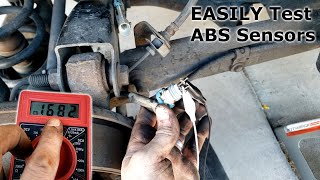
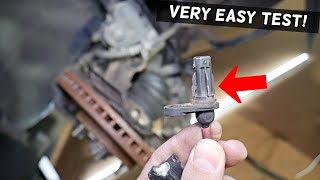
How to confirm: Use a capable OBD-II scanner to monitor live data from all four wheel speed sensors while driving. If the left rear sensor reads 0 MPH or shows an erratic signal while the others read correctly, the sensor has likely failed. You can also test the sensor's internal resistance with a multimeter; an open circuit (infinite resistance) or a reading far from the manufacturer's spec (typically 1.0-1.4 kOhms for rear sensors on this platform) indicates a bad sensor.
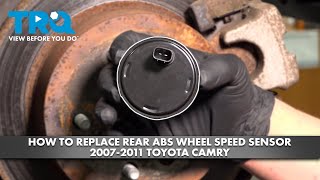
Typical fix: Replace the left rear wheel speed sensor. This is typically held on by a single 10mm or 12mm bolt and has an electrical connector nearby.
Est. part cost: $30-$180 - Damaged Wiring or Corroded Connector 🟡 Medium Probability The wiring harness runs along the suspension and can be damaged by road debris, improper jacking, or chafing against suspension components. The connector is also susceptible to water intrusion and corrosion, causing a poor signal.
How to confirm: Visually inspect the entire length of the wiring from the sensor to where it enters the car body. Look for breaks, chafing, or green/white corrosion on the connector pins. Use a multimeter to check for continuity between the connector at the sensor and the connector at the ABS module.
Typical fix: Repair the broken section of wire or replace the damaged connector pigtail. If corrosion is minor, cleaning the contacts with an electrical contact cleaner may restore function.
Est. part cost: $10-$50 - Damaged Tone Ring / Magnetic Encoder ⚪ Low Probability The magnetic encoder for the sensor is integrated into the dust seal of the rear wheel hub/bearing assembly. Rust can build up behind the hub, or the bearing can develop excessive play, which increases the air gap between the sensor and the encoder, leading to a weak or lost signal.
How to confirm: With the wheel raised, check for any play or roughness by rocking the wheel and spinning it by hand. Visually inspect the wheel bearing seal (the encoder surface) for any obvious damage, though it can be difficult to see without disassembly. If the sensor and wiring are confirmed good, a bad bearing/encoder is the next logical cause.
Typical fix: If the magnetic encoder is damaged or the bearing has failed, the entire rear wheel hub and bearing assembly must be replaced. 🎬 Watch this Lexus ES 350 rear hub replacement walkthrough
Est. part cost: $100-$250
Rare But Worth Checking
- Faulty ABS Control Module: → Shop ABS Control Module This is very rare. Before condemning the module, exhaust all other possibilities (sensor, wiring, hub). A faulty module will often trigger multiple, seemingly unrelated wheel speed sensor codes, not just one.
Diagnosis Steps
- Connect an ABS-capable OBD-II scanner to confirm the C0045 code is present and check for any other codes.
- View the live data stream for all four wheel speed sensors.
- Drive the vehicle slowly (or spin the wheel by hand with the vehicle safely raised) and observe the reading for the Left Rear (LR) sensor. Compare it to the Right Rear (RR) sensor. A reading of 0 or an erratic signal from the LR sensor points to a problem in that circuit.
- Perform a thorough visual inspection of the LR wheel speed sensor, its wiring harness, and connector. Pay close attention to where the harness routes along the suspension for signs of chafing or impact damage.
- If the visual inspection is clear, disconnect the sensor and test its internal resistance with a multimeter. Compare the reading to the manufacturer's specification (1.0-1.4 kOhm for rear sensors). An open or shorted sensor needs to be replaced.
- If the sensor tests good, check the wiring harness for continuity from the sensor connector to the ABS module and check for shorts to power or ground.
- Inspect the wheel bearing for excessive play by grabbing the tire at the 12 and 6 o'clock positions and attempting to rock it. Any significant movement suggests a worn bearing, which can affect the sensor-encoder air gap.
- If the sensor, wiring, and hub assembly are all confirmed to be good, the final and least likely step is to suspect a fault within the ABS control module itself.
Parts You'll Likely Need
- Rear Wheel Speed Sensor
(OEM #89516-33030 (for 2007-2009, may fit left or right), 89546-06020 (Left Rear specific, verify with VIN). Always confirm with dealer using VIN before purchase.)— This is the most common failure point for a C0045 code due to its exposed location and electronic nature.
Trusted brands: Lexus (OEM), Aisin, Denso, Standard Motor Products (SMP), Beck/Arnley
OEM price range: $150-$220
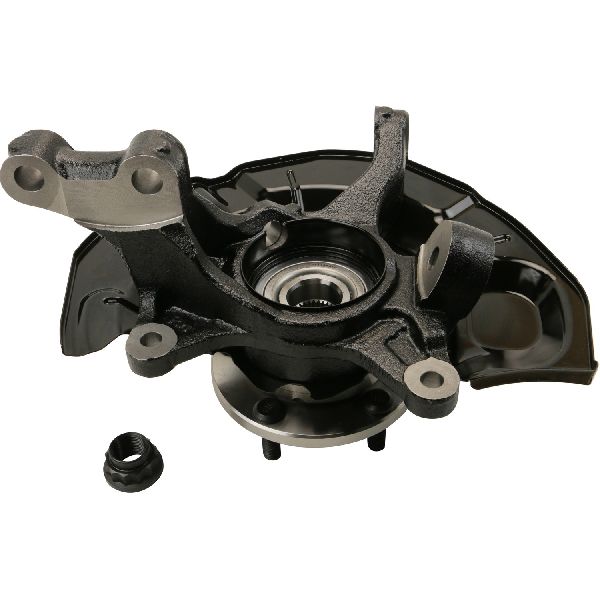
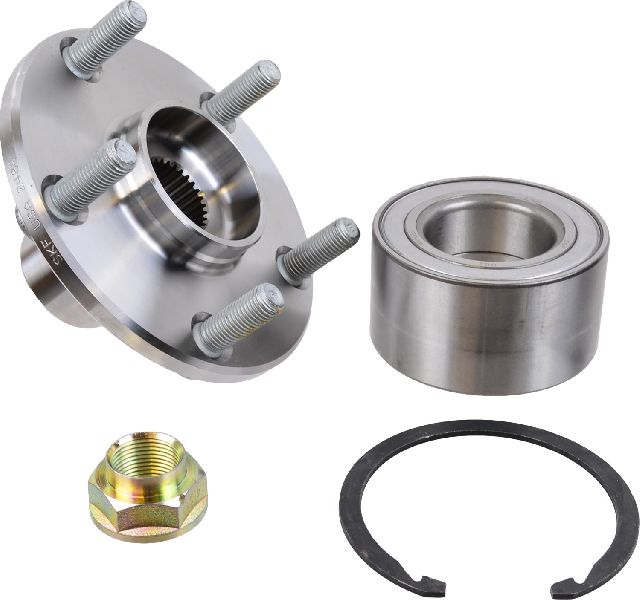
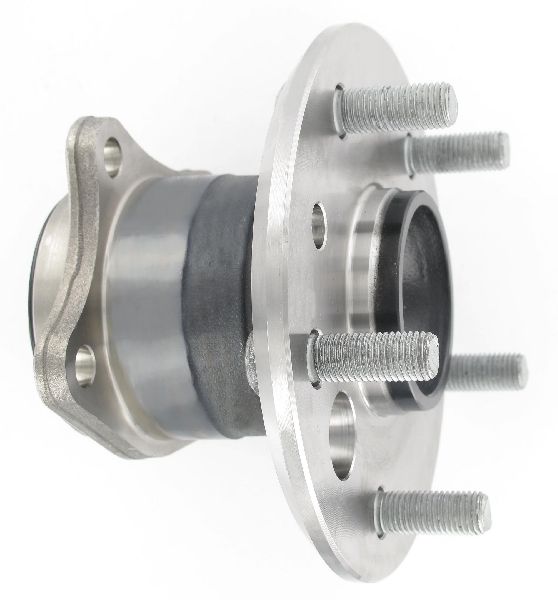
Aftermarket price range: $30-$80 - Rear Wheel Hub and Bearing Assembly
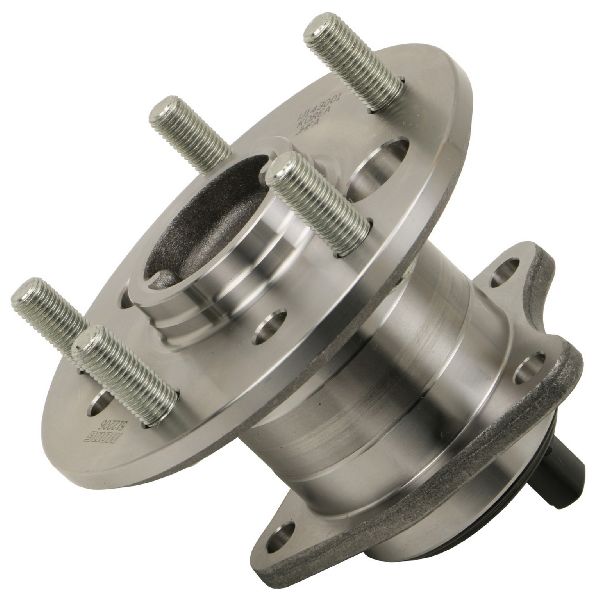
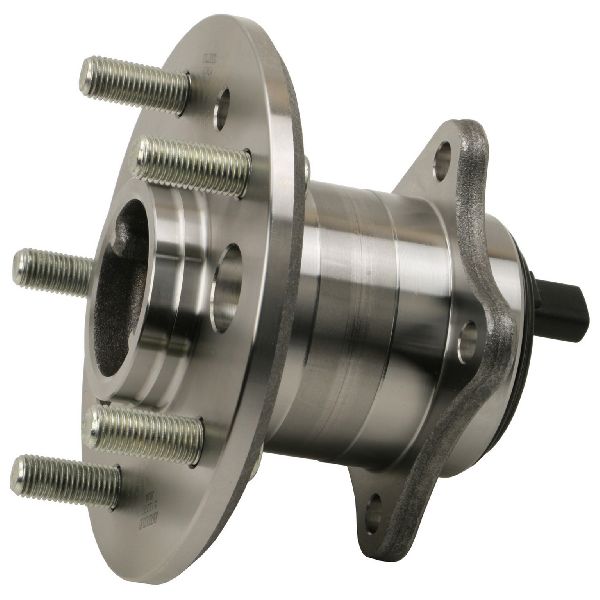
(OEM #42450-33020 (Left Rear, verify with VIN))— Replaced if the integrated magnetic tone ring is damaged or if the bearing has excessive play, causing an incorrect sensor reading.
Trusted brands: Koyo, Timken, SKF, WJB, Lexus (OEM)
OEM price range: $250-$350
Aftermarket price range: $100-$180
Technical Service Bulletins (TSBs) & Recalls
- L-SB-0027-09: Addresses transmission flare/slip issues with a software update.
- LSC 9LH: Limited Service Campaign to replace the rubber VVT-i oil line with an all-metal part on 2007-2008 models.
- ZLD Warranty Enhancement: Extended warranty coverage for melting/sticky dashboards on 2007-2008 models (now expired).
Documented NHTSA Reports
While C0045 is standard for the left rear wheel speed circuit, cross-manufacturer records provide insight into how this code manifests. NHTSA ODI #11165895 describes a situation where a service center recommended replacing the L/R hub bearing assembly to resolve the code, though the owner noted that the duration of the warning message varied from seconds to minutes. In another instance, NHTSA ODI #11219167 reports the code was caused specifically by a broken left rear wheel speed sensor encoder ring, necessitating the replacement of both the sensor and the rear hub assembly. Additionally, NHTSA ODI #10382746 notes that C0045 appeared alongside several other codes (C0057, C0231, C0232, C0282), which led a manufacturer to recommend a software re-program. Finally, NHTSA ODI #11399819 shows that C0045 can sometimes appear in conjunction with fuel system codes like P0463 and P069E, though this is less common on the Lexus platform.
Mechanic-Grade Diagnostic Values
- Rear Wheel Speed Sensor Internal Resistance — expected: 1.0 - 1.4 kOhms. Failure: An open circuit (infinite resistance) or a reading significantly outside the expected range indicates a failed sensor.
- Rear Wheel Speed Sensor AC Voltage Output — expected: Greater than 0.25 Volts AC when spinning the wheel by hand at about one-half revolution per second.. Failure: Voltage below this threshold suggests a weak sensor or an excessive air gap between the sensor and the tone ring.
- Skid Control ECU Ground Resistance — expected: Below 1 Ohm. Failure: Resistance higher than 1 Ohm indicates a poor ground connection, which can cause various ABS faults.
Hidden / Shadow Codes Worth Checking
- C1239 (with detail code): This code often accompanies a C0045 and indicates a more specific problem, such as 'Foreign Object Attached On Tip Of Left Rear Sensor' or 'Abnormal Noise'. This points towards a physical issue like rust flakes or debris on the sensor tip or a failing wheel bearing causing interference. (see via Toyota Techstream software or an equivalent professional-grade scan tool that can read manufacturer-specific detail codes.)
Scan Tool Commands That Help
- Toyota Techstream: Data List for ABS/VSC/TRAC — This is the primary diagnostic screen. Use it to monitor the live speed readings from all four wheels simultaneously while driving or spinning the wheels by hand. A '0' or erratic reading from the 'RL Wheel Speed' PID while others are reporting correctly confirms the fault is in the left rear circuit.
- Toyota Techstream: Active Test — While not used for direct sensor diagnosis, the Active Test menu allows a technician to cycle ABS solenoids and the pump motor after a repair to ensure functionality. It is also used for procedures like brake fluid bleeding.
Wiring & Ground Locations
- Skid Control ECU w/ Actuator — Located in the right front of the engine compartment.. This is the control module that receives the signal from the left rear wheel speed sensor. All wiring tests for continuity will terminate at this module's connector.
- Skid Control ECU Connector A19 — The main electrical connector on the Skid Control ECU.. Pins for the left rear sensor (RL+, RL-), power (IG1), and grounds (GND1, GND2) are located here. Testing for voltage, ground, and signal continuity happens at this connector.
- Ground Points GND1, GND2 — These are the main ground connections for the Skid Control ECU, located on the chassis near the module in the engine bay.. A corroded or loose ground at these points can cause erratic behavior and fault codes for any of the ABS sensors, not just C0045.
- Connector X1 (Speed Sensor Rear LH) — This is the 2-pin connector for the left rear wheel speed sensor itself, located in the left rear wheel well area.. This is the starting point for testing the sensor's internal resistance and for checking the wiring harness continuity back to the main ECU.
Real Owner Repair Stories
- ClubLexus Forum User (2010 Lexus, Canadian vehicle) — ABS, AWD, and Braking System Malfunction lights on. Code C1239 (Foreign Object Attached On Tip Of Left Rear Sensor) was present, which is related to C0045.
❌ Tried (didn't work) Clearing the code (it came back instantly)., Prying on the seized sensor (risked breaking it)., Cleaning the exposed tip of the sensor.
✅ What actually fixed it The user repeatedly blasted the area where the axle enters the hub with a jet of water over several days and sprayed it with silicone grease and rust inhibitor. This dislodged trapped rust and debris that was interfering with the sensor reading, resolving the code without replacing any parts. - ClubLexus Forum User (1998 Lexus LS (similar ABS system design)) — ABS kicking in at very low speeds (e.g., 2 MPH) right after a wheel bearing replacement.
❌ Tried (didn't work) Cleaning the sensor and tone ring., Resetting the ABS by pulling the fuse.
✅ What actually fixed it The sensor was not fully seated in the hub assembly. Due to a tight O-ring seal, the sensor must be carefully twisted and worked into place to sit flush. Simply pushing it in and tightening the bolt left a small air gap, causing the malfunction. Properly seating the sensor fixed the issue.
Model Year Variations Within This Range
- 2010-2012: The 2010 model year marked a mid-cycle refresh for the ES 350. While the fundamental ABS components remained the same, changes included revised steering wheel controls, new interior/exterior styling, and the addition of a VSC cut-off switch. These changes do not directly affect the diagnosis of C0045 but are important for identifying the correct vehicle configuration.
Diagnostic Flowchart
Other Known Issues on This Vehicle
Issues unrelated to this code that are worth knowing about as an owner of this generation:
- Melting/Sticky Dashboard 🟠 Medium — Very common, especially in 2007-2008 models exposed to heat and humidity. (Ref: Lexus Warranty Enhancement Program ZLD (expired) provided coverage.)
- Rupturing VVT-i Oil Line 🔴 High — Common on 2007-2008 models with the original rubber hose. Failure can cause rapid oil loss and catastrophic engine damage. (Ref: Lexus Limited Service Campaign (LSC) 9LH was issued to replace the rubber hose with an all-metal line.)
- U660E Transmission Flare/Slipping 🔴 High → Shop Transmission Assembly — Reported frequently on 2007 models, often when cold. Can manifest as a 'flare' or slip between gears. (Ref: A software update was issued under TSB L-SB-0027-09, but some cases required full transmission replacement.)
- Faulty A/C Evaporator Core 🟡 Low — Some 2007 models experienced leaking evaporator cores, leading to A/C system failure.
Used vs. New Parts: Buying Guide for This Vehicle
When a used part is the smart pick: A used OEM wheel speed sensor from a low-mileage, non-corroded donor car is a viable option. Since it is a simple electronic component without complex wear items, a working used part is often as good as a new one and preferable to a low-quality new aftermarket part.
Donor-vehicle mileage cap: roughly under 80000 miles for the part to have meaningful remaining life.
What to inspect on the donor part:
- Source the part from a vehicle in a dry, non-salt-belt state to minimize risk of corrosion.
- Inspect the connector pins for any signs of green or white corrosion.
- Check the wiring pigtail for any cracks, brittleness, or previous repairs.
- Ensure the plastic sensor body is not cracked or physically damaged from removal.
OEM-only on this vehicle (don't cheap out):
- While not strictly 'OEM-only', the ABS Control Module (Skid Control ECU) should be replaced with either an OEM part or a professionally remanufactured unit with a warranty. Avoid used modules from junkyards as they may have hidden faults or be incompatible.
Aftermarket brands forum-validated for this vehicle:
- Denso (often the original OEM supplier)
- Aisin
- Standard Motor Products (SMP)
- Beck/Arnley (often repackages OEM parts)
- NTK
Brands owners have reported issues with on this vehicle:
- Avoid unbranded, 'white-box' sensors from online marketplaces. While some may work, forum members report a high failure rate and inconsistent quality, leading to wasted time and labor.
Real Owner Stories
Aggregated from forums and TSBs cited above. Mileages and costs reflect what owners reported in those sources.
2007 Lexus ES350 — 60000 miles
Symptoms: Intermittent transmission slipping and flares between gears, eventually leading to the car barely moving.
What fixed it: A full transmission replacement was required after fluid changes and TSB software updates failed to resolve the slipping.
Source hint: CarKiller: 2007 Lexus ES350 transmission slips
2007 Lexus ES350 — ~125000 miles
Symptoms: Common wear and tear items including dashboard cracks and concerns over the VVT-i hose failure and coil pack sensitivity.
What fixed it: Replacement of the rubber VVT-i hose with an all-metal line as per the Limited Service Campaign.
Source hint: ClubLexus: ES350 2007 model common problems
Related OBD-II Codes
Frequently Asked Questions
Does the TSB L-SB-0027-09 for transmission flare apply to my 2007 Lexus ES350 if I have the C0045 code?
Can I use parts from a Toyota Camry to fix the C0045 code on my Lexus ES?
Is there a specific resistance I should look for when testing the left rear sensor on my ES350?
Could a bad wheel bearing cause the C0045 code even if the sensor is fine?
Is the VVT-i oil line failure related to the ABS warning lights?
What is the typical cost to replace the left rear wheel speed sensor on this vehicle?
Helpful Videos
Used OEM Parts in Stock
New Aftermarket Parts Available

The information in this article is provided for general reference and educational purposes only. Vehicle specifications, procedures, and part compatibility can vary by production date, trim level, and region. Always consult your vehicle's factory service manual and verify part numbers before purchasing or performing repairs. Safety-critical components such as airbags, seat belts, and braking systems should be installed by a qualified professional.
- Lexus ES:
- 🧭 Diagnostic Flowchart
- 🎬 Helpful Videos
- 🛍️ Shop This Part
- What's Unique About the 2007-2012 Lexus ES
- Symptoms You May Notice
- Most Likely Causes
- Rare But Worth Checking
- Diagnosis Steps
- Parts You'll Likely Need
- Technical Service Bulletins (TSBs) & Recalls
- Documented NHTSA Reports
- Mechanic-Grade Diagnostic Values
- Hidden / Shadow Codes Worth Checking
- Scan Tool Commands That Help
- Wiring & Ground Locations
- Real Owner Repair Stories
- Model Year Variations Within This Range
- Other Known Issues on This Vehicle
- Used vs. New Parts: Buying Guide for This Vehicle
- Real Owner Stories
- 2007 Lexus ES350 — 60000 miles
- 2007 Lexus ES350 — ~125000 miles
- Related OBD-II Codes
- Frequently Asked Questions
- 🎟️ Get 5% Off