

C0045 on 2007-2012 Nissan Altima: Left Rear Wheel Speed Sensor Circuit Fixes
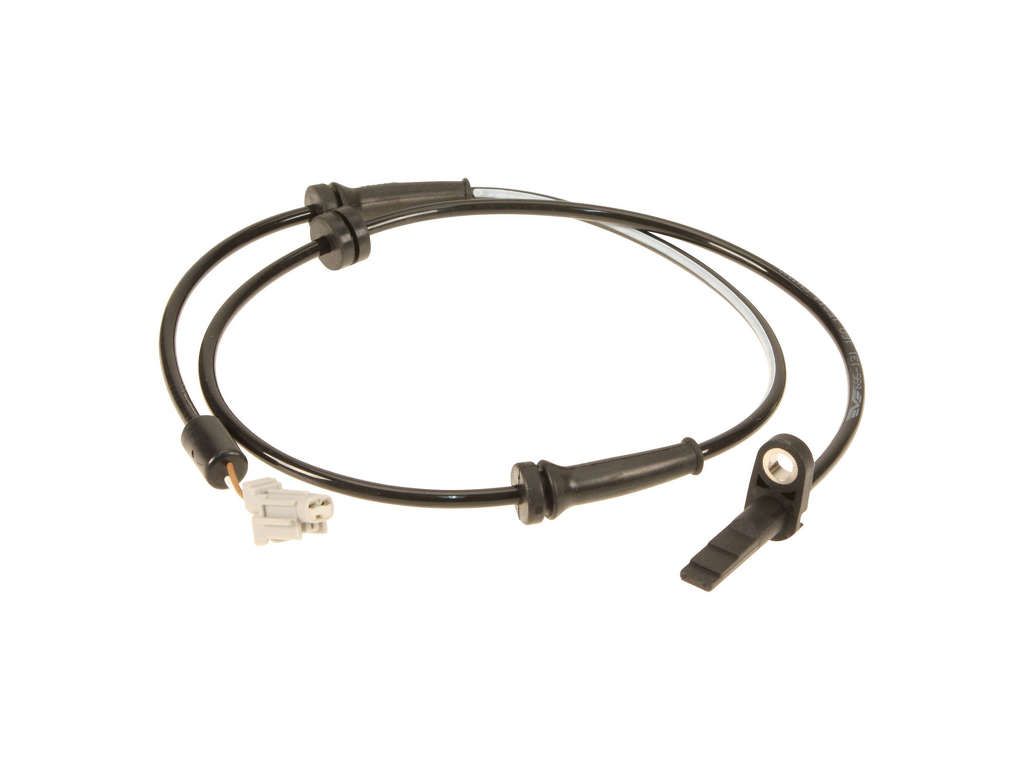
This code indicates a fault with the left rear wheel speed sensor circuit. On this Altima, the most common fix is replacing the rear ABS sensor harness, which contains both the left and right sensors. This is a DIY-friendly job with the part costing between $40 and $100.
- C0045 on a 2007-2012 Altima means there's a problem with the left rear wheel speed sensor circuit, which will disable your ABS and VDC systems.
- The most likely fix is replacing the rear ABS sensor harness, which includes BOTH the left and right sensors in one part.
- Unlike many cars, the sensor is NOT part of the wheel bearing/hub assembly, making for a simpler and cheaper repair.
- Before buying parts, use a scan tool's live data to confirm the left rear sensor is the one not reporting speed.
- This is a manageable DIY repair for those with basic tools, with the primary part costing under $100.
What's Unique About the 2007-2012 Nissan Altima
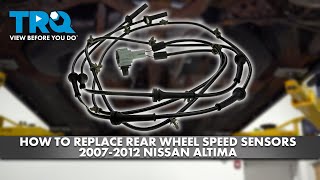
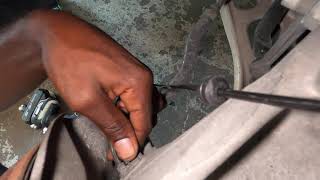
On the 2007-2012 fourth-generation Altima, the rear wheel speed sensors are not integrated into the wheel hub assembly, which is a common design on other vehicles. Instead, they are separate components that bolt onto the knuckle. Uniquely, both the left and right rear sensors are part of a single, integrated wiring harness that must be replaced as one unit, even if only one side is faulty. This is important to know before purchasing parts, as you will be replacing both sensors simultaneously. 🎬 Watch: Step-by-step rear wheel speed sensor replacement guide A key installation tip from repair videos is that the new harness has one lead that is longer than the other; the longer lead is for the driver's side (left side).
Symptoms You May Notice
- ABS warning light is on
- VDC OFF or SLIP warning light is on
- Cruise control may be disabled
- Replacing only the wheel hub/bearing when the fault is in the separate, less expensive speed sensor harness.
- Replacing the ABS control module before thoroughly testing the sensor circuit and wiring.
- Ordering a front wheel speed sensor (part 47910-JA000) by mistake when the rear harness (part 47900-JA000) is needed.
Most Likely Causes
- Failed Rear Wheel Speed Sensor Harness 🔴 High Probability → Shop ABS Wheel Speed Sensor The sensors are exposed to road debris, water, and salt, leading to corrosion and internal failure over time. The harness design means a failure in one sensor requires replacing the entire assembly for both rear wheels. The harness is routed over the rear subframe and behind the gas tank, held by clips that can become brittle and fail, allowing the wire to chafe or get damaged.
How to confirm: Use a scan tool with live data to monitor wheel speeds. Spin the left rear wheel by hand and check if the reading is zero, erratic, or doesn't change, while the other sensors respond correctly. You can also test the sensor's resistance at the connector. Disconnect the harness and measure across the two pins for the left rear sensor. A good passive sensor typically has a resistance between 800 and 1,700 ohms. A reading that is open (infinite resistance) or shorted (zero resistance) indicates a failed sensor.
Typical fix: Replace the entire rear ABS wheel speed sensor harness. This part includes both the left and right sensors and their wiring, which connects to a central point on the subframe.
Est. part cost: $40 - $100 - Damaged Wiring or Corroded Connector 🟡 Medium Probability The wiring runs along the rear subframe and suspension components, making it susceptible to chafing, impact damage from road debris, or corrosion at the connection points.
How to confirm: Visually inspect the entire length of the harness from both rear wheels to the central connector. Look for breaks, chafing, or green/white corrosion on the connector pins. Pay close attention to the areas where the harness is clipped to the subframe and control arms.
Typical fix: If the damage is to the main body harness connector, it may need to be cleaned or repaired. However, since damage is most common on the sensor side, replacing the entire sensor harness assembly is the standard and most effective repair.
Est. part cost: $0 (if cleaning) - $100 (for harness) - Damaged Tone Ring / Wheel Bearing Assembly ⚪ Low Probability While the sensor is separate, it reads a magnetic encoder (tone ring) that is integrated into the wheel hub/bearing assembly. Severe corrosion or a failing bearing can damage this ring, causing an erratic signal. A humming noise at highway speeds that changes when you change lanes is a classic symptom of a bad wheel bearing on this car.
How to confirm: After removing the brake rotor, visually inspect the surface of the wheel hub that the sensor points at. Look for cracks, heavy rust buildup, or missing magnetic material. A noisy or loose wheel bearing is also a strong indicator.
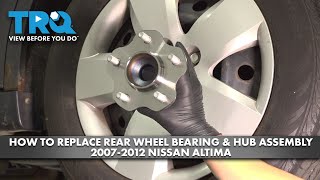
Typical fix: Replace the rear wheel hub and bearing assembly. 🎬 See how to replace the rear wheel bearing and hub The ABS sensor itself does not need to be replaced if it is not the source of the fault.
Est. part cost: $60 - $150
Rare But Worth Checking
- Faulty ABS Control Module: → Shop ABS Control Module This is the least likely cause. An ABS module failure typically triggers multiple wheel speed sensor codes or communication codes, not just a single one for the left rear. This should only be considered after the sensor, wiring, and hub have been ruled out.
- Software and Communication Errors: In some instances across different manufacturers, as noted in NHTSA ODI #10382746, a C0045 code can appear alongside other communication codes, and a dealer may need to erase the codes and re-program the software.
- Fuel System Interference: Though rare, some vehicle platforms have reported C0045 appearing in conjunction with fuel level sensor codes like P0463 and P069E, as documented in NHTSA ODI #11399819.
Diagnosis Steps
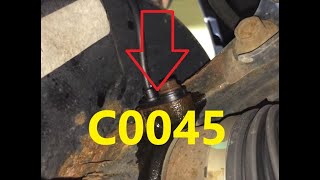
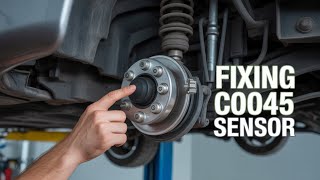
- Connect an OBD-II scanner capable of reading ABS codes to confirm C0045 is the active code. 🎬 Watch: How to diagnose and fix the C0045 code
- Access the live data stream for all four wheel speed sensors.
- Safely raise the vehicle and spin the left rear wheel by hand. Observe the speed reading on the scanner. It should increase smoothly. If it reads 0 MPH or is erratic, the problem is in that corner.
- Compare the reading with the right rear wheel to confirm normal sensor operation on the other side.
- Perform a visual inspection of the left rear wheel speed sensor and its wiring harness. Look for any obvious damage, chafing, or corrosion at the connectors.
- If visual inspection is clear, disconnect the main harness connector on the subframe. Use a multimeter to test the resistance of the left rear sensor pins. A reading between 800-1700 ohms is expected; an open or shorted circuit confirms the harness is faulty.
- If the sensor and wiring test good, inspect the tone ring on the wheel hub for damage or debris after removing the brake rotor.
- Only suspect the ABS control module if all other components in the circuit have been verified as good.
Parts You'll Likely Need
- Rear ABS Wheel Speed Sensor Harness
(OEM #47900-JA000)— This is the most common failure point. On this Altima, both rear sensors are sold as a single harness assembly, which is the direct fix for a C0045 code caused by a bad sensor. Be careful not to confuse this with the front sensor part number (47910-JA000).
Trusted brands: Hitachi, NGK/NTK, Delphi, Beck/Arnley, TRQ
OEM price range: $80-$120
Aftermarket price range: $40-$100
Platform-Specific Known Issues
- Owners and technicians report that the most difficult part of the repair is often removing the old sensor from the knuckle, as it can become seized due to rust. The single 10mm bolt holding it can also be heavily corroded. Applying penetrating oil beforehand is highly recommended. The harness itself is routed over the rear subframe and held by several plastic clips that can be brittle and break during removal.
Mechanic-Grade Diagnostic Values
- Rear Wheel Speed Sensor Resistance — expected: 800 - 1,700 Ohms (Ω). Failure: A reading of open (infinite resistance) or short (zero resistance) indicates a failed sensor.
- Rear Wheel Speed Sensor Retaining Bolt Torque — expected: 6 ft-lbs. Failure: Over-tightening can damage the new sensor or bolt; under-tightening can allow the sensor to move, causing a poor reading.
Scan Tool Commands That Help
- Nissan CONSULT-III Plus: ABS Self-Diagnosis — The Nissan dealer-level tool can run a comprehensive self-test on the ABS control unit. A self-test is also automatically conducted the first time vehicle speed exceeds approximately 4 mph after startup. If a fault is detected, the light remains on and a code is stored.
- Nissan CONSULT-III Plus: Data Monitor — This function allows for real-time viewing of all four wheel speed sensor signals simultaneously, which is the primary method to confirm if the Left Rear sensor is the one failing to report speed or is reporting erratically compared to the others.
Wiring & Ground Locations
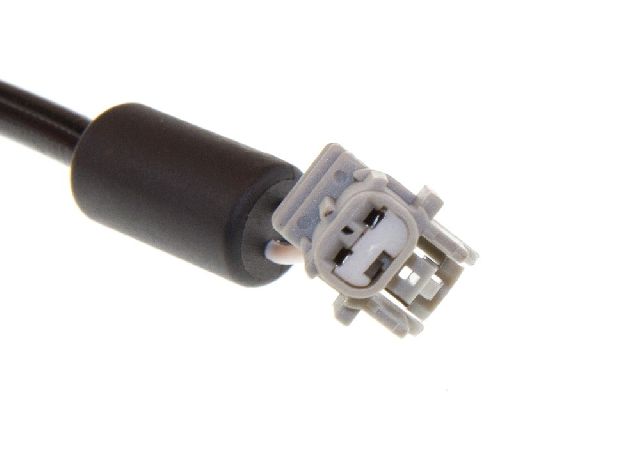
- Rear ABS Harness Connector — On the rear subframe, located behind the gas tank. The single harness for both rear sensors plugs into the main body harness here.. This is the central point for testing. You can disconnect it to test resistance for both rear sensors and check for voltage/ground from the ABS module without having to access the module itself.
Real Owner Repair Stories
- Reddit user on r/AskMechanics (2011 Chevrolet Equinox (Note: Different vehicle, but identical code and failure pattern)) — C0045 code with ABS and Traction Control lights on.
❌ Tried (didn't work) Replaced the left rear wheel speed sensor.
✅ What actually fixed it The code returned a few months after sensor replacement. The confirmed underlying issue was debris on the magnetic encoder ring on the wheel bearing/hub assembly, which was interfering with the sensor's reading. The final fix is to clean or replace the wheel hub assembly. - NHTSA ODI #11165895 — An owner reported a C0045 code where warning messages varied from a few seconds to minutes. A service center recommended replacing the left rear hub bearing assembly to resolve the issue.
- NHTSA ODI #11219167 — A report describes a C0045 code caused by a broken left rear wheel speed sensor encoder ring. The repair required replacing both the speed sensor and the rear hub assembly.
OEM Part Supersession History
47900-JA000→This part number is listed as discontinued by some Nissan parts dealers for the 2007-2009 Altima, but is still the primary reference for the 2007-2012 generation harness.— End of life for the specific part run.
Heads up: Aftermarket equivalents are widely available and are the most common replacement. Ensure any replacement part is specified for the 2007-2012 Altima, as harnesses for other generations (e.g., 47900-6CA0B for 2019+) will not fit.
Diagnostic Flowchart
Other Known Issues on This Vehicle
Issues unrelated to this code that are worth knowing about as an owner of this generation:
- Continuously Variable Transmission (CVT) Failure 🔴 High → Shop Transmission Assembly — Widespread issue, often appearing between 60,000 and 120,000 miles. Symptoms include shuddering, hesitation, whining noises, and sudden loss of power. (Ref: Nissan extended the warranty to 10 years/120,000 miles for the CVT on 2007-2010 models due to high failure rates.)
- Electronic Steering Column Lock (ESCL) Failure 🔴 High — Common on 2009-2010 models. The module fails without warning, preventing the engine from starting and leaving the vehicle stranded. (Ref: Nissan Voluntary Service Campaign PC516 was issued to replace the faulty ESCL unit with an Electronic Steering Column Box at no charge.)
- Cracked Exhaust Manifold (2.5L QR25DE Engine) 🟠 Medium — A frequent problem on the 4-cylinder engine, causing a loud ticking or exhaust leak noise, especially when the engine is cold. (Ref: TSB NTB19-006a (for a later generation, but the issue is known on the L32) addresses this issue by replacing the manifold.)
- Oil Cooler Gasket Leaks 🟡 Low — Common on both the 2.5L and 3.5L engines, resulting in oil drips under the passenger side of the engine. The repair is inexpensive in parts but can be labor-intensive due to access.
Used vs. New Parts: Buying Guide for This Vehicle
When a used part is the smart pick: A used OEM harness from a junkyard can be a viable, low-cost option if its condition is verified. Since this is a simple wire and sensor assembly with no complex electronics, a visually inspected, undamaged part from a low-mileage donor is a reasonable choice.
Donor-vehicle mileage cap: roughly under 80000 miles for the part to have meaningful remaining life.
What to inspect on the donor part:
- Inspect the entire length of the harness for any cuts, abrasions, or evidence of chafing.
- Check the main connector for any bent pins, corrosion, or broken plastic locking tabs.
- Examine the sensor heads for physical damage, cracks, or excessive rust.
- Ensure all plastic mounting clips are present and not broken.
Aftermarket brands forum-validated for this vehicle:
- NTK
- Delphi
- Standard Motor Products (SMP)
- Beck/Arnley
- Hitachi
Brands owners have reported issues with on this vehicle:
- No-name or unbranded parts sold on marketplaces with unusually low prices and no warranty should be avoided, as sensor accuracy and wire quality can be inconsistent.
Real Owner Stories
Aggregated from forums and TSBs cited above. Mileages and costs reflect what owners reported in those sources.
2007-2012 Nissan Altima
Symptoms: The ABS warning light was on along with the VDC OFF and SLIP lights. The cruise control was also disabled.
What fixed it: Complete replacement of the rear ABS wheel speed sensor harness, ensuring the longer lead was routed to the driver's side.
Source hint: How to Replace Rear Wheel Speed Sensors 07-12 Nissan Altima by TRQ
2009-2010 Nissan Altima
Symptoms: The engine would not start, leaving the vehicle stranded because the steering lock module failed without warning.
What fixed it: Replacement of the faulty ESCL unit with an Electronic Steering Column Box under Nissan Voluntary Service Campaign PC516.
Source hint: vehicle_specific_issues
Related OBD-II Codes
Frequently Asked Questions
Can I replace just the left rear sensor on my 2007-2012 Altima to fix code C0045?
Is there a specific TSB for the Electronic Steering Column Lock (ESCL) failure on my 2009 Altima?
My Altima has a humming noise and the ABS light is on; could this be related to C0045?
Does the CVT warranty extension apply to my 2012 Nissan Altima?
What resistance should I look for when testing the left rear sensor for C0045?
Are there any tips for removing the sensor from the knuckle on an older Altima?
Helpful Videos
We Have This Part in Stock


The information in this article is provided for general reference and educational purposes only. Vehicle specifications, procedures, and part compatibility can vary by production date, trim level, and region. Always consult your vehicle's factory service manual and verify part numbers before purchasing or performing repairs. Safety-critical components such as airbags, seat belts, and braking systems should be installed by a qualified professional.
- Nissan Altima:
- 🧭 Diagnostic Flowchart
- 🎬 Helpful Videos
- 🛍️ Shop This Part
- What's Unique About the 2007-2012 Nissan Altima
- Symptoms You May Notice
- Most Likely Causes
- Rare But Worth Checking
- Diagnosis Steps
- Parts You'll Likely Need
- Platform-Specific Known Issues
- Mechanic-Grade Diagnostic Values
- Scan Tool Commands That Help
- Wiring & Ground Locations
- Real Owner Repair Stories
- OEM Part Supersession History
- Other Known Issues on This Vehicle
- Used vs. New Parts: Buying Guide for This Vehicle
- Real Owner Stories
- 2007-2012 Nissan Altima
- 2009-2010 Nissan Altima
- Related OBD-II Codes
- Frequently Asked Questions
- 🎟️ Get 5% Off