

C0045 on 2004-2010 Toyota Sienna: Left Rear Wheel Speed Sensor Circuit Fixes
Code C0045 on a 2004-2010 Toyota Sienna almost always means the left rear wheel speed sensor has failed or its wiring is damaged. Expect to pay $40-$90 for an aftermarket sensor and $150-$250 for an OEM part. It's a common DIY repair with a difficulty of 2/5, but can be much harder in rust-prone areas.
- C0045 on a 2004-2010 Sienna points to an issue with the left rear wheel speed sensor circuit.
- The most likely culprit is a failed sensor, followed by damaged wiring. In rust-belt vehicles, the sensor is often seized in the hub.
- Driving is possible, but your ABS, VSC, and Traction Control safety systems will not function until the repair is made.
- Diagnosis involves checking the sensor resistance (spec: ~1.1 kOhms) and harness voltage (spec: ~4V) with a multimeter, and visually inspecting the wiring and tone ring.
- This is a manageable DIY repair, but can become very difficult if the sensor is seized by rust.
What's Unique About the 2004-2010 Toyota Sienna
For the second-generation Toyota Sienna (2004-2010), the C0045 code is a very common and straightforward issue. The rear wheel speed sensors are a frequent failure point due to their exposed location near the wheel, where they are subjected to water, salt, and road debris, leading to corrosion. In regions with heavy road salt use (the "rust belt"), the sensor can become seized in the wheel hub assembly, making removal extremely difficult and sometimes requiring the destruction of the old sensor. The wiring harness is also susceptible to damage from debris or improper servicing. A critical distinction for this platform is the difference between FWD and AWD models: on FWD models, the rear sensor is integrated into the wheel hub assembly and replaced as one unit, while on AWD models, the sensor is a separate, bolt-in part.
Symptoms You May Notice
- ABS warning light is on
- VSC (Vehicle Stability Control) warning light is on
- TRAC (Traction Control) warning light is on
- Brake warning light may be on
- Loss of anti-lock braking function during hard stops
- Occasional ABS activation at low speeds just before the lights come on permanently
- Replacing the ABS module before thoroughly testing the sensor and wiring.
- Replacing the wheel bearing/hub assembly on an AWD model when only the separate, less expensive sensor is bad.
- Replacing the sensor when the actual fault is a broken wire in the harness leading to it.
Most Likely Causes
- Failed Left Rear Wheel Speed Sensor 🔴 High Probability → Shop ABS Wheel Speed Sensor The sensor is exposed to the elements (water, road salt, debris) which leads to corrosion and internal failure over time. In salty climates, they are known to seize inside the wheel hub, making removal difficult. On FWD models, the sensor is integrated into the hub assembly, while on AWD models it is a separate component.
How to confirm: Disconnect the sensor and measure its resistance with a multimeter. A good sensor should read around 1.1 kOhms. An open circuit (infinite resistance) or a reading far from spec indicates a failed sensor. Another test is to check for AC voltage while spinning the wheel; you should see at least 100mV AC. The most definitive test is using a scan tool like Techstream to view live data; the left rear wheel speed should read 0 or be erratic while the other wheels show speed. 🎬 Watch: A quick rundown on diagnosing and replacing the sensor. You can also swap it with the right rear sensor (on AWD models) to see if the code changes to C0040 (Right Rear).
Typical fix: For AWD models, replace the left rear wheel speed sensor. It is held by a single 10mm bolt. For FWD models, replace the entire left rear wheel hub and bearing assembly. If the sensor is seized (AWD), it may require being broken apart and chiseled out of the hub. Thoroughly cleaning the mounting hole in the hub with a wire brush is critical for installing the new sensor.
Est. part cost: $40 - $300 - Damaged Wiring Harness or Connector 🟡 Medium Probability The wiring runs from the wheel hub up into the vehicle body and can be damaged by road debris, improper jacking, or corrosion, especially at the connector. Sometimes the wires can become twisted and break internally from a sensor that has come loose and rotated.
How to confirm: Visually inspect the entire length of the wiring from the sensor to where it enters the body for any breaks, chafing, or corrosion. Check the connector pins for corrosion or damage. Perform a continuity test on the wires between the sensor connector and the ABS module connector. With the key on, you should have a bias voltage (around 3V) at the harness-side connector; if no voltage is present, the problem is in the wiring toward the ABS module.
Typical fix: Repair the damaged section of wire or replace the pigtail connector. In some cases, the entire harness section from the sensor to the interior connector needs replacement. Toyota sells this harness separately.
Est. part cost: $15 - $100 - Damaged or Dirty Tone Ring ⚪ Low Probability The tone ring (or reluctor ring) is integrated into the wheel hub/bearing assembly. Rust can build up behind it, causing it to crack or wobble, or debris can obscure the teeth the sensor reads. This is less common than sensor or wire failure.
How to confirm: Visually inspect the tone ring by removing the speed sensor (on AWD models). Look for cracked or missing teeth, heavy rust, or debris. Spin the hub and ensure the ring is not warped. A live data scan tool can show an erratic signal from the wheel while driving.
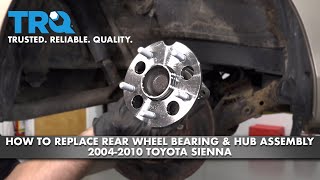
Typical fix: The tone ring is integrated into the wheel hub/bearing assembly. If it is damaged, the entire hub assembly must be replaced. This requires removing the caliper, rotor, and the four bolts holding the hub from behind the knuckle. 🎬 See this walkthrough for replacing the rear wheel hub assembly.
Est. part cost: $100 - $300
Rare But Worth Checking
- Faulty ABS/VSC Control Module: This is the least likely cause. Only consider this after definitively ruling out the sensor, wiring, and tone ring. It is very rare for the module to fail for only a single wheel speed circuit. Diagnosis requires testing for power, ground, and signal at the module connector itself.
Diagnosis Steps
- Confirm the C0045 code is present using an OBD-II scanner capable of reading ABS codes.
- Use the scanner's live data function to monitor all four wheel speeds while driving. Confirm that the Left Rear wheel speed reads zero or is erratic compared to the others.
- Safely raise and support the vehicle. Remove the left rear wheel.
- Visually inspect the wheel speed sensor and its wiring harness for any obvious signs of damage, such as broken wires, chafing, or corrosion at the connector.
- Disconnect the sensor. Inspect the connector pins for corrosion or damage. The harness-side connector is often located behind the rear quarter interior trim panel.
- With the ignition on, use a multimeter to check for bias voltage at the vehicle-side harness connector. You should see approximately 3 volts. If no voltage, the problem is in the wiring toward the ABS module.
- Use a multimeter to test the resistance of the wheel speed sensor itself (AWD models only). It should be around 1.1 kOhms. An open or shorted sensor needs replacement.
- If the sensor and harness voltage test good, remove the sensor (AWD models) and inspect the tone ring inside the hub for damage, heavy rust, or debris.
- If the sensor is seized, apply penetrating oil. If it still won't budge, it may need to be carefully drilled or chiseled out, taking care not to damage the hub. 🎬 Watch: How to replace the rear ABS sensors on your Sienna.
- If the sensor, wiring, and tone ring are all confirmed to be good, the problem may lie with the ABS control module, but this is extremely rare. Professional diagnosis is recommended at this point.
Parts You'll Likely Need
- Rear Wheel Hub & Bearing Assembly (FWD Models)
(OEM #42450-08010)— For Front-Wheel Drive models, the sensor is integrated into the hub assembly. If the sensor or tone ring fails, the entire hub must be replaced.
Trusted brands: Toyota (OEM), Timken, SKF, MOOG, WJB
OEM price range: $250-$400
Aftermarket price range: $100-$200 - Rear Wheel Speed Sensor (AWD Models, Left)
(OEM #89546-08010)— For All-Wheel Drive models, this is the most common failure item. It is a separate part from the hub assembly.
Trusted brands: Toyota (OEM), Denso, Standard Motor Products (SMP), Bosch, Aisin
OEM price range: $220-$250
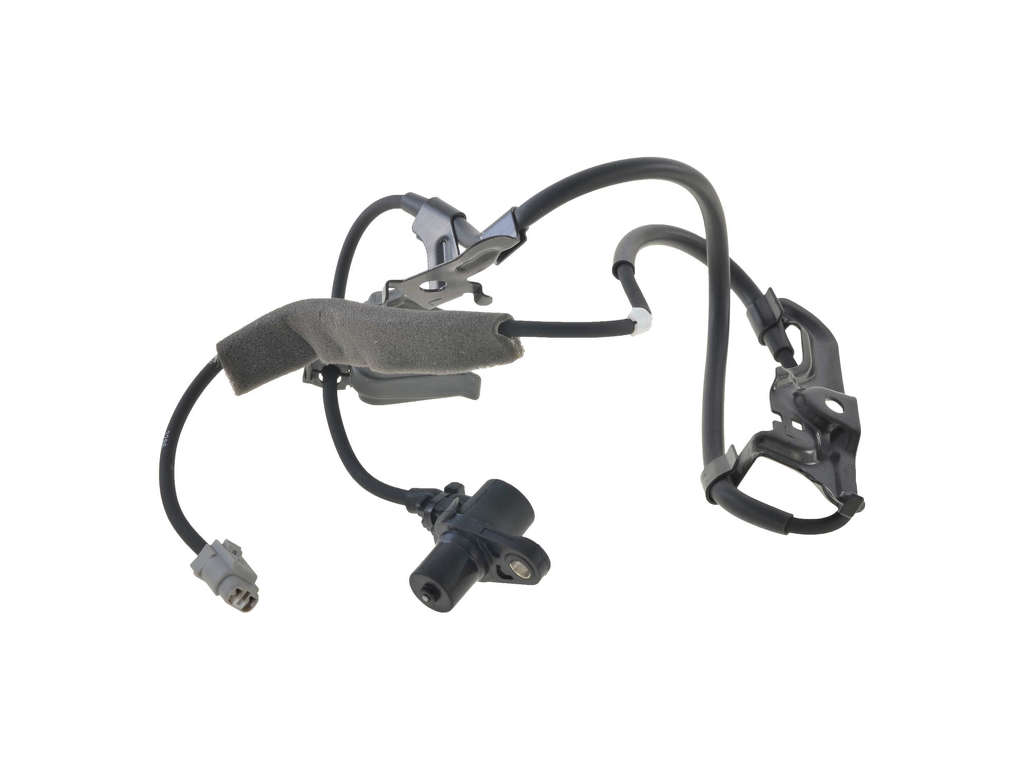
Aftermarket price range: $40-$90 - Rear ABS Wheel Speed Sensor Wiring Harness (Left)
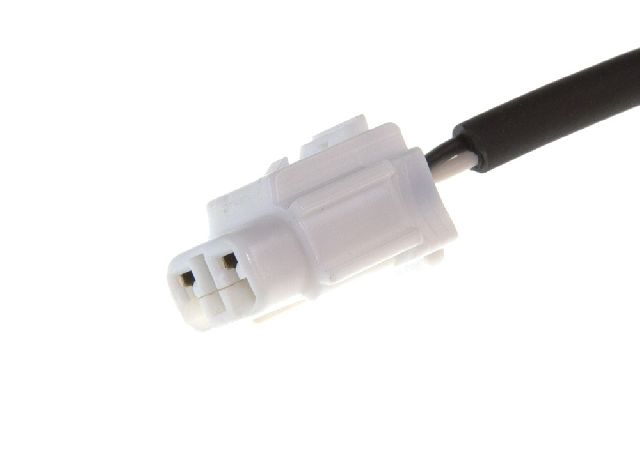
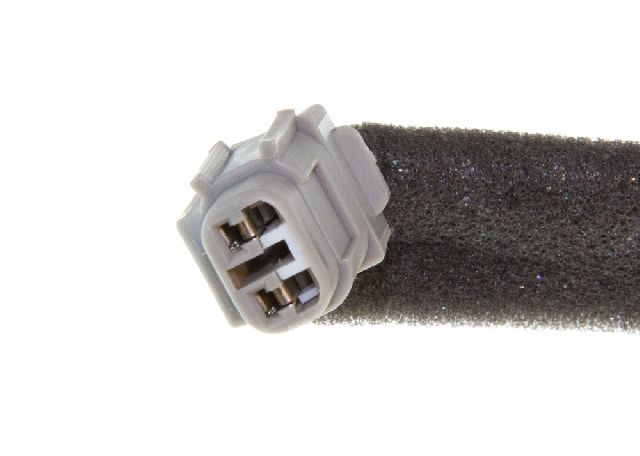
(OEM #N/A (Verify with dealer, aftermarket available))— Needed if the wiring is found to be broken, corroded, or damaged beyond a simple repair. Aftermarket versions like Beck/Arnley 084-5027 (FWD) are available. The OEM part number must be verified by VIN as FWD and AWD harnesses differ.
Trusted brands: Toyota (OEM), Beck/Arnley, Dorman
OEM price range: $40-$60
Aftermarket price range: $20-$40
Related Codes That Often Appear With This One
- C0215 — This code is for 'Left Rear Wheel Speed Sensor Signal Malfunction'. C0045 indicates a circuit problem (like a broken wire or bad sensor coil), while C0215 indicates a signal problem (like a dirty/damaged tone ring or excessive air gap). They often appear together as the root cause can affect both circuit integrity and signal quality.
- C1223 — This is a general 'ABS Control System Malfunction' code. It often sets as a secondary code whenever a specific fault like C0045 is detected, indicating the overall system has been disabled due to the primary fault.
Platform-Specific Known Issues
- Seized Sensor in Rust Belt: In areas with heavy road salt use, the steel body of the sensor on AWD models corrodes and fuses into the aluminum wheel hub/knuckle. Removal often requires destroying the old sensor with a hammer and chisel or even an air hammer. Liberal use of penetrating oil beforehand is recommended, and the mounting hole must be thoroughly cleaned with a wire brush or drill bit before installing the new part.
- FWD vs. AWD Part Differences: There is a critical difference in rear wheel speed sensor design between FWD and AWD models. On FWD Siennas, the sensor is integrated into the wheel hub and bearing assembly and is not sold separately. A sensor failure requires replacing the entire hub. On AWD Siennas, the sensor is a standalone, bolt-in component that can be replaced without changing the hub. Misdiagnosing this can lead to buying incorrect and unnecessary parts.
Mechanic-Grade Diagnostic Values
- Rear Wheel Speed Sensor Resistance (AWD Models) — expected: ~1.1 kOhms. Failure: Open loop (OL / infinite resistance) or near-zero resistance.
- Harness-Side Connector Bias Voltage — expected: ~3 Volts DC (with key on, sensor disconnected). Failure: 0 volts or significantly lower voltage indicates a wiring or ABS module issue.
- Sensor AC Voltage Output (while spinning wheel by hand) — expected: >100 millivolts (mV) AC. Failure: No voltage or very low voltage indicates a failed sensor.
Scan Tool Commands That Help
- Toyota Techstream: Data List for ABS/VSC/TRAC — This is the primary diagnostic step. It allows you to view the speed readings from all four wheels in real-time while driving. The faulty sensor will read 0 MPH or have an erratic signal while the others report speed accurately.
- Toyota Techstream or Jumper Wire: Zero Point Calibration — This is NOT for a C0045 code fix, but it is a required procedure if the ABS/VSC control module is ever replaced. It calibrates the yaw rate, deceleration, and steering angle sensors. Failure to perform this after module replacement will cause other VSC-related codes and warning lights.
Wiring & Ground Locations
- ABS Control Module — Located at the left rear of the engine compartment, underneath the air filter box assembly.. This is the destination for the wheel speed sensor signals. All wiring tests terminate here, and in rare cases, the module itself can be the fault.
- Interior Harness Connector — The wheel speed sensor harness passes through a grommet into the cabin and connects to the main body harness behind the left rear interior quarter trim panel, often near the rear speaker or seatbelt retractor assembly.. This connector can be a point of corrosion or loose pins. Testing at this location can help isolate whether a wiring fault is in the replaceable external harness or the main body harness.
- Ground Point: BM — Located at the left rear quarterpanel area, behind the interior trim.. This is a likely chassis ground point for circuits in the left rear of the vehicle. A loose or corroded ground here could potentially cause erratic behavior in the sensor circuit, though it's less common than a direct sensor or wiring failure.
Real Owner Repair Stories
- EDN Network Blog Post (Toyota Sienna (2nd Gen, year not specified)) — ABS warning light on.
❌ Tried (didn't work) Initial inspection showed the sensor connector was still attached to the sensor head.
✅ What actually fixed it The sensor head itself had come unglued from the wheel hub and was rotating freely. This caused the attached wires to become extremely twisted inside their protective sheath, eventually breaking the internal connection. The temporary fix was to untwist the wires, solder them back to the connector, and use JB Kwik epoxy to re-secure the sensor head to the hub. The long-term fix is to replace the entire wheel hub assembly.
Model Year Variations Within This Range
- 2004-2010: The rear wheel speed sensor configuration is different for Front-Wheel Drive (FWD) vs. All-Wheel Drive (AWD) models. On FWD models, the sensor is integrated into the wheel hub/bearing assembly and is replaced as a single unit (OEM Hub# 42450-08010). On AWD models, the sensor is a separate, bolt-in component (OEM Sensor# 89546-08010) that can be replaced independently of the hub.
Diagnostic Flowchart
Other Known Issues on This Vehicle
Issues unrelated to this code that are worth knowing about as an owner of this generation:
- Cracked Dashboard 🟡 Low — Extremely common, especially in warmer climates. Cracks can appear across the entire dash surface. (Ref: Toyota issued a Warranty Enhancement Program (ZE6) that extended coverage, but it has since expired for all vehicles (ended May 31, 2017).)
- Power Sliding Door Failure 🟠 Medium — Very common. The cable that pulls the door open and closed is known to fray and break over time, disabling the power function. (Ref: Toyota issued a Customer Support Program (CSP ZTV) to cover repairs for 10 years from the date of first use. A recall (NHTSA 16V858000) was also issued for some models where a stalled motor could blow a fuse and allow the door to open while driving.)
- Intermediate Steering Shaft Clunk 🟠 Medium — Common issue causing a clunking or binding feeling in the steering wheel, especially when turning at low speeds. (Ref: TSB ST003-04 was issued for a steering shaft noise. Some owners have had success by simply re-greasing the U-joint in the shaft as a temporary fix.)
- VVTi Oil Line Rupture (2GR-FE 3.5L V6, 2007-2010) 🔴 High — A critical issue on early 3.5L engines. A rubber section of an oil cooler line can burst, leading to rapid and catastrophic loss of all engine oil. (Ref: A recall was issued to replace the rubber line with an all-metal line. Owners should ensure this has been performed.)
- Transmission Hesitation at Low Speeds 🟡 Low → Shop Transmission Assembly — Many owners report a hesitation or 'gear hunting' from the automatic transmission at low speeds (5-15 mph). (Ref: No specific TSB, but owners report that cleaning the Mass Airflow (MAF) sensor and throttle body can significantly improve or resolve the issue.)
Used vs. New Parts: Buying Guide for This Vehicle
When a used part is the smart pick: A used part is a smart choice for the ABS wiring harness, as it is a simple electrical component with no wear parts. A complete used wheel hub assembly from a low-mileage, non-rust-belt vehicle can also be a cost-effective option for FWD models, as it includes the integrated sensor and tone ring.
Donor-vehicle mileage cap: roughly under 80000 miles for the part to have meaningful remaining life.
What to inspect on the donor part:
- For a hub assembly, check for any signs of play or roughness when spinning the bearing by hand.
- For a wiring harness, inspect for any cuts, abrasions, or corrosion on the connector pins.
- Verify the donor vehicle is from a dry, salt-free climate to minimize the risk of corrosion issues.
- Ensure the part number matches exactly, paying close attention to FWD vs. AWD designations.
OEM-only on this vehicle (don't cheap out):
- While not strictly 'OEM-only', many professional technicians and forum users strongly recommend using an OEM (Toyota) or OEM-supplier (Denso, Aisin) sensor for AWD models to avoid compatibility issues and premature failure that can occur with cheaper aftermarket brands.
Aftermarket brands forum-validated for this vehicle:
- For Hub Assemblies (FWD): Timken, SKF, MOOG
- For Sensors (AWD): Denso, Aisin, Standard Motor Products (SMP), Bosch
- For Harnesses: Beck/Arnley, Dorman
Brands owners have reported issues with on this vehicle:
- Unnamed, no-brand 'white box' sensors from online marketplaces are frequently reported to fail quickly or be dead-on-arrival.
Documented NHTSA Reports
While the C0045 code is standard for the Sienna's left rear wheel speed circuit, cross-manufacturer records provide additional context for this fault. For instance, NHTSA ODI #11219167 describes a case where the C0045 code was triggered by a broken left rear wheel speed sensor encoder ring, requiring replacement of both the sensor and the hub assembly. Another report, NHTSA ODI #11165895, notes that a service center recommended replacing the left rear hub bearing assembly to resolve the C0045 code, although the owner observed that suggested solutions online varied significantly. In some instances, as seen in NHTSA ODI #10382746, the C0045 code can appear alongside multiple other codes such as C0057 and C0231, sometimes leading to software reprogramming attempts. Additionally, NHTSA ODI #11399819 mentions the code appearing in conjunction with fuel level sensor issues (P0463), illustrating how it may be part of a broader electrical diagnostic profile.
Real Owner Stories
Aggregated from forums and TSBs cited above. Mileages and costs reflect what owners reported in those sources.
2006 Toyota Sienna AWD
Symptoms: C0045 code in the salty Northeast. The sensor was seized and broke during attempted removal.
What fixed it: The owner had to break the sensor apart and chisel/drill it out of the hub, then thoroughly clean the mounting hole before installing a new sensor.
Source hint: BobIsTheOilGuy - Toyota Sienna AWD Rear ABS Sensor Stuck
2004 Toyota Sienna
Symptoms: ABS warning light on with codes C0215 and C1223. The rear wheel speed sensor was heavily rusted and seized.
What fixed it: Replacement of the rear wheel speed sensor after struggling with a seized part due to corrosion.
Source hint: YouTube - 2004 Toyota Sienna Rear Wheel Speed Sensor Replacement
Related OBD-II Codes
Frequently Asked Questions
I have a 2006 Sienna AWD with a C0045 code; can I just swap the rear sensors to test them?
Is there a difference in how I fix C0045 on a FWD vs. an AWD 2004-2010 Sienna?
My ABS sensor is stuck in the hub of my 2006 Sienna. Is this common?
What should the resistance be for a healthy rear wheel speed sensor on this vehicle?
I'm seeing 0 mph on my scan tool for the left rear wheel. Does this mean the ABS module is bad?
Where is the harness connector located for the rear speed sensor on the 2004-2010 Sienna?
Helpful Videos
We Have This Part in Stock


The information in this article is provided for general reference and educational purposes only. Vehicle specifications, procedures, and part compatibility can vary by production date, trim level, and region. Always consult your vehicle's factory service manual and verify part numbers before purchasing or performing repairs. Safety-critical components such as airbags, seat belts, and braking systems should be installed by a qualified professional.
- Toyota Sienna:
- 🧭 Diagnostic Flowchart
- 🎬 Helpful Videos
- 🛍️ Shop This Part
- What's Unique About the 2004-2010 Toyota Sienna
- Symptoms You May Notice
- Most Likely Causes
- Rare But Worth Checking
- Diagnosis Steps
- Parts You'll Likely Need
- Related Codes That Often Appear With This One
- Platform-Specific Known Issues
- Mechanic-Grade Diagnostic Values
- Scan Tool Commands That Help
- Wiring & Ground Locations
- Real Owner Repair Stories
- Model Year Variations Within This Range
- Other Known Issues on This Vehicle
- Used vs. New Parts: Buying Guide for This Vehicle
- Documented NHTSA Reports
- Real Owner Stories
- 2006 Toyota Sienna AWD
- 2004 Toyota Sienna
- Related OBD-II Codes
- Frequently Asked Questions
- 🎟️ Get 5% Off