

C0045 on 2003-2014 Volvo XC90: Left Rear Wheel Speed Sensor Circuit Causes and Fixes
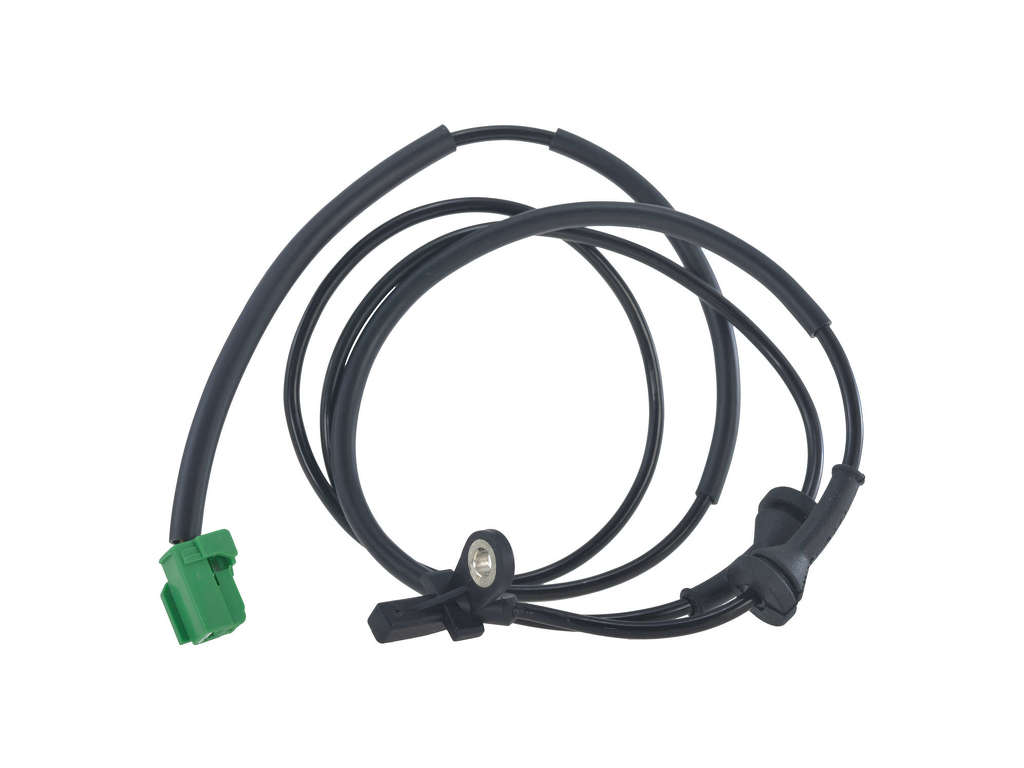
On a 2003-2014 Volvo XC90, code C0045 is most often caused by a failed left rear wheel speed sensor or a cracked/corroded reluctor ring on the axle. A faulty ABS module is also a common culprit on this platform. Expect to pay $40-$100 for a sensor, but be aware the replacement is labor-intensive as the connector is located under the second-row seats.
- Code C0045 on a 2003-2014 XC90 disables your ABS and stability control; drive with caution.
- The most likely causes are a bad left rear wheel speed sensor, a cracked reluctor ring, or damaged wiring.
- A faulty ABS module is also a common cause on these Volvos and should be considered if other components check out.
- DIY replacement of the rear sensor is difficult due to its wiring being routed inside the car, requiring removal of the rear seats.
- Always use a scan tool to check live wheel speed data before buying parts to confirm which wheel is faulting.
What's Unique About the 2003-2014 Volvo XC90
On the first-generation XC90, this code presents a few unique challenges. First, the rear wheel speed sensor wire is routed from the wheel hub into the cabin, with the connector located under the second-row seats, making replacement much more labor-intensive than on typical vehicles where the connector is in the wheel well. Second, this era of Volvo is known for ABS/BCM module failures, where internal solder joints or pressure sensors within the ATE MK60 unit fail, falsely triggering wheel speed sensor codes. It's crucial to rule out the sensor and its wiring before condemning the more expensive module.
Symptoms You May Notice
- ABS warning light is on.
- "Anti-Skid Service Required" or "Brake Failure Stop Safely" message on the instrument cluster.
- Stability/Traction control (DSTC) light is on.
- In some cases, the speedometer may work erratically or not at all.
- A clicking sound from the dash area may occur when the fault appears
- AWD may be disabled as it relies on wheel speed data.
- Replacing the ABS module before thoroughly testing the sensor, wiring, and reluctor ring. The module is expensive and often blamed, but the issue is frequently a simpler component at the wheel.
- Replacing the wheel speed sensor when the actual fault is a cracked reluctor ring. A visual inspection of the ring is critical.
Most Likely Causes
- Failed Left Rear Wheel Speed Sensor 🔴 High Probability → Shop ABS Wheel Speed Sensor The sensor is exposed to harsh conditions (water, salt, debris, vibration) at the wheel hub, leading to internal failure or corrosion over time. The long wire routing into the cabin also presents more opportunities for damage.
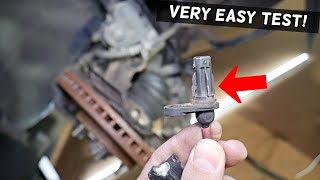
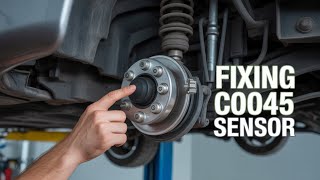
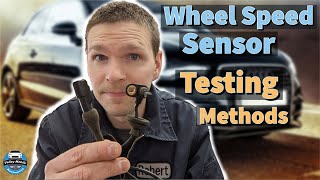
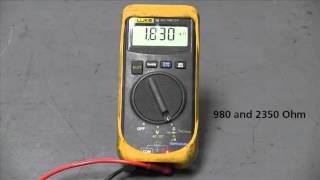
How to confirm: Using a scan tool with live data, observe the wheel speed readings from all four wheels while driving. A reading of zero or an erratic signal from the left rear sensor points to a bad sensor or wiring. You can also test the sensor's internal resistance with a multimeter; while specific values for this exact sensor are not widely published, a key diagnostic step is comparing the resistance reading from the faulty sensor to the reading from the working sensor on the other side of the vehicle. A significant difference, an open circuit (infinite resistance), or a short (near-zero resistance) indicates a failed sensor.
Typical fix: Replace the left rear wheel speed sensor. This is a complex DIY job on the XC90 as it requires removing the second-row seats and pulling back carpet and foam insulation to access the electrical connector inside the cabin. Some owners report success without removing the third-row seats, but it is a tight fit.
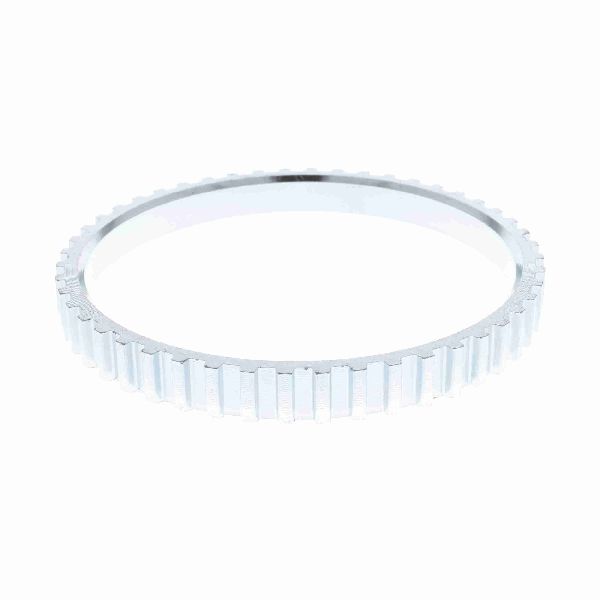
Est. part cost: $40-$120 - Cracked or Corroded Reluctor Ring 🟡 Medium Probability The metal reluctor ring (or 'tone ring') pressed onto the rear axle shaft is made of steel and is highly susceptible to rust. Rust builds up underneath the ring, causing it to expand, crack, and split open. This disrupts the signal the sensor is trying to read. The rear rings on the XC90 have 48 teeth.
How to confirm: Visually inspect the toothed ring on the rear axle shaft. Look for a visible crack or split in the ring, which is a very common failure. Also check for heavy rust buildup that fills the gaps between the teeth. This often requires removing the wheel speed sensor to get a clear view.
Typical fix: The damaged reluctor ring must be replaced. This involves removing the rear axle shaft from the hub, cutting or prying off the old, cracked ring, cleaning the mounting surface on the axle thoroughly with a wire brush, and pressing or heating a new one into place. Many owners use an oven or torch to heat the new ring, which allows it to slide onto the axle and shrink-fit as it cools. While this is a known Volvo issue, other manufacturers face similar failures; for instance, NHTSA ODI #11219167 describes a C0045 code caused by a broken left rear wheel speed sensor encoder ring on a Cadillac SRX.
Est. part cost: $15-$50 - Damaged Wiring or Connector 🟡 Medium Probability The sensor's wiring harness can be damaged by road debris, improper routing near suspension components, or corrosion at the connectors, both at the wheel hub and inside the vehicle under the carpet. Water intrusion from clogged sunroof drains can also lead to corrosion of the interior connector.
How to confirm: Perform a thorough visual inspection of the wiring from the sensor up to where it enters the vehicle body. Check for chafing, breaks, or pinched wires. Unplug the connectors (under the rear seat) and check for green or white corrosion on the pins. A 2013 XC90 owner found the wire broken right at the access panel under the second-row seat.
Typical fix: Repair the damaged section of wire or replace the corroded connector pigtail. In severe cases, the entire sensor harness may need replacement.
Est. part cost: $10-$50 - Faulty ABS Control Module (BCM) ⚪ Low Probability → Shop ABS Control Module The ATE MK60 ABS modules used in this generation of Volvo are known to fail due to internal faults, often related to the internal brake pressure sensor or cracked solder joints from heat cycles. This can cause the module to lose communication with a sensor and falsely report a circuit fault.
How to confirm: This is typically a diagnosis of exclusion. If the sensor, reluctor ring, and wiring have all been tested and confirmed to be good, the ABS module is the likely culprit. Often, other communication-related ABS codes (like CEM-1A5F) or internal fault codes (like BCM-0130 for the pressure sensor) may be present. A complete lack of communication with the BCM using a scan tool is a strong indicator. In some cases, software issues can mimic hardware failure; for example, NHTSA ODI #10382746 notes a Subaru dealer was instructed to erase C0045 and other codes and re-program the software.
Typical fix: The ABS module is removed from the vehicle and sent to a specialist like XeMODeX or ECU Testing for rebuilding. This is much more cost-effective than buying a new module from the dealer, which also requires expensive programming. Repairing the original module avoids the need for reprogramming.
Est. part cost: $150-$400 for a rebuild service
Rare But Worth Checking
- Failed Rear Wheel Bearing: A worn or failing wheel bearing can introduce excessive play or 'wobble' in the hub assembly. This changes the air gap between the sensor and the reluctor ring, causing an erratic signal. If you hear grinding or humming noises from the rear of the vehicle that change with speed, the wheel bearing should be inspected. A mechanic damaged a sensor during a wheel bearing replacement in one documented case. Cross-manufacturer reports like NHTSA ODI #11165895 mention a service center recommending the replacement of the L/R hub bearing assembly to resolve a C0045 code.
Diagnosis Steps
- Read the fault codes with a Volvo-compatible scanner (like VIDA) to confirm C0045 and check for any other related BCM or CEM codes.
- Use the scanner's live data function to monitor all four wheel speeds while driving. Confirm that the Left Rear (LR) wheel speed reads 0 mph or is erratic compared to the other three.
- Safely raise and support the vehicle. Remove the left rear wheel.
- Visually inspect the wheel speed sensor for physical damage or heavy contamination. Check its wiring for any signs of chafing, breaks, or heat damage.
- Carefully inspect the reluctor ring on the axle shaft. Use a light and spin the axle to check the entire circumference. Look closely for a hairline crack or a complete split, which is a very common failure.
- If the visual inspection is inconclusive, access the sensor connector under the second-row seats. Disconnect it and test the sensor's resistance with a multimeter. Compare the reading to the sensor on the opposite side; they should be very similar. An open or shorted reading indicates a bad sensor.
- If the sensor tests good, perform a continuity test on the wiring harness between the sensor connector and the ABS module connector to check for opens or shorts.
- If the sensor, reluctor ring, and wiring are all confirmed to be good, and especially if other communication or internal BCM codes are present, the fault is likely within the ABS control module itself.
Parts You'll Likely Need
- Rear Wheel Speed Sensor
(OEM #30773744, 30748149, 31274611)— This is the most common component to fail in the circuit due to its exposed location and complex routing.
Trusted brands: Bosch, ATE (OEM), Delphi, NTK
OEM price range: $90-$150
Aftermarket price range: $40-$80 - Rear ABS Reluctor Ring
(OEM #30735955)— These rings are prone to rusting, expanding, and cracking, which causes a loss of signal. They have 48 teeth. Note that while this part number is often listed for the front, it is also used on the rear for this platform.
Trusted brands: Febi Bilstein, Genuine Volvo
OEM price range: $60-$80
Aftermarket price range: $15-$30
Related Codes That Often Appear With This One
- BCM-0130 — This Volvo-specific code for 'Brake pressure sensor Signal too low' points to a common internal failure of the ATE MK60 ABS module, which can occur alongside false wheel speed sensor codes.
- BCM-0070 — This code for 'Pump Motor Supply Voltage' can appear alongside wheel sensor codes when the ABS module itself is failing internally. However, always check the simple things first, as one owner found this was caused by a blown ABS fuse.
- CEM-1A5F — This Central Electronic Module (CEM) code indicates 'communication with the BCM control unit Signal missing'. It often appears when the BCM has failed and is no longer communicating on the CAN bus network.
- P0463 / P069E — While primarily related to fuel systems, NHTSA ODI #11399819 notes these codes appearing simultaneously with C0045 on other vehicle platforms, suggesting potential electrical interference or shared grounding issues.
Platform-Specific Known Issues
- The Dreaded Under-Seat Connector: Multiple owners on forums confirm the most frustrating part of replacing the rear ABS sensor is its location. Unlike most cars, the electrical connector is not in the wheel well but deep inside the cabin, under the second-row seats and carpet. One owner documented the process: "I had to first remove all three middle row seats...Then you need to unclip the plastic trim next to the sills which the carpet is tucked into...Unfortunately, more carpet needs to pulled back to expose the access panel...I had to remove 11 bolts holding in the subframe of the third row seats." Another owner's mechanic took 3 hours for the job. A helpful YouTube video shows it may be possible to access the panel by only removing the second-row seats and pulling the carpet/insulation back forcefully.
- Cracked Reluctor Rings: A Common Deception: A very frequent point of failure that can be misdiagnosed as a bad sensor. An owner on the Volvo Owners Club forum traced an "Anti-skid service required" message to split ABS rings. They noted, "I looked under the car at the hubs to find that both ABS rings had split...one was split and the other completely broken in two." The cause is rust forming on the CV joint underneath the ring, which exerts pressure and cracks the ring. The fix involves removing the axle from the hub, breaking off the old ring, cleaning the rust off the axle surface, and heating the new ring with a torch to expand it for installation.
Mechanic-Grade Diagnostic Values
- Wheel Speed Sensor Resistance (Passive Sensor) — expected: Typically 800–1500 ohms, but the most effective test is comparing the reading to the identical sensor on the opposite wheel. They should be very close.. Failure: An open circuit (infinite resistance), a short circuit (near zero ohms), or a reading that is significantly different from the sensor on the other side of the car.
- Wheel Speed Sensor AC Voltage (Passive Sensor) — expected: A sine wave AC voltage that increases in amplitude and frequency as the wheel is spun. Should be at least 0.2 VAC (200 millivolts) when spinning the wheel at about one revolution every two seconds.. Failure: No voltage or an inconsistent, erratic voltage signal when the wheel is spinning at a steady rate.
Hidden / Shadow Codes Worth Checking
- BCM-C004501: This is the Volvo-specific diagnostic trouble code (DTC) that corresponds to the generic C0045. The suffix '01' indicates a general electrical failure. This code is visible with a Volvo-specific scanner like VIDA. (see via Volvo VIDA/DiCE diagnostic tool.)
Scan Tool Commands That Help
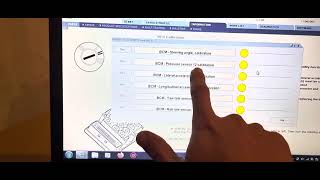
- Volvo VIDA: BCM Calibration — After replacing the BCM or other major components of the stability control system (like the Steering Angle Sensor), a calibration routine must be performed. In VIDA, this is found under Diagnostics -> Vehicle Communication -> BCM -> Advanced -> Calibrate. This function calibrates the yaw sensor, steering angle sensor, and pressure sensors.
Wiring & Ground Locations
- Rear WSS Interior Connector — Located under the outer seat of the second row. The sensor wire passes from underneath the car through a circular access panel in the floor pan (between the 2nd and 3rd rows) and routes forward to the connector.. This connector is a primary test point. It is also susceptible to corrosion from water intrusion (clogged drains, spills) and the wiring can be damaged under the carpet.
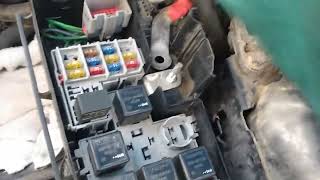
- BCM (Brake Control Module) — Bolted to the ABS hydraulic pump assembly in the engine compartment, typically on the driver's side near the strut tower and under the main fuse box.. This is the destination for the wheel speed sensor signals. The connector at the BCM is the final point for testing the wiring harness continuity from the sensor.
- Circular Access Panel — Under the carpet, between the second and third-row seats. There is one on each side. The sensor wire passes through a grommet in this panel.. This is a known point of difficulty during sensor replacement. The wire can get snagged, and in one documented case, a broken wire was found right at this panel.
Real Owner Repair Stories
- YouTube user 'dsubscribed' (2013 Volvo XC90) — ABS light and right rear wheel speed sensor code (analogous to C0045 for the left side).
❌ Tried (didn't work) The user was preparing to replace the entire sensor and harness, assuming the sensor itself had failed.
✅ What actually fixed it Upon removing the second-row seats and pulling back the carpet to access the wiring, the user discovered the sensor wire was visibly broken right at the interior access panel where it comes through the floor. Repairing the broken wire resolved the issue without needing to replace the sensor. - Volvo Owners Club Forum user (2004 Volvo XC90 T6) — ABS sensor malfunction message after having rear wheel bearings replaced.
❌ Tried (didn't work) N/A - direct repair attempt.
✅ What actually fixed it The mechanic replaced the rear ABS sensor. The user noted the extreme labor involved, confirming the mechanic had to remove the rear passenger seat to access the connector under a compartment. The repair took 3 hours.
OEM Part Supersession History
9466017→30735955— Updated part for the ABS Reluctor Ring.30748149, 31274611→30773744— Updated part number for the Left Rear Wheel Speed Sensor.
Heads up: Part 30773744 is specified for models from Chassis/VIN 352988 and onwards, but is generally backwards compatible. Always verify with VIN.
Model Year Variations Within This Range
- 2005+: Starting in 2005, the XC90 was equipped with the ATE MK60 ABS/BCM module, which is notoriously prone to internal pressure sensor failures and cracked solder joints, making a false C0045 code due to module failure more likely on these later models compared to the 2003-2004 models.
Diagnostic Flowchart
Other Known Issues on This Vehicle
Issues unrelated to this code that are worth knowing about as an owner of this generation:
- GM 4T65EV-GT Transmission Failure (T6 Models) 🔴 High → Shop Transmission Assembly — Extremely common on 2003-2005 T6 models, often failing between 60,000 and 100,000 miles. The transmission was not robust enough for the engine's torque and vehicle's weight. (Ref: Subject of a class-action lawsuit.)
- AWD Angle Gear / Bevel Gear Collar Sleeve Failure 🔴 High — Common across all AWD models. The splines on a collar sleeve connecting the transmission to the angle gear wear down, resulting in a loss of all-wheel drive. Often fails without warning.
- Clogged Sunroof Drains 🟠 Medium — Very common. The front and rear sunroof drain tubes become clogged with debris, causing rainwater to back up and leak into the cabin, often soaking the carpets and potentially damaging sensitive electronics under the floor.
- Front Suspension Lower Control Arm Bushing Wear 🟠 Medium — A frequent wear item on the heavy XC90. The large hydraulic bushings in the rear position of the front lower control arms crack and leak, causing clunking noises, poor handling, and abnormal tire wear.
- Rear Wheel Bearing Failure 🟠 Medium — Fairly common. The rear wheel bearings can fail, causing a loud humming or grinding noise that increases with vehicle speed. Replacement requires pressing the old bearing out and a new one in.
Used vs. New Parts: Buying Guide for This Vehicle
When a used part is the smart pick: A used part is generally not recommended for the key components in this repair. The wheel speed sensor and reluctor ring are inexpensive new and are wear items. A used ABS/BCM module is a possibility, but it must be from an identical vehicle (part number, AWD/FWD, DSTC options) and may still require programming, making a rebuilt unit with a warranty a much safer and more reliable choice.
Donor-vehicle mileage cap: roughly under 100000 miles for the part to have meaningful remaining life.
What to inspect on the donor part:
- For a BCM, verify the part number exactly matches.
- Inspect the donor vehicle for signs of flood damage or major electrical issues.
- If considering a complete axle for the reluctor ring, ensure the ring is free of visible cracks and heavy rust, and the donor vehicle has low mileage and is from a dry, salt-free climate.
OEM-only on this vehicle (don't cheap out):
- ABS Control Module (BCM): While rebuild services are the preferred cost-effective option, if buying a replacement, a Genuine Volvo part (or a professionally rebuilt original) is critical to avoid programming and compatibility nightmares.
Aftermarket brands forum-validated for this vehicle:
- ATE (often the Original Equipment Manufacturer for the sensor)
- Bosch (for wheel speed sensor)
- Febi Bilstein (for reluctor ring)
Brands owners have reported issues with on this vehicle:
- No-name, unbranded sensors from online marketplaces. These often have a high failure rate, incorrect resistance values, or poor-quality wiring, leading to a repeat repair.
Real Owner Stories
Aggregated from forums and TSBs cited above. Mileages and costs reflect what owners reported in those sources.
2013 Volvo XC90
Symptoms: The owner discovered a fault in the left rear wheel speed circuit.
What fixed it: The wire was found to be broken exactly at the access panel located under the second-row seat.
Source hint: Article context section 'Damaged Wiring or Connector' regarding a 2013 XC90 owner
Volvo XC90
Symptoms: ABS warning light and "Anti-skid service required" message appeared on the dash.
What fixed it: The owner found both rear ABS rings had split due to rust on the hubs; the rings were replaced by heating new ones with a torch to shrink-fit them onto the axle.
Source hint: Volvo Owners Club forum thread titled 'ABS Sensor replacement, XC90' and 'Cracked Reluctor Rings: A Common Deception'
Volvo XC90
Symptoms: ABS sensor failure requiring replacement of the rear sensor.
What fixed it: A difficult 3-hour repair involving the removal of middle-row seats, plastic sill trim, and pulling back carpet to reach the internal connector.
Source hint: Volvo Owners Club Forum and Volvo Forums
Documented NHTSA Reports
NHTSA ODI #11165895
Symptoms: An owner reported a message that varied from a couple of seconds to minutes before all lights extinguished.
What fixed it: The service center reported code C0045 and recommended replacing the L/R hub bearing assembly.
NHTSA ODI #11399819
Symptoms: An owner reported that despite having two fuel level sensors installed, the check engine light would return.
What fixed it: Diagnostic codes P0463, P069E, and C0045 were present, indicating potential cross-system electrical faults.
Related OBD-II Codes
Frequently Asked Questions
Why is my XC90's AWD system disabled when I have a C0045 code?
Is it true I have to remove the third-row seats to replace the left rear ABS sensor?
Can a cracked reluctor ring cause the same symptoms as a bad sensor on my XC90?
Where is the electrical connector for the left rear wheel speed sensor located?
Could my sunroof drains be responsible for an ABS sensor code?
Should I buy a new ABS Control Module (BCM) if the sensor isn't the problem?
Helpful Videos
We Have This Part in Stock


The information in this article is provided for general reference and educational purposes only. Vehicle specifications, procedures, and part compatibility can vary by production date, trim level, and region. Always consult your vehicle's factory service manual and verify part numbers before purchasing or performing repairs. Safety-critical components such as airbags, seat belts, and braking systems should be installed by a qualified professional.
- Volvo XC90:
- 🧭 Diagnostic Flowchart
- 🎬 Helpful Videos
- 🛍️ Shop This Part
- What's Unique About the 2003-2014 Volvo XC90
- Symptoms You May Notice
- Most Likely Causes
- Rare But Worth Checking
- Diagnosis Steps
- Parts You'll Likely Need
- Related Codes That Often Appear With This One
- Platform-Specific Known Issues
- Mechanic-Grade Diagnostic Values
- Hidden / Shadow Codes Worth Checking
- Scan Tool Commands That Help
- Wiring & Ground Locations
- Real Owner Repair Stories
- OEM Part Supersession History
- Model Year Variations Within This Range
- Other Known Issues on This Vehicle
- Used vs. New Parts: Buying Guide for This Vehicle
- Real Owner Stories
- 2013 Volvo XC90
- Volvo XC90
- Volvo XC90
- Documented NHTSA Reports
- NHTSA ODI #11165895
- NHTSA ODI #11399819
- Related OBD-II Codes
- Frequently Asked Questions
- 🎟️ Get 5% Off