

C0050 on 2006-2011 Cadillac DTS: Right Rear Wheel Speed Sensor Fault Causes and Fixes
On a 2006-2011 Cadillac DTS, code C0050 almost always indicates a problem with the right rear wheel speed sensor circuit. The most common fix is replacing the right rear wheel hub assembly which includes the integrated sensor and magnetic encoder ring. Before replacement, inspect and clean the encoder ring for metallic debris, a common issue cited in GM TSB PIC5428G. Expect to pay $150-$300 for an aftermarket part.
- Code C0050 on a 2006-2011 DTS means a fault with the right rear wheel speed sensor circuit, which will disable your ABS and StabiliTrak systems.
- Before replacing parts, inspect the magnetic ring on the back of the right rear wheel hub for metallic debris or cracks. Cleaning the ring can sometimes fix the problem.
- The most likely part to fail is the entire wheel hub assembly, which includes both the sensor and the magnetic ring.
- Always check the wiring harness for damage near the wheel, as this is a common point of failure.
- Driving with this fault is possible, but reduced safety from the disabled ABS and stability systems means you should get it repaired promptly.
What's Unique About the 2006-2011 Cadillac DTS
The 2006-2011 Cadillac DTS shares its W-body platform with the Buick Lucerne, which experiences the exact same issue. On these vehicles, the wheel speed sensor is integrated into the wheel hub bearing assembly. A very common issue is not the sensor itself failing electronically, but the magnetic encoder ring, which is part of the hub, becoming damaged, cracked, or contaminated with metallic debris from brake wear. This debris disrupts the magnetic field and leads to an erratic or missing signal.
Symptoms You May Notice
- ABS warning light is on
- StabiliTrak or Traction Control warning light is on
- "Service StabiliTrak" or "Service Brake System" message on the driver information center
- Traction control and ABS are disabled
- Cruise control may be disabled
- Heavier than normal power steering feel at low speeds
- Replacing only the wheel speed sensor when the actual problem is a damaged or contaminated magnetic encoder ring on the hub assembly.
- Replacing the EBCM before thoroughly testing the wiring and hub assembly.
- Assuming the hub is bad without first attempting to clean the magnetic encoder ring as per GM TSB PIC5428G.
Most Likely Causes
- Failed Wheel Hub Bearing Assembly (Damaged/Contaminated Encoder Ring) 🔴 High Probability → Shop Hub Assembly The magnetic encoder ring is integrated into the hub assembly and is exposed to the elements. Over time, it can attract metallic debris ('fuzz') from brake wear, or the ring itself can crack, swell, or delaminate, disrupting the sensor signal. This is a well-documented issue on many GM platforms.
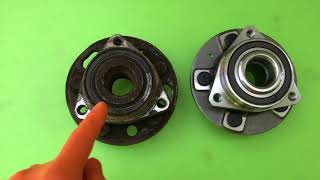
How to confirm: With the wheel, caliper, and rotor removed, visually inspect the magnetic ring on the back of the hub for cracks, peeling, or a build-up of metallic 'fuzz'. A scan tool showing erratic or zero MPH reading from the right rear wheel while driving also points to this. A YouTube video by 'beerwrenchkc' shows a clear example of a failed encoder ring on a similar GM vehicle.
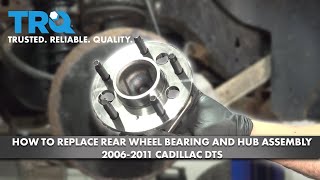
Typical fix: First, attempt to clean the encoder ring with a soft brush and brake cleaner as per TSB PIC5428G. If the code returns or the ring is visibly damaged, replace the entire right rear wheel hub and bearing assembly. The sensor and ring are included. 🎬 Watch: Step-by-step guide to replacing the rear wheel hub assembly.
Est. part cost: $150 - $300 - Damaged Wiring Harness or Connector 🟡 Medium Probability The wiring harness leading to the wheel speed sensor is located in the wheel well and is susceptible to damage from road debris, corrosion, and constant flexing from suspension travel. This can cause wires to break internally or the connector pins to corrode.
How to confirm: Visually inspect the wiring harness from the sensor to the main vehicle body for any signs of chafing, breaks, or corrosion at the connector pins. A multimeter can be used to check for continuity and shorts to ground between the EBCM and the sensor connector.
Typical fix: Repair the broken section of wire or replace the pigtail connector. In severe cases, a new harness section may be needed. Aftermarket pigtails are widely available.
Est. part cost: $20 - $60 - Failed Wheel Speed Sensor ⚪ Low Probability → Shop ABS Wheel Speed Sensor While the sensor itself can fail, it is far less common than issues with the magnetic ring or wiring. The sensor is a solid-state Hall-effect sensor and is generally reliable. It is almost always replaced with the hub assembly as a unit.
How to confirm: After confirming the wiring and magnetic ring are good, the sensor is the likely culprit. This can be confirmed by testing its signal output with an oscilloscope, which should be a clean square wave when the wheel is spun. Swapping sensors from left to right (if possible) and seeing if the code follows is another diagnostic step.
Typical fix: Replace the wheel speed sensor. On this vehicle, this means replacing the entire wheel hub assembly.
Est. part cost: $150 - $300
Rare But Worth Checking
- Faulty Electronic Brake Control Module (EBCM): → Shop ABS Control Module This is rare. The EBCM should only be considered after all other possibilities (sensor, hub, wiring) have been definitively ruled out. A failure here would typically set multiple wheel speed sensor codes or other EBCM-related codes, not just one.
Diagnosis Steps
- Connect an OBD-II scanner capable of reading ABS codes to confirm C0050 is present. Note any symptom bytes like 0F (Erratic), 18 (Low Amplitude), or 5A (Plausibility).
- Use the scanner's live data function to monitor all four wheel speeds while driving slowly in a straight line. Observe if the Right Rear (RR) wheel speed reads 0 MPH or jumps erratically compared to the others.
- Raise and safely support the rear of the vehicle. Remove the right rear wheel.
- Visually inspect the wheel speed sensor wiring harness for any visible damage, chafing, or corrosion, especially near the connector and where it flexes. Check for good terminal tension at the connector.
- Remove the brake caliper and rotor to get a clear view of the back of the wheel hub assembly.
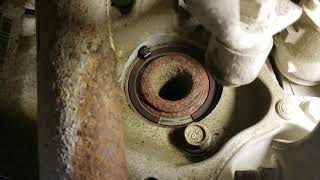
- Inspect the magnetic encoder ring on the hub. Look for cracks, swelling, or a build-up of of metallic debris. As per TSB PIC5428G, use a soft brush (do not use a magnet) and brake cleaner to remove any debris. Reassemble and re-test. 🎬 Watch: How to clean the magnetic ring without removing wheels.
- If cleaning doesn't resolve the issue or the ring is visibly cracked or peeling, the hub assembly must be replaced.
- If the ring and wiring look good, use a multimeter to test the sensor circuit for continuity, shorts to ground, and proper voltage according to the service manual. 🎬 See how to diagnose and fix ABS and traction control codes.
- If an oscilloscope is available, back-probe the sensor connector and spin the hub to check for a clean square wave signal. An erratic or missing signal confirms a bad hub/sensor assembly.
- If the wiring, hub, and signal are all good, the final step would be to test the input circuit at the EBCM, though this is an advanced step and rarely the cause.
Parts You'll Likely Need
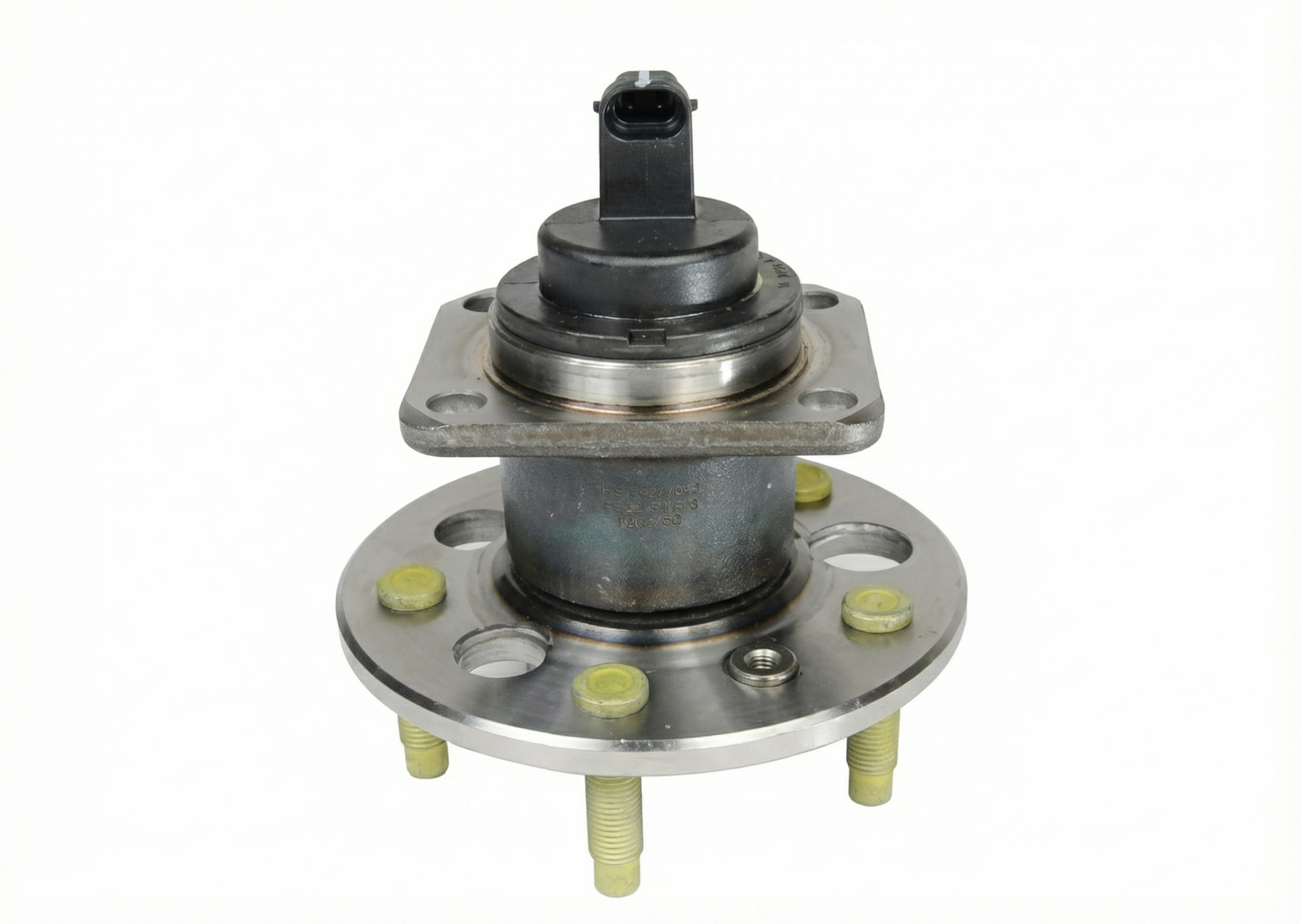
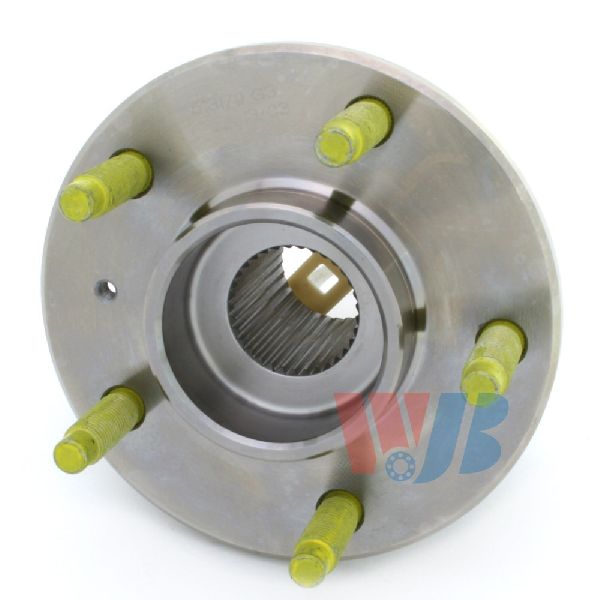
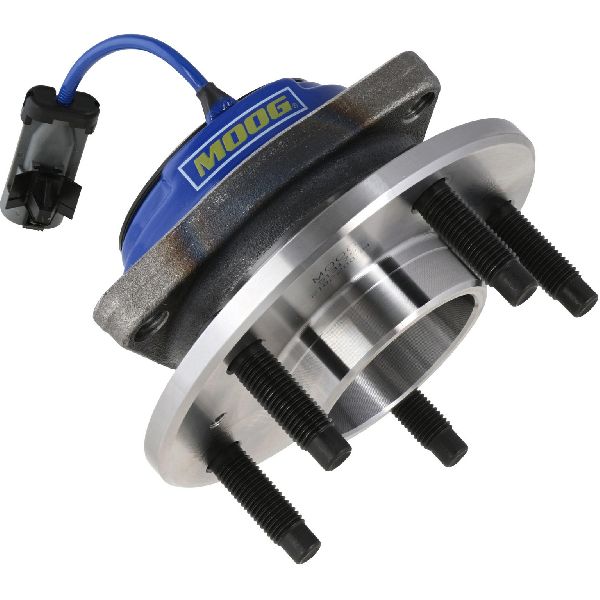
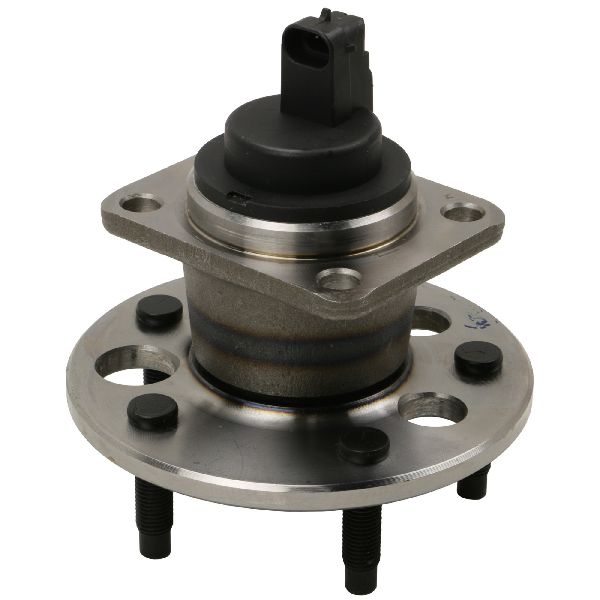
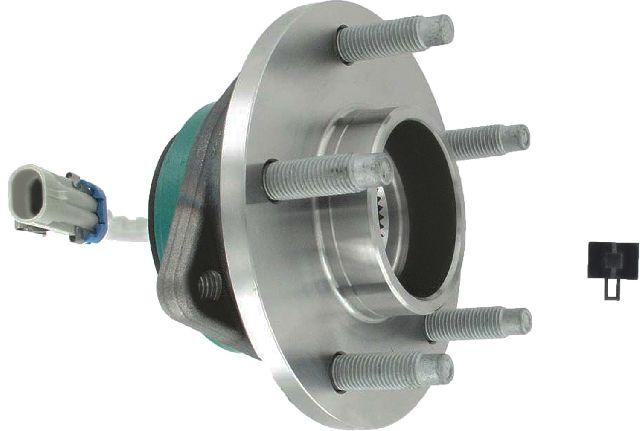
- Right Rear Wheel Hub and Bearing Assembly
(OEM #ACDelco Gold 512003 (replaces GM 25659192))— This is the most common failure point, as it contains the integrated wheel speed sensor and the magnetic encoder ring which often gets damaged or contaminated.
Trusted brands: ACDelco, MOOG, Timken, SKF, Carquest
OEM price range: $250-$350
Aftermarket price range: $150-$250 - Rear Wheel Speed Sensor Harness Pigtail
(OEM #ACDelco PT1521 (replaces GM 88953306))— If the wiring is found to be broken or corroded directly at the connector, replacing the pigtail is the standard repair.
Trusted brands: ACDelco, Dorman, Carquest
OEM price range: $40-$70
Aftermarket price range: $20-$40
Related Codes That Often Appear With This One
- C0045 — This is the code for the Left Rear Wheel Speed Sensor Circuit. If seen with C0050, it could indicate a problem common to both rear wheels, such as a wiring harness issue where they are routed together, or debris on both hubs.
- U0415 — As noted in TSB PIC5428G, a loss of a wheel speed sensor signal can cause the Power Steering Control Module to set this code, resulting in a 'Service Steering' message and heavier steering feel at low speeds. This is a normal default action.
Technical Service Bulletins (TSBs) & Recalls
- PIC5428G: While not explicitly for the DTS, this TSB is highly relevant as it covers the same issue on other GM platforms. It advises that codes like C0050 are often caused by metallic debris on the hub's magnetic encoder, and recommends cleaning it before replacing parts. Manufacturer TSB Bulletin #PIC5428G specifically notes that the Electronic Brake Control Module may set codes C0035-C0050 with symptom bytes 18, 5A, or 0F if debris is present.
- 17-NA-047: This bulletin supersedes PIC5428G, updating the model years and providing the same diagnostic advice to inspect and clean the encoder ring before part replacement.
Platform-Specific Known Issues
- A GM Technical Service Bulletin (TSB PIC5428G and its successors like 17-NA-047) exists for dozens of GM platforms addressing ABS/StabiliTrak lights with codes C0035-C0050 caused by metallic debris on the magnetic encoder ring. The TSB advises inspection and cleaning before replacement.
- Owner experiences on forums like CadillacForums.com and YouTube repair channels consistently point to the hub assembly's magnetic ring as the primary culprit for C0050, often after a sensor-only replacement failed to fix the issue.
Mechanic-Grade Diagnostic Values
- Wheel Speed Sensor Resistance (Passive Sensor Test) — expected: 850 - 1350 Ohms. Failure: An open circuit (OL) or a reading outside this range. Note: This test is for passive sensors; the DTS uses an active sensor, so this test is not the primary method but is often cited for general WSS diagnosis.
- WSS Circuit Continuity (from EBCM connector to sensor connector) — expected: < 2.0 Ohms. Failure: Resistance higher than 2.0 Ohms indicates excessive resistance or an open circuit in the harness.
- WSS Circuit Short to Ground (at EBCM connector) — expected: OL (Infinite Resistance). Failure: Any reading less than infinite indicates a short to ground in the harness.
- Voltage at WSS Harness Connector (Sensor disconnected, Key ON) — expected: One pin should show reference voltage (5V or 12V), the other should be ground.. Failure: No voltage suggests a wiring or EBCM issue. The EBCM may cut voltage if it detects a short, complicating this test.
Hidden / Shadow Codes Worth Checking
- C0050 00: Indicates a general 'Circuit Malfunction', pointing towards an open circuit, short to ground, or high resistance in the wiring. (see via Requires a professional scan tool like a GM Tech2/GDS2 that can read manufacturer-specific symptom bytes.)
- C0050 02: Indicates 'Circuit Short to Ground'. The EBCM has detected the sensor's signal or power circuit is shorted to ground. (see via Requires a professional scan tool like a GM Tech2/GDS2.)
- C0050 05: Indicates 'Circuit High Voltage/Open'. The EBCM has detected a short to voltage or an open/high resistance in the sensor circuit. (see via Requires a professional scan tool like a GM Tech2/GDS2.)
- C0050 18: Indicates 'Low Signal Amplitude'. The signal is weak, often due to debris on the encoder ring increasing the air gap. (see via Professional scan tool like GM GDS2/Tech2.)
- C0050 5A: Indicates 'Signal Plausibility Failure'. The signal from this sensor is illogical compared to the other wheels, often caused by a cracked encoder ring. (see via Professional scan tool like GM GDS2/Tech2.)
Scan Tool Commands That Help
- GM Tech2 / GDS2 or equivalent: Live Data > Wheel Speed Sensors — This is the primary diagnostic step. While driving in a straight line, all four sensors should read nearly identical speeds. The faulty sensor will read 0 MPH, jump erratically, or lag behind the others, confirming which corner has the fault.
- GM Tech2 / GDS2 or equivalent: Read DTC Information / Fault Codes — Used to retrieve not only the C0050 code but also the critical 2-digit symptom byte (e.g., 18, 5A) which provides specific details about the nature of the fault (weak signal, implausible signal, etc.).
Wiring & Ground Locations
- EBCM Ground (G303 / G401) — On the frame rail, located beneath the driver's side door area.. The Electronic Brake Control Module (EBCM) relies on this ground. Its exposed location makes it highly susceptible to corrosion from road salt and moisture. A poor ground can cause the EBCM to malfunction, potentially setting various communication or sensor codes, including C0050.
- Rear WSS Connector — At the wheel hub, connecting the sensor pigtail to the main body harness inside the wheel well.. This connector and the first few inches of wiring are the most common points for physical damage, corrosion, or internal wire breaks due to constant suspension movement and exposure to debris.
- EBCM Connector X1 — The main electrical connector on the EBCM module itself, mounted on the driver's side frame rail.. This is where the wheel speed sensor signals terminate. Technicians can perform continuity and voltage tests from this connector to diagnose the entire circuit back to the wheel without accessing the sensor directly.
Real Owner Repair Stories
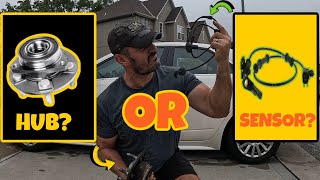
- YouTube - 'HOW TO FIGURE OUT (and FIX) AN ABS OR TRACTION CONTROL LIGHT' (Cadillac CTS (similar GM platform and issue)) — ABS and Traction Control lights on, odometer display not working.
❌ Tried (didn't work) Replacing the wheel speed sensor itself did not fix the problem.
✅ What actually fixed it The problem was a failed magnetic encoder ring on the wheel hub assembly. Replacing the entire wheel hub assembly, which included a new ring and sensor, resolved the C0045 and C0050 codes. - Reddit r/Cartalk (2008 Cadillac DTS) — Wheel bearing noise and likely related ABS codes.
❌ Tried (didn't work) A shop had previously installed a loaded knuckle with a wheel bearing that failed in just over a year. The failed bearing was identified as an SKF part.
✅ What actually fixed it The owner replaced the failed front wheel hub assembly with an OEM AC Delco part (513121A), which resolved the issue.
OEM Part Supersession History
GM 25659192→ACDelco Gold 512003 is a common replacement.— Standard part lifecycle and brand consolidation.
Diagnostic Flowchart
Other Known Issues on This Vehicle
Issues unrelated to this code that are worth knowing about as an owner of this generation:
- Engine Oil Leaks (Crankcase Half-Seal) 🔴 High — Very common. The Northstar V8 is known to develop leaks from the lower crankcase half-seal. This is a major repair as the engine often needs to be removed to properly re-seal the engine block halves.
- Excessive Oil Consumption 🟠 Medium — Common, especially on earlier Northstar engines. Piston rings can become stuck with carbon deposits, leading to consumption of up to a quart of oil every 500-1000 miles. (Ref: GM had internal procedures for a piston-soak/decarbonizing process to address this.)
- Power Steering Fluid Leaks 🟠 Medium — Frequently reported. Leaks can occur from the steering rack internal seals or from power steering hoses, sometimes due to improper routing causing them to rub on other components. (Ref: NHTSA 06V105000 / GM #06026: A recall was issued for 2006 models for an improperly crimped power steering hose that could leak and cause a fire risk.)
- Transmission Cooler Line Leaks 🟡 Low — Common. The rubber sections of the transmission cooler lines that run to the radiator can degrade and leak at the fittings where they are crimped to the metal lines.
- 4T80-E Transmission Issues 🟠 Medium — While the 4T80-E is generally robust, issues like TCC solenoid failure (causing P0741), harsh shifting, or slipping can occur, sometimes related to other engine problems like misfires.
- Door Lock Actuator Failure 🟡 Low — A common annoyance where one or more door lock actuators will fail, preventing the door from locking or unlocking electronically.
Used vs. New Parts: Buying Guide for This Vehicle
When a used part is the smart pick: For this repair, buying a used wheel hub assembly from a junkyard is generally NOT recommended. The magnetic encoder ring is a known failure point due to age and exposure, and the bearing itself is a wear item. A used part carries a high risk of premature failure, leading you to do the job twice.
Donor-vehicle mileage cap: roughly under 50000 miles for the part to have meaningful remaining life.
What to inspect on the donor part:
- Check for zero play or roughness when spinning the bearing by hand.
- Visually inspect the magnetic encoder ring for any cracks, peeling, or deep grooves.
- Ensure the ABS sensor wire and connector are free of any cuts, corrosion, or damage.
- Ideally, source from a vehicle in a dry, non-salt-belt region to minimize corrosion.
Aftermarket brands forum-validated for this vehicle:
- ACDelco (OEM supplier)
- Timken
- MOOG
- SKF
Brands owners have reported issues with on this vehicle:
- Unbranded, 'white box' parts from online marketplaces have a high reported failure rate. While brands like MOOG and Timken are generally trusted, some users have reported quality control issues or receiving parts made in China, so sourcing from a reputable vendor is key.
Real Owner Stories
Aggregated from forums and TSBs cited above. Mileages and costs reflect what owners reported in those sources.
2006-2011 Cadillac DTS
Symptoms: ABS and StabiliTrak lights were on. The owner found that a sensor-only replacement did not fix the issue.
What fixed it: Replacement of the entire wheel hub assembly because the magnetic ring was the actual culprit.
Source hint: YouTube - beerwrenchkc Channel
2006-2011 Cadillac DTS
Symptoms: "Service StabiliTrak" and ABS lights appearing on the dashboard.
What fixed it: Inspecting the wiring harness for chafing or breaks and checking the magnetic encoder ring for debris or damage.
Source hint: Reddit r/Cadillac & r/Cartalk
Related OBD-II Codes
Frequently Asked Questions
Does TSB PIC5428G apply to my Cadillac DTS if I have a C0050 code?
Why does my DTS feel harder to steer at low speeds when the ABS light is on?
Can I just replace the sensor on my 2006-2011 DTS to fix C0050?
Is there a recall for the power steering leaks on the 2006 DTS?
What is the 'fuzz' mentioned in the TSB for my Cadillac's wheel hub?
Helpful Videos

Used OEM Parts in Stock
New Aftermarket Parts Available


The information in this article is provided for general reference and educational purposes only. Vehicle specifications, procedures, and part compatibility can vary by production date, trim level, and region. Always consult your vehicle's factory service manual and verify part numbers before purchasing or performing repairs. Safety-critical components such as airbags, seat belts, and braking systems should be installed by a qualified professional.
- Cadillac DTS:
- 🧭 Diagnostic Flowchart
- 🎬 Helpful Videos
- 🛍️ Shop This Part
- What's Unique About the 2006-2011 Cadillac DTS
- Symptoms You May Notice
- Most Likely Causes
- Rare But Worth Checking
- Diagnosis Steps
- Parts You'll Likely Need
- Related Codes That Often Appear With This One
- Technical Service Bulletins (TSBs) & Recalls
- Platform-Specific Known Issues
- Mechanic-Grade Diagnostic Values
- Hidden / Shadow Codes Worth Checking
- Scan Tool Commands That Help
- Wiring & Ground Locations
- Real Owner Repair Stories
- OEM Part Supersession History
- Other Known Issues on This Vehicle
- Used vs. New Parts: Buying Guide for This Vehicle
- Real Owner Stories
- 2006-2011 Cadillac DTS
- 2006-2011 Cadillac DTS
- Related OBD-II Codes
- Frequently Asked Questions
- 🎟️ Get 5% Off