

C0050 on 2009-2013 Cadillac Escalade Hybrid: Right Rear Wheel Speed Sensor Causes and Fixes
Code C0050 on a 2009-2013 Escalade Hybrid means a fault with the right rear wheel speed sensor signal, disabling ABS and StabiliTrak. The most common fix costs nothing in parts: remove the sensor and clean metallic debris off the wheel hub's magnetic ring, as per GM TSB PIC5428G. If that fails, the separate, bolt-on sensor itself is the next likely culprit, costing about $30-$90.
- Code C0050 disables your ABS and StabiliTrak systems, so address it promptly for safety.
- Before buying any parts, perform the free and easy check: remove the right rear speed sensor and clean the magnetic ring on the hub assembly. This is the most common fix.
- If cleaning doesn't work, the next step is to replace the bolt-on wheel speed sensor (Part #20938121), which is a simple DIY job.
- Only replace the entire rear wheel hub assembly if the magnetic ring is visibly cracked or damaged.
What's Unique About the 2009-2013 Cadillac Escalade Hybrid
On this generation of Escalade (GMT900 platform), the most common cause for a C0050 code is not a failed part, but an accumulation of metallic debris on the magnetic encoder ring of the wheel hub. GM issued a technical service bulletin (PIC5428 and its revisions) detailing this exact issue. Unlike the front wheel speed sensors which are integrated into the hub assembly, the rear sensors on these trucks are separate, bolt-on components, making inspection, cleaning, and replacement much simpler and cheaper than a full hub replacement.
Symptoms You May Notice
- ABS warning light is on
- StabiliTrak or Traction Control warning light is on
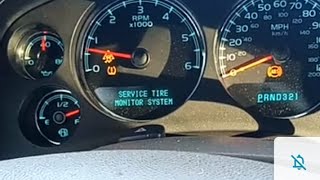
- "Service StabiliTrak" or "Service Traction Control" message on the driver information center
- ABS system does not activate during hard braking (wheels may lock up)
- Traction control does not activate on slippery surfaces
- Brake warning indicator may be on
- Replacing the wheel speed sensor without first inspecting and cleaning the magnetic encoder ring on the hub.
- Replacing the entire wheel hub assembly when only the separate, bolt-on speed sensor has failed.
- Assuming the front hub design (integrated sensor) is the same as the rear (separate sensor), leading to unnecessary purchase of a hub assembly.
Most Likely Causes
- Metallic Debris on Wheel Hub Magnetic Encoder Ring 🔴 High Probability This is a well-documented issue across many GM platforms of this era, covered by TSB PIC5428G. The magnetic ring attracts ferrous debris from normal brake wear and road grime, which disrupts the sensor's signal, often setting symptom bytes like 18 (low amplitude) or 5A (implausible signal).
How to confirm: Remove the right rear wheel speed sensor (one T30 Torx bolt). Use a light and a non-magnetic tool to inspect the magnetic ring on the inboard side of the hub assembly for metallic shavings or a paste-like buildup.
Typical fix: Carefully clean the magnetic encoder ring using a soft brush, compressed air, and a cloth with brake cleaner. Do NOT use magnets or harsh scrapers for cleaning, as this can damage the encoder. In many cases, this resolves the issue without replacing any parts.
Est. part cost: $0 - Failed Right Rear Wheel Speed Sensor 🟡 Medium Probability → Shop ABS Wheel Speed Sensor The sensor is exposed to harsh conditions (water, salt, vibration) at the wheel, leading to eventual internal electronic failure. On this platform, the sensor is a separate, relatively inexpensive part.
How to confirm: If the magnetic ring is clean and intact, the sensor is the next suspect. Use a multimeter to check for resistance across the sensor's two pins (compare to a known good sensor on the other side) or use an ABS-capable scan tool to watch live data from the sensor while spinning the wheel. A reading of zero or an erratic signal indicates a bad sensor. A more definitive test is to swap the right and left rear sensors and see if the code follows the sensor, changing to C0045. 🎬 See how to test the speed sensor and clear codes
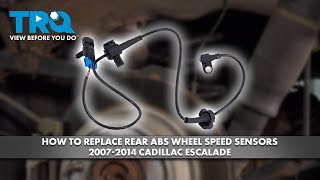
Typical fix: Replace the right rear wheel speed sensor. 🎬 Watch: Step-by-step guide to replacing the rear ABS sensor It is held in by a single T30 Torx bolt and is easily accessible after removing the wheel.
Est. part cost: $30-$90 - Damaged Wiring Harness or Connector ⚪ Low Probability The harness runs along the frame and axle, where it can be damaged by road debris, corrosion, or improper servicing. Wires can break inside the insulation near the sensor connector due to suspension movement over time.
How to confirm: Visually inspect the wiring from the sensor connector up into the main harness for any signs of chafing, breaks, or corrosion. Pay close attention to the connector pins for looseness or corrosion. A graphing multimeter can be used to check for intermittent opens/shorts while wiggling the harness.
Typical fix: Repair the damaged section of wire using solder and heat-shrink tubing or replace the pigtail connector if it is corroded.
Est. part cost: $15-$40 - Cracked or Damaged Magnetic Encoder Ring ⚪ Low Probability Though less common than debris, the ring itself can become brittle and crack or delaminate from the hub assembly, causing an erratic or missing signal that cannot be fixed by cleaning.
How to confirm: During the visual inspection for debris, carefully check the surface of the magnetic ring for any visible cracks, missing chunks, or peeling. The ring should be a solid, uniform brown/black surface.
Typical fix: The magnetic encoder ring is integrated into the wheel hub assembly. The entire right rear wheel hub assembly must be replaced.
Est. part cost: $150-$300
Rare But Worth Checking
- Failed Electronic Brake Control Module (EBCM): → Shop ABS Control Module This is extremely rare. All other possibilities (sensor, wiring, hub) should be exhaustively ruled out before considering the EBCM. This requires advanced diagnostics and confirmation that the EBCM is not receiving a signal even with a known good sensor and wiring.
Diagnosis Steps
- Connect an ABS-capable scan tool to confirm C0050 is the active code. Note any symptom bytes (e.g., 0F, 18, 5A), which strongly point to a physical issue like debris or a damaged ring.
- Use the scan tool to monitor live data from all four wheel speed sensors while driving slowly in a straight line. Confirm that the Right Rear (RR) sensor reads 0 mph or shows an erratic signal compared to the other three.
- Safely raise and support the rear of the vehicle. Remove the right rear wheel.
- Locate the wheel speed sensor on the rear of the axle housing. It is held in by a single T30 Torx bolt. Disconnect the electrical connector and remove the bolt and sensor.
- Thoroughly inspect the magnetic encoder ring on the inboard face of the wheel hub assembly. Look for a buildup of metallic 'paste' or shavings.
- If debris is present, carefully clean the ring with a soft brush, brake cleaner, and a clean rag. Ensure the ring is completely clean and dry. Do not use magnetic tools.
- While the sensor is out, inspect it for physical damage. Inspect the wiring harness and connector for corrosion, damage, or loose pins. Wiggle the harness while checking for continuity to find hidden breaks.
- Reinstall the sensor and wheel. Clear the codes with the scan tool and perform a test drive to see if the light returns.
- If the code returns and the ring was clean, the sensor itself is likely faulty. Test the sensor by swapping it with the left rear sensor to see if the code changes to C0045, or replace it.
- If a new sensor does not fix the issue, the problem likely lies in the wiring harness or the hub's encoder ring is physically damaged (requiring hub replacement).
Parts You'll Likely Need
- Rear ABS Wheel Speed Sensor
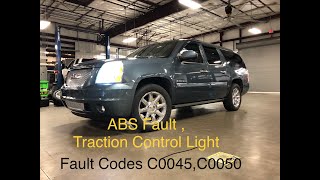
(OEM #20938121)— If cleaning the hub's magnetic ring doesn't solve the problem, the sensor itself is the next most likely component to have failed due to its exposure to the elements. It is a separate, bolt-on part. 🎬 Watch this walkthrough for C0045 and C0050 sensor replacement
Trusted brands: ACDelco, Delphi, Standard Motor Products (SMP)
OEM price range: $60-$90
Aftermarket price range: $30-$55 - Rear Wheel Hub and Bearing Assembly
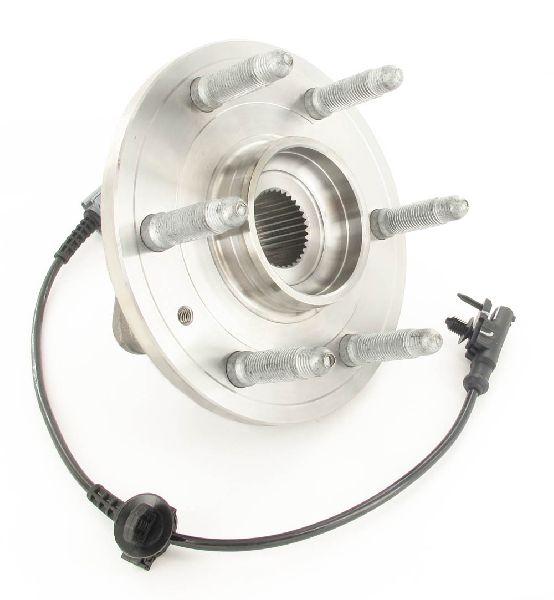
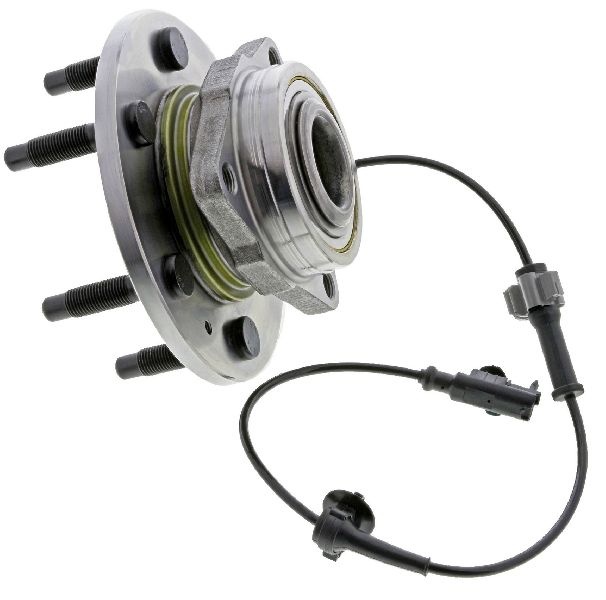
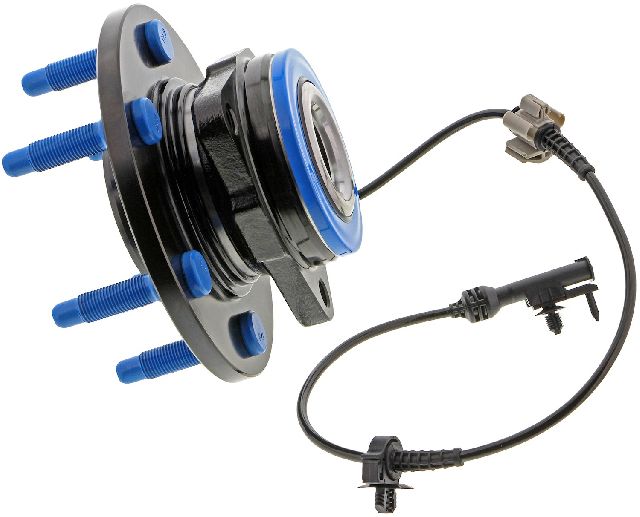
(OEM #20945052)— This is only needed if the magnetic encoder ring integrated into the hub is physically cracked or damaged, which is less common.
Trusted brands: ACDelco, Timken, MOOG, SKF
OEM price range: $250-$350
Aftermarket price range: $150-$250
Related Codes That Often Appear With This One
- C0045 — This is the code for the Left Rear Wheel Speed Sensor. If both appear, it could point to a shared wiring issue or debris on both hubs.
- U0415 — Invalid Data Received From Electronic Brake Control Module. As noted in GM TSBs, the Power Steering Control Module may set this code as a normal default action when it loses a valid wheel speed signal, sometimes causing a 'Service Steering' message.
Technical Service Bulletins (TSBs) & Recalls
- PIC5428G (and subsequent versions like 17-NA-047): EBCM Wheel Speed Sensor Diagnostic Aid. Documents that codes C0035-C0050, especially with symptom bytes 0F, 18, or 5A, are most often caused by ferrous debris on the magnetic encoder ring and provides a cleaning procedure. States that most repairs can be done without replacing parts. Manufacturer TSB Bulletin #PIC5428G specifically notes that the Electronic Brake Control Module may have these codes when the technician finds debris on the wheel bearing.
Mechanic-Grade Diagnostic Values
- WSS Circuit Continuity (EBCM to Sensor Connector) — expected: < 2.0 Ohms. Failure: A reading higher than 2.0 ohms indicates high resistance or an open in the circuit wiring.
- WSS Circuit Short to Ground — expected: OL (Over Limit / Infinite Resistance). Failure: Any continuity reading to a known good chassis ground indicates a short circuit.
- Voltage at WSS Harness Connector (Sensor Disconnected, Key On) — expected: One pin should have a reference voltage (typically 5V or 12V) and the other should have a good ground (< 1 Ohm to chassis ground).. Failure: Absence of reference voltage or high resistance on the ground pin points to a problem upstream in the wiring or EBCM. Note: Per TSB PIT4683F, the EBCM may intentionally cut this voltage if it detects a fault, so a lack of voltage does not automatically condemn the EBCM.
Hidden / Shadow Codes Worth Checking
- C0050 18: Low Signal Amplitude. This indicates the signal from the sensor is weaker than expected, which is a classic symptom of metallic debris on the magnetic encoder ring increasing the air gap. (see via Professional scan tools like the GM GDS2/Tech2 or other high-end scanners capable of reading manufacturer-specific symptom bytes.)
- C0050 5A: Signal Plausibility Failure. The EBCM has determined the signal from this sensor is not logical when compared to the other wheel speed sensors. This can be caused by a cracked encoder ring sending an erratic pattern or severe debris. (see via Professional scan tools like the GM GDS2/Tech2 or other high-end scanners capable of reading manufacturer-specific symptom bytes.)
- C0050 0F: Signal Erratic. The signal is dropping in and out. This often points to a wiring issue, such as a loose connection, corroded pin, or a wire breaking inside the insulation. (see via Professional scan tools like the GM GDS2/Tech2 or other high-end scanners capable of reading manufacturer-specific symptom bytes.)
Scan Tool Commands That Help
- GM GDS2 / Tech2: Data Display > EBCM > Wheel Speed Sensor Data — This is the primary diagnostic step. Use this to view the live signal from all four wheels simultaneously while driving. A faulty RR sensor will read 0 MPH or show erratic jumps compared to the other three, confirming the fault location before any parts are removed.
- GM GDS2 / Tech2: Clear DTC Information — Used after the physical repair (cleaning, sensor replacement, or wiring repair) is complete to erase the stored fault code and turn off the warning lights. The code will typically return immediately on the next drive cycle if the fault was not corrected.
Wiring & Ground Locations
- G110 — On the driver's side frame rail, below the driver's door, often near the body mount.. This is a primary ground location for the Electronic Brake Control Module (EBCM). Corrosion or looseness at this point can cause a variety of ABS faults, including intermittent sensor codes, as the module itself has an unstable ground reference.
- G401 — On the rear frame rail, typically on the driver's side.. This is a major chassis ground point for the rear of the vehicle. While not directly for the sensor, a poor connection here can introduce electrical noise or unstable grounds for various rear components, potentially affecting the sensor circuit's low reference side.
- RR WSS Connector — The sensor pigtail connects to the main harness via a connector clipped to the top of the frame rail, often above the rear axle and behind the splash shield.. This connector is a common failure point due to its exposure to road spray. The pins can corrode, or the wires can break inside the insulation within a few inches of the connector from constant suspension movement.
Real Owner Repair Stories
- Tahoe Yukon Forum user (2011 GMC Yukon (sister platform)) — ABS and StabiliTrak lights on, code C0050.
❌ Tried (didn't work) Cleaning the magnetic hub ring., Replacing the right rear wheel speed sensor with a new part.
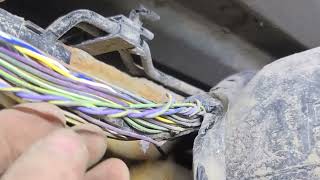
✅ What actually fixed it Found a broken wire inside the insulation about 6 inches away from the sensor's electrical connector. Splicing the wire and sealing the repair resolved the code. - Chevy Truck Forum user (2009 Chevrolet Silverado (sister platform)) — ABS and StabiliTrak lights on, codes C0050 and C0045.
❌ Tried (didn't work) Replacing both rear wheel speed sensors.
✅ What actually fixed it The problem was a poor ground connection for the EBCM itself. The user located the main EBCM ground bolt on the frame rail (G110), removed it, cleaned the contact surfaces of the frame and the wire terminal, and re-secured it. This provided a solid ground and fixed the codes. - YouTube video by Phillip Bailey (2017 GM Sierra (newer but similar architecture)) — ABS and TCS lights on, active code C0050.
❌ Tried (didn't work) A previous mechanic had replaced the sensor, but the code remained.
✅ What actually fixed it Using a graphing ohmmeter, a corroded wire causing high resistance was found within the harness near the sensor connector. The wire was visibly swollen ('ambulism'). Repairing this specific section of the wire fixed the fault.
OEM Part Supersession History
10384745, 15872664, 20763148→20938121— Standard part consolidation and potential minor improvements in materials or sealing over the production run.
Heads up: The current part number 20938121 is the correct service replacement for all 2009-2013 Escalade models and is backward compatible with the older numbers.
Diagnostic Flowchart
Other Known Issues on This Vehicle
Issues unrelated to this code that are worth knowing about as an owner of this generation:
- 2-Mode Hybrid (2ML70) Transmission Problems 🔴 High — More common at higher mileage (>100k miles). Can manifest as shuddering, lurching, or hesitation, particularly when switching between gas and electric modes.
- Accessory Power Module (APM) Failure in Cold Weather 🟠 Medium — Occurs in cold temperatures at startup, causing loss of power steering and battery charging warnings. The issue often resolves as the vehicle warms up. (Ref: Special Coverage Adjustment #14262, extending warranty to 10 years/150,000 miles for APM replacement.)
- High-Voltage Battery Pack Degradation 🔴 High — As a Nickel-Metal Hydride (NiMH) pack, it has a finite lifespan. After 10+ years, capacity is significantly reduced, leading to less electric-only time, poor fuel economy, and eventual replacement cost.
- Reduced Engine Power / Stalling 🟠 Medium — Some owners report intermittent 'Reduced Engine Power' messages, stalling, and various warning lights, which can sometimes be traced to wiring harness or module communication issues.
Used vs. New Parts: Buying Guide for This Vehicle
When a used part is the smart pick: A used wiring pigtail from a junkyard is an excellent, cost-effective choice if your original connector is physically damaged or corroded. A complete used hub assembly from a low-mileage, non-corroded donor vehicle can also be a smart buy if your original hub's magnetic tone ring is cracked, saving significant cost over a new OEM hub.
Donor-vehicle mileage cap: roughly under 75000 miles for the part to have meaningful remaining life.
What to inspect on the donor part:
- For a hub assembly, check for a clean, crack-free magnetic encoder ring.
- Spin the hub by hand; it should be smooth with no noise or grinding, which would indicate a bad bearing.
- For a wiring pigtail, ensure the plastic is not brittle and the wires are flexible with no signs of cracking or previous repairs.
- Prefer donor vehicles from dry, salt-free climates to minimize corrosion on all parts.
OEM-only on this vehicle (don't cheap out):
- Electronic Brake Control Module (EBCM) - Used or aftermarket modules are notoriously difficult to program and have high failure rates. Always buy new OEM if the module is condemned.
Aftermarket brands forum-validated for this vehicle:
- Sensors: ACDelco (OEM), Delphi, Standard Motor Products (SMP), NTK.
- Hub Assemblies: Timken, MOOG, SKF, ACDelco.
Brands owners have reported issues with on this vehicle:
- Unbranded 'white-box' sensors and hub assemblies from online marketplaces often have poor quality control, leading to incorrect signals, previous failure, or fitment issues.
Real Owner Stories
Aggregated from forums and TSBs cited above. Mileages and costs reflect what owners reported in those sources.
2007 GMC Yukon (GMT900 Platform)
Symptoms: Intermittent traction control and ABS faults.
What fixed it: Replacement of the rear wheel speed sensor. The sensor is located on the axle housing and the connector is mounted on the frame rail.
Source hint: YouTube: FAULT CODES C0045, C0050 ... 2007-2014 GMC AND CHEVY. WHEEL SPEED SENSOR REPLACEMENT.
2009-2013 Cadillac Escalade Hybrid
Symptoms: ABS warning light, StabiliTrak light, and 'Service StabiliTrak' message; symptom bytes 18 (low amplitude) or 5A (implausible signal) present.
What fixed it: Cleaning the magnetic encoder ring on the inboard side of the hub assembly using a soft brush, compressed air, and brake cleaner to remove ferrous debris.
Source hint: TSB PIC5428G (and subsequent versions like 17-NA-047): EBCM Wheel Speed Sensor Diagnostic Aid
Related OBD-II Codes
Frequently Asked Questions
Does TSB PIC5428G apply to my 2009-2013 Cadillac Escalade Hybrid regarding the C0050 code?
I have a 'Service StabiliTrak' message on my Escalade Hybrid's dash; is this related to the C0050 code?
Can I fix the C0050 code on my Escalade without buying new parts?
What tool do I need to remove the right rear wheel speed sensor on this vehicle?
If cleaning the magnetic ring doesn't work, how can I be sure the sensor is actually bad?
Is the magnetic encoder ring a separate part I can replace on my Escalade Hybrid?
Helpful Videos
Used OEM Parts in Stock
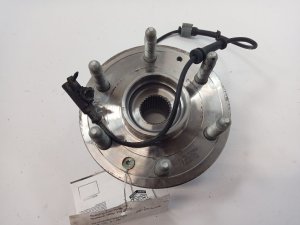
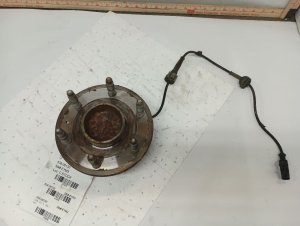
New Aftermarket Parts Available
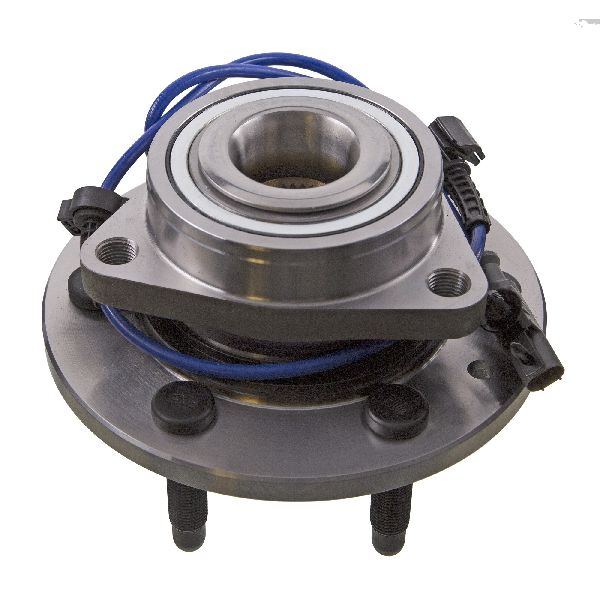
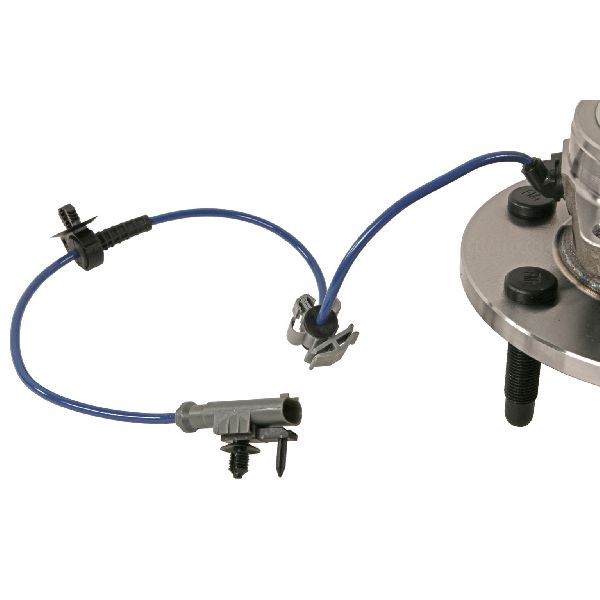


The information in this article is provided for general reference and educational purposes only. Vehicle specifications, procedures, and part compatibility can vary by production date, trim level, and region. Always consult your vehicle's factory service manual and verify part numbers before purchasing or performing repairs. Safety-critical components such as airbags, seat belts, and braking systems should be installed by a qualified professional.
- Cadillac Escalade Hybrid:
- 🧭 Diagnostic Flowchart
- 🎬 Helpful Videos
- 🛍️ Shop This Part
- What's Unique About the 2009-2013 Cadillac Escalade Hybrid
- Symptoms You May Notice
- Most Likely Causes
- Rare But Worth Checking
- Diagnosis Steps
- Parts You'll Likely Need
- Related Codes That Often Appear With This One
- Technical Service Bulletins (TSBs) & Recalls
- Mechanic-Grade Diagnostic Values
- Hidden / Shadow Codes Worth Checking
- Scan Tool Commands That Help
- Wiring & Ground Locations
- Real Owner Repair Stories
- OEM Part Supersession History
- Other Known Issues on This Vehicle
- Used vs. New Parts: Buying Guide for This Vehicle
- Real Owner Stories
- 2007 GMC Yukon (GMT900 Platform)
- 2009-2013 Cadillac Escalade Hybrid
- Related OBD-II Codes
- Frequently Asked Questions
- 🎟️ Get 5% Off