

C0050 on 2005-2010 Chevrolet Cobalt: Right Rear Wheel Speed Sensor Causes and Fixes
On a 2005-2010 Cobalt, code C0050 is almost always caused by a faulty right rear wheel hub assembly. The integrated magnetic ring gets contaminated with debris or fails, disrupting the ABS signal. The fix is to replace the entire hub assembly, which costs about $75-$180 for the part. Before ordering, verify if you have 4-lug or 5-lug wheels.
- Code C0050 means your Cobalt's ABS and traction control are disabled due to a fault with the right rear wheel speed sensor.
- The most likely cause is a failed wheel hub assembly, not just a simple sensor.
- Before ordering parts, confirm if your Cobalt has 4-lug or 5-lug wheels, as the hubs are different.
- Replacing the entire right rear wheel hub assembly is the most common and reliable fix.
- While you can drive the vehicle, do so with extra caution as key safety systems are offline.
What's Unique About the 2005-2010 Chevrolet Cobalt
The Chevrolet Cobalt, like many other GM vehicles from this era built on the Delta platform, uses a sealed rear wheel hub assembly where the wheel speed sensor and its magnetic encoder ring are integrated. This design is a known weak point. A widely circulated GM Technical Service Bulletin (PIC5428G, later superseded by 17-NA-047) for similar models points to ferrous metallic debris accumulating on this magnetic ring, which disrupts the sensor's reading. Therefore, the problem is often not the sensor electronics but the mechanical interface of the magnetic ring on the hub itself, leading to the entire hub assembly requiring replacement.
Symptoms You May Notice
- ABS light is on
- Traction Control or Stabilitrak light is on
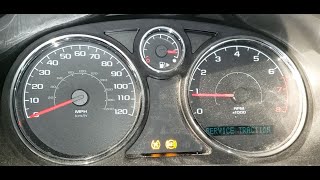
- "Service Traction System" or similar message on the driver information center
- ABS system does not activate during hard braking (wheels may lock and skid)
- Traction control does not activate on slippery surfaces
- Cruise control may be inoperative
- Hard steering or "Service Suspension Control" messages (as noted in related GM platforms)
- Assuming the sensor is a separate part that can be replaced. On the Cobalt's rear axle, the sensor is integrated into the hub assembly and is not serviced separately.
- Replacing the EBCM before thoroughly testing the hub and wiring.
- Replacing the hub assembly without first checking for a simpler wiring fault.
Most Likely Causes
- Failed Right Rear Wheel Hub & Bearing Assembly 🔴 High Probability → Shop Hub Assembly The integrated magnetic encoder ring on the hub is susceptible to contamination from metallic debris (brake dust, rust) or cracking, which causes an erratic or lost signal. This is a well-documented failure pattern on many GM platforms of this era sharing the Delta chassis.
How to confirm: With the vehicle raised, remove the wheel and brake rotor. Visually inspect the magnetic ring on the inboard side of the hub for a build-up of metallic 'fuzz' or visible cracks. Use an ABS-capable scan tool to monitor live data; if the right rear wheel shows 0 MPH or an erratic signal while the others read correctly, the hub is faulty.
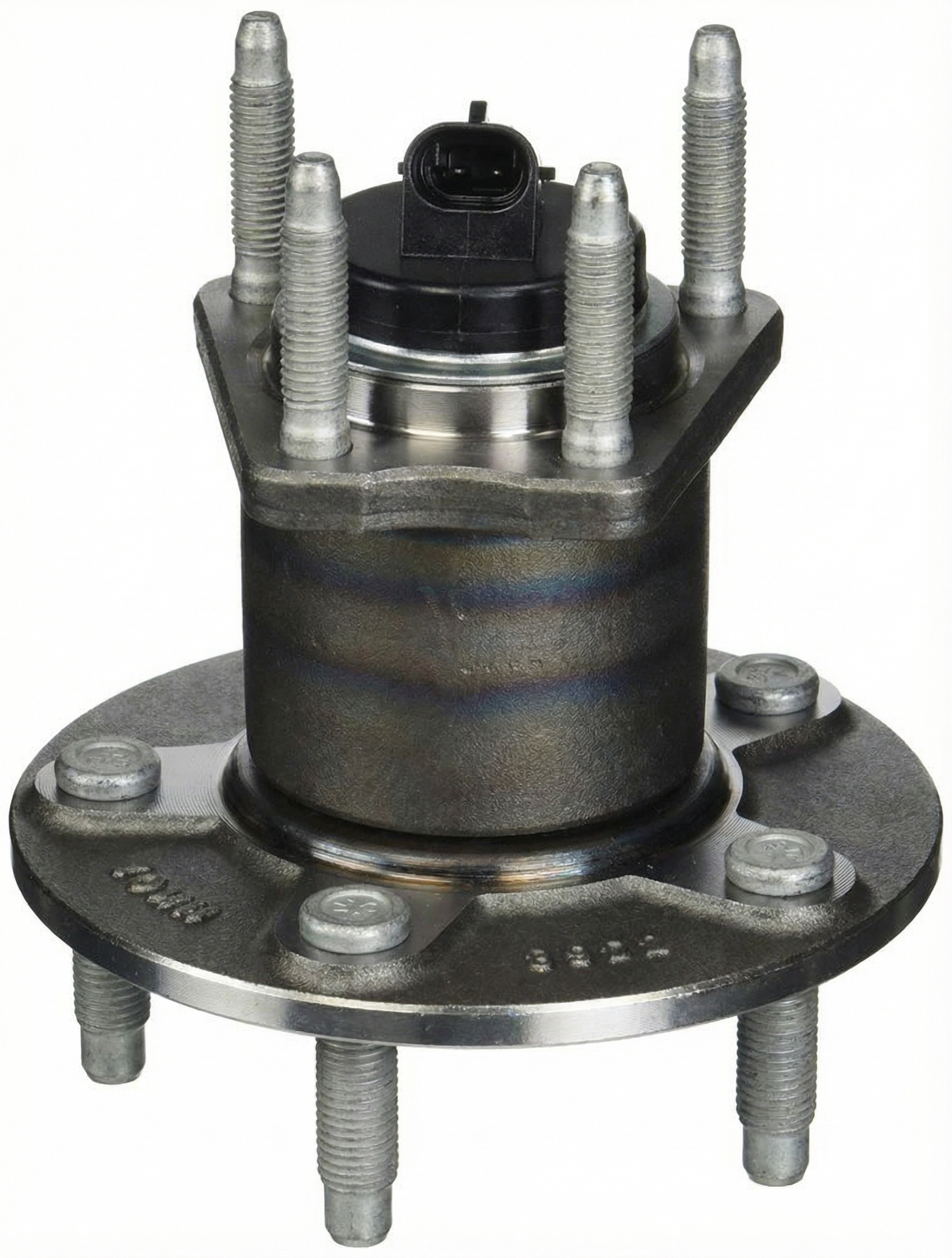
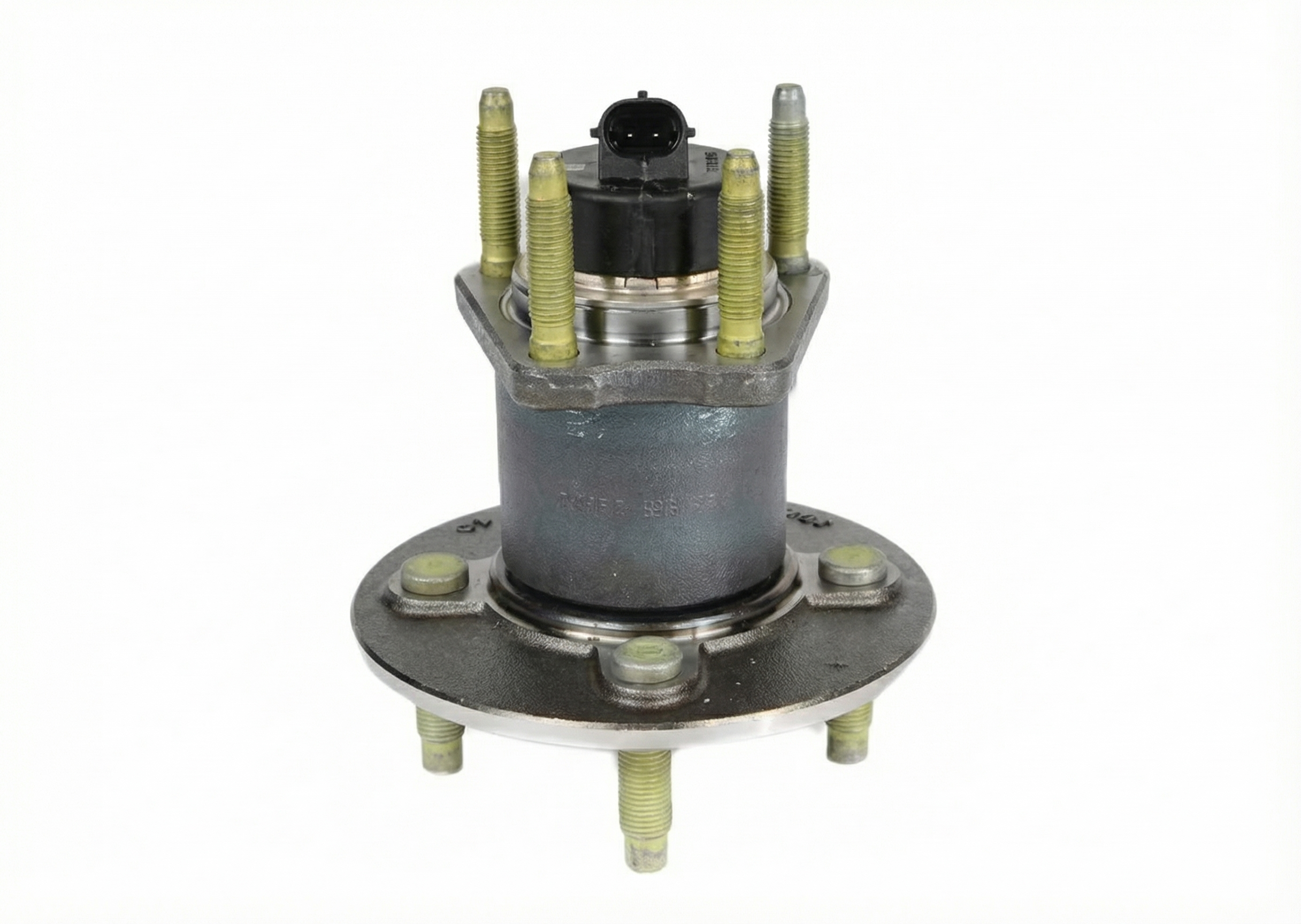
Typical fix: Replace the entire right rear wheel hub and bearing assembly. This part is a single, sealed unit that includes the bearing, hub, and the new sensor/encoder ring.
Est. part cost: $75-$180 - Damaged Wiring or Connector 🟡 Medium Probability The wiring harness leading to the wheel hub is exposed to the elements, road debris, and suspension movement, which can cause chafing, corrosion, or breaks in the wires over time. The pigtail connector right at the hub is a common failure point.
How to confirm: Visually inspect the wiring harness from the wheel hub up into the vehicle body for any signs of physical damage, melting, or corrosion at the connector. Wiggle the harness while monitoring live data on a scan tool to see if the signal cuts in and out. Use a multimeter to check for continuity and shorts to ground/power in the sensor circuit.
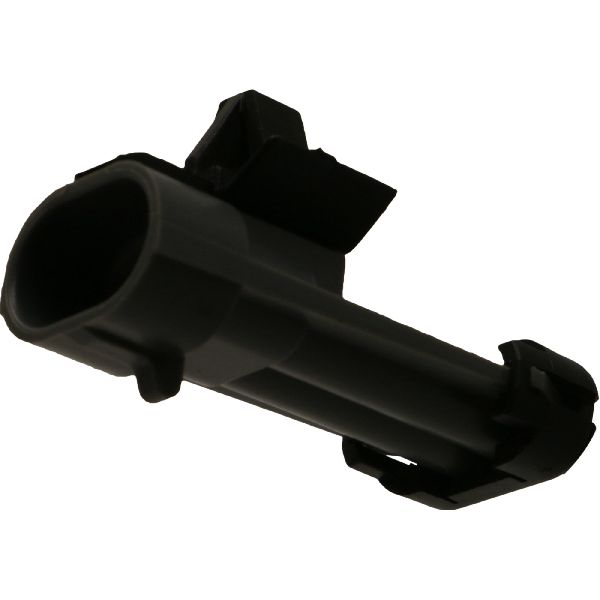
Typical fix: Repair the damaged section of wiring or replace the pigtail connector (e.g., ACDelco PT2298 / GM 88862217). Ensure the repair is sealed against moisture.
Est. part cost: $15-$50
Rare But Worth Checking
- Faulty Electronic Brake Control Module (EBCM): → Shop ABS Control Module This is very uncommon. The EBCM should only be suspected after the wheel hub assembly and wiring have been thoroughly tested and confirmed to be good. An EBCM failure will typically set other codes as well or show communication errors. Manufacturer TSB Bulletin #PIT5499B notes that technicians should specifically inspect the EBCM connector for water intrusion or corrosion when codes like C0050 are present.
Diagnosis Steps
- Connect an ABS-capable scan tool to confirm the C0050 code is present and check for any specific symptom bytes. Common GM bytes include '0F' (erratic signal, often debris), '18' (low signal amplitude, often a large air gap or wiring issue), and '5A' (signal not plausible, often a cracked ring).
- View live data from all four wheel speed sensors while driving slowly (over 5 mph) in a straight line. Confirm that the right rear sensor reads 0 MPH, jumps erratically, or lags significantly behind the other three.
- Safely raise and support the rear of the vehicle. Remove the right rear wheel.
- Thoroughly inspect the wiring harness and connector leading to the hub for any visible damage, corrosion, or loose connections. Pay close attention to the first 4-6 inches of wire from the connector. As suggested in TSB Bulletin #PIT5427B, also inspect intermediate connectors (like the X411) for damage or corrosion.
- Remove the brake caliper and rotor to access the wheel hub assembly.
- Carefully inspect the magnetic encoder ring on the inboard side of the hub. Look for a build-up of metallic shavings or brake dust. Also, check for any cracks or missing sections of the ring.
- If significant debris is present, you can attempt to clean it with a soft brush and brake cleaner. Reassemble and test drive to see if the code returns. Note that this may only be a temporary fix if the bearing seal that allowed the debris in has failed.
- If the ring is cracked, the wiring is confirmed good, the hub has excessive play (indicating a bad bearing), or if cleaning does not resolve the issue 🎬 See why these specific codes trigger on GM vehicles, the entire wheel hub assembly must be replaced.
Parts You'll Likely Need
- Rear Wheel Hub and Bearing Assembly
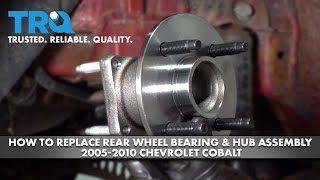
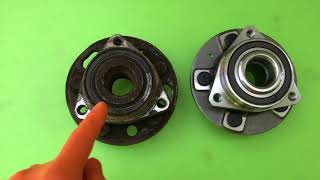
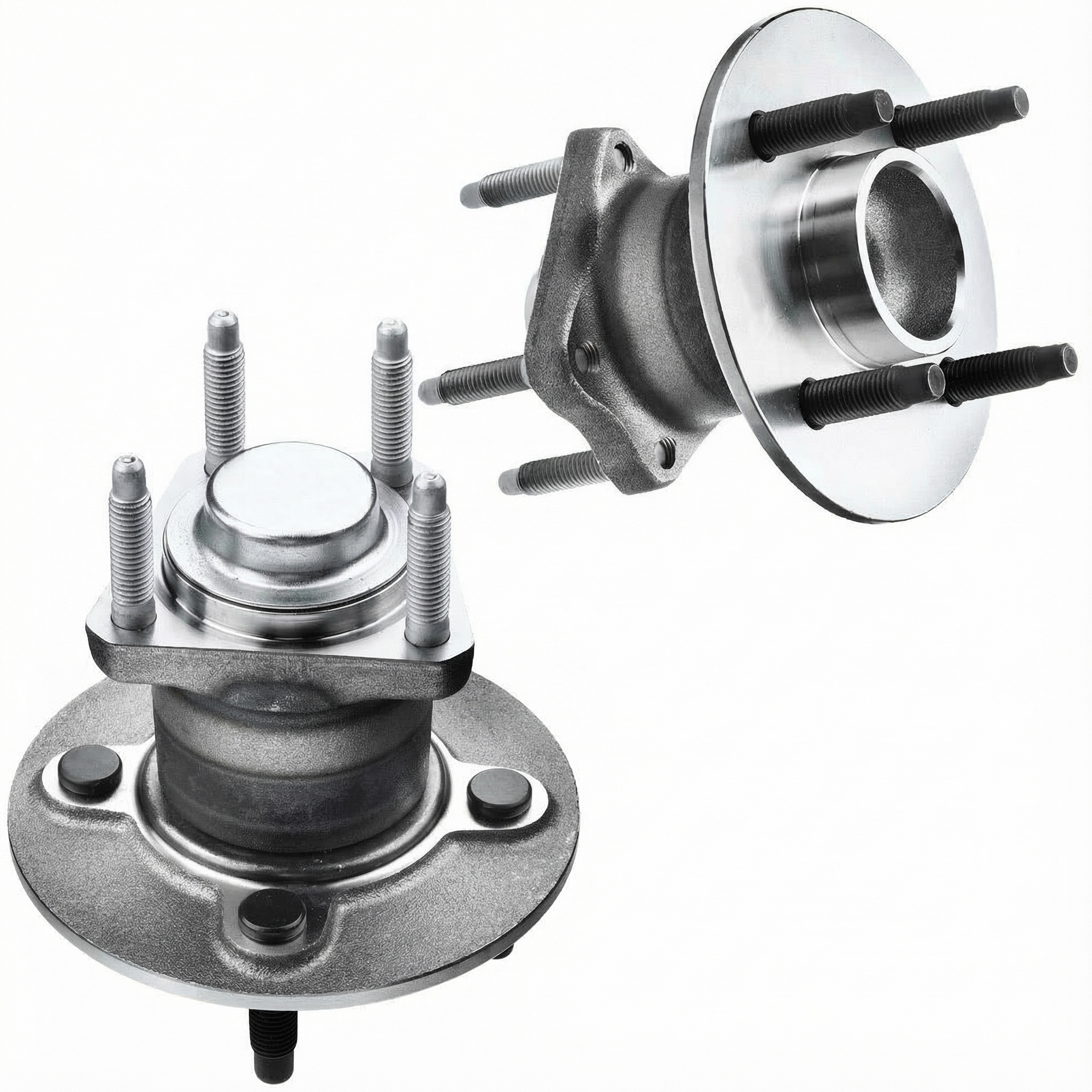
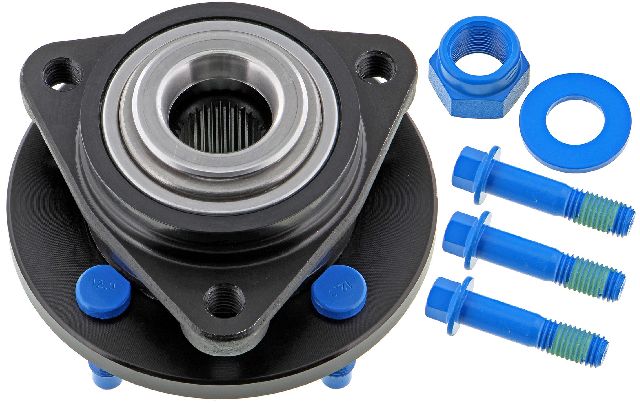
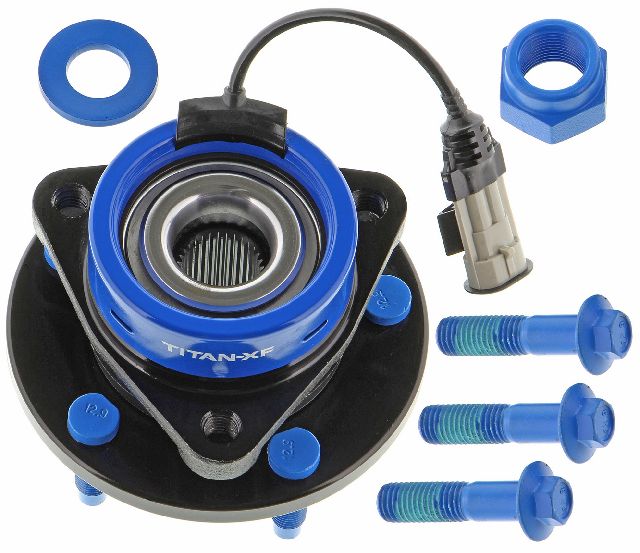
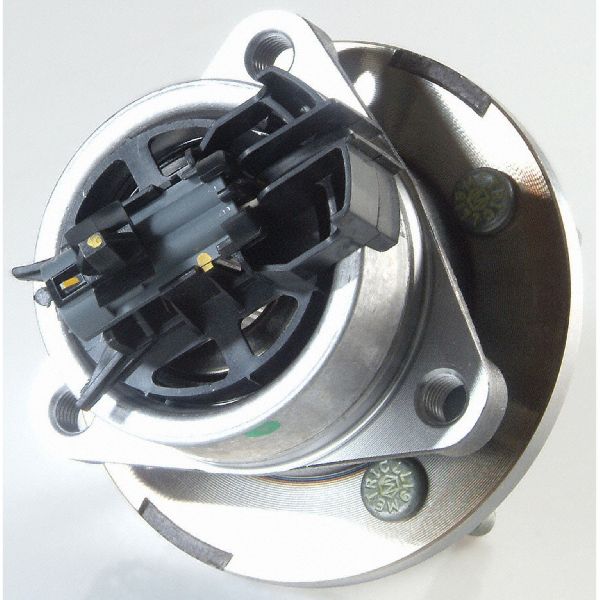
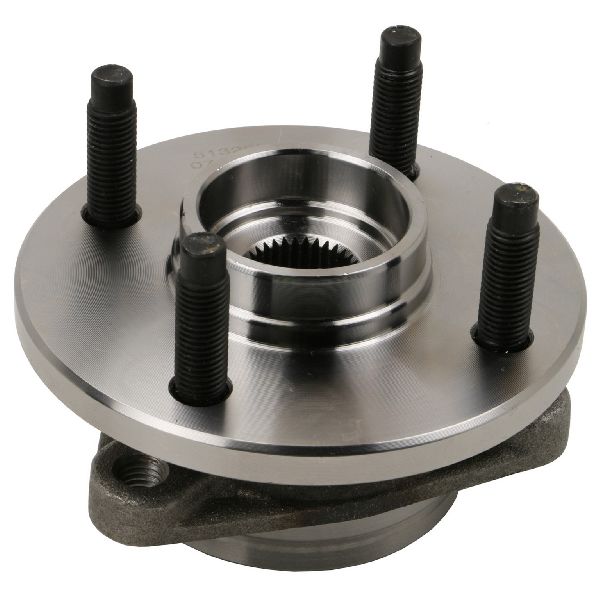
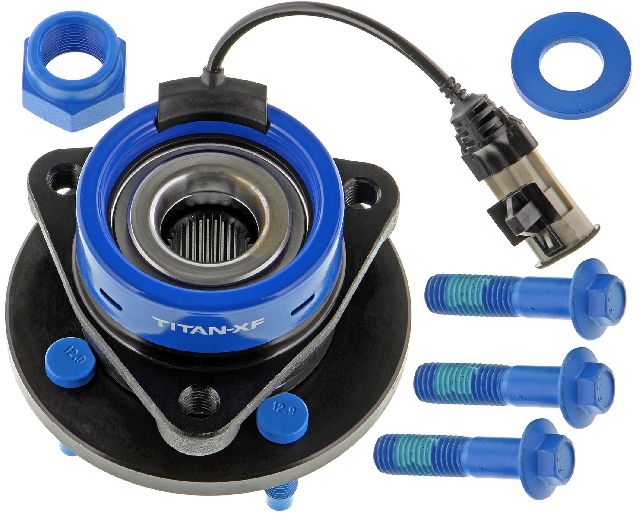
(OEM #512250 (for 5-lug with ABS), 512247 (for 4-lug with ABS))— This is the most common failure point. The part is a sealed unit containing the bearing, hub, and the integrated ABS sensor/encoder ring that fails. Important: Cobalts came with both 4-lug and 5-lug wheels. Base models often have 4-lugs, while SS and other higher trims have 5-lugs. Verify which your car has before ordering. 🎬 Follow this step-by-step rear wheel hub replacement walkthrough
Trusted brands: ACDelco, Timken, MOOG, SKF, MasterPro
OEM price range: $130-$180
Aftermarket price range: $75-$150
Related Codes That Often Appear With This One
- C0045 — This is the code for the Left Rear Wheel Speed Sensor. It's common for both rear hubs to fail around the same time due to similar wear and exposure.
- U0415 — This code indicates 'Invalid Data Received From Electronic Brake Control Module'. It can be set in the Power Steering Control Module when a wheel speed sensor signal is lost, as the power steering system may use this data. Fixing the C0050 code will typically resolve this as well.
Technical Service Bulletins (TSBs) & Recalls
- PIC5428G / 17-NA-047: While not listing the Cobalt specifically, this GM TSB (PIC5428G was superseded by 17-NA-047) addresses codes C0035-C0050 on a wide range of GM vehicles from the same era. It details the common issue of ferrous debris accumulating on the magnetic encoder ring of the wheel hub and provides diagnostic/cleaning instructions.
- TSB Bulletin #PIT5499B: This bulletin notes that when C0050 is found alongside a "Service Trailer Brake" message or full master cylinder fluid levels, technicians should inspect the EBCM connector for water intrusion or corrosion.
- TSB Bulletin #PIT5427B: Addresses symptoms like "Hard Steering" or "Service Suspension Control" where C0050 is present, advising an inspection of the X411 connector for damage or corrosion.
Platform-Specific Known Issues
- Owner Experience: Hub Replacement Solves Multiple Lights: A user on Chevy HHR Network with a similar platform vehicle reported ESC, traction, and ABS lights with code C0050. After replacing the right rear hub assembly, the problem persisted. The community advised that the wiring to the EBCM was the next logical step, as a bad pin or chafed wire could mimic a hub failure. This highlights the importance of checking wiring even after a part replacement.
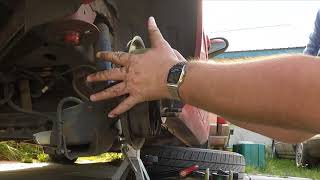
- DIY Video Takeaway: A YouTube repair video focusing on GM C0045/C0050 codes emphasizes that if a speed sensor replacement doesn't fix the issue, the problem is almost certainly the hub's magnetic ring, which may be broken up or worn off, preventing the sensor from getting a reading.
Mechanic-Grade Diagnostic Values
- Active Sensor Reference Voltage — expected: Approximately 11-12 Volts DC with key on, engine off.. Failure: If voltage is missing at the sensor connector, the fault is upstream in the wiring or the EBCM itself. The voltage should fluctuate slightly or show a square wave on a scope when the wheel is spun.
Hidden / Shadow Codes Worth Checking
- C0050 00: Circuit Malfunction. Indicates a general electrical fault like an open wire, short-to-ground, or high resistance in the sensor circuit. This often points to a wiring problem rather than the hub itself. (see via GM-specific scan tool (e.g., Tech2, GDS2) or high-end professional scanner.)
- C0050 06: Low Voltage / Open. The EBCM has detected that the circuit voltage is below the expected threshold, indicating an open circuit or a short to ground. (see via GM-specific scan tool (e.g., Tech2, GDS2) or high-end professional scanner.)
- C0050 0F: Erratic Signal. The signal is present but inconsistent, dropping out, or jumping. This strongly suggests a mechanical issue like metallic debris on the encoder ring, a failing bearing causing wobble, or a cracked ring. (see via GM-specific scan tool (e.g., Tech2, GDS2) or high-end professional scanner.)
- C0050 18: Low Signal Amplitude. The signal from the sensor is too weak. This can be caused by an excessive air gap between the sensor and the encoder ring, or internal sensor failure. (see via GM-specific scan tool (e.g., Tech2, GDS2) or high-end professional scanner.)
- C0050 5A: Signal Not Plausible. The signal is present and consistent, but it doesn't make sense compared to the other wheel speed sensors (e.g., reading 5 MPH while others read 50 MPH). This often points to a damaged or cracked encoder ring. (see via GM-specific scan tool (e.g., Tech2, GDS2) or high-end professional scanner.)
Scan Tool Commands That Help
- Tech2 / GDS2 / ABS-capable scanner: Live Data Graphing — This is the primary diagnostic function. Graphing all four wheel speed sensors on one screen while driving allows a technician to instantly see if the right rear sensor is dropping out, reading zero, or lagging behind the others, confirming the fault location without ambiguity.
Wiring & Ground Locations
- EBCM Connector — The Electronic Brake Control Module (EBCM) is located in the engine compartment, on the driver's side, near the strut tower and underhood fuse block.. This is where the sensor circuit terminates. Testing can be done here to isolate a wiring fault from a module fault. The key pins for the Right Rear Wheel Speed Sensor are Pin 19 (Brown wire, Signal) and Pin 20 (Orange wire, Low Reference).
- Transmission Case Ground — A major ground point with multiple black wires is bolted to the top of the transmission case, under the main engine harness.. This ground is critical for multiple modules, including potentially the EBCM. Corrosion or breakage at this point is a common Cobalt issue that can cause unstable module operation, communication errors (U-codes), and phantom faults that can be misdiagnosed as a bad sensor or module.
- Engine Bay Grounds — Other key grounds are located behind the driver's side fuse panel, under the driver's side headlamp assembly, and on the frame rail.. Poor grounding anywhere in the system can introduce electrical noise and voltage drops, potentially affecting the sensitive readings of the ABS system and EBCM.
Real Owner Repair Stories
- Cobalt SS Network forum user (2008 Chevrolet Cobalt SS Turbocharged) — While driving, speedometer and tachometer went to zero, 'Power Steering' message appeared on DIC. After shutting off, car would not crank, just a click. Scan tool could not connect.
❌ Tried (didn't work) Checking basic ECU connectors and grounds.
✅ What actually fixed it The dealer diagnosed a failed Electronic Brake Control Module (EBCM). The EBCM had failed in such a way that it took down the entire GMLAN data bus, preventing the ECU from communicating and leading to a no-start condition. This illustrates that a C0050-related EBCM failure can be far more severe than just an ABS light. - Chevy HHR Network forum user (Chevrolet HHR (Delta Platform sibling)) — ABS and Traction Control lights on with code C0050 00.
❌ Tried (didn't work) Replacing the right rear wheel hub assembly did not clear the code.
✅ What actually fixed it The symptom byte '00' indicated a circuit malfunction. The final diagnosis was a fault in the wiring between the hub connector and the EBCM, or a bad pin at the EBCM connector itself. This highlights that even with a new hub, the code can persist if the wiring is the true cause. - YouTube Mechanic Repair Video (2007 Chevrolet Cobalt) — No communication with TCM (U0101), speedometer not working, no start.
❌ Tried (didn't work) Inspecting the speed sensor and its immediate wiring.
✅ What actually fixed it The main ground bundle on top of the transmission case had corroded and the wires had broken off inside the terminal. Repairing this ground connection restored communication and fixed the no-start condition. This shows how a seemingly unrelated ground can cause major data communication failures that manifest as symptoms in other systems. - NHTSA ODI #11228687 — An owner reported that multiple diagnostic codes appeared, including C0035, C0040, C0050, and U0415, leading to illuminated warning lights.
- NHTSA ODI #10763888 — An owner reported that a diagnosis at a dealership for code C0050 identified a problem as a faulty Power Steering Control Module (PSCM), requiring the replacement of the entire steering column.
Model Year Variations Within This Range
- 2005-2010: Base models are typically equipped with 4-lug (4x100 bolt pattern) hubs, while SS and higher trims use 5-lug (5x110 bolt pattern) hubs. The hubs are not directly interchangeable. Always verify your vehicle's lug count before ordering parts.
- 2008-2010: The SS Turbocharged (SS/TC) models with the LNF engine have a larger front axle spline compared to the earlier SS Supercharged (LSJ) and base models. While this primarily affects the front hubs, it's a critical distinction when identifying parts for SS models from this period.
Diagnostic Flowchart
Other Known Issues on This Vehicle
Issues unrelated to this code that are worth knowing about as an owner of this generation:
- Electric Power Steering (EPS) Failure 🔴 High — Very common across all model years. Can result in a sudden loss of steering assist, making the vehicle difficult to steer at low speeds. (Ref: NHTSA Recalls: 10V073000, 14V153000. GM offered an extended warranty and multiple recalls to replace the EPS motor.)
- Ignition Switch Failure 🔴 High — Extremely common and dangerous, affecting 2005-2007 models most severely. Weight on the keychain or a jarring event could cause the switch to move out of the 'Run' position, shutting off the engine and disabling airbags. (Ref: NHTSA Recalls: 14V047000, 14V171000. This was part of a massive, high-profile GM recall to replace the ignition switch and cylinder.)
- Fuel Leaks 🔴 High — Common enough to warrant a recall. The plastic supply or return tube on the fuel pump module could crack, leading to a fuel leak. (Ref: NHTSA Recall: 09V419000.)
- Key Can Be Removed While Not in Park 🟠 Medium — Widespread issue across many GM models of the era, including the Cobalt. Allows the key to be removed from the ignition when the vehicle is not in 'Park', creating a rollaway risk. (Ref: NHTSA Recall: 14V400000 (part of the larger ignition recall campaign).)
- Timing Chain Tensioner/Guide Failure 🟠 Medium — A known issue on the 2.2L and 2.4L Ecotec engines. A failing tensioner can cause a rattling noise on startup, and if left unaddressed, can lead to the chain skipping time or breaking, causing significant engine damage.
Used vs. New Parts: Buying Guide for This Vehicle
When a used part is the smart pick: A used wiring harness pigtail from a junkyard is an excellent, cost-effective repair for a damaged connector. A used EBCM is a potential money-saver but carries significant risk; it should only be considered if the part number is an exact match and you have access to a technician who can attempt programming.
Donor-vehicle mileage cap: roughly under 80000 miles for the part to have meaningful remaining life.
What to inspect on the donor part:
- For a wiring pigtail: Ensure the connector's locking tab is intact, there's no visible corrosion on the pins, and the wires are not brittle or cracked.
- For an EBCM: Part number must match EXACTLY. Inspect for any signs of water damage or physical trauma to the case or connector.
- NEVER buy a used wheel hub assembly. The bearing is a wear item and has no verifiable remaining life.
OEM-only on this vehicle (don't cheap out):
- No parts are strictly 'OEM-only', but using a new, quality aftermarket hub assembly (e.g., Timken, MOOG, SKF) is highly recommended over a no-name brand or a used part.
Aftermarket brands forum-validated for this vehicle:
- Timken (Hub Assembly)
- MOOG (Hub Assembly)
- SKF (Hub Assembly)
- ACDelco (OEM and Professional aftermarket lines for Hubs and Wiring)
Brands owners have reported issues with on this vehicle:
- Be cautious of unbranded, low-cost hub assemblies from online marketplaces, as they often use inferior bearings and encoder rings that can fail prematurely.
Real Owner Stories
Aggregated from forums and TSBs cited above. Mileages and costs reflect what owners reported in those sources.
2006-2011 Chevrolet HHR
Symptoms: The owner reported ESC, traction, and ABS lights were all illuminated with code C0050 present.
What fixed it: While the hub is the standard fix, this specific case required diagnosing the wiring to the EBCM after a hub replacement failed to clear the code, suggesting a bad pin or chafed wire.
Source hint: chevyhhr.net: A thread titled 'DTC code c0050 Rear Hub Replaced code on'
2005-2010 Chevrolet Cobalt
Symptoms: ABS and traction control lights on; the speed sensor was unable to get a reading.
What fixed it: Replacement of the wheel hub assembly because the magnetic ring was broken up or worn off.
Source hint: A YouTube repair video focusing on GM C0045/C0050 codes
Related OBD-II Codes
Frequently Asked Questions
Does GM TSB 17-NA-047 apply to my Chevrolet Cobalt regarding the C0050 code?
Can I just replace the sensor, or do I need the whole hub assembly for my Cobalt?
My Cobalt has an ABS light and the cruise control stopped working. Are these related?
Is there a specific pigtail connector part number if my wiring is corroded?
Could my 'Service Traction System' message be caused by something other than the hub?
Helpful Videos
Used OEM Parts in Stock
New Aftermarket Parts Available

The information in this article is provided for general reference and educational purposes only. Vehicle specifications, procedures, and part compatibility can vary by production date, trim level, and region. Always consult your vehicle's factory service manual and verify part numbers before purchasing or performing repairs. Safety-critical components such as airbags, seat belts, and braking systems should be installed by a qualified professional.
- Chevrolet Cobalt:
- 🧭 Diagnostic Flowchart
- 🎬 Helpful Videos
- 🛍️ Shop This Part
- What's Unique About the 2005-2010 Chevrolet Cobalt
- Symptoms You May Notice
- Most Likely Causes
- Rare But Worth Checking
- Diagnosis Steps
- Parts You'll Likely Need
- Related Codes That Often Appear With This One
- Technical Service Bulletins (TSBs) & Recalls
- Platform-Specific Known Issues
- Mechanic-Grade Diagnostic Values
- Hidden / Shadow Codes Worth Checking
- Scan Tool Commands That Help
- Wiring & Ground Locations
- Real Owner Repair Stories
- Model Year Variations Within This Range
- Other Known Issues on This Vehicle
- Used vs. New Parts: Buying Guide for This Vehicle
- Real Owner Stories
- 2006-2011 Chevrolet HHR
- 2005-2010 Chevrolet Cobalt
- Related OBD-II Codes
- Frequently Asked Questions
- 🎟️ Get 5% Off