

C0050 on 2005-2009 Chevrolet Equinox: Right Rear Wheel Speed Sensor Circuit Causes and Fixes
On a 2005-2009 Equinox, code C0050 usually points to a problem with the right rear wheel's speed signal. The most common cause is not the sensor, but a contaminated or cracked magnetic ring on the wheel hub assembly. Cleaning the ring may fix it; otherwise, replacing the wheel hub assembly (~$70-$160) or the sensor itself (~$25-$75) is the solution.
- Code C0050 disables your ABS and StabiliTrak systems, so drive with extra caution, especially in poor weather.
- Before buying any parts, remove the right rear brake rotor and inspect the magnetic ring on the wheel hub. Cleaning off metallic debris is a common, no-cost fix.
- If the magnetic ring is cracked, you must replace the entire wheel hub assembly, not just the sensor.
- If the ring is clean and intact, the wheel speed sensor is the next likely part to replace.
- Accessing the rear sensor requires removing the wheel, caliper, and rotor, making it a moderately difficult DIY job.
What's Unique About the 2005-2009 Chevrolet Equinox
The first-generation Equinox and its platform-mates (Pontiac Torrent, Saturn Vue) use a magnetic encoder ring that is integrated directly into the wheel hub and bearing assembly. This design is a known weak point. The exposed magnetic ring is highly susceptible to collecting metallic road debris and brake dust, which disrupts the sensor's reading and is a very common cause for C0050. The ring can also become brittle, crack, and have pieces flake off, creating a gap in the signal. Because of this, a thorough inspection and cleaning of the hub's encoder ring is a critical first diagnostic step before replacing any parts.
Symptoms You May Notice
- ABS warning light is on
- StabiliTrak or Traction Control (TC) warning light is on
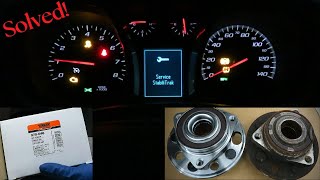
- "Service StabiliTrak" or similar message on the driver information center
- ABS system does not activate during hard braking (wheels may lock up)
- Traction control does not activate on slippery surfaces
- A grinding or pulsating brake pedal at low speeds as the ABS incorrectly activates
- Replacing the wheel speed sensor without first inspecting the magnetic encoder ring on the wheel hub. Many owners replace the sensor only to find the problem persists because the issue was debris or a crack on the hub's ring.
Most Likely Causes
- Debris on or Damage to the Wheel Hub's Magnetic Encoder Ring 🔴 High Probability The magnetic encoder ring is part of the wheel hub assembly and is exposed to the elements. It commonly attracts metallic 'fuzz' from brakes and road debris, which interferes with the sensor's signal. The ring can also develop cracks and flake off over time, creating a signal gap.
How to confirm: Remove the brake rotor and visually inspect the dark, magnetic strip on the inboard side of the wheel hub. Look for a build-up of metallic debris or any visible cracks or missing chunks in the ring. A flashlight and a small mirror can help. 🎬 See how to diagnose and fix common ABS and StabiliTrak issues. You can sometimes inspect it without full disassembly by looking behind the hub assembly from under the car.
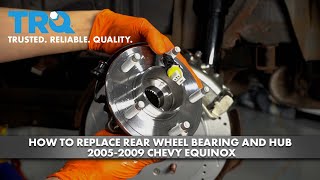
Typical fix: First, attempt to gently clean the debris off the ring with a soft brush and brake cleaner. If the code returns or the ring is physically cracked or has missing pieces, the entire wheel hub and bearing assembly must be replaced. 🎬 Watch: How to replace the rear wheel hub assembly.
Est. part cost: $70-$160 - Failed Right Rear Wheel Speed Sensor 🟡 Medium Probability → Shop ABS Wheel Speed Sensor The sensor lives in a harsh environment behind the wheel, exposed to heat, water, and vibration, which can cause it to fail electronically over time. It can also be very difficult to remove due to rust and corrosion, sometimes breaking during removal.
How to confirm: After confirming the encoder ring is clean and intact, use a scan tool to monitor live data from the right rear wheel speed sensor while spinning the wheel or driving. If the reading is zero, erratic, or doesn't change with speed while other wheels report correctly, the sensor has likely failed. Alternatively, you can test the sensor's resistance with a multimeter; compare the reading to the left rear sensor. A significant difference or an open circuit (OL) indicates a bad sensor.
Typical fix: Replace the right rear wheel speed sensor. 🎬 Watch: Step-by-step guide to replacing the rear wheel speed sensor. This requires removing the wheel, brake caliper, and rotor to access the sensor, which is typically held by a single T30 Torx or Allen bolt. The sensor can be very difficult to remove from the hub due to corrosion.
Est. part cost: $25-$75 - Damaged Wiring or Connector ⚪ Low Probability The wiring harness leading to the wheel speed sensor is susceptible to damage from road debris, corrosion from water and salt, or chafing against suspension components. The plastic clips holding the wire can break, allowing it to contact moving parts.
How to confirm: Visually inspect the entire length of the wiring from the sensor to where it enters the main vehicle body. Check for frayed wires, melted insulation, or green/white corrosion inside the connector plug. Pay close attention to where the harness is clipped to the body and suspension.
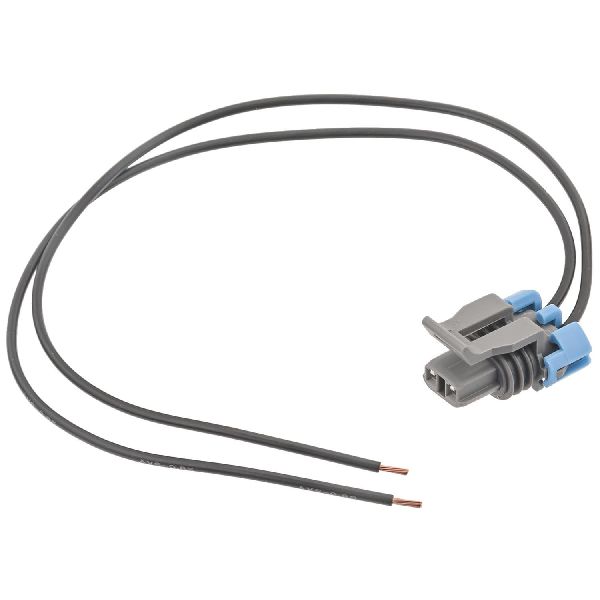
Typical fix: Repair the damaged section of wire or replace the sensor's pigtail connector if it is corroded. Ensure the repair is sealed against moisture. Zip ties can be used to secure the harness if the original clips are broken.
Est. part cost: $15-$40
Rare But Worth Checking
- Failed Electronic Brake Control Module (EBCM): → Shop ABS Control Module This is an uncommon cause. The EBCM is the computer for the ABS system. It would typically set multiple wheel speed sensor codes or communication codes, not just C0050, if it were failing.
Diagnosis Steps
- Connect an OBD-II scanner capable of reading ABS codes to confirm C0050 is the active code. Check for any other codes.
- Use the scanner's live data function to monitor the speeds of all four wheels while driving in a straight line. Observe if the Right Rear (RR) wheel speed reads 0 mph, is erratic, or does not match the other sensors.
- Safely raise and support the vehicle. Remove the right rear wheel.
- Visually inspect the wheel speed sensor wiring harness and connector for any signs of damage, chafing, or corrosion. Ensure it is properly clipped and secured away from moving parts.
- Remove the brake caliper and brake rotor to gain access to the wheel hub assembly.
- Thoroughly inspect the magnetic encoder ring on the inboard side of the hub. Look for metallic debris stuck to it or any physical cracks or missing sections.
- If debris is present, clean it off gently with a soft brush and brake cleaner. Reassemble and test drive to see if the code clears. If the ring is cracked, the hub must be replaced.
- If the ring is clean and intact, and the wiring appears good, test the sensor. Unplug it and use a multimeter to check the resistance across the sensor's two pins. Compare this reading to the sensor on the left rear wheel. If the readings are vastly different or the C0050 sensor reads open (OL), the sensor is bad.
- If the sensor and hub ring are good, the fault lies in the wiring or the EBCM. Test for voltage at the harness connector and check for continuity along the wires.
- After any repair, clear the codes with the scan tool and perform a test drive to ensure the ABS and StabiliTrak lights do not return.
Parts You'll Likely Need
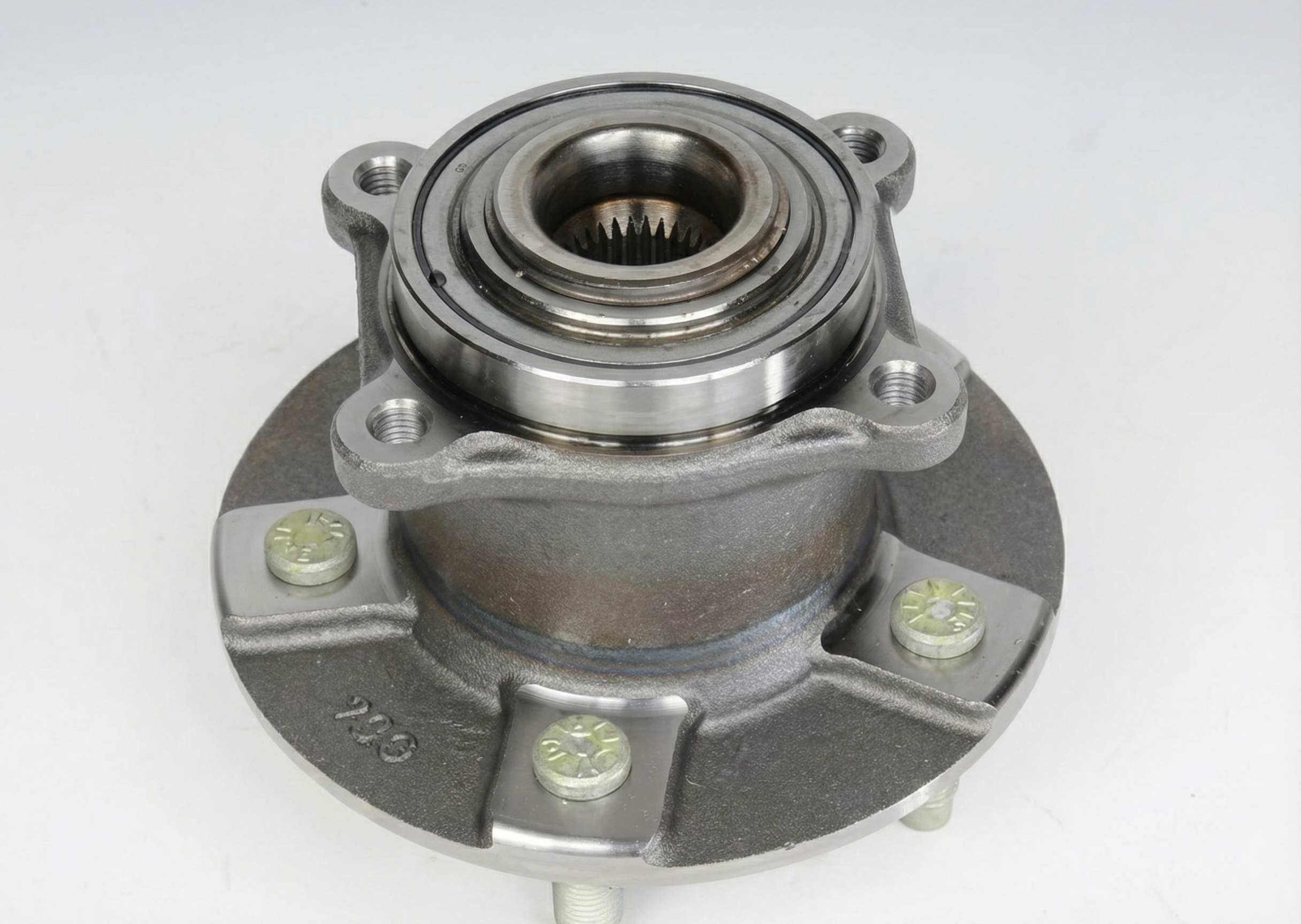
- Rear Wheel Hub and Bearing Assembly
(OEM #13546720)— This is the most common fix because the integrated magnetic encoder ring is prone to contamination or cracking, which is a frequent cause of C0050 on this vehicle. Replacing the whole assembly provides a new bearing, hub, and encoder ring.
Trusted brands: Timken, MOOG, SKF, ACDelco
OEM price range: $180-$250
Aftermarket price range: $70-$160 - Rear ABS Wheel Speed Sensor
(OEM #22703077)— If the hub's encoder ring is clean and intact, the sensor itself is the next most likely component to have failed electronically. Note: The sensor can be extremely difficult to remove from an old hub due to corrosion.
Trusted brands: ACDelco, Dorman, Standard Motor Products (SMP)
OEM price range: $40-$75
Aftermarket price range: $25-$50
Related Codes That Often Appear With This One
- C0045 — This is the code for the Left Rear Wheel Speed Sensor. Seeing both C0045 and C0050 together strongly suggests a problem common to both rear wheels, such as a damaged wiring harness that they share, a fault within the EBCM, or simply that both rear hubs are wearing out at a similar rate.
- C0040 — This is the code for the Right Front Wheel Speed Sensor. Seeing multiple wheel speed sensor codes from different corners of the vehicle (e.g., C0050 and C0040) can sometimes point towards a more central issue like the EBCM or a wiring harness problem, though it can also be a coincidence of multiple failing parts.
Technical Service Bulletins (TSBs) & Recalls
- PIC5428B/G: While written for slightly later models, this GM bulletin details the diagnostic process for C0035-C0050 codes caused by ferrous debris on the wheel bearing's magnetic encoder ring, recommending cleaning before replacement. This confirms the underlying issue is well-known to GM across multiple platforms.
- Bulletin #PIC5428G: This manufacturer bulletin notes that the Electronic Brake Control Module may store C0035-C0050 with symptom bytes 18, 5A, or 0F. It instructs technicians to gain access to the wheel bearing and inspect for debris.
- Bulletin #PIT5427B: A manufacturer service bulletin indicates that C0050 may be found alongside other codes like C0045 or U0121, potentially causing a Service StabiliTrak light or hard steering. It recommends that technicians inspect the X411 connector for damage or corrosion.
Platform-Specific Known Issues
- Sensor Seizure in Hub: The wheel speed sensor is notoriously difficult to remove from the wheel hub after years of exposure to heat and corrosion. It is common for the plastic sensor body to break off, leaving the rest of it seized in the hub. This often necessitates drilling out the old sensor, and can sometimes lead to damaging the hub, forcing a hub replacement even if it wasn't the original problem.
Mechanic-Grade Diagnostic Values
- Wheel Speed Sensor Resistance — expected: 800 - 2,500 Ohms (Ω). Failure: An open circuit (OL), a reading near zero, or a value significantly different from the other rear sensor indicates a failed sensor. One real-world example showed a bad sensor reading 450 Ω while a good one read ~2300 Ω.
- Voltage at Sensor Harness Connector — expected: ~12V (Reference Voltage). Failure: No voltage or significantly low voltage at the supply pin of the harness connector (with key on) points to a problem with the wiring or the EBCM itself, not the sensor.
- Ground Integrity at Sensor Harness Connector — expected: < 1.0 Ohm (Ω) to chassis ground. Failure: High resistance indicates a poor ground connection, which can cause an erratic signal.
Hidden / Shadow Codes Worth Checking
- C0050 0F: Erratic Signal. This indicates the EBCM is receiving a signal, but it is unstable or dropping out, often pointing to debris on the magnetic ring or a wiring issue. (see via Professional scan tools like the GM GDS2/Tech2 can read these manufacturer-specific symptom bytes.)
- C0050 18: Low Signal Amplitude. The signal from the sensor is too weak, which can be caused by an excessive air gap, a failing sensor, or a damaged magnetic ring. (see via Professional scan tools like the GM GDS2/Tech2 can read these manufacturer-specific symptom bytes.)
- C0050 5A: Signal Plausibility Failure. The signal from this sensor is illogical when compared to other wheel speed sensors (e.g., showing 0 mph while others show 30 mph). This strongly suggests a failed sensor or a completely compromised magnetic ring. (see via Professional scan tools like the GM GDS2/Tech2 can read these manufacturer-specific symptom bytes.)
Scan Tool Commands That Help
- GDS2 / Tech2 (or equivalent ABS-capable scanner): Data Display > EBCM > Wheel Speed Sensor Data — This is the primary diagnostic step after reading the code. Monitoring the live data for all four wheels while driving allows you to see if the RR sensor is reading 0, is erratic, or doesn't match the other sensors, confirming a signal issue in that corner.
Wiring & Ground Locations
- EBCM Location — In the engine compartment, located below the brake master cylinder on the driver's side.. This is the control module that receives the signal from the wheel speed sensor. All diagnostic wiring tests will eventually lead back to its connector.
- EBCM Ground — On the frame rail directly beneath the driver's side door. It can be identified as a heavy gauge (approx. 12-gauge) wire attached to the frame.. A poor ground connection at this point can cause the EBCM to malfunction, potentially setting false or intermittent trouble codes, including C0050. This is a known issue on similar GM truck platforms.
- RR WSS Harness Chafe Point — The wiring harness that runs under the vehicle near the rear suspension and connects to the main body via the X411 pass-through connector.. This harness is exposed to road debris and suspension movement. A TSB for similar models notes that the wires for the rear wheel speed sensors (circuits 882, 883, 884, 885) can get damaged in this area, leading to an open or short.
- G203 — Located at the lower center of the instrument panel (dash), on the I/P fuse block.. A 2006 wiring diagram shows this as a ground point related to the ABS system wiring, specifically for the wheel speed sensor low reference signal.
Real Owner Repair Stories
- YouTube channel 'Pine Hollow Auto Diagnostics' (2007 Chevrolet Equinox) — ABS and Traction Control lights on.
❌ Tried (didn't work) Initial diagnosis pointed to the right rear wheel speed sensor.
✅ What actually fixed it The code was C0050. The final repair was replacing the entire right rear wheel hub and bearing assembly. The video creator noted that on this vehicle, the sensor is part of the hub assembly. - Mitchell1 SureTrack Community Fix (2014 Chevrolet Tahoe 5.3L (Similar GM ABS system)) — ABS light on.
❌ Tried (didn't work) Visual inspection of the right rear sensor wiring, connector, and terminals showed no faults.
✅ What actually fixed it Code was C0050. A multimeter test found no 12V reference voltage at the sensor connector. Probing the EBCM connector confirmed the module itself was not outputting the required voltage. The final fix was replacing both the failed Electronic Brake Control Module (EBCM) and the right rear ABS wheel speed sensor.
OEM Part Supersession History
13544414, 13547479, 13564852→13546720— Part consolidation and potential design updates by the manufacturer.
Diagnostic Flowchart
Used vs. New Parts: Buying Guide for This Vehicle
When a used part is the smart pick: For this specific repair, using used parts is generally not recommended. The failure modes involve wear (bearing), environmental exposure (cracked ring), and electronic aging (sensor). A used part from a junkyard carries a high risk of having the same or other imminent faults.
Donor-vehicle mileage cap: roughly under 50000 miles for the part to have meaningful remaining life.
What to inspect on the donor part:
- If considering a used hub, visually inspect the magnetic encoder ring meticulously for any cracks, chips, or deep grooves.
- Check for any play or roughness in the bearing by hand.
- For a used sensor, inspect the plastic housing for cracks and the wiring pigtail for any signs of brittleness or damage.
OEM-only on this vehicle (don't cheap out):
- No parts for this repair are strictly OEM-only. Quality aftermarket hubs and sensors are widely available and perform well.
Aftermarket brands forum-validated for this vehicle:
- Hub Assemblies: Timken, MOOG, SKF are consistently cited as high-quality, reliable options that often meet or exceed OEM specifications.
- Sensors: ACDelco (GM's own brand), Standard Motor Products (SMP), and NTK are reputable choices for electronic sensors.
Brands owners have reported issues with on this vehicle:
- Dorman: While offering a wide range of parts, Dorman has a reputation for inconsistent quality control on electronic and suspension components, with some users reporting premature failures.
- Unbranded/White-Box Parts: Avoid the cheapest available parts from online marketplaces, as they often use lower-grade materials for the bearing and magnetic ring, leading to a repeat failure.
Real Owner Stories
Aggregated from forums and TSBs cited above. Mileages and costs reflect what owners reported in those sources.
2009 Chevrolet Equinox LS
Symptoms: The owner reported seeing messages for "Service Stabilitrak" and "Service Traction Control", along with the ABS light being on. The vehicle had codes C0899-00, C0040-00, and C0050-00 stored.
What fixed it: A responding user with a similar issue found that a bad wheel bearing was the root cause. Shards of metal from the failing bearing had physically damaged the end of the sensor. The ultimate fix was replacing the wheel bearings and sensors.
Source hint: Chevrolet Forum thread '2006 equinox abs p'
Related OBD-II Codes
Frequently Asked Questions
My ABS and StabiliTrak lights are on for code C0050. What's the most common cause on these 2005-2009 Equinox models?
I'm trying to replace the right rear wheel speed sensor on my Equinox, but it's stuck. Is this a common problem?
My mechanic says I need a whole new wheel hub assembly for a C0050 code, but my wheel bearing isn't noisy. Why?
I have a 2008 Pontiac Torrent with code C0050. Is the diagnosis the same as for the Chevrolet Equinox?
Is there a GM Technical Service Bulletin (TSB) that addresses the C0050 code being caused by debris on the hub ring?
What warning lights and messages will I see on my dash for a C0050 code?
Helpful Videos
Used OEM Parts in Stock
New Aftermarket Parts Available


The information in this article is provided for general reference and educational purposes only. Vehicle specifications, procedures, and part compatibility can vary by production date, trim level, and region. Always consult your vehicle's factory service manual and verify part numbers before purchasing or performing repairs. Safety-critical components such as airbags, seat belts, and braking systems should be installed by a qualified professional.
- Chevrolet Equinox:
- 🧭 Diagnostic Flowchart
- 🎬 Helpful Videos
- 🛍️ Shop This Part
- What's Unique About the 2005-2009 Chevrolet Equinox
- Symptoms You May Notice
- Most Likely Causes
- Rare But Worth Checking
- Diagnosis Steps
- Parts You'll Likely Need
- Related Codes That Often Appear With This One
- Technical Service Bulletins (TSBs) & Recalls
- Platform-Specific Known Issues
- Mechanic-Grade Diagnostic Values
- Hidden / Shadow Codes Worth Checking
- Scan Tool Commands That Help
- Wiring & Ground Locations
- Real Owner Repair Stories
- OEM Part Supersession History
- Used vs. New Parts: Buying Guide for This Vehicle
- Real Owner Stories
- 2009 Chevrolet Equinox LS
- Related OBD-II Codes
- Frequently Asked Questions
- 🎟️ Get 5% Off