

C0050 on 2006-2013 Chevrolet Impala: ABS Light Causes and Fixes
On a 2006-2013 Impala, code C0050 almost always means the ABS and Traction Control lights are on due to an issue with the right rear wheel speed signal. The most common cause is metallic debris on the wheel hub's magnetic ring, which can often be cleaned per GM TSB PIC5428G. If cleaning doesn't work or the ring is cracked, replacing the entire rear wheel hub assembly is the typical fix, costing around $70-$200 for the part. Wiring harness damage near the sensor is also a frequent culprit.
- Code C0050 will disable your ABS and StabiliTrak systems, so drive with extra caution.
- Before buying any parts, always start by removing the right rear wheel and thoroughly cleaning the magnetic ring on the back of the wheel hub assembly.
- If cleaning doesn't fix it, carefully inspect the wiring harness for damage before condemning the hub.
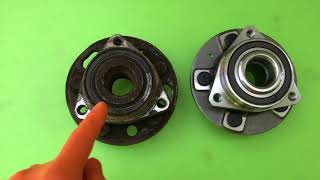
- The most reliable, long-term repair is often replacing the entire wheel hub assembly, which includes a new magnetic ring.
- The warning lights should turn off on their own after a short drive once the correct repair has been made.
What's Unique About the 2006-2013 Chevrolet Impala
For this generation of Impala and related GM W-body vehicles, the C0050 code is frequently caused by a specific design vulnerability. The magnetic encoder ring, which the sensor reads, is integrated into the rear wheel hub assembly and is susceptible to collecting metallic debris from brake wear and road grime. A widely-circulated GM Technical Service Bulletin (TSB PIC5428G) documents this exact issue, noting that simply cleaning the debris off the ring can often resolve the code without replacing any parts. However, if the ring itself is cracked or damaged, the entire hub assembly must be replaced. Additionally, the rear ABS wiring harness is known to be fragile and can break internally or corrode near the connector, causing identical symptoms.
Symptoms You May Notice
- ABS warning light is on
- Traction Control (TC) or StabiliTrak/ESC warning light is on
- "Service StabiliTrak" or "Service Traction Control" message on the driver information center.
- ABS system does not activate (no pedal pulsation) during hard braking
- Traction control does not activate during wheel spin
- A brief, intermittent grinding or ratchet noise at low speeds as the system falsely activates.
- Replacing the wheel speed sensor when the actual problem is debris on the hub's magnetic ring.
- Replacing the wheel hub assembly without first checking for a damaged or corroded wiring harness, which can cause identical symptoms.
- Assuming the hub is good after replacement without clearing the code. The ABS light may stay on until the code is cleared with a scanner, even if the mechanical fault is fixed.
Most Likely Causes
- Debris on Rear Wheel Hub Magnetic Encoder Ring 🔴 High Probability The open design of the hub's inboard side allows metallic brake dust and road debris to accumulate on the magnetic ring, disrupting the sensor's reading. This is a well-documented issue across many GM platforms of this era, as noted in TSB PIC5428G.
How to confirm: Remove the right rear wheel and visually inspect the magnetic ring on the inboard face of the wheel hub assembly. Look for a build-up of dark, metallic 'paste' or filings stuck to the ring. A flashlight is essential for a clear view.
Typical fix: Thoroughly clean the magnetic ring with a brake cleaner and a soft nylon brush or rag. Do not use magnetic tools for cleaning, as they can damage the encoder. Ensure no debris remains. If the code returns, the ring may be damaged, requiring hub replacement.
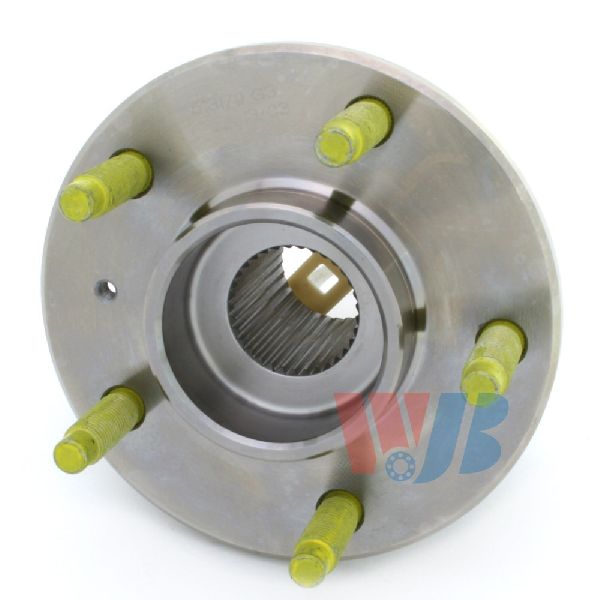
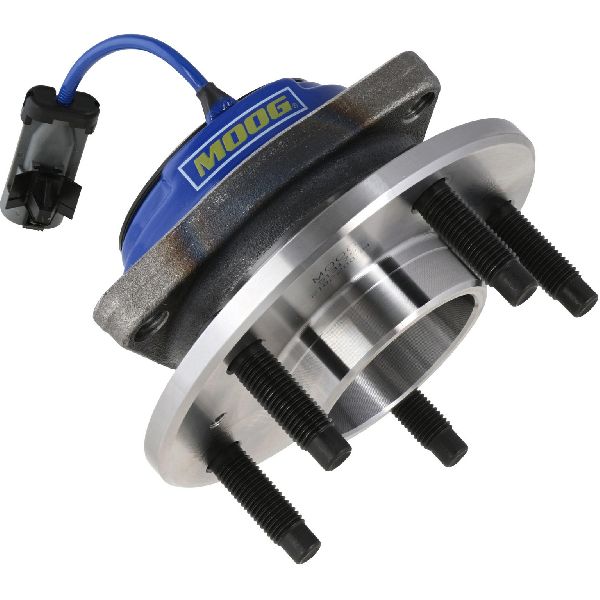
Est. part cost: $0 - Failed/Damaged Rear Wheel Hub Assembly 🟡 Medium Probability → Shop Hub Assembly The magnetic encoder ring integrated into the hub can crack, delaminate, or have pieces flake off from rust and age, causing a complete or erratic signal loss. The wheel bearing itself can also develop play, increasing the air gap between the sensor and ring, which weakens the signal.
How to confirm: After cleaning the ring, inspect it closely for cracks, missing sections, or severe corrosion. Spin the hub and watch the ring to ensure it's not warped. Also, check the wheel bearing for any play or roughness by rocking the wheel at the 12 and 6 o'clock positions.
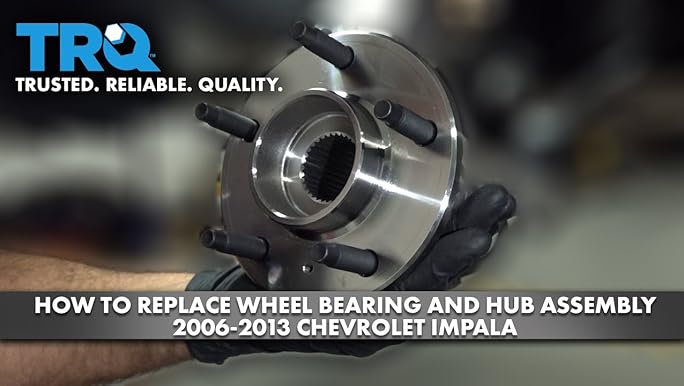
Typical fix: Replace the entire right rear wheel hub and bearing assembly. This part includes a new bearing, hub, and the 🎬 See this walkthrough for replacing the hub and sensor. critical magnetic encoder ring.
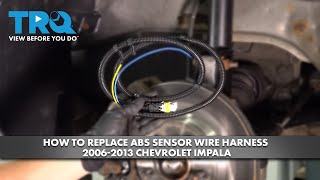
Est. part cost: $70-$200 - Damaged Wheel Speed Sensor Wiring Harness 🟡 Medium Probability → Shop ABS Wheel Speed Sensor The wiring harness runs in an exposed area in the wheel well and is prone to chafing, corrosion, and impact damage from road debris. Wires can break internally near the connector from repeated suspension movement, often with no visible external damage.
How to confirm: Visually inspect the entire length of the wiring from the sensor connector up into the vehicle body. Look for chafed insulation, green corrosion at the connector pins, or any signs of physical damage. A common failure point is within a few inches of the sensor connector. A multimeter can be used to check for continuity and shorts between the EBCM connector and the sensor connector.
Typical fix: Repair the damaged section of wire or replace the pigtail connector. Dorman and other brands sell replacement pigtail kits. For extensive damage, a complete rear harness that spans from wheel to wheel is available and is a more robust repair.
Est. part cost: $20-$80 - Failed Right Rear Wheel Speed Sensor ⚪ Low Probability → Shop ABS Wheel Speed Sensor While less common than hub or wiring issues on this platform, the sensor itself can fail electronically over time due to heat and vibration.
How to confirm: If the hub ring and wiring are confirmed to be good, the sensor is the next likely culprit. This is best confirmed by swapping it with the left rear sensor (if they are interchangeable) to see if the code follows to C0045. Alternatively, test its internal resistance with a multimeter (a good sensor typically reads between 800-1350 ohms). An AC voltage output test can also be performed; a healthy sensor should produce over 100mV AC when the wheel is spun by hand.
Typical fix: Replace the right rear wheel speed sensor. The sensor is typically held in by a single T30 Torx bolt.
Est. part cost: $30-$75
Rare But Worth Checking
- Failed Electronic Brake Control Module (EBCM): → Shop ABS Control Module This is very rare. The EBCM is the computer for the ABS system. It should only be suspected if you have multiple, persistent wheel speed sensor codes that cannot be traced to wiring or sensor/hub faults.
- Blown ABS Fuses: Check the two 60-amp fuses for the ABS motors located in the under-hood fuse box. While a blown fuse is unlikely to cause a single wheel code, it's a quick and easy check.
Diagnosis Steps
- Connect an ABS-capable OBD-II scanner to confirm the C0050 code is present.
- Check for any symptom bytes (e.g., 18, 5A, 0F) which can provide more detail about the fault. '18' is a weak signal, '5A' is a non-plausible signal, and '0F' is an erratic signal, all pointing to debris or damage.
- Safely raise and support the rear of the vehicle and remove the right rear wheel.
- Visually inspect the wheel speed sensor wiring harness for any signs of chafing, breaks, or corrosion at the connector. Pay close attention to the area near the connector and where the harness flexes.
- Inspect the magnetic encoder ring on the inboard side of the wheel hub assembly. Look for metallic debris stuck to it.
- Thoroughly clean the encoder ring with brake cleaner and a soft nylon brush, even if it looks clean.
- Inspect the cleaned ring for any visible cracks or damage. If damage is found, the hub must be replaced.
- If the light remains on after cleaning, use a scan tool to monitor live data from the right rear wheel speed sensor while spinning the wheel or driving. Compare its reading to the other wheels. A reading of zero or an erratic signal points to a bad sensor, wiring, or hub ring.
- If the signal is dead, use a multimeter to test for power and ground at the sensor connector and check the wiring for continuity back to the EBCM.
- If wiring and the hub ring are good, replace the wheel speed sensor. If the problem persists, replace the wheel hub assembly.
Parts You'll Likely Need
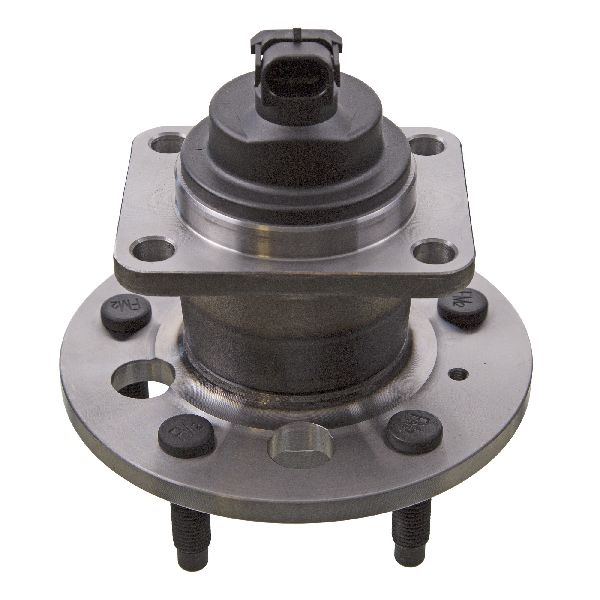
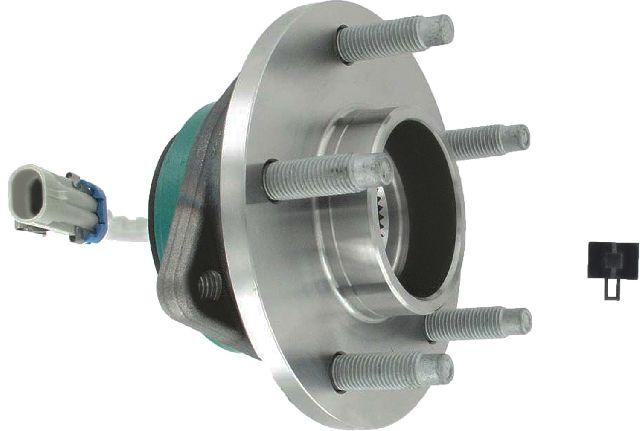
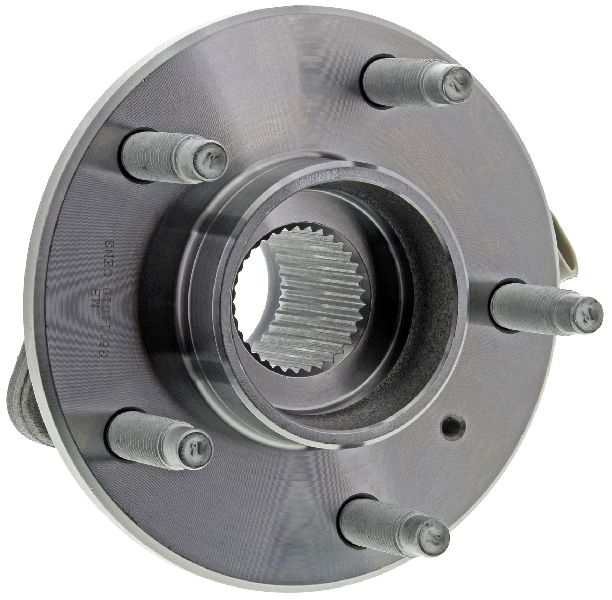
- Rear Wheel Hub and Bearing Assembly
(OEM #ACDelco FW413 (GM 84856655))— This is the most common definitive fix, as it replaces the bearing, the integrated magnetic encoder ring (the most frequent failure point), and often includes a new wheel speed sensor.
Trusted brands: ACDelco, Timken, MOOG, Dorman
OEM price range: $150-$250
Aftermarket price range: $70-$150 - Rear ABS Wheel Speed Sensor
(OEM #20938121 (supersedes 10384745, 15872664, 20763148))— Replaced when the sensor itself has failed electronically or when the wiring pigtail is damaged. On this vehicle, wiring issues are more common than sensor failure. Note that this part number fits many GM trucks as well, but is listed for W-body cars in some catalogs.
Trusted brands: GM Genuine Parts, ACDelco, Delphi, NTK, Dorman
OEM price range: $50-$90
Aftermarket price range: $30-$60 - Rear ABS Wheel Speed Sensor Wiring Harness Pigtail — Used to repair a damaged connector or a small section of broken/corroded wire near the sensor. This is a very common repair.
Trusted brands: Dorman 970-040, ACDelco PT2298, Standard Motor Products S2009
OEM price range: $40-$70
Aftermarket price range: $15-$40
Related Codes That Often Appear With This One
- U0415 - Invalid Data Received From Electronic Brake Control Module: This code may appear in the Power Steering Control Module if the vehicle has electric power steering, as the system defaults to a heavier feel when it loses a wheel speed signal.
Technical Service Bulletins (TSBs) & Recalls
- PIC5428G: Addresses ABS/Traction/Stabilitrak lights with codes C0035-C0050 and symptom bytes 18, 5A, or 0F. It confirms the cause is often ferrous debris on the magnetic encoder ring and the primary fix is cleaning, not part replacement. It explicitly warns against using magnetic tools for cleaning. According to Bulletin #PIC5428G, a technician should gain access to the wheel bearing associated with the set DTC to check for debris.
Platform-Specific Known Issues
- The wiring harness for the rear wheel speed sensors is known to be fragile and can chafe against suspension or subframe components, leading to intermittent or permanent signal loss.
- Water intrusion into the harness connector is common, causing corrosion of the pins and wires that may not be immediately visible without unplugging the sensor.
Mechanic-Grade Diagnostic Values
- Wheel Speed Sensor Internal Resistance — expected: 850 - 1350 Ohms. Failure: A reading outside this range, or an Open Loop (OL) reading, indicates a failed sensor.
- Wheel Speed Sensor AC Voltage Output — expected: Greater than 100 mV AC while spinning the wheel by hand.. Failure: No or very low AC voltage produced while the wheel is spinning points to a dead sensor or a damaged tone ring.
- Wiring Harness Continuity — expected: Less than 1.0 Ohm from the EBCM connector to the sensor connector on each wire.. Failure: High resistance or an Open Loop (OL) reading indicates a broken wire or severe corrosion in the harness.
- Sensor Circuit Voltage (at connector, key on) — expected: A brief 12V pulse upon key-on, which then turns off. This confirms the EBCM driver is functional.. Failure: No voltage pulse at all may indicate a problem with the EBCM or the wiring leading to it.
Hidden / Shadow Codes Worth Checking
- C0050 0F: Signal Erratic. This often points to metallic debris on the magnetic encoder ring or a cracked ring causing an inconsistent signal. (see via Requires a professional scan tool (like the GM GDS2/Tech2) capable of reading GM-specific symptom bytes.)
- C0050 18: Low Signal Amplitude. This indicates the signal from the sensor is weak or missing, often caused by an excessive air gap, a damaged/missing encoder ring, or an open circuit. (see via Requires a professional scan tool (like the GM GDS2/Tech2) capable of reading GM-specific symptom bytes.)
- C0050 5A: Signal Plausibility Failure. The EBCM is receiving a signal, but it doesn't make sense compared to the other wheel speed sensors. This can be caused by a cracked encoder ring or an intermittent wiring issue. (see via Requires a professional scan tool (like the GM GDS2/Tech2) capable of reading GM-specific symptom bytes.)
Wiring & Ground Locations
- EBCM (Electronic Brake Control Module) — Located in the engine bay, on the right (passenger) side, under the hood. It is part of the brake pressure modulator assembly where the brake lines converge.. This module receives the signal from the right rear wheel speed sensor. All wiring continuity tests for the sensor circuit ultimately terminate at the EBCM connector.
- Rear ABS Harness — The harness for the rear wheels is often a single assembly that connects to the main body harness and then splits to run to both the left and right rear wheel speed sensors.. On this platform, GM often sold the entire rear harness as one part, not individual side pigtails. A break in the wire for the right side (C0050) may necessitate replacing the harness that also services the left side (C0045).
- G115 (V6 Engines) — On the transmission case, below the brake booster.. This is a primary ground location for the Electronic Brake Control Module (EBCM). While a poor ground here would likely cause multiple ABS faults, not just C0050, it's a critical point to check for any ABS-related electrical issues.
Real Owner Repair Stories
- YouTube channel 'THE MECH A NIC' (2008/2007 Chevrolet Impala) — ABS and Traction Control lights on, with code C0045 (Left Rear) present. The diagnostic logic is identical for C0050 (Right Rear).
❌ Tried (didn't work) The wheel bearing/hub assembly was already new, so the magnetic ring was known to be good.
✅ What actually fixed it The wiring harness for the rear ABS sensors was faulty. The mechanic replaced the entire rear harness, which is sold as one piece that connects to the main harness and then splits to feed both the left and right rear wheels. This fixed the erratic signal code. - Reddit user in r/MechanicAdvice (2009 Chevrolet Impala) — ABS light on with codes C0050 and C0040 (Right Rear and Right Front).
❌ Tried (didn't work) Replaced the right rear wheel bearing/hub assembly.
✅ What actually fixed it The code remained after replacing the hub, indicating the problem was likely in the wiring harness for the rear sensor. The user was advised that the light should clear on its own after a drive cycle if the fault is fixed, and since it didn't, the wiring was the next logical step.
Model Year Variations Within This Range
- 2006-2013: The fundamental design of the rear hub assembly (with integrated magnetic ring), sensor, and wiring layout remained consistent throughout this generation of the Impala (W-body). There are no significant year-to-year variations that would alter the diagnosis or common causes for code C0050.
Diagnostic Flowchart
Used vs. New Parts: Buying Guide for This Vehicle
When a used part is the smart pick: A used wiring harness pigtail or a complete rear harness from a junkyard can be a cost-effective repair, especially if the donor vehicle is from a dry climate and has low mileage. A used wheel speed sensor can also be a viable option if tested for correct resistance before purchase.
Donor-vehicle mileage cap: roughly under 80000 miles for the part to have meaningful remaining life.
What to inspect on the donor part:
- For wiring: Inspect for any signs of corrosion (green crust), brittleness, or previous repairs (tape, butt connectors). Gently flex the wire near the connector to check for internal breaks.
- For hubs: Avoid used hub assemblies. The bearing has a finite life, and the magnetic ring is the primary failure point. The risk of getting a part that is already failing or will fail soon is very high.
- For sensors: Ask to test the sensor's resistance with a multimeter before buying. It should fall within the 850-1350 Ohm range.
Aftermarket brands forum-validated for this vehicle:
- Wheel Hubs: Timken, MOOG, SKF, and ACDelco (Professional/Gold line) are consistently cited as high-quality, reliable options by mechanics and forum users.
- Sensors/Wiring: Dorman, Standard Motor Products (SMP), and Delphi are reputable sources for replacement pigtails and sensors.
Brands owners have reported issues with on this vehicle:
- Avoid unbranded, 'white-box' wheel hub assemblies from online marketplaces. While cheap, they are notorious for premature bearing failure and issues with the magnetic encoder ring, leading to the same C0050 code returning shortly after repair.
Real Owner Stories
Aggregated from forums and TSBs cited above. Mileages and costs reflect what owners reported in those sources.
2008 Chevy Impala
Symptoms: ABS problems and associated codes.
What fixed it: The owner discovered broken wires inside the harness sheathing about 10 inches from the hub connector, which had no visible external damage.
Source hint: Chevrolet Forum: 2008 Chevy Impala ABS Problems and fix
2008 Chevy Impala
Symptoms: ABS lights and codes persisted even after replacing the wheel hub.
What fixed it: The root cause was found to be water intrusion and corrosion inside the wiring harness connector.
Source hint: Chevrolet Forum: 2008 Chevy Impala ABS Problems and fix
2009 Impala
Symptoms: Codes C0050 & C0040 were present.
What fixed it: After replacing the right rear wheel bearing did not fix the C0050 code, the next logical step identified in the discussion was to inspect the wiring harness for damage.
Source hint: Reddit r/MechanicAdvice: Codes C0050 & C0040 09 Impala
Chevy Impala
Symptoms: C0045 / C0050 codes present.
What fixed it: A mechanic diagnosed a wiring harness issue and recommended replacing the complete rear harness that connects both rear wheels to the module, calling it a more robust repair than splicing a single side.
Source hint: YouTube: chevy Impala C0045 / C0050 - by The mech a nic
Related OBD-II Codes
Frequently Asked Questions
What does TSB PIC5428G say about the C0050 code on my 2009 Impala?
My ABS and StabiliTrak lights are on. Is this related to the C0050 code?
Is it common for the rear wheel hub to get dirty and cause this code on an Impala?
I cleaned the magnetic ring, but the C0050 code came back. What should I check next?
Can I use a magnetic screwdriver to scrape the gunk off the hub ring?
My mechanic wants to replace the entire wheel hub assembly. Is that always necessary for a C0050?
Helpful Videos
Used OEM Parts in Stock
New Aftermarket Parts Available


The information in this article is provided for general reference and educational purposes only. Vehicle specifications, procedures, and part compatibility can vary by production date, trim level, and region. Always consult your vehicle's factory service manual and verify part numbers before purchasing or performing repairs. Safety-critical components such as airbags, seat belts, and braking systems should be installed by a qualified professional.
- Chevrolet Impala:
- 🧭 Diagnostic Flowchart
- 🎬 Helpful Videos
- 🛍️ Shop This Part
- What's Unique About the 2006-2013 Chevrolet Impala
- Symptoms You May Notice
- Most Likely Causes
- Rare But Worth Checking
- Diagnosis Steps
- Parts You'll Likely Need
- Related Codes That Often Appear With This One
- Technical Service Bulletins (TSBs) & Recalls
- Platform-Specific Known Issues
- Mechanic-Grade Diagnostic Values
- Hidden / Shadow Codes Worth Checking
- Wiring & Ground Locations
- Real Owner Repair Stories
- Model Year Variations Within This Range
- Used vs. New Parts: Buying Guide for This Vehicle
- Real Owner Stories
- 2008 Chevy Impala
- 2008 Chevy Impala
- 2009 Impala
- Chevy Impala
- Related OBD-II Codes
- Frequently Asked Questions
- 🎟️ Get 5% Off