

C0050 on 2015-2017 Chrysler 200: Right Rear Wheel Speed Sensor Fault Causes and Fixes
This code indicates a problem with the right rear wheel speed sensor circuit, which disables the ABS and stability control systems. The most common fix is replacing the faulty wheel speed sensor itself, which costs around $25-$75 for an aftermarket part or $80-$120 for an OEM Mopar part. Before replacing parts, confirm the fault by checking live data with a scan tool.
- C0050 on a 2015-2017 Chrysler 200 means there is a fault with the right rear wheel speed sensor circuit, which will disable your ABS and stability control.
- The most probable cause is a failed wheel speed sensor, which is a relatively affordable and accessible part to replace.
- Before replacing parts, use a scan tool to watch live data to confirm the right rear sensor is the one malfunctioning. Also, perform a visual inspection of the sensor's wiring for any obvious damage.
- If a new sensor doesn't fix the code, the issue may be in the wiring harness or, less commonly, the wheel hub's integrated magnetic ring.
- Driving with this code is possible, but the lack of ABS and stability control requires extra caution, and the issue should be repaired promptly for safety.
What's Unique About the 2015-2017 Chrysler 200
For the 2015-2017 Chrysler 200 (UF generation), the C0050 code does not point to a widely documented, unique design flaw or a specific technical service bulletin. The causes are typical for most modern vehicles, usually stemming from sensor failure or wiring damage. However, as with many Chrysler products, some owners report that aftermarket sensors can sometimes have compatibility issues, leading to a persistent code. Using a quality aftermarket brand or an OEM Mopar sensor is often recommended to ensure a successful repair. The issue is also common on its platform mates, the Dodge Dart and Jeep Cherokee (KL).
Symptoms You May Notice
- ABS warning light is on
- Traction Control or Electronic Stability Control (ESC) warning light is on
- Cruise control may be inoperative
- "Service ABS System" or similar message on the instrument cluster
- Replacing the ABS module before thoroughly testing the sensor, wiring, and hub assembly.
- Replacing the wheel hub/bearing assembly when only the inexpensive sensor has failed.
- Replacing the sensor without first checking for damaged wiring, which is a common point of failure.
Most Likely Causes
- Failed Right Rear Wheel Speed Sensor 🔴 High Probability → Shop ABS Wheel Speed Sensor The sensor is exposed to water, road salt, and debris, which can lead to internal failure over time. It is the most frequently failing component for this code across all Chrysler platforms.
How to confirm: Use an ABS-capable scan tool to monitor live data from all four wheels while driving. If the right rear sensor reads 0 MPH or shows erratic readings while the others are functioning correctly, the sensor has likely failed. A multimeter can also be used to check the sensor's resistance against OEM specifications.
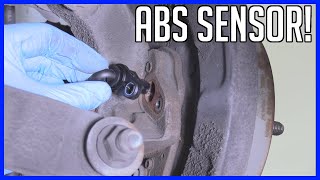
Typical fix: Replace the right rear wheel speed sensor. The sensor is typically held in by a single 5mm hex bolt. The connector is located inside the trunk, behind the liner. 🎬 Watch: Step-by-step rear wheel speed sensor replacement guide. The sensor can often seize in the knuckle due to corrosion and may break upon removal, requiring careful extraction of the remaining plastic piece.
Est. part cost: $25-$120 - Damaged Wiring or Connector 🟡 Medium Probability The wiring harness running to the wheel hub is subject to stress from suspension movement and can be damaged by road debris, leading to an open or short circuit. This is a very common issue on related Chrysler/Dodge/Jeep vehicles.
How to confirm: Visually inspect the wiring harness from the sensor connector up into the wheel well for any signs of chafing, breaks, or corrosion. Pay close attention to the section near the suspension components. Test for continuity and proper voltage at the sensor connector with a multimeter.
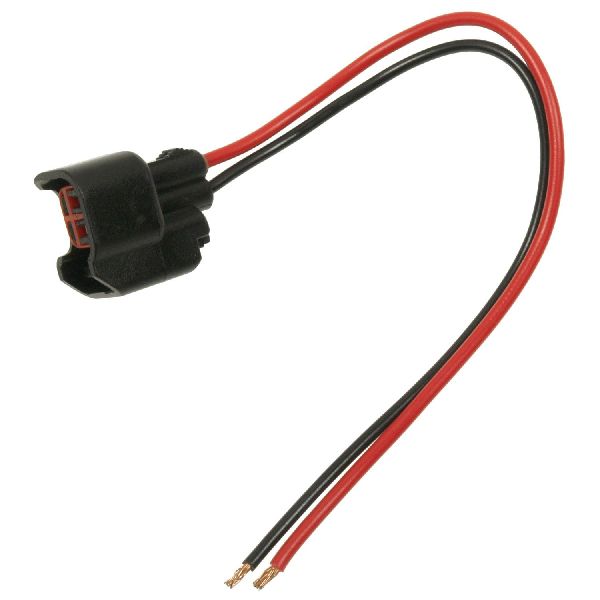
Typical fix: Repair the damaged section of wire with solder and heat-shrink tubing. If the connector is corroded or damaged, replace it with a new pigtail connector.
Est. part cost: $15-$40 - Damaged or Contaminated Tone Ring ⚪ Low Probability The magnetic tone ring is integrated into the wheel hub/bearing assembly. While durable, severe corrosion or an impact can crack it. More commonly, metallic debris from brake wear can accumulate on it, disrupting the sensor's reading. An owner on the Car Talk Community forum reported that loose hub and caliper bolts after a repair caused similar issues, indicating that physical damage or misalignment is a potential factor.
How to confirm: After removing the wheel speed sensor, use a light to inspect the magnetic ring on the hub for cracks, missing sections, or a heavy buildup of metallic debris. Spin the hub to ensure the ring is intact all the way around. Any wobble in the bearing could also indicate a failing hub assembly.
Typical fix: If the ring is just dirty, cleaning it may resolve the issue. If the ring is damaged, the entire wheel hub and bearing assembly must be replaced 🎬 Watch this walkthrough for replacing the rear hub and bearing. as the ring is an integral part.
Est. part cost: $150-$300
Rare But Worth Checking
- Faulty ABS Control Module: → Shop ABS Control Module This is the least likely cause and should only be considered after the sensor, wiring, and hub assembly have been thoroughly tested and ruled out. A faulty module often triggers multiple wheel speed sensor codes or communication codes, not just one.
Diagnosis Steps
- Connect an ABS-capable scan tool to the OBD-II port.
- Confirm that C0050 is present and check for any related codes. Note any sub-codes like -5A (plausibility) or -18 (low amplitude) which can help pinpoint the issue.
- Use the scan tool's live data function to view the speed readings from all four wheel speed sensors while driving slowly (over 5 mph) in a straight line.
- Confirm if the right rear (RR) sensor reading is 0, erratic, or significantly different from the other three.
- If the RR sensor is faulty, raise and secure the vehicle and remove the right rear wheel.
- Visually inspect the wheel speed sensor and its wiring harness for any obvious damage, corrosion, or loose connections.
- Disconnect the sensor connector, which is located in the trunk behind the right side liner. Inspect the connector pins for corrosion or damage.
- Test the sensor's internal resistance with a multimeter (if specifications are available) or check for a signal while spinning the wheel.
- Check for proper voltage and ground at the harness connector coming from the ABS module.
- If wiring and sensor tests are inconclusive, remove the sensor (typically one 5mm hex bolt) and inspect the magnetic tone ring on the wheel hub for damage or debris.
- If the sensor is confirmed bad, replace it. If the wiring is bad, repair it. If the tone ring is damaged, replace the wheel hub assembly.
Parts You'll Likely Need
- Rear Wheel Speed Sensor
(OEM #68155899AB)— This is the most common failure point for a C0050 code. The rear sensors on this model are typically interchangeable between the left and right sides.
Trusted brands: Mopar, Standard Motor Products (ALS2810), Delphi, Wells, Holstein Parts (2ABS2437)
OEM price range: $80-$120
Aftermarket price range: $25-$75 - Rear Wheel Hub and Bearing Assembly
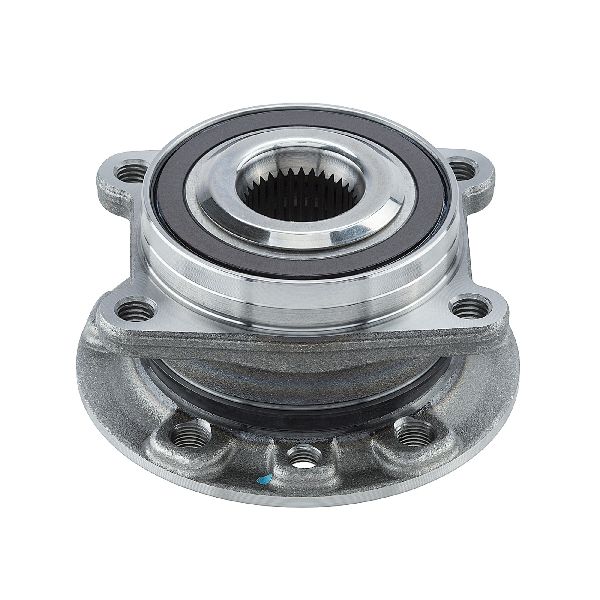
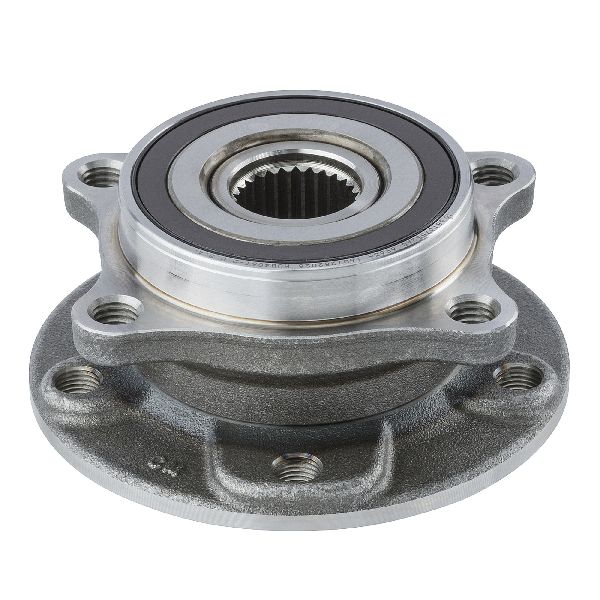
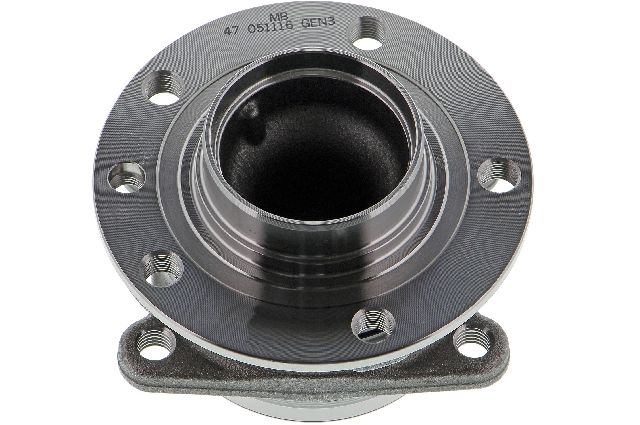
(OEM #68285245AA)— This part is replaced if the magnetic tone ring, which is integrated into the hub, is found to be cracked, damaged, or if the wheel bearing itself has failed, causing excessive movement (play) or noise.
Trusted brands: Mopar, Timken, SKF, MOOG
OEM price range: $250-$350
Aftermarket price range: $150-$250
Related Codes That Often Appear With This One
- U0415 — This code means 'Invalid Data Received From ABS Control Module.' It can be set in other modules (like the PCM or TCM) because the ABS module is broadcasting faulty data due to the C0050 fault. 🎬 See how these related codes appear during a real diagnosis.
- C003A — This is the corresponding code for the Right Rear Wheel Speed Sensor. Some scan tools may display this code instead of or in addition to C0050. A TSB for other Chrysler vehicles notes C003A-2F for an erratic signal.
Technical Service Bulletins (TSBs) & Recalls
- While no TSB directly for the Chrysler 200 and C0050 was found, a TSB for other Chrysler vehicles (part number not specified) addresses similar codes C003A-2F (Right Rear Wheel Speed Sensor - Signal Erratic) and C0037-2F (Left Rear), where the fix is to replace the affected wheel speed sensor. This corroborates that sensor failure is a known issue on Chrysler platforms.
- A Chrysler Tech Tip (TT9004311) exists for codes C003A-1D/2F and C0037-1D/2F on other models, instructing technicians to call a specific support line before replacing a rear wheel speed sensor, suggesting a deeper diagnostic need in some cases.
Platform-Specific Known Issues
- Sensor Seizure in Knuckle: Like many other Chrysler/Dodge/Jeep vehicles, the rear wheel speed sensor is prone to seizing inside the steering knuckle due to rust and corrosion. When attempting removal, the bolt may break, or the plastic body of the sensor may snap, leaving the lower portion stuck in the knuckle. This often requires drilling or carefully chipping out the remaining piece, adding significant time to the repair. Applying penetrating oil beforehand is highly recommended.
- Connector Location: Unlike some vehicles where the sensor connector is in the wheel well, on the Chrysler 200 the harness passes through the body and connects inside the trunk, behind the right-side trim panel. This protects the connector from the elements but requires interior trim removal to access it for testing or replacement.
Hidden / Shadow Codes Worth Checking
- C0050-5A: Signal Plausibility Failure. This means the signal from the sensor is present but doesn't make sense compared to the other wheel speed sensors. It often points to a mechanical issue like a damaged tone ring or an intermittent wiring fault. (see via Professional scan tool (like Mopar wiTECH) capable of reading manufacturer-specific symptom bytes.)
- C0050-18: Low Signal Amplitude. The signal from the sensor is too weak. This can be caused by an excessive air gap between the sensor and the tone ring, heavy debris on the ring, or a failing sensor. (see via Professional scan tool (like Mopar wiTECH) capable of reading manufacturer-specific symptom bytes.)
- C0050-0F: Erratic Signal. The sensor signal is inconsistent or drops out intermittently. This strongly suggests a wiring fault, like a broken wire inside the insulation, or a loose connector. (see via Professional scan tool (like Mopar wiTECH) capable of reading manufacturer-specific symptom bytes.)
Wiring & Ground Locations
- G304 — Located in the trunk, on the right side, behind the trim panel.. This is a primary ground point for several rear vehicle electronics. A loose or corroded G304 ground could potentially cause erratic behavior or voltage issues for the right rear wheel speed sensor circuit, even if the sensor and wiring harness are otherwise intact.
Real Owner Repair Stories
- 200forums.com user (2015 Chrysler 200) — ABS and traction control lights were on. Scan tool showed C0050 for the right rear wheel speed sensor.
❌ Tried (didn't work) Initially replaced the right rear wheel speed sensor, but the codes came back immediately after clearing them.
✅ What actually fixed it The user discovered the actual problem was a faulty wheel hub/bearing assembly. Even though the bearing was not making noise, the integrated magnetic tone ring was compromised, providing an erratic signal. Replacing the entire right rear wheel hub assembly and then clearing the codes permanently resolved the issue.
Documented NHTSA Reports
- An owner reported in NHTSA ODI #11649367 that after brake service, the vehicle disabled the ABS and supporting systems, setting codes C0050 and C2227. The technician noted that extra brake fluid required to return caliper piston contact to the brake pad may have been a factor.
- In NHTSA ODI #11693418, a diagnostic showed code C0050-00, which was associated with a need to replace the rear rotors, rear brake pads, and adapter plate.
- A report for a different manufacturer (NHTSA ODI #11228687) lists C0050 alongside several communication codes (U0415, U0126) and other wheel speed sensor faults, illustrating how this code often appears in clusters.
- While C0050 is typically a wheel speed sensor code, NHTSA ODI #10763888 notes that on some vehicle platforms, this specific code has been used to identify a faulty power steering control module (PSCM) requiring steering column replacement.
OEM Part Supersession History
68155899AA→68155899AB— Standard part revision, likely for improved durability or material changes.
Heads up: The parts are interchangeable. 68155899AB is the current and correct replacement for 68155899AA.
Diagnostic Flowchart
Other Known Issues on This Vehicle
Issues unrelated to this code that are worth knowing about as an owner of this generation:
- ZF 9-Speed Automatic Transmission Problems 🔴 High — Very common, especially in the 2015 model year. Problems include rough/jerky shifting, unexpected shifts to neutral, and complete transmission failure. (Ref: Multiple recalls (e.g., NHTSA 15V090000, 16V-529) and software updates were issued to address these problems.)
- Excessive Oil Consumption (2.4L Tigershark Engine) 🔴 High — Widespread issue affecting 2015-2017 models with the 2.4L engine. Owners report consuming a quart of oil every 1,000 miles or less, potentially leading to engine stalling or seizure if the oil level gets too low. (Ref: A class-action lawsuit led to a warranty extension (CSN W80) to 7 years/100,000 miles for this issue. The cause is cited as defective piston rings.)
- Engine Stalling / Shutting Off While Driving 🔴 High — Frequently reported, often linked to either the transmission issues or low oil levels in the 2.4L engine causing the MultiAir system to fail, especially during turns. (Ref: Related to both the transmission recalls and the oil consumption problem.)
- Electrical System and Uconnect Glitches 🟠 Medium — Common complaints include the Uconnect infotainment screen freezing, ghost touches, and other random electrical malfunctions. A weak battery is often a contributing factor. (Ref: Multiple software update TSBs were released, such as 08-028-17 REV. B, to address radio software issues.)
- Random Active Headrest Deployment 🟠 Medium — Reported in some 2015-2017 models where the plastic bracket inside the active head restraint can fail, causing it to deploy without an impact. (Ref: No specific recall found, but it is a known issue among owners.)
Used vs. New Parts: Buying Guide for This Vehicle
When a used part is the smart pick: For this repair, sourcing a used part is generally not recommended for the electronic sensor itself due to its low cost when new and the unknown remaining lifespan of a used part. However, a used wiring harness pigtail from a junkyard can be a cost-effective solution if only the connector is damaged.
Donor-vehicle mileage cap: roughly under 80000 miles for the part to have meaningful remaining life.
What to inspect on the donor part:
- For a wiring pigtail, ensure the connector is free of corrosion, the locking tab is intact, and there is at least 6-8 inches of wire to work with.
- If considering a used hub assembly, check for any signs of rust jacking under the tone ring, and ensure the bearing spins smoothly with no noise or play.
Aftermarket brands forum-validated for this vehicle:
- Standard Motor Products (SMP)
- Dorman
- Holstein
- Wells
Brands owners have reported issues with on this vehicle:
- Unbranded, no-name sensors from online marketplaces are frequently reported to fail prematurely or be dead-on-arrival.
Real Owner Stories
Aggregated from forums and TSBs cited above. Mileages and costs reflect what owners reported in those sources.
2015 Chrysler 200
Symptoms: ABS lights came on and the transmission would not shift after a wheel hub repair.
What fixed it: The issue was related to loose hub and caliper bolts after a repair, which can cause physical damage or misalignment affecting the sensor reading.
Source hint: Car Talk Community: 2015 Chrysler 200 - New wheel hub, now transmission won't shift
Related OBD-II Codes
Frequently Asked Questions
Where is the right rear wheel speed sensor connector located on my Chrysler 200?
Why did my sensor break while I was trying to remove it from the knuckle?
Is there a TSB for rear wheel speed sensor failures on Chrysler vehicles?
Can a bad wheel speed sensor affect my Chrysler 200's transmission shifting?
Does my 2015 Chrysler 200 have a warranty extension for engine issues that might coincide with these lights?
Helpful Videos
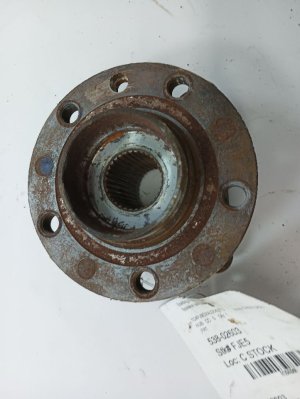
Used OEM Parts in Stock
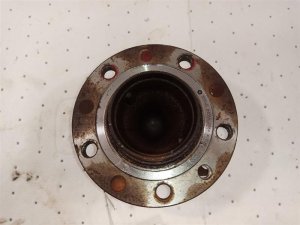
New Aftermarket Parts Available


The information in this article is provided for general reference and educational purposes only. Vehicle specifications, procedures, and part compatibility can vary by production date, trim level, and region. Always consult your vehicle's factory service manual and verify part numbers before purchasing or performing repairs. Safety-critical components such as airbags, seat belts, and braking systems should be installed by a qualified professional.
- Chrysler 200:
- 🧭 Diagnostic Flowchart
- 🎬 Helpful Videos
- 🛍️ Shop This Part
- What's Unique About the 2015-2017 Chrysler 200
- Symptoms You May Notice
- Most Likely Causes
- Rare But Worth Checking
- Diagnosis Steps
- Parts You'll Likely Need
- Related Codes That Often Appear With This One
- Technical Service Bulletins (TSBs) & Recalls
- Platform-Specific Known Issues
- Hidden / Shadow Codes Worth Checking
- Wiring & Ground Locations
- Real Owner Repair Stories
- Documented NHTSA Reports
- OEM Part Supersession History
- Other Known Issues on This Vehicle
- Used vs. New Parts: Buying Guide for This Vehicle
- Real Owner Stories
- 2015 Chrysler 200
- Related OBD-II Codes
- Frequently Asked Questions
- 🎟️ Get 5% Off