

C0050 on 1999-2006 GMC Sierra 1500: Right Rear Wheel Speed Sensor Fault Causes and Fixes
Code C0050 on a 1999-2006 GMC Sierra 1500 means there's a fault in the right rear wheel speed sensor circuit. This usually triggers the ABS and traction control lights. The most likely fix is replacing the faulty sensor itself or repairing its wiring harness, with the sensor costing between $25 and $70. Wiring issues and debris on the tone ring are also common culprits.
- C0050 on a 1999-2006 Sierra disables your ABS and traction control and points to the right rear wheel speed sensor circuit.
- Before buying parts, thoroughly inspect the wiring harness for damage, as this is a common point of failure, especially where it runs over the frame.
- Test the sensor with a multimeter; it's a quick way to confirm if the sensor itself has failed.
- Always check and clean the EBCM ground on the driver's side frame rail; it's a frequent and often overlooked cause of ABS faults on GMT800s.
- Unlike newer trucks, the sensor is a separate part from the wheel hub on this generation.
What's Unique About the 1999-2006 GMC Sierra 1500
On the 1999-2006 GMT800 platform, which includes this Sierra, the rear wheel speed sensors are individual components that bolt directly into the rear axle housing. This is different from many newer vehicles where the sensor is integrated into the wheel hub assembly. This design makes the sensor itself and its exposed wiring harness the most common points of failure, rather than requiring a full hub replacement. The EBCM is also a known weak point, with internal solder joint failures and ground connection issues being common.
Symptoms You May Notice
- ABS warning light is on
- Traction control or StabiliTrak warning light is on
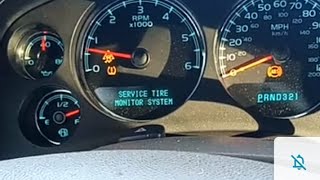
- "Service Brake System" or similar message on the driver information center
- Cruise control is disabled
- Brake pedal may pulsate or ABS may activate unnecessarily at very low speeds (under 10 mph).
- Replacing the entire wheel hub assembly. On this GMT800 platform, the rear sensor is separate from the hub, so replacing the hub will not fix a C0050 code.
- Immediately replacing the EBCM. While a known issue, the sensor and wiring are far more common failure points and should be thoroughly tested first.
Most Likely Causes
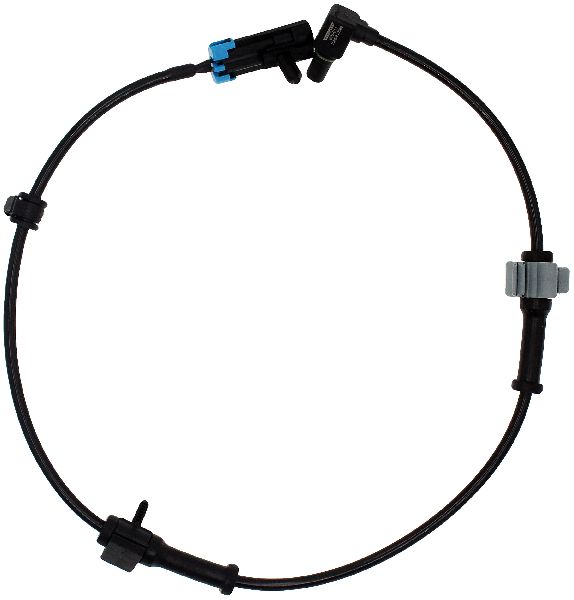
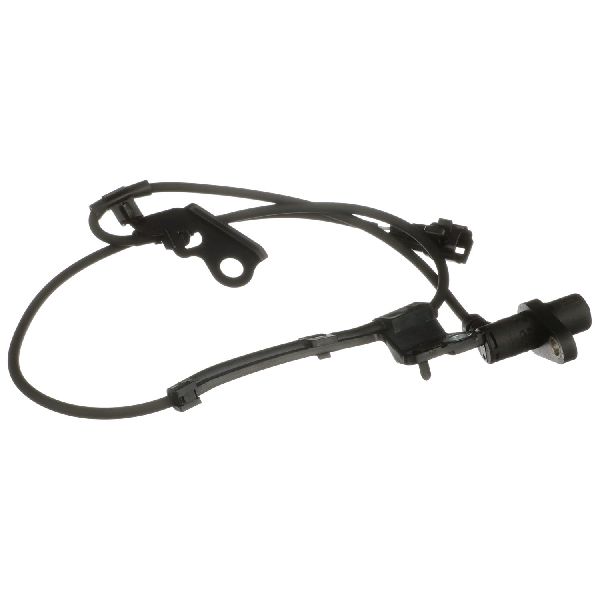
- Failed Right Rear Wheel Speed Sensor 🔴 High Probability → Shop ABS Wheel Speed Sensor The sensor is exposed to heat from the differential and harsh environmental conditions under the truck. Over time, the plastic housing can crack due to corrosion buildup where it mounts, allowing moisture inside and causing internal failure. Heat cycles can also cause the sensor's internal windings to fail when hot, leading to an intermittent light that appears after driving for a while.
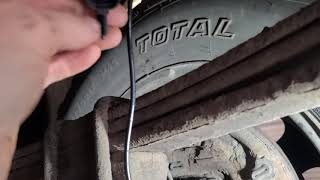
How to confirm: Disconnect the sensor and test its resistance with a multimeter. 🎬 Watch this video to see how to test the sensor. A reading between 1000-1500 ohms is typical for a good sensor. An open circuit (infinite resistance) or a short (near zero ohms) indicates a failed sensor. Alternatively, swap it with the left side sensor and see if the code changes to C0045 (Left Rear).
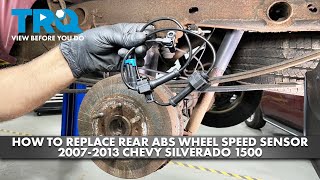
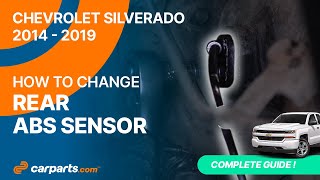
Typical fix: Replace the right rear wheel speed sensor. It is held into the axle housing by a single 10mm or T30 Torx bolt. Be sure to thoroughly clean the mounting surface on the axle of all rust and debris before installing the new sensor.
Est. part cost: $25-$70 - Damaged Wiring Harness or Connector 🟡 Medium Probability The wiring harness runs along the frame and axle, where it is susceptible to chafing, corrosion, and damage from road debris, improper routing, or vibration. A common failure point is where the harness runs over the top of the frame rail or near suspension components.
How to confirm: Visually inspect the entire length of the harness from the sensor to the main loom. Check for breaks, melted sections, or green corrosion inside the connector. Perform a continuity test on the two wires from the EBCM connector to the sensor connector. Wiggle the harness during the test to check for intermittent breaks.
Typical fix: Repair the damaged section of wire or replace the sensor connector pigtail. Ensure the harness is properly secured in its factory clips, away from moving parts and heat sources.
Est. part cost: $15-$40 - Debris or Damage on Tone Ring ⚪ Low Probability The tone ring is internal to the differential carrier, making it less prone to direct damage. However, metallic shavings from normal differential wear can accumulate on the magnetic sensor tip, disrupting the signal. This is a well-documented issue on many GM trucks.
How to confirm: Remove the wheel speed sensor from the axle housing. The tip of the sensor will likely be covered in a metallic paste. Clean the sensor tip. Use a light to look inside the hole and inspect the teeth of the tone ring for obvious damage, rust, or excessive debris.
Typical fix: Clean the magnetic tip of the sensor. If possible, carefully clean the tone ring through the sensor hole with a rag or compressed air. If the ring is damaged, it requires significant differential work to replace.
Est. part cost: $0-$5
Rare But Worth Checking
- Faulty Electronic Brake Control Module (EBCM): → Shop ABS Control Module This is a known issue on GMT800 trucks and should be considered after confirming the sensor and wiring are good. The module can fail internally due to bad solder joints, or it can lose its ground connection. A poor ground on the frame rail under the driver's door is a common cause of EBCM communication loss or codes like C0265. 🎬 See how to clean the EBCM ground on your Silverado. A user on GM-Trucks.com noted they had no power coming from the module to the sensor. Repair services exist that can rebuild the module for a fraction of the cost of a new one.
Diagnosis Steps
- Confirm the C0050 code is present using an ABS-capable OBD-II scanner. Note any symptom bytes (e.g., 18, 5A, 0F) if your scanner can read them, as they can help pinpoint the issue.
- Using the scan tool's live data function, monitor the speed of all four wheels while driving. The right rear should read 0 MPH, be erratic, or not match the other three wheel speeds.
- Visually inspect the right rear wheel speed sensor's wiring harness for any obvious signs of damage, such as chafing against the frame, melting near the exhaust, or corrosion. Pay close attention to where the harness goes over the frame rail.
- Disconnect the sensor connector. Check for corrosion or damage on the pins.
- Using a multimeter set to ohms, measure the resistance across the two pins of the sensor itself. A reading between 1000-1500 ohms is typical for a good sensor. An open loop (OL) or short (near zero ohms) indicates a failed sensor.
- If the sensor tests good, test the harness. Check for continuity on both wires running from the sensor connector back to the EBCM. Wiggle the harness while testing to find intermittent breaks.
- If wiring and sensor are good, remove the sensor (typically one 10mm or T30 Torx bolt) and inspect its magnetic tip for metallic debris. Clean it and inspect the tone ring inside the axle housing for debris or damaged teeth.
- Check the main EBCM ground connection on the frame rail under the driver's side door. Remove the bolt, clean the frame and terminal to bare metal, and re-secure it tightly.
Parts You'll Likely Need
- Rear Wheel Speed Sensor
(OEM #10340316)— This is the most frequent failure point for a C0050 code on this vehicle due to age and exposure to the elements. The part number 20938121 is a common replacement but is officially for the next generation (GMT900) trucks, though it is often used. 10340316 is a more direct cross-reference for the original part on many GMT800s.
Trusted brands: ACDelco, Delphi, Standard Motor Products (SMP), Bosch
OEM price range: $45-$70
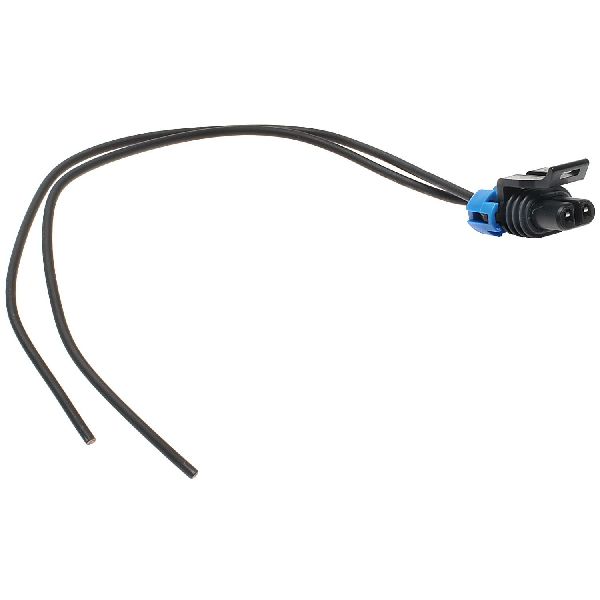
Aftermarket price range: $25-$50 - ABS Wheel Speed Sensor Connector Pigtail
(OEM #ACDelco PT2298 (19300033))— If the wiring is corroded or damaged right at the connector, replacing the pigtail is the most effective repair. The locking tab on the original connector often becomes brittle and breaks.
Trusted brands: Dorman, ACDelco
OEM price range: $25-$40
Aftermarket price range: $15-$30
Related Codes That Often Appear With This One
- C0045 — This is the code for the Left Rear Wheel Speed Sensor. If both appear, it could indicate a wiring harness issue common to both sides (like damage near the main connector), a shared ground fault, or that both sensors have failed around the same time.
- C0265 — This code indicates a fault with the EBCM's internal relay. If you see this alongside C0050, it points more strongly toward a failing EBCM or a bad EBCM ground connection rather than just a sensor issue.
Technical Service Bulletins (TSBs) & Recalls
- GM TSB #04-05-25-002C: Although not directly for C0050, this TSB addresses code C0265 and loss of communication with the EBCM due to a poor ground connection on the frame under the driver's door. This is a highly relevant issue for any GMT800 ABS fault diagnosis.
- GM TSB #PIC5428G: While for a later model, this TSB is highly relevant. It details how ferrous debris on the magnetic encoder ring causes various wheel speed sensor codes (C0035-C0050). It provides a specific cleaning procedure and is a key diagnostic step.
- TSB Bulletin #PIT5499B: A manufacturer service bulletin notes that technicians should inspect the Electronic Brake Control Module connector for water intrusion or corrosion when codes C0035 through C0055 are present.
- TSB Bulletin #PIT5427B: This bulletin describes scenarios involving a "Service Suspension Control" or "Hard Steering" message where C0050 may be stored; it recommends technicians inspect the X411 connector for damage or corrosion.
Platform-Specific Known Issues
- EBCM Ground Location: A major source of ABS faults on this platform is a poor ground connection for the EBCM, located on the outside of the frame rail directly under the driver's side door. Corrosion here can cause intermittent communication loss or various ABS codes. The fix is to remove the bolt, clean the frame and terminal to bare metal, and reassemble.
- Wiring Harness Chafe Points: The ABS sensor harness is known to chafe on the frame rail where it passes over the rear axle and near the shock mounts. Inspect these areas closely for worn insulation.
Mechanic-Grade Diagnostic Values
- Passive WSS AC Voltage Output — expected: Greater than 100-250mV AC when spinning the wheel by hand at about one revolution per second. Voltage should increase with speed.. Failure: A reading of 0V or a voltage that is erratic or does not increase with wheel speed indicates a failed sensor or a problem with the tone ring/air gap.
- WSS Resistance — expected: 800-1400 Ohms, with 1000-1500 Ohms being a common range for this platform.. Failure: A reading of infinity (Open Loop) or near zero (short circuit) indicates a failed sensor.
Hidden / Shadow Codes Worth Checking
- C0050 0F: Indicates an erratic signal from the wheel speed sensor. This often points to a wiring issue, a loose connection, or a failing sensor that drops out intermittently. (see via Requires a GM Tech 2, GDS2, or a professional-grade scan tool capable of reading manufacturer-specific symptom bytes.)
- C0050 18: Indicates low signal amplitude. This is commonly caused by an excessive air gap between the sensor and tone ring, metallic debris on the sensor's magnetic tip, or a damaged tone ring. (see via Requires a GM Tech 2, GDS2, or a professional-grade scan tool capable of reading manufacturer-specific symptom bytes.)
- C0050 5A: Indicates a signal plausibility failure. The signal is present but illogical compared to other wheel speeds. This often points to a physically damaged or cracked tone ring inside the differential. (see via Requires a GM Tech 2, GDS2, or a professional-grade scan tool capable of reading manufacturer-specific symptom bytes.)
Scan Tool Commands That Help
- GM Tech 2: Automated Bleed / ABS Bleed — After replacing the EBCM or opening the hydraulic system, this function is required to cycle the internal solenoids and pump to purge trapped air from the Brake Pressure Modulator Valve (BPMV).
- GM Tech 2: Special Functions -> Output Controls — Allows a technician to individually command ABS/TCS solenoids and the pump motor to verify their operation without driving the vehicle. This can help isolate a hydraulic fault within the EBCM/BPMV assembly from a sensor or wiring issue.
Wiring & Ground Locations
- G110 — On the outside of the driver-side frame rail, directly under the driver's door.. This is the primary ground for the Electronic Brake Control Module (EBCM). Corrosion at this point is extremely common and can cause a host of ABS codes, including C0050, or complete loss of communication with the module. TSB #04-05-25-002D specifically addresses cleaning this ground.
- EBCM Connector (C2) — The main electrical connector on the EBCM, located on the driver's side frame rail.. Pin 9 (Brown wire) is the signal wire for the Right Rear WSS. Pin 8 (Red wire) is the low reference for the Left Rear WSS, but wiring diagrams show the two rear sensors share a common reference circuit that can be tested. Testing for signal at Pin 9 and checking the integrity of the wire back to the sensor is a key diagnostic step.
Real Owner Repair Stories
- Mitchell1 SureTrack Community Fix (2014 Chevrolet Tahoe LTZ 5.3L (GMT900, but same diagnostic principle)) — ABS light on, code C0050 present.
❌ Tried (didn't work) Visual inspection of wiring harness and connector showed no faults.
✅ What actually fixed it Technician found no voltage supply coming from the EBCM to the sensor. Further testing with a lab scope showed the new sensor signal was also erratic. The final fix required replacing BOTH the faulty EBCM (which was not supplying power) and the original wheel speed sensor (which had also failed). - Reddit user on r/GMT800 (2006 Silverado) — ABS code C0035 (Left Front, but same diagnostic steps apply).
❌ Tried (didn't work) Replaced the wheel speed sensor with an OEM part., Replaced the entire wheel hub assembly., Checked wiring for continuity (it was fine)., Cleaned frame ground connections., Reflowed solder joints on the original ABS module.
✅ What actually fixed it The user was still in the diagnostic process, with the next logical step being the complete replacement of the EBCM, as all other components in the circuit had been replaced or verified. This highlights a scenario where the module is the last remaining possibility.
OEM Part Supersession History
15714228 (example, varies by exact year/axle)→10340316— Part consolidation and minor design updates by GM.
Heads up: Part number 20938121 is for the next-generation GMT900 trucks. While it may physically fit and is sometimes used, its electrical characteristics could differ, potentially causing intermittent issues. It is best to use the specified GMT800 part number like 10340316.
Model Year Variations Within This Range
- 1999-2002: Many early GMT800 trucks used a Kelsey-Hayes 4WAL three-channel ABS system (controls rear wheels as a pair). The EBCM for this system (often called the EHCU) is a common failure point.
- 2003-2006: Later models often used a four-channel Bosch system, which offered independent control of all four wheels. While the sensor and wiring are often the same, the EBCM is different and not interchangeable with the earlier Kelsey-Hayes units.
- 2005-2006: For the 2005 model year, GM introduced larger front brake rotors and calipers. This does not directly affect the rear C0050 code but is a key variation to be aware of when servicing brakes on these trucks.
Diagnostic Flowchart
Other Known Issues on This Vehicle
Issues unrelated to this code that are worth knowing about as an owner of this generation:
- Instrument Cluster Stepper Motor Failure 🟠 Medium — Extremely common, especially on 2003-2006 models. Gauges (speedometer, tach, etc.) become erratic, stuck, or completely dead. (Ref: GM TSB #07-08-49-018F)
- Rusted Brake Lines 🔴 High — Very common in regions that use road salt. The lines running along the frame rail, especially above the fuel tank, are prone to rusting through, which can cause a sudden and complete loss of braking power.
- Intermediate Steering Shaft (ISS) Clunk 🟡 Low — Widespread issue causing a noticeable clunk or pop in the steering wheel during low-speed turns. It's a wear item that can be temporarily fixed by greasing or permanently fixed by replacing with an improved design. (Ref: GM TSB #04-02-35-007A)
- Castech Cylinder Head Cracking (5.3L V8) 🔴 High — Affects a specific subset of 2001-2006 5.3L V8 engines with cylinder heads cast by 'Castech'. A crack can develop, causing coolant to slowly leak into the crankcase, often presenting as unexplained coolant loss. Identified by a battery symbol cast into the head under the oil filler cap.
- 4L60-E Transmission Failure 🔴 High — Common failure point, particularly the 3-4 clutch pack and sun shell. Often occurs between 100,000 and 150,000 miles, but can vary widely with use and maintenance.
- Fuel Level Sensor Failure 🟡 Low — Common issue where the fuel gauge becomes inaccurate or reads empty all the time. Caused by wear on the sensor contacts within the fuel pump module. Requires dropping the fuel tank to replace the sending unit.
Used vs. New Parts: Buying Guide for This Vehicle
When a used part is the smart pick: A used EBCM from a reputable auto recycler can be a cost-effective alternative to a new or rebuilt unit, especially if it comes with a warranty. A used wiring harness pigtail is also a perfectly acceptable repair part.
Donor-vehicle mileage cap: roughly under 150000 miles for the part to have meaningful remaining life.
What to inspect on the donor part:
- For an EBCM, ensure the donor vehicle was not in a major collision or flood. Inspect the module for intact connectors, no cracks in the case, and no signs of corrosion or water intrusion.
- For a wiring pigtail, inspect for flexible, non-brittle insulation and clean, corrosion-free terminals. Avoid any harness that feels stiff or has visible cracks.
OEM-only on this vehicle (don't cheap out):
- While not strictly 'OEM-only', using a high-quality EBCM from either GM or a well-known rebuilder is highly recommended over a cheap, unbranded unit due to the complexity and safety-critical nature of the part.
Aftermarket brands forum-validated for this vehicle:
- ACDelco (GM Genuine)
- Delphi
- Standard Motor Products (SMP)
- Bosch
Brands owners have reported issues with on this vehicle:
- Unnamed, 'white-box' sensors from online marketplaces. Forum discussions frequently mention these failing prematurely or being dead-on-arrival.
Real Owner Stories
Aggregated from forums and TSBs cited above. Mileages and costs reflect what owners reported in those sources.
2002 Chevy 1500 LS 4.8L
Symptoms: ABS module issues and various ABS codes; owner was seeking help with the ABS module and ground faults.
What fixed it: Cleaning the common EBCM ground fault located under the driver's door by removing the bolt and cleaning the frame and terminal to bare metal.
Source hint: GMT800 - The '99 - '06 GM Truck Forum - '2002 Chevy 1500 LS 4.8L ABS module help' (2022)
2005 Tahoe
Symptoms: ABS system faults related to the Electronic Brake Control Module (EBCM).
What fixed it: Reflowing the internal solder joints of the EBCM.
Source hint: Reddit r/GMT800 - 'Fixed the ebcm on my 05 Tahoe.' (2022)
2017 GMC Sierra
Symptoms: Rear wheel ABS speed sensor light remained on even after the sensor was replaced.
What fixed it: Further diagnostics into the wiring harness or ground issues, as replacing the sensor alone did not clear the fault.
Source hint: GM-Trucks.com - 'Rear wheel ABS speed sensor' (2017)
Related OBD-II Codes
Frequently Asked Questions
Does GM TSB #04-05-25-002C apply to my 1999-2006 GMC Sierra if I have ABS codes?
Can I swap parts to confirm if the Right Rear sensor is actually the problem?
Why does my ABS activate unnecessarily when I am slowing down under 10 mph?
Where is the main ABS ground located on the 1999-2006 Sierra 1500?
Is there a specific TSB regarding debris on the sensor rings for my truck?
What resistance should I look for when testing the rear wheel speed sensor?
Helpful Videos
We Have This Part in Stock



The information in this article is provided for general reference and educational purposes only. Vehicle specifications, procedures, and part compatibility can vary by production date, trim level, and region. Always consult your vehicle's factory service manual and verify part numbers before purchasing or performing repairs. Safety-critical components such as airbags, seat belts, and braking systems should be installed by a qualified professional.
- GMC Sierra 1500:
- 🧭 Diagnostic Flowchart
- 🎬 Helpful Videos
- 🛍️ Shop This Part
- What's Unique About the 1999-2006 GMC Sierra 1500
- Symptoms You May Notice
- Most Likely Causes
- Rare But Worth Checking
- Diagnosis Steps
- Parts You'll Likely Need
- Related Codes That Often Appear With This One
- Technical Service Bulletins (TSBs) & Recalls
- Platform-Specific Known Issues
- Mechanic-Grade Diagnostic Values
- Hidden / Shadow Codes Worth Checking
- Scan Tool Commands That Help
- Wiring & Ground Locations
- Real Owner Repair Stories
- OEM Part Supersession History
- Model Year Variations Within This Range
- Other Known Issues on This Vehicle
- Used vs. New Parts: Buying Guide for This Vehicle
- Real Owner Stories
- 2002 Chevy 1500 LS 4.8L
- 2005 Tahoe
- 2017 GMC Sierra
- Related OBD-II Codes
- Frequently Asked Questions
- 🎟️ Get 5% Off