

C0050 on 2014-2018 GMC Sierra 1500: Right Rear Wheel Speed Sensor Fault Causes and Fixes
This code means your ABS and StabiliTrak systems are disabled due to a fault with the right rear wheel speed sensor circuit. The most common causes are a damaged wire near the sensor connector or a failed sensor. Inspect the wiring carefully before replacing any parts. The break is often internal and not visible without testing.
- Code C0050 disables your ABS and StabiliTrak systems due to a fault in the right rear wheel speed sensor circuit.
- Before buying a new sensor, ALWAYS inspect the wiring harness for damage, as this is a very common failure point on the Sierra.
- Diagnosis requires an ABS-capable scan tool; remember that on this truck, the engine must be running and in gear to see a live speed signal from the rear wheels.
- The fix is often an inexpensive sensor or wiring repair, making it a manageable DIY job for those with basic tools.
What's Unique About the 2014-2018 GMC Sierra 1500
On the 2014-2018 Sierra (K2XX platform), the rear wheel speed sensors are separate, bolt-in components, unlike the front sensors which are integrated into the wheel hub assembly. This makes individual sensor replacement easier and cheaper. However, this platform is known for wiring issues where the harness, particularly near the sensor connector, can corrode internally or chafe against the frame, making a thorough wiring inspection a critical first step before replacing the sensor itself. The break in the wire is often inside the insulation and not externally visible, requiring a continuity test or a 'tug test' to find.
Symptoms You May Notice
- ABS warning light is on
- StabiliTrak/Traction Control warning light is on
- "Service StabiliTrak" message on the Driver Information Center (DIC)
- "Service Trailer Brake System" message on the DIC
- Cruise control may be inoperative
- Replacing the wheel hub assembly. On this truck, the rear sensor is not part of the hub. Unless the magnetic ring on the axle is physically cracked or damaged, replacing the hub is unnecessary for this code.
- Replacing the sensor without testing the wiring. Given the high frequency of wiring failures on this platform, replacing the sensor first often fails to fix the problem, leading to wasted time and money.
Most Likely Causes
- Damaged or Corroded Wiring/Connector 🔴 High Probability The wiring harness for the rear sensor is exposed to road debris, salt, and moisture. It frequently chafes against the frame rail above the spare tire or near the shock absorber mount. More commonly, water penetrates the harness near the sensor connector, causing the copper wire to corrode and break internally, often with no visible external damage.
How to confirm: Visually inspect the wiring harness from the sensor connector up over the rear axle and along the frame. Pay close attention to any areas where the harness touches the frame. The most effective test is to gently but firmly pull on each of the two wires at the connector; a broken wire will stretch or pull out. Use a multimeter to perform a continuity test on the two wires (typically green/yellow and violet) from the EBCM connector to the sensor connector. Wiggling the harness during the test can reveal intermittent breaks.
Typical fix: Repair the damaged section of wire or replace the sensor connector pigtail. It is crucial to use heat-shrink butt connectors or solder and heat-shrink tubing to create a weatherproof seal and prevent future corrosion.
Est. part cost: $15-$40 - Failed Right Rear Wheel Speed Sensor 🟡 Medium Probability → Shop ABS Wheel Speed Sensor The sensor operates in a harsh environment and can fail electronically over time due to heat cycles and vibration. It is a magnetic sensor that can lose its effectiveness.
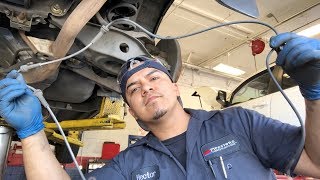
How to confirm: After confirming the wiring is good, the sensor is the next likely culprit. An ABS-capable scan tool can show live data; a reading of 0 MPH or erratic jumps 🎬 See how to easily test and diagnose wheel speed sensors from the right rear wheel while others read normally points to the sensor. Note: On these trucks, the engine must be running and in gear for the rear sensors to report speed.
Typical fix: Replace the right rear wheel speed sensor. It is held in by a single T30 Torx bolt. Clean the mounting hole before installing the new sensor.
Est. part cost: $25-$60 - Debris on Magnetic Encoder Ring ⚪ Low Probability The sensor reads a magnetic ring (also called a tone ring or reluctor ring) on the axle shaft or wheel hub. Metallic brake dust and road grime can accumulate on this ring, disrupting the sensor's signal. GM has a service bulletin (PIC5428F, later superseded) for many models that specifically addresses this issue causing C00xx codes.
How to confirm: After removing the wheel speed sensor, use a flashlight and a small mirror to inspect the magnetic ring through the sensor mounting hole. Look for a build-up of metallic paste or debris. The surface should be clean and smooth.
Typical fix: Clean the magnetic ring using a dry, soft nylon bristle brush, or a rag and brake cleaner. Be careful not to scratch or damage the ring's magnetic surface or use magnetic tools for cleaning.
Est. part cost: $0-$10
Rare But Worth Checking
- Faulty Electronic Brake Control Module (EBCM): → Shop ABS Control Module This is rare and should only be considered after all other possibilities (wiring, sensor, hub ring) have been definitively ruled out. A diagnostic scan tool that can communicate directly with the EBCM is needed to confirm this. A failure of the internal driver for the RR sensor channel would necessitate EBCM replacement. Manufacturer service bulletin TSB Bulletin #PIT5499B notes that a "Service Trailer Brake" message and code C0050 may require a technician to inspect the EBCM connector specifically for water intrusion or corrosion.
Diagnosis Steps
- Connect an ABS-capable scan tool and confirm C0050 is the active code. 🎬 Watch: Diagnostic walkthrough for a C0050 code on a GM truck Check for any symptom bytes like '0F' (erratic signal) or '18' (low signal amplitude) for more clues.
- View live data from all four wheel speed sensors. Drive the vehicle slowly (above 5 mph). Note: The engine must be running and in gear for the rear sensors to report speed.
- Confirm that the Right Rear (RR) sensor reads 0 MPH or jumps erratically while the other three sensors provide a smooth, consistent reading.
- Lift and safely support the rear of the vehicle. Perform a thorough visual inspection of the wiring harness for the RR wheel speed sensor. Check for chafing, cuts, or corrosion, especially where the harness goes over the frame above the spare tire.
- Disconnect the sensor. Inspect the connector terminals for green corrosion or pushed-out pins. Perform a 'tug test' by gently but firmly pulling on each wire at the connector to check for internal breaks.
- If wiring looks suspicious, perform a continuity test from the sensor connector to the EBCM connector. A reading of high or infinite resistance (OL) indicates an open wire. TSB Bulletin #PIT5427B suggests inspecting the X411 connector for damage or corrosion if multiple codes including C0050 are present.
- If wiring and connectors are confirmed to be good, remove the single T30 Torx bolt and pull the sensor out of the axle housing.
- Inspect the magnetic encoder ring inside the mounting hole for metallic debris. Clean if necessary.
- If the wiring is good and the ring is clean, the sensor itself is the most likely cause of the fault. Replace the sensor.
- After the repair, clear the codes with a scan tool and perform a test drive to ensure the warning lights do not return.
Parts You'll Likely Need
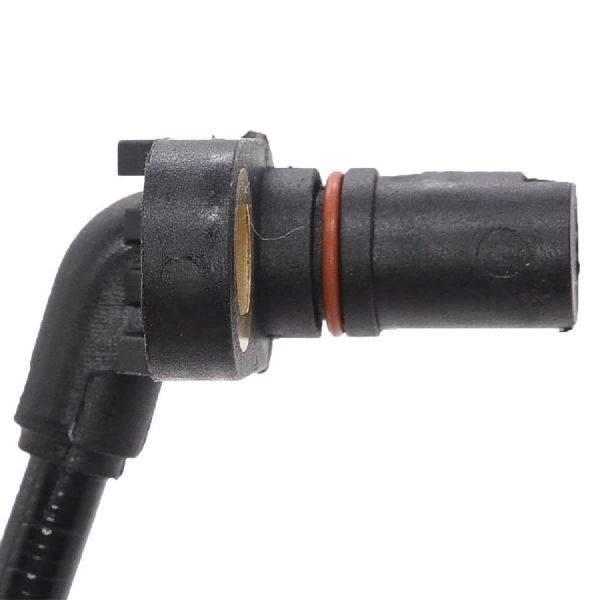
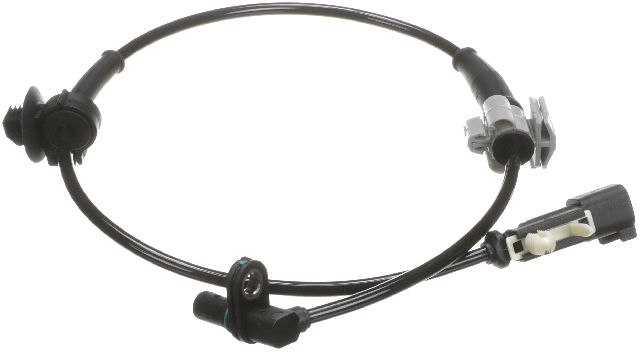
- Rear ABS Wheel Speed Sensor
(OEM #23299335 (replaces 22775301, 23492815))— This is the most commonly replaced part to fix a C0050 code after wiring issues have been ruled out.
Trusted brands: ACDelco (OEM), Standard Motor Products (ALS2550), NTK (AB1996), Dorman (970-041)
OEM price range: $45-$70
Aftermarket price range: $25-$50 - ABS Wheel Speed Sensor Connector Pigtail
(OEM #PT2160 (also 88861094))— If the wiring is corroded or broken at the connector, replacing the pigtail is the standard repair.
Trusted brands: ACDelco (OEM), Standard Motor Products (S2090), Dorman (645-915)
OEM price range: $25-$40
Aftermarket price range: $15-$25
Related Codes That Often Appear With This One
- C0045 — This is the code for the Left Rear Wheel Speed Sensor. If both C0045 and C0050 appear, it strongly suggests a shared wiring harness problem, a ground issue, or a problem at the EBCM.
- U0415 — This code means 'Invalid Data Received From EBCM'. Other modules in the truck (like the Transfer Case Control Module or Power Steering Control Module) set this code because the EBCM has a fault (like C0050) and they can no longer trust the data it's sending.
Technical Service Bulletins (TSBs) & Recalls
- GM PIT5335A: While originally for A/C issues, this bulletin number series is often referenced in forums regarding various electrical gremlins. A more relevant bulletin is PIC5428F, which applies to many GM vehicles and addresses wheel speed sensor codes (C0035-C0050) caused by metallic debris on the magnetic encoder ring. This TSB was later superseded by PIC5428G and then 17-NA-047.
- TSB Bulletin #PIT5499B: This bulletin notes that a Service Trailer Brake message may be displayed on the DIC and codes C0035-C0055 may be stored, requiring an inspection of the Electronic Brake Control Module connector for water intrusion.
- TSB Bulletin #PIT5427B: This manufacturer bulletin describes issues like hard steering or service suspension messages where a technician may find codes C0045 and C0050; it recommends inspecting the X411 connector for damage.
Platform-Specific Known Issues
- A known issue on these trucks is internal corrosion or breaks in the sensor wiring harness, often within a few inches of the connector, which may not be visible externally. A 'tug test' is often more effective than a visual inspection.
- A diagnostic quirk requires the engine to be running and the transmission in gear to get a speed reading from the rear sensors on a scan tool, which can confuse technicians who expect a signal when spinning the wheel by hand with the key on.
- The harness is also known to chafe on the frame above the spare tire, causing an intermittent short or open circuit that can be difficult to trace.
Mechanic-Grade Diagnostic Values
- Wheel Speed Sensor Resistance (Passive Sensor) — expected: 800 - 2,000 Ohms. Failure: A reading of OL (open circuit) or significantly outside the expected range. Note: This test is for passive sensors; active sensors cannot be reliably tested this way.
- Wheel Speed Sensor AC Voltage Output (Passive Sensor) — expected: Greater than 100mV (0.1V) AC when spinning the wheel by hand.. Failure: No voltage produced or an erratic, glitchy signal indicates a failed sensor.
- EBCM Bias Voltage at Sensor Connector (Key On) — expected: One wire should show a bias voltage (e.g., 2.5V or 5V) when the sensor is plugged in. This voltage should remain steady when wiggling the harness.. Failure: Voltage dropping out or fluctuating wildly when the harness is moved indicates a wiring problem.
Hidden / Shadow Codes Worth Checking
- C0050 0F: Erratic Signal. The EBCM detected an implausible change in wheel speed, like a jump of over 12 mph in 10 milliseconds. This often points to a significant crack in the encoder ring or a failing sensor. (see via GM-specific scan tool (GDS2, Tech2) or high-end professional scanner.)
- C0050 18: Low Signal Amplitude. The signal from the sensor is weak. This is commonly caused by an accumulation of metallic debris on the magnetic encoder ring or an excessive air gap between the sensor and the ring. (see via GM-specific scan tool (GDS2, Tech2) or high-end professional scanner.)
- C0050 5A: Signal Plausibility Failure. The signal from the right rear sensor is illogical compared to the other wheel speed sensors. This can be caused by a damaged tone ring, incorrect tire sizes, or an intermittent wiring fault. (see via GM-specific scan tool (GDS2, Tech2) or high-end professional scanner.)
Scan Tool Commands That Help
- GDS2 / Professional Scan Tool: Clear All Codes / Network Code Clear — After the physical repair is complete, a full network code clear is recommended to erase the C0050 from the EBCM and any corresponding U-codes (like U0415) from other modules.
Wiring & Ground Locations
- EBCM Connector X1, Pins 3 & 4 — The EBCM is located on the driver's side frame rail, below the driver's door. Connector X1 is the large main connector. Pins 3 (Green/Yellow) and 4 (Violet) are for the Right Rear Wheel Speed Sensor.. These are the termination points for the RR wheel speed sensor circuit. Testing for continuity between these pins and the sensor connector is the definitive way to confirm if the wiring harness is intact.
- G103 — Located on the engine block, typically at the right rear (passenger side).. This is a primary engine and module ground point. While a failure here would likely cause many other codes, a poor connection could introduce electrical noise that might affect sensitive circuits like the ABS sensors.
- G400 — On the frame at the rearmost crossmember, near the junction for the tail light harness.. This is a major rear body ground. A poor connection here is cited in GM documents (PIT5562) as a cause for various rear-of-vehicle electrical issues, including trailer brake system messages which often appear with C0050.
Real Owner Repair Stories
- YouTube channel 'Phillip Bailey' (2017 GM Truck (Sierra/Silverado)) — ABS and TCS lights on, active code C0050.
❌ Tried (didn't work) Visual inspection of the harness showed no obvious damage., The previous mechanic had already replaced the wheel speed sensor.
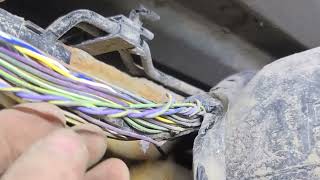
✅ What actually fixed it Using a graphing ohmmeter while wiggling the harness, the technician found an internal break in the yellow wire right near the sensor connector, visible only as a tiny 'aneurysm' or bulge in the insulation. Splicing and repairing this section of wire resolved the code. The original sensor was likely good. - YouTube channel 'Dre's Cars' (2018 Chevrolet Express Van (similar wiring)) — ABS light on, C0050 circuit open.
❌ Tried (didn't work) A new sensor was already tried.
✅ What actually fixed it The technician found two broken wires in the harness. One was further up the harness, and another was right by the connector. Instead of multiple splices, a new section of wire was run between the two break points to ensure a solid repair.
OEM Part Supersession History
22775301→23492815, then 23299335— Standard part evolution for improved durability or manufacturing process changes.
Diagnostic Flowchart
Other Known Issues on This Vehicle
Issues unrelated to this code that are worth knowing about as an owner of this generation:
- Torque Converter Clutch (TCC) Shudder 🟠 Medium — Very common, especially on vehicles equipped with the 8-speed (8L90/8L45) transmission. Often appears between 30,000-80,000 miles. (Ref: TSB 18-NA-355: Advises a specific fluid exchange procedure with an updated Mobil 1 synthetic LV ATF HP fluid.)
- A/C Condenser Failure 🔴 High — Extremely common. The condenser, which is a combination unit with the transmission cooler, is prone to cracking from thermal stress, causing refrigerant to leak out. Failures can occur as early as 30,000 miles. (Ref: Special Coverage Adjustment N172086880 (17336): Extended the warranty for this specific failure, but notably excluded the Silverado and Sierra pickups, despite them using similar parts to the covered SUVs.)
- Active Fuel Management (AFM) Lifter Failure 🔴 High — A significant issue on the 5.3L (L83) and 6.2L (L86) V8 engines. Lifters can become stuck or collapse, leading to a misfire, engine noise, and potential camshaft damage. Can occur at various mileages, sometimes under 100,000 miles. (Ref: Multiple TSBs exist related to diagnosis, but no single recall covers the widespread issue.)
- Brake Vacuum Pump Failure 🔴 High — The engine-driven vacuum pump can fail, leading to a loss of power brake assist and a very hard brake pedal. This was a widespread issue. (Ref: Recall 19V761000 (GM #N192268490): GM recalled nearly 3.5 million trucks and SUVs to reprogram the EBCM and, if necessary, replace the vacuum pump.)
- Direct Injection Intake Valve Carbon Buildup 🟠 Medium — Common to all EcoTec3 direct-injected engines on this platform. Over time (typically 60,000-100,000 miles), carbon deposits build up on the back of the intake valves, which can cause misfires, rough idle, and reduced performance. (Ref: No recall exists. The fix is a manual cleaning service (e.g., walnut blasting) of the intake valves.)
Used vs. New Parts: Buying Guide for This Vehicle
When a used part is the smart pick: A used wiring harness pigtail or a section of harness from a junkyard vehicle can be a cost-effective repair if the damage to your original harness is extensive. It is often higher quality than generic aftermarket pigtails.
Donor-vehicle mileage cap: roughly under 80000 miles for the part to have meaningful remaining life.
What to inspect on the donor part:
- Source the harness from a vehicle in a dry, salt-free climate to minimize the chance of corrosion.
- Inspect the donor harness carefully for any nicks, cuts, or previous repairs.
- Gently pull on the wires at the connector to ensure there are no internal breaks (the same 'tug test' used for diagnosis).
Aftermarket brands forum-validated for this vehicle:
- ACDelco (OEM)
- Standard Motor Products (SMP)
- NTK
Brands owners have reported issues with on this vehicle:
- Ultra-cheap, no-name sensors from online marketplaces often have high failure rates or produce noisy signals that can cause intermittent issues.
Real Owner Stories
Aggregated from forums and TSBs cited above. Mileages and costs reflect what owners reported in those sources.
2018 Chevrolet Silverado 1500
Symptoms: The instrument cluster displayed a simultaneous failure of the Stabilitrak, Trailer Brake, and Parking Assist systems.
What fixed it: Found a broken wire inside the harness located approximately 8 inches away from the wheel speed sensor connector.
Source hint: GM-Trucks.com: Thread 'C0050-40 Right Rear Wheel sensor open + Trailer Brakes, Stabilitrak, ABS'
Related OBD-II Codes
Frequently Asked Questions
My 2018 Silverado has the Stabilitrak and Trailer Brake messages on; does GM TSB PIC5428F apply to this issue?
I'm trying to test the rear sensors on my Sierra with a scan tool but I get 0 MPH even when spinning the wheel. Is my sensor dead?
Where is the most common place for the C0050 wiring to fail on a 2014-2018 GMC Sierra?
Is there a simple way to check for the 'invisible' wire breaks common on these K2XX trucks?
Will the Special Coverage Adjustment for A/C condensers cover my Sierra if it has the same failure as the SUVs?
What tool do I need to remove the RR wheel speed sensor on my 2015 Sierra 1500?
Used vs. New Parts: Buying Guide for This Vehicle
When a used part is the smart pick: A used wiring harness pigtail or a section of harness from a junkyard vehicle can be a cost-effective repair if the damage to your original harness is extensive. It is often higher quality than generic aftermarket pigtails.
Donor-vehicle mileage cap: roughly under 80000 miles for the part to have meaningful remaining life.
What to inspect on the donor part:
- Source the harness from a vehicle in a dry, salt-free climate to minimize the chance of corrosion.
- Inspect the donor harness carefully for any nicks, cuts, or previous repairs.
- Gently pull on the wires at the connector to ensure there are no internal breaks (the same 'tug test' used for diagnosis).
Aftermarket brands forum-validated for this vehicle:
- ACDelco (OEM)
- Standard Motor Products (SMP)
- NTK
Brands owners have reported issues with on this vehicle:
- Ultra-cheap, no-name sensors from online marketplaces often have high failure rates or produce noisy signals that can cause intermittent issues.
Real Owner Stories
Aggregated from forums and TSBs cited above. Mileages and costs reflect what owners reported in those sources.
2018 Chevrolet Silverado 1500
Symptoms: The instrument cluster displayed a simultaneous failure of the Stabilitrak, Trailer Brake, and Parking Assist systems.
What fixed it: Found a broken wire inside the harness located approximately 8 inches away from the wheel speed sensor connector.
Source hint: GM-Trucks.com: Thread 'C0050-40 Right Rear Wheel sensor open + Trailer Brakes, Stabilitrak, ABS'
Related OBD-II Codes
Frequently Asked Questions
My 2018 Silverado has the Stabilitrak and Trailer Brake messages on; does GM TSB PIC5428F apply to this issue?
I'm trying to test the rear sensors on my Sierra with a scan tool but I get 0 MPH even when spinning the wheel. Is my sensor dead?
Where is the most common place for the C0050 wiring to fail on a 2014-2018 GMC Sierra?
Is there a simple way to check for the 'invisible' wire breaks common on these K2XX trucks?
Will the Special Coverage Adjustment for A/C condensers cover my Sierra if it has the same failure as the SUVs?
What tool do I need to remove the RR wheel speed sensor on my 2015 Sierra 1500?
Helpful Videos
We Have This Part in Stock



The information in this article is provided for general reference and educational purposes only. Vehicle specifications, procedures, and part compatibility can vary by production date, trim level, and region. Always consult your vehicle's factory service manual and verify part numbers before purchasing or performing repairs. Safety-critical components such as airbags, seat belts, and braking systems should be installed by a qualified professional.
- GMC Sierra 1500:
- 🧭 Diagnostic Flowchart
- 🎬 Helpful Videos
- 🛍️ Shop This Part
- What's Unique About the 2014-2018 GMC Sierra 1500
- Symptoms You May Notice
- Most Likely Causes
- Rare But Worth Checking
- Diagnosis Steps
- Parts You'll Likely Need
- Related Codes That Often Appear With This One
- Technical Service Bulletins (TSBs) & Recalls
- Platform-Specific Known Issues
- Mechanic-Grade Diagnostic Values
- Hidden / Shadow Codes Worth Checking
- Scan Tool Commands That Help
- Wiring & Ground Locations
- Real Owner Repair Stories
- OEM Part Supersession History
- Other Known Issues on This Vehicle
- Used vs. New Parts: Buying Guide for This Vehicle
- Real Owner Stories
- 2018 Chevrolet Silverado 1500
- Related OBD-II Codes
- Frequently Asked Questions
- Used vs. New Parts: Buying Guide for This Vehicle
- Real Owner Stories
- 2018 Chevrolet Silverado 1500
- Related OBD-II Codes
- Frequently Asked Questions
- 🎟️ Get 5% Off