

C0050 on 2011-2015 Hyundai Elantra: Right Rear Wheel Speed Sensor Fault Causes and Fixes
Code C0050 on a 2011-2015 Elantra almost always means the right rear wheel speed sensor has failed or its wiring is damaged. This will disable your ABS and traction control. A new sensor is the most likely fix, costing around $30-$70 for an aftermarket part.
- Code C0050 means your Elantra's ABS and Stability Control are offline due to a problem with the right rear wheel speed sensor circuit.
- The most likely fix is replacing the right rear wheel speed sensor (Part No. 59930-3X360).
- Before buying parts, use a scanner's live data function to confirm the right rear sensor is the one failing.
- Visually inspect the sensor's wiring for damage before replacing the sensor.
What's Unique About the 2011-2015 Hyundai Elantra
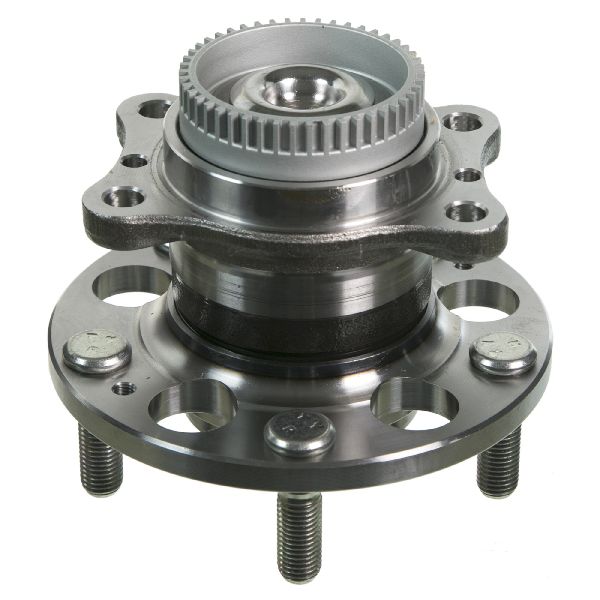
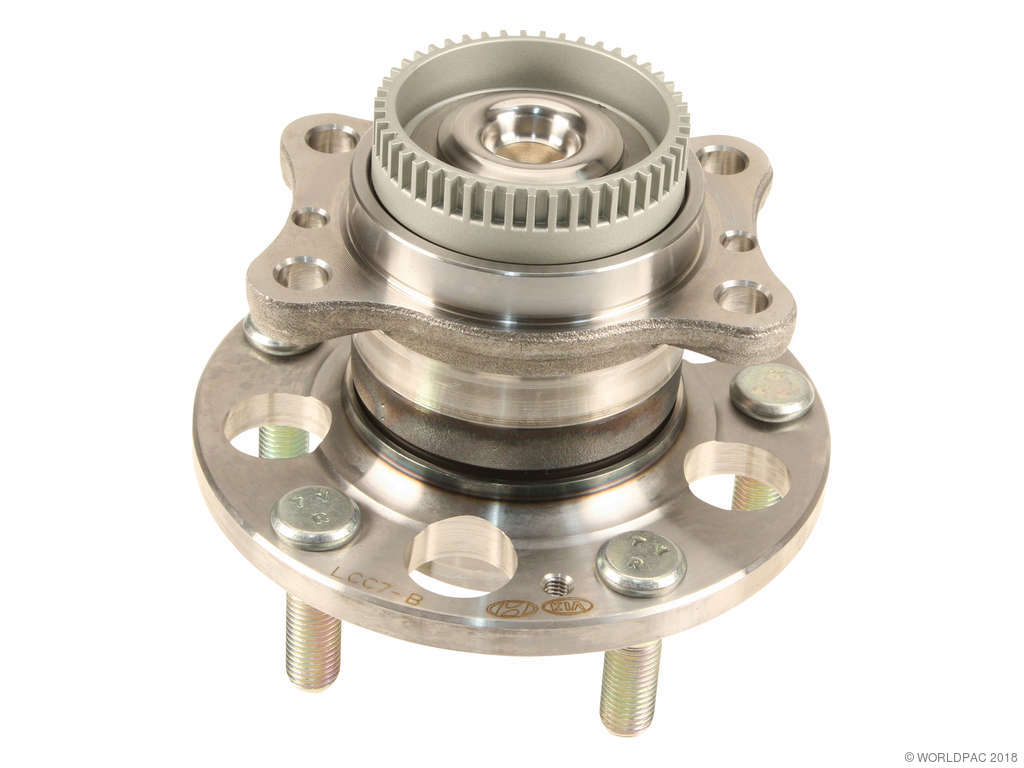
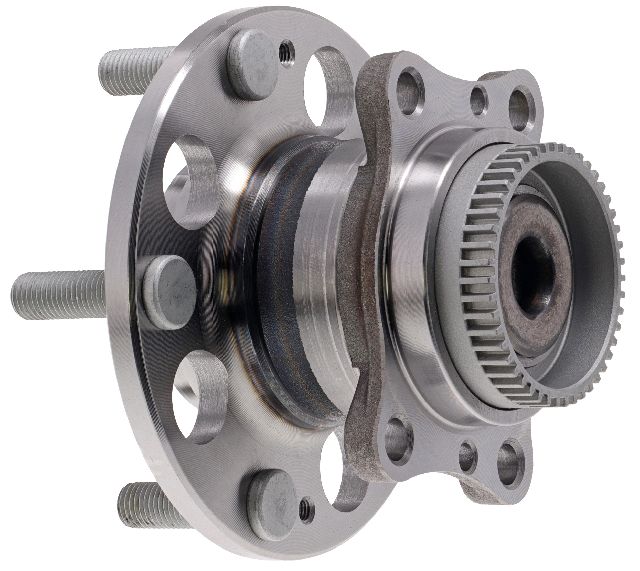
On the 2011-2015 Elantra (MD platform), this code is a straightforward component failure 99% of the time. There are no widespread design flaws causing this specific code, but the sensor's location behind the wheel makes it vulnerable to road debris, water, and salt. The magnetic encoder the sensor reads is integrated into the wheel hub bearing assembly, which means that if the encoder ring is damaged, the entire hub must be replaced, increasing repair costs compared to just a sensor swap.
Symptoms You May Notice
- ABS warning light is on
- Electronic Stability Control (ESC) or Traction Control (TCS) warning light is on
- ABS system does not activate during hard braking (wheels may lock up and skid)
- Traction control does not activate on slippery surfaces
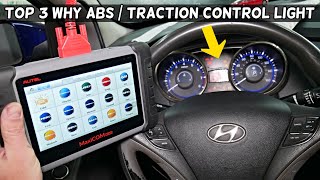
- Cruise control may be disabled 🎬 Watch: Top 3 reasons your ABS and traction lights are on
- Replacing the wheel hub assembly when only the sensor is bad. Always diagnose the sensor and wiring first before assuming the more expensive hub is the problem.
- Replacing the wrong side sensor. The code C0050 is specific to the RIGHT REAR wheel. Verify the position before ordering parts.
Most Likely Causes
- Failed Right Rear Wheel Speed Sensor 🔴 High Probability → Shop ABS Wheel Speed Sensor The sensor is exposed to harsh environmental conditions like water, road salt, and debris, which can lead to internal electronic failure over time. It is a common wear-and-tear item.
How to confirm: Using a scan tool with live data, observe the wheel speed readings from all four wheels while driving. The right rear sensor will likely show 0 MPH or an erratic, jumpy signal compared to the other three. A multimeter can also be used to test the sensor's internal resistance, though live data is more definitive.
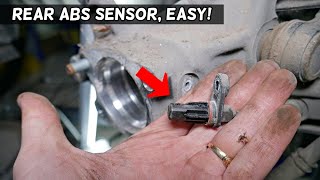
Typical fix: Replace the right rear wheel speed sensor. It is typically held in by a single 10mm bolt and can be accessed after removing the wheel. 🎬 See this walkthrough on locating and replacing the rear sensor
Est. part cost: $30-$80 - Damaged Wiring or Connector 🟡 Medium Probability The wiring harness runs down the suspension to the wheel hub and is susceptible to damage from road debris, improper jacking, or corrosion at the connector pins, especially in regions with heavy road salt use.
How to confirm: Visually inspect the entire length of the wiring from the sensor to where it enters the car body. Look for breaks, chafing, or melted sections. Unplug the connector and check for green or white corrosion on the pins. A continuity test with a multimeter can confirm an open or short in the circuit.
Typical fix: If the damage is localized, repair the broken wire(s) using solder and heat-shrink tubing. If the connector is corroded, it may need to be replaced with a new pigtail.
Est. part cost: $15-$40 - Damaged or Contaminated Hub Bearing Encoder Ring ⚪ Low Probability The magnetic encoder ring is built into the seal of the wheel hub bearing. Rust jacking underneath it or a buildup of metallic debris (often from brake wear) can corrupt the signal, causing an 'erratic signal' fault.
How to confirm: After removing the wheel speed sensor, visually inspect the magnetic ring on the face of the wheel hub with a flashlight. Look for cracks, heavy rust, or a coating of metallic 'fuzz'. Spinning the hub while observing the live data may show an erratic but not zero signal.
Typical fix: The entire rear wheel hub and bearing assembly must be replaced, as the encoder ring is not serviced separately.
Est. part cost: $100-$250
Rare But Worth Checking
- Faulty ABS Control Module: → Shop ABS Control Module This is very uncommon. This should only be considered after the sensor, wiring, and hub encoder ring have all been confirmed to be in perfect condition. The module itself can fail internally, but it's a last resort diagnosis. Usually, a failed module will present with multiple wheel speed sensor codes or communication codes.
Diagnosis Steps
- Connect an OBD-II scanner capable of reading ABS/Chassis codes to confirm C0050 is present.
- Access the live data stream on the scanner and monitor the speeds of all four wheels while driving slowly (above 5 mph) in a straight line.
- Confirm that the 'Right Rear Wheel Speed' reading is zero, erratic, or significantly different from the other three wheels.
- Raise and safely support the rear of the vehicle. Remove the right rear wheel.
- Visually inspect the wheel speed sensor and its wiring harness for any obvious signs of physical damage, such as cut wires, a cracked sensor body, or heat damage from the brakes.
- Unplug the sensor connector and inspect the terminals for corrosion or damage. Clean if necessary.
- Remove the single 10mm bolt holding the wheel speed sensor and carefully pry and pull it out of the hub. It may be seized with rust.
- Inspect the magnetic encoder ring on the hub for metallic debris, rust, or physical cracks. Clean any debris found with a soft brush or compressed air.
- If the visual inspection reveals no issues, the most probable cause is a failed sensor. Proceed with replacement.
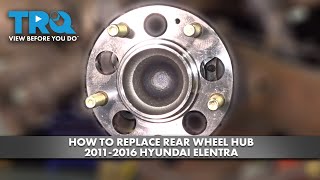
- If the encoder ring is visibly cracked or damaged, the entire wheel hub assembly must be replaced. 🎬 Watch: Step-by-step guide to replacing the rear wheel hub
- After replacing the part, clear the code with the scan tool and perform a test drive to ensure the warning lights do not return. The lights should go out on their own after the vehicle reaches about 10-15 mph.
Parts You'll Likely Need
- Right Rear ABS Wheel Speed Sensor
(OEM #59930-3X360)— This is the most common failure point for code C0050. It's an electronic sensor that fails from age and exposure to the elements.
Trusted brands: Hyundai (Genuine), Mando, Beck/Arnley, Standard Motor Products (SMP), Delphi
OEM price range: $90-$150
Aftermarket price range: $30-$70 - Rear Wheel Hub and Bearing Assembly
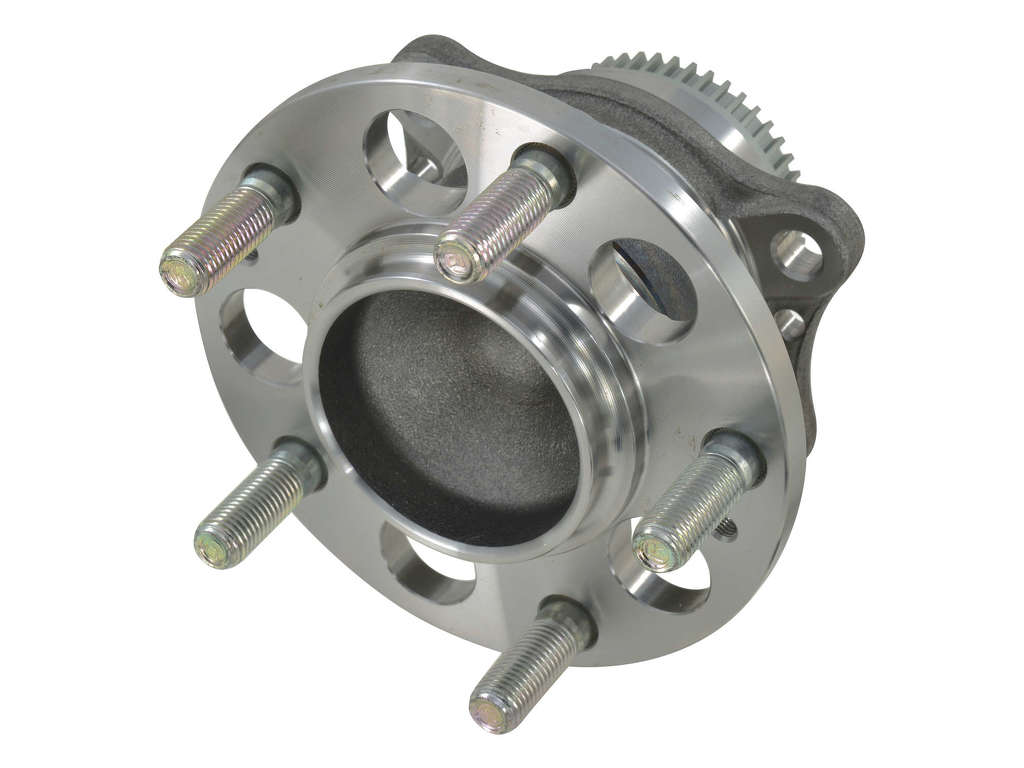
(OEM #52730-3S200)— This part is needed if the magnetic encoder ring, which is integrated into the hub, is found to be cracked or damaged, causing an erratic signal.
Trusted brands: Hyundai (Genuine), Timken, SKF, MOOG, TRQ
OEM price range: $200-$300
Aftermarket price range: $100-$180
Technical Service Bulletins (TSBs) & Recalls
- NHTSA ID: 10250689 / TSB 24-01-027H - Details Safety Recall 251 regarding a potential fire risk from an electrical short within the ABS module for a wide range of Hyundai vehicles, including the Elantra. The fix involves replacing the ABS fuse(s).
Platform-Specific Known Issues
- Safety Recall 251 (NHTSA 23V651000): Many 2011-2015 Elantras are affected by a recall for the ABS module itself, which can develop an internal electrical short and pose a fire risk, even when the car is parked. While this doesn't directly cause a C0050 code, it's a critical safety issue for the same system. The TSB (24-01-027H) instructs dealers to install a new multi-fuse to mitigate the fire risk. Owners should check with a Hyundai dealer or use their VIN on Hyundai's recall website to see if their vehicle is affected and if the remedy has been performed.
Documented NHTSA Reports
While C0050 is a standard wheel speed sensor code for Hyundai, cross-manufacturer records illustrate how this code can manifest differently or alongside other failures. For instance, NHTSA ODI #11228687 describes a vehicle where C0050 appeared simultaneously with several other chassis and communication codes (C0035, C0040, U0077, etc.). In other cases, such as NHTSA ODI #11649367, the vehicle disabled the ABS and supporting systems after setting C0050, with a technician noting the code appeared after service required extra brake fluid to return caliper piston contact. Furthermore, NHTSA ODI #11693418 reports C0050-00 appearing when the rear rotors, pads, and adapter plates required replacement. Notably, on some different makes, NHTSA ODI #10763888 indicates C0050 was used to identify a faulty power steering control module (PSCM), though this is not the standard application for the Hyundai Elantra.
Mechanic-Grade Diagnostic Values
- Wheel Speed Sensor Internal Resistance — expected: 800 - 2,000 Ohms (Ω). Failure: A reading of 0 Ω (short circuit), infinite/O.L. (open circuit), or a value significantly outside the expected range indicates a failed sensor.
- Wheel Speed Sensor AC Voltage Output (Passive Sensor) — expected: Generates an AC voltage that increases with wheel speed (e.g., >100mV when spinning by hand).. Failure: No AC voltage produced when the wheel is spun indicates a dead sensor or a problem with the tone ring.
Hidden / Shadow Codes Worth Checking
- C0050-0F: Erratic Signal. This points towards a physically damaged tone ring, metallic debris on the sensor tip, or a loose wheel bearing causing an inconsistent air gap. (see via Advanced OBD-II scanner with ABS/Chassis system capabilities (e.g., Hyundai GDS, Autel, Launch).)
- C0050-18: Low Signal Amplitude. Indicates a weak signal, often caused by an increased air gap between the sensor and tone ring, internal sensor failure, or a demagnetized ring. (see via Advanced OBD-II scanner with ABS/Chassis system capabilities.)
- C0050-5A: Signal Not Plausible. The signal from the sensor is illogical when compared to other vehicle data, like the other wheel speeds. This often points to a damaged tone ring sending an incorrect pulse count. (see via Advanced OBD-II scanner with ABS/Chassis system capabilities.)
Scan Tool Commands That Help
- Hyundai GDS (Global Diagnostic System): Fault Code Searching / DTC Analysis — To read the primary C0050 code and any manufacturer-specific sub-codes (like -18 or -0F) that provide deeper diagnostic clues.
- Hyundai GDS (Global Diagnostic System): Current Data (Live Data) — To view and graph all four wheel speed sensors' outputs in real-time while driving. This is the definitive way to confirm the right rear sensor is the one providing an erratic, absent, or incorrect signal compared to the others.
- Hyundai GDS (Global Diagnostic System): Actuation Test — While less common for a sensor input code, GDS may offer actuation tests for the ABS pump and solenoids. Running these can help rule out a broader ABS module issue if multiple, confusing codes are present.
Wiring & Ground Locations
- GC501 — A primary grounding point for the engine control system.. While not directly for the ABS sensor, a poor engine system ground can introduce electrical noise that may, in rare cases, interfere with various sensor readings processed by the main computer systems. A wiring diagram shows this as a key ground.
- Right Rear Wheel Speed Sensor Connector — Located in the right rear wheel well, connected directly to the sensor. The harness then routes up along the suspension components into the vehicle body.. This 2-pin connector is the most common point for corrosion or wiring damage due to its exposed location. Checking for power and ground (if an active sensor) or testing resistance across these pins is a primary diagnostic step.
Real Owner Repair Stories
- YouTube channel 'Fix It All' (Kia Sorento (shares platform components with Hyundai Santa Fe, similar diagnostic process to Elantra)) — ABS and Traction Control lights were on.
❌ Tried (didn't work) Initial diagnosis only.
✅ What actually fixed it The scanner reported a 'right rear wheel speed sensor signal open or short'. The technician diagnosed this as a 99% chance of a bad sensor or broken wire. The entire rear hub assembly, which included the sensor, was replaced to fix the problem. After replacement and clearing the codes, the lights went out and did not return.
OEM Part Supersession History
59930-3X360→No official supersession found.— This part number appears to be consistent for the 2011-2016 Elantra model years.
Heads up: Some parts listings specify 'Korea Built Vehicle'. While likely not an issue for North American models, it's wise to confirm fitment with a VIN when ordering.
Model Year Variations Within This Range
- 2011-2013 vs 2014-2015: The 2014 model year marked a significant facelift for the Elantra. While the underlying ABS components like the sensor and hub assembly remained the same, exterior parts changed. For example, the fog lights and headlight housings are different. This is not directly related to the C0050 fix but is important for overall vehicle identification and repair.
Diagnostic Flowchart
Other Known Issues on This Vehicle
Issues unrelated to this code that are worth knowing about as an owner of this generation:
- Engine Ticking / Piston Slap (1.8L Nu Engine) 🔴 High — Widespread issue, can occur at any mileage but often noted between 60,000-100,000 miles. A class-action lawsuit was settled regarding this issue. (Ref: A warranty extension and software update (Piston Ring Noise Sensing System - PNSS) were issued.)
- Worn Steering Coupler 🟠 Medium — Extremely common. Owners typically notice a clicking or 'thud' noise in the steering wheel when turning, usually starting around 50,000-80,000 miles. (Ref: Hyundai issued a warranty extension (T-XX-A) for this part, but many vehicles are now outside the coverage period. The part itself is very inexpensive.)
- Premature Alternator Failure 🟡 Low — A noticeable pattern of alternators failing more frequently than expected, sometimes annually.
- ABS Module Fire Risk 🔴 High → Shop ABS Control Module — Affects a large number of vehicles across the model years, leading to a major safety recall. (Ref: Recall 251 (NHTSA 23V651000) / TSB 24-01-027H.)
- Corroding Front Coil Springs 🟠 Medium — Primarily affects vehicles in regions with heavy road salt use (Snow Belt). Can lead to spring fracture. (Ref: Recall 131 (NHTSA 15V629000) was issued for 2011-2013 models.)
Used vs. New Parts: Buying Guide for This Vehicle
When a used part is the smart pick: A used wheel hub assembly from a low-mileage, non-corroded donor car can be a cost-effective option if the entire hub needs replacement. It is generally not recommended to buy a used wheel speed sensor alone, as it's an inexpensive electronic part prone to failure from age and environmental exposure.
Donor-vehicle mileage cap: roughly under 60000 miles for the part to have meaningful remaining life.
What to inspect on the donor part:
- Check for minimal rust on the hub surface and mounting points.
- Ensure the magnetic encoder ring is clean, free of debris, and has no visible cracks or damage.
- Spin the bearing by hand; it should be smooth and silent with no grinding or notchiness.
- Verify the donor vehicle is from a region with minimal road salt usage if possible.
Aftermarket brands forum-validated for this vehicle:
- For wheel hub assemblies: SKF, Timken, and MOOG are consistently cited as high-quality, premium aftermarket brands that often meet or exceed OEM specifications.
- For wheel speed sensors: Delphi, Standard Motor Products (SMP), and NTK are reputable brands known for reliable electronic components.
Brands owners have reported issues with on this vehicle:
- Ultra-low-cost, unbranded 'white-box' parts from online marketplaces can have high failure rates. While tempting, they may lead to doing the job twice.
Real Owner Stories
Aggregated from forums and TSBs cited above. Mileages and costs reflect what owners reported in those sources.
2011-2015 Hyundai Elantra (MD Platform)
Symptoms: ABS and ESC warning lights are on; users discussed issues with the ABS/ESC system and shared tips on dealing with seized sensors.
What fixed it: DIY replacement of the right rear wheel speed sensor, often requiring prying the old sensor out of the hub due to rust.
Source hint: Hyundai-Forums.com (https://www.hyundai-forums.com/) threads regarding MD-platform ABS/ESC light issues
Related OBD-II Codes
Frequently Asked Questions
Does Safety Recall 251 (NHTSA 23V651000) cause the C0050 code on my 2011-2015 Elantra?
Can I just replace the magnetic encoder ring if it's damaged?
Why is my cruise control disabled when the ABS light is on?
Is there a specific TSB for the steering noise I hear along with my ABS light?
Will the ABS and ESC lights go off automatically after I replace the sensor?
How can I confirm if the right rear sensor is actually bad before buying a part?
Helpful Videos
We Have This Part in Stock


The information in this article is provided for general reference and educational purposes only. Vehicle specifications, procedures, and part compatibility can vary by production date, trim level, and region. Always consult your vehicle's factory service manual and verify part numbers before purchasing or performing repairs. Safety-critical components such as airbags, seat belts, and braking systems should be installed by a qualified professional.
- Hyundai Elantra:
- 🧭 Diagnostic Flowchart
- 🎬 Helpful Videos
- 🛍️ Shop This Part
- What's Unique About the 2011-2015 Hyundai Elantra
- Symptoms You May Notice
- Most Likely Causes
- Rare But Worth Checking
- Diagnosis Steps
- Parts You'll Likely Need
- Technical Service Bulletins (TSBs) & Recalls
- Platform-Specific Known Issues
- Documented NHTSA Reports
- Mechanic-Grade Diagnostic Values
- Hidden / Shadow Codes Worth Checking
- Scan Tool Commands That Help
- Wiring & Ground Locations
- Real Owner Repair Stories
- OEM Part Supersession History
- Model Year Variations Within This Range
- Other Known Issues on This Vehicle
- Used vs. New Parts: Buying Guide for This Vehicle
- Real Owner Stories
- 2011-2015 Hyundai Elantra (MD Platform)
- Related OBD-II Codes
- Frequently Asked Questions
- 🎟️ Get 5% Off