

C0050 on 2007-2012 Hyundai Santa Fe: Right Rear Wheel Speed Sensor Circuit Fault Guide
Code C0050 on a 2007-2012 Hyundai Santa Fe means there is a fault in the right rear wheel speed sensor circuit. This is most often caused by a failed sensor, damaged wiring, or a corroded/cracked ABS tone ring. Expect to pay $25-$70 for a replacement sensor and about an hour of labor if you take it to a shop. Driving with this code is possible, but your ABS and ESC safety systems will be disabled.
- C0050 means your 2007-2012 Santa Fe has a problem with the right rear wheel speed sensor circuit, disabling your ABS and ESC.
- The most likely cause is a bad wheel speed sensor (Part No. 95681-2B000), which is a relatively inexpensive part and accessible for DIY replacement.
- Before buying parts, always inspect the wiring for damage and the ABS tone ring (on the axle) for cracks or heavy rust, as these can also cause the code.
- A scan tool that can read live ABS data is the most effective tool for confirming which wheel is at fault.
What's Unique About the 2007-2012 Hyundai Santa Fe
On the second-generation (CM) Hyundai Santa Fe, the causes for a C0050 code are fairly standard. However, a key aspect for this platform is that the rear wheel speed sensor is available as a separate service part from the rear wheel hub assembly, which is not always the case on other vehicles. Hyundai even issued a Technical Service Bulletin (19-BE-001H-1) encouraging dealers to replace only the sensor when appropriate, rather than the entire hub, to save on costs. Additionally, the ABS tone ring on the axle can corrode and crack, especially in areas with road salt, causing an erratic signal. While some vehicles integrate this ring into the hub, on the Santa Fe it is often a separate, replaceable part.
Symptoms You May Notice
- ABS warning light is on
- Electronic Stability Control (ESC) or Traction Control (TCS) warning light is on
- Downhill Brake Control (DBC) warning light may be on
- ABS system does not activate during hard braking (wheels may lock up)
- Traction control does not activate on slippery surfaces
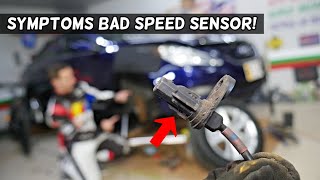
- Cruise control may be disabled 🎬 Watch: Common symptoms of a failing Hyundai ABS sensor
- Replacing the entire wheel hub/bearing assembly when only the inexpensive sensor or a section of wiring was faulty. Always diagnose the circuit components first.
- Assuming the sensor is bad without checking the tone ring. A cracked tone ring will cause the same symptoms and a new sensor will not fix the issue.
Most Likely Causes
- Failed Right Rear Wheel Speed Sensor 🔴 High Probability → Shop ABS Wheel Speed Sensor The sensor is located behind the wheel, where it's exposed to harsh conditions like water, road salt, dirt, and vibrations, leading to internal failure or corrosion over time.
How to confirm: Use a scan tool that can read ABS live data. Watch the signal from the right rear wheel speed sensor while driving or spinning the wheel by hand. If the reading is zero, erratic, or doesn't match the other wheels, the sensor is the primary suspect. You can also test the sensor's internal resistance with a multimeter and compare it to the manufacturer's specification (an out-of-spec reading or open circuit indicates failure).
Typical fix: Replace the right rear wheel speed sensor. It is typically held in by a single 10mm or T30 bolt on the wheel hub/knuckle. Per TSB 19-BE-001H-1, Hyundai recommends replacing just the sensor instead of the whole hub assembly.
Est. part cost: $25-$70 - Damaged or Corroded Wiring/Connector 🟡 Medium Probability The wiring harness runs down the suspension to the wheel hub and is susceptible to damage from road debris, moisture intrusion, and constant flexing. Wires can break internally or corrode at the connector pins, causing an open or short circuit.
How to confirm: Visually inspect the entire length of the wiring from the sensor connector up into the wheel well. Look for any cuts, abrasions, melting, or green/white corrosion on the connector pins. Wiggle the harness while monitoring live data to see if the signal cuts in and out. Perform a continuity test on the wires between the sensor connector and the ABS module connector using a multimeter.
Typical fix: Repair the broken or corroded section of wire using solder and heat-shrink tubing. If the connector itself is damaged, replace the pigtail connector.
Est. part cost: $15-$40 - Damaged or Corroded ABS Tone Ring ⚪ Low Probability The tone ring is a toothed metal ring on the axle that the sensor reads. In areas with heavy road salt use, this ring can rust heavily. The rust swells under the ring, causing it to crack or break, which prevents the sensor from getting a clean signal.
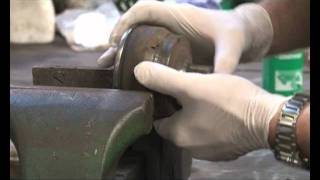
How to confirm: Remove the wheel speed sensor and use a flashlight and mirror to inspect the tone ring inside the hub. Spin the hub and look for any broken teeth, visible cracks, or heavy rust buildup that could interfere with the sensor's magnetic reading. A cracked ring is a definitive sign of failure. 🎬 Watch: How to replace a broken ABS reluctor ring
Typical fix: If the tone ring is damaged, it must be replaced. On this vehicle, it is often possible to replace just the ring, which is pressed onto the CV axle shaft. This is a more involved repair than the sensor itself. If it is integrated into the wheel hub/bearing assembly, the entire hub must be replaced.
Est. part cost: $20-$40 for a separate ring, $80-$150 for a hub assembly
Rare But Worth Checking
- Failed ABS Control Module: → Shop ABS Control Module This is very rare. The ABS module is the computer that controls the system. It should only be suspected after the sensor, wiring, and tone ring have all been confirmed to be in good condition. A module failure often triggers multiple wheel speed sensor codes or communication codes, not just one.
Diagnosis Steps
- Connect an OBD-II scanner capable of reading ABS/Chassis codes to confirm C0050 is the active fault. Note any sub-codes like 'erratic signal' which can point towards a tone ring issue.
- Use the scanner's live data function to monitor the speed of all four wheels while driving slowly in a straight line. Observe if the Right Rear (RR) wheel speed reading is erratic, drops to zero, or does not match the other three wheels.
- If the signal is faulty, raise and secure the rear of the vehicle. Visually inspect the right rear wheel speed sensor and its wiring harness for any obvious signs of damage, corrosion, or loose connections.
- Disconnect the sensor and inspect the connector pins for corrosion or damage. Check for reference voltage and ground at the harness-side connector with the ignition on.
- If the visual inspection is clear, remove the sensor (typically one bolt). Shine a light into the mounting hole and slowly rotate the hub to inspect the ABS tone ring for cracks, missing teeth, or heavy rust/debris. A cracked ring is a common failure point.
- If the tone ring appears okay, test the sensor itself. Use a multimeter to check the resistance across the sensor's pins and compare it to the manufacturer's specifications. An open circuit (infinite resistance) or a reading far out of spec indicates a bad sensor.
- If the sensor tests good, the final step is to check the wiring harness for continuity and shorts. Check for continuity on both wires between the sensor connector and the main ABS module connector. A wiring diagram is essential for this step.
Parts You'll Likely Need
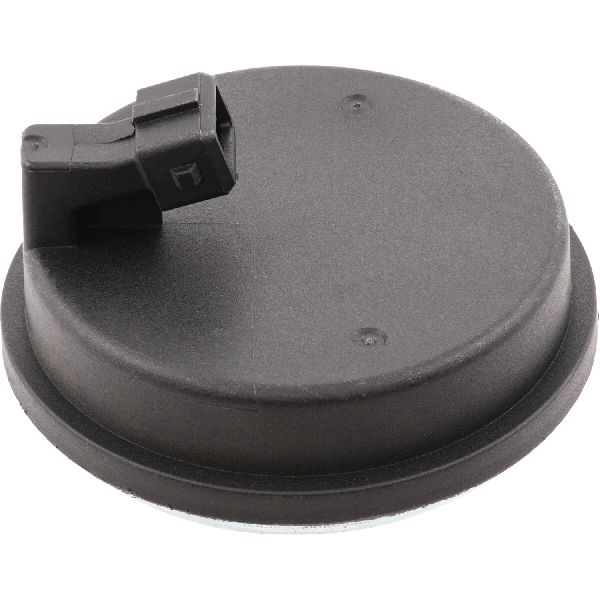
- Right Rear ABS Wheel Speed Sensor
(OEM #95681-2B000)— This is the most common failure point for a C0050 code. The sensor fails internally from age and exposure to the elements. This part number is specified for the right rear position on AWD models.
Trusted brands: Hyundai (OEM), Mando, Bosch, Delphi, Standard Motor Products (SMP)
OEM price range: $90-$150
Aftermarket price range: $25-$70 - ABS Wheel Speed Sensor Connector (Pigtail) — If the wiring is corroded or broken at the connector, replacing the pigtail is the most effective repair.
Trusted brands: Dorman, Standard Motor Products (SMP)
OEM price range: $30-$50
Aftermarket price range: $15-$30 - Rear ABS Tone Ring — If the tone ring has cracked due to corrosion, it must be replaced to restore a proper sensor signal. Aftermarket options are available.
Trusted brands: Dorman (e.g., 917-543, though fitment for this specific model year needs verification)
OEM price range: Not typically sold separately by OEM
Aftermarket price range: $20-$40
Technical Service Bulletins (TSBs) & Recalls
- TSB 19-BE-001H-1: This bulletin advises that for FWD models of the Santa Fe (CM), Veracruz (EN), and others, the rear wheel speed sensor is available as a separate part from the hub assembly. It recommends replacing only the sensor when appropriate, rather than the entire hub, to reduce repair costs.
Platform-Specific Known Issues
- Water Intrusion on Rear Sensors (Later Models): While primarily affecting later model years (2013+), Hyundai issued TSB 17-01-009-2 for Santa Fe models in coastal areas where saltwater could enter the rear sensor housing, causing temporary ABS/ESC lights. The fix involved applying a special silicone spray or replacing the sensor cap. This highlights the sensor's vulnerability to moisture.
Mechanic-Grade Diagnostic Values
- Passive Wheel Speed Sensor Resistance — expected: 800 - 1,700 Ohms (General automotive reference). Failure: A reading of OL (Open Loop/infinite resistance) or a value significantly outside the expected range. Compare to the sensor on the opposite wheel; they should be very close.
- Passive Wheel Speed Sensor AC Voltage Output — expected: Greater than 100-200 millivolts (mV) AC. Failure: No voltage or very low voltage is generated when spinning the wheel by hand (approx. 1 revolution per second). This indicates the sensor is not creating a signal.
Hidden / Shadow Codes Worth Checking
- C0050-0F: An erratic wheel speed sensor signal is detected. This often points to a damaged tone ring, debris on the sensor tip, or a loose wheel bearing. (see via Advanced OBD-II scanner with ABS/Chassis system capabilities (e.g., Hyundai GDS, Autel, Launch).)
- C0050-18: Low signal amplitude is detected. This indicates a weak or erratic signal, which could be caused by an increased air gap between the sensor and ring, or internal sensor failure. (see via Advanced OBD-II scanner with ABS/Chassis system capabilities.)
- C0050-5A: The wheel speed sensor signal is not plausible. The module is receiving a signal, but it doesn't make sense when compared to the other wheel speed sensors (e.g., showing 5 mph when others show 40 mph). (see via Advanced OBD-II scanner with ABS/Chassis system capabilities.)
- C0050-06: Low Voltage / Open Circuit. This indicates a break in the wiring, a disconnected sensor, or a completely failed sensor. (see via Advanced OBD-II scanner with ABS/Chassis system capabilities.)
Wiring & Ground Locations
- ABS Control Module — Located in the engine compartment, at the left rear, below the brake master cylinder.. This is the destination for the wheel speed sensor wiring. Final continuity checks of the harness must be performed at the connector for this module.
- Engine Compartment Fuse/Relay Box — Located on the left side of the engine compartment.. Contains the main fuses and relays for the ABS system. A blown fuse (typically a large 40A or 50A fuse) would disable the entire system and likely set multiple codes, but should be checked.
Real Owner Repair Stories
- Reddit user on r/genesiscoupe (Hyundai Genesis Coupe (similar Hyundai platform)) — ABS and ESC lights on, pedal shuddering on initial movement.
❌ Tried (didn't work) Replacing the wheel speed sensor.
✅ What actually fixed it The root cause was a cracked ABS tone ring. For that vehicle, Hyundai did not sell the ring separately, requiring the user to source a used axle to harvest the tone ring for the repair.
Documented NHTSA Reports
- Cross-Manufacturer Note (Jeep): NHTSA ODI #11649367 describes a technician's finding where the vehicle disabled ABS and set code C0050 after brake service; the opinion was that extra brake fluid required to return caliper piston contact to the brake pad triggered the fault.
- Cross-Manufacturer Note (Chevrolet): An owner reported in NHTSA ODI #11228687 that their vehicle displayed a cluster of codes including C0035, C0040, and C0050, resulting in multiple illuminated warning lights.
- Cross-Manufacturer Note (Jeep): NHTSA ODI #11693418 notes a diagnostic showing code C0050-00 in a case where the rear brake pads, rotors, and adapter plate required replacement.
- Cross-Manufacturer Note (Chevrolet): In NHTSA ODI #10763888, a dealership diagnosed a C0050 code as a faulty Power Steering Control Module (PSCM), requiring replacement of the steering column, though this definition is specific to that manufacturer's platform.
Model Year Variations Within This Range
- 2007-2012: The rear wheel speed sensor part number is different for All-Wheel Drive (AWD) and Front-Wheel Drive (FWD/2WD) models. The part number 95681-2B000 is for the right rear on AWD models. FWD models may use a different sensor, such as part number 91920-0W100. It is critical to verify the part by VIN and drivetrain type.
Diagnostic Flowchart
Related OBD-II Codes
Frequently Asked Questions
Does TSB 19-BE-001H-1 apply to my 2007-2012 Hyundai Santa Fe?
Why does my scanner show an 'erratic signal' sub-code for the right rear wheel?
Do I have to replace the entire wheel hub assembly to fix code C0050?
Can driving in wet or coastal areas cause the C0050 code on my Santa Fe?
Are the wheel speed sensors the same on the Hyundai Veracruz or Kia Sorento?
Helpful Videos


We Have This Part in Stock

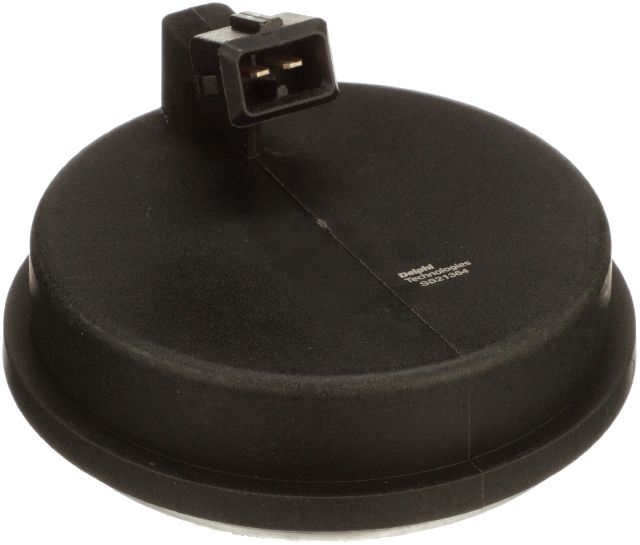

The information in this article is provided for general reference and educational purposes only. Vehicle specifications, procedures, and part compatibility can vary by production date, trim level, and region. Always consult your vehicle's factory service manual and verify part numbers before purchasing or performing repairs. Safety-critical components such as airbags, seat belts, and braking systems should be installed by a qualified professional.
- Hyundai Santa Fe:
- 🧭 Diagnostic Flowchart
- 🎬 Helpful Videos
- 🛍️ Shop This Part
- What's Unique About the 2007-2012 Hyundai Santa Fe
- Symptoms You May Notice
- Most Likely Causes
- Rare But Worth Checking
- Diagnosis Steps
- Parts You'll Likely Need
- Technical Service Bulletins (TSBs) & Recalls
- Platform-Specific Known Issues
- Mechanic-Grade Diagnostic Values
- Hidden / Shadow Codes Worth Checking
- Wiring & Ground Locations
- Real Owner Repair Stories
- Documented NHTSA Reports
- Model Year Variations Within This Range
- Related OBD-II Codes
- Frequently Asked Questions
- 🎟️ Get 5% Off