

C0050 on 2010-2015 Hyundai Tucson: Right Rear Wheel Speed Sensor Fault Causes and Fixes
Code C0050 on a 2010-2015 Hyundai Tucson indicates a fault with the right rear wheel speed sensor circuit. This usually means the sensor itself has failed or its wiring is damaged. Expect to pay $30-$80 for a new sensor and about 1-2 hours of labor for replacement. This is a critical safety repair as it disables ABS and stability control.
- C0050 means your Tucson's ABS and Stability Control are offline due to a fault with the right rear wheel speed sensor.
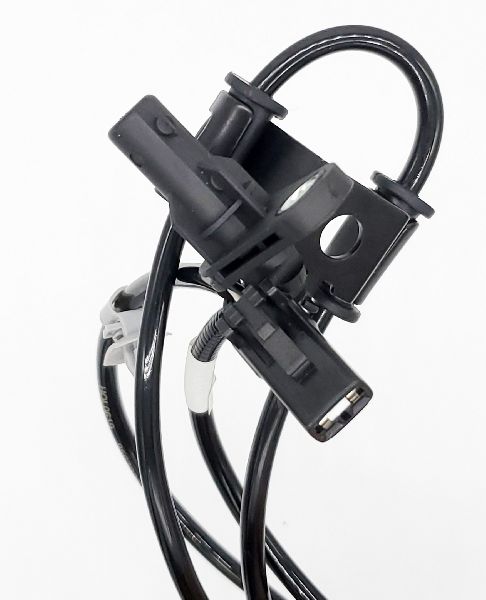
- The most likely culprit is the sensor itself, which is an affordable and accessible part to replace (OEM P/N: 95681-2S300).
- Before buying parts, use a scan tool to watch live data from the wheel sensors to confirm the fault is at the right rear wheel.
- Always inspect the wiring and connector for damage before replacing the sensor, as this is a common and cheaper fix.
- This is a safety-critical repair; do not ignore the warning lights as your ABS will not function in an emergency.
What's Unique About the 2010-2015 Hyundai Tucson
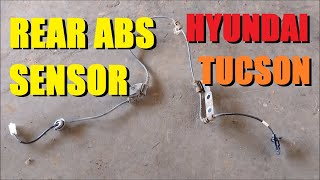
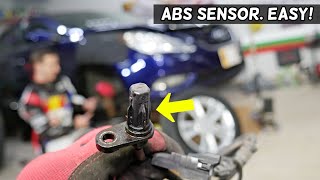
For the 2010-2015 (second generation) Tucson, the C0050 code is a straightforward issue, typically isolated to the sensor or its wiring. Unlike some vehicles where the sensor is integrated into a costly hub assembly, on this Tucson the sensor is a separate, affordable part. The repair can be a DIY job, but routing the new sensor wire can be tricky. 🎬 Watch this step-by-step guide on replacing the rear sensor. On some models, the connector is located inside the vehicle, requiring the removal of the rear seat and interior trim panels to access it.
Symptoms You May Notice
- ABS warning light is on
- Traction Control or Electronic Stability Control (ESC) warning light is on
- Downhill Brake Control (DBC) warning light may be on
- Cruise control may not work
- In some cases, the Blind-Spot Detection (BSD) system may show a warning, as it can rely on wheel speed data.
- Replacing the ABS module before thoroughly testing the sensor and wiring.
- Replacing the wheel hub assembly when only the external sensor has failed. Hyundai has issued bulletins for other models advising to replace only the sensor when possible.
Most Likely Causes
- Failed Right Rear Wheel Speed Sensor 🔴 High Probability → Shop ABS Wheel Speed Sensor The sensor is exposed to harsh conditions like water, road salt, and debris, leading to internal electronic failure over time. This is the most common point of failure for this code.
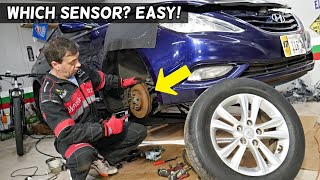
How to confirm: Use a multimeter to test the sensor's internal resistance; an out-of-spec or open-circuit reading confirms failure. Alternatively, a scan tool showing a zero or erratic reading from the right rear wheel while driving points to a bad sensor. 🎬 See how to test which wheel speed sensor is bad.
Typical fix: Replace the right rear wheel speed sensor. The sensor is typically held in by a single 10mm bolt. 🎬 Watch a quick walkthrough of the sensor replacement process.
Est. part cost: $30-$80 - Damaged Wiring or Connector 🟡 Medium Probability The wiring harness runs along the suspension and through the wheel well, making it vulnerable to chafing, corrosion, or damage from road debris or improper service. Wires can break internally near the connector from repeated suspension movement.
How to confirm: Visually inspect the entire length of the wire from the sensor to where it enters the cabin. Check the connector for corrosion or bent pins. Perform a continuity test on the wires with a multimeter to check for opens or shorts.
Typical fix: Repair the broken section of wire or replace the connector pigtail. Ensure the wire is properly secured away from moving parts.
Est. part cost: $15-$40 - Damaged or Contaminated Tone Ring / Hub Assembly ⚪ Low Probability The tone ring (or magnetic encoder), which the sensor reads, is integrated into the wheel hub assembly. While durable, it can crack from rust or get covered in metallic debris (often from brake wear), which confuses the sensor and generates an erratic signal.
How to confirm: After removing the sensor, use a light and a small mirror to inspect the tone ring inside the hub for cracks, missing teeth, or heavy rust/debris. Excessive play or noise from the wheel bearing also indicates a failing hub that requires replacement.
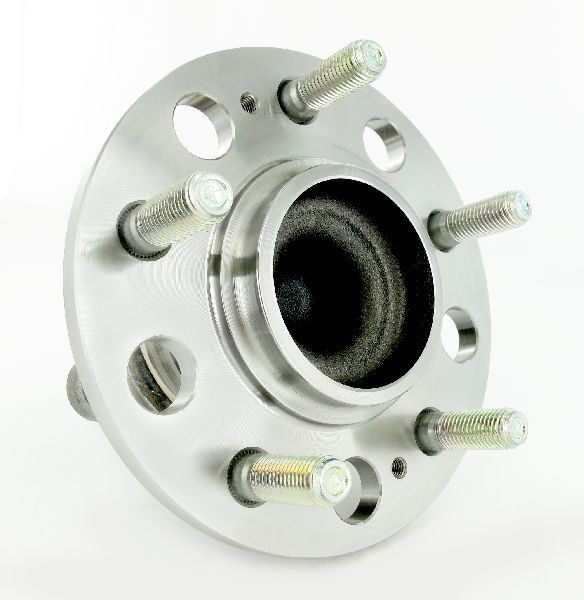
Typical fix: If the tone ring is damaged or the bearing has failed, the entire rear wheel hub assembly must be replaced.
Est. part cost: $100-$200
Rare But Worth Checking
- Faulty ABS Control Module: → Shop ABS Control Module This is very rare. Before condemning the module, all other possibilities (sensor, wiring, hub) must be exhaustively ruled out. This is typically diagnosed by a professional after confirming the sensor and wiring are good and that the module is receiving power but not sending a signal.
Diagnosis Steps
- Connect an OBD-II scanner capable of reading ABS codes to confirm C0050 is present. Check for any sub-codes like C0050-18 (low signal) or C0050-5A (not plausible) which can provide more clues.
- Use the scanner's live data function to monitor the speeds of all four wheels while driving slowly (above 5 mph). Confirm that the right rear wheel reads 0 MPH or has an erratic signal compared to the others.
- Safely raise and support the vehicle. Remove the right rear wheel.
- Visually inspect the wheel speed sensor and its wiring harness for any obvious signs of damage, such as cracks, fraying, or corrosion at the connector.
- Disconnect the sensor. Follow the wire harness to locate the main connector, which may be behind the wheel well liner or under the rear seat inside the cabin.
- Use a multimeter to measure the sensor's internal resistance. Compare the reading to the manufacturer's specification. An infinite (open) or zero (short) reading indicates a bad sensor.
- If the sensor tests good, inspect the wiring harness for continuity from the sensor connector back to the ABS control module. Check for a reference voltage (often 5V or 12V) and ground at the harness-side connector with the ignition on.
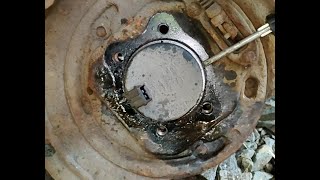
- With the sensor removed, inspect the tone ring on the wheel hub for any debris, rust, or physical damage. Clean it carefully with a brake cleaner and a soft brush.
- If the sensor, wiring, and tone ring are all good, the issue may be with the wheel hub bearing (excessive play causing an incorrect air gap) or, in rare cases, the ABS module itself.
Parts You'll Likely Need
- Rear Right ABS Wheel Speed Sensor
(OEM #95681-2S300)— This is the most common failure point for code C0050. It is a standalone part that fails from age and exposure.
Trusted brands: Hyundai (OEM), Bosch, Standard Motor Products (SMP), Delphi, RIDEX
OEM price range: $60-$100
Aftermarket price range: $30-$80 - Rear Wheel Hub and Bearing Assembly
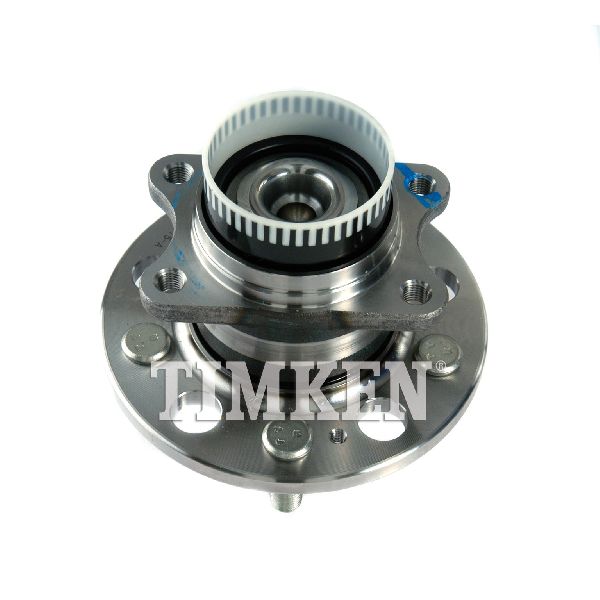
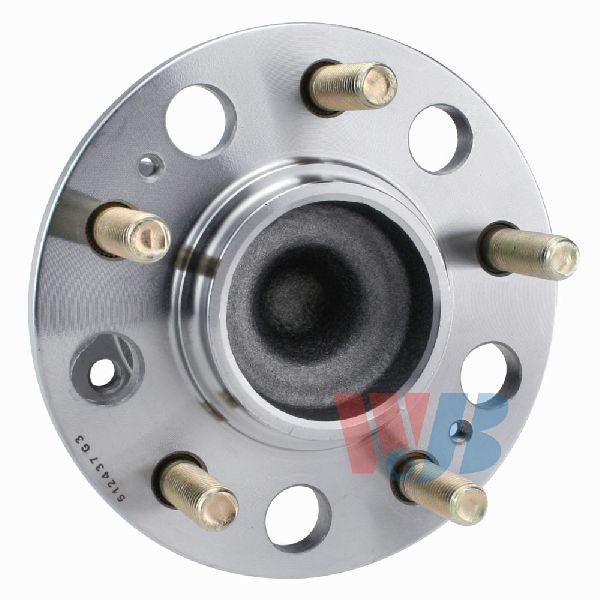
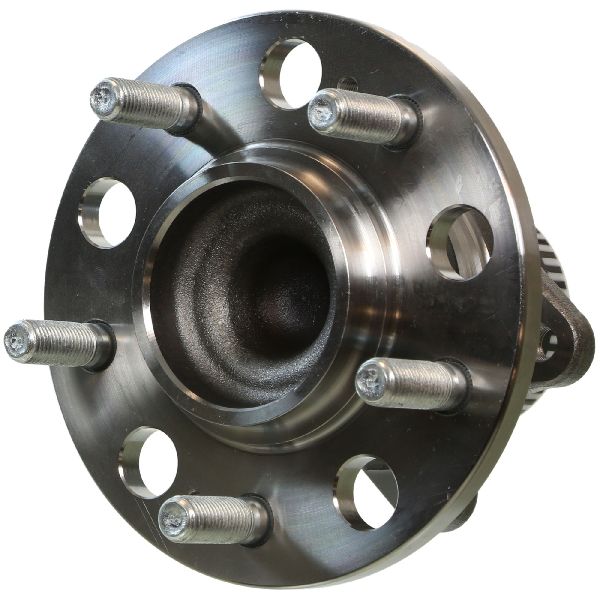
(OEM #52710-2E500 (AWD), 512437 (FWD - Interchange))— Needed if the integrated tone ring is damaged or if the wheel bearing itself has failed, causing an incorrect air gap or signal.
Trusted brands: Timken, SKF, MOOG, GSP
OEM price range: $180-$250
Aftermarket price range: $100-$200
Related Codes That Often Appear With This One
- C0045 — This is the code for the Left Rear Wheel Speed Sensor. Seeing both rear sensor codes together could point to a shared wiring harness problem, a corroded common connector, or that both sensors have failed due to similar age and exposure.
Technical Service Bulletins (TSBs) & Recalls
- TSB 19-BE-001H-1: While written for the Santa Fe and Veracruz, this TSB confirms Hyundai's procedure for replacing the rear wheel speed sensor as a separate component from the hub assembly, which is relevant to the Tucson.
- TSB 17-01-009-2: Pertains to Santa Fe models in coastal areas where saltwater intrusion could cause temporary sensor signal loss. While not directly for the Tucson, it highlights the sensor's vulnerability to moisture.
Documented NHTSA Reports
While C0050 is a wheel speed sensor code on the Hyundai Tucson, it is important to note that this code can have different meanings on other vehicle platforms. For example, NHTSA ODI #10763888 describes a case where a Chevrolet HHR was diagnosed with C0050, identifying a fault in the Power Steering Control Module (PSCM) rather than a wheel speed sensor. Conversely, on other platforms, the code remains brake-related; NHTSA ODI #11649367 reports that the code can be set after brake service if extra fluid is required to return caliper piston contact to the brake pad, disabling the ABS and supporting systems. Another report, NHTSA ODI #11693418, notes the code appearing alongside requirements to replace rotors, brake pads, and adapter plates. Finally, NHTSA ODI #11228687 shows C0050 appearing in a cluster of other wheel speed sensor codes (C0035, C0040) on a Chevrolet Silverado, suggesting a broader suspension or electrical fault.
Mechanic-Grade Diagnostic Values
- Sensor Type — expected: Active Hall-effect sensor, which generates a square wave signal.. Failure: This is not a passive sensor, so a simple resistance test may be inconclusive. The proper test involves checking for power, ground, and a signal.
- Harness Connector Voltage — expected: A reference voltage (typically 5V or 12V) on one pin and a good ground (less than 1 ohm to chassis ground) on the other pin, measured with the ignition on.. Failure: Absence of reference voltage or a high-resistance ground points to a problem in the wiring or the ABS module, not the sensor.
Hidden / Shadow Codes Worth Checking
- C0050-06: Indicates a low voltage or open in the right rear wheel speed sensor circuit. (see via Advanced scan tool with ABS/Chassis system capabilities (e.g., Hyundai GDS, Autel, Launch).)
- C0050-0F: An erratic wheel speed sensor signal is detected. This often points to a damaged tone ring, debris on the sensor, a loose wheel bearing, or electrical interference. (see via Advanced scan tool with ABS/Chassis system capabilities.)
- C0050-18: Low signal amplitude is detected. This can be caused by an increased air gap between the sensor and tone ring or internal sensor failure. (see via Advanced scan tool with ABS/Chassis system capabilities.)
- C0050-5A: The wheel speed sensor signal is not plausible. The module receives a signal, but it's illogical compared to other wheel sensors (e.g., reading 5 mph when others show 40 mph). (see via Advanced scan tool with ABS/Chassis system capabilities.)
Scan Tool Commands That Help
- Hyundai GDS (Global Diagnostic System) or equivalent: Live Data Monitoring / Data Graphing — This is the primary diagnostic step. Use it to view the speed readings from all four wheels simultaneously while driving. A faulty right rear sensor circuit will show a reading of 0 mph or a signal that drops out or jumps erratically compared to the other three wheels.
- Hyundai GDS (Global Diagnostic System): Mobile Data-recording Function ('Flight Record') — Extremely useful for capturing intermittent faults that don't appear during a short test drive. This function records sensor data over a longer period, allowing a technician to review the data and pinpoint the exact moment the RR wheel speed signal failed.
Wiring & Ground Locations
- Right Rear Sensor Harness Connector — Inside the vehicle cabin, behind the plastic trim panel located next to the rear passenger-side seat. The harness routes from the sensor, through a grommet in the wheel well, and plugs in at this interior location.. This is a key connection point to test. Corrosion or a loose connection here can cause the C0050 code. Technicians need to know that interior trim removal is required to access it, which is not immediately obvious.
- Chassis Ground — While a specific ground point designator (e.g., G402) is not available, a common chassis ground point is a bolt or stud connected to bare metal on the vehicle's frame, often found near the component or under trim panels.. A poor ground connection for the ABS module or the sensor circuit can cause erratic signals and trigger this code. Verifying a clean, tight ground is a crucial step in diagnosing electrical faults.
Real Owner Repair Stories
- YouTube channel 'Merry Frankster' (2011 Hyundai Tucson) — ABS light and other associated warning lights (traction control) came on. Scan tool showed a code for the rear left ABS sensor with an intermittent signal (Note: video is for left side, but the process is identical for the right side C0050).
❌ Tried (didn't work) The owner went straight to diagnosis and replacement based on the scan tool code.
✅ What actually fixed it Replacing the rear wheel speed sensor (part number shown in video). The video documents the entire process, including the difficult step of accessing the connector inside the cabin by prying off the plastic trim behind the rear seat. After replacement, all warning lights went off. - YouTube channel 'Fix It Angel' (Hyundai Tucson (year not specified, but similar generation)) — ABS activating at low speeds with no ABS light or codes present initially. Live data on a scan tool showed the left front wheel speed signal dropping out intermittently.
❌ Tried (didn't work) Initial visual inspection of the sensor and wiring showed no obvious issues.
✅ What actually fixed it After removing the sensor, a close inspection of the tone ring on the CV axle revealed a clear crack. The cracked tone ring was causing an erratic signal as it rotated, leading to the signal dropout. The fix was to replace the CV axle which contained the integrated tone ring.
Diagnostic Flowchart
Other Known Issues on This Vehicle
Issues unrelated to this code that are worth knowing about as an owner of this generation:
- Theta II Engine Failure/Oil Consumption 🔴 High — Widespread issue affecting 2.0L and 2.4L engines, leading to knocking, seizing, and potential fires. It was the subject of major recalls and class-action lawsuits. (Ref: Multiple recalls (e.g., NHTSA 17V226000) and warranty extensions (Service Campaign 966/982) were issued to install Knock Sensor Detection System (KSDS) software and cover engine replacement for connecting rod bearing failure.)
- Delayed or Rough Transmission Shifting 🟠 Medium — Owners report hesitation and jerky shifting, particularly with the 6-speed automatic transmission. It can sometimes be addressed with a software update or may indicate internal wear.
- ABS Module Internal Short/Fire Risk 🔴 High → Shop ABS Control Module — While distinct from a wheel speed sensor fault, the main ABS module on some Hyundai models of this era was recalled because it could short circuit internally, creating a fire risk even when the vehicle is parked. (Ref: NHTSA Recall 20V520000 (This recall primarily targeted older models but highlights a known issue with Hyundai ABS modules).)
- Air Conditioning System Failure 🟡 Low — Reports of the A/C system blowing weak or warm air are common, often traced to refrigerant leaks or compressor malfunctions.
Used vs. New Parts: Buying Guide for This Vehicle
When a used part is the smart pick: For this repair, using used parts is generally not recommended. The primary failure component, the ABS sensor, is an electronic part exposed to harsh conditions. A new aftermarket sensor is inexpensive (often $30-$50) and comes with a warranty, making it a much safer and more reliable choice than a used sensor with unknown remaining life.
Donor-vehicle mileage cap: roughly under 80000 miles for the part to have meaningful remaining life.
What to inspect on the donor part:
- If considering a used wheel hub assembly (for the tone ring), inspect the donor vehicle for signs of heavy corrosion or impact damage.
- Check the wheel bearing on the donor part for any roughness or play before purchasing.
- For a wiring pigtail, ensure the insulation is flexible and not brittle, and the connector pins are clean and straight.
OEM-only on this vehicle (don't cheap out):
- No parts for this specific repair are strictly OEM-only. However, for critical safety components like the ABS system, using a reputable OEM or high-quality aftermarket brand is strongly advised.
Aftermarket brands forum-validated for this vehicle:
- Bosch
- Delphi
- Standard Motor Products (SMP)
- Beck/Arnley
- VEMO
Brands owners have reported issues with on this vehicle:
- Avoid unbranded, no-name sensors from online marketplaces. While cheap, they have a high failure rate, may not have the correct internal resistance or signal properties, and can lead to repeat repairs.
Real Owner Stories
Aggregated from forums and TSBs cited above. Mileages and costs reflect what owners reported in those sources.
2012 Hyundai Tucson
Symptoms: ABS, ESC, and DBC warning lights appeared on the dashboard. The dealer diagnosed a bad right rear speed sensor.
What fixed it: Replacement of the right rear speed sensor (though the dealer initially quoted a full hub replacement).
Cost: $585-$585
Source hint: Hyundai-Forums.com thread titled 'Do I really need to replace the speed sensor?'
2016 Hyundai Tucson
Symptoms: A cascade of warning lights including ABS, ESC, and AEB triggered by a single rear wheel speed sensor fault code.
What fixed it: Checking for voltage at the connector and replacing the faulty rear wheel speed sensor.
Source hint: Tucson-Forum.com thread titled '2016 Tuscon N/S/R Wheel Speed Sensor Fault?'
Related OBD-II Codes
Frequently Asked Questions
My dealer says I need to replace the entire hub assembly for $585 to fix code C0050 on my 2012 Tucson. Is this necessary?
Why is my Blind-Spot Detection (BSD) and Cruise Control not working along with the ABS light?
Does the saltwater intrusion issue mentioned in TSB 17-01-009-2 apply to my Tucson?
Can I use a generic OBD-II scanner to clear the C0050 code once I've replaced the sensor?
Is there a specific part number I should look for when replacing the sensor on a platform-mate like the Kia Sportage?
Could my Downhill Brake Control (DBC) light being on be related to the C0050 code?
Helpful Videos
We Have This Part in Stock


The information in this article is provided for general reference and educational purposes only. Vehicle specifications, procedures, and part compatibility can vary by production date, trim level, and region. Always consult your vehicle's factory service manual and verify part numbers before purchasing or performing repairs. Safety-critical components such as airbags, seat belts, and braking systems should be installed by a qualified professional.
- Hyundai Tucson:
- 🧭 Diagnostic Flowchart
- 🎬 Helpful Videos
- 🛍️ Shop This Part
- What's Unique About the 2010-2015 Hyundai Tucson
- Symptoms You May Notice
- Most Likely Causes
- Rare But Worth Checking
- Diagnosis Steps
- Parts You'll Likely Need
- Related Codes That Often Appear With This One
- Technical Service Bulletins (TSBs) & Recalls
- Documented NHTSA Reports
- Mechanic-Grade Diagnostic Values
- Hidden / Shadow Codes Worth Checking
- Scan Tool Commands That Help
- Wiring & Ground Locations
- Real Owner Repair Stories
- Other Known Issues on This Vehicle
- Used vs. New Parts: Buying Guide for This Vehicle
- Real Owner Stories
- 2012 Hyundai Tucson
- 2016 Hyundai Tucson
- Related OBD-II Codes
- Frequently Asked Questions
- 🎟️ Get 5% Off