

C0050 on 2006-2011 Kia Rio: Right Rear Wheel Speed Sensor Circuit Fault - Causes and Fixes
This code means your 2006-2011 Kia Rio has a problem with the right rear wheel speed sensor. This will disable your ABS and traction control. The most common fix is replacing the faulty sensor, but also check for damaged wiring or debris on the hub's magnetic ring first. In many cases, the wiring fails within a few inches of the sensor connector.
- Code C0050 on a 2006-2011 Kia Rio means the ABS and traction control systems are disabled due to a fault with the right rear wheel speed sensor.
- Before replacing parts, always inspect the wiring for damage and check the hub's tone ring for metallic debris, which can often be cleaned off to fix the problem.
- The most likely part to have failed is the wheel speed sensor itself, which is a relatively inexpensive and accessible part for DIY replacement.
- Driving is possible, but your vehicle's safety is compromised. Avoid hard braking and slippery conditions until the system is repaired.
- A scan tool that can read ABS live data is the most effective tool for confirming which wheel sensor is at fault.
What's Unique About the 2006-2011 Kia Rio
For the second-generation (JB) Kia Rio and its platform-mate, the Hyundai Accent (MC), the C0050 code is a straightforward chassis fault. Like many vehicles from this era, the wheel speed sensor and its wiring are exposed to harsh conditions, making them prone to damage and corrosion. While no major TSBs are specific to the Rio for this code, a common issue across many manufacturers is the accumulation of metallic brake dust and road debris on the magnetic encoder ring (tone ring) that the sensor reads. On the Rio, the tone ring is integrated into the rear hub/bearing assembly, meaning the entire hub must be replaced if the ring is damaged. Forum discussions suggest that wiring damage near the sensor connector is also a very common failure point.
Symptoms You May Notice
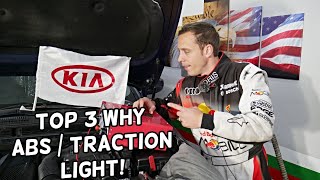
- ABS warning light is illuminated on the dashboard. 🎬 Watch: Top 3 reasons your ABS and traction lights are on.
- Traction Control or Electronic Stability Control (ESC) light is on.
- ABS system does not activate during hard braking (wheels may lock up).
- Cruise control may be disabled.
- Replacing the wheel hub/bearing when only the sensor or wiring was faulty.
- Replacing the sensor when the actual problem was just debris on the tone ring that could have been cleaned off.
- Replacing the sensor when the wiring harness was broken a few inches away from the plug.
Most Likely Causes
- Failed Right Rear Wheel Speed Sensor 🔴 High Probability → Shop ABS Wheel Speed Sensor The sensor is located in a harsh environment behind the wheel, exposed to water, salt, and vibrations, leading to eventual electronic failure. This is the most frequently replaced part for this code.
How to confirm: Use an ABS-capable scan tool to monitor live data from all four wheels. If the right rear sensor reads 0 mph or an erratic speed while the others read correctly, the sensor is likely bad. You can also test the sensor's internal resistance with a multimeter and compare it to the manufacturer's specification (if available).
Typical fix: Replace the right rear wheel speed sensor. It is typically held in by one 10mm bolt. 🎬 See this step-by-step rear wheel speed sensor replacement guide.
Est. part cost: $20-$70 - Damaged Wiring or Corroded Connector 🔴 High Probability The wiring harness leading to the sensor is highly susceptible to damage from road debris, ice buildup, or corrosion from moisture and road salt. The failure often occurs within a few inches of the connector plug, sometimes hidden inside the protective loom.
How to confirm: Visually inspect the entire length of the wiring from the sensor to where it enters the vehicle body. Pay extremely close attention to the section right behind the wheel hub. Unplug the connector and check for green or white corrosion on the pins. Gently tug on the wires near the connector to see if they are broken internally.
Typical fix: Repair the damaged section of wire or replace the connector pigtail. Ensure the repair is sealed against moisture using heat-shrink tubing.
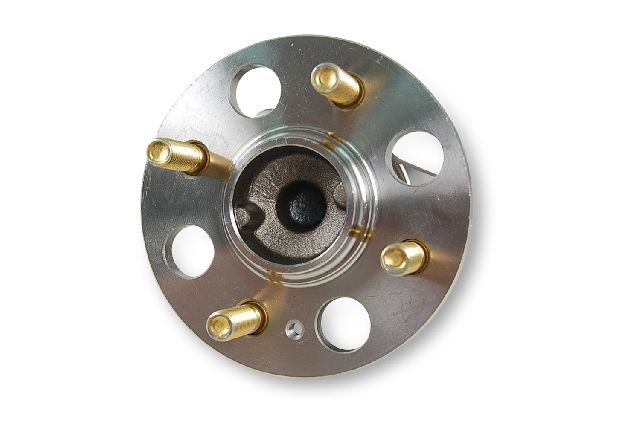
Est. part cost: $10-$40 - Contaminated or Damaged Tone Ring 🟡 Medium Probability The tone ring on this vehicle is a magnetic encoder integrated into the seal of the rear wheel hub/bearing assembly. It can become coated with metallic brake dust or road grime, obstructing the sensor's reading. If the wheel bearing fails, it can damage the integrated tone ring.
How to confirm: Remove the wheel speed sensor and use a flashlight to inspect the magnetic ring on the wheel hub through the mounting hole. Spin the hub and look for heavy debris stuck to the ring or any visible cracks or damage. Also check for excessive play in the wheel bearing, which would indicate a bad hub.
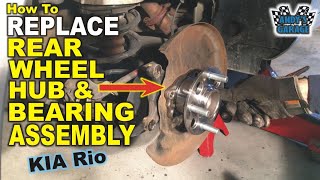
Typical fix: Clean the tone ring carefully with a brush and brake cleaner. If the ring is damaged or the wheel bearing has failed, the entire rear wheel hub assembly must be replaced. 🎬 Watch: How to replace the rear wheel hub and bearing.
Est. part cost: $5 (cleaning supplies) - $150 (for a new hub)
Rare But Worth Checking
- Failed ABS Control Module: → Shop ABS Control Module This is rare. The ABS module will typically set other codes or codes for multiple sensors if it is failing. This should only be considered after all other possibilities have been thoroughly ruled out.
Diagnosis Steps
- Connect an ABS-capable scan tool to the OBD-II port.
- Read the fault codes from the ABS module. Confirm C0050 is present.
- Access the live data stream on the scan tool. Monitor the speeds of all four wheels while driving the vehicle slowly (above 10 mph) in a straight line.
- Confirm that the Right Rear (RR) wheel speed sensor is reading 0 or providing an erratic signal compared to the other three sensors.
- Raise and safely support the rear of the vehicle. Remove the right rear wheel.
- Visually inspect the wheel speed sensor and its wiring harness for any obvious signs of damage, such as cracks, chafing, or loose connections. Pay close attention to the wiring within 6 inches of the sensor plug.
- Unplug the sensor connector and inspect for corrosion or bent pins.
- Remove the sensor (usually one 10mm bolt) and inspect the magnetic tone ring on the wheel hub for built-up metallic debris or damage. Clean it with a brush and brake cleaner as a first step.
- If the wiring and tone ring appear okay, test the sensor itself. Using a multimeter, check the sensor's resistance and compare it to the manufacturer's specifications. If it's an open circuit or has very high resistance, it has failed.
- If the sensor tests good, check for power and ground at the vehicle-side harness connector with the ignition on. A lack of voltage points to a wiring problem between the connector and the ABS module.
- If a wiring break is suspected, perform a continuity test on the wires between the sensor connector and the ABS module connector.
- If all other components check out, the fault may lie within the ABS control module, but this is the least likely cause.
Parts You'll Likely Need
- Rear Wheel Speed Sensor
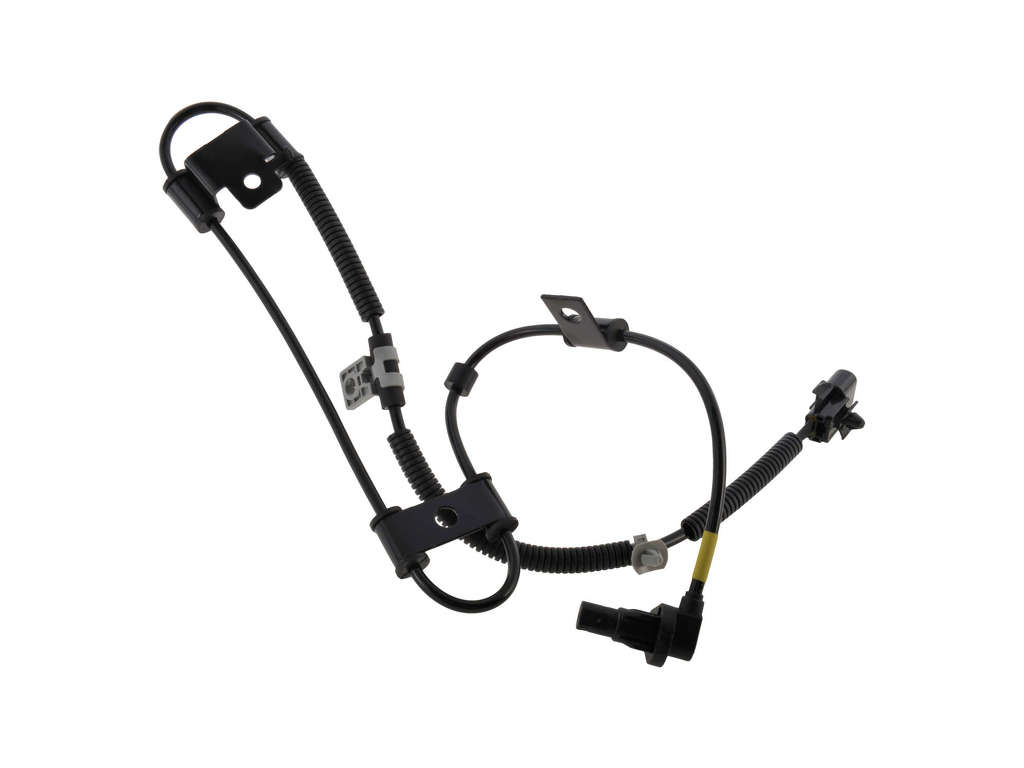
(OEM #91925-1G000)— This is the most common component to fail for this code due to its exposed location and electronic nature.
Trusted brands: Kia (Genuine), Mando, Standard Motor Products (SMP), Delphi, A-Premium
OEM price range: $50-$100
Aftermarket price range: $18-$60 - Rear Wheel Hub Assembly
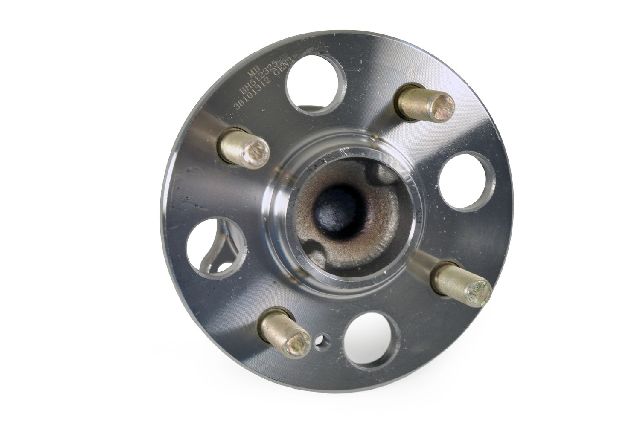
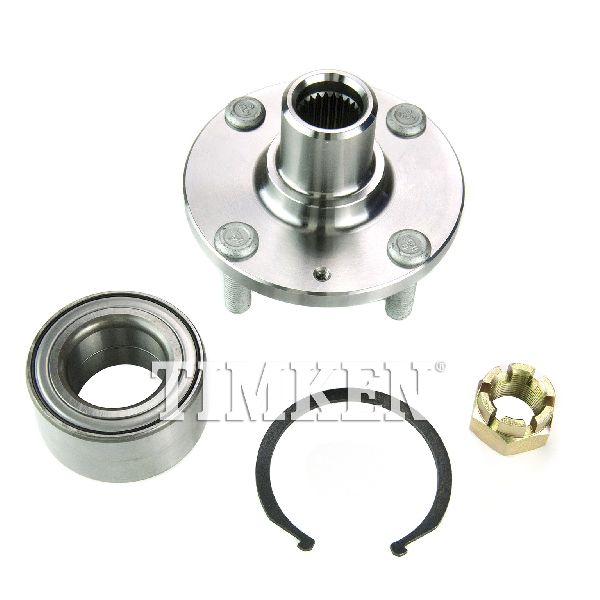
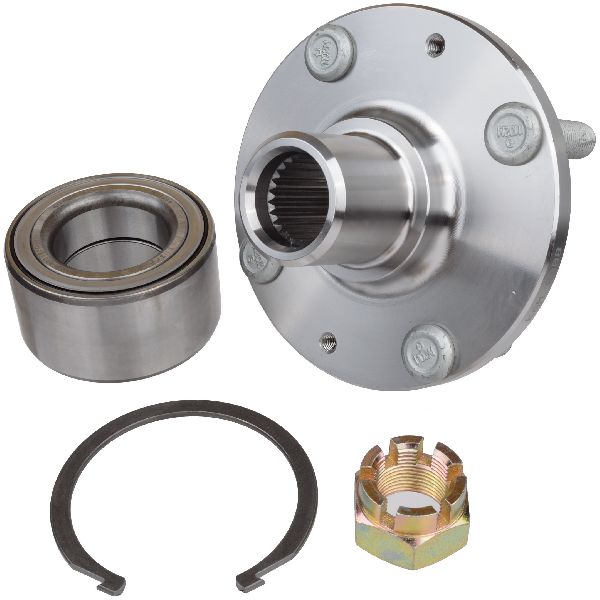
(OEM #52710-1G101)— Required if the magnetic tone ring, which is integrated into the hub assembly, is damaged, or if the wheel bearing itself has failed.
Trusted brands: Timken, SKF, MOOG, TRQ
OEM price range: $150-$250
Aftermarket price range: $70-$150
Technical Service Bulletins (TSBs) & Recalls
- TSB ENG 085 (November 2010): While not directly related to ABS, this TSB for 2006-2007 Rios discusses updates to the ECM software that change how the vehicle reports readiness monitors for emissions testing. This is an example of a known software update for the platform.
Platform-Specific Known Issues
- A Reddit user with a similar Kia model found the issue was a broken wire just a few inches from the sensor connector, hidden behind the wheel well liner. After replacing the sensor twice with no success, they located and repaired the wire, which solved the problem.
Documented NHTSA Reports
- While C0050 is a wheel speed sensor code on the Kia Rio, cross-manufacturer records show variations in logic. For instance, NHTSA ODI #10763888 for a different make identifies C0050 as a fault in the Power Steering Control Module (PSCM) requiring a steering column replacement.
- In other vehicle platforms, C0050 has been documented alongside multiple communication and sensor codes (C0035, C0040, U0077, etc.) as seen in NHTSA ODI #11228687.
- NHTSA ODI #11649367 notes that the code can be set when extra brake fluid is required to return caliper piston contact to the brake pad after service, disabling the ABS and supporting systems.
- NHTSA ODI #11693418 describes a case where C0050-00 was present when the rotors, rear brake pads, and adapter plate required replacement.
Mechanic-Grade Diagnostic Values
- Right Rear Wheel Speed Sensor Signal (Active Sensor) — expected: A square wave with a frequency of 1-2000 Hz that increases with wheel speed. The duty cycle should be 50% ± 20%. The low voltage (VIL) should be less than 30% of ignition voltage, and the high voltage (VIH) should be greater than 70% of ignition voltage.. Failure: A missing, flat-lined, or erratic waveform on an oscilloscope. A reading of 0 or a fixed high/low voltage on a multimeter when back-probing while spinning the wheel indicates a fault.
Hidden / Shadow Codes Worth Checking
- C0050 0F: (Example from GM, logic is similar) Indicates an 'Erratic Signal'. The module is receiving a signal, but it's inconsistent, jumping, or dropping out, often pointing to a damaged tone ring or wiring issue. (see via Advanced scan tool with manufacturer-specific data stream capabilities (like Kia GDS).)
- C0050 18: (Example from GM, logic is similar) Indicates 'Low Signal Amplitude'. The signal is present but weak, often caused by an excessive air gap between the sensor and tone ring, or debris obstructing the sensor's view. (see via Advanced scan tool with manufacturer-specific data stream capabilities (like Kia GDS).)
- C0050 5A: (Example from Hyundai/GM) Indicates 'Signal Not Plausible'. The signal from the right rear sensor does not logically match the signals from the other wheel speed sensors or the vehicle speed sensor, suggesting a fault in the sensor or its reading of the tone ring. (see via Advanced scan tool with manufacturer-specific data stream capabilities (like Kia GDS).)
Wiring & Ground Locations
- ABS Control Module — In the engine compartment, located on the driver's side against the firewall, behind the engine.. This is the central computer for the ABS. All sensor signals terminate here, making its connector the primary location for advanced circuit testing.
- ABS Module Connector Pin 22 — At the main electrical connector for the ABS control module.. This is the specific terminal for the 'SENSOR REAR RIGHT SIGNAL'. A technician can back-probe this pin to see if the signal from the sensor is reaching the module, which isolates the entire wiring harness in one test.
- Main Chassis Ground — Underneath the battery and battery tray in the engine compartment.. A documented failure point on the 2006 JB Rio involves corrosion at this main ground point, leading to a host of electrical issues, including a no-start or intermittent power to modules like the ABS. A bad ground here can cause erratic behavior that mimics sensor failure.
- Shock Tower Ground Point — On the passenger side shock tower in the engine compartment.. This is a known factory ground point. While not the primary ground for the ABS module itself, checking all accessible chassis grounds for tightness and lack of corrosion is a crucial step in diagnosing any electrical fault.
Real Owner Repair Stories
- ScannerDanner Professional Mechanic Video (General ABS wiring repair, applicable to Kia Rio) — ABS light on due to a broken wire at the sensor.
❌ Tried (didn't work) A previous repair using standard butt connectors and heat shrink failed after a short time because it created a new, rigid stress point on the thin wires.
✅ What actually fixed it The wire broke again just past the initial repair due to vibration. The final, correct fix involved soldering in a new section of wire to add length, using adhesive-lined heat shrink to seal the connections, and crucially, extending the heat shrink tubing well past the repair area to provide strain relief and prevent the wire from flexing at a single point. - Mitchell1 ProDemand Real Fix (2014 Chevrolet Tahoe (Illustrates a complex diagnostic path)) — ABS light on, code C0050 stored.
❌ Tried (didn't work) Initial inspection of wiring and connector showed no visible faults., Replacing only the ABS module restored power to the sensor circuit, but the code returned because the signal was still erratic.
✅ What actually fixed it A dual failure was present. The ABS control module had failed and was not providing the 12-volt supply to the sensor. After replacing and programming the module, the voltage was restored, but a lab scope showed the sensor's signal was still erratic. Replacing the wheel speed sensor as a second step finally resolved the issue. This highlights that a module failure can sometimes accompany a sensor failure.
OEM Part Supersession History
52710-1G101→52750-1G101— Standard part number evolution or change in manufacturer for the OEM supply.
Heads up: Both part numbers refer to the rear wheel hub assembly for this platform and are generally interchangeable. However, always confirm fitment with the vehicle's VIN when ordering.
Model Year Variations Within This Range
- 2006-2011: ABS was not standard on all trim levels. Base models (often designated 'LX') may not be equipped with ABS. Confirm the presence of the ABS warning light during the instrument cluster self-test at startup, or by visually inspecting for the ABS module/pump assembly in the engine bay before beginning diagnosis.
Diagnostic Flowchart
Other Known Issues on This Vehicle
Issues unrelated to this code that are worth knowing about as an owner of this generation:
- Engine Misfire / Rough Idle 🟠 Medium — Common, especially over 40,000 miles. Often caused by rapid spark plug wear or failing ignition coils. (Ref: TSB ENG 033 mentioned in TSB ENG 085 was released to address rough idling via an ECM reprogram.)
- Timing Belt Wear 🔴 High — The 1.6L Alpha II engine is an interference engine. The timing belt has a recommended replacement interval of 60,000 miles. Failure to replace it can lead to catastrophic engine damage.
- Transmission Shifting Issues (Automatic) 🟠 Medium — Owners report harsh shifting or a reluctance to shift, particularly on inclines. Sometimes related to fluid condition or sensors, but can indicate internal wear.
- Faulty A/C Compressor Clutch 🟡 Low — A clicking or noisy A/C compressor is often due to a failing clutch assembly, which is a common issue reported across multiple model years.
- SRS Airbag Warning Light / OCS Mat Failure 🔴 High — Affects 2006-2008 models. The front passenger Occupant Classification System (OCS) sensor mat can crack, causing the airbag system to default to deploying the airbag regardless of occupant size, which is a safety risk. (Ref: NHTSA Recall 08V161000)
- Sudden, Intermittent Loss of Engine Power 🟠 Medium — Some owners of manual transmission models have reported a sudden, brief cut in engine power while driving. The cause is not consistently diagnosed but could be sensor-related.
Used vs. New Parts: Buying Guide for This Vehicle
When a used part is the smart pick: A used wiring harness pigtail from a junkyard is an excellent, cost-effective choice if your connector is corroded or damaged. This provides an OEM-quality connector for splicing onto your existing harness. A used sensor is a gamble; it may work, but as an electronic component exposed to harsh elements, its remaining lifespan is unknown. Avoid used wheel hub assemblies entirely.
Donor-vehicle mileage cap: roughly under 80000 miles for the part to have meaningful remaining life.
What to inspect on the donor part:
- For a wiring pigtail, ensure the connector pins are clean (no green or white corrosion) and the plastic isn't brittle.
- Cut the pigtail with at least 6-8 inches of wire to give you plenty of room to work.
- For a used sensor, inspect the plastic housing for cracks and the mounting tab for damage. Avoid sensors from heavily rusted vehicles.
OEM-only on this vehicle (don't cheap out):
- ABS Control Module. If the module itself is diagnosed as faulty, a new or professionally remanufactured OEM unit is strongly recommended to ensure compatibility and proper programming.
Aftermarket brands forum-validated for this vehicle:
- For wheel speed sensors: Standard Motor Products (SMP), Delphi, Bosch, Mando (often an OEM supplier).
- For wheel hub assemblies: Timken, SKF, MOOG, TRQ.
Brands owners have reported issues with on this vehicle:
- Unnamed, 'white-box' sensors from online marketplaces often have high failure rates, either out of the box or shortly after installation. They may have incorrect internal resistance or produce a noisy signal that the ABS module rejects.
Real Owner Stories
Aggregated from forums and TSBs cited above. Mileages and costs reflect what owners reported in those sources.
2014 Kia Rio
Symptoms: ABS, Traction Control, and EPS lights are all illuminated on the dashboard.
What fixed it: Repairing a broken wire in the harness located near the sensor after two sensor replacements failed to fix the issue.
Source hint: Reddit r/kia - '2014 Rio - ABS, Traction Control, and EPS lights are on'
2006 Kia Rio 5-speed manual
Symptoms: Sudden, intermittent loss of engine power while driving.
What fixed it: The cause was not consistently diagnosed in the report, but it was noted as a potential sensor-related issue providing erratic data.
Source hint: Edmunds Forums - 'Kia Rio Engine Problems'
Related OBD-II Codes
Frequently Asked Questions
Does TSB ENG 085 apply to my 2006-2011 Kia Rio's ABS system?
Is there a recall for the airbag light on my 2007 Kia Rio?
Can I use parts from a Hyundai Accent to fix my C0050 code?
Why did my cruise control stop working at the same time the ABS light came on?
My 2006 Rio has a rough idle; is this related to the wheel speed sensor?
Is the C0050 code caused by a bad timing belt?
Helpful Videos

We Have This Part in Stock


The information in this article is provided for general reference and educational purposes only. Vehicle specifications, procedures, and part compatibility can vary by production date, trim level, and region. Always consult your vehicle's factory service manual and verify part numbers before purchasing or performing repairs. Safety-critical components such as airbags, seat belts, and braking systems should be installed by a qualified professional.
- Kia Rio:
- 🧭 Diagnostic Flowchart
- 🎬 Helpful Videos
- 🛍️ Shop This Part
- What's Unique About the 2006-2011 Kia Rio
- Symptoms You May Notice
- Most Likely Causes
- Rare But Worth Checking
- Diagnosis Steps
- Parts You'll Likely Need
- Technical Service Bulletins (TSBs) & Recalls
- Platform-Specific Known Issues
- Documented NHTSA Reports
- Mechanic-Grade Diagnostic Values
- Hidden / Shadow Codes Worth Checking
- Wiring & Ground Locations
- Real Owner Repair Stories
- OEM Part Supersession History
- Model Year Variations Within This Range
- Other Known Issues on This Vehicle
- Used vs. New Parts: Buying Guide for This Vehicle
- Real Owner Stories
- 2014 Kia Rio
- 2006 Kia Rio 5-speed manual
- Related OBD-II Codes
- Frequently Asked Questions
- 🎟️ Get 5% Off