

C0050 on 2011-2016 Kia Sportage: Right Rear Wheel Speed Sensor Fault Causes and Fixes
Code C0050 on a 2011-2016 Kia Sportage means there's a fault with the right rear wheel speed sensor circuit. This is most often caused by a failed sensor, damaged wiring, or metallic debris on the wheel hub's magnetic ring. A new sensor costs around $60-$100, while a new hub assembly can be $70-$200.
- C0050 means the right rear wheel speed sensor isn't sending a proper signal, which disables your ABS and stability control.
- Before buying parts, use a scan tool to watch live data from all four wheels to confirm the right rear sensor is the one failing.
- Always perform a visual inspection first. Check the wiring for damage and, most importantly, remove the sensor to inspect and clean the magnetic ring on the wheel hub, as debris is a common cause.
- If cleaning doesn't work, the sensor itself is the most likely part to have failed. If you also hear a grinding or humming noise from that wheel, the entire hub assembly may need replacement.
What's Unique About the 2011-2016 Kia Sportage
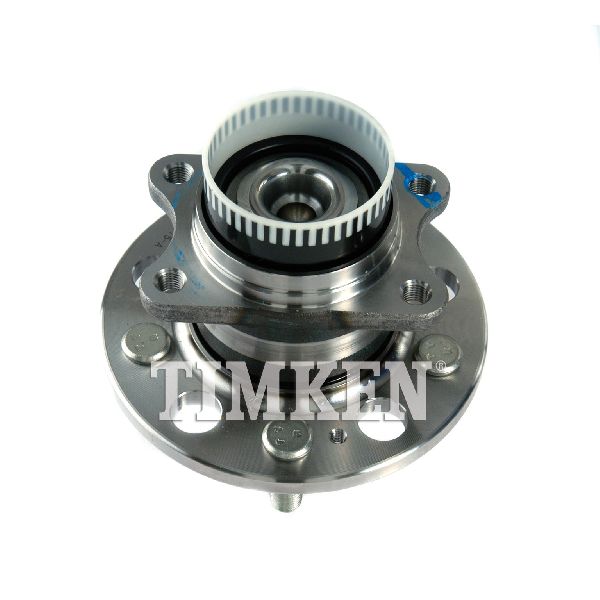
On the third-generation (SL) Kia Sportage and its platform-mate, the 2010-2015 Hyundai Tucson, the magnetic encoder ring that the wheel speed sensor reads is integrated into the rear wheel hub and bearing assembly. This design means that a common cause of an erratic signal can be metallic debris from brakes or road grime accumulating on the face of the hub, which can often be fixed with a simple cleaning. However, it also means that if the encoder ring itself is cracked or damaged, the entire wheel hub assembly must be replaced, not just a separate tone ring.
Symptoms You May Notice
- ABS warning light is on
- Traction Control System (TCS) or Electronic Stability Control (ESC) warning light is on
- Downhill Brake Control (DBC) warning light may be on
- ABS system does not activate during hard braking (wheels may lock up)
- Traction control does not activate on slippery surfaces
- Cruise control may be inoperative
- Blind-Spot Detection (BSD) and other ADAS features may be disabled
- Replacing the wheel hub/bearing when only the sensor was bad or the magnetic ring was dirty.
- Replacing the ABS sensor when the actual problem is a broken wire further up the harness or a corroded connector pin.
- Replacing the sensor when the integrated magnetic encoder on the hub has failed.
Most Likely Causes
- Failed Right Rear Wheel Speed Sensor 🔴 High Probability → Shop ABS Wheel Speed Sensor The sensor is an exposed electronic component located at the wheel, making it highly susceptible to water intrusion, corrosion from road salt, and internal failure from vibration and heat cycles over time.
How to confirm: After confirming the wiring and tone ring are intact, test the sensor's internal resistance with a multimeter (compare to spec) or replace it with a known good sensor. A more definitive test is to plug in a new sensor without fully installing it, clear the codes, and spin the hub by hand while watching live data on a scan tool to see if a speed signal is generated.
Typical fix: Replace the right rear wheel speed sensor. It is typically held in by a single 10mm or 12mm bolt.
Est. part cost: $60-$120 - Damaged Wiring or Connector 🟡 Medium Probability The wiring harness runs near the suspension and wheel, making it vulnerable to damage from road debris, improper servicing (e.g., stretching during brake jobs), or corrosion in the connector pins. Wires can break internally right at the connector from repeated suspension movement.
How to confirm: Visually inspect the wiring harness from the sensor to the main chassis for any cuts, chafing, or melting. Unplug the connector and check for green or white corrosion on the pins. Use a multimeter to check for continuity and for shorts to ground or power between the connector and the ABS module.
Typical fix: Repair the damaged section of wire with solder and heat shrink, or replace the pigtail connector if the break is at the plug. In some cases, the entire sensor-to-chassis harness needs replacement.
Est. part cost: $15-$40 for a pigtail - Debris on Magnetic Encoder Ring 🟡 Medium Probability
How to confirm: Remove the wheel speed sensor and visually inspect the magnetic ring on the face of the wheel hub assembly. Look for a build-up of metallic brake dust or rust that can disrupt the magnetic signal. A similar issue is well-documented on other vehicles with this type of ABS system.
Typical fix: Thoroughly clean the face of the magnetic encoder ring with a non-metallic brush and brake cleaner. Ensure all debris is removed before reinstalling the sensor. Do not use magnetic tools for cleaning as this can damage the encoder.
Est. part cost: $0 (cost of brake cleaner) - Failed Rear Wheel Hub & Bearing Assembly ⚪ Low Probability → Shop Hub Assembly The magnetic encoder ring is built into the hub. If the bearing fails, it can create excessive play, altering the sensor's air gap. More commonly, the encoder ring itself can crack or lose magnetism with age and corrosion, leading to an erratic or missing signal even if the bearing feels fine.
How to confirm: Check for humming or grinding noises while driving that change pitch when turning. With the vehicle raised, check for excessive play (wobble) in the right rear wheel. If the sensor and wiring are good but the signal is still bad (especially with sub-codes like C0050-0F or C0050-5A), the hub is the likely cause.
Typical fix: Replace the entire rear wheel hub and bearing assembly.
Est. part cost: $70-$200
Rare But Worth Checking
- Faulty ABS Control Module: → Shop ABS Control Module This is very rare. All other possibilities, especially the sensor, wiring, and hub, should be exhaustively ruled out before considering the ABS module. A module failure typically sets multiple wheel speed sensor codes or communication codes.
Diagnosis Steps
- Connect an ABS-capable scan tool and confirm C0050 is the active code. 🎬 Watch: Fast and easy DIY diagnosis for ABS and traction lights. Note any sub-codes like 'erratic signal' or 'circuit open'.
- Access the live data stream on the scan tool. Monitor the speeds of all four wheels while driving in a straight line above 5-10 mph. Confirm that the right rear wheel speed reads 0 mph, is erratic, or lags significantly behind the other three.
- Raise and safely support the rear of the vehicle. Remove the right rear wheel.
- Visually inspect the wheel speed sensor and its connector for obvious damage, corrosion, or looseness.
- Follow the wiring harness from the sensor up into the wheel well and towards the chassis. Look for any signs of cuts, chafing, heat damage, or strained wires, especially near suspension components.
- Unbolt and remove the wheel speed sensor (typically one 10mm or 12mm bolt). Inspect the sensor tip for damage or heavy metallic debris.
- Carefully inspect the magnetic encoder ring on the face of the wheel hub assembly. Look for metallic debris, rust buildup, or visible cracks in the ring. Clean the ring thoroughly with brake cleaner and a soft, non-metallic brush.
- If cleaning doesn't solve it, test the circuit. Disconnect the sensor and use a multimeter on the vehicle-side harness connector. Check for a reference voltage (e.g., 5V or 12V) and a good ground with the key on.
- A quick verification test: Plug in a new sensor to the harness without installing it. Clear the codes. Spin the hub assembly by hand and watch the live data on the scan tool. If a speed signal now appears, the old sensor was bad. If not, the problem is in the wiring or hub.
- If the sensor and wiring are confirmed to be good, but the signal remains erratic or absent, the wheel hub/bearing assembly (with its integrated encoder ring) is faulty and requires replacement.
- After any repair, clear the code with the scan tool and perform a test drive to ensure the warning lights stay off and the ABS system functions correctly.
Parts You'll Likely Need
- Right Rear Wheel Speed Sensor
(OEM #95681-2S300 (for 2WD models))— This is the most common failure point for code C0050 due to its exposed location and electronic nature.
Trusted brands: Kia (OEM), Mando, Holstein, NTK, Delphi, Blue Print
OEM price range: $90-$140
Aftermarket price range: $40-$80 - Rear Wheel Hub and Bearing Assembly
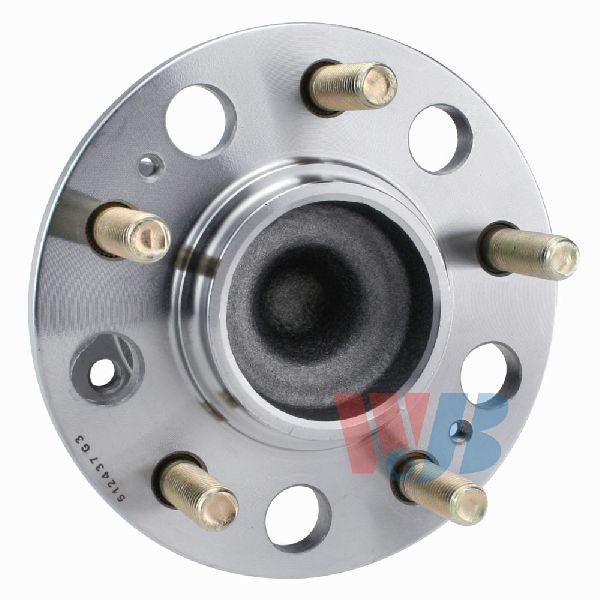
(OEM #52730-2S200 (FWD); 52710-2E500 (AWD))— Required if the integrated magnetic encoder ring is damaged or if the bearing itself has failed, causing an incorrect sensor reading. Part number differs between Front-Wheel Drive and All-Wheel Drive models.
Trusted brands: Timken, SKF, Moog, GSP, WJB, Detroit Axle
OEM price range: $150-$250
Aftermarket price range: $70-$150
Related Codes That Often Appear With This One
- C0045 (Left Rear Wheel Speed Sensor Circuit): If both rear sensor codes appear, it may point to a shared wiring or connector issue.
- C0050-5A: A sub-code indicating the signal is 'not plausible', often pointing to a damaged encoder ring on the hub.
Technical Service Bulletins (TSBs) & Recalls
- SC148 (May 2017): While for the Sorento, this TSB addresses water intrusion into the rear wheel speed sensor connector and provides a procedure for applying special silicone grease to the connector seals to prevent future corrosion-related issues. This is a relevant preventative measure.
Platform-Specific Known Issues
- Wiring Harness Connector Location: → Shop Engine Wiring Harness Connector To fully replace the rear wheel speed sensor harness, the rear seat bottom cushion often needs to be removed to access the inboard electrical connector, making the job more involved than just working in the wheel well.
- Corrosion on Hub Face: In regions with road salt, corrosion can build up on the hub face, making removal of the old sensor difficult. It can also cause the magnetic encoder ring to delaminate or crack, requiring hub replacement.
Mechanic-Grade Diagnostic Values
- Sensor Harness Voltage (Key On) — expected: One pin should have a reference voltage (typically 5V or 12V) and another should have continuity to ground.. Failure: Absence of reference voltage or a good ground points to a problem in the wiring harness or the ABS module, not the sensor itself.
- Sensor Signal (Oscilloscope) — expected: A clean, regular square wave that increases in frequency as the wheel is spun.. Failure: A missing, flat, intermittent, or noisy waveform indicates a problem with the sensor or the magnetic encoder ring on the hub.
Hidden / Shadow Codes Worth Checking
- C0050-5A: Signal Plausibility Failure. The signal from the sensor is present but illogical compared to other vehicle sensors (e.g., reading 5 mph while others read 50 mph). This strongly points to a damaged or cracked magnetic encoder ring on the wheel hub. (see via Kia GDS (dealer tool) or high-end aftermarket scan tool with manufacturer-specific capabilities (e.g., Autel, Launch).)
- C0050-18: Signal Amplitude Less Than Minimum. The signal from the sensor is too weak. This is often caused by an excessive air gap between the sensor and the ring (due to rust or improper installation), heavy debris on the ring, or an internal sensor failure. (see via Kia GDS (dealer tool) or high-end aftermarket scan tool with manufacturer-specific capabilities.)
- C0050-0F: Erratic Signal. The signal is inconsistent or drops out intermittently. This often points to a loose connection, a failing sensor, or a damaged section of the magnetic encoder ring. (see via Kia GDS (dealer tool) or high-end aftermarket scan tool with manufacturer-specific capabilities.)
Scan Tool Commands That Help
- Kia GDS / Advanced Aftermarket Scanner: Live Data - Wheel Speed Sensors — This is the primary diagnostic step. Use it to view the speed readings from all four wheels simultaneously while driving or spinning the wheels by hand to confirm the right rear sensor is the one providing no signal or an erratic signal.
- Kia GDS / Advanced Aftermarket Scanner: Radar Sensor Alignment (for Smart Cruise Control) — If the vehicle is equipped with Advanced Driver Assistance Systems (ADAS) like Smart Cruise Control, a wheel speed sensor fault can disable them. After replacing the sensor and clearing the C0050 code, this function may be necessary to recalibrate the ADAS module if related errors persist.
Wiring & Ground Locations
- Inboard Harness Connector — Underneath the rear seat bottom cushion on the right (passenger) side.. To replace the entire right rear wheel speed sensor and its integrated harness, you must access this connector inside the cabin. Technicians need to know that the rear seat must be removed to complete the job.
- ABS Control Module (HECU) — In the engine bay, typically located near the firewall/bulkhead, identifiable by the multiple metal brake lines running into it.. This is the termination point for the wheel speed sensor harness. If voltage/ground tests fail at the sensor connector, final continuity checks must be performed between the sensor connector and the connector at this module to isolate a wiring break.
Real Owner Repair Stories
- YouTube channel 'Old Skool Cars' (2016 Kia Sportage) — Multiple warning lights on the dashboard ('Christmas tree lights').
❌ Tried (didn't work) The owner ordered a replacement sensor cable, but it was the incorrect part for the vehicle.
✅ What actually fixed it The entire right rear wheel hub and bearing assembly was replaced. The owner confirmed the fix by plugging the new hub's sensor into the harness before installation; the dashboard warning lights went out immediately. The original hub's integrated magnetic encoder ring was faulty. - YouTube channel 'ZeroDTC's' (Kia Sportage (SL generation, 1.7 Diesel)) — ABS, ESC, and other warning lights on. Scan tool showed a code for 'rear right wheel speed sensor open circuit'.
❌ Tried (didn't work) The technician first performed diagnostic checks rather than replacing parts blindly.
✅ What actually fixed it Replacing only the right rear wheel speed sensor. The technician verified the wiring and ABS module were good by plugging in a new sensor to the harness and confirming the fault code could be cleared before performing the full installation.
Documented NHTSA Reports
While C0050 is a standardized code, its application can vary by manufacturer. For instance, in a report involving a different make (Chevrolet HHR), NHTSA ODI #10763888 describes code C0050 as identifying a problem with a faulty power steering control module (PSCM), requiring replacement of the entire steering column. Conversely, on other platforms like the Chevrolet Silverado, an owner reported C0050 appearing alongside several other codes such as C0035 and C0040 (NHTSA ODI #11228687). In newer vehicles from other manufacturers, such as the Jeep Grand Cherokee L, C0050-00 has been documented in cases where the rear rotors and brake pads required replacement (NHTSA ODI #11693418), or where the vehicle disables ABS and supporting systems, requiring extra brake fluid to return caliper piston contact to the brake pad (NHTSA ODI #11649367).
OEM Part Supersession History
95681-2S300 (OEM for 2WD)→Aftermarket cross-references include: 5S12259, AB0866, ABS2165, ALS2072, SU13677.— Aftermarket equivalents for the original part.
Heads up: The most critical incompatibility is between 2WD and AWD models, which use different part numbers for both the sensor and the wheel hub assembly. Always verify by VIN.
Model Year Variations Within This Range
- 2014-2016: The Sportage received a facelift for the 2014 model year which included cosmetic updates, standard fitment of high-performance dampers, and the addition of Trailer Stability Assist. However, the fundamental design of the ABS system, including the sensor and integrated hub/encoder ring, was not changed. Diagnosis and repair for code C0050 remain consistent across the entire 2011-2016 generation.
Diagnostic Flowchart
Other Known Issues on This Vehicle
Issues unrelated to this code that are worth knowing about as an owner of this generation:
- Theta II Engine Failure (2.0L & 2.4L GDI) 🔴 High — Widespread across 2011-2016 models. Manufacturing debris (metal shavings) can lead to connecting rod bearing wear, causing engine knocking, seizing, and potential fire risk. Failure can occur at various mileages. (Ref: Subject of multiple recalls (e.g., NHTSA 19V120) and a major class-action lawsuit resulting in lifetime warranty extensions for affected vehicles.)
- Excessive Oil Consumption 🟠 Medium — Common on Theta II engines, often a precursor to more serious engine failure. Owners must monitor oil levels frequently. (Ref: Related to the engine failure class-action lawsuit and associated warranty extensions.)
- Panoramic Sunroof Malfunction 🟡 Low — Frequently reported. Issues include the sunroof getting stuck open/closed, making grinding noises, or moving slowly. (Ref: No specific recall, but common fixes include checking fuses, resetting the motor, cleaning and lubricating the tracks with silicone grease, or motor/switch replacement.)
Used vs. New Parts: Buying Guide for This Vehicle
When a used part is the smart pick: A used wheel speed sensor wiring harness from a junkyard can be a cost-effective option if the original is damaged, as it is not a typical wear item. A low-mileage wheel hub assembly can also be considered if on a tight budget, but it carries risk.
Donor-vehicle mileage cap: roughly under 60000 miles for the part to have meaningful remaining life.
What to inspect on the donor part:
- For a hub assembly, spin it by hand to ensure the bearing is smooth with no grinding or noise. Check for any side-to-side play (wobble).
- Visually inspect the magnetic encoder ring on the hub face for any cracks, chips, or signs of delamination.
- For a sensor or harness, check for any cuts, scrapes, melted plastic, or corrosion on the connector pins. Ensure the plastic is not brittle.
OEM-only on this vehicle (don't cheap out):
- ABS Control Module (HECU). Due to the need for precise programming and the critical safety nature, it is highly recommended to use an OEM module if it needs replacement.
Aftermarket brands forum-validated for this vehicle:
- Sensors: Mando, NTK, Delphi, Blue Print, Holstein
- Hub Assemblies: Timken, SKF, Moog, GSP, WJB
Real Owner Stories
Aggregated from forums and TSBs cited above. Mileages and costs reflect what owners reported in those sources.
2016 Kia Sportage
Symptoms: ABS problem identified as a defective rear hub sensor.
What fixed it: Replaced the entire rear hub assembly because the magnetic ring on the old one was corroded and failing.
Source hint: YouTube - KIA Sportage ABS Problem - Rear Hub Sensor Defective
2017 Kia Sportage
Symptoms: A cascade of warning lights including ABS and AEB (Autonomous Emergency Braking).
What fixed it: Replacing the right rear sensor after diagnosing an intermittent code.
Source hint: Reddit thread titled 'Kia Sportage ABS, AEB, and other warning lights on'
Hyundai Tucson (Platform-mate)
Symptoms: Wheel speed sensor fault; replaced sensor and hub assembly but the fault remained, requiring further harness testing.
What fixed it: Testing the harness for voltage and checking fuses using an ABS-capable scan tool to reset codes.
Source hint: Hyundai Tucson Forum - N/S/R Wheel Speed Sensor Fault?
Related OBD-II Codes
Frequently Asked Questions
Does TSB SC148 apply to my 2011-2016 Kia Sportage?
Why is my Kia Sportage's Downhill Brake Control (DBC) light on along with the ABS light?
Is it true I have to remove the rear seat to fix a wheel speed sensor issue?
Can I just clean the sensor, or do I need to replace the whole hub?
Will a C0050 code affect my cruise control or Blind-Spot Detection?
How can I confirm if the sensor is bad without buying a new one first?
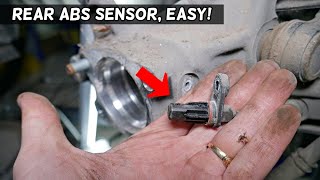
Helpful Videos
We Have This Part in Stock


The information in this article is provided for general reference and educational purposes only. Vehicle specifications, procedures, and part compatibility can vary by production date, trim level, and region. Always consult your vehicle's factory service manual and verify part numbers before purchasing or performing repairs. Safety-critical components such as airbags, seat belts, and braking systems should be installed by a qualified professional.
- Kia Sportage:
- 🧭 Diagnostic Flowchart
- 🎬 Helpful Videos
- 🛍️ Shop This Part
- What's Unique About the 2011-2016 Kia Sportage
- Symptoms You May Notice
- Most Likely Causes
- Rare But Worth Checking
- Diagnosis Steps
- Parts You'll Likely Need
- Related Codes That Often Appear With This One
- Technical Service Bulletins (TSBs) & Recalls
- Platform-Specific Known Issues
- Mechanic-Grade Diagnostic Values
- Hidden / Shadow Codes Worth Checking
- Scan Tool Commands That Help
- Wiring & Ground Locations
- Real Owner Repair Stories
- Documented NHTSA Reports
- OEM Part Supersession History
- Model Year Variations Within This Range
- Other Known Issues on This Vehicle
- Used vs. New Parts: Buying Guide for This Vehicle
- Real Owner Stories
- 2016 Kia Sportage
- 2017 Kia Sportage
- Hyundai Tucson (Platform-mate)
- Related OBD-II Codes
- Frequently Asked Questions
- 🎟️ Get 5% Off