

C0050 on 2013-2017 Mazda CX-5: Right Rear Wheel Speed Sensor Circuit Causes and Fixes
Code C0050 on a 2013-2017 Mazda CX-5 means there's a fault with the right rear wheel speed sensor circuit. The most common fix is replacing the sensor itself, which costs about $60-$80 for the part. Less often, the issue is a damaged wheel bearing/hub assembly which contains the magnetic ring for the sensor. Before replacing parts, always inspect the wiring for damage.
- C0050 on your CX-5 means the right rear wheel speed sensor circuit has a problem, which disables your ABS and stability control.
- The most likely cause is a bad sensor, which is a relatively inexpensive part and DIY-friendly to replace (difficulty 2/5).
- Verify if your CX-5 is FWD or AWD before ordering parts, as the sensor and hub part numbers are different.
- Use a scanner that can read ABS live data to confirm the right rear wheel isn't reporting speed before replacing any parts.
- If a new sensor doesn't fix it, the problem is likely the wheel hub assembly, which contains the magnetic ring the sensor reads, or a wiring issue.
What's Unique About the 2013-2017 Mazda CX-5
On the first-generation Mazda CX-5, the wheel speed sensor is a separate, replaceable part. However, the magnetic ring it reads (often called a tone or reluctor ring) is a magnetic encoder integrated directly into the rear wheel hub and bearing assembly. This means that if the ring is damaged by corrosion, debris, or if the bearing fails, the entire wheel hub/bearing must be replaced, which is a more involved and expensive repair than just the sensor.
Symptoms You May Notice
- ABS warning light is on
- Traction Control System (TCS) or Dynamic Stability Control (DSC) warning light is on
- Brake system warning light may be on
- ABS system does not activate during hard braking (wheels may lock up)
- Traction control does not activate on slippery surfaces
- "Smart City Brake System Malfunction" message may appear on the dash
- "4WD System High Load" message may appear on AWD models
- Replacing the wheel hub/bearing when only the sensor is bad. Always diagnose with a scanner to check the live data feed from the sensor first.
- Replacing the sensor when the wiring is damaged. A thorough visual and physical inspection of the harness is critical.
- Guessing which rear sensor is bad without a scanner. The code C0050 specifically points to the right rear circuit. 🎬 Watch: A breakdown of C0050 causes and common fixes.
Most Likely Causes
- Failed Right Rear Wheel Speed Sensor 🔴 High Probability → Shop ABS Wheel Speed Sensor The sensor is exposed to road debris, water, and salt, which can cause internal failure or corrosion of the connector pins over time.
How to confirm: Use an OBD-II scanner capable of reading ABS live data. Observe the wheel speed signals from all four wheels while driving. The right rear sensor will likely read 0 MPH or show erratic, jumpy readings compared to the others. The sensor itself is an active magneto-resistive type and should not be tested with a standard multimeter for resistance, as this can damage it.
Typical fix: Replace the right rear wheel speed sensor. It is typically held in by a single 10mm bolt and can be accessed by removing the wheel and partially pulling back the fender liner.
Est. part cost: $40-$90 - Damaged or Corroded Wiring/Connector 🟡 Medium Probability The wiring harness runs near the wheel and suspension, making it vulnerable to damage from road debris, improper jacking, or corrosion from the elements. The harness can chafe or break at its mounting points or near the connector.
How to confirm: Visually inspect the wiring harness leading to the right rear wheel speed sensor for any cuts, fraying, melting, or corrosion in the connector pins. Wiggle the harness while monitoring live data on a scanner to see if the signal cuts out. Perform a continuity test with a multimeter if visual inspection is inconclusive.
Typical fix: Repair the damaged section of wiring or replace the connector pigtail.
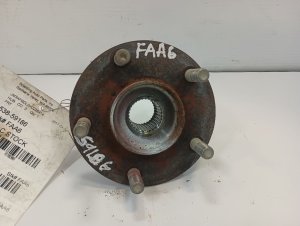
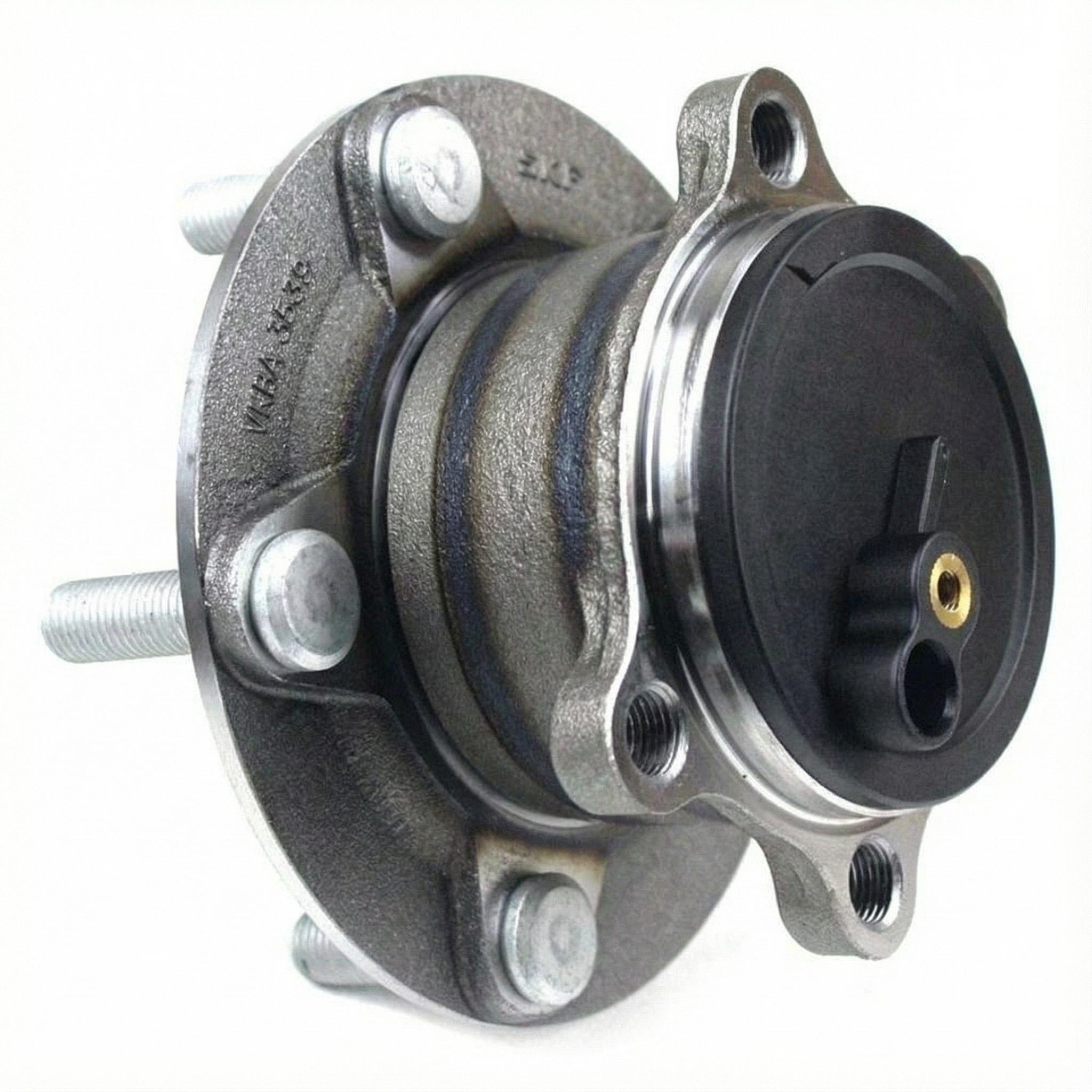
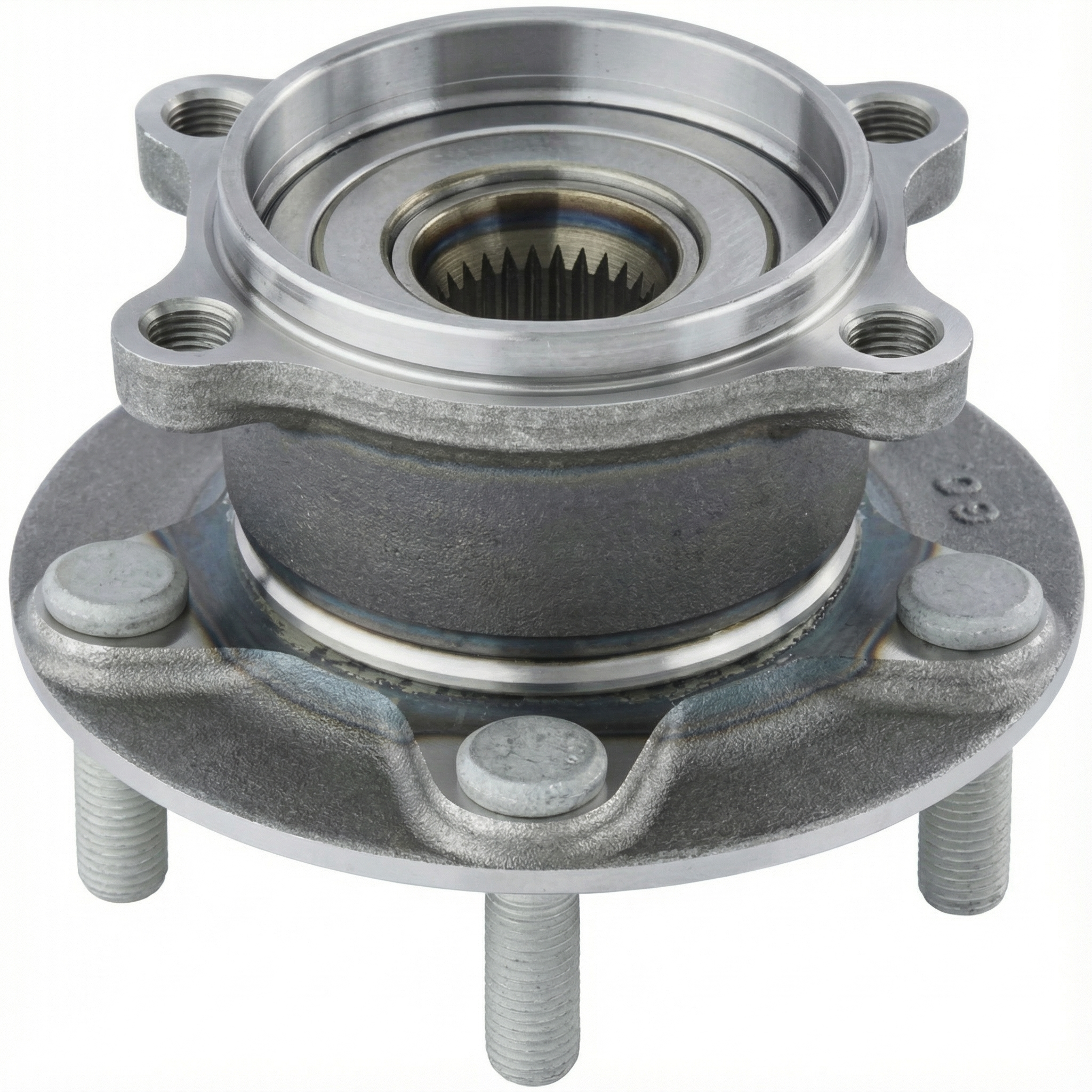
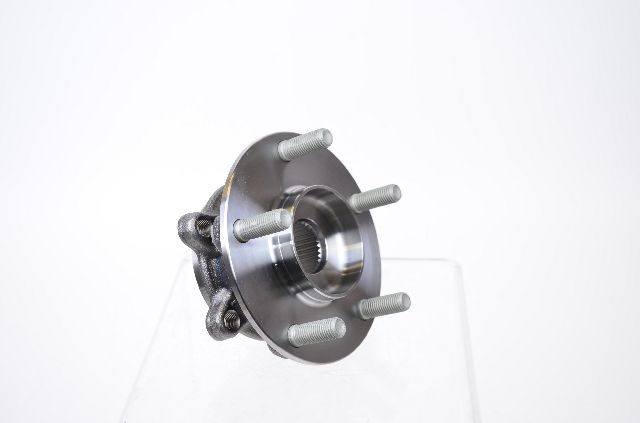
Est. part cost: $15-$40 - Damaged Wheel Hub / Bearing Assembly ⚪ Low Probability → Shop Hub Assembly The magnetic encoder ring is built into the wheel hub's seal. Rust jacking or debris can damage this delicate magnetic ring, causing an unreadable signal. A failing wheel bearing can also introduce excessive play, altering the sensor's air gap and causing an erratic signal. Noisy wheel bearings are a known, albeit not frequent, issue on this platform.
How to confirm: After confirming the sensor and wiring are good, remove the sensor and inspect the magnetic ring on the hub for rust, cracks, or missing magnetic sections. Also check for excessive play or a humming/grinding noise from the wheel bearing when spinning the wheel by hand.
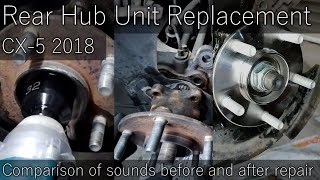
Typical fix: Replace the entire rear wheel hub and bearing assembly. 🎬 See this walkthrough for replacing the rear wheel hub assembly.
Est. part cost: $100-$250
Rare But Worth Checking
- Faulty ABS Control Module: → Shop ABS Control Module This is very rare and should be considered a last resort. Before condemning the module, all other possibilities (sensor, wiring, hub) must be exhaustively ruled out. This diagnosis often requires a dealership-level scan tool and verification of power/ground/communication at the module. It often presents with multiple, nonsensical codes, not just one.
Diagnosis Steps
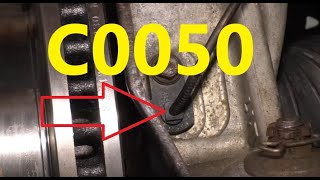
- Connect an ABS-capable OBD-II scanner and confirm the presence of code C0050. 🎬 Watch: Understanding the C0050 right rear sensor fault code. Note any sub-codes (e.g., C0050:18 for low signal amplitude) which can help pinpoint the issue.
- Access the live data stream for all four wheel speed sensors.
- Safely drive the vehicle in a straight line at a low speed (or raise the rear wheels and spin them by hand) while a helper monitors the scanner. Compare the speed reading from the Right Rear (RR) sensor to the other three.
- If the RR sensor reads 0 or is erratic, the problem is located at that corner (sensor, wiring, or hub).
- Raise and safely support the rear of the vehicle. Remove the right rear wheel.
- Visually inspect the wheel speed sensor and its wiring harness for any obvious damage, corrosion, or loose connections. Follow the harness from the sensor up into the wheel well, checking all mounting points.
- Unplug the sensor connector and inspect the pins for corrosion or moisture.
- Unbolt and remove the sensor (typically a single 10mm bolt). It may be seized; use penetrating oil and gentle twisting. Inspect the sensor tip for damage or heavy metallic debris.
- With the sensor removed, shine a light into the mounting hole and slowly rotate the hub to inspect the magnetic encoder ring. Look for cracks, rust buildup, or any visible damage.
- If no visual faults are found, the most likely culprit is the sensor itself. Replacing the sensor is the next logical step.
- If a new sensor does not fix the issue, perform continuity and voltage drop tests on the wiring harness between the sensor connector and the ABS module.
- If the sensor and wiring are confirmed good, the issue is likely the wheel hub's encoder ring, requiring hub replacement.
Parts You'll Likely Need
- Rear ABS Wheel Speed Sensor
(OEM #K011-43-71YA (FWD Models), KA0K-43-7EXA (AWD Models))— This is the most common failure point for a C0050 code. It is an electronic component that lives in a harsh environment and fails over time. Note that FWD and AWD models use different part numbers.
Trusted brands: Mazda (OEM), Delphi, Standard Motor Products (SMP), Beck Arnley, Holstein, APA/URO Parts
OEM price range: $65-$95
Aftermarket price range: $30-$60 - Rear Wheel Hub and Bearing Assembly
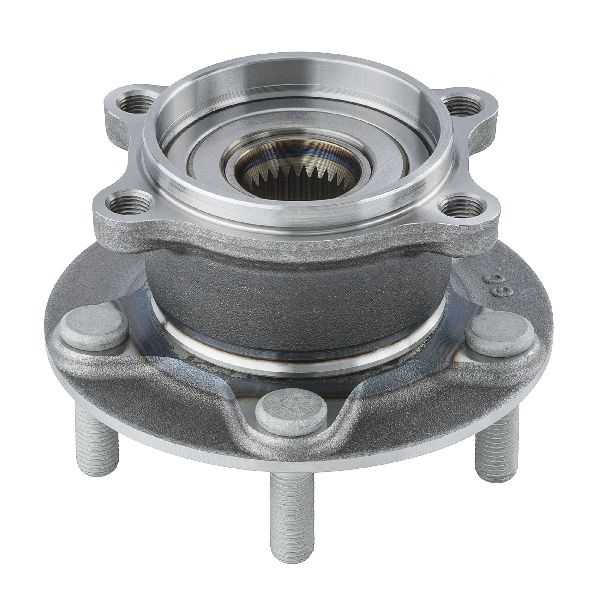
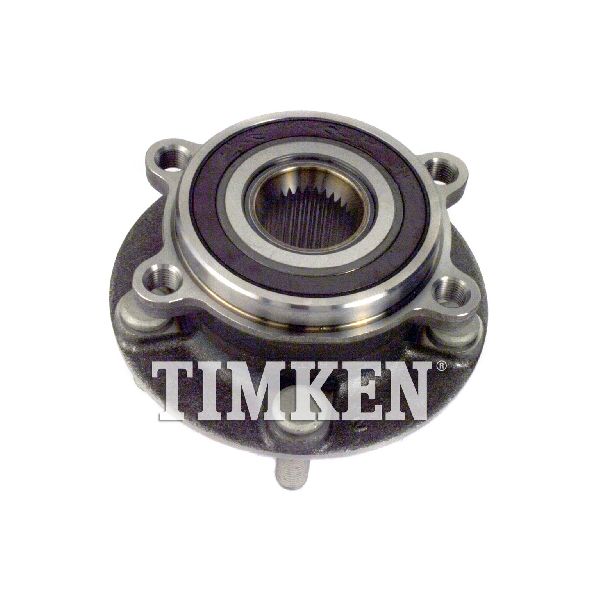
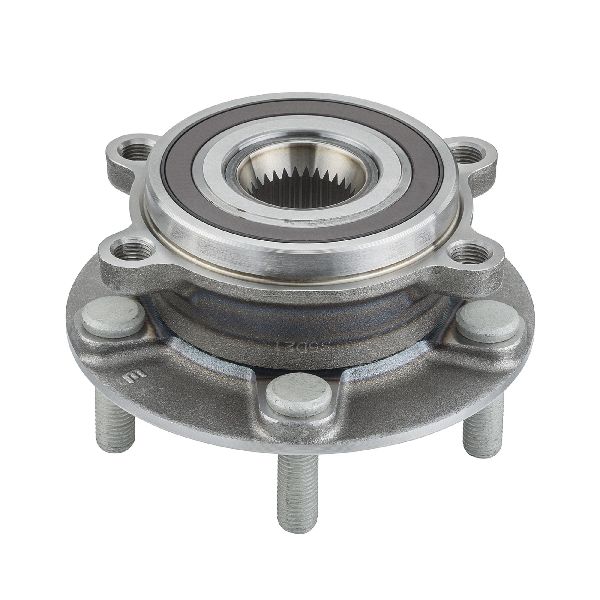
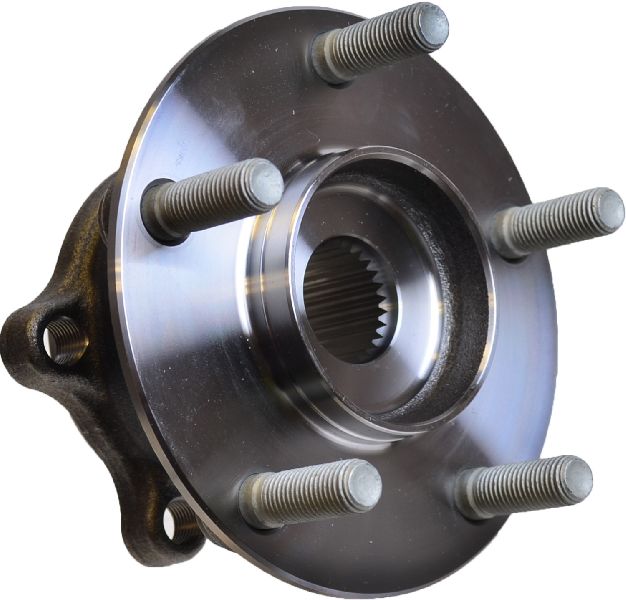
(OEM #KD35-26-15XC (AWD), KDY1-26-15X (FWD))— Needed if the integrated magnetic encoder ring is damaged, or if the bearing itself has failed, causing excessive play that disrupts the sensor reading. Part numbers differ for AWD and FWD models.
Trusted brands: Mazda (OEM), Timken, SKF, MOOG, TRQ
OEM price range: $200-$280
Aftermarket price range: $100-$180
Platform-Specific Known Issues
- Part Number Confusion: The rear ABS sensor and wheel hub part numbers are different for Front-Wheel Drive (FWD) and All-Wheel Drive (AWD) models. K011-43-71YA is for FWD, while KA0K-43-7EXA is for AWD. Always verify with VIN.
- Sensor Seizure: The 10mm bolt holding the sensor in place is prone to rusting and breaking off during removal. Applying penetrating oil beforehand is highly recommended. The sensor body itself can also get stuck in the knuckle.
Mechanic-Grade Diagnostic Values
- Air gap between rear ABS wheel-speed sensor and ABS sensor rotor (magnetic encoder) — expected: 0.3—1.4 mm {0.02—0.05 in}. Failure: A gap outside this range can cause a weak or non-existent signal. This can be caused by a failing wheel bearing, incorrect sensor installation, or debris.
Hidden / Shadow Codes Worth Checking
- C0050:18: Low Signal Amplitude. This indicates the signal from the sensor is present but weak. Common causes are an excessive air gap, debris on the magnetic encoder ring, or an internally failing sensor. (see via Requires a professional-grade scan tool capable of reading manufacturer-specific sub-codes or symptom bytes.)
- C0050:5A: Signal Plausibility Failure. The sensor is producing a signal, but it is illogical when compared to the other wheel speed sensors. This can point to a damaged encoder ring with missing teeth/segments, an intermittent wiring fault, or incorrect tire sizes. (see via Requires a professional-grade scan tool capable of reading manufacturer-specific sub-codes or symptom bytes.)
Scan Tool Commands That Help
- Mazda Modular Diagnostic System (M-MDS): PID Data Monitoring: WSPD_SEN_RR — This is the primary diagnostic step to confirm the fault. By monitoring the 'WSPD_SEN_RR' (Wheel Speed Sensor - Right Rear) PID while driving, a technician can see if the signal drops out, is erratic, or reads zero compared to the other wheels, confirming the fault is at that corner.
Wiring & Ground Locations
- DSC HU/CM — Right front corner of the engine compartment.. This is the ABS/DSC control module where the wheel speed sensor harness terminates. Testing for continuity and voltage should be done between this module's connector and the sensor connector.
- G21 / G23 — G21 is on the left side of the luggage compartment; G23 is at the left front of the luggage compartment.. These are the primary rear body ground points. A corroded or loose connection at these locations can cause various electrical issues in the rear of the vehicle, including an unstable ground for the wheel speed sensor circuit, leading to an erratic signal.
OEM Part Supersession History
k0114371y→K011-43-71YA— Part revision by manufacturer.
Heads up: Applies to FWD models. The new part number is a direct replacement for the old one.KA0K-43-7EX→KA0K-43-7EXA— Part revision by manufacturer.
Heads up: Applies to AWD models. The new part number is a direct replacement.
Model Year Variations Within This Range
- 2016-2017: The 2016 model year received a facelift that included the introduction of an electronic parking brake (EPB). The AWD rear wheel speed sensor for these later models (Part #KA0K-43-7EXA) is often described as 'Harness Epb(R)', indicating its wiring is integrated with the electronic parking brake system. While the sensor's function is the same, the harness and connectors may differ from pre-2016 models.
- 2016-2017: The suspension was revised for the 2016 facelift, with retuned dampers and bushings for improved ride comfort. While this doesn't change the fundamental cause of the C0050 code, it's possible that harness routing or attachment points were slightly altered, though this is not explicitly documented as a cause for failure.
Diagnostic Flowchart
Other Known Issues on This Vehicle
Issues unrelated to this code that are worth knowing about as an owner of this generation:
- LED Daytime Running Light (DRL) Failure 🟠 Medium — Common on 2016 models, but also seen on 2014-2015. A recall was issued for some 2016 vehicles. (Ref: NHTSA Recall 20V063000 (Mazda recall 4320A) for 2016 models.)
- Windshield Cracking Spontaneously 🟠 Medium — Numerous owner complaints across the generation. A TSB was issued for cracking noises, but spontaneous cracking is a separate, widely reported issue. (Ref: TSB 09-025/14 addresses cracking noises from windshield pins in cold weather, not spontaneous glass failure.)
- Failing Rear Liftgate Supports/Struts 🟡 Low — Common in regions with road salt. Struts can corrode, fail, and cause the liftgate to drop unexpectedly. (Ref: NHTSA Recall 16V644000 (Mazda recall 9916H); TSB 09-013/25 for switch corrosion.)
- Vehicle Fails to Shut Off Completely (Stays in ACC Mode) 🟠 Medium — Most common on 2013-2014 models. Drains the battery. (Ref: Caused by a faulty shifter switch/park sensor within the shifter assembly. No specific recall, but a well-documented problem.)
- Skyactiv-G Carbon Buildup on Intake Valves 🟡 Low — A long-term consequence of all Direct Injection (GDI) engines. Not considered a major problem on Skyactiv engines compared to other brands, but can occur at high mileage (100k+ miles), especially with frequent short trips.
- Premature Brake Wear 🟡 Low — Some owners of early models (2013-2016) reported faster-than-expected wear of brake pads and rotors.
Used vs. New Parts: Buying Guide for This Vehicle
When a used part is the smart pick: A rear wheel hub and bearing assembly can be a good used part if sourced from a low-mileage, accident-free vehicle from a dry climate to avoid corrosion issues. An ABS sensor, being a sensitive electronic component, is almost always better to purchase new.
Donor-vehicle mileage cap: roughly under 60000 miles for the part to have meaningful remaining life.
What to inspect on the donor part:
- For a hub assembly, spin the bearing by hand; it must be completely silent and smooth with zero binding or roughness.
- Physically check the hub for any play or wobble.
- Visually inspect the integrated magnetic encoder ring; it must be free of cracks, rust jacking, and heavy metallic debris.
- Ensure the donor vehicle was not involved in a rear-end or side collision.
Aftermarket brands forum-validated for this vehicle:
- Wheel Hub Assembly: SKF and Timken are consistently cited in forums as being top-tier, OEM-quality alternatives. MOOG is also a well-known brand, though some users report variable quality in recent years.
- ABS Wheel Speed Sensor: Standard Motor Products (SMP), Delphi, and Holstein are reputable aftermarket sensor manufacturers.
Brands owners have reported issues with on this vehicle:
- Unbranded, 'white-box' or exceptionally cheap wheel hub assemblies found on marketplaces are often of questionable quality and may fail prematurely.
Real Owner Stories
Aggregated from forums and TSBs cited above. Mileages and costs reflect what owners reported in those sources.
2016 Mazda CX-5
Symptoms: ABS, TCS, and SCBS warning lights came on. The dashboard displayed 'Smart City Brake System Malfunction' and '4WD System High Load' messages.
What fixed it: Replacement of the right rear wheel speed sensor.
Source hint: Reddit r/MechanicAdvice - 2016 Mazda CX-5 Advice
2013-2017 Mazda CX-5
Symptoms: Multiple warning lights including ABS and SCBS (Smart City Brake System) were illuminated on the dashboard.
What fixed it: The issue was traced back to a faulty rear wheel speed sensor.
Source hint: Mazdas247 Forum - ABS/TCS/SCBS Lights On
Documented NHTSA Reports
Cross-Manufacturer Diagnostic Context
While C0050 specifically targets the right rear wheel speed circuit on the Mazda CX-5, it is important to note how other manufacturers interpret this code. For instance, NHTSA ODI #10763888 describes a case where a technician identified C0050 as a fault within a power steering control module (PSCM) on a different make, requiring a steering column replacement. Additionally, an owner reported in NHTSA ODI #11228687 that C0050 appeared alongside multiple communication codes (U0077, U0126, U0415) following suspension-related issues.
Brake Service and Signal Interference
In some automotive platforms, C0050 has been documented following brake maintenance. NHTSA ODI #11649367 notes a technician's observation where the vehicle disabled ABS and set code C0050 after service, potentially due to the extra brake fluid required to return caliper piston contact. Similarly, NHTSA ODI #11693418 reports a diagnostic showing C0050-00 in a scenario where rotors, rear pads, and adapter plates required replacement.
Related OBD-II Codes
Frequently Asked Questions
Why does my CX-5 dash say 'Smart City Brake System Malfunction' and '4WD System High Load' when I have a C0050 code?
Can I use a standard multimeter to test the resistance of my right rear wheel speed sensor?
Are the ABS sensors the same for all 2013-2017 CX-5 models?
Is there a recall for the C0050 code on the 2016 Mazda CX-5?
I'm having trouble removing the 10mm bolt on the rear sensor; is this common?
Could a noisy wheel bearing cause the C0050 code?
Helpful Videos

Used OEM Parts in Stock
New Aftermarket Parts Available


The information in this article is provided for general reference and educational purposes only. Vehicle specifications, procedures, and part compatibility can vary by production date, trim level, and region. Always consult your vehicle's factory service manual and verify part numbers before purchasing or performing repairs. Safety-critical components such as airbags, seat belts, and braking systems should be installed by a qualified professional.
- Mazda CX-5:
- 🧭 Diagnostic Flowchart
- 🎬 Helpful Videos
- 🛍️ Shop This Part
- What's Unique About the 2013-2017 Mazda CX-5
- Symptoms You May Notice
- Most Likely Causes
- Rare But Worth Checking
- Diagnosis Steps
- Parts You'll Likely Need
- Platform-Specific Known Issues
- Mechanic-Grade Diagnostic Values
- Hidden / Shadow Codes Worth Checking
- Scan Tool Commands That Help
- Wiring & Ground Locations
- OEM Part Supersession History
- Model Year Variations Within This Range
- Other Known Issues on This Vehicle
- Used vs. New Parts: Buying Guide for This Vehicle
- Real Owner Stories
- 2016 Mazda CX-5
- 2013-2017 Mazda CX-5
- Documented NHTSA Reports
- Cross-Manufacturer Diagnostic Context
- Brake Service and Signal Interference
- Related OBD-II Codes
- Frequently Asked Questions
- 🎟️ Get 5% Off