

C0050 on 2002-2005 Mercury Mountaineer: Right Rear Wheel Speed Sensor Fault Guide
On a 2002-2005 Mountaineer, code C0050 means there's a fault with the right rear wheel speed sensor circuit. This almost always means the sensor itself has failed. Expect to pay $20-$60 for an aftermarket sensor and replace it yourself in under an hour.
- C0050 on your 2002-2005 Mountaineer means the right rear wheel speed sensor circuit has a fault.
- Your ABS and traction control are disabled, so drive with extra caution until it's fixed.
- The most likely cause is a bad wheel speed sensor, which is an affordable and accessible part to replace (OEM Part # 2L2Z-2C190-AA).
- Before buying parts, always perform a visual inspection of the sensor's wiring for any obvious damage.
- Using a scan
What's Unique About the 2002-2005 Mercury Mountaineer
The 2002-2005 Mercury Mountaineer shares its platform with the third-generation Ford Explorer and the Lincoln Aviator. For this specific generation, the C0050 code most often points to a failure of the wheel speed sensor itself or its attached wiring pigtail. Unlike some newer vehicles where a magnetic ring in the hub assembly is the common failure point, on this platform the sensor is a distinct, accessible, and commonly replaced part. The sensor lives in a harsh environment behind the wheel, exposed to water, dirt, and vibrations, leading to its eventual failure.
Symptoms You May Notice
- ABS warning light is illuminated on the dashboard
- Traction control or stability control warning light is on
- ABS system does not activate during hard braking (wheels may lock and skid)
- Traction control does not function on slippery surfaces
- In some cases, the cruise control may be disabled
- Replacing the wheel hub/bearing assembly when only the sensor is bad. On this generation, the sensor is a separate component from the hub and is serviced independently.
Most Likely Causes
- Failed Right Rear Wheel Speed Sensor 🔴 High Probability → Shop ABS Wheel Speed Sensor The sensor is exposed to harsh environmental conditions (water, salt, debris) at the wheel hub, which leads to corrosion and internal electronic failure over time. The internal coil windings can break, creating an open circuit.
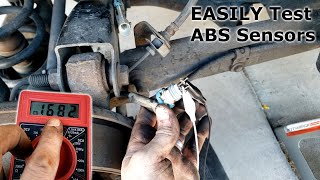
How to confirm: Use a scan tool to monitor live data from all four wheel speed sensors while driving. A faulty right rear sensor will show a reading of 0 MPH or an erratic signal while the others read correctly. You can also test the sensor's internal resistance with a multimeter; it should typically be between 800 and 1,700 ohms. An open circuit (infinite resistance) or a short (zero resistance) confirms failure.
Typical fix: Replace the right rear ABS wheel speed sensor and its integrated wiring harness. The OEM part number is 2L2Z-2C190-AA, which has been superseded by several revisions.
Est. part cost: $20-$60 - Damaged Wiring or Connector 🟡 Medium Probability The wiring harness runs along the suspension and can be damaged by road debris, improper jacking, or become brittle and crack from age and heat cycles. The area within a few inches of the sensor connector is most vulnerable.
How to confirm: Visually inspect the entire length of the wiring from the sensor to the main harness connection on the frame. Look for breaks, chafing, melting, or corrosion. Check for corrosion or bent pins inside the connectors. Perform a continuity test on the wires with a multimeter if no visual damage is found.
Typical fix: Repair the damaged section of wire using solder and heat-shrink tubing, or replace the pigtail connector if it is corroded.
Est. part cost: $10-$30 - Damaged or Dirty ABS Tone Ring ⚪ Low Probability The tone ring (a toothed metal ring that the sensor reads) can accumulate rust and debris, or it can crack or get damaged, preventing an accurate reading. This is less common than sensor failure on this platform.
How to confirm: Remove the wheel speed sensor and use a flashlight and mirror to inspect the tone ring through the mounting hole. Rotate the axle to check the entire circumference for missing teeth, cracks, or heavy rust buildup that could interfere with the sensor's magnetic reading.
Typical fix: If dirty, cleaning the tone ring with a wire brush and brake cleaner may resolve the issue. If the ring is cracked or damaged, the component it is attached to (the rear axle shaft) will need to be replaced.
Est. part cost: $50-$150
Rare But Worth Checking
- Failed ABS Control Module: → Shop ABS Control Module This is very rare. Before condemning the expensive ABS module, exhaust all other diagnostic possibilities. A failed module will often, but not always, set multiple wheel speed sensor codes or communication faults.
Diagnosis Steps
- Connect an ABS-capable scan tool and confirm the C0050 code is present.
- View the live data stream for all four wheel speed sensors.
- Drive the vehicle slowly (above 5 mph) and observe the speed readings. The right rear sensor reading should be different from the others (likely zero or erratic).
- Raise and safely support the rear of the vehicle on jack stands.
- Visually inspect the right rear wheel speed sensor and its wiring harness for any obvious damage, such as cracks, fraying, or signs of melting.
- Follow the harness from the sensor up to its connection on the frame, checking for damage along the way.
- Disconnect the sensor and inspect the connector terminals for corrosion or damage.
- If no visual issues are found, remove the single bolt (typically a 5mm Allen or 8mm hex bolt) holding the sensor in place and pull the sensor out of the hub. It may be seized from corrosion and require careful persuasion to remove.
- Inspect the sensor tip for metallic debris or damage. Inspect the tone ring inside the hub for cracks, missing teeth, or heavy rust.
- Using a multimeter set to Ohms, test the resistance across the two pins of the old sensor. Compare the reading to the typical specification of 800-1700 Ohms. An infinite reading (OL) indicates a failed open circuit.
- If the sensor tests good, check for voltage and ground at the vehicle-side connector and test the wiring continuity back to the ABS module.
Parts You'll Likely Need
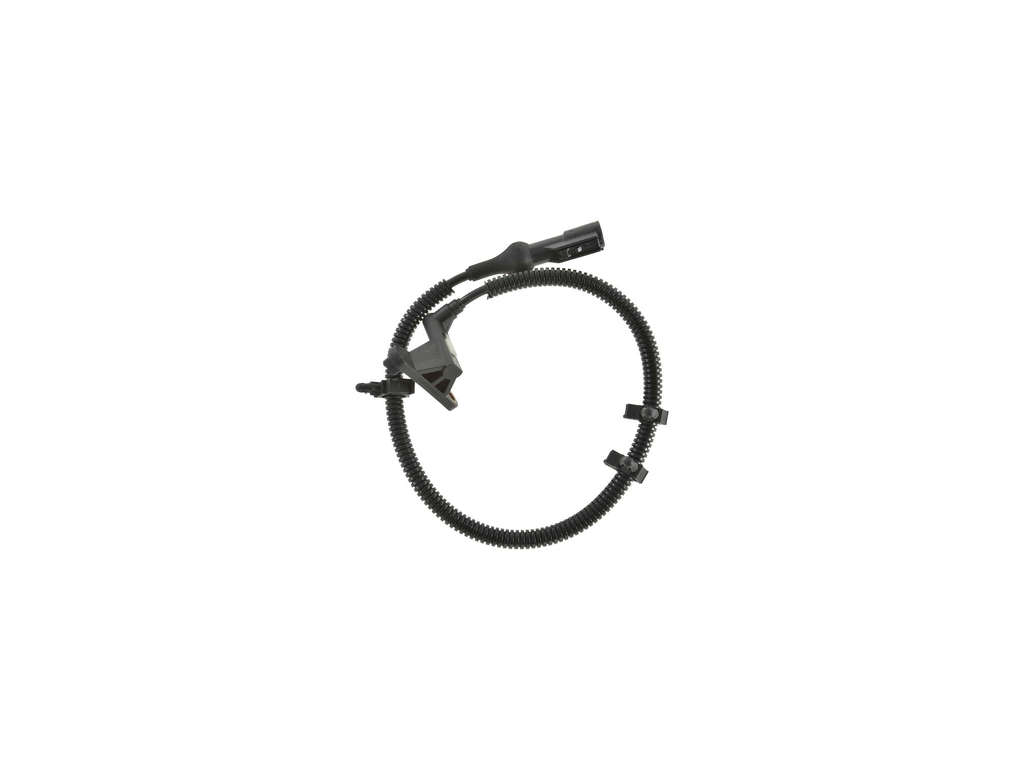
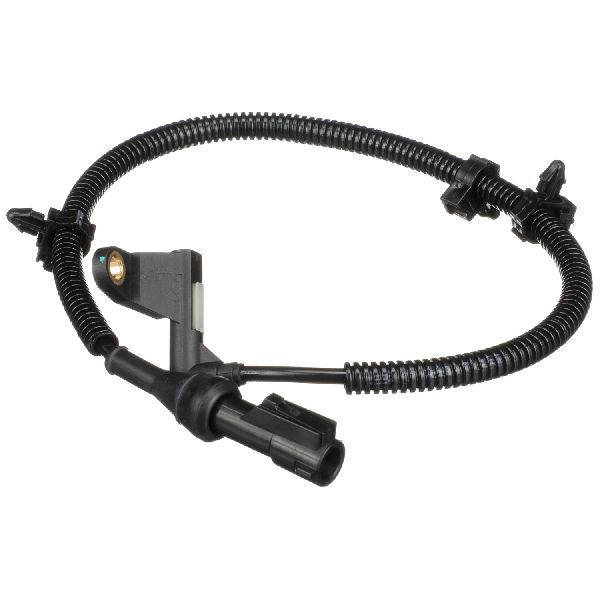
- Rear ABS Wheel Speed Sensor
(OEM #2L2Z-2C190-AA (may be superseded by 2L2Z-2C190-AB, 2L2Z-2C190-AC))— This is the most common failure point for a C0050 code on this vehicle due to its exposure to the elements and heat cycles.
Trusted brands: Motorcraft, Dorman, Bosch, Standard Motor Products (SMP), SKP
OEM price range: $50-$100
Aftermarket price range: $20-$60
Technical Service Bulletins (TSBs) & Recalls
- TSB 05-24-2: Pertains to the common cracked rear liftgate appliqué, a well-known issue on this platform.
- TSB 04-15-04: Addresses the 4.0L SOHC timing chain rattle, another common platform issue.
Platform-Specific Known Issues
- The ABS sensor is notorious for seizing inside the cast iron knuckle due to galvanic corrosion. Removal often requires significant force, and sometimes the sensor must be broken apart and drilled out, increasing repair time.
- Owners on forums report that using a liberal amount of penetrating oil and twisting the sensor back and forth with pliers can help break it free before attempting to pull it straight out.
Mechanic-Grade Diagnostic Values
- Sensor AC Voltage Output — expected: A fluctuating AC voltage signal greater than 100mV (0.1V) that increases with wheel speed.. Failure: A reading of 0V or a non-fluctuating signal while the wheel is spinning by hand points to a failed sensor.
- Sensor Resistance — expected: 800 - 1,700 Ohms across the two sensor pins.. Failure: A reading of infinite resistance (OL) indicates an open circuit, while a reading near zero indicates a short. Both confirm sensor failure.
- Wiring at ABS Module for Right Rear Sensor — expected: Continuity between sensor connector and module connector pins.. Failure: No continuity (open circuit) on either wire.
Hidden / Shadow Codes Worth Checking
- C0050:00: General Electrical Failure. This points to an open circuit, short-to-ground, or high resistance in the sensor circuit. (see via Ford IDS, FORScan, or other professional-grade scan tool capable of reading manufacturer-specific symptom bytes.)
- C0050:18: Signal Amplitude Low. This suggests a weak signal, which can be caused by an excessive air gap, metallic debris on the sensor tip, or a failing sensor. (see via Ford IDS, FORScan, or other professional-grade scan tool capable of reading manufacturer-specific symptom bytes.)
- C0050:5A: Signal Plausibility Failure. The module is receiving a signal, but it's illogical compared to other sensors (e.g., showing speed when stopped). This often points to a damaged tone ring or electrical interference. (see via Ford IDS, FORScan, or other professional-grade scan tool capable of reading manufacturer-specific symptom bytes.)
Scan Tool Commands That Help
- Ford IDS / FORScan: Live Data / Data Logger — This is the first step. Use it to monitor the PIDs for all four wheel speed sensors simultaneously while driving to confirm the right rear sensor is the one providing an erratic or zero MPH reading.
- Ford IDS / FORScan: Self Test > All CMDTCs — After replacing a part, run this self-test to command the ABS module to re-check all its circuits and confirm the fault is cleared. This is the correct way to verify the repair, rather than just clearing codes.
Wiring & Ground Locations
- ABS Control Module — Located in the left front of the engine compartment, typically mounted to the ABS hydraulic block.. This is where the signal from the right rear sensor terminates. All wiring tests for continuity will end at this module's main connector.
- G101 — A primary chassis ground located at the left front of the engine compartment, near the battery junction box.. A poor connection at this main ground point can cause a variety of electrical issues for modules in the engine bay, including the ABS module, potentially leading to false codes.
- Right Rear Sensor Connector — The sensor's pigtail connects to the main chassis harness. On the passenger (right) side, this connection point is often found high in the fender well, sometimes behind the coolant reservoir area.. This connector is a common point for corrosion or damage. Testing should be performed on both sides of this connector to isolate the fault between the sensor pigtail and the main vehicle harness.
- Right Rear Sensor Wires — The two wires running from the sensor to the ABS module.. Wiring diagrams suggest the wire colors are typically Blue (RR+) and Red (RR-). Knowing these colors helps in testing for continuity and voltage at the module connector.
Real Owner Repair Stories
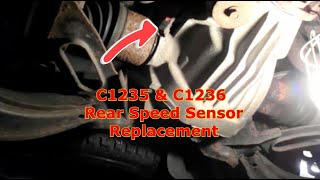
- Compilation of forum posts and YouTube repair videos (2003 Ford Explorer) — ABS light on, diagnostic codes for rear wheel speed sensor input missing (Ford-specific C1235/C1236, analogous to generic C0050).
❌ Tried (didn't work) In many cases, owners proceed directly to sensor replacement as it is the most common cause.
✅ What actually fixed it Replacing the rear wheel speed sensor resolved the codes and turned off the ABS light. A major challenge noted in multiple sources was the old sensor being seized in the differential/knuckle, requiring it to be broken and drilled out for removal.
Documented NHTSA Reports
While the C0050 code on the Mountaineer platform typically points to the wheel speed sensor, cross-manufacturer records show how this code can manifest in other systems. For instance, NHTSA ODI #10763888 describes a case where C0050 was diagnosed as a faulty power steering control module (PSCM) requiring a steering column replacement. In heavy-duty applications, NHTSA ODI #11228687 shows C0050 appearing alongside multiple other communication and sensor codes (C0035, C0040, U0077), indicating a broader electrical or suspension issue. Furthermore, NHTSA ODI #11649367 notes that C0050 can be triggered after brake service if extra fluid is required to return caliper piston contact to the brake pad, disabling the ABS and supporting systems.
OEM Part Supersession History
2L2Z-2C190-AA→2L2Z-2C190-AB, 2L2Z-2C190-AC— Standard part revisions by the manufacturer, likely for improved durability or minor design changes.
Model Year Variations Within This Range
- 2002-2005: This generation uses a four-wheel ABS system with individual sensors at each wheel. This is a significant change from the prior generation (1995-2001) Explorer/Mountaineer, which commonly used a single ABS sensor on the rear differential. A technician familiar with the older platform might mistakenly look for a sensor on the differential.
Diagnostic Flowchart
Other Known Issues on This Vehicle
Issues unrelated to this code that are worth knowing about as an owner of this generation:
- 4.0L SOHC V6 Timing Chain Cassette Failure 🔴 High — Very common, especially on engines over 100,000 miles. Often presents as a rattling or ticking noise from the engine on startup or at idle ('death rattle'). Failure of the plastic guides can lead to catastrophic engine damage. (Ref: Multiple TSBs were issued, including 04-15-04, but no full recall. Repair is complex and often requires engine removal to replace the rear cassette.)
- 5R55W/S Automatic Transmission Failure 🔴 High — Widespread issue, often appearing around or after 100,000 miles. Symptoms include delayed engagement into Drive or Reverse, harsh shifting (especially 2-3), slipping, or a flashing O/D light. Problems often stem from worn servo bores or solenoid pack failure.
- Cracked Rear Liftgate Appliqué Panel 🟠 Medium — Extremely common across all 2002-2005 Explorer/Mountaineer/Aviator models. The plastic panel below the rear glass develops stress cracks, which can allow water intrusion. A class-action lawsuit was filed regarding this issue. (Ref: Multiple TSBs were released (e.g., 05-24-2) to address the repair procedure, but it was not a recall.)
- Leaking Thermostat Housing 🟡 Low — A very common failure point. The original two-piece plastic housing is prone to cracking or the seals degrade, causing coolant leaks from the top front of the engine.
- Wheel Bearing Failure 🟠 Medium — Both front and rear wheel bearings are a common failure item, often after 100,000 miles. Symptoms include a humming or grinding noise that changes with vehicle speed and when turning.
Used vs. New Parts: Buying Guide for This Vehicle
When a used part is the smart pick: For this specific repair, a used part is not recommended. The ABS sensor is a relatively low-cost electronic part that lives in a harsh environment. The risk of a used part failing prematurely outweighs the small cost savings, especially given the labor involved if the old sensor is seized.
OEM-only on this vehicle (don't cheap out):
- No parts for this specific repair are considered 'OEM-only'. Quality aftermarket sensors are widely available and considered reliable.
Aftermarket brands forum-validated for this vehicle:
- Motorcraft (OEM)
- Bosch
- Standard Motor Products (SMP)
- NTK
- Dorman
Brands owners have reported issues with on this vehicle:
- While no specific brands are consistently reported as problematic, be cautious with unbranded, 'white-box' parts from online marketplaces, as their quality and longevity can be unpredictable.
Real Owner Stories
Aggregated from forums and TSBs cited above. Mileages and costs reflect what owners reported in those sources.
2002 Ford Explorer
Symptoms: ABS Light is on and the scanner pulled code C0050.
What fixed it: Replacement of the right rear wheel speed sensor, though the old sensor was difficult to remove due to corrosion in the knuckle.
Source hint: explorerforum.com thread titled 'ABS Light, Code C0050'
2002-2005 Mercury Mountaineer 4.0L SOHC — ~115000 miles
Symptoms: Rattling or ticking noise from the engine on startup or at idle, known as the 'death rattle'.
What fixed it: Replacement of the timing chain cassettes as described in TSB 04-15-04.
Source hint: TSB 04-15-04
Mercury Mountaineer Platform Owner
Symptoms: Diagnostic scan showed code C0050-00.
What fixed it: An owner reported in NHTSA ODI #11693418 that the diagnostic showed C0050-00, and the repair required replacing the rotors, rear brake pads, and adapter plate.
Source hint: NHTSA ODI #11693418
Related OBD-II Codes
Frequently Asked Questions
My 2002 Mercury Mountaineer has a cracked plastic panel on the rear hatch; is there a TSB for this?
I'm hearing a rattle from my 4.0L SOHC engine at startup; does this relate to the ABS code?
What is the specific replacement part number for the right rear wheel speed sensor on my Mountaineer?
Why is the ABS sensor so difficult to remove from the rear knuckle of my 2003 Mountaineer?
Could a bad wheel bearing cause my C0050 code on a 2005 Mountaineer?
Will the C0050 code affect my cruise control or traction control?
Helpful Videos
We Have This Part in Stock


The information in this article is provided for general reference and educational purposes only. Vehicle specifications, procedures, and part compatibility can vary by production date, trim level, and region. Always consult your vehicle's factory service manual and verify part numbers before purchasing or performing repairs. Safety-critical components such as airbags, seat belts, and braking systems should be installed by a qualified professional.
- Mercury Mountaineer:
- 🧭 Diagnostic Flowchart
- 🎬 Helpful Videos
- 🛍️ Shop This Part
- What's Unique About the 2002-2005 Mercury Mountaineer
- Symptoms You May Notice
- Most Likely Causes
- Rare But Worth Checking
- Diagnosis Steps
- Parts You'll Likely Need
- Technical Service Bulletins (TSBs) & Recalls
- Platform-Specific Known Issues
- Mechanic-Grade Diagnostic Values
- Hidden / Shadow Codes Worth Checking
- Scan Tool Commands That Help
- Wiring & Ground Locations
- Real Owner Repair Stories
- Documented NHTSA Reports
- OEM Part Supersession History
- Model Year Variations Within This Range
- Other Known Issues on This Vehicle
- Used vs. New Parts: Buying Guide for This Vehicle
- Real Owner Stories
- 2002 Ford Explorer
- 2002-2005 Mercury Mountaineer 4.0L SOHC — ~115000 miles
- Mercury Mountaineer Platform Owner
- Related OBD-II Codes
- Frequently Asked Questions
- 🎟️ Get 5% Off