

C0050 on 2008-2017 Mitsubishi Lancer: Right Rear Wheel Speed Sensor Fault Causes and Fixes
Code C0050 on a 2008-2017 Lancer means there is a fault with the right rear wheel speed sensor circuit. The most common fix is replacing the sensor itself. Before replacing, check the wiring for damage and use a scan tool to confirm the sensor is not reporting speed correctly. The sensor bolt is known to seize, so use penetrating oil before attempting removal.
- C0050 means the right rear wheel speed sensor circuit is faulty, which disables your ABS and stability control.
- The most likely cause is a failed sensor, followed by damaged wiring. A damaged hub/bearing is less common.
- Use a scan tool's live data to confirm the right rear wheel isn't reporting speed before buying parts.
- The replacement sensor part number is likely 4670A586. The job is DIY-friendly, requiring basic tools and removal of some trunk trim to access the connector.
- Do not continue to drive ignoring this light; your vehicle's primary safety systems are offline.
What's Unique About the 2008-2017 Mitsubishi Lancer
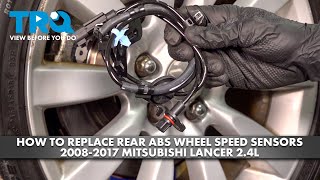
On the 2008-2017 Lancer (CY/CZ generation), the C0050 code is a straightforward issue, almost always pointing to the sensor or its wiring. Unlike some vehicles where the magnetic encoder ring is a frequent point of failure, on the Lancer, the sensor itself is the most common culprit. The sensor is a simple, bolt-in component, but its wiring is routed up through the suspension and connects inside the trunk, requiring some interior trim removal for a full circuit diagnosis or replacement. 🎬 Watch: How to access and replace the rear ABS sensor A common point of frustration is the 12mm bolt holding the sensor, which frequently rusts and seizes in the knuckle, requiring penetrating oil and patience to remove without breaking.
Symptoms You May Notice
- ABS warning light is on
- ASC (Active Stability Control) or TCL (Traction Control) warning light is on
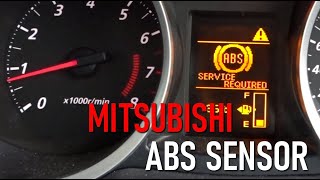
- "Service Required" message may appear on the information display
- ABS system is disabled (wheels may lock up during hard braking)
- Traction and stability control are disabled (increased wheel spin on acceleration, less stable in turns)
- Cruise control may be inoperative
- Replacing the wheel hub/bearing when only the sensor is bad. Always diagnose the sensor and wiring first before condemning the more expensive hub assembly.
- Replacing the sensor without checking the wiring. An intermittent wiring fault can mimic a sensor failure, leading to the new sensor not fixing the problem.
- Breaking the seized sensor bolt during removal, which complicates the repair by requiring drilling and extraction.
Most Likely Causes
- Failed Right Rear Wheel Speed Sensor 🔴 High Probability → Shop ABS Wheel Speed Sensor The sensor is located behind the wheel, where it is exposed to water, salt, and road debris, leading to internal electronic failure or corrosion. The mounting bolt is also highly susceptible to seizing in the knuckle.
How to confirm: Use an ABS-capable scan tool to monitor live data; the right rear wheel speed will read 0 or be erratic while the vehicle is moving. The sensor can also be tested with a multimeter for correct resistance (requires service manual specifications). An open circuit (infinite resistance) or a short (zero resistance) indicates a bad sensor.
Typical fix: Replace the right rear wheel speed sensor. The sensor is typically held in by a single 10mm or 12mm bolt. It is highly recommended to soak the bolt with penetrating oil before attempting removal to avoid breakage.
Est. part cost: $30-$90 - Damaged Wiring or Connector 🟡 Medium Probability The wiring harness runs along the suspension and can be damaged by road debris, improper jacking, or corrosion over time. The connector pigtail itself can also fail.
How to confirm: Perform a thorough visual inspection of the wiring from the sensor to where it enters the body. Check for breaks, chafing, or corrosion at the connector pins. Test for continuity and voltage at the connector with a multimeter.
Typical fix: Repair the broken section of wire using solder and heat-shrink tubing. If the connector is damaged, replace the pigtail. Aftermarket pigtail connectors like Standard Motor Products HP3945 are available.
Est. part cost: $15-$40 for a pigtail connector - Damaged or Dirty Wheel Hub Magnetic Encoder Ring ⚪ Low Probability The magnetic ring is integrated into the wheel bearing/hub assembly. While durable, a failing wheel bearing can cause excessive play and damage the ring, or metallic debris from brake wear can stick to it, disrupting the sensor's reading.
How to confirm: After removing the wheel speed sensor, visually inspect the magnetic ring on the hub through the sensor mounting hole. Rotate the hub and look for cracks, missing sections, or a heavy buildup of metallic debris.
Typical fix: If the encoder ring is damaged, the entire rear wheel hub and bearing assembly must be replaced.
Est. part cost: $100-$250
Rare But Worth Checking
- Failed ABS/ASC Control Module: This is very unlikely to be the cause for a single wheel speed sensor code. A faulty module typically results in multiple codes, communication errors, or codes for several sensors at once.
Diagnosis Steps
- Connect an ABS-capable scan tool and confirm that C0050 is the primary active code.
- Access the live data stream on the scan tool. Drive the vehicle slowly (under 10 mph) in a straight line and observe the wheel speed readings from all four sensors. Confirm that the Right Rear (RR) sensor reads 0 MPH, is erratic, or lags significantly behind the others.
- Safely raise and support the vehicle. Remove the right rear wheel.
- Liberally apply penetrating oil to the ABS sensor mounting bolt and let it soak.
- Visually inspect the entire length of the ABS sensor wire from the wheel hub, along the suspension arms, to the point it enters the vehicle body. Look for any signs of physical damage, chafing, or melting.
- Unplug the sensor connector (located inside the trunk, behind the right-side trim panel) and inspect for corrosion or bent pins. This may require removing the trunk floor, sill plates, and prying off the large plastic side panel.
- Carefully attempt to remove the single bolt (typically 10mm or 12mm) holding the ABS sensor into the wheel hub assembly and gently pull/twist the sensor out. It may be seized.
- Inspect the sensor tip for damage or heavy metallic debris. 🎬 See how to clean your ABS sensor to clear warning lights Shine a light into the mounting hole and slowly rotate the hub to inspect the magnetic encoder ring for cracks or damage.
- If no visual faults are found, use a multimeter to test the internal resistance of the sensor. Compare the reading to the specification in the factory service manual. An open circuit (infinite resistance) or a short (zero resistance) indicates a bad sensor.
- If the sensor tests good, test the wiring harness for continuity, shorts to ground, and proper voltage from the ABS module using a wiring diagram as a reference.
Parts You'll Likely Need
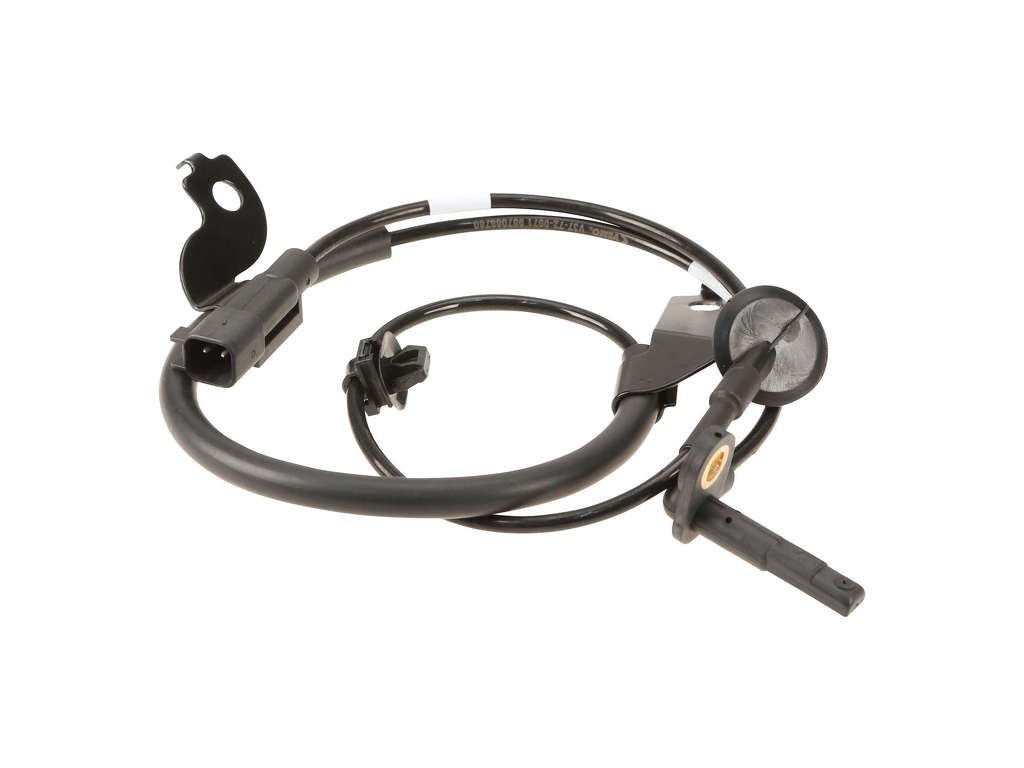
- Rear Right ABS Wheel Speed Sensor
(OEM #4670A586)— This is the most common failure point for the C0050 code due to its exposure to the elements. The part number 4670A586 supersedes the older number 4670A186.
Trusted brands: Mitsubishi Genuine, NTK, Standard Motor Products (SMP), Delphi, WVE/Wells
OEM price range: $120-$180
Aftermarket price range: $30-$90 - Rear Wheel Hub & Bearing Assembly
(OEM #3785A019)— Needed only if the magnetic encoder ring integrated into the hub is found to be cracked or damaged, which is a less common cause.
Trusted brands: Koyo, Timken, MOOG, TRQ, GMB
OEM price range: $250-$350
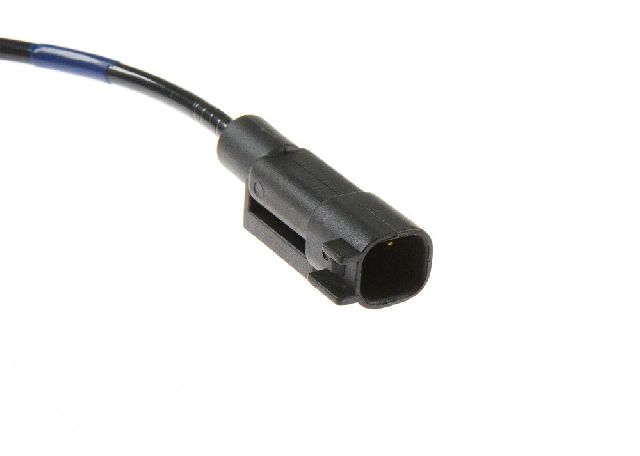
Aftermarket price range: $100-$200 - ABS Sensor Connector Pigtail — Required if the wiring connector is corroded or damaged. Allows for splicing in a new connector without replacing the entire harness.
Trusted brands: Standard Motor Products HP3945, Dorman, ACDelco PT2160
OEM price range: N/A
Aftermarket price range: $15-$40
Related Codes That Often Appear With This One
- C0045 — This is the code for the Left Rear Wheel Speed Sensor. Seeing both codes together could point to a common wiring issue, a problem with the ABS module, or simply that both rear sensors have failed around the same time.
Technical Service Bulletins (TSBs) & Recalls
- TSB-13-35-003: Issued for 2008-2010 Lancer models, this bulletin revises incorrect diagnostic procedures for wheel speed sensor DTCs (C1014, C101F, C102A, C1035, C1041-C1044, C1046-C1049) in the factory service manual. While not for C0050 specifically, it shows a history of documentation updates for this system and affects related models like the Outlander.
- TSB-12-35-003: This bulletin clarifies the stop light switch installation and adjustment procedure for 2008-2012 Lancers. A misadjusted stop light switch can cause ABS/ASC system warnings, though it typically sets different codes.
Platform-Specific Known Issues
- Seized Sensor Bolt: Owners frequently report that the 10mm or 12mm bolt holding the rear ABS sensor seizes into the steel knuckle due to galvanic corrosion. It is crucial to use a generous amount of penetrating oil and work the bolt back and forth carefully to avoid snapping it off, which would require drilling and extraction.
- Interior Trim Removal for Connector Access: Unlike many cars where the sensor connector is under the vehicle, the Lancer's rear sensor harness passes through the body and connects behind the trunk's interior side trim. This requires removing the trunk floor, sill plates, and prying off the large plastic side panel to access the connector for testing or replacement.
Documented NHTSA Reports
While the C0050 code on the Mitsubishi Lancer is primarily a wheel speed sensor circuit fault, it is important to note that this code can have different manufacturer-specific definitions on other platforms. For example, on some vehicles, NHTSA ODI #10763888 describes C0050 as identifying a faulty power steering control module (PSCM) involving the entire steering column. In other suspension-related reports, such as NHTSA ODI #11228687, C0050 appeared alongside several communication and sensor codes (C0035, C0040, U0077) during a diagnostic inspection. Furthermore, some technicians have noted in NHTSA ODI #11649367 that the code may set after brake service if extra fluid is required to return caliper piston contact to the brake pad, potentially disabling the ABS and supporting systems.
Mechanic-Grade Diagnostic Values
- ABS Wheel Speed Sensor Internal Resistance — expected: Approximately 980 - 2,350 Ohms. This is a general specification for passive sensors; the exact value for OEM part 4670A586 is not published. Comparing the reading to a known-good sensor on the same car is a reliable method.. Failure: A reading of infinite resistance (OL) indicates an open circuit, while a reading near zero Ohms indicates a short circuit. Either confirms a failed sensor.
- ABS Wheel Speed Sensor AC Voltage Output — expected: Greater than 100-200 millivolts (0.1-0.2V AC) when spinning the wheel at approximately one revolution per second.. Failure: No AC voltage produced while the wheel is spinning indicates the sensor is not generating a signal and has failed.
Scan Tool Commands That Help
- Mitsubishi MUT-III: Data List (Service Data Monitor) — This is the primary function used to diagnose a C0050. The technician selects the ABS/ASC system, then views the 'Data List' to monitor the live speed output from all four wheels simultaneously while the vehicle is driven slowly. This will confirm if the right rear sensor is reading '0' or providing an erratic signal compared to the others.
- Mitsubishi MUT-III: Actuator Test — While not used to directly diagnose the sensor, this function is used in a comprehensive system check if a module fault is suspected. It allows the technician to command the ABS pump motor and individual solenoid valves to operate, verifying the hydraulic unit is responding correctly to ECU commands.
Wiring & Ground Locations
- A-03 — This is the main electrical connector for the ABS-ECU, which is attached to the ABS hydraulic unit/pump assembly in the engine bay.. If the sensor and its direct wiring test good, a technician would then check for power and ground at this connector to rule out a module power supply issue. Pins 1 and 14 are the main grounds. Pins 7, 13, and 26 are all separate 12V power feeds for different functions within the module.
- Right Rear Sensor Connector — Inside the trunk, located behind the right-side plastic trim panel, near the wheel well.. This is the primary disconnection point for testing the sensor's resistance and the continuity of the harness running from the trunk to the ABS-ECU. Corrosion here is less common than under the car but possible.
OEM Part Supersession History
4670A186→4670A586— Part has been updated or revised by the manufacturer.
Model Year Variations Within This Range
- 2008: A parts supplier notes a distinction for some 2008 FWD models having an 'Oval Connector' for the wheel speed sensor. Owners of 2008 models should visually inspect their existing sensor connector before ordering a replacement part to ensure compatibility, as a mid-generation change may have occurred.
Diagnostic Flowchart
Other Known Issues on This Vehicle
Issues unrelated to this code that are worth knowing about as an owner of this generation:
- CVT Transmission Unreliability/Failure 🔴 High — Commonly reported after 60,000-100,000 miles, especially on earlier models. Symptoms include whining, hesitation, shuddering, and eventual failure. (Ref: Multiple TSBs exist, such as TSB-15-23-003, for replacing pulley bearings to address noise. A class-action lawsuit was filed regarding these issues.)
- Front Crossmember/Subframe Corrosion 🔴 High — Affects vehicles primarily in salt-belt regions. Severe rust can cause the lower control arm to detach, leading to a loss of steering control. (Ref: Recall SR-16-003 (NHTSA #16V458) was issued for 2002-2007 Lancers, but the issue is known to persist on the 2008+ generation. Dealers inspect and either apply an anti-corrosion agent or replace the crossmember.)
- Clear Coat / Paint Peeling 🟡 Low — Widespread reports of the clear coat and paint (especially on the roof and trunk) failing, peeling, and oxidizing prematurely.
- A/C Compressor Clutch Failure 🟠 Medium — The clutch on the A/C compressor is a common failure point, leading to a non-functional air conditioning system. Often the clutch fails before the compressor itself.
- Crankshaft Position Sensor Failure 🟠 Medium — A failing crankshaft position sensor can cause intermittent crank-no-start conditions or stalling while driving.
Used vs. New Parts: Buying Guide for This Vehicle
When a used part is the smart pick: A used wheel hub/bearing assembly can be a cost-effective choice if it comes from a low-mileage, non-corroded donor vehicle and the bearing feels smooth with no play. A used wiring pigtail is also a good option if the plastic is flexible and the pins are clean.
Donor-vehicle mileage cap: roughly under 70000 miles for the part to have meaningful remaining life.
What to inspect on the donor part:
- For a hub: Spin the bearing by hand. It must be completely silent and smooth with zero roughness or grinding. There should be no in-and-out or side-to-side play.
- For a wiring pigtail: Inspect for any cracking in the wire insulation. The connector's locking tab must be intact. Avoid parts with any signs of green or white corrosion on the pins.
- Visually inspect the magnetic encoder ring on the hub for any cracks, chips, or heavy rust build-up.
OEM-only on this vehicle (don't cheap out):
- ABS/ASC Control Module. Due to the known failure rate of this component and the need for potential programming, sourcing a used module is very risky. A new OEM unit or a professional repair of the original unit is strongly recommended.
Aftermarket brands forum-validated for this vehicle:
- Sensors: NTK, Standard Motor Products (SMP), Delphi
- Hub Assemblies: Timken, MOOG, Koyo, SKF
Brands owners have reported issues with on this vehicle:
- Be cautious with unbranded, 'white-box' wheel speed sensors and hub assemblies from online marketplaces. While initial cost is low, they have a higher reported failure rate, which can lead to having to do the repair twice.
Real Owner Stories
Aggregated from forums and TSBs cited above. Mileages and costs reflect what owners reported in those sources.
2007 Mitsubishi Outlander
Symptoms: ABS warning lights on; difficulty finding the sensor plug location.
What fixed it: Replaced the rear ABS sensor after performing extensive interior trim removal, including pulling the back door sills and floor bolts to reach the connector behind the plastic side panel.
Source hint: MitsubishiForum.com: 'ABS rear sensors'
2010 Mitsubishi Lancer
Symptoms: ABS/ASC warning lights; potential for broken mounting bolts during repair.
What fixed it: Replacement of the rear ABS sensor, following advice to soak the mounting bolt in penetrating oil a full day in advance to prevent the bolt from snapping in the knuckle.
Source hint: EvolutionM.net: General consensus on ABS sensor replacement
Right Rear Brake and Rotor Failure
Symptoms: An owner reported that their rotors, rear brake pads, and adapter plate needed to be replaced after a diagnostic check showed code C0050-00.
What fixed it: Extensive replacement of the rear braking hardware and adapter plate was required to resolve the issues associated with the code.
Source hint: NHTSA ODI #11693418
Related OBD-II Codes
Frequently Asked Questions
Does TSB-13-35-003 apply to my 2009 Mitsubishi Lancer's ABS system?
Where is the Right Rear ABS sensor connector located on the Lancer?
Why is the ABS sensor bolt so difficult to remove on this vehicle?
Can a bad brake light switch cause the same ABS/ASC warning lights as code C0050?
If I need to replace the wiring connector for the sensor, is there a specific part available?
Will a failing wheel bearing cause this code on my Lancer?
Helpful Videos

We Have This Part in Stock


The information in this article is provided for general reference and educational purposes only. Vehicle specifications, procedures, and part compatibility can vary by production date, trim level, and region. Always consult your vehicle's factory service manual and verify part numbers before purchasing or performing repairs. Safety-critical components such as airbags, seat belts, and braking systems should be installed by a qualified professional.
- Mitsubishi Lancer:
- 🧭 Diagnostic Flowchart
- 🎬 Helpful Videos
- 🛍️ Shop This Part
- What's Unique About the 2008-2017 Mitsubishi Lancer
- Symptoms You May Notice
- Most Likely Causes
- Rare But Worth Checking
- Diagnosis Steps
- Parts You'll Likely Need
- Related Codes That Often Appear With This One
- Technical Service Bulletins (TSBs) & Recalls
- Platform-Specific Known Issues
- Documented NHTSA Reports
- Mechanic-Grade Diagnostic Values
- Scan Tool Commands That Help
- Wiring & Ground Locations
- OEM Part Supersession History
- Model Year Variations Within This Range
- Other Known Issues on This Vehicle
- Used vs. New Parts: Buying Guide for This Vehicle
- Real Owner Stories
- 2007 Mitsubishi Outlander
- 2010 Mitsubishi Lancer
- Right Rear Brake and Rotor Failure
- Related OBD-II Codes
- Frequently Asked Questions
- 🎟️ Get 5% Off