

C0050 on 2013-2018 Nissan Altima: Right Rear Wheel Speed Sensor Circuit Fault and Fixes
This code points to a problem with the right rear wheel speed sensor circuit. Most often, the fix is to replace the right rear ABS wheel speed sensor itself. Expect to pay $20-$60 for an aftermarket sensor, which is a common DIY repair. However, the sensor is notorious for seizing in the wheel knuckle, often breaking during removal and complicating the job significantly.
- Code C0050 means your Altima's ABS and traction control are disabled due to a fault with the right rear wheel speed sensor circuit.
- The most likely cause is a failed ABS sensor, which costs about $20-$60 for an aftermarket part.
- Before buying parts, inspect the wiring and connector for damage, and use a scan tool to watch live wheel speed data to confirm the right rear sensor is the one failing.
- Be prepared for the old sensor to be seized in the wheel knuckle; it may break on removal and require extra work to extract.
- Driving is possible, but your vehicle's safety systems are compromised, so prompt repair is recommended.
What's Unique About the 2013-2018 Nissan Altima
For the fifth-generation Altima (L33), the C0050 code is a straightforward issue with a well-known repair challenge. The rear wheel speed sensors are notoriously prone to seizing inside the steering knuckle due to corrosion from water and road salt. It is very common for the sensor to break during removal, requiring the technician to drill or punch out the remaining plastic piece. In many documented cases, this requires removing the entire wheel hub assembly to gain enough access to extract the broken sensor remnants.
Symptoms You May Notice
- ABS warning light is on
- Traction Control or VDC (Vehicle Dynamic Control) light is on
- SLIP indicator light may be on
- ABS system does not activate during hard braking (wheels may lock up)
- Traction control does not activate on slippery surfaces
- Cruise control may be inoperative
- Replacing the wheel hub/bearing when only the sensor is bad. Always diagnose the sensor and wiring first before condemning the more expensive hub assembly.
- Replacing the sensor when the actual fault is a corroded connector or a break in the wiring harness further up the line.
Most Likely Causes
- Failed Right Rear Wheel Speed Sensor 🔴 High Probability → Shop ABS Wheel Speed Sensor The sensor is exposed to harsh elements like water, salt, and road debris, leading to internal electronic failure over time. It is the most common point of failure for this code.
How to confirm: Use an ABS-capable scan tool to view live data; the right rear wheel speed should read 0 MPH or be erratic while the other wheels show a consistent speed. You can also test the sensor's signal with an oscilloscope. Resistance tests are not typically useful for this type of active sensor.
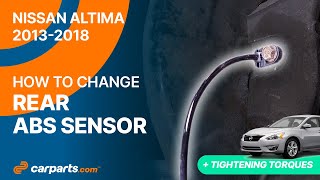
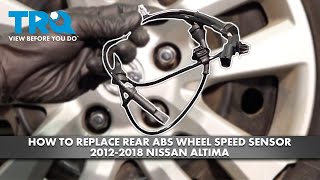
Typical fix: Replace the right rear wheel speed sensor. 🎬 Watch: Step-by-step guide to replacing the rear ABS sensor Apply penetrating oil generously before attempting removal. Be prepared for the old sensor to be seized in the knuckle and break apart.
Est. part cost: $20-$60 - Damaged Wiring or Connector 🟡 Medium Probability The wiring harness runs down to the wheel and is susceptible to damage from road debris, corrosion at the connector, or chafing against suspension components. The connector pins can also corrode or become loose.
How to confirm: Visually inspect the wiring harness from the sensor up into the wheel well for any breaks, chafing, or corrosion. Check for a secure connection at the sensor and where it connects to the main body harness. A multimeter can be used to check for continuity and shorts in the wiring between the sensor connector and the ABS module connector.
Typical fix: Repair the damaged section of wiring using solder and heat-shrink tubing, or replace the pigtail connector if it is corroded. Ensure wiring is properly secured away from moving parts.
Est. part cost: $15-$40 - Damaged or Contaminated Hub Bearing Magnetic Encoder ⚪ Low Probability The magnetic encoder ring is integrated into the wheel hub/bearing assembly's seal. While durable, severe corrosion can cause it to delaminate, crack, or become coated in metallic debris (rust), which interferes with the sensor's reading.
How to confirm: After removing the wheel speed sensor, visually inspect the magnetic ring on the hub for cracks, rust build-up, or missing sections. Spin the hub and ensure the ring is clean and intact. An incorrect air gap between the sensor and ring can also cause issues.
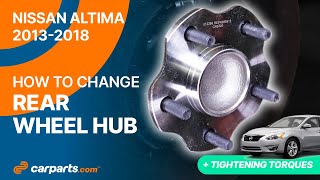
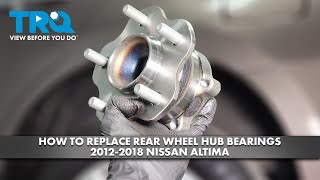
Typical fix: If the magnetic encoder ring is damaged, the entire wheel hub and bearing assembly must be replaced. 🎬 Watch: How to replace the rear wheel hub assembly
Est. part cost: $70-$200
Rare But Worth Checking
- Faulty ABS Control Module: → Shop ABS Control Module This is very rare and should only be considered after all other possibilities (sensor, wiring, hub) have been definitively ruled out. A failed module would typically store multiple wheel speed sensor codes or internal fault codes.
Diagnosis Steps
- Connect an ABS-capable OBD-II scanner and confirm the C0050 code is present. Check for any other related codes.
- Use the scanner's live data function to monitor all four wheel speed sensors while driving or with the wheels raised. Observe if the Right Rear (RR) sensor reads 0, is erratic, or doesn't match the other sensors' speeds.
- Raise and safely support the rear of the vehicle. Remove the right rear wheel.
- Visually inspect the wheel speed sensor and its wiring harness for any obvious signs of damage, such as cracks, melting, frayed wires, or rodent damage. Check the connector for corrosion or loose pins.
- Disconnect the sensor. If you have a multimeter, you can check the wiring harness for proper voltage and ground from the ABS module. An oscilloscope is the best tool to verify a clean square wave signal from the sensor when spinning the wheel.
- Remove the 10mm bolt holding the sensor to the knuckle. Liberally apply penetrating oil. Carefully try to twist and pull the sensor out. Be aware it may be seized and break.
- Once the sensor is out (or the broken pieces are removed), thoroughly clean the mounting hole with a wire brush or drill bit. Inspect the magnetic encoder ring on the wheel hub for excessive rust, debris, or damage.
- If the sensor and wiring test good and the encoder ring is clean and intact, the fault may be intermittent or, in rare cases, within the ABS module itself.
Parts You'll Likely Need
- Rear Right ABS Wheel Speed Sensor
(OEM #47900-3TA2A)— This is the most common failure item for a C0050 code due to its exposure to the elements and electronic nature. This part number fits both rear left and right sides and supersedes 47900-3TA0A and 47900-3TA1A.
Trusted brands: Hitachi, NTK, Delphi, Standard Motor Products, Wells
OEM price range: $150-$220
Aftermarket price range: $20-$60 - Rear Wheel Hub and Bearing Assembly
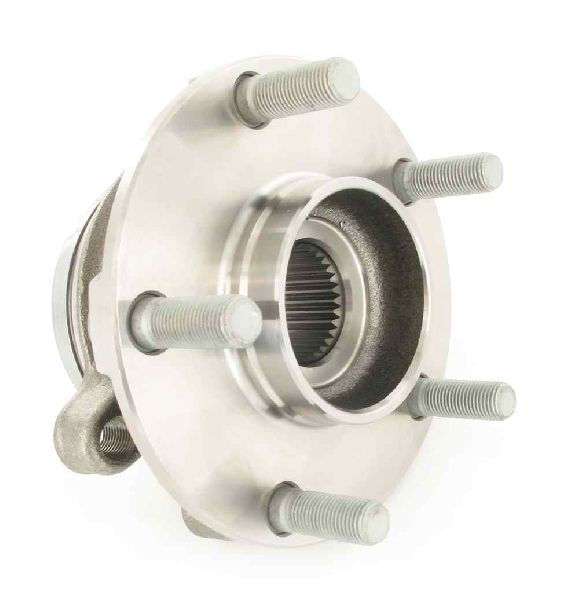
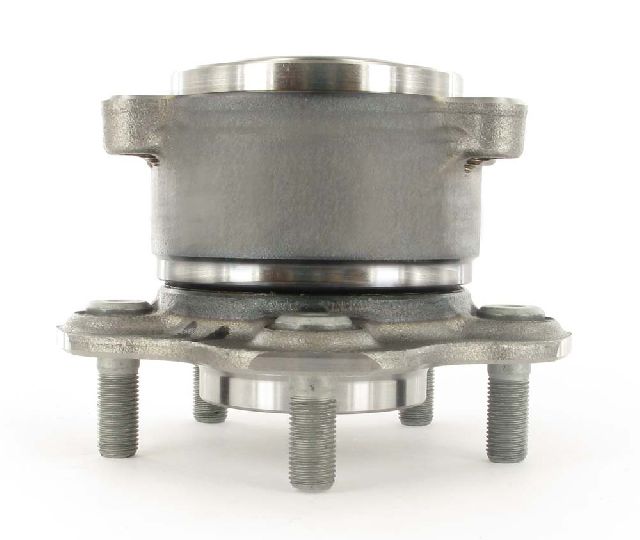
(OEM #43202-3JA1A)— Needed only if the magnetic encoder ring integrated into the hub is damaged, or if the hub is being replaced for a separate bearing noise issue. The original part may be 43202-3TA0A, which is superseded by 43202-3JA1A.
Trusted brands: Timken, SKF, MOOG, TRQ, Detroit Axle
OEM price range: $180-$270
Aftermarket price range: $70-$200
Technical Service Bulletins (TSBs) & Recalls
- NTB10-102a: This Nissan Technical Service Bulletin provides a diagnostic flowchart for various wheel speed sensor codes (C1101-C1108), which is directly applicable to diagnosing the circuit fault indicated by C0050.
Platform-Specific Known Issues
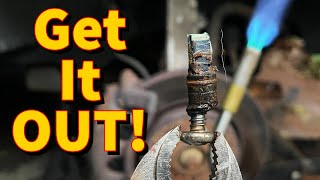
- The rear ABS wheel speed sensor is notoriously difficult to remove without breaking it. Applying penetrating oil and gently twisting is recommended, but mechanics and DIYers should be prepared to drill out the old sensor if it breaks off in the knuckle. 🎬 See this pro tip for removing a stuck or broken sensor
- A video by CarParts.com on YouTube specifically demonstrates the process of removing the wheel hub to punch out the broken sensor from the backside, a common scenario for this repair.
Mechanic-Grade Diagnostic Values
- ABS Sensor Retaining Bolt Torque — expected: 84 in-lbs (7 ft-lbs). Failure: N/A. This is an installation specification.
- Wiring Harness Continuity Under Load — expected: Less than 1-2 Ohms of resistance, stable.. Failure: If the multimeter reading jumps to infinite resistance (OL) when the harness is wiggled, it indicates an internal wire break that is not visible from the outside.
Hidden / Shadow Codes Worth Checking
- C0050 5A: Signal Plausibility Failure. This indicates the sensor is producing a signal, but it's illogical compared to the other wheel speed sensors (e.g., reading 10 MPH while others read 60 MPH). (see via This type of sub-code may be visible on dealer-level scanners like the Nissan CONSULT or advanced aftermarket scan tools.)
- C0050 18: Low Signal Amplitude. This suggests a weak or erratic signal from the sensor, which could be caused by an excessive air gap, a failing sensor, or a damaged magnetic encoder ring. (see via Visible on more advanced scan tools that can interpret manufacturer-specific fault data beyond the primary code.)
Wiring & Ground Locations
- Wheel Speed Sensor Harness Connector — Located in the wheel well, behind the plastic fender liner. The harness is routed up from the sensor and plugs into the body harness here.. This connector is a common point for corrosion or loose pins. It's the first place to check for wiring issues after the sensor itself.
- ABS Actuator & Electric Unit Ground — On similar Nissan platforms, the main ground points for the ABS module are located in the engine compartment, often designated with identifiers like E15 or E30, bolted directly to the chassis or engine block.. While a bad ground for the entire module is unlikely to cause a single sensor code, it is a possibility. A faulty ground would typically cause multiple system codes or more erratic behavior.
Real Owner Repair Stories
- RB The Mechanic YouTube Channel (2009 Nissan Altima (similar hub/sensor design)) — ABS light on after replacing other parts.
❌ Tried (didn't work) The new ABS sensor would not physically seat all the way into the knuckle.
✅ What actually fixed it The vehicle had an aftermarket wheel hub assembly installed. A metal shield on the new hub was misaligned and physically blocked the ABS sensor from inserting fully. The technician had to disassemble the knuckle and hub to reposition the shield, allowing the new sensor to be installed correctly.
"I Checked Everything" — The Actual Cause
- A common scenario analogous to a 'smoke test clean' for this electrical code is when a visual inspection of the wiring harness shows no damage, and continuity tests pass with the harness held still. The actual cause can be an internal break in the wire that only separates and creates an open circuit when the suspension moves or the wire is flexed. This is often found by wiggling the harness while performing a continuity test.
Documented NHTSA Reports
While C0050 is a standard wheel speed sensor code for Nissan, it is important to note that other manufacturers use this identifier differently. For example, NHTSA ODI #10763888 describes a case where C0050 identified a faulty power steering control module (PSCM) on a different make, requiring a steering column replacement. Additionally, NHTSA ODI #11228687 shows this code appearing alongside multiple other communication and sensor faults (C0035, C0040, U0126) on a different platform. In some brake service scenarios, as noted in NHTSA ODI #11649367, the code was set after the extra brake fluid required to return caliper piston contact was discharged, disabling the ABS. Another report, NHTSA ODI #11693418, mentions C0050-00 appearing when rotors, pads, and adapter plates required replacement on a different vehicle type.
Diagnostic Flowchart
Other Known Issues on This Vehicle
Issues unrelated to this code that are worth knowing about as an owner of this generation:
- Continuously Variable Transmission (CVT) Failure 🔴 High — Very common, especially in 2013-2017 models. Issues like shuddering, hesitation, and complete failure can occur well before 100,000 miles. (Ref: Multiple TSBs exist, including NTB16-110P, addressing specific DTCs like P17F0 and P17F1. Nissan also extended warranties for some model years due to class-action lawsuits.)
- Rear Lower Control Arm Corrosion and Failure 🔴 High — Primarily affects vehicles in 'salt belt' states. Corrosion can cause the arm to crack and separate, affecting vehicle control. (Ref: Nissan issued a voluntary service campaign (ID P9324 / NTB19-082) to replace the arms on affected 2013 models and extended the warranty. No formal recall was issued.)
- Failing A/C Compressor or Clutch 🟠 Medium — Commonly reported issue where the A/C blows warm air. The failure is often the compressor's internal components or the magnetic clutch, frequently requiring a full compressor replacement.
- Primary/Secondary Hood Latch Failure 🔴 High — Widespread issue where corrosion can cause the secondary hood latch to fail, potentially allowing the hood to fly open while driving if the primary latch is released. (Ref: Multiple recalls were issued, including NHTSA campaign 20V315000, to address the latching mechanism.)
- Delayed Engagement in CVT ('Morning Sickness') 🟡 Low — Common complaint of a 3-5 second delay when shifting into Drive or Reverse on a cold start. It's often caused by old fluid or outdated TCM software. (Ref: TSB NTB16-054 provides a software update to the TCM to address this specific cold-start condition.)
Used vs. New Parts: Buying Guide for This Vehicle
When a used part is the smart pick: For this repair, using used parts is generally not recommended. The primary failure components are an electronic sensor and a wheel bearing, both of which are wear items with unknown remaining life when sourced from a junkyard.
Donor-vehicle mileage cap: roughly under 80000 miles for the part to have meaningful remaining life.
What to inspect on the donor part:
- For a hub assembly: Check for zero play or roughness when spinning the bearing.
- Inspect the magnetic encoder ring for any signs of rust, cracking, or delamination.
- Ensure the wiring pigtail on the sensor (if attached to hub) is not brittle or cracked.
- Source from a vehicle in a dry, salt-free climate if possible to minimize corrosion.
OEM-only on this vehicle (don't cheap out):
- No parts are strictly 'OEM-only' for this repair, but caution is advised with non-reputable aftermarket brands.
Aftermarket brands forum-validated for this vehicle:
- For Wheel Speed Sensors: Hitachi (often the OEM supplier), NTK, Delphi, Standard Motor Products (SMP), Wells.
- For Wheel Hub Assemblies: Timken, SKF, MOOG, and TRQ are generally well-regarded brands that often meet or exceed OEM specifications.
Brands owners have reported issues with on this vehicle:
- Unbranded, 'white-box' parts from online marketplaces. These are more likely to have manufacturing defects, such as the hub fitment issue described, or use lower-quality electronics in sensors, leading to premature failure.
Real Owner Stories
Aggregated from forums and TSBs cited above. Mileages and costs reflect what owners reported in those sources.
2013 Nissan Altima
Symptoms: ABS warning light, Traction Control/VDC light, and SLIP indicator are all illuminated. The sensor is seized and likely to break during removal.
What fixed it: Replacement of the right rear wheel speed sensor; however, the sensor broke off in the knuckle and required drilling out the old pieces and cleaning the mounting hole with a wire brush.
Source hint: nissanclub.com and vehicle_specific_issues
2013-2018 Nissan Altima
Symptoms: ABS light on; live data shows the right rear wheel speed reading 0 MPH while others are consistent.
What fixed it: Removing the wheel hub to punch out the broken sensor from the backside after it snapped during a removal attempt.
Source hint: CarParts.com YouTube video cited in vehicle_specific_issues
2013-2018 Nissan Altima
Symptoms: ABS and Traction Control lights on; visual inspection revealed the wiring harness was damaged by road debris.
What fixed it: Repairing the damaged section of the wiring harness using solder and heat-shrink tubing and securing it away from moving suspension parts.
Source hint: common_causes
Related OBD-II Codes
Frequently Asked Questions
Does Nissan Technical Service Bulletin NTB10-102a apply to my Altima's C0050 code?
Can I just replace the sensor, or do I need to replace the whole hub assembly (Part 43202-3JA1A)?
Why is my cruise control not working along with the ABS light?
Is there a recall for the rear suspension components that might be related to my ABS light?
I'm trying to DIY this repair; what should I be careful of when removing the old sensor?
Helpful Videos
Used OEM Parts in Stock
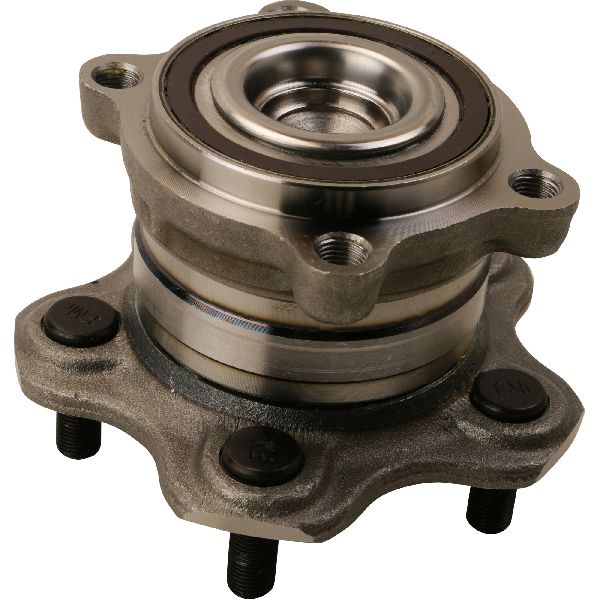
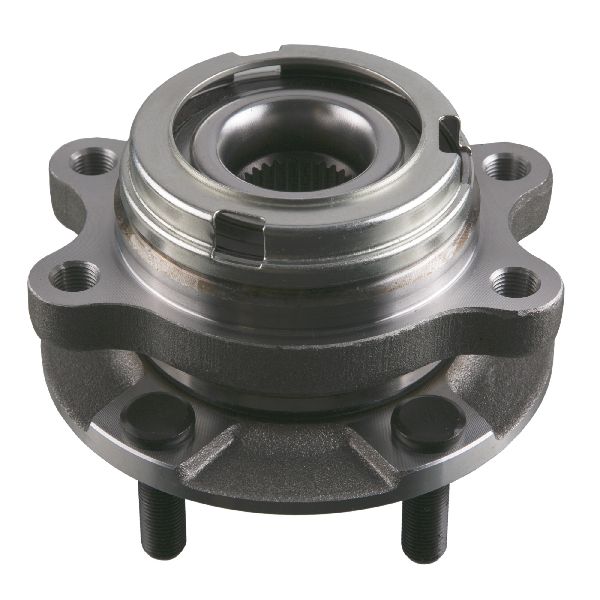
New Aftermarket Parts Available


The information in this article is provided for general reference and educational purposes only. Vehicle specifications, procedures, and part compatibility can vary by production date, trim level, and region. Always consult your vehicle's factory service manual and verify part numbers before purchasing or performing repairs. Safety-critical components such as airbags, seat belts, and braking systems should be installed by a qualified professional.
- Nissan Altima:
- 🧭 Diagnostic Flowchart
- 🎬 Helpful Videos
- 🛍️ Shop This Part
- What's Unique About the 2013-2018 Nissan Altima
- Symptoms You May Notice
- Most Likely Causes
- Rare But Worth Checking
- Diagnosis Steps
- Parts You'll Likely Need
- Technical Service Bulletins (TSBs) & Recalls
- Platform-Specific Known Issues
- Mechanic-Grade Diagnostic Values
- Hidden / Shadow Codes Worth Checking
- Wiring & Ground Locations
- Real Owner Repair Stories
- "I Checked Everything" — The Actual Cause
- Documented NHTSA Reports
- Other Known Issues on This Vehicle
- Used vs. New Parts: Buying Guide for This Vehicle
- Real Owner Stories
- 2013 Nissan Altima
- 2013-2018 Nissan Altima
- 2013-2018 Nissan Altima
- Related OBD-II Codes
- Frequently Asked Questions
- 🎟️ Get 5% Off