

C0050 on 2008-2010 Saturn VUE: Right Rear Wheel Speed Sensor Circuit Fault, Causes and Fixes
For a 2008-2010 Saturn VUE, code C0050 indicates a fault with the right rear wheel speed sensor circuit. This is most often caused by a damaged or debris-contaminated magnetic encoder ring on the wheel hub bearing, requiring replacement of the entire hub assembly. It can also be a failed sensor or wiring issue. This is a well-documented issue on GM's Theta platform vehicles.
- C0050 on your 2008-2010 VUE means the ABS and StabiliTrak systems are disabled due to a fault in the right rear wheel speed circuit.
- The most common cause by far is metallic debris on, or cracks in, the magnetic encoder ring that is part of the rear wheel hub assembly, a known issue covered by GM TSB PIC5428G.
- While cleaning the ring is the first step, be prepared to replace the entire right rear wheel hub assembly (e.g., ACDelco FW413, Timken HA590236) for a permanent solution.
- Before replacing parts, use a scan tool to check live data and visually inspect the hub ring and wiring to ensure a correct diagnosis.
What's Unique About the 2008-2010 Saturn VUE
The 2008-2010 Saturn VUE is a GM Theta platform vehicle, sharing its core architecture with the Chevrolet Captiva Sport. On these GM platforms, the magnetic encoder ring for the ABS sensor is a magnetized nitrile rubber ring integrated into the wheel hub and bearing assembly, not a traditional toothed metal wheel. This ring is exposed on the inboard side and is highly susceptible to attracting and accumulating ferrous metallic debris from brake dust and road grime. This contamination disrupts the sensor's reading and is the most common cause for the C0050 code, as documented in multiple versions of GM TSB PIC5428. Often, the sensor itself is fine, but the entire hub assembly must be replaced to install a new, clean encoder ring.
Symptoms You May Notice
- ABS warning light is on
- StabiliTrak or Traction Control (TC) warning light is on
- "Service StabiliTrak" or "Service Traction Control" message on the driver information center
- ABS system does not activate during hard braking (wheels may lock up)
- Traction control does not activate on slippery surfaces (wheels may spin)
- Cruise control may be disabled
- A brief grinding or ratchet noise from the wheels at low speeds as the system attempts to engage.
- Replacing only the wheel speed sensor when the actual problem is a cracked or contaminated magnetic ring on the hub assembly. This results in the code returning shortly after the repair.
Most Likely Causes
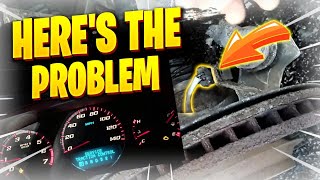
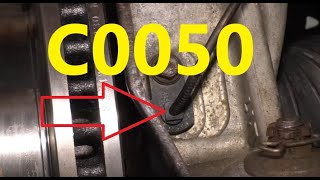
- Damaged or Debris-Contaminated Wheel Hub Magnetic Encoder Ring 🔴 High Probability The magnetic ring is integrated into the rear of the hub assembly and is somewhat exposed. Over time, it can become brittle, crack, or attract metallic debris ('fuzz') from brake wear, causing an erratic or lost signal. This is the most common failure documented in GM TSB PIC5428G. 🎬 Watch: Understanding the causes and fixes for the C0050 code.
How to confirm: Remove the wheel speed sensor and use a small mirror and light to visually inspect the brown magnetic ring on the hub for cracks, missing sections, or a build-up of metallic 'fuzz'. Spin the hub to check the entire circumference. If a scan tool shows symptom byte 5A or 0F, a damaged ring is highly probable.
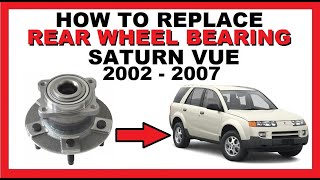
Typical fix: GM's TSB suggests cleaning the ring with a soft nylon brush as a first step. However, owners and technicians report this is often a temporary fix. The definitive, long-term repair is to replace the entire right rear wheel hub and bearing assembly. The hub bolts should be torqued to 55 lb ft (75 Nm). 🎬 Watch this step-by-step guide to replacing the rear wheel hub.
Est. part cost: $80-$200 - Failed Right Rear Wheel Speed Sensor 🟡 Medium Probability → Shop ABS Wheel Speed Sensor The sensor is located in a harsh environment behind the wheel, exposed to water, salt, and vibrations, which can lead to internal failure over time. The wiring harness pigtail is also a common failure point.
How to confirm: Use a scan tool capable of reading live ABS data to monitor the right rear wheel speed while driving. If the reading is zero or erratic while other wheels report speed, and the hub ring is confirmed clean and undamaged, the sensor/harness is the likely culprit. You can also test the sensor's wiring for continuity back to the EBCM.
Typical fix: Replace the right rear wheel speed sensor harness. It is typically held in by a single bolt and connects to the main harness in the wheel well.
Est. part cost: $25-$75 - Damaged Wiring or Connector ⚪ Low Probability The wiring harness runs from the sensor up into the wheel well and can be damaged by road debris, improper jacking, or corrosion at the connector pins, especially in regions with heavy salt use. Sometimes the wire breaks inside the insulation right at the connector.
How to confirm: Visually inspect the entire length of the sensor's wiring harness from the hub to where it enters the vehicle body. Check for chafing, breaks, or melted sections. Unplug the connector and check for green or white corrosion on the pins. Gently tug on the wires at the back of the connector to see if they are broken internally.
Typical fix: Repair the damaged section of wire using solder and heat shrink tubing or replace the pigtail connector. A common replacement pigtail is ACDelco PT1521.
Est. part cost: $15-$40
Rare But Worth Checking
- Failed Electronic Brake Control Module (EBCM): → Shop ABS Control Module This is the least likely cause. Before condemning the EBCM, all other possibilities (sensor, hub, and wiring) must be exhaustively ruled out. An EBCM failure often, but not always, presents with multiple wheel speed sensor codes or communication errors.
- Broken Axle Washer Tab: In some documented cases on similar GM vehicles, a small metal tab from an axle washer can break off and become magnetically stuck to the encoder ring, causing a C0050 code. This is an uncommon but possible source of the metallic debris.
Diagnosis Steps
- Connect a professional scan tool capable of reading ABS codes. Confirm C0050 is the active or stored code and check for specific symptom bytes (e.g., 18, 5A, 0F).
- Access the live data stream for the ABS module. Monitor the wheel speed signals from all four wheels while driving the vehicle straight at a low speed (>10 mph).
- Observe the 'Right Rear Wheel Speed' data point. If it reads 0 mph or is erratic while the other three sensors show a consistent speed, the problem is isolated to the right rear wheel circuit.
- Raise and safely support the rear of the vehicle. Remove the right rear wheel.
- Visually inspect the wheel speed sensor wiring harness for any obvious physical damage, chafing, or corrosion from the sensor to the wheel well connector.
- Remove the single bolt (often a 10mm or Torx) holding the wheel speed sensor in place and carefully pull it out of the hub.
- Inspect the tip of the sensor for metallic debris. Clean it if necessary.
- Using a light and mirror, meticulously inspect the brown magnetic encoder ring on the face of the wheel hub. Look for cracks, breaks, or a heavy accumulation of metallic particles. If damage is found, the hub must be replaced. If only debris is present, clean it with a soft nylon brush and re-test.
- If the ring looks good, test the wiring. Disconnect the sensor harness connector and check for continuity back to the EBCM connector. Check for breaks or corrosion at the connector itself.
- If the wiring and hub ring are confirmed to be good, the wheel speed sensor itself is the most likely failed component.
Parts You'll Likely Need
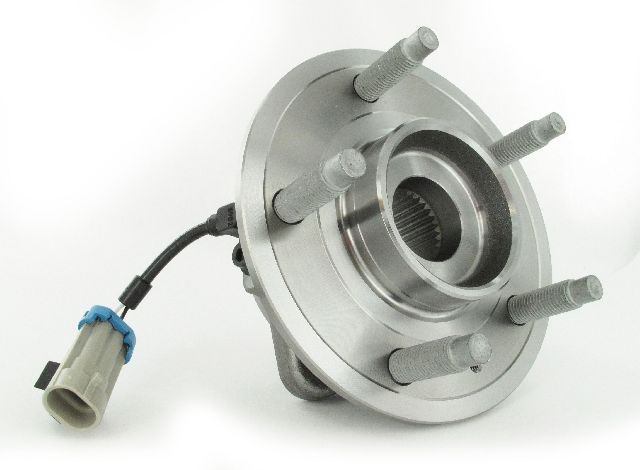
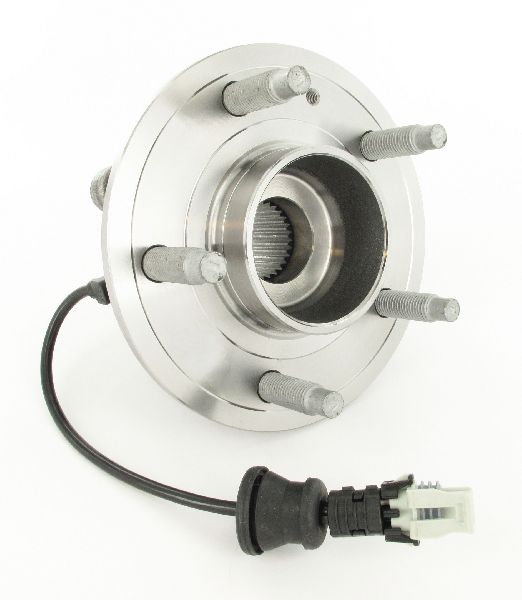
- Rear Wheel Hub and Bearing Assembly
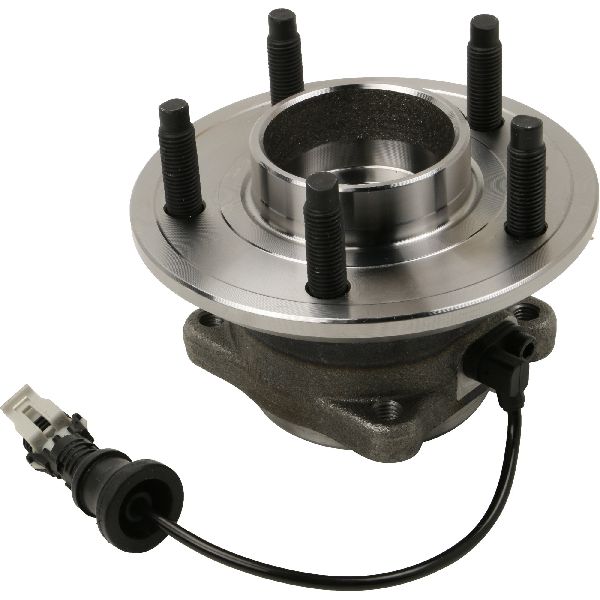
(OEM #ACDelco FW413)— This is the most common fix because the integrated magnetic encoder ring cracks or gets contaminated, which is a frequent failure point on this platform. The ring is not serviced separately.
Trusted brands: ACDelco, Timken (HA590236), MOOG, SKF
OEM price range: $180-$250
Aftermarket price range: $80-$150 - Rear Wheel Speed Sensor Harness
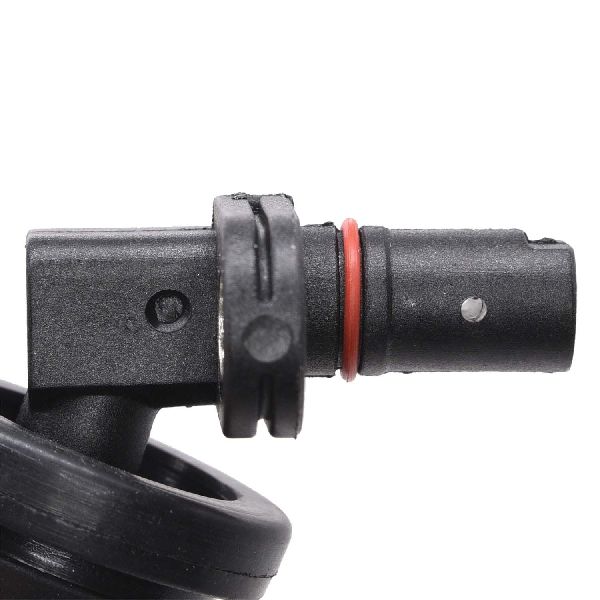
(OEM #ACDelco 25900721)— If the hub's magnetic ring is intact and wiring is good, the sensor harness itself may have failed due to age and exposure to the elements. This part is separate from the hub on the rear of the VUE.
Trusted brands: ACDelco (GM Genuine), Dorman, Standard Motor Products (SMP)
OEM price range: $50-$80
Aftermarket price range: $25-$50 - ABS Wheel Speed Sensor Connector Pigtail
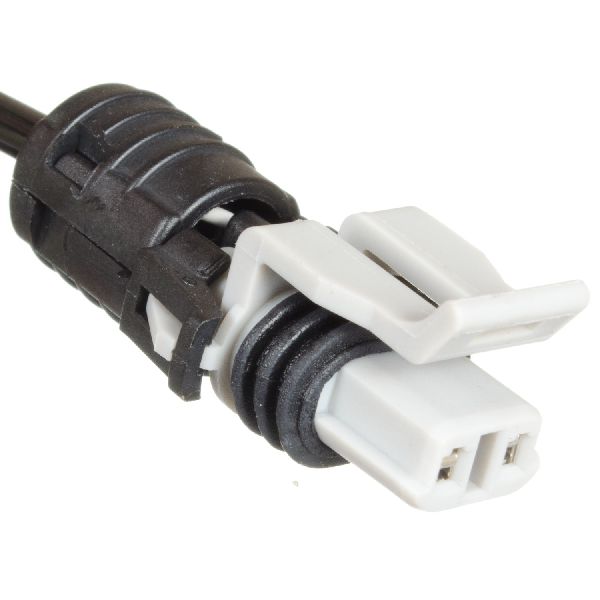
(OEM #ACDelco PT1521 (88953306))— If only the connector is corroded or the wires are broken right at the plug, replacing just the pigtail is a cost-effective repair.
Trusted brands: ACDelco, Dorman, Standard Motor Products (HP4750)
OEM price range: $25-$40
Aftermarket price range: $15-$30
Related Codes That Often Appear With This One
- U0415 - Invalid Data Received From Electronic Brake Control Module: This code is often set in the Power Steering Control Module as a secondary fault. When the EBCM detects the C0050 fault, it stops broadcasting wheel speed data, causing the power steering module to lose a necessary input. This may result in heavier steering feel at low speeds and will resolve itself once the C0050 is fixed. —
Technical Service Bulletins (TSBs) & Recalls
- TSB #PIC5428G (and earlier versions B, C, E, F): This is the key document from GM covering codes C0035, C0040, C0045, and C0050 with symptom bytes 18, 5A, or 0F. It explicitly states the cause is often ferrous metallic debris stuck to the magnetic encoder ring on the hub. It provides a procedure for inspection and cleaning with a soft nylon brush, but cautions that a magnet should never be used as it can damage the encoder. While the TSB suggests cleaning may be a sufficient repair, real-world experience often shows hub replacement is required for a permanent fix.
Platform-Specific Known Issues
- Owner Experience: Cleaning vs. Replacing: A common story on forums like SaturnFans.com involves an owner first getting the C0050 code and cleaning the metallic 'fuzz' from the magnetic ring. This often fixes the problem for a short time, but the code frequently returns. The consensus among long-term owners is that cleaning is a temporary measure, and the only permanent solution is to replace the entire hub assembly with a quality part from a brand like Timken, MOOG, or ACDelco.
Mechanic-Grade Diagnostic Values
- Wheel Speed Sensor Resistance — expected: 800 - 1700 Ohms (typical for this type of passive sensor). Failure: A reading of infinity (open circuit) or near zero (short circuit). Readings should also be within about 100 ohms of each other from side to side.
- Wheel Speed Sensor AC Voltage Output — expected: At least 100-200 millivolts (0.1-0.2 VAC) when spinning the wheel by hand at about one revolution per second. Voltage should increase with speed.. Failure: No voltage or an erratic, inconsistent voltage signal when the wheel is spinning steadily.
- Voltage at EBCM for WSS Circuit (Short to Voltage) — expected: Less than 4.25 volts. Failure: Both the sensor signal and return circuit wires are greater than 4.25 volts, indicating a short to a power source.
- Voltage at EBCM for WSS Circuit (Short to Ground) — expected: Greater than 0.75 volts. Failure: Both the sensor signal and return circuit wires are less than 0.75 volts, indicating a short to ground.
Hidden / Shadow Codes Worth Checking
- C0050 0F: Erratic Signal. This indicates the EBCM detected a change in wheel speed that exceeded 20 km/h (12 mph) between two 10-millisecond samples. This strongly points to a mechanical issue like debris on the encoder ring or a loose connection. (see via GM Tech2, GDS2, or other high-end professional scan tool capable of reading GM-specific symptom bytes.)
- C0050 18: Signal Amplitude Less Than Minimum. This is set when one wheel speed is 0 km/h while the others are moving above 8 km/h (5 mph). This points to a complete signal loss from the sensor, often due to a broken wire, dead sensor, or a completely obscured encoder ring. (see via GM Tech2, GDS2, or other high-end professional scan tool capable of reading GM-specific symptom bytes.)
- C0050 5A: Signal Plausibility Failure. The signal is present but illogical compared to other vehicle sensors. This is a classic symptom of a cracked or severely contaminated magnetic encoder ring that is sending a distorted but not completely absent signal. (see via GM Tech2, GDS2, or other high-end professional scan tool capable of reading GM-specific symptom bytes.)
Wiring & Ground Locations
- EBCM (Electronic Brake Control Module) — Located near the left front shock tower, attached to the Brake Pressure Modulator Valve (BPMV), behind the radiator surge tank.. This module receives the signal from the right rear wheel speed sensor. The wiring harness to the EBCM can chafe on a transmission mounting bolt, causing various electrical issues including WSS codes.
- G101 — At the left front of the engine compartment.. This is a primary engine compartment ground. While not directly for the sensor, a poor ground here can introduce electrical noise and potential issues for the EBCM, which is grounded through the chassis.
- EBCM Connector X1 — The main 38-pin electrical connector on the EBCM itself.. The Right Rear WSS signal and power wires terminate here. Technicians may need to back-probe this connector to test for continuity or voltage from the sensor circuit. For example, on some similar GM platforms, the RR WSS signal is on Pin 3 and the return is on Pin 4.
Real Owner Repair Stories
- SaturnFans.com forum discussions (paraphrased composite) (2008-2010 Saturn VUE, various trims) — ABS and Stabilitrak lights on, C0050 code present.
❌ Tried (didn't work) Replacing only the wheel speed sensor without inspecting the hub., Cleaning the magnetic ring, which caused the light to go off but then return a few days or weeks later.
✅ What actually fixed it The definitive fix reported by multiple owners was the complete replacement of the rear wheel hub and bearing assembly. Many users stressed the importance of using a high-quality aftermarket brand like Timken or MOOG, or an OEM ACDelco part, as cheap, unbranded hubs tended to fail prematurely.
Diagnostic Flowchart
Used vs. New Parts: Buying Guide for This Vehicle
When a used part is the smart pick: A used part is generally NOT recommended for this repair. The primary failure component, the wheel hub assembly, is a wear item with a failure-prone integrated magnetic ring. A used hub carries a high risk of having the same contamination, damage, or wear that caused the original failure. A used wheel speed sensor harness could be a viable option if it is visually inspected for good condition with no corrosion or brittleness.
Donor-vehicle mileage cap: roughly under 50000 miles for the part to have meaningful remaining life.
What to inspect on the donor part:
- For a used sensor harness: check that the connector is free of corrosion (no green or white powder), the locking tab is intact, and the wiring insulation is not cracked or brittle.
- For a wheel hub: Avoid completely. There is no reliable way to visually inspect the remaining life of the bearing or the integrity of the magnetic encoder ring.
Aftermarket brands forum-validated for this vehicle:
- Wheel Hub Assembly: Timken, MOOG, SKF, ACDelco (OEM). These brands are consistently recommended by professionals and DIYers for their durability and proper fitment.
Brands owners have reported issues with on this vehicle:
- Unbranded or 'white box' wheel hub assemblies from online marketplaces. These often use lower-quality bearings and seals, leading to premature failure and the return of the C0050 code.
Real Owner Stories
Aggregated from forums and TSBs cited above. Mileages and costs reflect what owners reported in those sources.
2008-2010 Saturn VUE
Symptoms: ABS/TC/Stabilitrak lights on, code C0050, right rear hub's magnetic ring covered in metallic dust.
What fixed it: Successfully fixed the issue by replacing the Timken HA590236 hub assembly.
Source hint: SaturnFans.com Forum - 'ABS/TC/Stabilitrak lights on, code C0050'
2008-2010 Saturn VUE
Symptoms: C0050 code and associated warning lights appeared. After inspection, metallic 'fuzz' was found on the magnetic ring.
What fixed it: Cleaning the debris from the ring only fixed the problem for a short time before the code returned. The permanent solution was to replace the entire hub assembly.
Source hint: Owner Experience: Cleaning vs. Replacing
Related OBD-II Codes
Frequently Asked Questions
Is there a specific Technical Service Bulletin (TSB) for the C0050 code on my 2008-2010 Saturn VUE?
My mechanic says I need to replace the entire rear hub assembly for a sensor code. Is this correct?
I cleaned the metallic 'fuzz' off the magnetic ring, but the ABS light came back on. What should I do now?
My cruise control stopped working at the same time the ABS and StabiliTrak lights came on. Are these problems related?
What is the torque specification for the right rear hub bolts on my Saturn VUE?
What other GM vehicles have the same problem with the C0050 code?
Helpful Videos
We Have This Part in Stock


The information in this article is provided for general reference and educational purposes only. Vehicle specifications, procedures, and part compatibility can vary by production date, trim level, and region. Always consult your vehicle's factory service manual and verify part numbers before purchasing or performing repairs. Safety-critical components such as airbags, seat belts, and braking systems should be installed by a qualified professional.
- Saturn VUE:
- 🧭 Diagnostic Flowchart
- 🎬 Helpful Videos
- 🛍️ Shop This Part
- What's Unique About the 2008-2010 Saturn VUE
- Symptoms You May Notice
- Most Likely Causes
- Rare But Worth Checking
- Diagnosis Steps
- Parts You'll Likely Need
- Related Codes That Often Appear With This One
- Technical Service Bulletins (TSBs) & Recalls
- Platform-Specific Known Issues
- Mechanic-Grade Diagnostic Values
- Hidden / Shadow Codes Worth Checking
- Wiring & Ground Locations
- Real Owner Repair Stories
- Used vs. New Parts: Buying Guide for This Vehicle
- Real Owner Stories
- 2008-2010 Saturn VUE
- 2008-2010 Saturn VUE
- Related OBD-II Codes
- Frequently Asked Questions
- 🎟️ Get 5% Off