

C0050 on 2007-2009 Suzuki XL-7: Right Rear Wheel Speed Sensor Circuit Causes and Fixes
Code C0050 on a 2007-2009 Suzuki XL-7 indicates a fault in the right rear wheel speed sensor circuit. The most common cause is a failed wheel hub and bearing assembly, which contains the integrated sensor. Other causes include a damaged wiring connector or debris on the magnetic encoder ring. Expect to pay between $100 and $250 for an aftermarket hub assembly.
- C0050 on a 2007-2009 XL-7 means there is a fault with the right rear wheel speed sensor circuit, which will disable your ABS and stability control systems.
- The most common cause by far is a failed right rear wheel hub and bearing assembly, which contains the non-serviceable sensor.
- Before replacing the expensive hub, always inspect and clean the magnetic ring on the hub for metallic debris, and check the wiring and connector for any obvious damage or corrosion.
- A scan tool that can read live ABS data is essential for confirming which wheel is faulting before buying parts.
- This vehicle is a rebadged GM product (Chevy Equinox/Pontiac Torrent), so parts and diagnostic procedures for those vehicles are directly applicable.
What's Unique About the 2007-2009 Suzuki XL-7
The 2007-2009 Suzuki XL-7 is built on the General Motors (GM) Theta platform, sharing its chassis and many electronic components with the Chevrolet Equinox, Pontiac Torrent, and Saturn VUE. For this code, the key platform-specific detail is that the rear wheel speed sensor is not a separate, serviceable part. Instead, the sensor and its magnetic encoder ring are integrated directly into the rear wheel hub and bearing assembly. This design means that a failure of the sensor, or more commonly, a cracked or contaminated magnetic ring, requires the replacement of the entire hub assembly. This is a well-documented failure point on these GM-platform vehicles.
Symptoms You May Notice
- ABS warning light is on
- Traction Control (TCS/TC) warning light is on
- Stability Control (Stabilitrak) warning light is on or a "Service Stability System" message appears.
- All-Wheel Drive (AWD) system may be disabled, with an "AWD Off" message.
- ABS system does not activate during hard braking (wheels may lock and skid).
- Cruise control may not function.
- Warning lights may appear sporadically at first, then become constant.
- Replacing the ABS module (EBCM) before thoroughly testing the wheel hub and wiring. The hub assembly is a far more common failure point.
- Replacing the hub assembly without first checking for and cleaning debris off the magnetic encoder ring, which can be a much cheaper fix.
Most Likely Causes
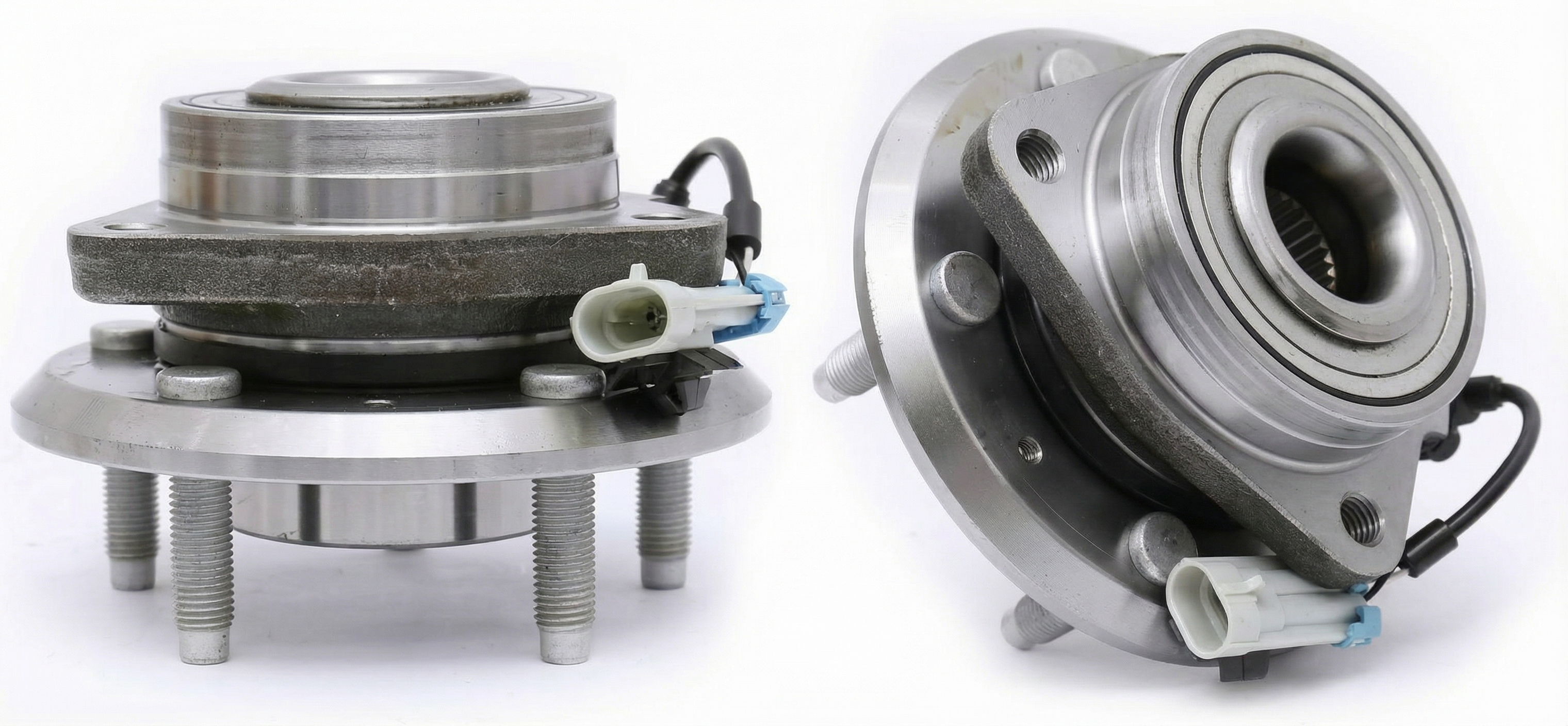
- Failed Right Rear Wheel Hub & Bearing Assembly 🔴 High Probability → Shop Hub Assembly The wheel speed sensor and magnetic tone ring are integrated into the hub assembly. This non-serviceable design is a well-documented failure point on the GM Theta platform. The bearing wears out, the internal sensor fails, or the magnetic encoder ring becomes brittle and cracks.
How to confirm: Use a scan tool that can read ABS live data. Observe the wheel speed signals from all four wheels while driving. The Right Rear (RR) wheel speed will likely read 0, be erratic, or not match the other three. A cracked encoder ring may be visible upon inspection after removing the brake rotor.
Typical fix: Replace the entire right rear wheel hub and bearing assembly.
Est. part cost: $100-$250 - Damaged or Corroded Wiring/Connector 🟡 Medium Probability The wiring harness and connector near the wheel are exposed to moisture, road salt, and physical stress, leading to corrosion, broken wires, or loose pins. This is a known issue on GM vehicles of this era.
How to confirm: Visually inspect the wiring harness from the right rear hub up into the wheel well for any signs of chafing, breaks, or green/white corrosion in the connector. Perform a continuity and resistance test on the circuit with a multimeter. Wiggle the harness while monitoring live data to check for intermittent connection loss.
Typical fix: Repair the damaged section of wire or replace the connector pigtail. Ensure the connection is sealed against moisture.
Est. part cost: $15-$50 - Debris on Magnetic Encoder Ring 🟡 Medium Probability The exposed design of the magnetic encoder ring on the hub assembly makes it susceptible to collecting ferrous metallic debris from brake dust and road grime. This debris disrupts the sensor's ability to read the wheel's rotation, triggering the code.
How to confirm: Remove the wheel and brake rotor. Visually inspect the dark magnetic strip on the inboard side of the hub assembly. Look for a build-up of metallic 'fuzz' or particles stuck to the surface.
Typical fix: Clean the magnetic ring thoroughly with a brake cleaner and a soft brush or rag. This is often a no-cost fix and should be attempted before replacing parts.
Est. part cost: $0-$10
Rare But Worth Checking
- Failed Electronic Brake Control Module (EBCM): → Shop ABS Control Module This is rare. The EBCM is the computer for the brake system. It should only be suspected after the hub, wiring, and connectors have been proven to be good. A failure here usually triggers multiple wheel speed sensor codes or communication codes (U-codes).
Diagnosis Steps
- Connect a scan tool capable of reading ABS codes to confirm C0050 is present. Check for manufacturer-specific sub-codes like C0050 0F (Erratic Signal) or C0050 18 (Low Signal Amplitude) for more clues.
- Access the live data stream on the scan tool to monitor all four wheel speed sensors.
- Safely drive the vehicle in a straight line. Observe the wheel speed readings. Confirm that the Right Rear (RR) speed sensor reads differently (e.g., 0 mph, erratic) than the other three sensors.
- Raise and secure the rear of the vehicle. Remove the right rear wheel and brake rotor.
- Visually inspect the magnetic encoder ring on the back of the hub assembly. Clean off any accumulated metallic debris with brake cleaner and a rag. Check the ring for any visible cracks or missing sections.
- If the ring is clean and intact, inspect the wiring harness and connector for the right rear wheel speed sensor. Look for any obvious damage, corrosion, or loose connections. Disconnect the sensor and inspect the connector terminals.
- If a visual inspection reveals no issues, and cleaning the ring did not resolve the code, the most likely cause is a failed wheel hub assembly, as the sensor is integrated.
- Replace the right rear wheel hub and bearing assembly.
- After replacement, clear the code with the scan tool and perform another test drive to verify the repair and ensure the warning lights do not return.
Parts You'll Likely Need
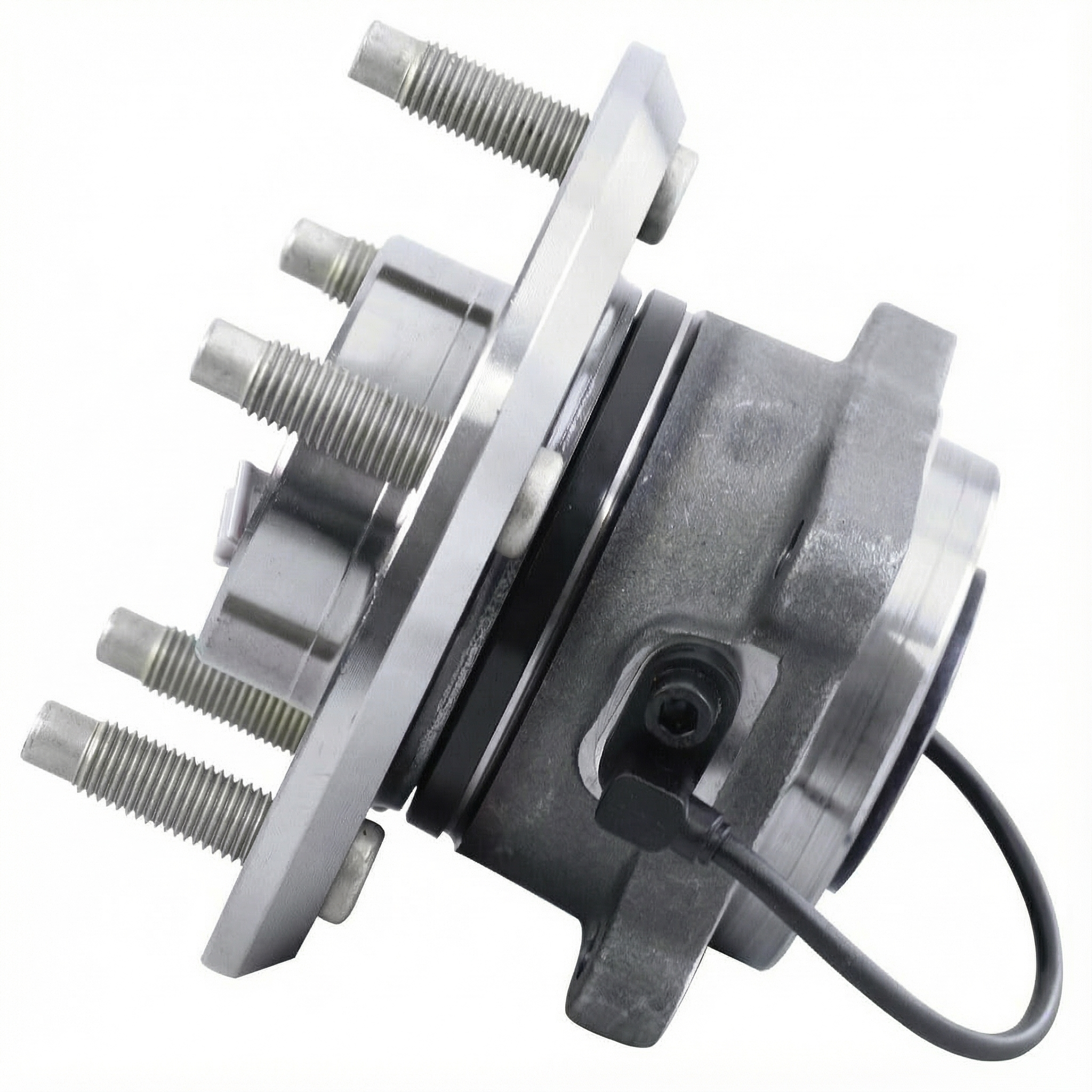
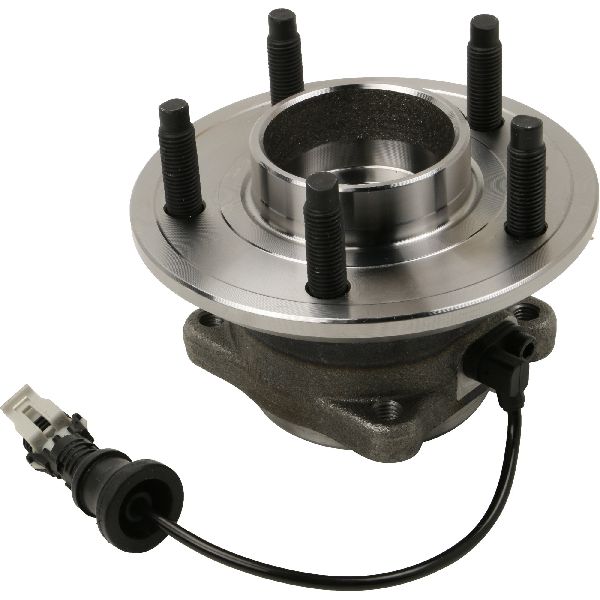
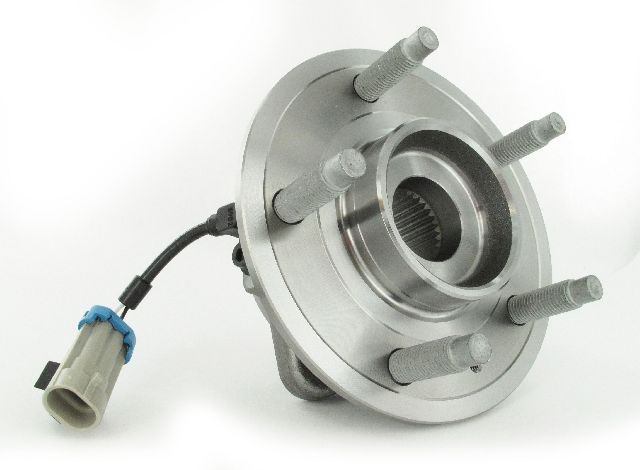
- Right Rear Wheel Hub and Bearing Assembly
(OEM #15871031)— This is the most common failure for code C0050 because the wheel speed sensor and tone ring are integrated into this non-serviceable part. The magnetic ring can also crack or become contaminated.
Trusted brands: ACDelco, Timken (P/N: HA590126), MOOG (P/N: 512362), SKF, Mevotech
OEM price range: $250-$400
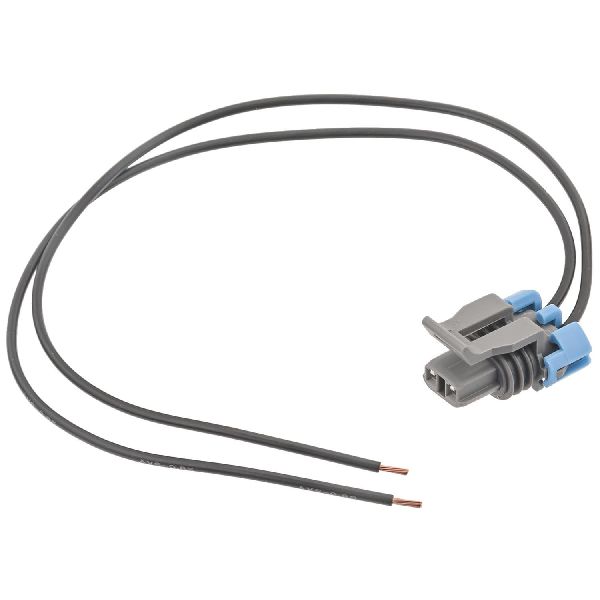
Aftermarket price range: $100-$250 - Rear Wheel Speed Sensor Harness Connector Pigtail
(OEM #13586115)— The connector at the hub is a common point of failure due to corrosion or damaged terminals, which can be a cheaper fix than replacing the entire hub.
Trusted brands: ACDelco (P/N: PT2831), Dorman
OEM price range: $30-$50
Aftermarket price range: $15-$30
Related Codes That Often Appear With This One
- C0045 — This is the code for the Left Rear Wheel Speed Sensor Circuit. If both C0045 and C0050 appear together, it strongly suggests a problem with wiring or a connector that is common to both rear wheels, rather than two simultaneous hub failures.
Technical Service Bulletins (TSBs) & Recalls
- GM TSB PI0934 / #13-03-08-001: While for a later GM model, this TSB is relevant as it describes the same failure mode: C0045/C0050 caused by rear wheel speed sensor harness terminals not being fully seated in the connector.
- GM TSB PIC5428G: Though for later models, this TSB is highly relevant as it details the common issue of ferrous debris accumulating on the magnetic encoder ring of the wheel hub, causing various wheel speed sensor codes including C0050.
- GM TSB PIT5427B: Identifies corrosion within the intermediate chassis harness connector X411 (located behind and to the left of the fuel tank) as a known cause for both C0045 and C0050 codes.
Platform-Specific Known Issues
- Cluster of Warning Lights: Owners frequently report that the C0050 fault triggers a cascade of warning lights and messages on the Driver Information Center (DIC), including 'Service Stability Control', 'Service Traction Control', and 'AWD Off'. This can be alarming but typically all stem from the single wheel speed sensor fault.
Mechanic-Grade Diagnostic Values
- Wheel Speed Sensor Resistance — expected: Approximately 800-1300 Ohms. The key is that the resistance should be very similar to the sensor on the opposite side (Left Rear).. Failure: A reading of infinity (OL) indicates an open circuit, while a reading far outside the typical range or significantly different from the other side suggests a failed sensor.
- Wheel Speed Sensor AC Voltage Output — expected: Greater than 0.1V (100mV) AC while spinning the wheel by hand. The voltage should increase with wheel speed.. Failure: No voltage or very low voltage when the wheel is spinning points to a failed sensor or a problem with the magnetic encoder ring.
Hidden / Shadow Codes Worth Checking
- C0050 0F: Signal Erratic. The EBCM has detected a signal that is choppy, intermittent, or changes at a physically impossible rate. (see via Requires a GM-specific scan tool like a Tech2, GDS2, or a high-end professional scanner capable of reading manufacturer symptom bytes.)
- C0050 18: Low Signal Amplitude. The signal from the sensor is weaker than expected, which can be caused by an excessive air gap, heavy debris on the encoder ring, or a failing sensor winding. (see via Requires a GM-specific scan tool like a Tech2, GDS2, or a high-end professional scanner.)
- C0050 5A: Signal Plausibility Failure. The signal from the right rear sensor is illogical when compared to the signals from the other three wheels (e.g., showing 0 mph while others show 30 mph). (see via Requires a GM-specific scan tool like a Tech2, GDS2, or a high-end professional scanner.)
Wiring & Ground Locations
- EBCM (Electronic Brake Control Module) — Located in the engine compartment, below the brake master cylinder.. This module receives the signal from the right rear wheel speed sensor. All circuit testing ultimately leads back to this module's connector.
- EBCM Connector: Pins 19 & 20 — At the main electrical connector for the EBCM.. Pin 19 (Brown wire) is the signal from the Right Rear Wheel Speed Sensor. Pin 20 (Orange wire) is the Low Reference (ground) for the sensor. Testing for continuity, shorts, and voltage at these specific pins can isolate a wiring fault from a module fault.
- Ground Point G401 — Under the left side of the luggage/cargo area.. This is a major chassis ground for several rear components. While not the direct ground for the sensor circuit (which is a low reference from the EBCM), a poor G401 connection can cause electrical noise and module issues that may manifest as sensor codes.
- Connector X411 — Under the rear of the vehicle, located behind and to the left of the fuel tank.. This is a large intermediate connector for the rear chassis harness. GM TSB PIT5427B specifically identifies corrosion within this connector as a known cause for rear wheel speed sensor codes (C0045/C0050) on this platform.
Diagnostic Flowchart
Other Known Issues on This Vehicle
Issues unrelated to this code that are worth knowing about as an owner of this generation:
- Premature Timing Chain Stretch (3.6L V6) 🔴 High — Very common, often appearing between 75,000 and 120,000 miles. Can cause check engine light codes like P0008, P0017, or P0018. (Ref: Suzuki TSB SI-0012R)
- Power Steering System Leaks / Failure 🔴 High — Common complaints of power steering hose leaks, pump failure, or steering rack failure, leading to difficult steering.
- Leaking Sunroof Drains 🟠 Medium — Clogged sunroof drain tubes can cause water to leak into the cabin, potentially damaging interior electronics.
- Cracked Fuel Pump Module 🔴 High — Subject to a recall in specific states, the plastic ports on the fuel pump module can crack and leak fuel. (Ref: NHTSA Recall 07V277000)
Used vs. New Parts: Buying Guide for This Vehicle
When a used part is the smart pick: A used part is generally NOT recommended for the wheel hub assembly due to bearing wear and the integrated, life-limited sensor. A used wiring pigtail connector from a junkyard can be a cost-effective option if the wiring is flexible, the connector body is not brittle, and the terminals are clean and free of corrosion.
Donor-vehicle mileage cap: roughly under 70000 miles for the part to have meaningful remaining life.
What to inspect on the donor part:
- For a wiring pigtail, inspect for any signs of previous repair (tape, butt connectors).
- Ensure the connector's locking tab is intact and clicks securely.
- Check for corrosion (green or white powder) inside the connector terminals.
- Bend the wires near the connector; if they are stiff or the insulation cracks, do not use it.
OEM-only on this vehicle (don't cheap out):
- While not strictly OEM-only, the wheel hub assembly is a critical component where quality matters significantly. Using a reputable OEM or top-tier aftermarket brand is highly advised over budget options.
Aftermarket brands forum-validated for this vehicle:
- Timken
- SKF
- MOOG
- ACDelco (OEM)
- National (NTN/BCA)
Brands owners have reported issues with on this vehicle:
- Unbranded, 'white box' parts from online marketplaces.
- Store-brand 'economy' or 'value' lines with short warranties (e.g., 1 year or less).
- Some forum users have reported premature failures with brands like Detroit Axle.
Real Owner Stories
Aggregated from forums and TSBs cited above. Mileages and costs reflect what owners reported in those sources.
2008 Suzuki XL-7
Symptoms: Intermittent appearance of 'Service stability control', 'service traction control', 'AWD off', and 'ABS' warnings; described the experience as 'nerve racking'.
What fixed it: Faulty ABS wheel speed sensor (integrated into the hub).
Source hint: CarComplaints.com (2015)
2008 Suzuki XL-7
Symptoms: Stability traction control light stayed on, which disabled the AWD and changed the power steering feel, making the car feel unsafe in wet conditions.
What fixed it: Replacement of the right rear wheel speed sensor/hub assembly.
Source hint: RepairPal.com (2018)
2008 Suzuki XL-7
Symptoms: Sporadic 'Service Traction Control' & 'Service Stability Control' warnings while driving.
What fixed it: Replacement of the wheel speed sensor/hub assembly.
Source hint: Car Talk Community (2013)
2008 Suzuki XL-7
Symptoms: Dashboard displayed 'Service Stability Control', 'Service Traction Control', and 'All Wheel Drive Off' lights.
What fixed it: Replacement of the faulty ABS wheel speed sensor.
Source hint: 2CarPros.com (2012)
Documented NHTSA Reports
Cross-Manufacturer Reference: Steering Column Issues
Symptoms: An owner of a vehicle sharing similar GM architecture reported that code C0050 was diagnosed as a faulty Power Steering Control Module (PSCM), requiring replacement of the entire steering column.
Source hint: NHTSA ODI #10763888
Cross-Manufacturer Reference: Brake Service Correlation
Symptoms: A technician reported that C0050 may be set after brake service if extra fluid is required to return caliper piston contact to the brake pad, disabling ABS and supporting systems.
Source hint: NHTSA ODI #11649367
Cross-Manufacturer Reference: Multi-System Faults
Symptoms: A report describes C0050 appearing alongside a cluster of other codes including C0035, C0040, and various U-codes (communication errors) on a GM-platform vehicle.
Source hint: NHTSA ODI #11228687
Cross-Manufacturer Reference: Hardware Replacement
Symptoms: A diagnostic report for code C0050-00 noted that rear rotors, rear brake pads, and an adapter plate required replacement to resolve the issue.
Source hint: NHTSA ODI #11693418
Related OBD-II Codes
Frequently Asked Questions
Why does my 2008 Suzuki XL-7 show 'Service Stability Control', 'Service Traction Control', and 'AWD Off' all at the same time?
Is there a TSB for the Suzuki XL-7 regarding debris on the wheel sensor causing code C0050?
Could a wiring problem near the fuel tank cause my C0050 code?
Can I just replace the sensor on my XL-7's right rear wheel?
Does the C0050 code affect how my Suzuki XL-7 drives in bad weather?
Is there a TSB regarding the wiring connectors for the rear sensors?
Helpful Videos
Used OEM Parts in Stock
New Aftermarket Parts Available


The information in this article is provided for general reference and educational purposes only. Vehicle specifications, procedures, and part compatibility can vary by production date, trim level, and region. Always consult your vehicle's factory service manual and verify part numbers before purchasing or performing repairs. Safety-critical components such as airbags, seat belts, and braking systems should be installed by a qualified professional.
- Suzuki XL-7:
- 🧭 Diagnostic Flowchart
- 🎬 Helpful Videos
- 🛍️ Shop This Part
- What's Unique About the 2007-2009 Suzuki XL-7
- Symptoms You May Notice
- Most Likely Causes
- Rare But Worth Checking
- Diagnosis Steps
- Parts You'll Likely Need
- Related Codes That Often Appear With This One
- Technical Service Bulletins (TSBs) & Recalls
- Platform-Specific Known Issues
- Mechanic-Grade Diagnostic Values
- Hidden / Shadow Codes Worth Checking
- Wiring & Ground Locations
- Other Known Issues on This Vehicle
- Used vs. New Parts: Buying Guide for This Vehicle
- Real Owner Stories
- 2008 Suzuki XL-7
- 2008 Suzuki XL-7
- 2008 Suzuki XL-7
- 2008 Suzuki XL-7
- Documented NHTSA Reports
- Cross-Manufacturer Reference: Steering Column Issues
- Cross-Manufacturer Reference: Brake Service Correlation
- Cross-Manufacturer Reference: Multi-System Faults
- Cross-Manufacturer Reference: Hardware Replacement
- Related OBD-II Codes
- Frequently Asked Questions
- 🎟️ Get 5% Off