

C0050 on 2011-2020 Toyota Sienna: Right Rear Wheel Speed Sensor Circuit Fault Causes and Fixes
Code C0050 on a 2011-2020 Toyota Sienna means there's a fault with the right rear wheel speed sensor circuit. This is most often caused by a failed sensor, damaged wiring, or a faulty wheel hub assembly which contains the magnetic tone ring. Expect to pay $40-$80 for a sensor or $100-$250 for a hub assembly.
- C0050 disables your ABS and stability control systems, so drive with extra caution until repaired.
- The most likely causes are a bad right rear wheel speed sensor, damaged wiring, or a faulty wheel hub assembly.
- Diagnosis should involve using a scan tool to check live wheel speed data to confirm the fault location.
- Ensure you purchase the correct parts for your Sienna's drivetrain (FWD or AWD), as they are different.
What's Unique About the 2011-2020 Toyota Sienna
On the third-generation Toyota Sienna (2011-2020), this code is a straightforward indicator of a problem at the right rear wheel. A key distinction is that the magnetic encoder ring (tone ring) the sensor reads is integrated into the wheel hub and bearing assembly. While the wheel speed sensor itself can be replaced separately, if the sensor and wiring are confirmed to be good, the entire wheel hub assembly must be replaced to fix a damaged or faulty magnetic ring. This is a common failure point and a frequent source of misdiagnosis where only the sensor is replaced, leading to the code's return. There are different part numbers for the sensor and hub depending on whether the Sienna is Front-Wheel Drive (FWD) or All-Wheel Drive (AWD).
Symptoms You May Notice
- ABS warning light is on
- Traction Control (VSC/TRAC) warning light is on
- Brake warning light may be on
- ABS system does not activate during hard braking (wheels may lock up)
- Traction control does not activate on slippery surfaces
- Cruise control may be disabled
- Replacing only the wheel speed sensor when the actual fault is a damaged magnetic ring on the wheel hub assembly. This results in the code returning shortly after the repair.
- Failing to clean the hub mounting surface before installing a new sensor, leading to an incorrect air gap and a persistent code.
Most Likely Causes
- Failed Right Rear Wheel Speed Sensor 🔴 High Probability → Shop ABS Wheel Speed Sensor The sensor is exposed to harsh conditions like water, road salt, and debris, which can lead to corrosion and internal electronic failure over time. It is a common wear item.
How to confirm: Use a multimeter to test the sensor's internal resistance; an open circuit or a reading outside the manufacturer's specification indicates failure. Alternatively, use a capable scan tool to monitor live data from all four wheels; a reading of 0 MPH or an erratic signal from the right rear wheel while others read correctly points to a bad sensor or circuit.
Typical fix: Replace the right rear wheel speed sensor. The sensor is typically held in by a single 10mm bolt and may require some gentle prying or application of penetrating oil 🎬 See this quick walkthrough on replacing the rear ABS sensor. if seized by rust.
Est. part cost: $40 - $120 - Damaged or Corroded Wiring/Connector 🟡 Medium Probability The wiring harness runs near the wheel and suspension, making it vulnerable to damage from road debris, chafing against components, or corrosion from moisture and road salt. Rodent damage is also a possible cause.
How to confirm: Visually inspect the wiring harness from the sensor connector back as far as possible. Look for breaks, chafing, melting, or green/white corrosion inside the connector pins. Perform a continuity test on the wires between the sensor and the ABS module connector to check for opens or shorts.
Typical fix: Repair the damaged section of wire with solder and heat shrink. If the connector is corroded, it may need to be cleaned with electrical contact cleaner or replaced with a new pigtail connector.
Est. part cost: $15 - $50 - Faulty Rear Wheel Hub & Bearing Assembly 🟡 Medium Probability → Shop Hub Assembly The magnetic tone ring that the sensor reads is built into the wheel hub assembly. This ring can crack, get covered in metallic debris, or lose magnetism, causing an erratic signal. A failing wheel bearing can also cause excessive play (wobble), altering the air gap between the sensor and ring, which will trigger the code even if the bearing isn't noisy.
How to confirm: After ruling out the sensor and wiring, the hub is the next logical cause. With the sensor removed, you may be able to inspect the magnetic ring for cracks or heavy debris. An erratic signal on a live data scan tool (as opposed to no signal) often points to a bad tone ring. Check for wheel bearing play by grabbing the tire at the 12 and 6 o'clock positions and attempting to rock it.
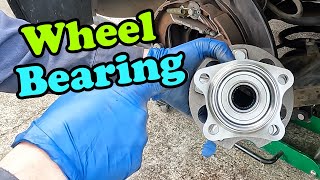
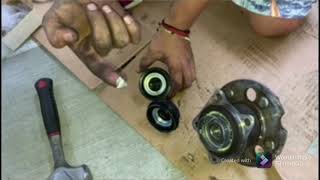
Typical fix: Replace the entire right rear wheel hub and bearing assembly. This is a more involved repair that requires removing the brake caliper, rotor, and the four bolts holding the hub to the knuckle. 🎬 Watch: Step-by-step guide to replacing the rear wheel hub assembly.
Est. part cost: $100 - $250
Rare But Worth Checking
- Failed ABS Control Module: → Shop ABS Control Module This is very uncommon. The ABS module is the computer for the brake system. A failure here would typically set multiple wheel speed sensor codes or internal module fault codes, not just C0050 alone.
- Incorrect Sensor Air Gap: This can happen after a repair if rust or debris is not properly cleaned from the sensor's mounting surface on the hub, preventing it from seating correctly. This increases the distance to the tone ring, resulting in a weak or lost signal.
Diagnosis Steps
- Connect an ABS-capable OBD-II scanner to the vehicle.
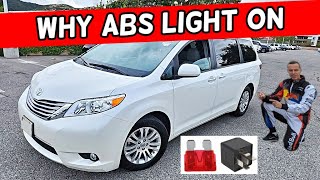
- Read the fault codes and confirm C0050 is present. Note any sub-codes, 🎬 Watch: Why your ABS light is on and how to diagnose it. as they can provide more specific information (e.g., general circuit malfunction, low signal amplitude).
- Use the scanner's live data function to monitor the speed of all four wheels while driving slowly in a straight line. Confirm that the Right Rear wheel speed sensor reads 0 MPH or shows an erratic signal compared to the other three sensors.
- Raise and safely support the rear of the vehicle. Remove the right rear wheel.
- Visually inspect the wheel speed sensor and its wiring harness for any obvious signs of damage, corrosion, or loose connections.
- Disconnect the sensor and test its internal resistance with a multimeter. Compare the reading to the manufacturer's specification (typically in the kilo-ohm range). If it's an open or short circuit, the sensor is bad.
- If the sensor tests good, inspect the wiring harness for continuity and check for voltage from the ABS module at the connector.
- If the sensor and wiring are good, the fault is most likely with the magnetic tone ring integrated into the wheel hub assembly. Inspect the ring for cracks or heavy contamination if possible by looking through the sensor mounting hole.
- Check for excessive play in the wheel bearing by rocking the wheel/hub.
- If the tone ring is damaged or the bearing has failed, the final step is to replace the entire wheel hub and bearing assembly.
Parts You'll Likely Need
- Rear Wheel Speed Sensor
(OEM #89516-08040 (FWD Models), 89545-08020 (AWD Right), 89546-08020 (AWD Left))— This is the most common failure point in the circuit due to its exposed location and electronic nature. Note the different part numbers for FWD and AWD models.
Trusted brands: Toyota (OEM), Aisin, Dorman, Standard Motor Products, Beck/Arnley
OEM price range: $40-$245
Aftermarket price range: $40-$120 - Rear Wheel Hub & Bearing Assembly
(OEM #42450-08030 (FWD Models), 42410-08020 (AWD Models))— Required if the integrated magnetic tone ring is damaged or if the wheel bearing itself has failed, causing an incorrect sensor reading. This is the second most common fix. FWD and AWD models use different hub assemblies.
Trusted brands: Toyota (OEM), Aisin, TRQ, DuraGo, Timken, MOOG
OEM price range: $250-$375
Aftermarket price range: $100-$250
Related Codes That Often Appear With This One
- C0045 —
Platform-Specific Known Issues
- Forum chatter on SiennaChat.com confirms that both the sensor and the hub assembly are common failure points for this code. Owners often recommend checking for a 'crunchy' or noisy bearing sound when spinning the wheel, but emphasize that a bad magnetic ring can trigger the code even with a silent bearing.
- Due to the different part numbers for FWD and AWD models, it is critical to verify the vehicle's drivetrain before ordering a sensor or hub assembly.
Mechanic-Grade Diagnostic Values
- Sensor Circuit Bias Voltage — expected: ~4.5 - 5.0 Volts DC. Failure: A reading of 0V or significantly lower than the other wheel sensor circuits suggests an open or short in the wiring or a fault in the ABS module. This test is performed on the harness-side connector with the sensor disconnected and key ON.
- Sensor Signal (Oscilloscope) — expected: A clean digital square wave that increases in frequency as the wheel is spun.. Failure: A missing, erratic, or inconsistent waveform points to a faulty sensor or a damaged magnetic encoder ring on the hub assembly.
- Sensor Internal Resistance — expected: A specific resistance value (typically in the kilo-ohm range, e.g. 1.0-2.5 kΩ). The key is that it should not be an open loop (infinite resistance) or a short (near zero resistance).. Failure: A reading of 'O.L.' (Open Loop) or near 0 ohms indicates a failed sensor.
Hidden / Shadow Codes Worth Checking
- C0050 with sub-code 06: Indicates Low Voltage or an Open in the right rear wheel speed sensor circuit. This points directly towards a failed sensor or a break in the wiring. (see via An advanced scan tool like Toyota Techstream or a high-end professional scanner capable of reading manufacturer-specific ABS codes.)
- C0050 with sub-code 0F or 18: Indicates an Erratic Signal or Low Signal Amplitude. This strongly suggests the sensor is working but receiving a poor signal, which is most often caused by a damaged/dirty magnetic encoder ring on the wheel hub or excessive bearing play. (see via An advanced scan tool like Toyota Techstream or a high-end professional scanner.)
- C0050 with sub-code 5A: Indicates the signal is Not Plausible, meaning it doesn't logically match the signals from the other wheel speed sensors. This can also point to a faulty encoder ring or bearing play. (see via An advanced scan tool like Toyota Techstream or a high-end professional scanner.)
Scan Tool Commands That Help
- Toyota Techstream: Data List (for ABS/VSC/TRAC system) — This is the primary diagnostic step after reading the code. It allows you to view and graph the live speed readings from all four wheels simultaneously. While driving or spinning the wheel by hand, you can definitively confirm if the right rear sensor is reading 0 MPH or providing an erratic signal compared to the others.
- Toyota Techstream: Health Check — Use this at the beginning of the diagnosis to perform a comprehensive scan of all vehicle ECUs. It ensures that no other related codes in other systems are present that might be influencing the ABS fault.
Wiring & Ground Locations
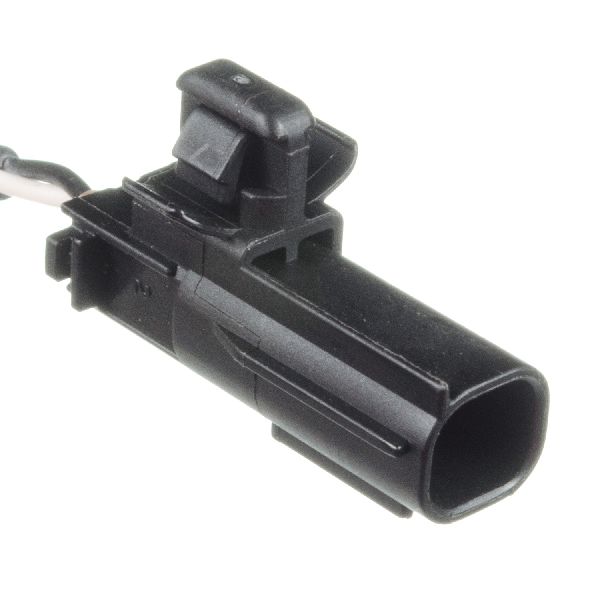
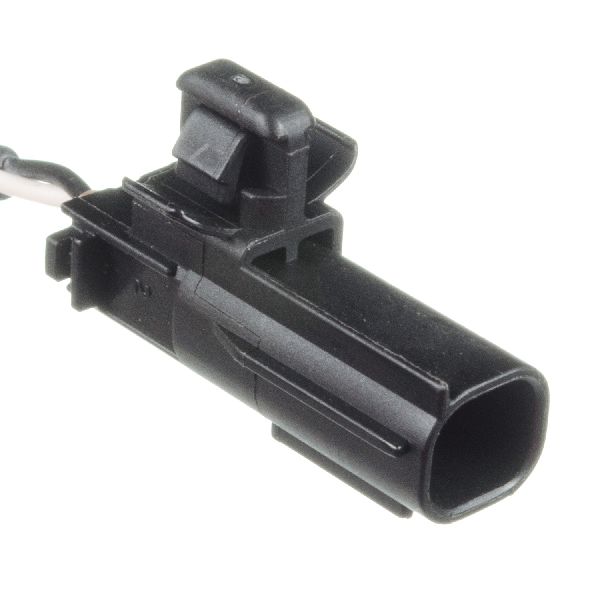
- Right Rear Wheel Speed Sensor Connector — At the rear right wheel hub, connecting the sensor to the main vehicle harness. It is a 2-pin connector.. This is the most common point for testing. You can check for bias voltage from the ABS module on the harness side and test the sensor's internal resistance on the sensor side. It is also a frequent location for corrosion or physical damage.
- ABS/Skid Control ECU — Typically located in the engine bay, though its exact position can vary. It's the module to which all wheel speed sensor harnesses eventually connect.. This is the termination point for the circuit. In cases of a suspected wiring break, a continuity test is performed between the pins at this ECU connector and the corresponding pins at the wheel speed sensor connector.
- Harness Routing — The wiring runs from the wheel sensor, up through the wheel well, and along the vehicle's frame/subframe towards the front of the vehicle.. This path exposes the harness to potential damage from road debris, suspension movement (chafing), and corrosion. A visual and physical inspection along this entire route is necessary if initial connector tests are inconclusive.
Real Owner Repair Stories
- Common narrative from multiple diagnostic videos (e.g., Beer Wrench KC, Haze's Mobile Auto Repair) (General Motors vehicles (Cadillac CTS, Chevy Malibu) with the same C0050 code and integrated hub/encoder design, directly analogous to the Sienna's system.) — ABS and Traction Control (StabiliTrak) lights on. Cruise control disabled.
❌ Tried (didn't work) Replacing the right rear wheel speed sensor. The code and warning lights returned immediately or shortly after driving.
✅ What actually fixed it Replacing the entire right rear wheel hub and bearing assembly. Upon inspection, the old hub's magnetic encoder ring was found to be cracked, rusted, or broken apart, providing an erratic signal that the new sensor could not read correctly. - Cross-Manufacturer Insight: While the Sienna uses this code for the wheel speed circuit, other manufacturers may use it differently. For instance, NHTSA ODI #10763888 describes a case where C0050 identified a faulty power steering control module (PSCM) on a Chevrolet HHR, requiring a steering column replacement. Additionally, an owner reported in NHTSA ODI #11228687 that C0050 appeared alongside several other communication and sensor codes (C0035, C0040, U0077) on a Chevrolet Silverado.
OEM Part Supersession History
89516-08040→89516-08040— Part number appears stable for the FWD rear sensor throughout the 2011-2020 generation.42450-08030→42450-08030— Part number appears stable for the FWD rear hub assembly throughout the 2011-2020 generation.42410-08020→42410-08020— Part number appears stable for the AWD rear hub assembly throughout the 2011-2020 generation.
Model Year Variations Within This Range
- 2011-2020: The most critical variation is not by year, but by drivetrain. Front-Wheel Drive (FWD) and All-Wheel Drive (AWD) models use different part numbers for both the rear wheel speed sensors and the rear wheel hub assemblies. Verifying the vehicle's drivetrain is essential before ordering parts.
Diagnostic Flowchart
Documented NHTSA Reports
While C0050 is primarily a wheel speed sensor code on Toyota platforms, cross-manufacturer records illustrate how it can manifest in other braking systems. For example, NHTSA ODI #11649367 describes a situation where a vehicle disabled the ABS and set code C0050 after service required extra brake fluid to return caliper piston contact to the brake pad. Similarly, NHTSA ODI #11693418 notes that C0050-00 was triggered in a case where rotors, rear brake pads, and adapter plates required replacement.
Other Known Issues on This Vehicle
Issues unrelated to this code that are worth knowing about as an owner of this generation:
- Power Sliding Door Cable Failure 🔴 High — Very common. The cable frays and eventually snaps, rendering the power sliding function inoperative. (Ref: TSB T-SB-0141-18; Customer Support Program ZKD (extends warranty to 10 years/unlimited miles for this part).)
- Torque Converter Shudder 🟠 Medium — Common on models with the 6-speed and 8-speed automatic transmissions. Owners report a brief shudder or vibration under light throttle between 25-50 mph. (Ref: Warranty Extension ZG1 (extends coverage for this specific issue to 8 years or 150,000 miles).)
- Cracked or Melting Dashboard 🟡 Low — Affected earlier models in the generation (up to 2010, but the issue can still be seen on early 2011+ models in hot climates). The dash surface becomes sticky, shiny, or develops cracks due to heat and humidity. (Ref: Warranty Enhancement Program ZE6 extended coverage, but has since expired (ended May 31, 2017).)
- Ruptured VVT-i Oil Line 🔴 High — More common on earlier 2GR-FE engines (pre-2013), but can still occur. A rubber section of the oil line can rupture, causing a massive and rapid oil leak that can lead to catastrophic engine failure if not addressed immediately. (Ref: Toyota issued a recall for earlier models to replace the all-metal line, but some 2011+ models may still have the problematic design.)
- Oxygen (O2) Sensor Failure 🟠 Medium — A fairly common issue leading to a check engine light and reduced fuel economy. The sensors, particularly the upstream ones, can fail over time.
Used vs. New Parts: Buying Guide for This Vehicle
When a used part is the smart pick: A wiring harness pigtail from a junkyard is an excellent choice if only your connector is damaged. A complete, low-mileage OEM hub assembly from a donor vehicle in a dry climate can be a superior choice to a new, budget-tier aftermarket hub.
Donor-vehicle mileage cap: roughly under 60000 miles for the part to have meaningful remaining life.
What to inspect on the donor part:
- Verify the donor vehicle's mileage.
- Inspect the hub for any signs of heavy rust or corrosion.
- Ensure the magnetic encoder ring on the back of the hub is clean, intact, and free of cracks or damage.
- Spin the bearing by hand; it should feel perfectly smooth with no roughness or catching.
OEM-only on this vehicle (don't cheap out):
- No parts for this specific repair are strictly OEM-only, but using a very low-quality, unbranded hub assembly is highly discouraged due to premature failure.
Aftermarket brands forum-validated for this vehicle:
- Timken
- SKF
- MOOG
- NSK
- Aisin (often an OEM supplier for Toyota)
Brands owners have reported issues with on this vehicle:
- Be cautious with unbranded 'white-box' parts or the absolute lowest-priced options from online marketplaces, as quality control and bearing longevity are common complaints.
Real Owner Stories
Aggregated from forums and TSBs cited above. Mileages and costs reflect what owners reported in those sources.
2011-2020 Toyota Sienna
Symptoms: ABS, VSC, and slip lights are on. A scan revealed code C0050.
What fixed it: Replacing the right rear wheel speed sensor or the hub assembly, depending on whether the sensor or the integrated magnetic tone ring failed.
Source hint: SiennaChat.com thread titled 'abs-vsc-and-slip-lights-on-code-c0050'
Related OBD-II Codes
Frequently Asked Questions
Is there a specific warranty extension for the ABS sensor or hub on my 2011-2020 Sienna?
I hear a 'crunchy' sound from the rear wheel; could this be related to code C0050?
Can I use the same wheel speed sensor for any 2011-2020 Sienna?
Why is my cruise control not working along with the ABS light?
Can I just clean the sensor to fix the C0050 code?
Is the C0050 code related to the VVT-i oil line recall?
Helpful Videos
We Have This Part in Stock


The information in this article is provided for general reference and educational purposes only. Vehicle specifications, procedures, and part compatibility can vary by production date, trim level, and region. Always consult your vehicle's factory service manual and verify part numbers before purchasing or performing repairs. Safety-critical components such as airbags, seat belts, and braking systems should be installed by a qualified professional.
- Toyota Sienna:
- 🧭 Diagnostic Flowchart
- 🎬 Helpful Videos
- 🛍️ Shop This Part
- What's Unique About the 2011-2020 Toyota Sienna
- Symptoms You May Notice
- Most Likely Causes
- Rare But Worth Checking
- Diagnosis Steps
- Parts You'll Likely Need
- Related Codes That Often Appear With This One
- Platform-Specific Known Issues
- Mechanic-Grade Diagnostic Values
- Hidden / Shadow Codes Worth Checking
- Scan Tool Commands That Help
- Wiring & Ground Locations
- Real Owner Repair Stories
- OEM Part Supersession History
- Model Year Variations Within This Range
- Documented NHTSA Reports
- Other Known Issues on This Vehicle
- Used vs. New Parts: Buying Guide for This Vehicle
- Real Owner Stories
- 2011-2020 Toyota Sienna
- Related OBD-II Codes
- Frequently Asked Questions
- 🎟️ Get 5% Off