

C1114 on 2017-2024 Chevrolet Suburban: Service Trailer Brake System Explained
This code almost always indicates an electrical issue with the connected trailer, not a fault with your Suburban. It's often caused by trailers with their own power sources (batteries, solar), specific brake systems (EOH), or poor wiring. Check the trailer's wiring, ground connection, and 7-way plug before replacing any parts on the truck.
- Code C1114 almost always points to a problem with the trailer, not your Suburban.
- Before buying any parts, thoroughly inspect the trailer's wiring, ground connection, and the 7-way plug.
- Certain types of trailers, like those with Electric-Over-Hydraulic brakes or their own power sources, are known to cause this code. Refer to GM TSBs for specific solutions.
- If the code appears even without a trailer, check the trailer brake fuses first.
- If you must replace the Trailer Brake Control Module on the truck, it will require programming by a dealer or a properly equipped independent shop.
What's Unique About the 2017-2024 Chevrolet SUBURBAN
The 2017-2024 Suburban features a sophisticated integrated trailer brake controller (ITBC) that must determine what kind of trailer brakes are being used (electromagnetic or electro-hydraulic) by analyzing the electrical signature. This sensitivity makes it prone to setting the C1114 code when connected to trailers with non-standard electrical systems. Common triggers include trailers with their own batteries, solar chargers, or generators, which can back-feed voltage into the truck's module if the trailer battery's charge is higher than the vehicle's. Certain aftermarket Electric-Over-Hydraulic (EOH) brake pumps, like some from Hydrastar, can also generate voltage spikes that the truck interprets as a fault. The issue is frequently an incompatibility or electrical feedback from the trailer, rather than a failed part on the truck itself.
Diagnostic Flowchart
Tap your situation to follow the diagnostic path that matches what you're seeing on this vehicle.
Generation note: This year range covers two generations of the Chevrolet Suburban: the 11th generation (2015-2020, K2XX platform) and the 12th generation (2021-2024, T1XX platform). The integrated trailer brake control system and the potential for this code exist on both generations. TSBs confirm the issue spans across these platforms, with similar diagnostic approaches.
Symptoms You May Notice
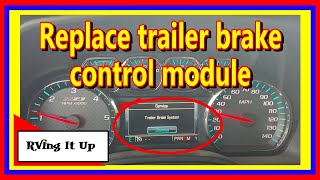
- "Service Trailer Brake System" message on the Driver Information Center (DIC).
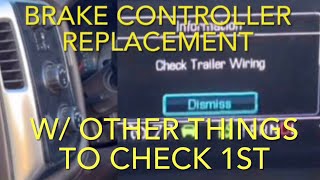
- "Check Trailer Wiring" message on the DIC.
- Trailer brakes do not engage or function incorrectly.
- The gain adjustment for the trailer brake controller has no effect.
- "Trailer Connected" and "Trailer Disconnected" messages may appear intermittently while driving.
- Replacing the in-dash trailer brake controller switch. The switch with the gain and manual lever is a separate component from the control module (TBCM) at the rear of the vehicle. While the switch can fail, it's less common for this specific code.
Most Likely Causes
- Incompatible or Faulty Trailer Wiring/Electrical System 🔴 High Probability The vehicle's control module is sensitive to electrical feedback. Trailers with their own battery, generator, or solar charger can send voltage back to the truck, triggering the fault, especially if the trailer battery is more charged than the truck's. Similarly, trailers with Electric-Over-Hydraulic (EOH) brake systems, particularly certain Hydrastar units, can cause voltage spikes during light brake application. Poor trailer-side ground connections are also a very frequent cause.
How to confirm: The code appears only when a specific trailer is connected. Test with a different, known-good trailer or a trailer simulator tool. If the code does not return, the issue is with the first trailer.
Typical fix: Inspect and repair the trailer's wiring, especially the main ground connection (white wire) to the trailer frame. For EOH trailers, an adapter module (like Dexter p/n K58-036-00) may be required. For trailers with onboard power, TSB #23-NA-149 indicates the fix 🎬 Watch: How to fix errors caused by trailer solar or lithium batteries. is to replace the truck's Trailer Brake Control Module with an updated part designed to handle the voltage feedback.
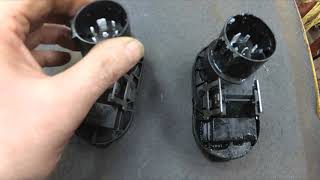
Est. part cost: $0-$250 - Poor Connection at 7-Way Connector 🟡 Medium Probability Corrosion, debris, or bent pins in either the truck's socket or the trailer's plug can cause intermittent open circuits or shorts. Aftermarket trailer plugs that don't meet SAE specifications are a common problem. TSBs also note that excessive trailer harness length on gooseneck or bumper-pull trailers can cause the plug to bounce and lose connection.
How to confirm: Visually inspect the truck's 7-way socket and the trailer's plug for green/white corrosion, bent pins, or loose wires. Wiggle the connection while monitoring the DIC. Ensure the trailer plug is fully seated and held firmly by the socket door.
Typical fix: Clean the connectors thoroughly with electrical contact cleaner and apply dielectric grease. Using a 🎬 See how to find hidden wiring shorts in the trailer plug. high-quality, OEM-spec plug (like Pollak, the OEM supplier) on the trailer is recommended. For 2015-2018 models with a loose connection, an updated truck-side socket with a stronger spring is available (GM P/N 23404450).
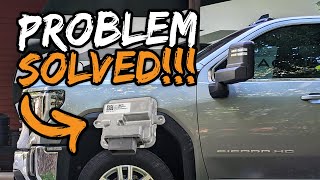
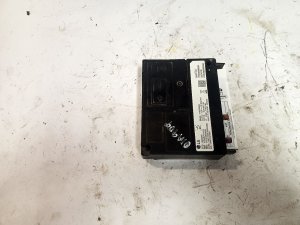
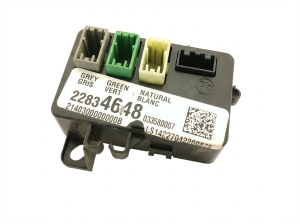
Est. part cost: $20-$75 - Faulty Trailer Brake Control Module (TBCM) ⚪ Low Probability → Shop Trailer Brake Control Module The module is located on the driver's side frame rail, generally above the spare tire, exposing it to moisture and road debris. Water intrusion can short the internal circuit board. This is more likely if the code appears without a trailer connected.
How to confirm: If the code sets without a trailer connected, and all fuses and wiring to the 7-way connector are confirmed good, the TBCM is a likely suspect. A diagnostic scan tool may show a loss of communication with the module. Per TSB 23-NA-149, if you have a trailer with its own power source, the module itself is the intended failure point and requires replacement with an updated version.
Typical fix: Replace the Trailer Brake Control Module. The updated part number per TSB 23-NA-149 is 85596395. This part is often integrated with the Fuel Pump Control Module (FPCM) and MUST be programmed to the vehicle's VIN after installation.
Est. part cost: $80-$180
Rare But Worth Checking
- Blown Fuse: A blown fuse for the trailer brake system can cause this code. While simple, it's often overlooked. Check the large J-case fuses in the under-hood fuse box labeled for trailer brake power/studs before proceeding with more complex diagnostics.
- Damaged Vehicle Wiring Harness: Though less common than trailer issues, the vehicle's own wiring harness between the TBCM and the 7-way connector can be damaged from road debris or improper repairs, leading to this code even without a trailer connected.
- Aftermarket Trailer Sway Control Device: Some aftermarket electronic sway control systems that mount on the trailer can interfere with the GM ITBC. When these devices activate, they can apply the trailer brakes independently, which the truck's module may interpret as a circuit fault, setting C1114 and disabling trailer brakes.
Diagnosis Steps
- Note if the message appears with or without a trailer connected. If it only appears with a trailer, the trailer is the primary suspect.
- If a trailer is connected, identify its brake system (standard electric, EOH) and whether it has an onboard battery, solar charger, or generator.
- Thoroughly inspect the 7-way connectors on both the truck and trailer for corrosion, damage, or loose pins. Clean with electrical contact cleaner and apply dielectric grease.
- Inspect the trailer's wiring, paying close attention to the ground wire (typically white) connection to the trailer frame. A poor ground is a very common cause. Also check for poor-quality splices or connections inside trailer junction boxes.
- If possible, connect a different, known-good trailer or use a trailer simulator tool (GM P/N EL-52641) to see if the fault persists. If it goes away, the issue is confirmed to be with the original trailer.
- If the code appears without a trailer, check all related fuses (typically large 30A or 40A J-case fuses) in the under-hood fuse block that provide power to the trailer brake system.
- If fuses are good, inspect the vehicle's wiring harness leading from the TBCM (above the spare tire) to the rear 7-way connector for any visible damage, chafing, or corrosion.
- If the issue is confirmed to be the truck and all wiring is good, the Trailer Brake Control Module (TBCM) itself is the likely culprit. Replacement requires programming by a dealer or qualified shop.
Parts You'll Likely Need
- Trailer 7-Way Plug — The fault is most often on the trailer side. A low-quality or corroded trailer plug is a primary cause of connection issues that trigger C1114. Using a quality plug from the OEM supplier is recommended.
Trusted brands: Pollak, Hopkins
OEM price range: $20-$40
Aftermarket price range: $15-$30 - Trailer Brake Control Module (TBCM)
(OEM #85596395 (Updated part per TSB 23-NA-149))— If the fault occurs without a trailer and wiring/fuses are good, the control module is the most likely failed component on the truck. It is also the specified fix for issues with trailers that have their own power source. It requires programming after replacement.
Trusted brands: ACDelco (GM Genuine), Dorman
OEM price range: $100-$180
Aftermarket price range: $80-$130 - Vehicle 7-Way Trailer Connector Socket
(OEM #23404450)
Technical Service Bulletins (TSBs) & Recalls
- PIT6212C: Issue with Hydrastar EOH trailer brakes causing voltage spikes and C1114. Recommends testing the truck with a simulator and directing repairs to the trailer.
- 23-NA-149: Procedure to correct C1114 when pulling a trailer with its own battery/generator/solar charger. The fix is to replace the TBCM with an updated part.
- PIT5509L / PIT5509K: Explains C1114 is set by the Chassis/Brake Control Module due to issues on the trailer brake circuit (circuit 47) when a trailer is connected, and clarifies which electrical fault corresponds to which DIC message.
- PIT5311F: Addresses intermittent C1114 messages caused by poor trailer grounding or non-SAE compliant 7-way plugs. Recommends cleaning ground connections and using quality trailer-side plugs.
Platform-Specific Known Issues
- TSB #PIT6212C notes that some Hydrastar Electric Over Hydraulic (EOH) trailer brake systems can cause a voltage spike during light braking, setting C1114. The TSB states this is a trailer issue, not a truck fault.
- TSB #23-NA-149 addresses the "Trailer Brake Disabled" message and C1114 when towing a trailer that has its own battery, generator, or solar charger. The official GM fix is to replace the vehicle's Trailer Brake Control Module with an updated part (P/N 85596395) designed to tolerate the voltage back-feed.
- TSB #PIT5509 series (up to L) explains that the control module is sensitive because it must determine the brake type (electric vs. EOH). It details how different fault types (open circuit, short to ground, short to power) can cause different DIC messages in conjunction with code C1114.
Mechanic-Grade Diagnostic Values
- TBCM Relay Feedback Signal Voltage — expected: 3.2 - 4.1 V. Failure: A voltage higher than 4.1V indicates a short to voltage. A voltage lower than 3.2V indicates a short to ground or open/high resistance.
- Ground Circuit Resistance at TBCM — expected: Less than 5 ohms. Failure: A reading greater than 5 ohms indicates an open or high resistance in the ground circuit for the trailer brake control relay.
- EOH Brake Pump Minimum Duty Cycle — expected: Approx. 20-30%. Failure: This is not a failure value, but an operational characteristic. If the gain is set too low or brakes are applied too lightly, the pump motor may not turn on, which is normal behavior and should not be misdiagnosed as a fault.
Hidden / Shadow Codes Worth Checking
- C1114 with 'Check Trailer Wiring' message: Indicates a short to ground on the trailer brake control output circuit (Circuit 47). (see via This is a combination of the DTC and the specific message displayed on the Driver Information Center (DIC).)
- C1114 with 'Service Trailer Brake System' message: Indicates a short to power on the trailer brake control output circuit (Circuit 47) or a poor trailer ground. (see via This is a combination of the DTC and the specific message displayed on the Driver Information Center (DIC).)
Scan Tool Commands That Help
- GDS2: Data Display -> Trailer Brake Type — Use this with a trailer connected to verify that the Chassis Control Module (CCM/BSCM) has correctly identified the trailer's brake system (Electro-magnetic vs. Electro-over hydraulic). An incorrect identification points to a trailer-side wiring issue or incompatible aftermarket device.
- GDS2: Data Display -> Trailer Brake Control Output Circuit — This parameter will display the specific fault detected by the module: 'Okay', 'Short to Ground', 'Short to Power', or 'Unknown'. This is critical for narrowing down the electrical fault without extensive manual testing.
- Tech 2 / GDS2: Data Display -> TBCM Relay Feedback Signal — Used to monitor the voltage on the feedback circuit. A stable reading between 3.2-4.1V indicates a healthy circuit. Deviations point directly to a short to voltage or ground, helping to isolate intermittent issues.
Wiring & Ground Locations
- G401 — On the driver's side frame rail, near the rear of the vehicle.. This is a primary ground point for rear-body electrical components, including the trailer wiring harness. Corrosion or a loose connection at G401 can cause a poor ground for the trailer, which is a known trigger for a 'Service Trailer Brake System' message with code C1114.
- Circuit 47 (Dark Blue Wire) — Runs from the Trailer Brake Control Module (TBCM) near the spare tire, along the frame, to Pin C of the 7-way trailer connector.. This is the main trailer brake control output circuit. The C1114 code is set when the control module detects a short to ground, short to power, or open on this specific circuit.
- X61A (MID-BEC) — Under the instrument panel, to the left of the steering column.. This is the Mid-Body Electrical Center where the harness for an aftermarket trailer brake controller connects. While not directly related to the factory ITBC module, it's a key location for diagnosing issues if an aftermarket controller has been installed or removed.
- Trailer Ground (White Wire) — On the trailer itself, this wire should run from the 7-way plug and be securely bolted to a clean, bare metal spot on the trailer frame.. This is the most common failure point. A rusty, painted-over, or loose trailer ground connection is a primary cause of a 'Service Trailer Brake System' message and C1114 code.
Real Owner Repair Stories
- eTrailer.com Q&A (2019 Chevrolet Silverado 5500) — Every time the brakes are applied, code C1114 sets and disables the integrated brake controller, unless the gain is turned all the way up to 10.
❌ Tried (didn't work) Thoroughly checking all wires on the trailer.
✅ What actually fixed it The user confirmed the issue was on the trailer side. The expert recommendation was to check for corrosion on the truck's 7-way connector causing voltage to arc to ground, and to apply dielectric grease. This implies the final fix was cleaning and ensuring a solid connection at the 7-way plug. - YouTube video by 'CHECK TRAILER WIRING ON CHEVY CLUSTER' (2017 Chevrolet 2500) — Intermittent 'Check Trailer Wiring' message on the dash, which became progressively more frequent.
❌ Tried (didn't work) Replacing the 7-way pin connector on the truck., Replacing the 7-way pigtail on the trailer.
✅ What actually fixed it The problem was ultimately solved by replacing the Trailer Brake Control Module on the truck. The video creator concluded that after eliminating all trailer-side and connector issues, the module itself was the final point of failure.
OEM Part Supersession History
Unknown, for 2015-2018 models→23404450— The original 7-way truck-side connector socket had a weak spring on the cover door, which could fail to hold the trailer plug securely, leading to intermittent connections.Unknown, for vehicles towing trailers with onboard power sources→85596395 (for Suburban/Tahoe/Yukon/Escalade per TSB 23-NA-149, revised Sept 2023)— The original TBCM was not designed to handle voltage back-feed from trailers with their own batteries, solar, or generators. The updated module is designed to tolerate this condition.Unknown, for general replacement→84056018— General updated part number for the truck-side 7-way trailer connector socket, recommended in TSB 21-NA-155 for replacement due to deformed or worn terminals.
Model Year Variations Within This Range
- 2015-2018: These model years were prone to a loose 7-way connector due to a weak spring in the socket's door. An updated part (GM P/N 23404450) with a stronger spring was released to fix this specific issue.
- 2021-2024 (T1XX Platform): The control module is referred to as the Brake System Control Module (BSCM) or Chassis Control Module - Auxiliary (K38A) in some service literature, whereas older models primarily use Chassis Control Module (CCM). The diagnostic principles and causes of C1114 remain the same across platforms.
Helpful Videos
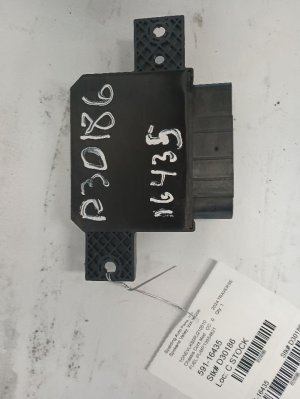
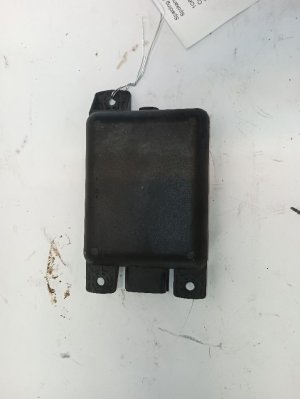
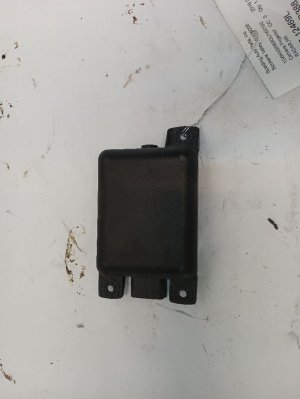
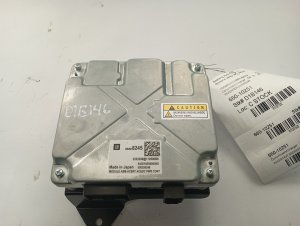
We Have This Part in Stock

The information in this article is provided for general reference and educational purposes only. Vehicle specifications, procedures, and part compatibility can vary by production date, trim level, and region. Always consult your vehicle's factory service manual and verify part numbers before purchasing or performing repairs. Safety-critical components such as airbags, seat belts, and braking systems should be installed by a qualified professional.
- Chevrolet SUBURBAN:
- 🧭 Diagnostic Flowchart
- 🎬 Helpful Videos
- 🛍️ Shop This Part
- What's Unique About the 2017-2024 Chevrolet SUBURBAN
- Symptoms You May Notice
- Most Likely Causes
- Rare But Worth Checking
- Diagnosis Steps
- Parts You'll Likely Need
- Technical Service Bulletins (TSBs) & Recalls
- Platform-Specific Known Issues
- Mechanic-Grade Diagnostic Values
- Hidden / Shadow Codes Worth Checking
- Scan Tool Commands That Help
- Wiring & Ground Locations
- Real Owner Repair Stories
- OEM Part Supersession History
- Model Year Variations Within This Range
- 🎟️ Get 5% Off