

C1463 on 2013-2018 Ford Fusion: Right Front Vertical Accelerometer Circuit Failure Causes and Fixes
On a 2013-2018 Ford Fusion, code C1463 points to a circuit fault for the right front suspension ride height sensor, a key part of the AdvanceTrac and adaptive suspension systems. The most likely fix is replacing the sensor itself (OEM Part No. DG9Z-5359-A or similar) and performing a mandatory ride height calibration with a tool like FORScan. Expect the part to cost between $50 and $150.
- Code C1463 on a 2013-2018 Ford Fusion specifically means there's a circuit problem with the Right Front Suspension Ride Height Sensor
What's Unique About the 2013-2018 Ford Fusion
The Ford Fusion and its Lincoln MKZ sibling use these sensors not just for stability control (AdvanceTrac), but also for their optional adaptive suspension (CCD). While many cars have stability control, the dual-use nature of this sensor on equipped Fusions means a failure can lead to both a 'Service AdvanceTrac' warning and a noticeably harsh, stiff ride as the dampers default to their firmest setting. It's important to distinguish this wheel-mounted sensor from the central yaw rate sensor, which is located inside the cabin and triggers different codes.
Symptoms You May Notice
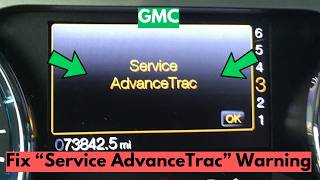
- "Service AdvanceTrac" warning light illumi 🎬 Watch: How to diagnose and fix the Service AdvanceTrac warningnated on the dashboard
- ABS and/or Traction Control warning lights illuminated
- "Suspension Fault" or "Drive Control Malfunction" message (on models with adaptive suspension)
- An unusually stiff or harsh ride quality
- Disabled traction and stability control systems
- Replacing the ABS wheel speed sensor. The ride height sensor and the ABS wheel speed sensor are two different parts in the same area. C1463 specifically points to the ride height sensor (vertical accelerometer) circuit, not the wheel speed sensor.
- Replacing the central yaw rate sensor. This sensor is located inside the car's cabin and is responsible for detecting vehicle rotation. While it's part of the AdvanceTrac system, it will set different trouble codes.
Most Likely Causes
- Failed Right Front Suspension Ride Height Sensor 🔴 High Probability → Shop Suspension Ride Height Sensor The sensor is a moving part located on the suspension in the wheel well, making it highly vulnerable to wear, water intrusion, physical damage from road debris, and corrosion over time. The plastic linkage arm can also become brittle and break.
How to confirm: Use a Ford-specific scan tool (like FORScan) to monitor live data from the 'Right Front Vertical Accelerometer'. Look for erratic voltage readings, intermittent drops to zero, or no signal at all as you gently bounce the suspension. Compare its readings to the left front sensor; they should be similar on level ground.
Typical fix: Replace the right front suspension ride height sensor. A ride height calibration must be performed with a scan tool like FORScan after replacement.
Est. part cost: $50 - $150 - Damaged Wiring or Connector 🟡 Medium Probability The wiring harness runs to the exposed wheel well area. Constant suspension movement, road debris, and moisture can lead to chafing, broken wires, or corrosion in the connector pins.
How to confirm: Visually inspect the wiring harness leading to the right front ride height sensor for any signs of damage, melting, or corrosion. Unplug the connector and check for bent, corroded, or broken pins. Use a multimeter to check for continuity and proper voltage at the connector per the factory service manual. A replacement pigtail connector is available if the original is damaged.
Typical fix: Repair the damaged section of the wiring harness or replace the connector pigtail. Ensure the repair is sealed against moisture.
Est. part cost: $20 - $55
Rare But Worth Checking
- ABS or Vehicle Dynamics Module (VDM) Failure: This is very rare. Before condemning the control module, exhaust all other possibilities, including a thorough check of the sensor and its wiring. Module replacement is expensive and requires programming by a dealer or qualified shop.
Diagnosis Steps
- Connect a professional-grade OBD-II scanner or a tool like FORScan that can read Ford-specific Chassis (C-codes). Confirm that C1463 is present and check for any other related codes.
- Access the live data stream for the Vehicle Dynamics Module (VDM). Monitor the parameter for the 'Right Front Vertical Accelerometer' or 'Ride Height Sensor'.
- Gently push down on the right front corner of the car and observe the live data. The sensor value (typically voltage) should change smoothly. If the value is stuck, jumps erratically, or shows no change, the sensor or its wiring is faulty.
- Compare the reading from the right front sensor to the left front sensor. At rest on level ground, they should be very similar.
- If the data points to a sensor issue, raise and safely support the vehicle. Locate the sensor on the right front suspension. It's a small black box with a linkage arm connecting it to the control arm.
- Visually inspect the sensor, its linkage, connector, and the wiring harness for any obvious damage, corrosion, or loose connections.
- If no visual damage is found, use a multimeter to test the sensor's circuit. Check for the correct reference voltage, ground, and signal wire integrity according to the vehicle's service manual.
- If the wiring and connector are confirmed to be good, the ride height sensor itself is the most likely culprit.
- After replacing the sensor, you MUST perform the 'VDM Ride Height Calibration' procedure using a compatible scan tool. This requires the vehicle to be on perfectly level ground with no occupants and a known amount of fuel. Failure to do this will result in the system not working correctly and the code likely returning.
Parts You'll Likely Need
- Front Right Suspension Ride Height Sensor
(OEM #DG9Z-5359-A (Verify by VIN, as part numbers can vary by specific options))— This is the component that directly corresponds to the C1463 fault code. It is an electronic sensor with moving parts exposed to the elements, making it the most common point of failure in this circuit.
Trusted brands: Motorcraft, Dorman
OEM price range: $90-$150
Aftermarket price range: $50-$100 - Suspension Ride Height Sensor Connector
(OEM #Motorcraft WPT-1268 (pigtail))— If the wiring connector is corroded or damaged, replacing the pigtail is often necessary to ensure a solid connection to the new sensor.
Trusted brands: Motorcraft
OEM price range: $30-$55
Aftermarket price range: $20-$40
Related Codes That Often Appear With This One
- C1462 — Code C1462 refers to the 'Left Front Vertical Accelerometer Circuit Failure'. Seeing both codes together would indicate a problem with both front ride height sensors or a shared wiring issue.
- U0418 — This code means 'Invalid Data Received From Brake System Control Module'. It can appear alongside sensor fault codes like C1463 because the invalid sensor data is causing the main ABS/AdvanceTrac module to send unreliable information to other modules on the vehicle's network.
Mechanic-Grade Diagnostic Values
- Sensor Reference Voltage (VREF) — expected: 4.0 - 6.0 Volts. Failure: Voltage below 4.0V or above 6.0V indicates a problem with the VDM or wiring, not necessarily the sensor.
- Sensor Ground Circuit Resistance — expected: < 5.0 Ohms to a known good chassis ground. Failure: Resistance higher than 5.0 Ohms indicates a poor or open ground connection, which will cause an incorrect signal.
- Live Sensor Signal Voltage (via FORScan/IDS) — expected: A smooth, changing voltage reading when the suspension is compressed and rebounded.. Failure: Voltage is stuck at 0, at max (e.g., 5V), or does not change smoothly with suspension movement.
Scan Tool Commands That Help
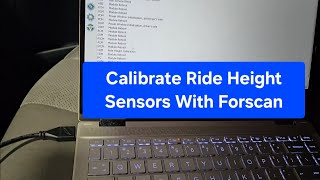
- FORScan / Ford IDS: VDM Ride Height Calibration — This is a mandatory 🎬 Watch: Step-by-step FORScan ride height calibration tutorial procedure after replacing any ride height sensor. The Vehicle Dynamics Module (VDM) must learn the baseline 'level' reading of the new sensor. Failure to perform this calibration will result in the C1463 code returning and the adaptive suspension remaining in a fault state.
- FORScan / Ford IDS: VDM Live Data Monitoring — This is the primary diagnostic step. Watching the live voltage from the 'Right Front Vertical Accelerometer' while bouncing the suspension is the most effective way to confirm if the sensor is sending a valid, changing signal or if it is dead/erratic.
Wiring & Ground Locations
- G104 / G105 — Right front of the engine compartment, near the strut tower or on the frame rail.. The ride height sensor requires a clean ground to send an accurate signal. A corroded or loose ground at this location can cause high resistance in the circuit, leading to an incorrect signal and triggering code C1463. This should be checked when diagnosing a circuit fault.
- Sensor Connector (at the wheel well) — Connected directly to the ride height sensor (DG9Z-5359-A) in the right front wheel well.. This connector is highly exposed to water, salt, and road debris. Corrosion on the pins or damage to the connector body or its wires is a very common cause of an open or shorted circuit for C1463. The pigtail for this connector is Motorcraft WPT-1268.
Real Owner Repair Stories
- Reddit user on r/mechanicadvice (2014 Lincoln MKZ (shares platform and suspension with Fusion)) — Owner found a disconnected rod hanging in the wheel well.
✅ What actually fixed it The issue was a broken plastic linkage arm on the ride height sensor. The arm has a socket that pops onto a ball stud on the suspension control arm. In this case, the socket was cracked and would no longer stay attached. The temporary fix was to pop it back on, but the permanent fix is replacing the sensor assembly, as the arm is integrated.
Model Year Variations Within This Range
- 2017-2018: For the 2017 model year facelift, Ford introduced 'pothole detection technology' on Fusions equipped with the CCD adaptive suspension. This system uses the same ride height sensors (accelerometers) but with more advanced software in the Vehicle Dynamics Module (VDM). The VDM processes data from the sensors at a very high frequency (500 Hz) to detect the sudden drop of a wheel into a pothole and instantly stiffens the damper to prevent the wheel from dropping all the way in, reducing the impact. While the C1463 code and its primary causes (sensor/wiring failure) remain the same, the VDM software is more complex on these later models.
Diagnostic Flowchart
Other Known Issues on This Vehicle
Issues unrelated to this code that are worth knowing about as an owner of this generation:
- 1.5L EcoBoost Coolant Intrusion 🔴 High — Common on 2014-2019 Fusions with the 1.5L engine. A design flaw in the engine block can allow coolant to leak into the cylinders. (Ref: TSB 19-2375, TSB 20-2100)
- Degraded Transmission Shifter Cable Bushing 🔴 High — Widespread on 2013-2016 models. The bushing can detach, causing a mismatch between the gear shifter position and the actual transmission gear, potentially leading to a rollaway. (Ref: Ford Recalls 18S20, 19S16, 22S43)
- Steering Gear Motor Bolt Corrosion 🔴 High — Affects 2013-2016 models primarily in regions that use road salt. Bolts can corrode and break, causing a loss of power steering assist. (Ref: Ford Recall 19S26)
- Harsh or Delayed Automatic Transmission Shifting 🟠 Medium — Reported across various model years. Can sometimes be addressed with a PCM/TCM software update, but may indicate internal transmission wear.
- Swollen Lug Nuts 🟡 Low — Very common across many Ford models of this era. The chrome caps on the lug nuts swell and deform, making it difficult or impossible to fit a standard lug wrench on them.
Used vs. New Parts: Buying Guide for This Vehicle
When a used part is the smart pick: For this specific part, buying used is generally not recommended. The sensor is a relatively low-cost electronic component with moving plastic parts that is exposed to harsh wheel-well conditions. The risk of getting a part with a brittle plastic arm or internal water damage is high.
Donor-vehicle mileage cap: roughly under 50000 miles for the part to have meaningful remaining life.
What to inspect on the donor part:
- Inspect the plastic linkage arm and its ball socket for any cracks, stress marks, or brittleness.
- Ensure the arm pivots smoothly without binding or excessive play.
- Check the electrical connector pins for any signs of green or white corrosion, or bent pins.
- If possible, choose a donor vehicle from a dry, salt-free climate to minimize corrosion risk.
OEM-only on this vehicle (don't cheap out):
- Vehicle Dynamics Module (VDM)
Aftermarket brands forum-validated for this vehicle:
- Dorman
Brands owners have reported issues with on this vehicle:
- No-name, unbranded parts from online marketplaces should be avoided, as sensor accuracy is critical and calibration may fail if the part is out of spec.
Real Owner Stories
Aggregated from forums and TSBs cited above. Mileages and costs reflect what owners reported in those sources.
2013-2018 Ford Fusion (Adaptive Suspension models)
Symptoms: The owner noticed the 'Service Suspension System' message and used a scan tool to watch live voltage data for the accelerometer. They observed the voltage readings drop to zero intermittently while the suspension moved.
What fixed it: Diagnosis of the faulty wheel accelerometer by monitoring live voltage data and replacing the sensor.
Source hint: Tahoe Yukon Forum - 'Service Suspension System message' - https://www.tahoeyukonforum.com/threads/service-suspension-system-message.128711/page-2
Related OBD-II Codes
Frequently Asked Questions
Can I use a standard OBD-II scanner to diagnose the C1463 code on my Ford Fusion?
Is the C1463 code related to the 1.5L EcoBoost coolant intrusion TSB 19-2375?
Can I just bolt on a new sensor to fix the 'Service AdvanceTrac' message?
Does the Lincoln MKZ suffer from the same C1463 sensor failures as the Fusion?
Should I buy a used ride height sensor from a salvage yard to save money?
Could a damaged wiring pigtail cause the C1463 code instead of a bad sensor?
Helpful Videos

The information in this article is provided for general reference and educational purposes only. Vehicle specifications, procedures, and part compatibility can vary by production date, trim level, and region. Always consult your vehicle's factory service manual and verify part numbers before purchasing or performing repairs. Safety-critical components such as airbags, seat belts, and braking systems should be installed by a qualified professional.
- Ford Fusion:
- 🧭 Diagnostic Flowchart
- 🎬 Helpful Videos
- What's Unique About the 2013-2018 Ford Fusion
- Symptoms You May Notice
- Most Likely Causes
- Rare But Worth Checking
- Diagnosis Steps
- Parts You'll Likely Need
- Related Codes That Often Appear With This One
- Mechanic-Grade Diagnostic Values
- Scan Tool Commands That Help
- Wiring & Ground Locations
- Real Owner Repair Stories
- Model Year Variations Within This Range
- Other Known Issues on This Vehicle
- Used vs. New Parts: Buying Guide for This Vehicle
- Real Owner Stories
- 2013-2018 Ford Fusion (Adaptive Suspension models)
- Related OBD-II Codes
- Frequently Asked Questions
- 🎟️ Get 5% Off