

P0010 on 2011-2017 Chrysler 200: Intake Cam Actuator Circuit Causes and Fixes
On a 2011-2017 Chrysler 200, code P0010 is most often caused by a failed intake camshaft position actuator solenoid on Bank 1. This is frequently due to low or dirty oil, as the VVT system is hydraulically operated. Replacing the solenoid is a common DIY fix, with the OEM Mopar part costing around $100-$150 and aftermarket versions available for $25-$75.
- P0010 is an electrical circuit code for the intake VVT solenoid; do not immediately suspect mechanical timing parts like the timing chain.
- The most likely fix is replacing the Bank 1 intake VVT solenoid, which is an accessible and affordable part for DIY repair.
- Always check your engine oil level and condition first. Using the correct oil (5W-20 meeting MS-6395) and regular changes can prevent this code.
- On the 3.6L V6, Bank 1 is the rear cylinder head. The intake solenoid is the one located toward the inside of the 'V'.
- Do not waste money replacing the camshaft position sensor, as it is not related to this specific fault code.
What's Unique About the 2011-2017 Chrysler 200
The 2011-2017 Chrysler 200 spans two generations with different engines, which affects this code. The first generation (2011-2014) used a 2.4L 'World' engine or the 3.6L Pentastar V6. The second generation (2015-2017) used a 2.4L 'Tigershark' MultiAir II and an updated 3.6L Pentastar V6. Across all engines, the VVT system is highly sensitive to oil quality, viscosity, and level. The 2.4L Tigershark engine, in particular, uses the MultiAir system where oil pressure hydraulically actuates the intake valves themselves, making correct oil (0W-20 Synthetic) and frequent changes critical. Many P0010 faults on these cars can be traced back to using the wrong oil, dirty oil, or low oil levels, which can clog the fine mesh screens on the VVT solenoids or cause them to fail.
Generation note: The 2011-2017 range covers two generations. The first generation (2011-2014) was a heavily updated Chrysler Sebring, offering a 2.4L World engine or 3.6L Pentastar V6. The second generation (2015-2017) was a completely new car on a different platform, with a 2.4L Tigershark MultiAir II engine or an updated 3.6L Pentastar V6. While the cause of P0010 is similar, the exact part location and engine specifics differ, especially the 2.4L Tigershark's unique MultiAir system.
Symptoms You May Notice
- Check Engine Light is on
- Rough engine idle, especially at cold start
- Engine may hesitate or stall, sometimes when coming to a stop
- Reduced engine power and acceleration
- Decreased fuel economy
- Rattling or ticking noise from the engine area upon startup
- Replacing the camshaft position sensor. The code P0010 is for the actuator circuit (the solenoid), not the position sensor. Replacing the sensor will not fix this electrical circuit code.
- Assuming a major timing chain issue. P0010 is an electrical code for the control solenoid circuit. While related to timing, it does not automatically mean the timing chain, guides, or tensioners are bad, which would typically set codes like P0016.
Most Likely Causes
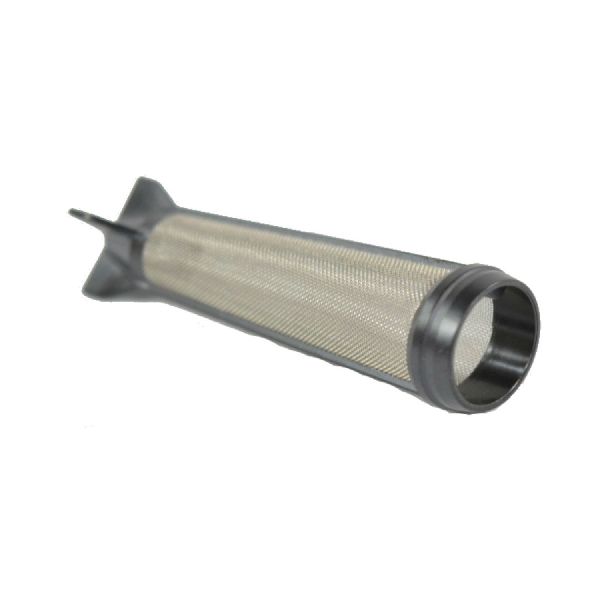
- Faulty Intake VVT Solenoid (Bank 1) 🔴 High Probability The solenoid can fail electrically due to an internal short or open circuit in the coil. More commonly, it becomes clogged with oil sludge or debris from infrequent oil changes, which blocks the internal oil passages or tears the fine mesh screens, preventing proper oil flow.
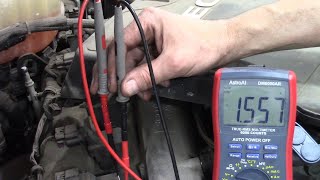
How to confirm: Disconnect the solenoid and measure its resistance with a multimeter. A reading between 6.9-12 Ohms is typical. An infinite reading (open) or zero reading (short) confirms electrical failure. A good diagnostic step is to swap the intake solenoid with the exhaust solenoid. If the code changes to P0013 (Exhaust Cam Actuator Circuit), the solenoid is confirmed bad.
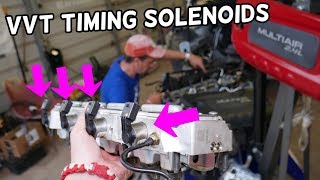
Typical fix: Replace the Bank 1 intake VVT solenoid. On the 2.4L, it is on the front or side of the cylinder head. 🎬 See this walkthrough for replacing the 2.4L Tigershark VVT solenoid. On the 3.6L, Bank 1 is the rear cylinder head (near the firewall), and the intake solenoid is the inner of the two solenoids on that head. 🎬 Watch: How to locate and replace solenoids on the 3.6L engine. Always apply a light coat of clean engine oil to the new solenoid's O-rings before installation.
Est. part cost: $25-$75 - Low, Dirty, or Incorrect Engine Oil 🟡 Medium Probability The VVT system is operated by oil pressure. The 2.4L Tigershark engine is particularly sensitive and requires 0W-20 synthetic oil to operate the MultiAir system correctly. The 3.6L Pentastar typically requires 5W-20 meeting Chrysler MS-6395 spec. Low oil levels, often due to the 2.4L's known oil consumption issue, can starve the solenoids and cause this code.
How to confirm: Check the oil dipstick for level and inspect the oil's condition. If it is dark, gritty, or below the 'add' line, this is a likely contributor. Check service records for the last oil change date and oil type used. For the 2.4L, oil consumption issues are widely documented.
Typical fix: Perform an engine oil and filter change using the manufacturer-specified oil (e.g., SAE 0W-20 for 2.4L Tigershark, 5W-20 for 3.6L Pentastar). If the oil was very low, investigate the cause, such as the 2.4L's oil consumption problem or the 3.6L's common oil filter housing leak.
Est. part cost: $40-$80 - Damaged Wiring or Connector ⚪ Low Probability The wiring harness to the solenoid can become brittle from engine heat cycles, or the connector pins can corrode or get contaminated with oil, causing an open or short circuit. The connector's locking tab can also become brittle and break.
How to confirm: Visually inspect the wiring leading to the VVT solenoid for any signs of cracking, melting, or breaks. Unplug the connector and check inside for oil contamination, bent, or corroded pins. Wiggle the harness with the engine running to see if it affects the idle.
Typical fix: Repair the damaged section of wire or clean the connector terminals with electrical contact cleaner. If the connector itself is broken, it will need to be replaced with a new pigtail.
Est. part cost: $10-$50
Rare But Worth Checking
- Faulty Powertrain Control Module (PCM): This is very rare. The PCM is the last item to suspect after all other possibilities (solenoid, oil, wiring) have been thoroughly ruled out. A failed driver circuit in the PCM can mimic a solenoid or wiring fault.
- Failed Camshaft Phaser: → Shop Engine Camshaft While P0010 is an electrical circuit code, a mechanically failed/stuck phaser can sometimes cause the PCM to flag the circuit as it attempts to command a change that isn't happening. This is more likely to be accompanied by mechanical timing codes like P0011 or P0016.
Diagnosis Steps
- Check Engine Oil: Verify the oil level is correct and the oil is clean and of the correct viscosity (0W-20 for 2.4L, 5W-20 for 3.6L). If low or dirty, an oil change is the recommended first step. Address any underlying oil consumption or leak issues.
- Inspect the Wiring: Visually inspect the electrical connector and wiring going to the Bank 1 intake VVT solenoid. Look for damage, corrosion, or oil saturation.
- Swap Solenoids (Recommended): A highly effective diagnostic step is to swap the intake VVT solenoid with the exhaust VVT solenoid (they are typically identical parts). Clear the codes and run the engine. If the code changes to P0013 (Exhaust Camshaft Position Actuator Circuit), you have confirmed the solenoid is faulty.
- Test the Solenoid: If swapping isn't feasible, disconnect the solenoid's electrical connector. Use a multimeter set to Ohms to measure the resistance across the two pins on the solenoid. A reading of approximately 6.9-12 Ohms is typical. An open circuit (infinite resistance) or a short (zero resistance) means the solenoid is bad.
- Check for Power: If the solenoid tests good, use a multimeter to check for voltage at the harness connector with the key on, engine off. One wire should have battery voltage supplied from the PCM relay. The other is the control wire that the PCM pulses to ground.
- Replace the Solenoid: If the solenoid fails the resistance test or the swap test, replace it. This is the most common resolution.
- Clear Codes and Test Drive: After any repair, clear the trouble codes with a scan tool and perform a test drive to ensure the code does not return.
Parts You'll Likely Need
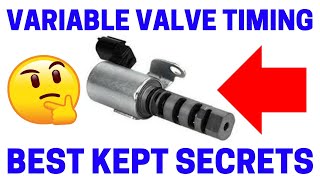
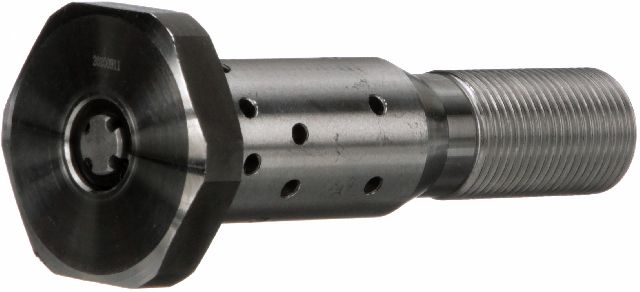
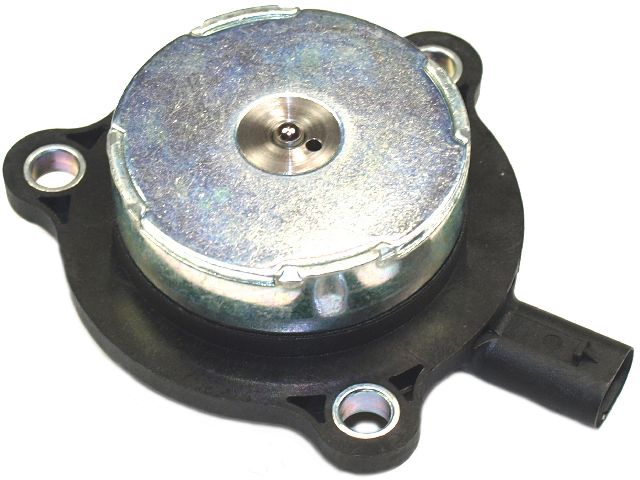
- Engine Variable Valve Timing (VVT) Solenoid
(OEM #3.6L Pentastar: 5184101AG, 05184101AG; 2.4L World/Tigershark: 4884483AC, 4884483AA)— This is the most common part to fail for a P0010 code, either due to an internal electrical failure or clogging from dirty/low oil.
Trusted brands: Mopar (OEM), Dorman, Standard Motor Products (SMP), SKP
OEM price range: $100-$151
Aftermarket price range: $25-$75
Related Codes That Often Appear With This One
- P0013 — This is the same circuit fault but for the 'B' (exhaust) camshaft solenoid on Bank 1. If they appear together, it can point to a common issue like an oil problem or a shared electrical fault.
- P0011 — This code indicates a mechanical timing issue (cam timing over-advanced) rather than an electrical one. If P0010 and P0011 appear together, it strongly suggests the VVT solenoid is the root cause, as its electrical failure is preventing proper mechanical operation.
Technical Service Bulletins (TSBs) & Recalls
- 18-022-17 REV. A - Flash: Powertrain Diagnostic and System Improvements (for 2015 MY w/ 2.4L engine)
- TSB Bulletin #0902223 - A manufacturer service bulletin notes that upon further investigation of MIL illumination, a technician may find DTC P0010 (Bank 1 Camshaft 1 Position Actuator Circuit Open) has been set.
Platform-Specific Known Issues
- For 2015 models with the 2.4L engine, TSB 18-022-17 REV. A was released to reprogram the PCM for various powertrain improvements, including setting DTCs like P0335, P0456, and U0402. While it doesn't specifically list P0010, ensuring the PCM software is up-to-date is a good practice.
- On 3.6L Pentastar engines, the VVT solenoids are located under the front of the valve covers. Bank 1 (rear, by firewall) can be difficult to access. There are four solenoids in total (intake/exhaust for each bank).
- The 2.4L Tigershark engine has a well-documented issue with excessive oil consumption, which is a primary cause of VVT-related codes due to low oil levels. A class-action lawsuit was settled regarding this issue, and Chrysler issued warranty extensions and TSBs (e.g., 09-006-20 REV B) outlining an oil consumption test.
Mechanic-Grade Diagnostic Values
- VVT Solenoid internal resistance — expected: 6.9 to 12 Ohms. Failure: A reading of 0 Ohms (short circuit) or infinite/OL (open circuit).
- VVT Solenoid harness connector voltage (Key On, Engine Off) — expected: One pin should show battery voltage (approx. 12V), the other is the ground-side control from the PCM.. Failure: No voltage on the power supply pin indicates a wiring or relay issue upstream. Voltage on the control pin indicates a short to power.
- Wiring harness resistance from solenoid connector to PCM connector — expected: Below 5.0 Ohms. Failure: Resistance above 5.0 Ohms indicates high resistance in the wire, which can cause the code.
Scan Tool Commands That Help
- wiTECH (Chrysler Dealer Tool) or equivalent professional scanner (e.g., Autel, XTOOL): Active Test: VVT Solenoid or VVT Actuator Test — This bidirectional command allows the technician to manually activate the specific VVT solenoid with the key on, engine off. You should hear an audible click from the solenoid. This directly tests the electrical integrity of the circuit from the PCM to the solenoid and the solenoid's mechanical function.
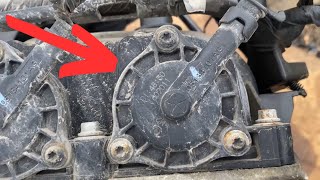
- wiTECH or equivalent: Cam and Crank Variation Relearn Procedure — This procedure should be performed after replacing a major timing component like a camshaft phaser or, on 2.4L MultiAir engines, the entire MultiAir 'brick' assembly. It allows the PCM to learn the new positions and variations of the components.
Wiring & Ground Locations
- Bank 1 VVT Solenoids (3.6L Pentastar) — Bank 1 is the cylinder head against the firewall. There are two solenoids; the intake solenoid ('A' camshaft) is the inner one (closer to the center of the engine), and the exhaust is the outer one.. Correctly identifying Bank 1 and the specific intake solenoid is critical to avoid replacing the wrong part. Access is tight due to the proximity to the firewall.
- Bank 2 VVT Solenoids (3.6L Pentastar) — Bank 2 is the cylinder head closer to the radiator. The intake solenoid is the inner one, and the exhaust is the outer one.. Useful for comparison or if swapping solenoids for diagnosis. Much easier to access than Bank 1.
- VVT Solenoid Connector (3.6L Pentastar) — The 2-pin electrical connector has its keyway on the inside edge of the solenoid housing, which is less common.. When ordering a replacement pigtail or connector, noting the keyway position is important to ensure the correct part is sourced.
Real Owner Repair Stories
- MotorCity Mechanic (YouTube) (Chrysler with 3.6L Pentastar engine) — Ticking noise from the engine, accompanied by VVT-related trouble codes (e.g., P1058, similar to P0010 but for Bank 2).
❌ Tried (didn't work) Initially suspecting the VVT solenoid due to the code.
✅ What actually fixed it The root cause was a failed rocker arm with worn needle bearings. The ticking noise was the key symptom. Ignoring the tick can lead to camshaft damage. The fix was to replace the failed rocker arms and, in some cases, the camshaft if it was scored. - Reddit user in r/dodgedart (Dodge Dart with 2.4L MultiAir engine (same platform as Chrysler 200)) — Stumbling during driving, dead cylinder at times, rough running, and a P1067 code (Cylinder 2 Oil Control Solenoid Fault).
❌ Tried (didn't work) Initial diagnosis pointed to a single solenoid, but on the MultiAir system, these are integrated into the 'brick'.
✅ What actually fixed it The entire MultiAir valve actuation assembly (the 'brick') had to be replaced due to a single failed internal actuator solenoid. The user sourced a used assembly from a scrapyard for about $300 to avoid the $1700 dealer price for the part alone.
OEM Part Supersession History
68171656AD→68267112AF— Updated engine wiring harness for the 3.6L engine.
Diagnostic Flowchart
Other Known Issues on This Vehicle
Issues unrelated to this code that are worth knowing about as an owner of this generation:
- Excessive Oil Consumption (2.4L Tigershark) 🔴 High — Very common on 2015-2017 models with the 2.4L engine. Can start at any mileage. Caused by a piston ring design defect. (Ref: TSB 09-006-20 REV. B; Warranty Extension XB1; W80 Customer Satisfaction program. Subject of a major class-action lawsuit.)
- Harsh/Erratic Shifting (9-Speed Automatic) 🟠 Medium — Common on 2015-2017 models equipped with the ZF 9-speed transmission. Problems include lurching, sudden shifts to neutral, and stalling. (Ref: Multiple software updates (e.g., Recall S55 / NHTSA 16V-529) were released to improve shift logic, but mechanical issues can persist.)
- Leaking Oil Filter Housing (3.6L Pentastar) 🔴 High — Extremely common on virtually all 3.6L Pentastar engines, typically after 80,000 miles. The plastic housing cracks or warps from heat cycles, leaking oil and/or coolant into the engine valley. (Ref: No recall, but it's a widely known failure. Aftermarket aluminum housings are a popular permanent fix.)
- Engine Stalls While Driving 🔴 High — Reported on both generations. Can be caused by a variety of issues including a faulty TIPM (1st gen), low oil level (2nd gen 2.4L), or transmission faults (2nd gen). (Ref: Multiple investigations and recalls for various underlying causes over the years.)
- HVAC System Failure (Clogged Heater Core) 🟠 Medium — Common on the 1st generation (2011-2014). Owners report poor heat, especially on the passenger side, due to a clogged heater core.
- Totally Integrated Power Module (TIPM) Failure 🔴 High — A well-known issue on 1st generation (2011-2014) models and other Chrysler products of the era. Can cause a wide range of bizarre electrical problems, including no-start conditions, fuel pump failure, and random stalling. (Ref: Subject of a class-action lawsuit, but not a formal recall for the 200 itself.)
Used vs. New Parts: Buying Guide for This Vehicle
When a used part is the smart pick: For high-cost, complex assemblies like the 2.4L MultiAir 'brick' or a complete cylinder head for the 3.6L (if rocker arm failure damaged it), a low-mileage used part from a reputable salvage yard can offer significant savings ($300 used vs. $1700+ new). A used PCM can also be a cost-effective option if the original is confirmed faulty, but it will require programming to the vehicle's VIN.
Donor-vehicle mileage cap: roughly under 80000 miles for the part to have meaningful remaining life.
What to inspect on the donor part:
- For a MultiAir brick or cylinder head, request the VIN of the donor car to verify mileage and check for accident history (avoid heavy front-end collisions).
- Visually inspect VVT solenoids for torn or clogged screens.
- When buying a used engine harness, check for brittle plastic, cracked insulation, and oil contamination inside connectors.
OEM-only on this vehicle (don't cheap out):
- Powertrain Control Module (PCM): While a used one can work, it requires dealer-level tools (wiTECH) for programming. For guaranteed compatibility, a new Mopar PCM is the safest bet.
Aftermarket brands forum-validated for this vehicle:
- Standard Motor Products (SMP)
- SKP
- Holstein
Brands owners have reported issues with on this vehicle:
- Dorman: While a major brand, some professional mechanics and DIYers report a higher failure rate for their electronic components and solenoids compared to OEM or other premium aftermarket brands.
Real Owner Stories
Aggregated from forums and TSBs cited above. Mileages and costs reflect what owners reported in those sources.
2016 Chrysler 200 2.4L — ~75000 miles
Symptoms: Check Engine Light for P0010 came on. The engine was consuming excessive amounts of oil, and the oil level was found to be very low on the dipstick.
What fixed it: Performing an engine oil and filter change with the correct 0W-20 synthetic oil resolved the code. The root cause was identified as the engine's known oil consumption problem.
Source hint: Vehicle Specific Issue: Excessive Oil Consumption (2.4L Tigershark)
2014 Chrysler 200 3.6L
Symptoms: Check Engine Light was on for P0010. The owner noted the difficulty of reaching the Bank 1 solenoids due to their location near the firewall.
What fixed it: Replacing the faulty Bank 1 intake VVT solenoid resolved the issue.
Source hint: 200forums.com
2015 Chrysler 200 2.4L
Symptoms: The P0010 code was present, along with a rough idle and a noticeable decrease in fuel economy.
What fixed it: The owner reported that performing regular oil changes with the correct 0W-20 oil and ensuring the oil level was always correct prevented the VVT code from returning.
Source hint: allpar.com
Related OBD-II Codes
Frequently Asked Questions
Where is the Bank 1 intake VVT solenoid on my 3.6L Chrysler 200? It seems hard to find.
My 2.4L Chrysler 200 is burning a lot of oil. Could this be related to my P0010 code?
What is the correct engine oil to use in my Chrysler 200 to help prevent P0010?
How can I test the VVT solenoid myself before replacing it?
I have a 2015 Chrysler 200 with the 2.4L engine. Is there a software update that could be related to this code?
Besides the check engine light, what are common symptoms for P0010 on this car?
Helpful Videos

We Have This Part in Stock

The information in this article is provided for general reference and educational purposes only. Vehicle specifications, procedures, and part compatibility can vary by production date, trim level, and region. Always consult your vehicle's factory service manual and verify part numbers before purchasing or performing repairs. Safety-critical components such as airbags, seat belts, and braking systems should be installed by a qualified professional.
- Chrysler 200:
- 🧭 Diagnostic Flowchart
- 🎬 Helpful Videos
- 🛍️ Shop This Part
- What's Unique About the 2011-2017 Chrysler 200
- Symptoms You May Notice
- Most Likely Causes
- Rare But Worth Checking
- Diagnosis Steps
- Parts You'll Likely Need
- Related Codes That Often Appear With This One
- Technical Service Bulletins (TSBs) & Recalls
- Platform-Specific Known Issues
- Mechanic-Grade Diagnostic Values
- Scan Tool Commands That Help
- Wiring & Ground Locations
- Real Owner Repair Stories
- OEM Part Supersession History
- Other Known Issues on This Vehicle
- Used vs. New Parts: Buying Guide for This Vehicle
- Real Owner Stories
- 2016 Chrysler 200 2.4L — ~75000 miles
- 2014 Chrysler 200 3.6L
- 2015 Chrysler 200 2.4L
- Related OBD-II Codes
- Frequently Asked Questions
- 🎟️ Get 5% Off