

P0011 on 2014-2018 Mazda 3: SkyActiv 'A' Camshaft Timing Over-Advanced Causes and Fixes
On a 2014-2018 Mazda 3 with a SkyActiv engine, P0011 is most often caused by low/dirty engine oil or a failing electric Variable Valve Timing (VVT) motor. Unlike many cars, the intake cam is adjusted by an electric motor, not an oil-pressure solenoid. Always check your oil level and condition before replacing any parts, as using the wrong viscosity or having low/dirty oil is a very common trigger.
- First, check your engine oil. Low, dirty, or incorrect viscosity oil is a common and simple-to-fix cause for timing codes.
- This engine's intake camshaft uses an ELECTRIC motor for VVT, not an oil control solenoid. Do not waste money replacing a part that doesn't exist on the intake side.
- The most likely failed part, if oil is not the issue, is the 'Electric VVT Adjust Motor' (Part No. PE01-12-4Z0C).
- A scan tool that can read live data is extremely helpful to compare the commanded cam position to the actual position, which can help differentiate a mechanical problem from an electrical one.
- Ignoring this code can lead to poor performance, bad fuel economy, and potential long-term engine damage.
What's Unique About the 2014-2018 Mazda 3
The key difference in the SkyActiv-G engine is its intake VVT system. Unlike older Mazda engines or many other manufacturers that use oil pressure controlled by a solenoid (Oil Control Valve or OCV) to adjust cam timing, the SkyActiv-G uses an electric motor mounted to the front of the engine. This means a common misdiagnosis is looking for a faulty intake VVT solenoid, a part this engine does not have for the intake side. The diagnostic process must focus on the electric motor, its dedicated relay, its wiring, and the mechanical phaser itself.
Symptoms You May Notice
- Check Engine Light is on
- Rough or unstable idle
- Poor acceleration and loss of power
- Reduced fuel economy
- Engine stalling, especially at low RPM or when coming to a stop
- Hard starting
- Engine rattling or vibrating noise
- Replacing the 'intake VVT solenoid' or 'Oil Control Valve (OCV)'. The SkyActiv-G engine in this vehicle does not use an oil-pressure solenoid for the intake camshaft; it uses an electric motor. This is a critical distinction that can save significant time and money. The exhaust camshaft, however, does use a traditional OCV.
Most Likely Causes
- Low, Dirty, or Incorrect Viscosity Engine Oil 🔴 High Probability The SkyActiv VVT system is highly sensitive to oil quality, pressure, and viscosity. While the intake actuator is electric, the entire timing system relies on clean oil. TSB 01-008/17 for this platform highlights how debris in the oil can cause the oil pump relief valve or exhaust OCV to stick, leading to timing codes P0015 and P0524, demonstrating the system's sensitivity to contamination.
How to confirm: Check the oil level on the dipstick and inspect the oil's color and consistency. Verify that the oil viscosity used matches the manufacturer's recommendation (0W-20 for SkyActiv engines). An oil change is the cheapest and most important first diagnostic step.
Typical fix: Perform an engine oil and filter change using the correct specification full synthetic oil (0W-20).
Est. part cost: $40-$80 - Failing Electric VVT Adjust Motor/Driver 🔴 High Probability This electric motor is the primary moving part responsible for adjusting the intake cam timing. As a complex electromechanical component, it can fail internally over time, either electrically or mechanically. Manufacturer service bulletin #SA-033-25 notes that a malfunction in the intake EVVT motor can prevent it from accurately regulating the intake camshaft timing, triggering P0011.
How to confirm: Diagnosis involves checking for related codes (like P0010), inspecting the wiring and connector for damage, and using a high-level scan tool to command the motor and observe the response of the actual cam position (PIDs VT IN_DES vs. VT IN_ACT). A large discrepancy or a stuck actual value points to a fault.
Typical fix: Replace the electric VVT adjust motor.
Est. part cost: $150-$300 - Wiring or Connector Issue 🟡 Medium Probability The VVT motor and its relay are located in the engine bay, exposed to heat and vibration which can degrade wiring or cause connections to become loose or corroded over time.
How to confirm: Visually inspect the wiring harness and connectors for the VVT motor and VVT relay. Check for loose pins, corrosion, or frayed wires. A multimeter can be used to check for continuity and proper voltage at the connector per the factory service manual.
Typical fix: Repair the damaged section of the wiring harness or clean/replace the faulty connector.
Est. part cost: $5-$50 - Stuck or Failing VVT Actuator (Cam Phaser) ⚪ Low Probability The mechanical part of the system, the phaser itself, can become stuck in the advanced position due to internal wear or debris from contaminated oil. This is a purely mechanical failure within the gear assembly.
How to confirm: This is difficult to confirm without disassembly. After ruling out the motor and oil issues, the actuator is the next suspect. A Mazda diagnostic procedure involves removing the motor and manually rotating the actuator's eccentric shaft to feel for smooth operation.
Typical fix: Replace the intake VVT actuator (cam phaser), which is a significant labor-intensive job requiring removal of the valve cover and timing components.
Est. part cost: $300-$600 - Stretched Timing Chain or Worn Guide/Tensioner ⚪ Low Probability → Shop Engine Timing Chain Over high mileage, the timing chain can stretch, causing the base camshaft timing to be incorrect. This can lead the VVT system to operate outside its expected range, triggering a fault.
How to confirm: Listen for rattling noises from the front of the engine, especially on startup. Confirmation requires removing the valve cover and/or timing cover to physically inspect the chain for slack and comparing cam/crank correlation with a scan tool.
Typical fix: Replace the timing chain, tensioner, and guides.
Est. part cost: $200-$500
Rare But Worth Checking
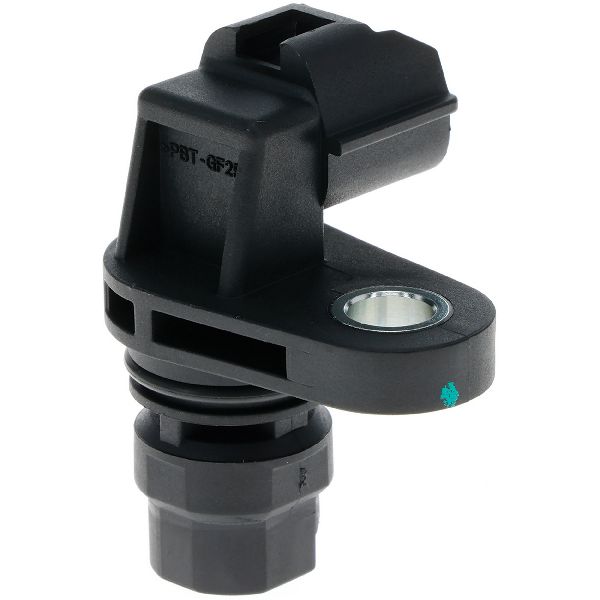
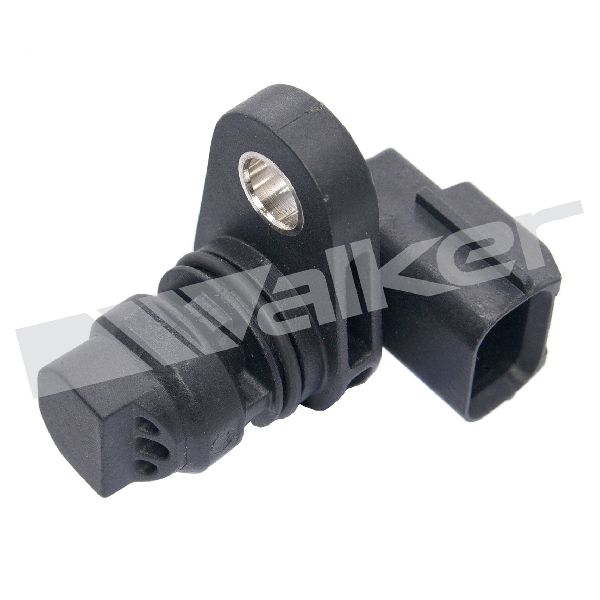
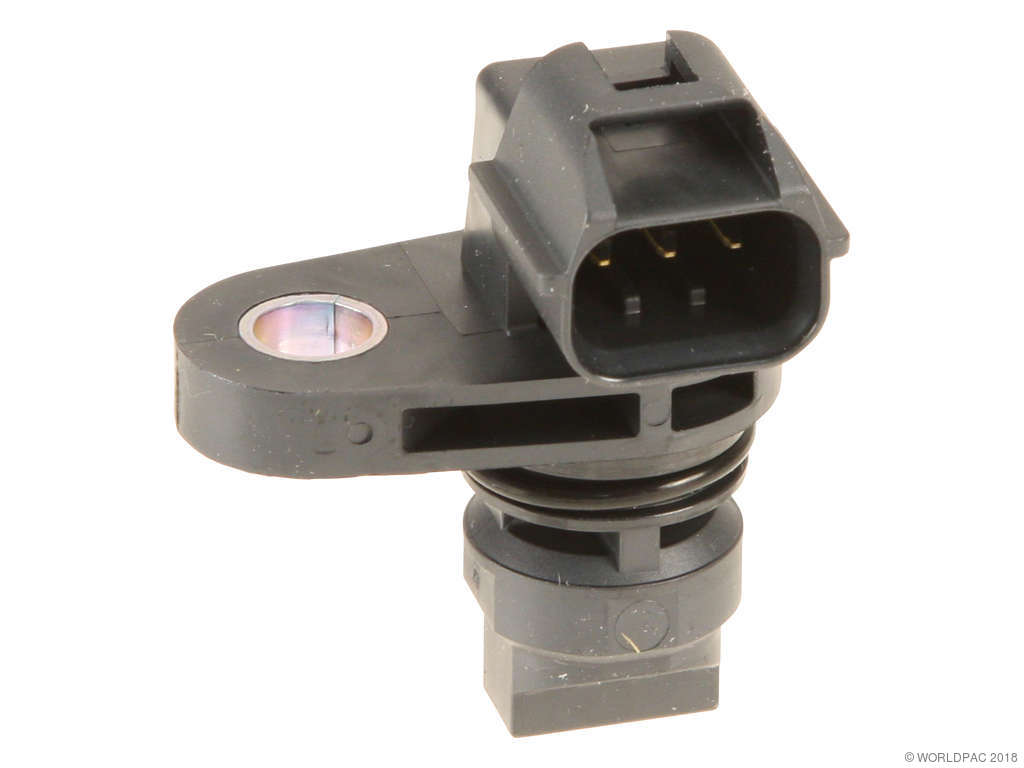
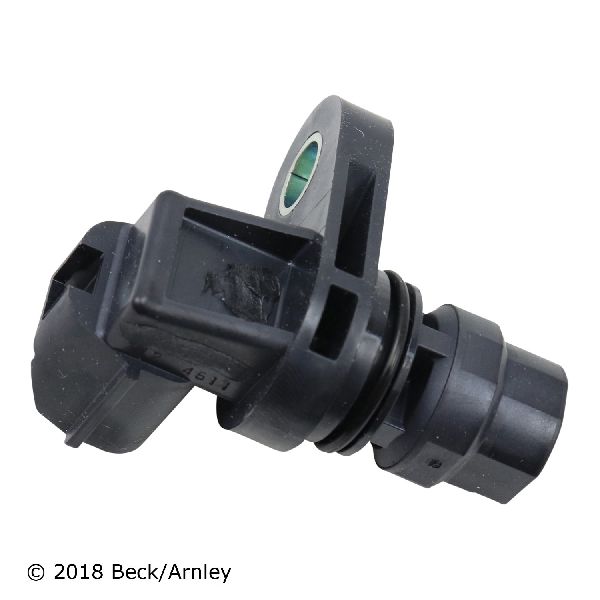
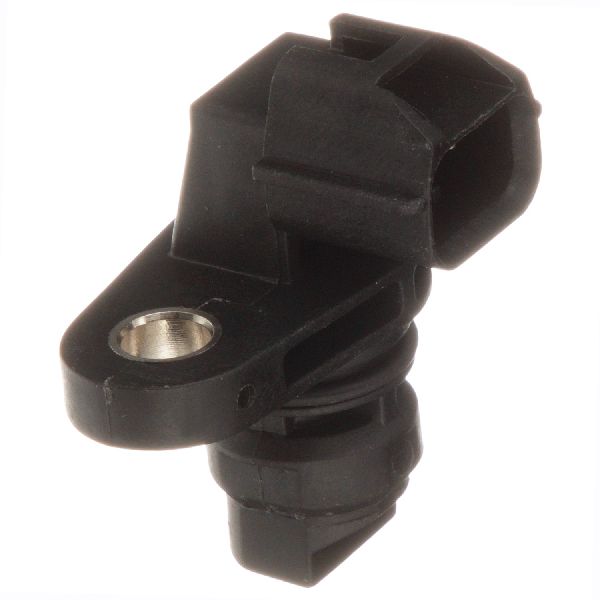
- Failing Intake Camshaft Position (CMP) Sensor: → Shop Engine Camshaft Position Sensor The sensor itself could be sending an incorrect reading, making the PCM believe the timing is over-advanced when it is not. This is less common than a mechanical or motor failure but is a possible cause.
- Failing VVT Relay: The Mazda diagnostic flowchart includes checking the electric VVT relay. A faulty relay could cause erratic or no power supply to the VVT motor, preventing it from adjusting timing correctly.
- Warped Valve Cover: → Shop Engine Valve Cover In a documented case on a similar Mazda engine, a warped plastic valve cover caused the camshaft position sensor to be physically misaligned, leading to incorrect readings and persistent P0011/P0016 codes after all other components were replaced. The fix was a new valve cover.
Diagnosis Steps
- Check Engine Oil: Verify the oil level is full and the oil is clean. If the oil is old, low, or the wrong viscosity, perform an oil change with 0W-20 full synthetic oil and a new filter. Clear the code and drive to see if it returns. This is the most critical first step.
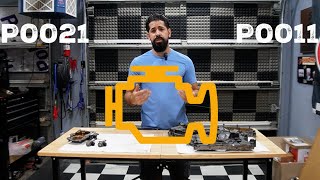
- Scan for Codes: Use an OBD-II scanner to confirm P0011 and check for 🎬 Watch: A guide on how to fix P0011 and P0021 codes any other related codes, such as P0010 (circuit malfunction) or P0340 (cam sensor circuit). Freeze frame data can show the engine conditions when the code was set.
- Inspect Wiring: Visually inspect the connector and wiring going to the electric VVT motor on the front of the engine for any signs of damage, corrosion, or loose connections. Also, locate and inspect the VVT relay in the fuse box.
- Monitor Live Data: Use a scan tool that can read live data. Compare the 'Target Intake Cam Timing' (VT IN_DES) with the 'Actual Intake Cam Timing' (VT IN_ACT). If there is a large discrepancy, the actual value is stuck, or it doesn't respond to changes in RPM, it confirms a fault in the VVT system.
- Test the VVT Motor Circuit: Following the factory service manual, test for power and ground at the VVT motor connector. Test the VVT relay for proper function. This will isolate whether the issue is with the motor itself or its power supply.
- Inspect Mechanical Actuator: If electrical checks pass, the issue may be mechanical. This involves removing the VVT motor and manually checking if the actuator on the camshaft rotates smoothly. Any binding or roughness indicates a faulty phaser.
- Inspect Timing Chain: If all else fails, a physical inspection of the timing chain for stretching or damage is necessary. This is an advanced step and usually requires a professional.
Parts You'll Likely Need
- Electric VVT Adjust Motor
(OEM #PE01-12-4Z0C (supersedes PE01-12-4Z0B, PE01-12-4Z0A))— This is the component that directly controls the intake cam phasing and is a common point of failure for P0011 on this engine. It is often mislabeled as a 'solenoid' by parts suppliers.
Trusted brands: Mazda (OEM)
OEM price range: $250-$600
Aftermarket price range: $120-$250 - VVT Actuator / Cam Phaser
(OEM #PE01-12-4X0B)— If the VVT motor is working correctly, the mechanical phaser itself may be stuck or damaged, often due to oil contamination. This is a more involved and expensive repair.
Trusted brands: Mazda (OEM)
OEM price range: $350-$600
Aftermarket price range: $250-$450 - Intake Camshaft Position Sensor — If the sensor is faulty, it can report incorrect timing data, leading the PCM to set a P0011 code even if the mechanical timing is correct. It's a less common cause but a critical part of the system.
Related Codes That Often Appear With This One
- P0010 — P0010 indicates a circuit malfunction for the VVT actuator. If seen with P0011, it points strongly toward an electrical problem like a bad VVT motor, relay, or wiring issue, rather than a purely mechanical one.
- P0012 — This code is for 'Timing Over-Retarded'. Seeing it intermittently with P0011 could suggest an erratic VVT motor or a system struggling to maintain the correct position, possibly due to oiling issues.
Technical Service Bulletins (TSBs) & Recalls
- 01-008/17: Addresses rough idle and codes P0015/P0524 on 2014-2018 Mazda3 due to potential oil contamination affecting timing components.
- Bulletin #01-007-15-3025A: Notes that some vehicles may experience a check engine light with DTC P0011:00 stored in memory, specifically identifying the Electric Variable Valve Timing Control System as being over-advanced.
- Bulletin #SA-033-25: States that P0011 and P0012 may be caused by a malfunction in the intake EVVT motor that prevents it from accurately regulating the intake camshaft timing.
Platform-Specific Known Issues
- While not directly for P0011, Mazda issued TSB 01-008/17 for 2014-2018 Mazda 3 models experiencing rough idle with codes P0015 (Exhaust Timing Over-Retarded) and P0524 (Low Oil Pressure). The cause was identified as potential debris in the oil system. This highlights the sensitivity of the SkyActiv timing system to oil quality and pressure, which is a relevant factor for a P0011 diagnosis.
Mechanic-Grade Diagnostic Values
- Scan Tool Live Data - VVT PIDs — expected: The PID 'VT IN_ACT' (Actual Intake Cam Position) should closely follow 'VT IN_DES' (Desired Intake Cam Position) as engine RPM is varied between idle and 3,000 RPM.. Failure: A significant and persistent lag or discrepancy between the actual and desired values indicates a system fault.
- Intake Camshaft Position (CMP) Sensor Output Voltage Waveform — expected: Using an oscilloscope at idle, the wave pattern should have a maximum value of 4.8V or more and a minimum value of 0.8V or less.. Failure: A waveform that does not meet these voltage specifications indicates a faulty CMP sensor.
- Exhaust VVT Oil Control Valve (OCV) Resistance (for reference) — expected: 6.9 - 7.9 Ohms at 68°F (20°C).. Failure: A reading outside this range indicates a failed solenoid coil. While the intake side is electric, this value for the oil-controlled exhaust side provides a baseline for general VVT component electrical testing on Mazda engines.
Scan Tool Commands That Help
- Mazda M-MDS (or equivalent like FORScan): PID Monitoring: VT IN_ACT and VT IN_DES — This is the primary diagnostic step after checking oil. It directly compares the PCM's command with the VVT system's actual response to confirm a performance fault. The test involves running the engine from idle to 3,000 RPM and back down five times to check for conformity.
Wiring & Ground Locations
- PCM Location — Left rear of the engine compartment.. The PCM is the source of the command signals (VT IN_DES) and receives the feedback (from the CMP sensor) to set code P0011. All related wiring harnesses terminate here.
- Engine Ground Points — Key grounds are typically located on the passenger side motor mount, on the transmission housing, and from the main harness to the strut tower/fender area.. Poor grounding can cause erratic sensor readings and actuator performance. A bad ground for the PCM or CMP sensor could lead to incorrect timing readings, potentially triggering a P0011 code.
Real Owner Repair Stories
- Reddit user on r/MechanicAdvice (2007 Mazda 3 (Note: Older MZR engine, but demonstrates a highly relevant edge case)) — Persistent P0011 and P0016 codes, strong and smooth idle despite scan tool showing 15-20 degrees of incorrect advance.
❌ Tried (didn't work) Replaced crank position sensor, Replaced cam position sensor (twice), Replaced VVT control solenoid, Replaced PCM, Replaced VVT sprocket (phaser), Verified mechanical engine timing multiple times, Tested wiring harness for shorts/bad connections
✅ What actually fixed it The plastic valve cover was slightly warped, causing the camshaft position sensor to be physically misaligned. The user noticed the scan tool reading got closer to 0 degrees when the sensor was unbolted and wiggled. A new valve cover was the ultimate fix.
OEM Part Supersession History
PE01-12-4Z0A, PE01-12-4Z0B→PE01-12-4Z0C— Standard part revision and improvement by the manufacturer.
Heads up: The newer part (C) replaces the older versions (A, B). When replacing, it is always best practice to use the latest available part number.
Model Year Variations Within This Range
- 2014: A specific range of 2014 Mazda 3s (VINs JM1BM**177872 to 196206) were covered under Mazda Service Bulletin 01-007/15 for P0011/P0012 caused by VVT actuator spring shaft fatigue. This suggests early production models may have been more prone to this specific mechanical failure.
Diagnostic Flowchart
Other Known Issues on This Vehicle
Issues unrelated to this code that are worth knowing about as an owner of this generation:
- Infotainment 'Ghost Touch' and System Reboots 🟠 Medium — Very common. Can occur at any mileage. A class-action lawsuit led to a warranty extension program (CSP13) for this issue on many vehicles. (Ref: Warranty Extension Program SSPB6 (for 2014-2016 Mazda 3) and TSB 09-003/22 for other models.)
- Automatic Transmission Hesitation or Rough Shifting 🟡 Low — Frequently discussed by owners. Often presents as hesitation from a stop or jerky low-speed shifts, especially when cold. Many consider it a characteristic of the Skyactiv-Drive transmission's design, which aims to blend features of DCT and traditional automatic transmissions. (Ref: Various software update TSBs exist. Dealers often state the behavior is normal.)
- Leaking/Failing Drive Belt Tensioner 🟠 Medium — A commonly cited failure point, particularly on higher mileage vehicles. The hydraulic tensioner can leak oil, leading to belt noise and eventual failure.
- Cracked Cylinder Head (2.5L) 🔴 High — A known but less frequent issue where cracks can form near the exhaust manifold, causing coolant leaks. This was addressed by TSB 01-013/19. (Ref: TSB 01-013/19)
- Parking Brake Caliper Corrosion 🟠 Medium — Affects 2014-2016 models, especially in salt-belt regions. Water can enter the caliper, causing the parking brake actuator to corrode and bind. (Ref: Recall 1217F.)
Used vs. New Parts: Buying Guide for This Vehicle
When a used part is the smart pick: For this specific repair, using used parts is generally not recommended for the key electronic and mechanical components. The VVT motor and actuator are wear items, and a used part may have limited remaining life or the same fault you are trying to fix.
Donor-vehicle mileage cap: roughly under 50000 miles for the part to have meaningful remaining life.
What to inspect on the donor part:
- If considering a used VVT motor or actuator, source it from a vehicle with the lowest possible mileage.
- Check for service records of the donor vehicle to see if oil changes were performed regularly with the correct oil.
- Avoid parts from vehicles that show signs of engine sludge or have been in a major front-end collision.
OEM-only on this vehicle (don't cheap out):
- Electric VVT Adjust Motor
- VVT Actuator / Cam Phaser
- Camshaft Position Sensor
Brands owners have reported issues with on this vehicle:
- While brands like Dorman offer replacements, forum and mechanic consensus generally advises sticking with OEM Mazda parts for critical timing components like the VVT motor and phaser to ensure compatibility and longevity. Aftermarket electronics can be a gamble.
Real Owner Stories
Aggregated from forums and TSBs cited above. Mileages and costs reflect what owners reported in those sources.
2007 Mazda 3
Symptoms: The owner experienced P0011 and P0016 codes and went through a long diagnostic journey replacing multiple parts.
What fixed it: The cause was discovered to be a warped valve cover that was misaligning the camshaft sensor.
Source hint: Reddit r/MechanicAdvice - Thread '07 Mazda 3 - Found the cause for the P0016 and P0011 codes'
2010 Mazda 3
Symptoms: Severe vibration at a stop, which began immediately after a fuel fill-up.
What fixed it: The community recommended starting with an oil and filter change due to the system's sensitivity to oil condition.
Source hint: Reddit r/MechanicAdvice - Thread '2010 Mazda 3 P0011 Code'
2014 Mazda CX-5 2.5L
Symptoms: Intermittent Check Engine Light (CEL) and engine overheating issues.
What fixed it: The report highlights the complexity of diagnosing timing codes (P0011a) alongside cooling system issues on this platform.
Source hint: Mazdas247 Forums - 'P0011a code'
Related OBD-II Codes
Frequently Asked Questions
Does TSB 01-008/17 apply to my 2014-2018 Mazda 3 if I have a P0011 code?
What oil viscosity should I use in my SkyActiv-G engine to prevent P0011?
Can a faulty VVT motor cause my Mazda 3 to stall at stoplights?
Is there a specific part number for the electric VVT motor used in the 2.0L and 2.5L engines?
How can I tell if the issue is the electric motor or the mechanical cam phaser?
Does the 2014-2018 Mazda 6 or CX-5 suffer from this same P0011 issue?
Helpful Videos
We Have This Part in Stock


The information in this article is provided for general reference and educational purposes only. Vehicle specifications, procedures, and part compatibility can vary by production date, trim level, and region. Always consult your vehicle's factory service manual and verify part numbers before purchasing or performing repairs. Safety-critical components such as airbags, seat belts, and braking systems should be installed by a qualified professional.
- Mazda 3:
- 🧭 Diagnostic Flowchart
- 🎬 Helpful Videos
- 🛍️ Shop This Part
- What's Unique About the 2014-2018 Mazda 3
- Symptoms You May Notice
- Most Likely Causes
- Rare But Worth Checking
- Diagnosis Steps
- Parts You'll Likely Need
- Related Codes That Often Appear With This One
- Technical Service Bulletins (TSBs) & Recalls
- Platform-Specific Known Issues
- Mechanic-Grade Diagnostic Values
- Scan Tool Commands That Help
- Wiring & Ground Locations
- Real Owner Repair Stories
- OEM Part Supersession History
- Model Year Variations Within This Range
- Other Known Issues on This Vehicle
- Used vs. New Parts: Buying Guide for This Vehicle
- Real Owner Stories
- 2007 Mazda 3
- 2010 Mazda 3
- 2014 Mazda CX-5 2.5L
- Related OBD-II Codes
- Frequently Asked Questions
- 🎟️ Get 5% Off