

P0012 on 2004-2011 Audi A6 3.2L FSI: Causes for Over-Retarded Camshaft Timing
On the Audi A6 3.2L FSI, code P0012 is most often caused by failing timing chain tensioners, identifiable by a rattling noise on startup. Less severe causes include low/dirty oil or a faulty camshaft adjuster solenoid (N205 valve). A tensioner fix is a complex, expensive, engine-out repair in most cases, while a solenoid is a manageable DIY.
- A rattling noise on startup is the most critical symptom. If you hear it, assume the timing chain tensioners are failing and seek professional diagnosis immediately to avoid engine damage.
- Always start diagnosis by checking the engine oil level and condition. A simple oil change can sometimes resolve the issue if it's caught early.
- The camshaft adjuster solenoid is a likely culprit if there is no startup rattle. It is relatively inexpensive and easy to replace or swap for diagnosis.
- Do not use cheap, unbranded timing chain tensioners. Forum and video evidence shows these often fail to hold pressure correctly, which can lead to immediate chain slip upon installation.
- While replacing the upper tensioners is a difficult DIY, it is possible. However, any work on the lower chains or guides requires engine removal and is a massive, costly job.
What's Unique About the 2004-2011 Audi A6
The 3.2L FSI V6 engine (engine codes AUK, BKH) in the C6 generation A6 is notorious for premature failure of its upper timing chain tensioners. A plastic guide on the tensioner often wears out or breaks, causing chain slack, which directly leads to the over-retarded timing that triggers P0012. While oil issues or a bad solenoid can cause this code, a distinct 1-3 second rattling noise from the rear of the engine on cold starts almost certainly points to the well-documented tensioner issue. This is a significantly more involved and expensive repair than on many other vehicles because the timing components are located on the rear of the engine, requiring transmission removal for a full service.
Symptoms You May Notice
- Check Engine Light is on
- Rattling noise from the rear of the engine for 1-3 seconds on cold starts
- Rough or unstable idle
- Poor acceleration and loss of power
- Engine hesitation or sluggish performance
- Reduced fuel economy
- Engine stalling, especially when coming to a stop
- Replacing the camshaft position sensor when the actual fault is with the camshaft adjuster solenoid (VVT solenoid).
- Replacing only the camshaft adjuster solenoid when the root cause is failing timing chain tensioners causing a persistent mechanical timing issue. The solenoid swap test is key to avoiding this.
- Assuming a cheap, non-OEM timing kit will fix the problem. There are reports of aftermarket kits being defective out of the box, leading to the code returning immediately after a costly repair.
Most Likely Causes
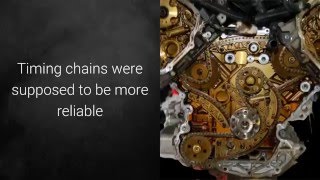
- Failing Upper Timing Chain Tensioners 🔴 High Probability → Shop Engine Timing Chain The original plastic guides on the upper tensioners are a known weak point on the 3.2L FSI engine. They become brittle and break apart, leading to chain slack. Audi released updated parts to address this. The issue is so common that a Technical Service Bulletin (TSB 2039995/1) was issued. 🎬 Watch: Overview of common 3.2L timing chain failure points
How to confirm: Listen for a distinct rattling or clicking noise from the upper rear of the engine for a few seconds after a cold start. As the failure progresses, the noise may persist at idle. A professional diagnosis involves removing the valve covers to inspect the tensioner guides for visible damage. Using a VCDS scan tool, check Measuring Block 93; if the sum of the Bank 1 and Bank 2 values exceeds 7-8 degrees, it indicates significant timing deviation, likely from worn timing components.
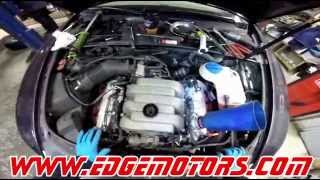
Typical fix: Replace the upper timing chain tensioners for Bank 1 and Bank 2. While it is technically possible to replace the upper tensioners without removing the engine, it is an extremely labor-intensive job. 🎬 See this DIY walkthrough for replacing upper tensioners A full timing service (chains, guides, tensioners) requires removing the engine and transmission. It is critical to use the updated OEM tensioners. Part numbers for the improved tensioners are 06E109217AH (Bank 2) and 06E109218AJ (Bank 1).
Est. part cost: $500-$800 for a pair of OEM updated upper tensioners and associated gaskets. - Low, Dirty, or Incorrect Engine Oil 🟡 Medium Probability The camshaft adjustment system is hydraulic and relies on clean oil at the correct pressure to function. The 3.2L FSI is sensitive to oil quality. Long oil change intervals or using oil that does not meet the VW 502 00 specification can lead to sludge and clog the small passages in the adjuster solenoids and tensioners.
How to confirm: Check the engine oil level via the dipstick and MMI system. Inspect the oil's condition. If it is dark, thick, or below the minimum level, this could be the cause. An oil pressure test can also be performed to ensure the system is within spec.
Typical fix: Perform an oil and filter change using a high-quality, manufacturer-approved synthetic oil (VW 502 00 spec). Consider using an engine flush product like Liqui Moly before the oil change to help clear deposits. Clear codes and see if P0012 returns.
Est. part cost: $80-$150 for oil and filter. - Faulty Camshaft Adjuster Solenoid (VVT Solenoid / N205 Valve) 🟡 Medium Probability → Shop Engine Camshaft
How to confirm: Swap the Bank 1 intake solenoid with the Bank 1 exhaust solenoid. Clear the codes and drive the vehicle. If the code changes to P0015 (Exhaust Camshaft Over-Retarded), the solenoid is confirmed to be faulty. You can also test the solenoid by applying 9-12V to its pins to see if it actuates. Resistance should be between 5.0 and 8.0 ohms.
Typical fix: Replace the faulty camshaft adjuster solenoid. The 3.2L engine has four solenoids, two per bank (intake and exhaust), located on the front of the engine. They are held in by a single Torx screw and are relatively easy to access and replace. It's also wise to replace the O-ring seal at the same time to prevent oil leaks.
Est. part cost: $40-$100 for one aftermarket solenoid, $120-$180 for an OEM part (e.g., Bosch).
Rare But Worth Checking
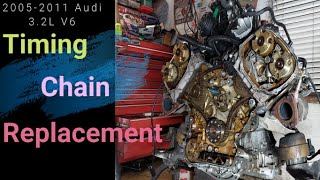
- Stretched Timing Chain: → Shop Engine Timing Chain While the chains themselves can stretch, it's almost always a secondary effect of long-term operation with failed tensioners. If the tensioners are being replaced in an engine-out service, the chains should always be replaced as well. 🎬 Watch: Full timing chain and guide replacement with torque specs
- Faulty Camshaft Position Sensor (G40): → Shop Engine Camshaft Position Sensor This sensor tells the ECU the camshaft's position. While it can fail, it is far less common for this code than the adjuster solenoid or mechanical timing components. A failure here would likely also trigger a sensor-specific code like P0341.
- Clogged Oil Control Valve Filter Screen: → Shop Engine Variable Valve Timing (VVT) Solenoid There are small filter screens in the oil passages leading to the camshaft adjusters. Debris from failing tensioner guides or oil sludge can clog these screens, restricting oil flow and causing timing deviation codes. They are difficult to access and are typically cleaned or replaced during a major timing service.
- Failed Oil Pressure Regulating Valve (N428): This solenoid, located on the lower engine block, switches the engine between high and low oil pressure modes. If it fails in the low-pressure state, it can starve the hydraulic camshaft adjusters of the pressure needed to advance timing, potentially triggering P0012, especially under load. A failure of this valve may also trigger code P164E.
Diagnosis Steps
- Check Engine Oil: Verify the oil level is correct and the oil is clean and of the proper VW 502 00 specification. If low or dirty, perform an oil and filter change, clear the codes, and see if P0012 returns.
- Listen for Noise: On a cold start, listen carefully to the back of the engine for a rattling sound lasting 1-3 seconds. The absence of noise doesn't rule out tensioners, but its presence makes them the prime suspect.
- Scan for Other Codes: Use an OBD-II scanner to check for any other related codes that could provide more clues (e.g., P0011, P0341, P0022).
- Test the Camshaft Adjuster Solenoid (N205): Locate the intake solenoid on Bank 1 (passenger side). Swap it with the exhaust solenoid on the same bank. Clear codes and drive. If the code changes to P0015, the solenoid is faulty and needs replacement.
- Inspect Wiring: Check the wiring and connector for the Bank 1 intake camshaft adjuster solenoid and the camshaft position sensor for any damage, corrosion, or oil contamination.
- Professional Inspection of Timing Components: If the steps above do not resolve the issue, especially if a startup rattle is present, the vehicle must be taken to a qualified mechanic. They can use a scan tool to check timing deviation values (cam phase) and will likely need to remove the valve covers to visually inspect the timing chain tensioners and guides for wear or breakage.
Parts You'll Likely Need
- Upper Timing Chain Tensioner Kit
(OEM #06E109217AH (Bank 2), 06E109218AJ (Bank 1))— This is the most probable cause of P0012 on the 3.2L FSI, especially if accompanied by a startup rattle. The plastic guides on the original parts fail, causing chain slack.
Trusted brands: Audi (Genuine), INA
OEM price range: $250-$400 per side
Aftermarket price range: $150-$250 per side - Camshaft Adjuster Solenoid / VVT Solenoid
(OEM #06E109257P)— This solenoid controls oil flow to the camshaft adjuster. It can become clogged with dirty oil or fail electrically, causing incorrect timing.
Trusted brands: Bosch, Pierburg, Vaico
OEM price range: $120-$180
Aftermarket price range: $40-$100 - Valve Cover Gasket Kit
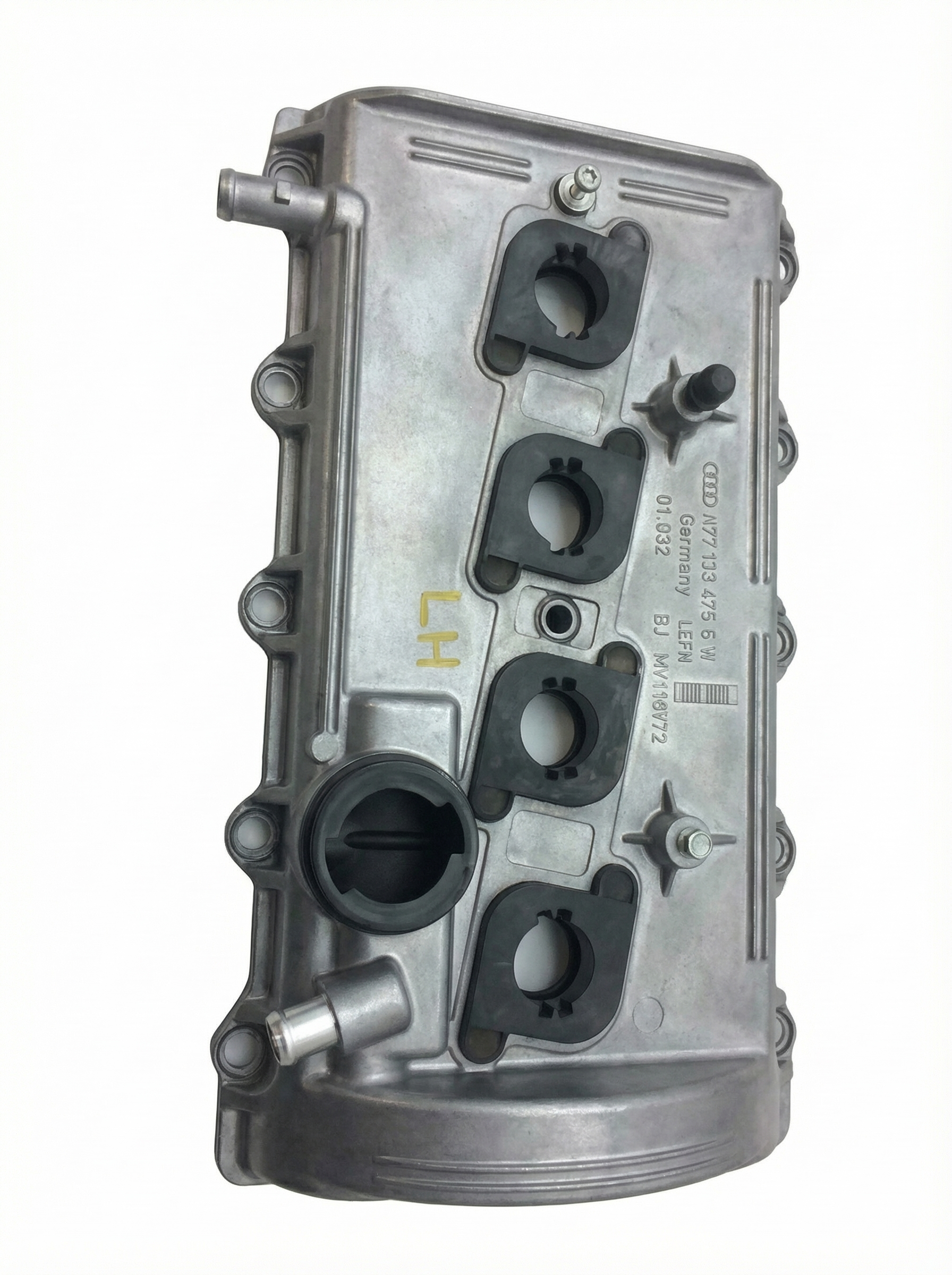
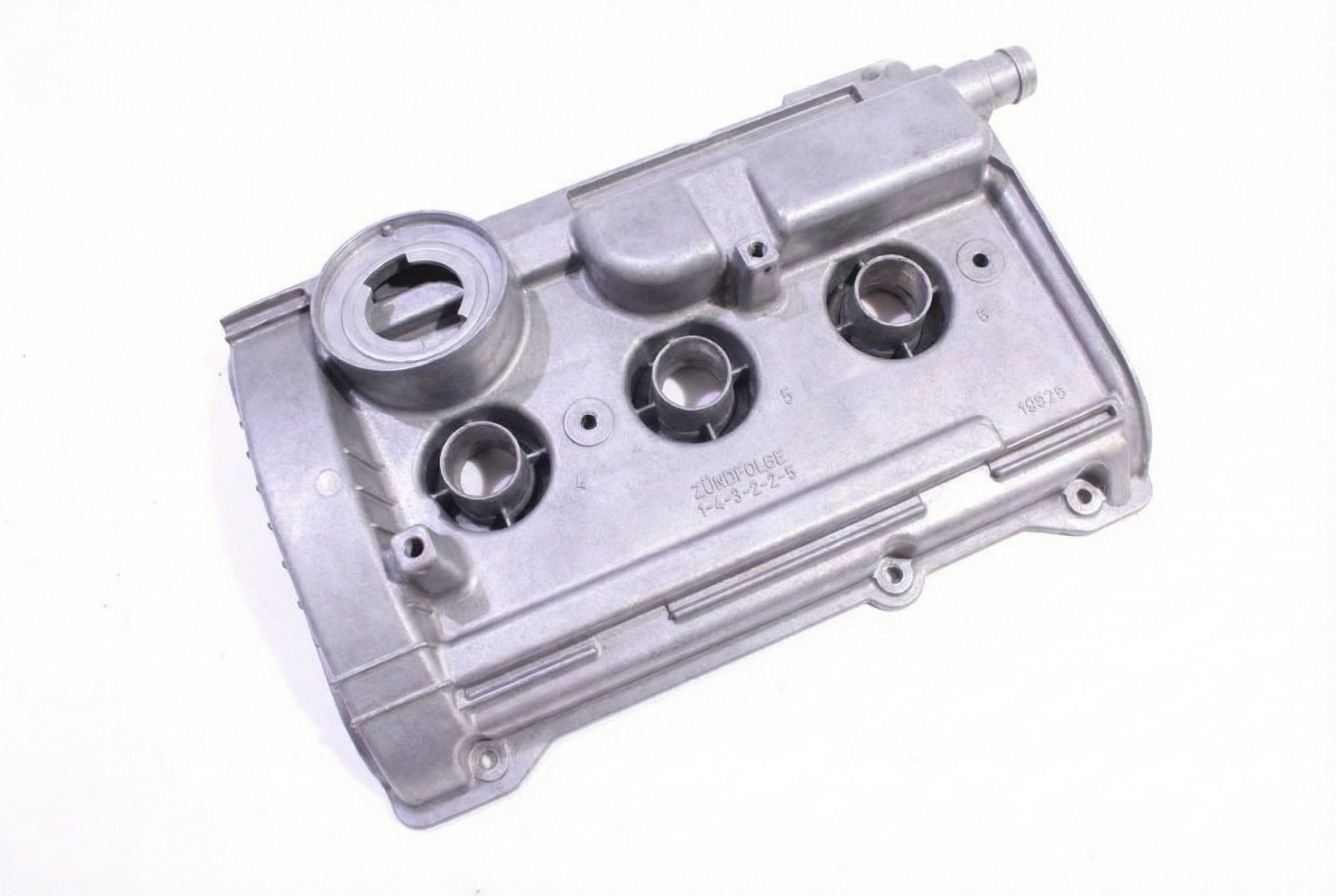
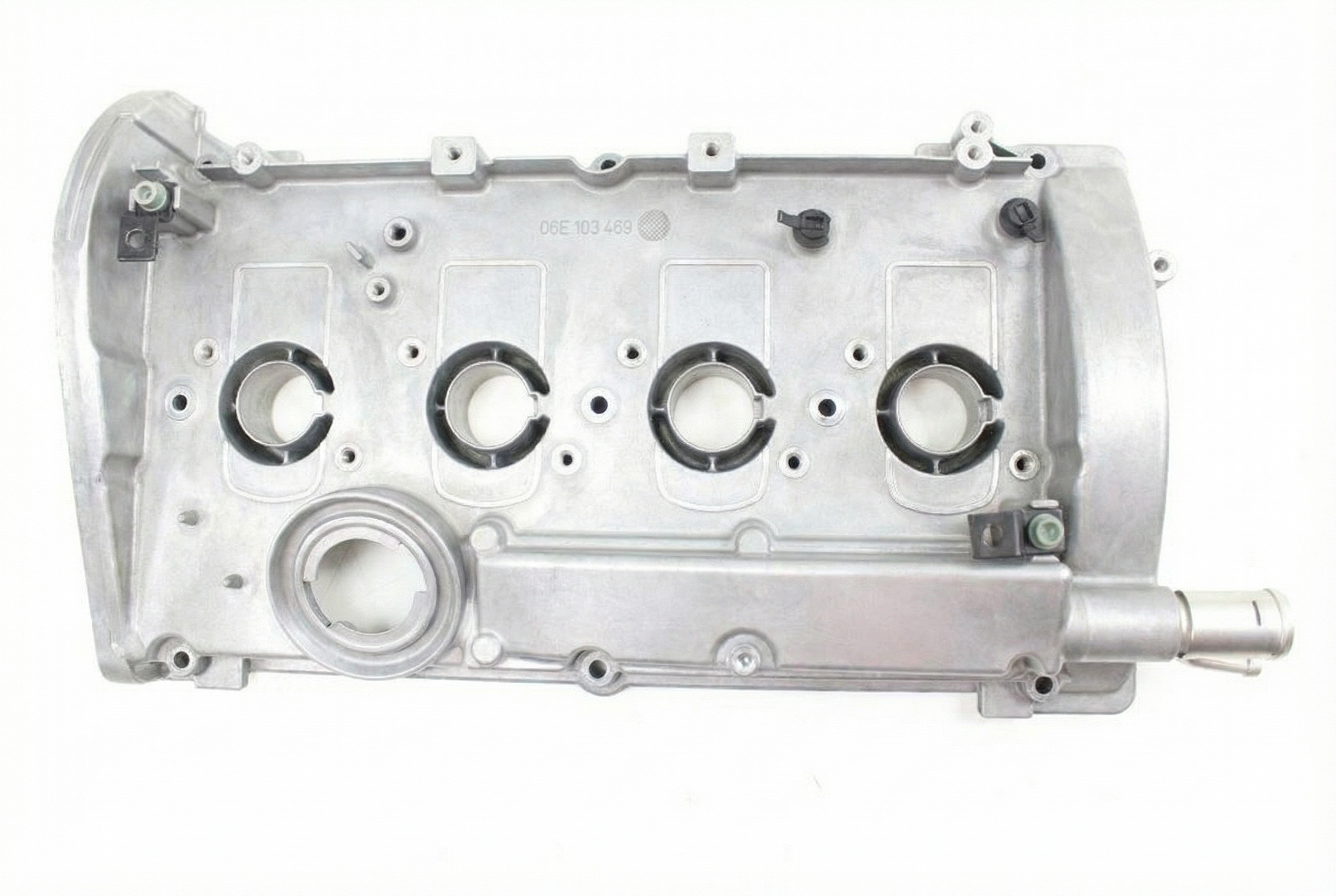
(OEM #06E103483G)— Required for inspecting or replacing the upper timing chain tensioners. The kit should include the main gasket, spark plug tube seals, and other small seals.
Trusted brands: Victor Reinz, Elring
OEM price range: $80-$120
Aftermarket price range: $40-$70
Related Codes That Often Appear With This One
- P0011 — 'A' Camshaft Position - Timing Over-Advanced (Bank 1). This can occur if the adjuster solenoid is sticking or intermittently failing, causing both over-advanced and over-retarded conditions at different times.
- P0341 — Camshaft Position Sensor 'A' Circuit Range/Performance (Bank 1). This code can accompany P0012 if the timing deviation is so severe that the sensor's reading is considered implausible by the ECU.
- P0022 — 'A' Camshaft Position - Timing Over-Retarded (Bank 2). If both banks show the same code, it points more strongly towards a systemic issue like low oil pressure or widespread timing component wear affecting both sides.
Technical Service Bulletins (TSBs) & Recalls
- { "number": "TSB 2039995/1 (15-15-26)", "description": "Addresses rattling noises from the timing chain drive for 1-3 seconds after a cold start. It confirms the cause is one of the upper chain tensioners and provides part numbers for the improved replacements (06E109217AH and 06E109218AJ). It explicitly states the noise does not lead to damage, though this is debated by owners who have experienced failures." }
Platform-Specific Known Issues
- The 3.2L FSI engines (AUK, BKH) are known for a critical design flaw in the upper timing chain tensioners where the plastic guide pads wear out prematurely, causing chain slack and the P0012 code. This is often first noticed as a 1-3 second rattle on cold starts.
Mechanic-Grade Diagnostic Values
- Camshaft Adaptation Phase Position (VCDS Measuring Block 93) — expected: The sum of Bank 1 and Bank 2 values should be less than 7 degrees.. Failure: A combined value exceeding 7-8 degrees indicates excessive timing chain stretch or tensioner failure, requiring mechanical inspection.
- Camshaft Adjuster Solenoid (N205) Internal Resistance — expected: 5.0 to 8.0 Ohms at approximately 20°C (68°F).. Failure: A reading outside this range indicates a faulty solenoid that needs replacement.
- Engine Oil Pressure (AUK/BKH engines) — expected: The oil pressure switch operates between 1.2 and 1.6 bar (17-23 PSI).. Failure: While a specific idle/RPM pressure spec is hard to find, pressure consistently below this range, especially when hot, points to a problem with the oil pump, pressure regulating valve, or excessive internal wear.
Scan Tool Commands That Help
- VCDS (VAG-COM): Basic Settings - Group 094 - Camshaft Adjustment (Intake) — This function can be used to command the system to perform a self-test of the camshaft adjustment. It can help determine if the system is capable of functioning correctly when commanded directly, which can help differentiate between a sticky solenoid and a persistent mechanical fault.
- VCDS (VAG-COM): Output Test Mode (DTM) - Function 03 — This allows a technician to individually activate the N205 and N208 camshaft adjustment valves. The valves should produce an audible click when activated. A lack of a click points to a failed solenoid or a wiring issue.
Wiring & Ground Locations
- N205 Solenoid Connector — On the front of the engine, mounted to the upper timing covers. Bank 1 (passenger side) has two solenoids; the intake solenoid (N205) is one of them.. This is the primary connector to check for voltage, ground, and resistance when diagnosing the camshaft adjuster solenoid. Pin 1 should receive 12V with ignition on (from relay J271), and Pin 2 is ground-switched by the ECM.
- Engine Ground Strap — While specific diagrams are elusive, a primary engine-to-chassis ground strap is typically located on the driver's side frame rail, connecting the engine block or transmission to the chassis. Inspect for corrosion or looseness.. A poor engine ground can cause a host of electrical issues, including erratic sensor readings and incorrect solenoid operation, potentially contributing to timing codes.
Real Owner Repair Stories
- AudiWorld Forums User (2001 Audi A4 1.8T (Note: Different engine, but illustrates a key point about part quality)) — Loud rattling noise between 2000-2800 RPM, CEL with code P0012.
❌ Tried (didn't work) Initial diagnosis pointed to the Cam Chain Tensioner (CCT).
✅ What actually fixed it The user first replaced the CCT with a cheap aftermarket 'Bapmic' brand part, which failed in less than 100 miles. The P0012 code returned immediately. The final fix was to reinstall the old, working Genuine Audi CCT with new pads. This highlights the critical importance of using high-quality OEM or OEM-supplier parts for timing components.
OEM Part Supersession History
06E109218AJ (Bank 1 Tensioner)→06E109218AP— Improved design to address premature wear of the plastic guide pads.
Heads up: The newer part number (AP) is a direct replacement for the older AJ and AC revisions and should be used for all repairs.06E109217AH (Bank 2 Tensioner)→06E109217AM— Improved design to address premature wear of the plastic guide pads.
Heads up: The newer part number (AM) is a direct replacement for the older AH and AD revisions and should be used for all repairs.
Diagnostic Flowchart
Other Known Issues on This Vehicle
Issues unrelated to this code that are worth knowing about as an owner of this generation:
- Carbon Buildup on Intake Valves 🔴 High — Considered inevitable on FSI (direct injection) engines. Typically requires cleaning every 60,000-80,000 miles. Symptoms include rough idle, misfires, and loss of power.
- Thermostat Failure 🟠 Medium — Common failure item. Can fail stuck open (engine won't reach operating temperature) or stuck closed (engine overheats). Replacement is moderately difficult as it is located under the intake manifold/supercharger on some models.
- High-Pressure Fuel Pump (HPFP) Failure 🟠 Medium — The HPFP can fail, leading to fuel starvation issues like hesitation, stalling, and difficulty starting. Often preceded by fault codes related to low fuel rail pressure.
- Intake Manifold Runner Flap Motor Failure 🟡 Low → Shop Engine Intake Manifold — The motor or linkages for the intake manifold runner control flaps can fail, causing a rough idle, especially when cold, and a loss of low-end torque.
Used vs. New Parts: Buying Guide for This Vehicle
When a used part is the smart pick: For this specific repair, using used parts is generally not recommended, especially for wear items. The only potential exception might be external components like a camshaft position sensor or a solenoid if it can be tested before purchase. Structural engine components like valve covers or timing covers are also acceptable if they are not damaged.
Donor-vehicle mileage cap: roughly under 50000 miles for the part to have meaningful remaining life.
What to inspect on the donor part:
- For a solenoid, check for physical damage and test resistance with a multimeter if possible.
- Avoid any parts from an engine that shows signs of heavy oil sludge or coolant contamination.
- Never buy used timing chains, tensioners, or guides. The risk of premature failure is extremely high.
OEM-only on this vehicle (don't cheap out):
- Timing Chain Tensioners
- Timing Chains
- Timing Chain Guides
Aftermarket brands forum-validated for this vehicle:
- INA (Often the OEM supplier for tensioners and guides)
- IWIS (OEM supplier for timing chains)
- Bosch (OEM supplier for solenoids and sensors)
- Pierburg (Good quality for solenoids)
Brands owners have reported issues with on this vehicle:
- Unnamed or generic 'white-box' timing chain kits from online marketplaces. Forum reports indicate a high rate of immediate or premature failure.
Real Owner Stories
Aggregated from forums and TSBs cited above. Mileages and costs reflect what owners reported in those sources.
2006 Audi A6 3.2L FSI
Symptoms: Rattling noise from the timing chain drive for 1-3 seconds after a cold start.
What fixed it: Replacement of the upper chain tensioners with updated parts (06E109217AH and 06E109218AJ).
Source hint: TSB 2039995/1 (15-15-26)
2005 Audi A6 (C6) 3.2L FSI
Symptoms: Timing codes and rattling noise from the upper rear of the engine; confirmed brittle plastic guides on the upper tensioners had broken apart.
What fixed it: Replacement of the upper timing chain tensioners; noted that while difficult, it was performed without removing the engine.
Source hint: AudiWorld Forums
2007 Audi A6 3.2L FSI
Symptoms: Slack on startup and P0012 code; noted that oil drains out of the tensioner due to its orientation.
What fixed it: Replacement of the driver's side tensioner.
Source hint: quattroworld.com
2009 Audi Q5 3.2L FSI (CALB) — ~100000 miles
Symptoms: Timing chain guide and tensioner failure; discussion of the inevitability of the issue on the 3.2L engine.
What fixed it: Pre-emptive replacement of the upper guides without engine removal.
Source hint: AudiWorld Forums thread from 2021
Related OBD-II Codes
Frequently Asked Questions
My 2006 Audi A6 3.2L makes a rattling sound for about two seconds when I first start it in the morning. Is there a TSB for this?
What are the specific part numbers for the updated tensioners I should use for my AUK/BKH engine?
Can the upper timing chain tensioners be replaced without pulling the engine out of my A6?
How can I use VCDS to check if my timing chains are stretched or the guides are worn?
Does the P0012 code on this Audi always mean the timing chains are failing?
Is the driver's side tensioner more prone to failure than the passenger side?
Helpful Videos
Used OEM Parts in Stock
New Aftermarket Parts Available


The information in this article is provided for general reference and educational purposes only. Vehicle specifications, procedures, and part compatibility can vary by production date, trim level, and region. Always consult your vehicle's factory service manual and verify part numbers before purchasing or performing repairs. Safety-critical components such as airbags, seat belts, and braking systems should be installed by a qualified professional.
- Audi A6:
- 🧭 Diagnostic Flowchart
- 🎬 Helpful Videos
- 🛍️ Shop This Part
- What's Unique About the 2004-2011 Audi A6
- Symptoms You May Notice
- Most Likely Causes
- Rare But Worth Checking
- Diagnosis Steps
- Parts You'll Likely Need
- Related Codes That Often Appear With This One
- Technical Service Bulletins (TSBs) & Recalls
- Platform-Specific Known Issues
- Mechanic-Grade Diagnostic Values
- Scan Tool Commands That Help
- Wiring & Ground Locations
- Real Owner Repair Stories
- OEM Part Supersession History
- Other Known Issues on This Vehicle
- Used vs. New Parts: Buying Guide for This Vehicle
- Real Owner Stories
- 2006 Audi A6 3.2L FSI
- 2005 Audi A6 (C6) 3.2L FSI
- 2007 Audi A6 3.2L FSI
- 2009 Audi Q5 3.2L FSI (CALB) — ~100000 miles
- Related OBD-II Codes
- Frequently Asked Questions
- 🎟️ Get 5% Off