

P0012 on 2011-2016 Hyundai Elantra 1.8L: Causes and Fixes for Over-Retarded Camshaft Timing
On a 2011-2016 Elantra 1.8L, code P0012 is almost always caused by low/dirty engine oil or a failing intake Oil Control Valve (OCV). Always check your oil first. Replacing the OCV is a common DIY fix costing between $40 and $90 for the part. Using non-OEM oil filters has also been linked to this code.
- First, check your engine oil. Low or dirty 5W-20 oil is the number one cause of P0012 on this Elantra.
- The most likely failed part is the intake Oil Control Valve (OCV), part number 24355-2E100. It's affordable and easy to replace.
- A simple, no-cost diagnostic step is to swap the identical intake and exhaust OCVs to see if the trouble code moves to the exhaust side (P0015).
- Do not immediately suspect the Camshaft Position Sensor; it is rarely the cause of this code.
- If an oil change and new OCV don't fix the problem, the issue may be a clogged OCV filter screen or a more serious timing chain problem.
What's Unique About the 2011-2016 Hyundai Elantra
The 1.8L Nu engine in this generation of Elantra uses a Dual-CVVT system that is highly dependent on oil pressure and cleanliness to function correctly. These engines are known for potential oil consumption and piston slap issues, which were the subject of a class-action lawsuit (Brown v. Hyundai Motor America). This can lead to low oil levels or sludgy oil that directly starves the CVVT system and triggers timing codes like P0012. Therefore, unlike on some other vehicles where this code might point to a more complex issue, on this Elantra, the root cause is very frequently related to basic oil maintenance or the direct failure of the OCV due to contamination.
Symptoms You May Notice
- Check Engine Light is on
- Rough, shaky idle
- Engine stalling, especially when coming to a stop
- Poor acceleration and loss of power
- Decreased fuel economy
- Rattling or ticking noise from the engine, especially on startup
- Engine hesitation during acceleration
- Hard starting
- Replacing the Camshaft Position Sensor (CMP). The CMP sensor reads the camshaft's position, but it rarely fails in a way that causes a timing correlation code like P0012. The problem is almost always with the oil-driven mechanical/hydraulic parts that actually control the timing. A faulty CMP sensor would more likely trigger codes like P0340.
Most Likely Causes
- Low or Dirty Engine Oil 🔴 High Probability The CVVT system is hydraulic and extremely sensitive to oil level, viscosity, and cleanliness. The 1.8L Nu engine has documented issues with oil consumption and sludge buildup, which can lead to low oil levels that starve the CVVT system of the pressure it needs to operate. A class-action lawsuit highlighted these issues.
How to confirm: Check the engine oil dipstick. If the level is below the 'L' mark or the oil appears very dark, thick, or sludgy, this is the most likely cause. Keep records of oil changes, as dealers may require them for warranty claims related to engine issues.
Typical fix: Perform an oil and filter change using the manufacturer-recommended 5W-20 synthetic oil and an OEM filter. If the oil was very low, top it off and monitor for consumption.
Est. part cost: $30-$60 - Failing Intake Oil Control Valve (OCV) / VVT Solenoid 🔴 High Probability → Shop Engine Variable Valve Timing (VVT) Solenoid The OCV is an electromechanical part that constantly works while the engine is running. It can become clogged with sludge from dirty oil or simply fail electrically over time, a common failure on this platform.
How to confirm: After verifying the oil is clean and full, the easiest test is to swap the intake and exhaust OCVs (they are identical parts on this engine). Clear the codes and drive. If the code returns as P0015 (Exhaust Camshaft Position Timing Over-Retarded), the OCV is faulty. You can also test the solenoid's resistance with a multimeter (should be around 6.9-7.9 Ω at 68°F/20°C). 🎬 Watch: Two simple DIY methods to fix code P0012
Typical fix: Replace the intake OCV. It is located on the top of the valve cover (the front-most of the two solenoids) and is held in by a single 10mm bolt. 🎬 See this walkthrough on replacing the oil control valve solenoid
Est. part cost: $40-$90 - Clogged OCV Filter Screen 🟡 Medium Probability There is a small, thimble-shaped filter screen located in the cylinder head, often underneath or near the OCV. This screen can become clogged with sludge and debris, restricting oil flow to the OCV and CVVT phaser, even if the OCV itself is good. This is a frequently overlooked part.
How to confirm: This is difficult to confirm without removal. If a new OCV does not fix the code, inspecting this filter is the next logical step. It may be located under a plug bolt near the OCV port.
Typical fix: Remove and clean the filter screen with brake cleaner or replace it with a new one. 🎬 Watch: How to fix VVT codes for free by cleaning parts The part itself is very inexpensive but can be labor-intensive to access depending on its exact location.
Est. part cost: $5-$15 - Use of Aftermarket Oil Filter ⚪ Low Probability → Shop Engine Oil Filter Adapter Some owners have reported that using non-OEM oil filters can trigger oil pressure-related codes like P0012, even shortly after an oil change. This may be due to differences in the filter's bypass valve or flow characteristics.
How to confirm: If the code appeared shortly after an oil change where a non-OEM filter was used, this is a possible cause.
Typical fix: Replace the aftermarket oil filter with a genuine Hyundai OEM filter and perform an oil change. Clear the code and see if it returns.
Est. part cost: $10-$15 (filter only)
Rare But Worth Checking
- Stretched Timing Chain or Failed Tensioner: → Shop Engine Timing Chain If you hear a persistent rattling or chattering noise from the engine, especially on cold starts, it could indicate a stretched timing chain or failing plastic guides. This is a known, though less common, issue on the 1.8L Nu engine that can cause a no-start condition or timing correlation codes like P0016 in addition to P0012.
- Failing CVVT Cam Phaser: → Shop Engine Timing Gear The actuator gear on the end of the camshaft can fail internally, getting stuck in one position or having its internal locking pin shear off. This is usually accompanied by a rattling noise and is a complex, expensive repair. A technician confirmed that if the phaser can be rotated by hand while the cam is held, it is faulty.
Diagnosis Steps
- Check the engine oil level and condition. Top off or perform an oil and filter change if necessary, preferably with an OEM filter. This resolves the issue in a high percentage of cases.
- Scan for any other stored trouble codes. A P0010 code, for example, would point directly to an electrical issue with the OCV.
- Locate the intake and exhaust Oil Control Valves (OCVs) on top of the valve cover. They are identical parts.
- Swap the intake OCV with the exhaust OCV. They are each held by a single 10mm bolt. Clear the codes and test drive the vehicle.
- Re-scan the codes. If P0012 has disappeared and P0015 (Exhaust Camshaft Position Timing - Over-Retarded) is now present, you have confirmed the OCV is the faulty part.
- If the code remains P0012 after the swap, the problem is not the OCV. The next step is to inspect the small OCV filter screen in the cylinder head for blockages.
- If all the above steps fail to resolve the code, the issue is likely a more significant mechanical problem, such as a stretched timing chain or a faulty CVVT phaser, which requires professional diagnosis.
Parts You'll Likely Need
- Intake Oil Control Valve (VVT Solenoid)
(OEM #24355-2E100)— This solenoid is the most common part to fail. It gets clogged with dirty oil or fails electrically, preventing it from properly directing oil pressure to adjust cam timing. Note: Some sources indicate a newer part number 24355-2E200 may supersede the original, but 24355-2E100 is widely cited for this application.
Trusted brands: Hyundai (OEM), Dorman, Standard Motor Products (SMP), Denso
OEM price range: $70-$140
Aftermarket price range: $40-$90
Related Codes That Often Appear With This One
- P0011 — This is the code for 'Over-Advanced' timing on the same camshaft. Seeing both codes or having them appear intermittently can point to a sticking OCV or severe oil sludging issues causing erratic CVVT operation.
- P0010 — This code indicates an electrical circuit failure (open or short) in the intake OCV. If you see P0010 with P0012, it points directly to a failed OCV solenoid or a problem with its wiring or connector.
- P0300 — This is a 'Random/Multiple Cylinder Misfire' code. Incorrect camshaft timing disrupts the engine's combustion process, leading to an unstable idle and misfires.
- P0016 — Crankshaft Position - Camshaft Position Correlation (Bank 1 Sensor A). This code often appears when the base timing has jumped, for example, due to a stretched or skipped timing chain.
Technical Service Bulletins (TSBs) & Recalls
- TSB 21-EM-001H-1: Describes the procedure to inspect for cylinder wall scuffing and replace the short block on 2011-2016 Elantras with the 1.8L Nu engine exhibiting engine noise. This is relevant as the underlying issue causes oil contamination that leads to P0012.
- TSB 12-EM-004: Addresses a cold start rattle noise in 2011-2012 Elantras related to the CVVT assembly, recommending its replacement.
Platform-Specific Known Issues
- Hyundai issued TSB 21-EM-001H-1 regarding engine noise from piston scuffing in the 1.8L Nu engine, which can lead to oil consumption and sludge, the primary drivers of code P0012. This TSB outlines inspection and short block replacement procedures.
- A class-action lawsuit (Brown v. Hyundai) was settled, providing an extended powertrain warranty (up to 10 years/120,000 miles) for certain vehicles to cover engine damage from piston slap noise. This highlights the engine's predisposition to issues that contaminate oil and harm the CVVT system.
Mechanic-Grade Diagnostic Values
- Oil Control Valve (OCV) Solenoid Resistance — expected: 6.9 to 7.9 Ω at 20°C (68°F).. Failure: A reading outside this range, or an open/short circuit, indicates a faulty solenoid coil.
- Scan Tool: Commanded vs. Actual Camshaft Angle — expected: The 'Actual' angle should closely follow the 'Commanded' angle as engine RPM is raised from idle to 2,500 RPM.. Failure: The 'Actual' angle lags significantly behind or is stuck at a fixed value, indicating a hydraulic or mechanical fault.
- PCM Fault Trigger Condition — expected: The system should maintain the commanded cam phase.. Failure: The PCM sets DTC P0012 if the actual camshaft angle fails to match the target angle more than 10 times during a drive cycle.
Hidden / Shadow Codes Worth Checking
- Mode $06, VVT Monitor: Mode $06 data can reveal if the CVVT system is failing its self-test, even before a check engine light for P0012 is triggered. It shows raw test values for the CVVT system's performance during its last self-test cycle. (see via An advanced OBD-II scanner with Mode $06 capability or, preferably, the Hyundai GDS (Global Diagnostic System) tool.)
Scan Tool Commands That Help
- Hyundai GDS (Global Diagnostic System): CVVT Actuator Test — This bidirectional control allows a technician to command the OCV solenoid to activate while the engine is running. By observing the 'Desired' vs 'Actual' camshaft position PIDs in live data, you can confirm if the OCV is electrically responding and if the phaser is mechanically capable of moving. This isolates a faulty OCV from a stuck phaser or oil flow issue.
- Hyundai GDS (Global Diagnostic System): Resetting Adaptive Values — After replacing a CVVT component like an OCV or phaser, this function should be used to clear the old learned values from the ECM. This ensures the system adapts to the new component correctly.
- Hyundai GDS (Global Diagnostic System): Flight Record — For intermittent P0012 codes or symptoms, the Flight Record function can be activated. It continuously records engine data, and when the driver experiences the issue and presses a trigger, it saves the data from the minutes leading up to the event for later analysis.
Wiring & Ground Locations
- ECM Connector C600-MA / C600-AB — Located in the engine compartment, typically on the driver's side near the firewall or battery.. This is the main connector for the Engine Control Module. A corroded pin or loose connection here for the OCV control circuit can cause P0010 and P0012. The OCV is controlled by the ECM from these connectors.
- Ground Point GC501 / GC602 — GC501 is a common engine bay ground point, often on the chassis near the battery. GC602 is another ground point referenced in ECM pinouts.. The OCV and its related sensors share ground paths. A loose or corroded main engine ground can create a floating ground, causing erratic voltage readings and triggering timing codes.
Real Owner Repair Stories
- Reddit user on r/Hyundai (2013 Elantra GT (uses Nu engine family)) — P0017 & P0014 codes (exhaust side, but same principle), rough idle, occasional stalling, reduced power, slapping/ticking from timing area.
❌ Tried (didn't work) Initial diagnosis pointed towards common causes.
✅ What actually fixed it The root cause was a sheared internal alignment pin in the exhaust CVVT phaser. The user found a chunk of metal in the exhaust OCV, which was a piece of the pin. A Hyundai technician confirmed that any rotational play in the phaser while the camshaft is held stationary means the phaser is junk and must be replaced, which requires a full timing job. - YouTube channel proclaimliberty2000 (Vehicle with P0012 (specific model not stated but general principle applies)) — Check Engine Light and Low Oil Pressure light with code P0012.
❌ Tried (didn't work) Considered replacing VVT solenoid, phaser, or checking timing chain.
✅ What actually fixed it The problem was resolved simply by performing an engine oil and filter change. The oil was noted as being very dirty (rated 7 out of 10 on a dirtiness scale). This cleared both the P0012 code and the oil pressure warning.
"I Checked Everything" — The Actual Cause
- While not a smoke test issue, a common diagnostic dead-end occurs when the oil is clean and a new Oil Control Valve (OCV) does not fix the P0012 code. In these cases, the root cause is often a deeper mechanical failure. One confirmed instance on this engine family was a sheared internal locking pin inside the CVVT cam phaser. This failure is not detectable with basic electronic tests and requires physically checking for rotational play between the phaser gear and the camshaft itself.
OEM Part Supersession History
24355-2E100→N/A— 24355-2E100 remains the most commonly cited and correct OEM part number for the intake OCV on the 2011-2016 1.8L Nu engine.
Heads up: While other part numbers like 24355-2E200 exist for other Hyundai applications, they are not confirmed direct replacements for this specific model range. Always verify the part number with the vehicle's VIN to ensure compatibility.
Model Year Variations Within This Range
- 2014-2016: Following the 2014 model year facelift, the 1.8L Nu engine's rated output was slightly decreased from 148 hp to 145 hp. This change did not materially affect the design or common failure points of the CVVT system related to code P0012.
Diagnostic Flowchart
Other Known Issues on This Vehicle
Issues unrelated to this code that are worth knowing about as an owner of this generation:
- Engine Ticking / Piston Slap 🔴 High — Widespread issue, particularly noticeable on cold starts. This was the subject of a class-action lawsuit. (Ref: TSB 21-EM-001H-1 (Inspection/Repair), Class Action Settlement (Warranty Extension TXXK))
- Failing Steering Coupler 🟠 Medium — Extremely common. Owners report a clicking or clunking noise in the steering column when turning. The rubber coupler (Part # 56315-2K000-FFF) disintegrates over time. (Ref: null)
- Excessive Oil Consumption 🟠 Medium — Frequently reported by owners, often related to the piston/ring issues in the Nu engine. Can lead to low oil levels and trigger other codes like P0012. (Ref: Related to TSB 21-EM-001H-1 and the class action lawsuit.)
- Stretched or Jumped Timing Chain 🔴 High → Shop Engine Timing Chain — Less common than oil issues, but can occur, leading to a no-start condition and codes like P0016. Often preceded by a chattering noise. (Ref: null)
- Faulty Crankshaft Position Sensor 🟡 Low — Some owners report intermittent stalling or hesitation that is resolved by replacing the crankshaft position sensor. (Ref: null)
Used vs. New Parts: Buying Guide for This Vehicle
When a used part is the smart pick: For this specific repair, buying a used Oil Control Valve (OCV) is not recommended. These parts fail due to internal sludge and electrical wear, which are impossible to assess visually. Given the relatively low cost of a new aftermarket part, a new part is a much safer investment.
What to inspect on the donor part:
- Not applicable for OCVs, as internal condition cannot be verified.
OEM-only on this vehicle (don't cheap out):
- Engine Oil Filter: Many owners and technicians report that using non-OEM oil filters can cause oil pressure-related codes like P0012. Using a genuine Hyundai filter is a cheap and effective way to prevent issues.
- CVVT Cam Phaser: If the phaser itself requires replacement, using an OEM or a top-tier OE supplier part is critical due to the precise machining and internal mechanics required for proper function.
Aftermarket brands forum-validated for this vehicle:
- Dorman
- Standard Motor Products (SMP)
- Denso
Brands owners have reported issues with on this vehicle:
- Unnamed or 'white-box' brands from online marketplaces should be avoided. These often use lower-quality solenoids, seals, and filter screens that can fail prematurely or arrive defective.
Real Owner Stories
Aggregated from forums and TSBs cited above. Mileages and costs reflect what owners reported in those sources.
2011-2016 Hyundai Elantra 1.8L Nu
Symptoms: Persistent timing codes that even the dealership could not resolve through standard diagnostics.
What fixed it: Cleaning a clogged OCV filter screen in the cylinder head that had been overlooked.
Source hint: hyundai-forums.com - 'P0011 Oil Control Solenoid'
2011-2016 Hyundai Elantra 1.8L Nu
Symptoms: P0012 code appeared immediately after an oil change.
What fixed it: Replacing a cheap aftermarket oil filter with a genuine OEM filter.
Source hint: North American Motoring - 'P0012 code after oil change'
Related OBD-II Codes
Frequently Asked Questions
Does TSB 21-EM-001H-1 apply to my 2013 Elantra with the 1.8L Nu engine?
Is there a warranty extension for engine issues on the 2011-2016 Hyundai Elantra?
Can using a non-Hyundai oil filter cause a P0012 code on this car?
I hear a rattle on cold starts; is this related to P0012?
Where is the Intake Oil Control Valve located on the 1.8L Nu engine?
What should I do if replacing the OCV doesn't clear the P0012 code?
Helpful Videos
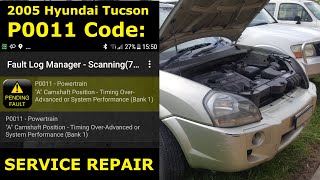
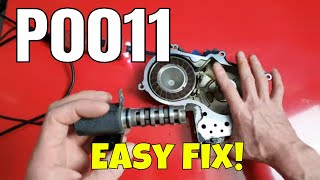
![How to Fix P0012 Engine Code in 4 Minutes [2 DIY Methods / Only $6.86]](https://img.youtube.com/vi/Pu-PR3uhV5Q/mqdefault.jpg)

We Have This Part in Stock


The information in this article is provided for general reference and educational purposes only. Vehicle specifications, procedures, and part compatibility can vary by production date, trim level, and region. Always consult your vehicle's factory service manual and verify part numbers before purchasing or performing repairs. Safety-critical components such as airbags, seat belts, and braking systems should be installed by a qualified professional.
- Hyundai Elantra:
- 🧭 Diagnostic Flowchart
- 🎬 Helpful Videos
- 🛍️ Shop This Part
- What's Unique About the 2011-2016 Hyundai Elantra
- Symptoms You May Notice
- Most Likely Causes
- Rare But Worth Checking
- Diagnosis Steps
- Parts You'll Likely Need
- Related Codes That Often Appear With This One
- Technical Service Bulletins (TSBs) & Recalls
- Platform-Specific Known Issues
- Mechanic-Grade Diagnostic Values
- Hidden / Shadow Codes Worth Checking
- Scan Tool Commands That Help
- Wiring & Ground Locations
- Real Owner Repair Stories
- "I Checked Everything" — The Actual Cause
- OEM Part Supersession History
- Model Year Variations Within This Range
- Other Known Issues on This Vehicle
- Used vs. New Parts: Buying Guide for This Vehicle
- Real Owner Stories
- 2011-2016 Hyundai Elantra 1.8L Nu
- 2011-2016 Hyundai Elantra 1.8L Nu
- Related OBD-II Codes
- Frequently Asked Questions
- 🎟️ Get 5% Off