

P0012 on 2008-2016 Mercedes-Benz E-Class: Intake Camshaft Timing Over-Retarded Causes & Fixes
On a 2008-2011 E-Class with the M272 or M273 engine, P0012 is most often caused by a faulty intake camshaft adjuster solenoid (magnet) on Bank 1 (passenger side). Replacing the solenoid (Part No. A2720510177) is a common DIY fix costing around $40-$80 for the part. For 2012+ models with M276/M278 engines, while still a possible cause, a startup rattle may point towards more serious timing chain or phaser issues.
- For a 2008-2016 E-Class, P0012 almost always points to an issue with the variable valve timing system on the passenger-side intake camshaft.
- Before buying any parts, check your engine oil. Low, old, or incorrect oil is a common cause of VVT problems.
- The most likely part to fail, especially on 2008-2011 models, is the camshaft adjuster solenoid (magnet). This is a relatively inexpensive and accessible part for a DIY repair.
- Check the solenoid's electrical connector for oil. If oil is present, the solenoid must be replaced, and it's wise to also install a pigtail harness extension to protect the main wiring.
- A rattling noise on startup combined with this code suggests a more serious timing chain issue that requires professional attention.
What's Unique About the 2008-2016 Mercedes-Benz E-Class
For the E-Class, especially models from 2008-2011 with the M272 (V6) and M273 (V8) engines, the camshaft adjuster solenoids (often called 'cam magnets') are a very common failure point that directly causes the P0012 code. These solenoids can get stuck or leak oil into their electrical connectors, leading to faulty operation. While later 2012-2016 models with M276/M278 engines can also experience solenoid failure, they are also known for timing chain and adjuster (phaser) issues, which can present with similar codes and are a more serious and expensive repair.
Generation note: This range covers two E-Class generations: the end of the W211 (2008-2009) and the W212 (2010-2016). The primary difference is the engine. Early models (approx. 2008-2011) use the M272 (V6) and M273 (V8) engines. Later models (approx. 2012-2016) use the newer M276 (V6) and M278 (V8) direct-injection engines. The most common cause for this code differs slightly between these engine families, with the cam magnets being the primary suspect on the M272/M273.
Symptoms You May Notice
- Check Engine Light is on
- Rough or unstable idle
- Sluggish acceleration and loss of power
- Decreased fuel economy
- Engine hesitation or stalling
- Rattling or knocking noise from the front of the engine, especially on a cold start, which can indicate a more serious timing chain or cam phaser issue.
- Replacing the camshaft position sensor when the actual problem is the less expensive and more common failure of the camshaft adjuster solenoid (magnet).
- Assuming a major timing chain issue before checking the oil level/condition and testing the solenoids, which is the most frequent cause on M272/M273 engines.
Most Likely Causes
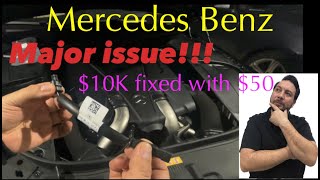
- Faulty Camshaft Adjuster Solenoid (Magnet) 🔴 High Probability → Shop Engine Camshaft This is a well-documented, high-failure item on the M272 and M273 engines. The solenoids get clogged with oil sludge or fail electrically. Oil can also leak past the internal seal into the electrical connector, disrupting the signal and potentially wicking down the wiring harness. 🎬 See how oil leaks can damage your entire engine harness.
How to confirm: Unplug the electrical connector from the Bank 1 (passenger side) intake solenoid and check for oil inside the connector. A common and effective diagnostic step is to swap the intake solenoid with the exhaust solenoid on the same bank. Clear the codes and drive the car. If the fault follows the solenoid 🎬 Watch: How to perform this diagnostic swap yourself. and a P0015 (Exhaust 'B' Cam Over-Retarded) code appears, the solenoid is definitively bad.
Typical fix: Replace the faulty camshaft adjuster solenoid. Many owners and shops choose to replace all four solenoids (intake and exhaust on both banks) as a preventative measure since they have a similar lifespan and are a known failure point.
Est. part cost: $40 - $100 - Low, Incorrect, or Dirty Engine Oil 🟡 Medium Probability The camshaft adjustment system is hydraulic and highly dependent on clean oil at the correct pressure and viscosity. Mercedes engines with extended oil change intervals can be susceptible to sludge if not maintained with the correct specification oil, which clogs the tiny passages and filter screens in the solenoids and adjusters.
How to confirm: Check the engine oil level via the dipstick or electronic reading and assess its condition. If the oil is very dark, sludgy, or below the minimum mark, this could be the cause. Ensure the oil used meets Mercedes-Benz approval, typically MB 229.5.
Typical fix: Perform an oil and filter change using a Mercedes-Benz approved oil (e.g., MB 229.5 specification) of the correct viscosity. Clear the code and drive to see if it returns.
Est. part cost: $80 - $150 - Faulty Camshaft Position Sensor ⚪ Low Probability → Shop Engine Camshaft Position Sensor
How to confirm: The sensor provides the timing data to the ECM. If solenoid replacement doesn't fix the code, the sensor is the next logical suspect. It can be tested or, more easily, swapped with the sensor from the exhaust cam to see if the code changes (e.g., to P0015 related).
Typical fix: Replace the Bank 1 intake camshaft position sensor.
Est. part cost: $50 - $120
Rare But Worth Checking
- Stretched Timing Chain or Worn Camshaft Adjuster (Phaser): → Shop Engine Timing Chain This is a more severe mechanical failure. A key symptom is a distinct rattling noise from the front of the engine for a few seconds on a cold start. While the infamous balance shaft gear issue primarily affected pre-2008 M272 engines, timing chain stretch and phaser failure can still occur on later models and are a known issue on the M276/M278 engines. One owner on a forum reported a P0012 code was ultimately caused by a previous improper timing job where a damaged oil ring on the camshaft adjuster was found. This is a complex and expensive repair that should be diagnosed by a professional.
Diagnosis Steps
- Read the code with an OBD-II scanner to confirm P0012 is present and note any other codes.
- Check the engine oil level and condition. If low, dirty, or overdue for a change, service it first. Ensure oil meeting MB 229.5 specification is used.
- Locate the intake camshaft adjuster solenoid on Bank 1 (passenger side, top-front of the engine). Disconnect the electrical plug and inspect for any oil contamination inside the connector. Oil here is a sure sign the solenoid's internal seal has failed.
- Diagnostic Swap: If no oil is found, swap the Bank 1 intake solenoid with the Bank 1 exhaust solenoid (located just below it). Clear the codes, drive the vehicle, and re-scan. If the code changes to P0015, the solenoid you moved is faulty and must be replaced.
- If the solenoid is confirmed bad, replace it. It is held by three E8 external Torx bolts. Be aware the driver's side solenoids are harder to access due to the power steering reservoir and oil cooler.
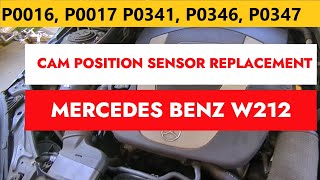
- If the code returns after replacing the solenoid, the next step is to test or swap the camshaft position sensor, which is located right next to the solenoid.
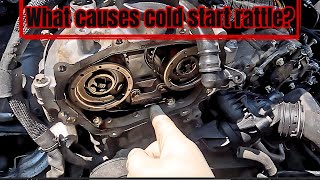
- If all of the above steps fail to resolve the issue, and especially if you hear a rattling noise on startup, 🎬 Watch this guide to diagnosing serious cold start rattles. the problem is likely mechanical (stretched chain, bad adjuster/phaser). This requires professional diagnosis.
Parts You'll Likely Need
- Camshaft Adjuster Solenoid (Magnet)
(OEM #A2720510177)— This is the most frequent point of failure for code P0012 on M272 and M273 engines. This is an updated part number.
Trusted brands: Mercedes-Benz (OEM), Pierburg (OEM supplier), Bosch
OEM price range: $60-$100
Aftermarket price range: $30-$70 - Camshaft Position Sensor
(OEM #M272: A0041539628, M276: A2769051100 / A2761530028)— A secondary cause if the solenoid is not the issue. It provides the position data that the ECM uses to set the code.
Trusted brands: Mercedes-Benz (OEM), Bosch, Continental/VDO
OEM price range: $80-$120
Aftermarket price range: $40-$80
Related Codes That Often Appear With This One
- P0011 — 'A' Camshaft Position - Timing Over-Advanced (Bank 1). This code points to the same component but indicates the opposite timing error, suggesting an erratic solenoid or oil pressure issue.
- P0015 — 'B' Camshaft Position - Timing Over-Retarded (Bank 1). This code is for the exhaust camshaft on the same bank. Seeing it after swapping the intake and exhaust solenoids is a key diagnostic step. If they appear together, it could point to a systemic issue like oil pressure.
- P0016 — Crankshaft Position - Camshaft Position Correlation (Bank 1 Sensor A). This code indicates a direct conflict between what the crank and cam sensors are reading, often pointing towards a jumped tooth or stretched timing chain, a more serious mechanical issue.
Technical Service Bulletins (TSBs) & Recalls
- While no specific TSB number was found in the search, multiple sources reference a Mercedes TSB covering the balance shaft issue on M272 engines that also includes scenarios for camshaft adjuster solenoid failure. TSB LI05.10-P-052324 and LI03.30-P-059434 are often associated with M272 timing components.
Platform-Specific Known Issues
- On M272/M273 engines, oil leaking from the cam magnets into the engine wiring harness is a critical known issue. If not caught early, the oil can wick through the harness via capillary action, contaminating the O2 sensor connectors and even reaching the main engine computer (ECU/ME), causing thousands of dollars in damage. Mercedes offers a pigtail harness extension (sometimes called a 'sacrificial harness') to install between the new magnet and the main harness. This short extension traps any future leaks, protecting the main harness and ECU.
Mechanic-Grade Diagnostic Values
- Camshaft Adjuster Solenoid (OCV) Resistance — expected: 6.9 - 7.9 Ohms at 68ºF (20°C). Failure: A reading outside this range indicates a faulty solenoid coil.
- Camshaft Position Sensor Supply Voltage (M272/M273) — expected: Approximately 12V at Pin 1 of the sensor connector with key on, engine off.. Failure: No or low voltage suggests a wiring or ECU supply problem, not a faulty sensor.
- Camshaft Position Sensor Signal Voltage (Hall Effect Sensor) — expected: Voltage should fluctuate between 0V and 5V as the engine is rotated by hand.. Failure: Voltage that is stuck high (5V) or low (0V) and does not fluctuate indicates a failed sensor.
- Camshaft Position Sensor Resistance (M276) — expected: 1,000 to 3,000 Ohms. Failure: Readings outside this range suggest the sensor is faulty.
Scan Tool Commands That Help
- XENTRY/DAS (Mercedes Dealer Tool) or compatible high-end scanner (e.g., XTOOL A80 H6): Actuation test for left/right intake/exhaust camshaft adjuster solenoids. — This command allows a technician to directly activate each solenoid while the engine is running to see if it responds and affects engine operation. If activating the Bank 1 intake solenoid causes no change in engine idle or timing values, it confirms a failure in the solenoid, its wiring, or the adjuster itself.
- XENTRY/DAS: View Camshaft Adaptation/Correction Values — Live data in XENTRY shows the degree to which the ECU is attempting to correct the camshaft timing. Large correction values for the Bank 1 intake cam, especially when compared to other cams, can indicate the system is struggling to achieve the commanded position, pointing towards a mechanical or hydraulic issue rather than just a sensor.
Wiring & Ground Locations
- Bank 1 Camshaft Component Location — Bank 1 is the passenger side on US/LHD vehicles. The intake camshaft position sensor (B6/5) and adjuster solenoid (Y49/5) are located at the front of the passenger-side cylinder head.. Correctly identifying Bank 1 is the first step in diagnosis to avoid replacing parts on the wrong side of the engine.
- W10 Ground Point — Main battery negative cable connection to the body, typically at the front strut tower in the engine bay.. A poor main ground can cause a host of floating voltages and erratic sensor readings, including those from the camshaft position sensors.
- W11 Ground Point — This is the ground for the ECU/ECM wiring assembly, located in the engine bay.. A compromised ECU ground can directly affect the reference voltage for sensors and the ECU's ability to accurately read their signals, potentially causing false timing codes.
- Engine to Chassis Ground Strap — A large braided strap typically running from the engine block or bell housing area to the vehicle's chassis/frame.. This is the main ground path for the entire engine block. Corrosion or looseness here can lead to intermittent and hard-to-diagnose electrical issues, including sensor malfunctions.
Real Owner Repair Stories
- MBWorld.org Forum User (Model year not specified, but M272 engine.) — Check Engine Light with code P0012.
❌ Tried (didn't work) Initial diagnosis by the owner.
✅ What actually fixed it The owner took the car to the dealership. The final repair was the replacement of the camshaft position sensor and an 'adjustment'. The owner reported the engine felt smoother after the repair. - Classic Jalopy Blog (2007 E350 Wagon (M272 Engine)) — Check Engine Light with codes for camshaft/crankshaft correlation, indicating the right bank was too retarded.
❌ Tried (didn't work) Replacing the magnetic actuators (solenoids) only provided a temporary fix.
✅ What actually fixed it After checking live data and seeing correct camshaft values, the owner suspected the sensors were giving intermittent bad readings. Replacing all four camshaft position sensors resolved the issue.
OEM Part Supersession History
A2720510077→A2720510177— Updated design to improve reliability and prevent internal oil leakage that was common on the original part.
Heads up: The new part is a direct replacement for the old one. It is highly recommended to use the updated part number (A2720510177) for all replacements.N/A→A2711502733 (also listed as 2711500156)— This is the part number for the 'sacrificial' pigtail wiring harness adapter. It was introduced as a service solution to protect the main engine harness from oil contamination wicking from a leaking cam magnet.
Heads up: This pigtail is installed between the new cam magnet and the engine harness. It's designed to catch any future oil leaks from the magnet's connector, preventing the oil from traveling down the main harness to the ECU. It is considered essential when replacing the magnets.
Model Year Variations Within This Range
- 2008-2011: These models primarily use the M272 (V6) and M273 (V8) port-injected engines. For P0012, the camshaft adjuster solenoid (magnet) is the overwhelmingly common cause, along with the potential for oil to wick into the wiring harness.
- 2012-2016: These models use the newer M276 (V6) and M278 (V8) direct-injection engines. While solenoid failure can still occur, these engines are more known for mechanical timing issues, such as stretched timing chains and faulty tensioners, which cause a distinct rattle on cold starts. A P0012 code accompanied by a startup rattle on these engines warrants a more immediate and serious investigation into the timing components.
Diagnostic Flowchart
Used vs. New Parts: Buying Guide for This Vehicle
When a used part is the smart pick: For the camshaft adjuster solenoids (magnets), a used part from a known low-mileage (under 60k miles) donor vehicle can be a cost-effective option, especially if it's the updated part number. However, given the low cost of new aftermarket units from OEM suppliers like Pierburg, buying new is often the smarter long-term choice.
Donor-vehicle mileage cap: roughly under 60000 miles for the part to have meaningful remaining life.
What to inspect on the donor part:
- Verify the part number is the updated version (A2720510177).
- Inspect the electrical connector pins for any signs of oil residue or corrosion.
- Gently shake the solenoid; you should not hear any loose internal rattling.
- Ensure the O-ring is present and not flattened or cracked, though replacing it is always recommended.
OEM-only on this vehicle (don't cheap out):
- Camshaft Position Sensors: While aftermarket sensors exist, OEM/OES brands like Bosch or Continental/VDO are strongly recommended. Cheaper sensors are known to have a high failure rate or provide inaccurate readings, leading to persistent codes and difficult diagnosis.
- Timing Chain and Tensioners: For major mechanical repairs like timing components, using genuine Mercedes-Benz parts is critical to ensure longevity and proper function. The cost savings of aftermarket timing kits do not outweigh the risk of premature failure and catastrophic engine damage.
Aftermarket brands forum-validated for this vehicle:
- Pierburg (for Camshaft Adjuster Solenoid - they are an OEM supplier)
- Bosch (for Camshaft Position Sensor and Solenoid)
- Continental/VDO (for Camshaft Position Sensor)
Brands owners have reported issues with on this vehicle:
- Unnamed, 'white-box' or unusually cheap sensors and solenoids from online marketplaces. These frequently fail shortly after installation or are dead-on-arrival.
Real Owner Stories
Aggregated from forums and TSBs cited above. Mileages and costs reflect what owners reported in those sources.
2014 Mercedes-Benz E-Class W212 3.5L NA (M276) — 75000 miles
Symptoms: Initially, the only code was P0012. After the owner replaced all four camshaft solenoids, the code returned along with new codes P0017, P0018, and P0019. The owner also noted a startup rattle and a squeaky tapping sound that became louder after an oil change.
What fixed it: The forum discussion concluded that the issue was not the solenoids but likely the VVT adjusters (phasers), with a commenter suggesting the 'reluctor wheel gets loose' causing the correlation codes.
Source hint: MBWorld.org Forums
Related OBD-II Codes
Frequently Asked Questions
I found oil inside the electrical connector of my camshaft solenoid on my E-Class. Is this a serious problem?
How can I confirm the camshaft solenoid is bad before buying a new one?
I'm replacing the faulty solenoid for P0012. Should I replace all four at once?
What specific engine oil should I use in my 2008-2016 E-Class to help prevent P0012?
I replaced the solenoid and did an oil change, but P0012 returned. What's the next step?
My E-Class has a P0012 code and a rattling noise from the engine on cold starts. What does this mean?
Helpful Videos


We Have This Part in Stock

The information in this article is provided for general reference and educational purposes only. Vehicle specifications, procedures, and part compatibility can vary by production date, trim level, and region. Always consult your vehicle's factory service manual and verify part numbers before purchasing or performing repairs. Safety-critical components such as airbags, seat belts, and braking systems should be installed by a qualified professional.
- Mercedes-Benz E-Class:
- 🧭 Diagnostic Flowchart
- 🎬 Helpful Videos
- 🛍️ Shop This Part
- What's Unique About the 2008-2016 Mercedes-Benz E-Class
- Symptoms You May Notice
- Most Likely Causes
- Rare But Worth Checking
- Diagnosis Steps
- Parts You'll Likely Need
- Related Codes That Often Appear With This One
- Technical Service Bulletins (TSBs) & Recalls
- Platform-Specific Known Issues
- Mechanic-Grade Diagnostic Values
- Scan Tool Commands That Help
- Wiring & Ground Locations
- Real Owner Repair Stories
- OEM Part Supersession History
- Model Year Variations Within This Range
- Used vs. New Parts: Buying Guide for This Vehicle
- Real Owner Stories
- 2014 Mercedes-Benz E-Class W212 3.5L NA (M276) — 75000 miles
- Related OBD-II Codes
- Frequently Asked Questions
- 🎟️ Get 5% Off