

P0012 on 2007-2010 Mercedes-Benz ML-Class M156: Camshaft Timing Over-Retarded Causes and Fixes
On the M156 engine in a 2007-2010 ML63 AMG, code P0012 is almost always caused by a failing intake camshaft adjuster on Bank 1. This is a known weak point. Expect a rattling noise on startup. The fix involves replacing or rebuilding the adjuster, which is a labor-intensive job.
- P0012 on the M156 engine almost always points to a failing intake camshaft adjuster on Bank 1, a very common and well-known issue.
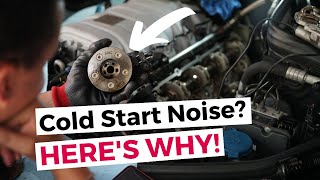
- The most obvious symptom is a loud metallic rattle from the front of the engine on a cold start.
- Always check your engine oil level and condition first, as low or dirty oil can cause timing issues.
- The repair is complex and expensive, requiring special tools and significant labor. This is not a recommended DIY job for beginners.
- Many owners choose to replace all four adjusters at once or use aftermarket rebuild kits to prevent future failures.
What's Unique About the 2007-2010 Mercedes-Benz ML-Class
The M156 V8 is a legendary high-performance engine, but it has a well-documented and very common issue with its camshaft adjusters. The internal locking pin and plate mechanism wears out, causing the adjuster to lose hydraulic pressure. This initially creates a distinct rattling noise on cold starts and eventually leads to timing-related fault codes like P0012 as the wear progresses. Unlike many other engines where this code might point to a simple sensor or solenoid, on the M156, it's often a sign of this impending mechanical failure.
Symptoms You May Notice
- Check Engine Light is on
- Loud metallic rattling or ticking noise from the front of the engine, especially on cold startup, that may go away after a few seconds.
- Rough or unstable idle.
- Hesitation or stumbling on acceleration.
- Noticeable loss of power.
- Decreased fuel economy
- Replacing only the camshaft position sensor or solenoid without addressing the underlying mechanical wear in the adjuster. While these parts can fail, the rattling noise is the key indicator of the more common adjuster failure.
Most Likely Causes
- Worn Intake Camshaft Adjuster (Bank 1) 🔴 High Probability → Shop Engine Camshaft The plates and locking pins inside the original M156 adjusters are a known weak point and wear prematurely. The wear creates excessive clearance, preventing the adjuster from holding oil pressure and locking the camshaft in the correct base position. This is considered a wear item on this engine.
How to confirm: The primary symptom is a rattling noise from the front of the engine on startup lasting more than a second. A mechanic can use a stethoscope to isolate the noise to a specific adjuster. With the valve cover off, a technician can check for rotational play in the adjuster.
Typical fix: Replace the Bank 1 intake camshaft adjuster. Many owners choose to replace all four adjusters at the same time as a preventative measure, since they are all prone to the same failure. Aftermarket kits with more durable plates (e.g., from 63 Motorsports or VRP Speed) are available to rebuild the existing adjusters, which is a popular, more permanent solution.
Est. part cost: $800-$1300 for one OEM adjuster - Low or Dirty Engine Oil 🟡 Medium Probability The camshaft adjustment system is hydraulic and relies on clean oil of the correct viscosity and pressure to function. If the oil is low, dirty, or the wrong type, it can't operate the adjusters properly. Many specialists recommend 5,000-mile oil change intervals with 5W-40 oil to mitigate wear.
How to confirm: Check the oil level on the dipstick and inspect its condition. If it's low, black, or sludgy, this could be the cause. Verify the service history to ensure the correct oil (e.g., MB 229.5 spec) was used.
Typical fix: Perform an oil and filter change using a high-quality, manufacturer-approved synthetic oil. Clear the code and see if it returns.
Est. part cost: $100-$200 - Faulty Camshaft Adjuster Solenoid (Magnet) ⚪ Low Probability → Shop Engine Camshaft
How to confirm: Unplug the electrical connector for the Bank 1 intake solenoid and inspect for oil. Oil wicking down the harness from a leaking solenoid is a common Mercedes issue and is addressed in TSB LI05.20-P-067123. You can also swap the intake and exhaust solenoids on Bank 1, clear the codes, and see if the fault code changes to P0015 (exhaust cam), which would confirm a bad solenoid.
Typical fix: Replace the faulty solenoid. If oil has contaminated the harness, a short adapter harness (pigtail) may need to be installed to prevent oil from reaching the ECU.
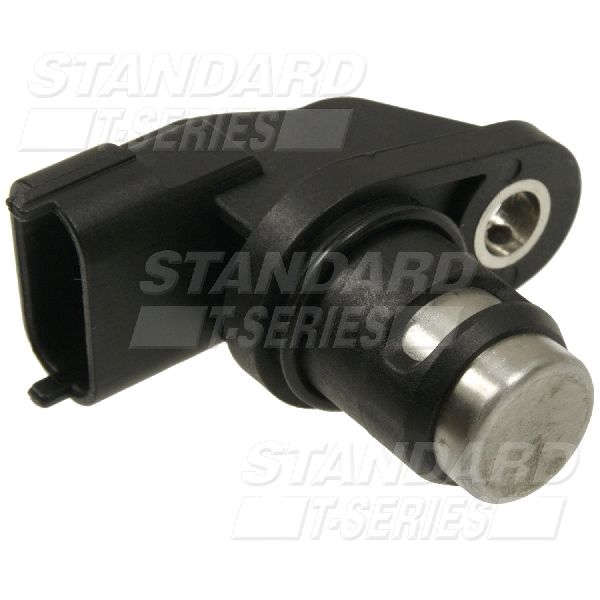
Est. part cost: $40-$80 - Faulty Camshaft Position Sensor ⚪ Low Probability → Shop Engine Camshaft Position Sensor
How to confirm: These sensors can fail, but are less common than adjuster or solenoid issues. Like the solenoids, they can also leak oil into the wiring harness. A diagnostic scanner can be used to monitor the live data from the sensor to check for erratic readings. Swapping the sensor with one from another position (if compatible) can also help diagnose.
Typical fix: Replace the Bank 1 intake camshaft position sensor.
Est. part cost: $50-$100
Rare But Worth Checking
- Worn Camshaft Lobes / Hydraulic Lifters: → Shop Engine Camshaft The M156 engine is also known for premature wear on camshafts and lifters (tappets). While this typically doesn't directly cause a P0012 code, a severely worn cam could potentially affect timing readings. This is usually accompanied by a persistent ticking noise at all RPMs, not just startup.
Diagnosis Steps
- Verify the engine oil level and condition. If low or dirty, perform an oil change with manufacturer-approved oil (MB 229.5 spec), clear the code, and re-test.
- Listen for a metallic rattling sound from the front of the engine during a cold start. The presence of this noise strongly indicates a failing camshaft adjuster.
- Scan for other fault codes. Codes for other banks or misfires can help narrow down the problem.
- Inspect the electrical connector for the Bank 1 intake camshaft adjuster solenoid (magnet) for any signs of engine oil. If oil is present, the solenoid is bad and should be replaced.
- As a simple test, swap the intake and exhaust camshaft solenoids on Bank 1. Clear the codes and drive the vehicle. If the code changes to P0015 (Exhaust 'B' Camshaft Position), the solenoid is confirmed to be the fault.
- If the noise is present and the solenoid tests are inconclusive, the fault is almost certainly the mechanical camshaft adjuster. This requires valve cover removal for replacement.
Parts You'll Likely Need
- Intake Camshaft Adjuster (Bank 1)
(OEM #A1560503647)— This is the most common failure point on the M156 engine that causes the P0012 code, characterized by a startup rattle. Previous revisions include 1560501847, 1560502947, 1560503047, 1560503347, and 1560503547.
Trusted brands: Mercedes-Benz (OEM)
OEM price range: $900-$1300
Aftermarket price range: N/A (Rebuild kits available for ~$500) - Camshaft Adjuster Solenoid (Magnet)
(OEM #A2720510177 (Check VIN, common part))— A less common but possible cause. It's an electronic solenoid that controls oil flow to the adjuster and can fail or leak oil into its connector.
Trusted brands: Bosch, Mercedes-Benz (OEM)
OEM price range: $60-$90
Aftermarket price range: $30-$50 - Camshaft Position Sensor
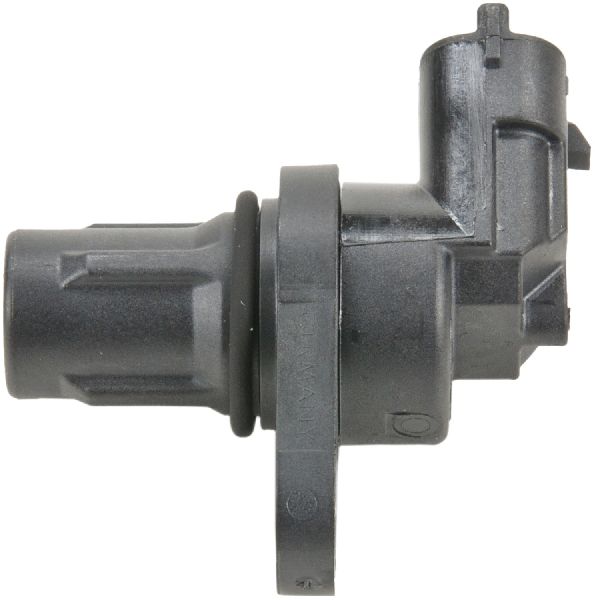
(OEM #A0041539628 (Check VIN, common part))— Can fail and send incorrect data to the ECU, but is not the most probable cause for this code on this engine.
Trusted brands: Bosch, Continental, Mercedes-Benz (OEM)
OEM price range: $80-$120
Aftermarket price range: $40-$70 - Hydraulic Lifter / Tappet
(OEM #A1560500225)— Often replaced concurrently with camshafts or adjusters if a persistent ticking noise is present, indicating wear.
Trusted brands: INA, Mercedes-Benz (OEM)
OEM price range: $20-$30 each
Aftermarket price range: $15-$25 each - Camshaft Adjuster Diamond Washer
(OEM #1560510275)— A critical one-time-use washer that sits between the camshaft and the adjuster. It has a diamond-like coating to prevent slippage and must be replaced anytime the adjuster is removed.
Trusted brands: Mercedes-Benz (OEM)
OEM price range: $10-$20 each
Aftermarket price range: N/A
Related Codes That Often Appear With This One
- P0011 — This is for 'Timing Over-Advanced'. Seeing both codes could indicate a very erratic adjuster or solenoid that is causing the timing to swing uncontrollably.
- P0022 — This is the same 'Over-Retarded' code but for Bank 2 (driver's side). If both P0012 and P0022 are present, it points to a systemic issue like low/dirty oil or both intake adjusters failing simultaneously.
- P0300, P0301, P0302, P0303, P0304 — These are random or specific cylinder misfire codes for Bank 1. Incorrect camshaft timing disrupts the air/fuel mixture and combustion, leading to misfires on the affected bank.
- 1208 — This is a Mercedes-specific fault code often logged as 'Constant adjustment of intake camshaft of right cylinder bank in direction Retarded'. It is the manufacturer-equivalent code for P0012 and will be seen on dealer-level scanners like Xentry/DAS.
Technical Service Bulletins (TSBs) & Recalls
- LI05.20-P-067123: Addresses oil escaping at sensors and contaminating the engine wiring harness, which can cause various fault codes. Recommends installing an adapter pigtail.
Platform-Specific Known Issues
- The M156 engine is notorious for camshaft adjuster failure. It is considered a matter of 'when,' not 'if.' Many owners opt to replace all four adjusters at once, or use aftermarket rebuild kits with stronger components to prevent future failures.
- This engine is also known for a 'ticking time bomb' reputation among some enthusiasts due to the potential for head bolt failure on earlier models (pre-2011). While a separate issue from P0012, it's a significant concern for any owner of this platform.
- Owner experiences on forums frequently describe the classic 'death rattle' on startup as the first sign of adjuster failure. Many DIY-focused owners attempt to rebuild the adjusters using aftermarket plates from companies like 63 Motorsports to provide a more permanent fix than replacing with another OEM unit that may fail again.
Mechanic-Grade Diagnostic Values
- Camshaft Adjuster Solenoid Resistance — expected: 10-18 Ohms. Failure: An open circuit (infinite resistance), a short (near zero resistance), or a value far outside the expected range.
- Camshaft Position Sensor Live Data (at idle) — expected: Intake: ~28° | Exhaust: ~-15°. Failure: A value that is stuck, does not change with RPM, or is wildly different from the opposing bank. For example, one user reported intakes stuck at 28° under load, indicating a problem.
- Camshaft Position Sensor Signal Wire Voltage (Key On, Engine Off) — expected: Approximately 5 Volts (reference voltage from ECU). Failure: Zero volts or significantly lower than 5V, indicating a wiring or ECU issue.
- Engine Oil Pressure (Hot Idle) — expected: Greater than 0.3 bar (4.4 psi). Though spec is low, many healthy engines show 1.0-1.5 bar (14.5-22 psi).. Failure: Pressure below 0.3 bar can indicate oiling issues that would affect the hydraulic adjusters.
- Engine Oil Pressure (at 3000 RPM) — expected: Above 4.4 bar (64 psi). Failure: Failure to reach this pressure, especially with thinner oils like 0W-40, can indicate excessive bearing clearance, starving upper engine components like adjusters.
Hidden / Shadow Codes Worth Checking
- 1208: Constant adjustment of intake camshaft of right cylinder bank in direction 'Retarded'. This is the Mercedes-specific equivalent of the generic P0012 code. (see via Mercedes-Benz Xentry/DAS diagnostic software.)
- 1200: Constant adjustment of exhaust camshaft of right cylinder bank in direction 'Advanced'. While not a direct match, it often appears alongside 1208, pointing to a broader timing issue on Bank 1. (see via Mercedes-Benz Xentry/DAS diagnostic software.)
Scan Tool Commands That Help
- Xentry/DAS: Camshaft Position Actuation Test — This function allows a technician to command the camshaft adjusters to move while monitoring their actual position. In Xentry, a user can hold RPMs within a specified range (e.g., 2700-3500 RPM) and click 'actuate'. The software will show the commanded vs. actual angle. If the value turns red or fails to move to the commanded position, it indicates a fault with the adjuster, solenoid, or oil supply.
- Xentry/DAS: View Camshaft Position Adaptation Values — This allows viewing the long-term adjustment values for each camshaft. If a value is approaching its limit (e.g., nearing +6 or -6 degrees), it indicates the system is constantly compensating for a mechanical issue like a worn adjuster or stretched timing chain.
Wiring & Ground Locations
- Main Engine Ground Strap — On the driver's side (left side), it is a braided copper strap running from a lower bell housing bolt to the chassis, located just under and to the rear of the steering box.. A poor engine ground can cause erratic behavior in sensors and solenoids, including the camshaft position sensors and adjuster solenoids. While not a primary cause, verifying this ground is a fundamental step in diagnosing any electrical fault.
- Engine Bay Ground Point (W11/1) — On the W164 chassis, there is a primary grounding point on the driver's side, forward of the firewall, where a nut secures a cluster of brown ground wires to the body.. This is a central grounding location for many engine bay components. Corrosion or looseness here can lead to intermittent and hard-to-diagnose electrical issues.
Real Owner Repair Stories
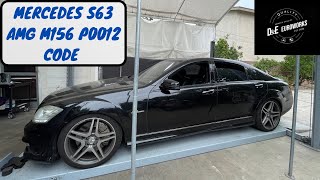
- YouTube channel 'Fixing cars and stuff' (2008 Mercedes S63 AMG (W221) with M156 engine) — P0012 code for Bank 1 intake cam timing, rough idle that felt like it had an aggressive camshaft.
❌ Tried (didn't work) The video starts with the diagnosis after valve cover removal, so prior steps are unknown. The mechanic noted the timing was also slightly off from a previous incorrect repair.
✅ What actually fixed it The mechanic discovered a sealing ring was missing from the bushing that the intake camshaft adjuster sits on. This caused a loss of oil pressure to the adjuster. The bushing was also gouged internally due to the missing ring. The fix was to replace the damaged bushing with a used part in good condition and correct the engine timing.
OEM Part Supersession History
A1560501847, A1560502947, A1560503047, A1560503347, A1560503547→A1560503647— The original camshaft adjusters used plates made of a softer metal that wore down prematurely, causing the internal locking mechanism to fail. The updated part numbers reflect revisions with improved materials to increase longevity, though failure is still common.
Model Year Variations Within This Range
- 2007-Early 2011 (By Engine S/N): Engines built before serial number 60-060658 were fitted with cylinder head bolts prone to breaking. While this does not directly cause P0012, it is a critical issue for these model years. A coolant leak into the cylinders from a failed head bolt can cause misfires and catastrophic engine damage. Any major engine work for a P0012 code on an early M156 should include consideration of replacing the head bolts as a preventative measure.
Diagnostic Flowchart
Other Known Issues on This Vehicle
Issues unrelated to this code that are worth knowing about as an owner of this generation:
- Cylinder Head Bolt Failure 🔴 High — Common on engines built prior to late 2010/early 2011 (before engine serial number 60-060658). Failure can lead to coolant entering the cylinders and catastrophic engine damage.
- Camshaft and Hydraulic Lifter (Tappet) Wear 🔴 High → Shop Engine Camshaft — Widespread issue, often appearing around 80,000-100,000 miles. Worn cam lobes and collapsed lifters cause a persistent ticking noise and can lead to misfires and further engine damage if not addressed.
- Magnesium Intake Manifold Failure 🟠 Medium → Shop Engine Intake Manifold — The center plate of the magnesium intake manifold deteriorates over time due to heat and oil vapor exposure, causing vacuum leaks. Symptoms include a rough idle, hissing sounds, and lean condition codes (P0171, P0174).
- Crankcase Breather Valve (PCV) Failure 🟠 Medium — The diaphragm in the valve can tear around 60,000 miles, leading to increased oil consumption, smoke from the exhaust, and fuel trim fault codes.
- Idler Pulley Failure 🟡 Low — The plastic idler pulleys for the serpentine belt can fail, causing belt damage. If the belt breaks, it can damage the thermostat's coolant breather port, compounding the repair.
Used vs. New Parts: Buying Guide for This Vehicle
When a used part is the smart pick: For this specific repair, buying a used camshaft adjuster is highly discouraged due to the extremely high failure rate of the original part. It is almost certain a used adjuster is either already failing or has very limited life left. A used part only makes sense for peripheral components like a sensor, solenoid, or a specific undamaged bushing if the original is found to be faulty.
Donor-vehicle mileage cap: roughly under 30000 miles for the part to have meaningful remaining life.
What to inspect on the donor part:
- For a solenoid or sensor, ensure the connector pins are clean with no signs of oil leakage from inside the part.
- For a mechanical part like a bushing, visually inspect for any scoring, gouges, or signs of heat damage.
- Ask for proof the donor vehicle did not have any timing-related fault codes.
OEM-only on this vehicle (don't cheap out):
- Camshaft Adjuster: Due to the known flaws, only a new OEM part (latest revision) or a professionally rebuilt unit with upgraded internal plates should be used.
- Camshaft Adjuster Diamond Washer: This is a one-time-use, critical friction washer. Never reuse it.
- Torque-to-Yield Bolts: The camshaft adjuster bolts are single-use and must be replaced with new OEM bolts.
Aftermarket brands forum-validated for this vehicle:
- 63 Motorsports: Widely regarded in the community for providing high-quality, more durable rebuild kits (plates, pins, springs) for the OEM adjusters.
- VRP Speed: Also offers rebuild kits and upgraded components for M156 adjusters.
Brands owners have reported issues with on this vehicle:
- Unknown/unbranded camshaft adjusters from online marketplaces. The tolerances and material quality are critical, and a poor-quality part is likely to fail quickly and could cause catastrophic engine damage.
Real Owner Stories
Aggregated from forums and TSBs cited above. Mileages and costs reflect what owners reported in those sources.
2008 Mercedes-Benz ML63 AMG M156
Symptoms: Startup rattle and clicking noises coming from the engine.
What fixed it: Identified as common adjuster wear; members suggest this is a known characteristic of the M156 valvetrain.
Source hint: MBWorld.org Forums thread titled 'Engine Rattle ML63 - MBWorld.org Forums'
2007-2010 Mercedes-Benz ML-Class M156
Symptoms: Classic 'death rattle' on startup and a P0012 fault code.
What fixed it: Rebuilt the camshaft adjusters using aftermarket plates from 63 Motorsports to provide a more permanent fix than OEM units.
Source hint: vehicle_specific_issues section citing owner experiences and 63 Motorsports
2007-2011 Mercedes-Benz M156-powered models
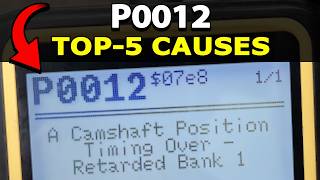
Symptoms: P0012 code indicating Camshaft Position - Timing Over-Retarded (Bank 1).
What fixed it: Diagnostic outcomes overwhelmingly pointed to the replacement of the mechanical camshaft adjusters.
Source hint: MBWorld.org Forums thread titled 'P0012 - Camshaft Position - Timing Over-Retarded (Bank 1) - MBWorld.org Forums'
Related OBD-II Codes
Frequently Asked Questions
Is there a TSB for oil leaking into the wiring harness on my ML63 AMG?
I hear a metallic rattling noise when I start my 2008 ML63. Is this related to P0012?
Can I rebuild the camshaft adjusters on my M156 engine instead of buying new OEM ones?
What oil should I be using in my ML-Class M156 engine to prevent P0012?
Is the P0012 code related to the 'ticking time bomb' head bolt issue I've read about?
How can I confirm if the solenoid is the problem before replacing the expensive adjuster?
Helpful Videos

We Have This Part in Stock


The information in this article is provided for general reference and educational purposes only. Vehicle specifications, procedures, and part compatibility can vary by production date, trim level, and region. Always consult your vehicle's factory service manual and verify part numbers before purchasing or performing repairs. Safety-critical components such as airbags, seat belts, and braking systems should be installed by a qualified professional.
- Mercedes-Benz ML-Class:
- 🧭 Diagnostic Flowchart
- 🎬 Helpful Videos
- 🛍️ Shop This Part
- What's Unique About the 2007-2010 Mercedes-Benz ML-Class
- Symptoms You May Notice
- Most Likely Causes
- Rare But Worth Checking
- Diagnosis Steps
- Parts You'll Likely Need
- Related Codes That Often Appear With This One
- Technical Service Bulletins (TSBs) & Recalls
- Platform-Specific Known Issues
- Mechanic-Grade Diagnostic Values
- Hidden / Shadow Codes Worth Checking
- Scan Tool Commands That Help
- Wiring & Ground Locations
- Real Owner Repair Stories
- OEM Part Supersession History
- Model Year Variations Within This Range
- Other Known Issues on This Vehicle
- Used vs. New Parts: Buying Guide for This Vehicle
- Real Owner Stories
- 2008 Mercedes-Benz ML63 AMG M156
- 2007-2010 Mercedes-Benz ML-Class M156
- 2007-2011 Mercedes-Benz M156-powered models
- Related OBD-II Codes
- Frequently Asked Questions
- 🎟️ Get 5% Off