

P0013 on 2011-2017 Chrysler 200 3.6L: Exhaust VVT Solenoid Circuit Causes and Fixes
For a 2011-2017 Chrysler 200 with the 3.6L V6, code P0013 is almost always caused by a failed exhaust VVT solenoid on the rear cylinder bank (Bank 1). Before replacing it, check your oil level and condition, as low or dirty oil is a common trigger. A new Mopar solenoid (P/N 05047788AD) costs about $40-$60, with aftermarket options being cheaper. The four solenoids on the engine are identical and interchangeable for diagnosis.
- Before buying any parts, check your engine oil level and condition. An oil change with the correct 5W-20 oil might fix the problem.
- The most likely failed part is the Bank 1 (rear bank) exhaust VVT solenoid. It's an affordable part and relatively easy to replace.
- A highly effective diagnostic trick is to swap the exhaust solenoid with the intake solenoid on the same bank. If the code follows the part (changing to P0010), you've confirmed the solenoid is bad.
- Do not replace the camshaft position sensor for this code; it is a different component and will not solve the issue.
What's Unique About the 2011-2017 Chrysler 200
The 3.6L Pentastar V6, used across many Chrysler, Dodge, and Jeep vehicles, features a VVT system that is notoriously sensitive to oil quality and level. While P0013 is an electrical circuit code, the root cause on this engine is very often a mechanical or hydraulic issue, like a solenoid clogged by oil sludge or debris from engine wear. A well-documented weakness of this engine is rocker arm failure ('Pentastar Tick'), which can release metal particles into the oil, directly leading to the failure of these solenoids. A user on a Reddit forum experienced P0013 and other codes immediately after a rocker arm replacement, highlighting the sensitivity of these components during service.
Generation note: This guide covers the 2011-2014 (JS) and 2015-2017 (UF) generations of the Chrysler 200. Both generations offered the 3.6L Pentastar V6, and the causes and fixes for code P0013 are consistent across both. It's important to note the correct oil viscosity changed: 2011-2012 models typically require 5W-30, while 2013-2017 models specify 5W-20. The engine itself was significantly updated for the 2016 model year, including a revised VVT system, though the P0013 diagnostic procedure remains the same.
Symptoms You May Notice
- Check Engine Light is on
- Rough or uneven idle
- Hesitation or stumbling during acceleration
- Reduced engine power
- Decreased fuel economy
- Engine may stall in some conditions
- Engine running louder than usual or ticking
- Replacing the Camshaft Position Sensor. This code is for the actuator solenoid circuit, not the position sensor. The sensor and solenoid are different parts. Replacing the sensor will not fix P0013.
Most Likely Causes
- Faulty Exhaust VVT Solenoid (Bank 1) 🔴 High Probability The solenoids are sensitive to oil contamination and can fail electrically (internal short/open) or mechanically (clogged or stuck). This is the most common failure point for this code on the Pentastar engine. Chrysler has issued TSBs for newer model years related to VVT actuator failures, indicating a known weakness in the system's components.
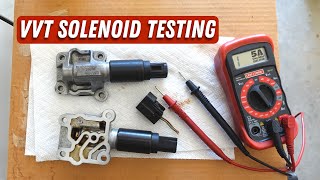
How to confirm: Swap the Bank 1 exhaust solenoid (rear bank, outer position) with the intake solenoid (rear bank, inner position). Clear the codes. If the trouble code changes to P0010 (Intake Cam Actuator Circuit), the solenoid is definitively bad. Alternatively, test the solenoid's resistance with a multimeter; a normal reading is between 6.9 and 12 ohms. An open circuit (infinite resistance) or shorted (near zero resistance) reading indicates failure. 🎬 Watch: A helpful guide on testing VVT solenoids with a multimeter.
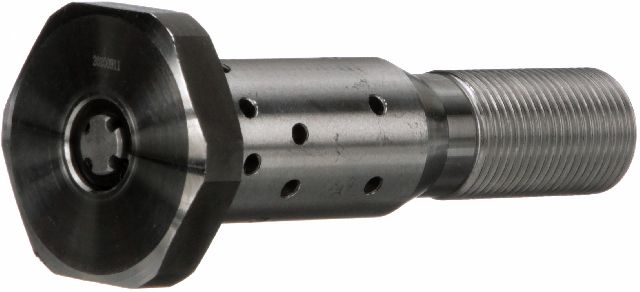
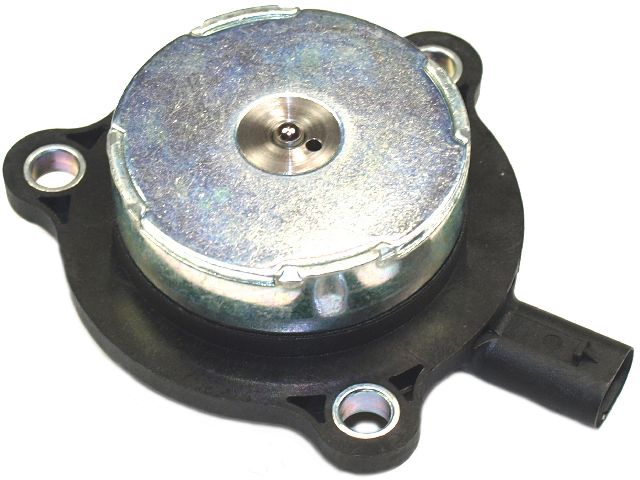
Typical fix: Replace the Bank 1 exhaust VVT solenoid. All four VVT solenoids on the 3.6L Pentastar are identical and interchangeable. The Mopar part number is 05047788AD.
Est. part cost: $25-$60 - Low, Dirty, or Incorrect Engine Oil 🔴 High Probability The Pentastar's VVT system is operated by oil pressure. Low levels or oil that is old, dirty, or of the wrong viscosity can starve or clog the VVT solenoids, causing them to malfunction. Using the wrong type of oil filter (e.g., a non-OEM cartridge) has also been reported to cause oil pressure issues.
How to confirm: Check the engine oil level on the dipstick and inspect its condition. If the level is low or the oil appears dark, gritty, or sludgy, this is likely a contributing factor. Note the oil specification change: 2011-2012 models often use 5W-30, while 2013-2017 models use 5W-20.
Typical fix: Perform an oil and filter change using the manufacturer-specified oil weight (check owner's manual or oil cap) and a quality filter. Clear the code and see if it returns.
Est. part cost: $40-$80 - Wiring Harness or Connector Damage ⚪ Low Probability The wiring to the solenoid, located on the hot, rear bank of the engine, can become brittle from heat cycles. The connector can also become contaminated with oil or dirt, leading to a poor connection.
How to confirm: Visually inspect the wiring and connector leading to the Bank 1 exhaust VVT solenoid. Look for frayed wires, corrosion, pushed-out pins, or oil inside the connector. With the ignition on (engine off), use a multimeter to check for battery voltage on one of the pins in the connector.
Typical fix: Clean the connector with electrical contact cleaner. If the wiring or connector is damaged, repair the wire or replace the connector with a pigtail kit.
Est. part cost: $15-$30
Rare But Worth Checking
- Failing Rocker Arms ('Pentastar Tick'): The 3.6L Pentastar is known for rocker arm bearing failure, which creates a distinct ticking sound. This failure introduces metal debris into the oil, which can quickly clog and destroy VVT solenoids. If you hear a tick and get this code, the solenoid may just be a symptom of a larger problem requiring valvetrain repair. This issue is particularly noted in 2011-2016 models.
- Faulty Powertrain Control Module (PCM): This is extremely rare. The PCM driver for the solenoid circuit can fail, but this should only be considered after all other possibilities, including wiring, have been exhaustively tested.
Diagnosis Steps
- Check Engine Oil: Verify the oil level is correct and the oil is clean. If low or dirty, perform an oil and filter change first, clear the code, and test drive. Ensure you use the correct viscosity (5W-30 for 2011-2012, 5W-20 for 2013-2017).
- Inspect Connector: Visually inspect the electrical connector on the Bank 1 (rear bank) exhaust VVT solenoid for damage, corrosion, or oil contamination. The exhaust solenoid is the one positioned further toward the outside (passenger side) of the cylinder head.
- Swap Solenoids (Recommended): Swap the Bank 1 exhaust solenoid with the Bank 1 intake solenoid. They are identical parts. Clear the codes and drive the vehicle. If the code changes to P0010, the solenoid you moved is faulty and needs to be replaced. This is the most definitive DIY test.
- Test Solenoid Electrically: If you don't swap them, use a multimeter to test the resistance across the two pins of the suspect solenoid. A reading outside of the 6.9-12 ohm range indicates a failed solenoid.
- Check Wiring: If the solenoid tests good, check for power at the solenoid connector with the key on. You should see battery voltage. Then, check for continuity on the control wire between the solenoid connector and the PCM. Resistance should be below 5.0 ohms.
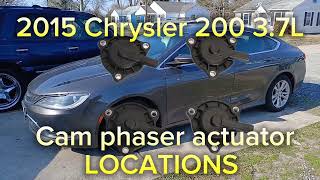
- Replace the Solenoid: If the solenoid is confirmed bad, replace it. It is held in by a single 10mm bolt. 🎬 Watch: See the solenoid locations and removal steps on a 200. The Mopar part is 05047788AD.
- Listen for Engine Noises: Be aware of any ticking noises that could indicate the 'Pentastar Tick' from failing rocker arms, which would be the root cause of repeated solenoid failures.
Parts You'll Likely Need
- Engine Variable Valve Timing (VVT) Solenoid
(OEM #05047788AD)— This is the most common part to fail, either electrically or by becoming clogged, directly causing the P0013 code. This part number supersedes 5047788AB and 5047788AC.
Trusted brands: Mopar, Dorman, Standard Motor Products (SMP)
OEM price range: $40-$70
Aftermarket price range: $25-$60
Related Codes That Often Appear With This One
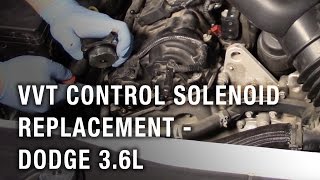
- P0014 — This code indicates a mechanical timing issue (over-advanced) for the same camshaft. If P0013 (electrical) and P0014 (mechanical) appear together, it points strongly to a stuck or clogged VVT solenoid or a more serious timing problem. 🎬 Watch: Understanding the common causes of P0013 and P0014 codes.
- P0010 — This is the circuit code for the intake solenoid on the same bank. It will appear if you swap a faulty exhaust solenoid to the intake position for diagnostic purposes.
Technical Service Bulletins (TSBs) & Recalls
- TSB 09-002-14 Rev. B: While not directly for P0013, this TSB is highly relevant to the Pentastar engine family. It addresses misfire codes (P0300, P0302, P0304, P0306) on 2011-2013 models due to a defect in the left cylinder head, which was given an extended warranty (X56). This highlights known valvetrain issues in early Pentastar engines.
- TSB 09-008-15: Identifies oil filter housing leakage concerns on numerous 2014 Chrysler vehicles with the 3.6L engine.
- TSB 08-133-23: Issued for 2023 models but relevant, this TSB involves replacing all four cam phaser actuators due to internal failures causing VVT codes, confirming an inherent weakness in the system.
- TSB 08-111-21: While for 2021 models, this TSB identifies a poor engine ground connection as a potential cause for multiple simultaneous VVT circuit codes (P0010, P0013, P0020, P0023) and may be relevant to earlier models if multiple codes are present.
- TSB Bulletin #0902223: A manufacturer service bulletin for the 3.6L engine notes that technicians may find P0013 (Bank 1 Camshaft 2 Position Actuator Circuit Open) set alongside other actuator circuit codes like P0010, P0020, and P0023.
Platform-Specific Known Issues
- The 3.6L Pentastar engine is known for potential rocker arm bearing failure, which can cause a ticking noise. This failure contaminates the engine oil with metal debris, which then clogs and damages the VVT solenoids, leading to codes like P0013.
- The plastic oil filter housing assembly, located in the engine valley, is another known failure point that can cause significant oil leaks, leading to low oil levels that trigger VVT codes.
Mechanic-Grade Diagnostic Values
- VVT Solenoid Internal Resistance — expected: 6.9 to 12 Ohms. Failure: An open circuit (OL or infinite resistance) or a short (near 0 Ohms) indicates a failed solenoid coil.
- VVT Solenoid Harness Connector Voltage (Key On, Engine Off) — expected: ~12V (Battery Voltage) on one of the two pins.. Failure: No voltage or significantly low voltage points to a wiring, fuse, or PCM power supply issue upstream of the connector.
- VVT Solenoid Control Circuit Resistance (from solenoid connector to PCM connector) — expected: Below 5.0 Ohms. Failure: Resistance above 5.0 Ohms indicates an open or high resistance in the control wire running to the PCM.
Scan Tool Commands That Help
- Professional Scan Tool (e.g., wiTECH, Autel): VVT Solenoid Actuation / Actuator Test — This bidirectional command allows the technician to manually command the solenoid ON and OFF. It is used to verify if the PCM driver is working and if the solenoid clicks when commanded. If the solenoid clicks but the code persists, it points away from an electrical circuit failure and more towards a mechanical/hydraulic issue (clogged solenoid, bad phaser).
Wiring & Ground Locations
- VVT Solenoid Connector — On the top of the cylinder head. For P0013 (Bank 1 Exhaust), it is on the rear cylinder head (by the firewall), in the position closer to the passenger side of the vehicle.. This is the primary connector to inspect, clean, and test for voltage and signal integrity.
- PCM C2 Connector — This is one of the main harness connectors at the Powertrain Control Module (PCM).. This is the termination point for the solenoid control circuit. Testing for continuity between the solenoid connector and this connector is the definitive way to rule out a wiring break.
- G8a — Listed for the 2014 model as being at the 'center rear of engine'.. This is a primary engine ground point. A TSB for other models has linked multiple VVT codes to a poor engine ground, making this a potential, though rare, root cause to investigate if other diagnostics fail.
Real Owner Repair Stories
- Reddit user on r/MechanicAdvice (2014 Dodge Durango 3.6L) — Check Engine Light with multiple codes including P0013 and P0010 after a DIY rocker arm replacement.
❌ Tried (didn't work) Initial reassembly resulted in the codes.
✅ What actually fixed it The user double-checked all connections, cleared the codes, and after driving the vehicle for a while, the codes cleared and did not return. This suggests that the PCM needed to go through a drive cycle to relearn and self-correct after the major repair and disconnection of multiple sensors. - Repair data cited for a Chrysler 300 (2021 Chrysler 300 3.6L V6) — Multiple VVT circuit open codes (P0010, P0013, P0020, P0023) appeared simultaneously.
❌ Tried (didn't work) Replacing the solenoids would not have fixed this issue as the problem was not with the components themselves.
✅ What actually fixed it The issue was traced to a poor engine ground connection, as outlined in TSB 08-111-21. The fix required accessing the ground point and repairing the connection.
When the Usual Fixes Don't Work
- While replacing the VVT solenoid is the most common fix, it is not always the solution. In a documented case on a related vehicle, a persistent P0013 code, appearing with other VVT codes, was ultimately caused by a poor engine ground connection, not a faulty solenoid. This highlights the importance of considering broader electrical issues when multiple circuit codes appear at once, even if a single solenoid seems to be the obvious culprit.
OEM Part Supersession History
5047788AB, 5047788AC→05047788AD— Standard part revision and improvement by the manufacturer.
Heads up: None. The latest part number (05047788AD) is the correct and compatible replacement for the earlier versions.
Model Year Variations Within This Range
- 2016-2017: For the 2016 model year, the 3.6L Pentastar engine was significantly upgraded. This included a revised VVT system with two-stage variable valve lift (VVL), a higher compression ratio, and recalibrated timing. While the P0013 code and its primary causes (solenoid, oil, wiring) remain the same, technicians should be aware they are working on the 'Pentastar Upgrade' engine which has different internal characteristics from the 2011-2015 version.
Diagnostic Flowchart
Other Known Issues on This Vehicle
Issues unrelated to this code that are worth knowing about as an owner of this generation:
- Cracked Oil Filter Housing / Cooler Assembly 🔴 High — Extremely common across all years. The plastic housing can warp and crack from heat cycles, causing major oil and/or coolant leaks into the engine valley. (Ref: TSB 09-008-15, TSB 09-003-25)
- Rocker Arm / Lifter Failure ('Pentastar Tick') 🔴 High — Common across all 3.6L applications, particularly noted in 2011-2016 models. Needle bearings in the rocker arms fail, causing a ticking noise that can lead to misfires and camshaft damage.
- ZF 9-Speed Automatic Transmission Problems (2015-2017) 🔴 High — Widespread on the second-generation (UF) Chrysler 200. Symptoms include harsh/erratic shifting, lurching, and premature failure. Multiple lawsuits and software updates were issued. (Ref: Recall for some models shifting to neutral; multiple software update TSBs issued.)
- Left Cylinder Head Defect (2011-2013 models) 🔴 High — Affected early 3.6L Pentastar engines built before mid-2012. Premature valve guide wear caused loss of compression and misfires on cylinders 2, 4, and 6. (Ref: TSB 09-002-14 Rev. B / Extended Warranty X56 (10yr/150k miles))
- Engine Stalling While Driving 🟠 Medium — Reported on both generations, with a notable investigation by the NHTSA for 2011-2013 models stalling at low speeds due to a defective PCM logic. (Ref: NHTSA Investigation PE12027)
Used vs. New Parts: Buying Guide for This Vehicle
When a used part is the smart pick: For this specific repair, using a used VVT solenoid from a junkyard is NOT recommended. The part is highly sensitive to oil contamination and its internal condition cannot be verified visually.
What to inspect on the donor part:
- Not applicable as used parts are not advised.
OEM-only on this vehicle (don't cheap out):
- While not strictly 'OEM-only', using a new Mopar solenoid (P/N 05047788AD) is the highest-confidence repair. The cost difference between OEM and quality aftermarket is often minimal.
Aftermarket brands forum-validated for this vehicle:
- Standard Motor Products (SMP)
- Dorman (often includes a new connector pigtail which can be useful)
Brands owners have reported issues with on this vehicle:
- Unbranded, 'white-box' parts from online marketplaces should be avoided. The internal coil windings and valve tolerances are critical, and low-quality units are known to fail quickly or not perform to spec, causing the code to return.
Real Owner Stories
Aggregated from forums and TSBs cited above. Mileages and costs reflect what owners reported in those sources.
2011-2013 Chrysler 200 3.6L Pentastar V6
Symptoms: Misfire codes (P0300, P0302, P0304, P0306) and valvetrain issues related to a defect in the left cylinder head.
What fixed it: Replacement of the left cylinder head under the X56 extended warranty program.
Source hint: TSB 09-002-14 Rev. B
3.6L Pentastar V6 (Generic)
Symptoms: Receiving codes P0010 and P0013 among others after performing major valvetrain repairs.
What fixed it: The owner noted the extreme sensitivity of the VVT system during rocker arm replacement, emphasizing that even minor mistakes during reassembly can trigger these circuit codes.
Source hint: Reddit r/MechanicAdvice - 'Pentastar 3.6l Rocker Replacement Mistake'
Related OBD-II Codes
Frequently Asked Questions
Which VVT solenoid do I need to replace for a P0013 code on my 3.6L Pentastar?
Does the 'Pentastar Tick' have anything to do with my P0013 code?
Is there a TSB for the cylinder head issues on my 2012 Chrysler 200?
Can using the wrong oil filter cause a P0013 code on this car?
Are the intake and exhaust solenoids the same part on the 3.6L engine?
My 2014 Chrysler 200 has an oil leak in the engine valley; could this cause P0013?
Helpful Videos


We Have This Part in Stock

The information in this article is provided for general reference and educational purposes only. Vehicle specifications, procedures, and part compatibility can vary by production date, trim level, and region. Always consult your vehicle's factory service manual and verify part numbers before purchasing or performing repairs. Safety-critical components such as airbags, seat belts, and braking systems should be installed by a qualified professional.
- Chrysler 200:
- 🧭 Diagnostic Flowchart
- 🎬 Helpful Videos
- 🛍️ Shop This Part
- What's Unique About the 2011-2017 Chrysler 200
- Symptoms You May Notice
- Most Likely Causes
- Rare But Worth Checking
- Diagnosis Steps
- Parts You'll Likely Need
- Related Codes That Often Appear With This One
- Technical Service Bulletins (TSBs) & Recalls
- Platform-Specific Known Issues
- Mechanic-Grade Diagnostic Values
- Scan Tool Commands That Help
- Wiring & Ground Locations
- Real Owner Repair Stories
- When the Usual Fixes Don't Work
- OEM Part Supersession History
- Model Year Variations Within This Range
- Other Known Issues on This Vehicle
- Used vs. New Parts: Buying Guide for This Vehicle
- Real Owner Stories
- 2011-2013 Chrysler 200 3.6L Pentastar V6
- 3.6L Pentastar V6 (Generic)
- Related OBD-II Codes
- Frequently Asked Questions
- 🎟️ Get 5% Off