

P0013 on 2016-2020 Kia Sorento 3.3L V6: Exhaust Actuator Circuit Causes and Fixes
On a 2016-2020 Sorento with the 3.3L V6, P0013 almost always indicates a failed exhaust Oil Control Valve (OCV) on Bank 1. First, check your engine oil level and condition. If the oil is fine, replacing the OCV is a straightforward DIY fix, with the part typically costing between $40 and $90.
- P0013 on the 3.3L Sorento points to an electrical fault with the exhaust VVT solenoid (OCV) on the rear cylinder bank (Bank 1).
- Always check your engine oil level and condition first. Low or dirty oil is a common cause of VVT system problems.
- The most likely fix is replacing the Bank 1 exhaust Oil Control Valve, which is an accessible and affordable DIY repair for most home mechanics.
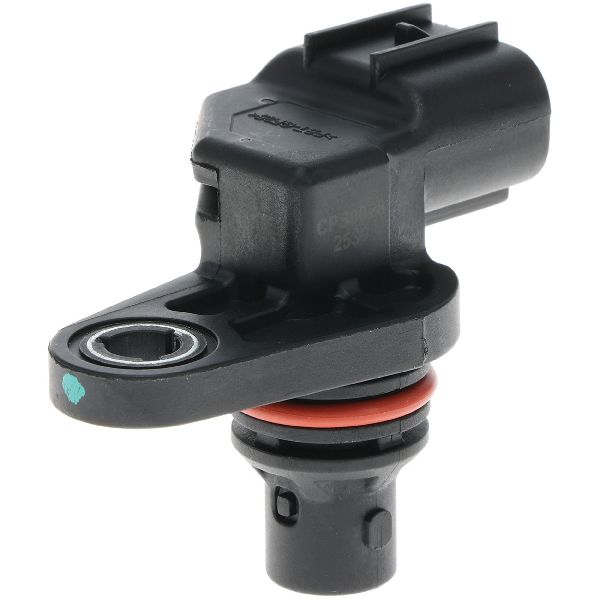
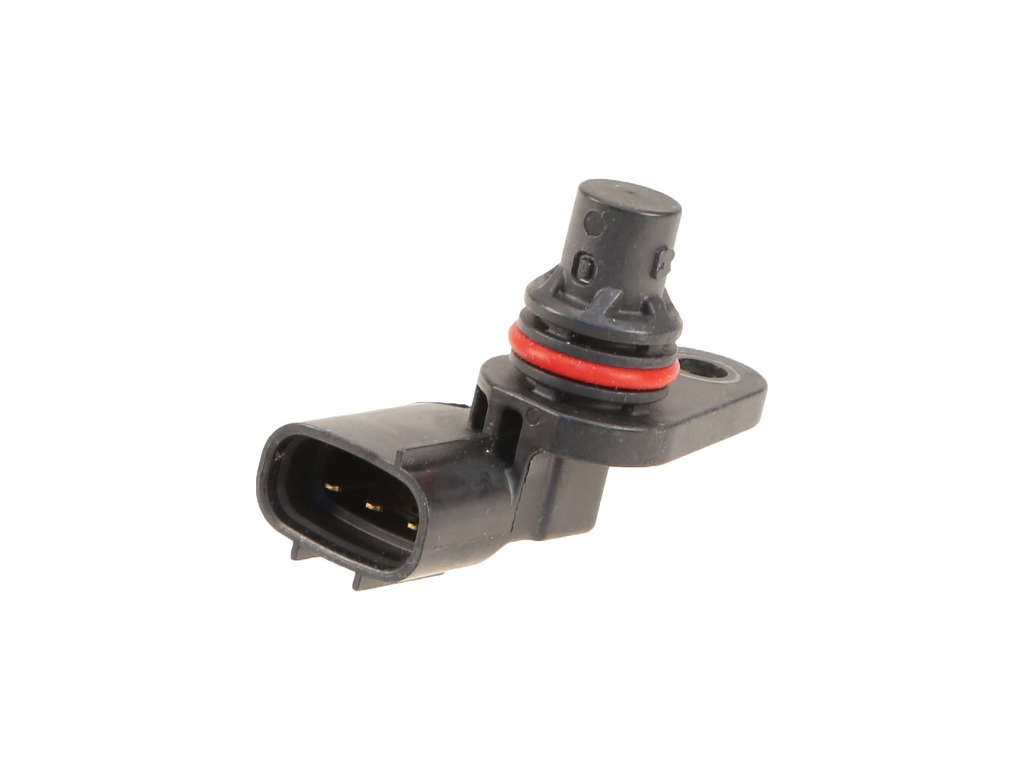
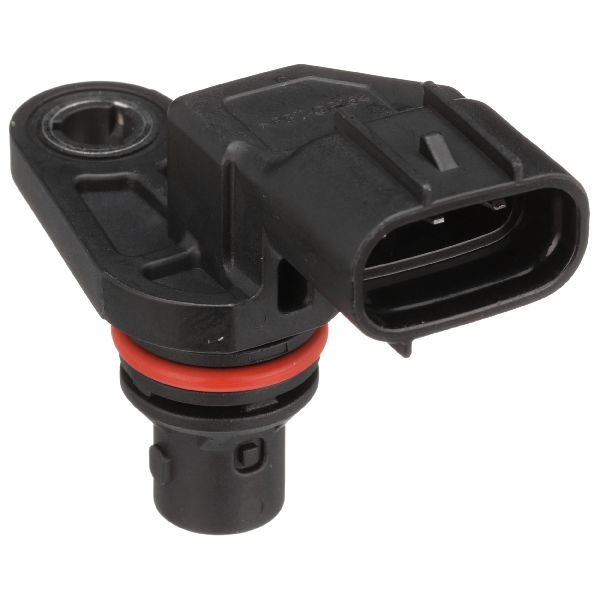
- Do not confuse the Oil Control Valve (actuator) with the Camshaft Position Sensor; replacing the sensor will not fix this code.
What's Unique About the 2016-2020 Kia Sorento
For the third-generation Sorento with the 3.3L V6 (engine code G6DH), this code is a common and typically straightforward issue. Bank 1 is the cylinder bank closer to the firewall, which can make accessing the exhaust OCV slightly more challenging than on the front bank (Bank 2). These Lambda II engines are known to be sensitive to oil maintenance; they rely heavily on clean oil and proper oil pressure for the Continuously Variable Valve Timing (CVVT) system to function correctly. Neglecting oil changes can directly lead to oil sludge, which clogs the fine mesh screens on the OCVs and causes them to fail.
Symptoms You May Notice
- Check Engine Light is on
- Rough or unstable idle
- Decreased fuel economy
- Engine hesitation or loss of power, especially during acceleration
- Difficulty starting the engine
- Engine stalling
- Replacing the Camshaft Position *Sensor*. P0013 is a circuit code for the *actuator* (the OCV/solenoid), not the sensor that reads the camshaft's position. Replacing the sensor will not fix this code.
Most Likely Causes
- Failed Bank 1 Exhaust Oil Control Valve (OCV/VVT Solenoid) 🔴 High Probability The OCV can fail electrically due to an internal short or open circuit in its coil windings, or it can become mechanically stuck due to oil sludge and contamination from extended oil change intervals. This is a very common failure point on the Lambda engine family.
How to confirm: Check the resistance of the solenoid with a multimeter; it should be within the manufacturer's specified range (typically 6.9-7.9 Ohms for Kia/Hyundai). You can also swap the Bank 1 exhaust OCV with the Bank 2 exhaust OCV (same part number). If the code changes to P0023, the OCV is confirmed to be faulty.
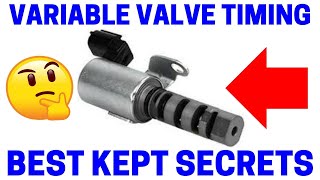
Typical fix: Replace the Bank 1 exhaust Oil Control Valve. Cleaning is sometimes attempted but replacement is the reliable fix. 🎬 Watch: How to replace a VVT oil control valve solenoid
Est. part cost: $40-$90 - Low or Dirty Engine Oil 🟡 Medium Probability The VVT system is operated by oil pressure. If the oil is low, dirty, or the wrong viscosity, it can clog the small passages and filter screens in the OCV or prevent it from operating correctly. The Lambda II GDI engine can be prone to carbon buildup and oil consumption, making regular oil checks critical.
How to confirm: Check the engine oil dipstick. The oil should be at the full mark and appear clean. If it's low, black, or sludgy, it needs to be changed. This is the first and most important check.
Typical fix: Perform an engine oil and filter change using the correct viscosity oil specified in the owner's manual (typically 5W-30) and a quality OEM filter.
Est. part cost: $50-$100 - Wiring or Connector Issue ⚪ Low Probability The wiring harness or the electrical connector to the OCV can become damaged, corroded, or contaminated with oil, causing an open or short in the circuit. Rodents have also been known to chew on the soy-based wire coatings.
How to confirm: Visually inspect the connector and wiring going to the Bank 1 exhaust OCV for any signs of damage, corrosion, or loose connections. Use a multimeter to check for proper voltage and ground at the connector with the key on.
Typical fix: Repair the damaged wiring or replace the connector pigtail.
Est. part cost: $15-$50
Rare But Worth Checking
- Faulty Powertrain Control Module (PCM): This is very rare. The PCM is the last thing to suspect after all other possibilities, including the OCV and its entire circuit, have been thoroughly tested and ruled out.
- Mechanical Timing Issue: In rare cases, especially on higher mileage engines, a stretched timing chain or a failing camshaft phaser can cause timing-related codes. One owner of a related Hyundai engine with P0013 found a broken pin on the exhaust cam gear. This is not a common cause for a purely electrical circuit code like P0013 but can happen if the phaser failure damages the OCV.
Diagnosis Steps
- Check the engine oil level and condition. Top off or change the oil and filter if necessary. This is the most critical first step.
- Inspect the electrical connector and wiring harness for the Bank 1 exhaust OCV. Bank 1 is the cylinder bank closer to the firewall. Look for any signs of damage, corrosion, or loose connections.
- Using a multimeter, disconnect the OCV and measure the resistance across its two pins. Compare the reading to the manufacturer's specification (typically between 6.9 and 7.9 ohms for Kia/Hyundai). An open circuit (infinite resistance) or a short (near-zero resistance) indicates a failed solenoid.
- If the resistance is within spec, check for power and ground at the OCV connector with the ignition on.
- The most effective test is to swap the Bank 1 exhaust OCV with the Bank 2 exhaust OCV (on the front cylinder bank, same part number). Clear the codes and drive the vehicle. If the code returns as P0023 ('B' Camshaft Position - Actuator Circuit Bank 2), the OCV is faulty and needs to be replaced.
- If the code P0013 returns after the swap, the problem lies within the wiring or the PCM, requiring further electrical diagnosis.
Parts You'll Likely Need
- Exhaust Camshaft Oil Control Valve (Bank 1)
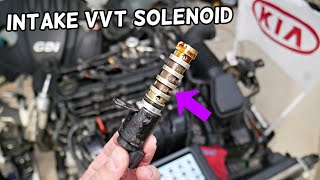
(OEM #24355-3CAB2)— This solenoid is the most common failure point for a P0013 code, either due to an internal electrical fault or mechanical sticking from contaminated oil. This part number is often used for both intake and exhaust OCVs on this engine. 🎬 Watch: Kia VVT solenoid location and replacement walkthrough
Trusted brands: Kia (Genuine), Hyundai (Genuine), Aisin, Dorman
OEM price range: $70-$120
Aftermarket price range: $40-$90
Related Codes That Often Appear With This One
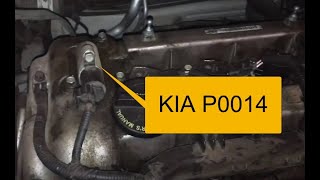
- P0014 — P0014 indicates the exhaust camshaft timing is mechanically over-advanced. A failing OCV that triggers P0013 can get stuck, causing this mechanical timing error. 🎬 See this video on fixing the related P0014 timing code
Mechanic-Grade Diagnostic Values
- Oil Control Valve (OCV) Solenoid Resistance — expected: 6.9 - 7.9 Ohms at 68°F (20°C). Failure: A reading of infinite resistance (open circuit) or near-zero resistance (short circuit).
- Voltage at OCV Connector — expected: Battery voltage (approx. 12V) on one pin with ignition on, engine off.. Failure: No voltage indicates a problem with the power supply circuit, potentially a fuse or wiring issue.
Scan Tool Commands That Help
- Kia GDS (Global Diagnostic System): Actuation Test for Oil Control Valve — This bidirectional command allows a technician to manually command the OCV solenoid on and off while monitoring engine data. A change in engine idle or sound when the solenoid is activated confirms the solenoid is mechanically working and the circuit is capable of carrying a signal. No change suggests a failed solenoid or a circuit problem.
Wiring & Ground Locations
- Bank 1 Exhaust OCV Connector — On the Bank 1 (rear, firewall side) valve cover. It is one of two solenoids located there.. This is the primary connection point to test for voltage, ground, and resistance. It is susceptible to oil contamination from a leaking valve cover gasket, which can degrade the connection and cause an open or short circuit.
- Main Engine Ground — Typically a large gauge wire from the negative battery terminal to the chassis and another from the chassis to the engine block or transmission case. Specific ground points are often found on the cylinder heads.. A poor main engine ground can cause a host of erratic electrical issues and fault codes, including circuit codes for sensors and actuators like P0013.
Real Owner Repair Stories
- Reddit user comment (Kia with a camshaft sensor code (specific model/year not detailed, but engine behavior is relevant)) — Check engine light with a camshaft-related code.
❌ Tried (didn't work) An initial dealer visit resulted in an oil pan reseal and cleaning the oil control valve for $600, but the code returned within two days.
✅ What actually fixed it The user was quoted an $8000 engine replacement. Another commenter suggested a common, less severe failure on these engines: the dowel pin holding the CVVT sprocket to the camshaft can sink into the cam, allowing the sprocket to spin and exceed timing tolerances. This is verifiable with scan tool data and can often be repaired without major engine disassembly. While not a direct fix for P0013's circuit fault, it highlights how dealers can escalate to engine replacement when underlying mechanical timing issues are suspected alongside electrical codes. - NHTSA ODI #11678480 — An owner of a related Kia model reported that their vehicle was diagnosed with DTCs P0014 and P0013. Despite the check engine light being turned off and the camshaft being replaced, the failure persisted.
OEM Part Supersession History
221103cab0, 221103cab0a, 504r53ca00→24355-3CAB2— Part number consolidation and potential minor revisions by the manufacturer.
Diagnostic Flowchart
Other Known Issues on This Vehicle
Issues unrelated to this code that are worth knowing about as an owner of this generation:
- Head Gasket / Head Bolt Failure 🔴 High — Primarily reported on 2016-2017 models, with failures occurring between 50,000 and 140,000 miles. Can lead to catastrophic engine failure requiring replacement. (Ref: NHTSA Preliminary Evaluation PE23-019 opened in Nov 2023. Kia launched extended warranty campaign WTY035 in Dec 2023 for coolant leaks.)
- Intake Valve Carbon Buildup 🟡 Low — Common to all Gasoline Direct Injection (GDI) engines, including the Lambda II. Can cause rough idle or misfires, typically becoming noticeable after 80,000 miles.
- Excessive Oil Consumption 🟠 Medium — Some owners report increased oil consumption, particularly after 60,000 miles, requiring frequent top-offs. (Ref: No specific recall for the 3.3L V6, but Kia has general TSBs for oil consumption tests.)
- Sticking Steering Wheel 🟠 Medium — Reported in 2016-2018 models where the wheel sticks in the straight-ahead position, requiring force to initiate a turn. (Ref: Solution often involves replacing the electric steering gear.)
- Faulty Accelerator Pedal Assembly 🔴 High — Affected a specific range of early 2016 models. (Ref: Recall SC115 was issued for improperly soldered components that could prevent acceleration.)
Used vs. New Parts: Buying Guide for This Vehicle
When a used part is the smart pick: For the primary fix, the Oil Control Valve (OCV), buying a used part is generally not recommended. The part is relatively inexpensive new (often under $90 for a quality aftermarket version), and a used part carries a high risk of being clogged or having a limited remaining electrical lifespan.
Donor-vehicle mileage cap: roughly under 60000 miles for the part to have meaningful remaining life.
What to inspect on the donor part:
- Ensure the donor vehicle had no signs of engine sludge (check oil fill cap).
- Ask for the maintenance history if possible; regular oil changes are key.
- Physically inspect the OCV's mesh screens for any tears or metallic debris before purchase.
OEM-only on this vehicle (don't cheap out):
- Engine Control Module (ECM/PCM) - Must be OEM and often requires dealer programming.
Aftermarket brands forum-validated for this vehicle:
- Dorman
- Standard Motor Products (SMP)
- Aisin
Brands owners have reported issues with on this vehicle:
- No-name, unbranded solenoids from online marketplaces often have high failure rates and may not perform to OEM specifications.
Real Owner Stories
Aggregated from forums and TSBs cited above. Mileages and costs reflect what owners reported in those sources.
2016-2017 Kia Sorento 3.3L V6 — ~95000 miles
Symptoms: Head gasket/head bolt failure leading to coolant leaks and potential catastrophic engine failure.
What fixed it: Kia launched extended warranty campaign WTY035 to address these specific engine concerns.
Source hint: NHTSA Preliminary Evaluation PE23-019 and Kia Warranty Campaign WTY035
2016 Kia Sorento 3.3L V6
Symptoms: Improperly soldered components in the pedal assembly preventing the vehicle from accelerating.
What fixed it: Replacement of the accelerator pedal assembly under recall SC115.
Source hint: Recall SC115
2016-2020 Kia Sorento 3.3L V6
Symptoms: Rough idle and misfires, typically occurring after high mileage.
What fixed it: Cleaning of intake valve carbon buildup, a common issue for the Lambda II GDI engine.
Source hint: known_issues: Intake Valve Carbon Buildup
2016-2018 Kia Sorento
Symptoms: The steering wheel sticks in the straight-ahead position and requires physical force to initiate a turn.
What fixed it: Replacement of the electric steering gear.
Source hint: known_issues: Sticking Steering Wheel
Related OBD-II Codes
Frequently Asked Questions
Is there a recall for the 3.3L V6 engine regarding coolant leaks or head gasket issues?
Can I just clean the Bank 1 Exhaust OCV to fix P0013?
My 2016 Sorento has a recall for the accelerator pedal; could this cause P0013?
What is the correct oil viscosity for the Lambda II 3.3L GDI engine to prevent VVT codes?
Where is the Bank 1 Exhaust OCV located on my Sorento V6?
Are there any specific aftermarket brands recommended for replacing the VVT solenoid?
Helpful Videos
We Have This Part in Stock


The information in this article is provided for general reference and educational purposes only. Vehicle specifications, procedures, and part compatibility can vary by production date, trim level, and region. Always consult your vehicle's factory service manual and verify part numbers before purchasing or performing repairs. Safety-critical components such as airbags, seat belts, and braking systems should be installed by a qualified professional.
- Kia Sorento:
- 🧭 Diagnostic Flowchart
- 🎬 Helpful Videos
- 🛍️ Shop This Part
- What's Unique About the 2016-2020 Kia Sorento
- Symptoms You May Notice
- Most Likely Causes
- Rare But Worth Checking
- Diagnosis Steps
- Parts You'll Likely Need
- Related Codes That Often Appear With This One
- Mechanic-Grade Diagnostic Values
- Scan Tool Commands That Help
- Wiring & Ground Locations
- Real Owner Repair Stories
- OEM Part Supersession History
- Other Known Issues on This Vehicle
- Used vs. New Parts: Buying Guide for This Vehicle
- Real Owner Stories
- 2016-2017 Kia Sorento 3.3L V6 — ~95000 miles
- 2016 Kia Sorento 3.3L V6
- 2016-2020 Kia Sorento 3.3L V6
- 2016-2018 Kia Sorento
- Related OBD-II Codes
- Frequently Asked Questions
- 🎟️ Get 5% Off