

P0013 on 2013-2019 Subaru Outback 2.5L: Exhaust Cam Actuator Circuit Fixes
On a 2013-2019 Subaru Outback with the 2.5L engine, code P0013 is almost always caused by a failed exhaust Oil Control Valve (OCV) on the passenger side (Bank 1). Before replacing any parts, always check that the engine oil is full and clean, as low or dirty 0W-20 synthetic oil is a known trigger. A new OEM solenoid (Part #10921AA231) costs around $100-$150 and is a straightforward DIY replacement that many owners perform in under an hour.
- P0013 on a 2.5L Outback almost always points to the passenger-side exhaust Oil Control Valve (OCV).
- Always check your engine oil level and condition first. A simple oil change can sometimes resolve the issue, especially on engines prone to oil consumption.
- Do not confuse the Oil Control Valve (actuator solenoid) with the Camshaft Position Sensor; they are different parts and cause different codes.
- Swapping the suspected faulty OCV with its counterpart on the other side of the engine is a free and effective way to confirm the diagnosis before buying parts.
What's Unique About the 2013-2019 Subaru Outback
The 2.5L FB25 engine in this generation of Outback uses a Dual Active Valve Control System (AVCS) that adjusts timing on both intake and exhaust camshafts. This system is highly dependent on clean oil at the proper pressure to function correctly. While the P0013 code points to an electrical fault, issues are often triggered or worsened by low or dirty engine oil, a condition some early FB-series engines are prone to due to issues with piston rings causing excessive oil consumption. It's crucial to distinguish this code from a camshaft *position sensor* fault, which would set a different code like P0365.
Generation note: This range covers the end of the fourth generation (2013-2014) and the full fifth generation (2015-2019) Subaru Outback. The 2.5L FB25 engine and its AVCS (variable valve timing) system are fundamentally the same across these years, so the causes and fixes for P0013 are consistent.
Symptoms You May Notice
- Check Engine Light is on
- Rough or uneven idle
- Engine may hesitate, stall, or run rough
- Reduced fuel economy
- Hard starting condition
- Engine may make a slight ticking or clicking noise
- Replacing the Camshaft Position Sensor. P0013 is a code for the actuator *circuit*, not the sensor that reads the camshaft's position. A bad sensor would typically set a P0365 code.
- Replacing the wrong Oil Control Valve. The FB25 engine has four OCVs (intake and exhaust for each bank). P0013 specifically refers to the exhaust OCV on Bank 1 (passenger side). Ensure you are diagnosing and replacing the correct part.
Most Likely Causes
- Faulty Bank 1 Exhaust Oil Control Valve (OCV) 🔴 High Probability The OCV is an electromechanical part that operates in hot engine oil, making it a common failure point. The internal coil windings can break, creating an open circuit, or the valve can become clogged with sludge, leading to a circuit fault code. Owners on forums often report this part failing between 60,000 and 120,000 miles.
How to confirm: Using a multimeter, check the resistance of the solenoid; it should be between 6.9 and 7.9 ohms at 68°F (20°C). An infinite (OL) reading indicates an open circuit, while near-zero indicates a short. The most effective DIY diagnostic is to swap the passenger-side exhaust OCV with the driver-side exhaust OCV (they are identical parts). If the code changes to P0023 (the Bank 2 equivalent), the OCV is confirmed to be faulty.
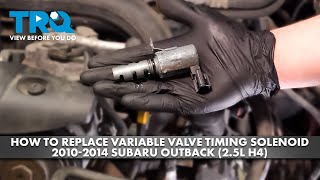
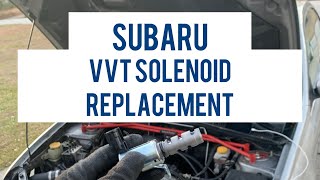
Typical fix: Replace the Bank 1 (passenger side) exhaust Oil Control Valve. Lightly oil the new O-ring before installation. The part is typically held in by a single 10mm bolt. 🎬 Watch: Step-by-step VVT solenoid replacement guide
Est. part cost: $100-$150 - Low, Dirty, or Incorrect Viscosity Engine Oil 🟡 Medium Probability The AVCS system is entirely hydraulic. Low oil levels or oil that is dirty, sludged, or of the wrong viscosity can clog the small passages and filter screens in the OCVs, causing them to malfunction and trigger a circuit code. Early FB25 engines (especially 2013-2014 models) were known for excessive oil consumption due to piston ring design, making low oil levels a frequent issue.
How to confirm: Check the engine oil dipstick. The oil should be at the full mark and appear clean. The FB25 engine requires 0W-20 synthetic oil. Some owners report the P0013 code appearing shortly after an oil change if the level is not perfectly full.
Typical fix: Perform an oil and filter change using the correct specification oil. Clear the code and see if it returns. Some owners have had success cleaning the OCV with brake cleaner and testing it with a 12V source before reinstalling.
Est. part cost: $50-$100 - Damaged Wiring or Electrical Connector ⚪ Low Probability The exhaust OCV is located on the lower part of the engine, making its wiring susceptible to heat damage, road debris, or oil contamination from leaks. Subaru TSB 02-170-17R notes a specific issue where oil can seep through a faulty OCV seal and 'wick' up into the wiring harness, causing intermittent circuit codes.
How to confirm: Visually inspect the wiring harness and connector leading to the Bank 1 exhaust OCV for any signs of cracking, fraying, oil saturation, or corrosion. Ensure the connector is fully seated and the locking tab is engaged.
Typical fix: Repair the damaged wiring or clean the oil-soaked connector with electrical contact cleaner. If oil has wicked into the harness, the affected section may need to be replaced.
Est. part cost: $10-$50
Rare But Worth Checking
- Faulty Engine Control Module (ECM): This is very rare. The ECM should only be considered after all other possibilities, including the OCV and its entire circuit, have been thoroughly tested and ruled out.
Diagnosis Steps
- Check Engine Oil: Verify the engine oil level is full and the oil is clean. If low or dirty, perform an oil change with 0W-20 synthetic oil, clear the code, and test drive. This is the first and most important step.
- Inspect Wiring: Visually inspect the electrical connector and wiring going to the Bank 1 (passenger side) exhaust OCV. Look for damage, corrosion, or oil contamination. Ensure the connector is secure.
- Test the OCV: Disconnect the OCV and measure the resistance across its two pins with a multimeter. A reading between 6.9-7.9 ohms is expected. An infinite reading indicates an open circuit and a failed solenoid.
- Perform a Swap Test: A highly effective method is to swap the passenger-side exhaust OCV with the driver-side exhaust OCV. They are identical parts. Clear the codes and drive the vehicle. If the fault code changes to P0023 ('B' Camshaft Position Actuator Circuit/Open Bank 2), you have definitively confirmed the OCV is the problem. 🎬 See: How to diagnose and fix a P0013 code
- Check for Power: If the OCV tests good and the swap test does not isolate the issue, use a multimeter to check for voltage at the OCV connector harness-side with the ignition on. If there is no power, the issue lies in the wiring harness or the ECM.
- Final Diagnosis: If the code remains P0013 after the swap and the wiring is confirmed to be good, the problem may be a rare internal fault in the Engine Control Module (ECM).
Parts You'll Likely Need
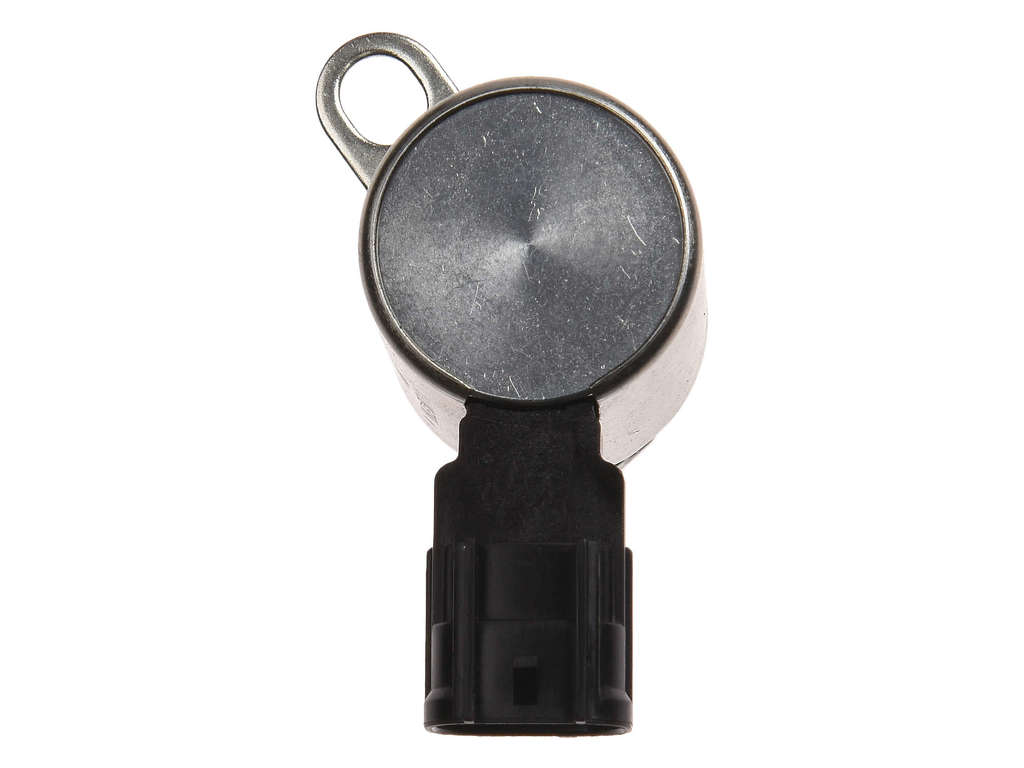
- Exhaust Oil Control Valve / VVT Solenoid (Bank 1)
(OEM #10921AA231)— This solenoid is the most common point of failure for the P0013 code due to electrical failure or internal clogging.
Trusted brands: Subaru (OEM), Denso, Dorman
OEM price range: $90-$150
Aftermarket price range: $40-$90
Related Codes That Often Appear With This One
- P0014 — 'B' Camshaft Position - Timing Over-Advanced or System Performance (Bank 1). This code can appear with P0013 if the OCV is stuck in a position that causes the camshaft timing to be incorrect, in addition to having an electrical fault.
Technical Service Bulletins (TSBs) & Recalls
- TSB 02-163-16: Provides updated inspection and repair procedures for various AVCS-related DTCs, including checking oil condition and performing diagnostic checks with the Subaru Select Monitor (SSM).
- TSB 02-170-17R: Addresses a specific failure mode where engine oil seeps through the OCV solenoid's connector pins and contaminates the engine wiring harness, causing intermittent circuit codes like P0013.
Platform-Specific Known Issues
- A user on a Subaru forum reported that their P0013 code was triggered by using a much thicker 5W-50 oil instead of the specified 0W-20, demonstrating the system's sensitivity to oil viscosity.
- Subaru TSB 02-170-17R describes a known issue where oil can wick through the OCV's internal seal and into the wiring harness, causing persistent, intermittent circuit faults that may not be resolved by simply replacing the OCV. The connector and harness must be thoroughly cleaned or replaced.
Mechanic-Grade Diagnostic Values
- Oil Control Valve (OCV) Solenoid Resistance — expected: 6.9 - 7.9 Ohms at 68°F (20°C). Failure: An infinite (OL) reading indicates an open circuit; a reading near zero indicates a short circuit. Either requires replacement.
- OCV Connector Voltage (Harness Side) — expected: One pin should have battery voltage (approx. 12V) with Key On, Engine Off. The other pin is the control circuit from the ECM.. Failure: No voltage suggests a wiring issue, blown fuse, or problem with the power supply circuit.
- Scan Tool Live Data: AVCS Commanded vs. Actual Angle — expected: At idle, the commanded and actual angles for the exhaust cam should be near 0 degrees. When driving, the actual angle should closely follow the commanded angle.. Failure: If the actual angle does not change while the commanded angle does, it points to a stuck OCV or an oil flow problem, even if the circuit code isn't present.
Scan Tool Commands That Help
- Subaru Select Monitor (SSM) or equivalent professional scanner: Active Test / Actuator Operation Test for AVCS Solenoid — This command allows the technician to directly command the OCV to operate. If the solenoid clicks and/or the engine stumbles when the command is sent, it confirms the wiring and the solenoid's coil are likely functional, pointing the diagnosis towards a potential clog or oil pressure issue.
- Subaru Select Monitor (SSM) or equivalent professional scanner: Read Initial VVT Position — According to TSB 02-163-16R, this value can be checked to see if the ECM has a bad learned value for the camshaft's base position. The left and right bank values should be within 10 degrees of each other. An incorrect learned value could potentially cause related performance issues, though it's less likely to directly cause a P0013 circuit code.
Wiring & Ground Locations
- Engine Block to Chassis Ground — Typically a large gauge wire from the engine block (often near the alternator or starter) to the chassis/frame rail, below the battery.. A poor main engine ground can cause a host of floating voltages and intermittent electrical issues for all engine sensors and actuators, including the OCVs.
- Intake Manifold Grounds — On many Subaru engines, there are ground wires bolted directly to the top of the intake manifold. The ECU itself often relies on these grounds.. Since the ECM controls the OCV, a poor ground connection at the manifold can affect the ECM's ability to properly command and monitor the OCV circuit, potentially leading to false circuit codes.
Real Owner Repair Stories
- LegacyGT.com Forum Consensus (Various Subaru models with FB/EJ engines) — Persistent, intermittent AVCS-related codes (both circuit and performance codes like P0011/P0021) that would not resolve.
❌ Tried (didn't work) Replacing the OCV solenoid (sometimes multiple times), Multiple oil changes
✅ What actually fixed it The root cause was found to be a clogged mesh filter screen located inside the banjo bolt for the AVCS oil supply line. These screens, intended to protect the solenoids, can become blocked with sludge and starve the system of oil, leading to various faults. Removing and cleaning or replacing the banjo bolt and screen resolved the issue.
OEM Part Supersession History
10921AA220→10921AA230— Standard part revision and improvement by the manufacturer.10921AA230→10921AA231— Standard part revision and improvement by the manufacturer.
Model Year Variations Within This Range
- 2013-2014: These earlier FB25 engines had a higher incidence of excessive oil consumption due to piston ring design. This makes checking the oil level the absolute first step for any code on these years, as a low oil level is a very common trigger for AVCS faults.
- 2014-2019: Starting in 2014, revisions were made to the FB25 including new pistons and a slightly higher compression ratio (10.3:1 vs 10.0:1). While these changes were aimed at improving efficiency and addressing oil consumption, the AVCS system and the OCV part number remained consistent for the purpose of diagnosing P0013.
- 2019: The 2019 Outback was the last year for this generation and this version of the FB25 engine. The next generation Outback (2020+) received the updated FB25D with direct injection, which is a significantly different engine.
Diagnostic Flowchart
Other Known Issues on This Vehicle
Issues unrelated to this code that are worth knowing about as an owner of this generation:
- Excessive Oil Consumption 🔴 High — Common in 2013-2014 models. Caused by defective piston rings. Can lead to low oil levels, triggering other engine codes and potentially causing engine damage if not monitored. (Ref: A class-action lawsuit led to warranty extensions and reimbursements for some owners.)
- CVT Transmission Issues 🔴 High — Some owners report shuddering, hesitation, or outright failure of the Continuously Variable Transmission (CVT). Issues with the torque converter or valve body are common. (Ref: Subaru extended the CVT warranty to 10 years/100,000 miles for many models, including those in this range, due to customer complaints.)
- Cracked Windshields 🟡 Low — Many owners across multiple model years report that the windshields are prone to cracking easily from minor impacts.
- Infotainment System Glitches 🟠 Medium — Particularly on 2015-2019 models, the Starlink infotainment system can be prone to freezing, unresponsiveness, or random reboots. Some screens suffer from delamination. (Ref: Various software updates were released to address some of these issues.)
- Rapid Battery Drain 🟠 Medium — A significant number of owners report batteries that drain unexpectedly, sometimes overnight. This has been attributed to various software and electrical issues.
Used vs. New Parts: Buying Guide for This Vehicle
When a used part is the smart pick: A used Oil Control Valve (OCV) from a reputable salvage yard can be a cost-effective option, especially if it comes from a low-mileage, rear-ended vehicle. Given the relatively low cost of a new aftermarket part, many owners opt for new, but a used OEM part is often superior to a cheap new aftermarket one.
Donor-vehicle mileage cap: roughly under 80000 miles for the part to have meaningful remaining life.
What to inspect on the donor part:
- Check for a clean, sludge-free exterior on the donor engine.
- Ask for the vehicle's mileage; prefer donors under 80,000 miles.
- Inspect the electrical connector pins on the used OCV for any corrosion, damage, or signs of oil seepage from inside the solenoid.
OEM-only on this vehicle (don't cheap out):
- Engine Control Module (ECM)
Aftermarket brands forum-validated for this vehicle:
- Denso (often the original OEM manufacturer)
- NTK
Brands owners have reported issues with on this vehicle:
- Unbranded, no-name parts from online marketplaces should be avoided, as their internal coil windings and valve tolerances may not meet OEM specifications, leading to premature failure or performance issues.
Real Owner Stories
Aggregated from forums and TSBs cited above. Mileages and costs reflect what owners reported in those sources.
2013-2019 Subaru Outback 2.5L FB25 — ~90000 miles
Symptoms: Check Engine Light is on; owners on forums report these parts failing between 60,000 and 120,000 miles.
What fixed it: Replace the Bank 1 (passenger side) exhaust Oil Control Valve. Lightly oil the new O-ring before installation.
Cost: $100-$150
Source hint: subaruoutback.org
2013-2014 Subaru Outback 2.5L FB25
Symptoms: P0013 code appearing shortly after an oil change if the level is not perfectly full; engine may hesitate, stall, or run rough.
What fixed it: Perform an oil and filter change using the correct specification oil (0W-20 synthetic) and ensure it is at the full mark.
Cost: $50-$100
Source hint: Reddit r/subaru
2013-2019 Subaru Outback 2.5L FB25
Symptoms: Persistent, intermittent circuit faults that may not be resolved by simply replacing the OCV; oil found inside the electrical connector.
What fixed it: Clean the oil-soaked connector with electrical contact cleaner or replace the affected section of the wiring harness where oil has wicked through the seal.
Cost: $10-$50
Source hint: TSB 02-170-17R
Subaru Outback 2.5L FB25
Symptoms: Code P0013 triggered after using a much thicker 5W-50 oil instead of the specified 0W-20.
What fixed it: Changing the oil back to the manufacturer-specified 0W-20 synthetic oil.
Source hint: vehicle_specific_issues
Related OBD-II Codes
Frequently Asked Questions
Which side of the engine is affected by code P0013 on my 2.5L FB25 Outback?
Does Subaru TSB 02-170-17R apply to my P0013 circuit code?
Can using the wrong oil viscosity trigger this code on my 2013-2019 Outback?
Is there a simple DIY test to confirm the OCV is bad before I buy a new one?
What should the resistance reading be for a healthy OCV on the FB25 engine?
Could my Outback's known oil consumption issue be related to this code?
Helpful Videos
![How to Fix P0013 Engine Code in 4 Minutes [2 DIY Methods / Only $6.63]](https://img.youtube.com/vi/t8TG_Q7QhvI/mqdefault.jpg)


We Have This Part in Stock


The information in this article is provided for general reference and educational purposes only. Vehicle specifications, procedures, and part compatibility can vary by production date, trim level, and region. Always consult your vehicle's factory service manual and verify part numbers before purchasing or performing repairs. Safety-critical components such as airbags, seat belts, and braking systems should be installed by a qualified professional.
- Subaru Outback:
- 🧭 Diagnostic Flowchart
- 🎬 Helpful Videos
- 🛍️ Shop This Part
- What's Unique About the 2013-2019 Subaru Outback
- Symptoms You May Notice
- Most Likely Causes
- Rare But Worth Checking
- Diagnosis Steps
- Parts You'll Likely Need
- Related Codes That Often Appear With This One
- Technical Service Bulletins (TSBs) & Recalls
- Platform-Specific Known Issues
- Mechanic-Grade Diagnostic Values
- Scan Tool Commands That Help
- Wiring & Ground Locations
- Real Owner Repair Stories
- OEM Part Supersession History
- Model Year Variations Within This Range
- Other Known Issues on This Vehicle
- Used vs. New Parts: Buying Guide for This Vehicle
- Real Owner Stories
- 2013-2019 Subaru Outback 2.5L FB25 — ~90000 miles
- 2013-2014 Subaru Outback 2.5L FB25
- 2013-2019 Subaru Outback 2.5L FB25
- Subaru Outback 2.5L FB25
- Related OBD-II Codes
- Frequently Asked Questions
- 🎟️ Get 5% Off