

P0013 on 2013-2018 Toyota RAV4 2.5L: Exhaust Cam Actuator Circuit Causes and Fixes
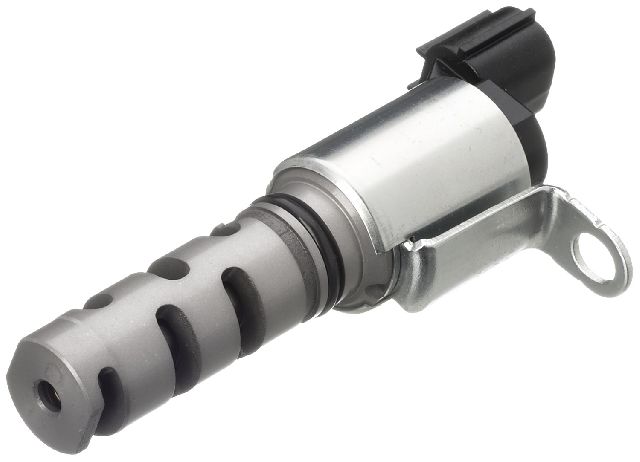
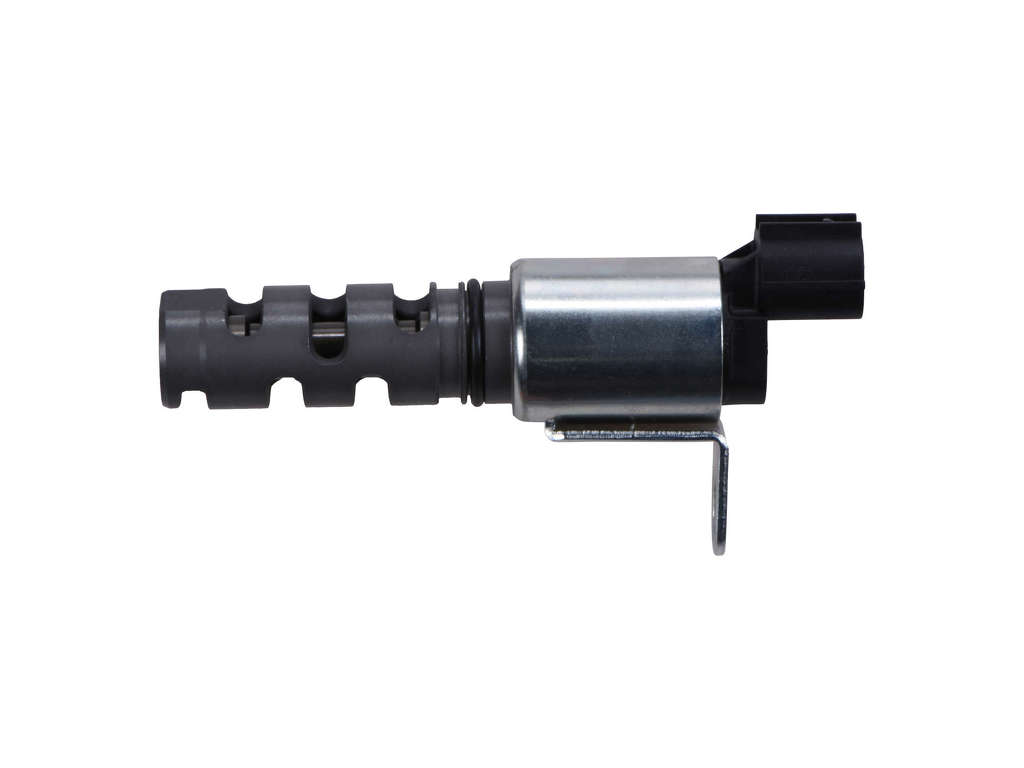
On a 2013-2018 RAV4, code P0013 is almost always caused by a faulty exhaust Variable Valve Timing (VVT) solenoid, also called an Oil Control Valve (OCV). Low or dirty engine oil is a major contributing factor. Replacing the solenoid is a simple DIY job costing around $30-$70 for an aftermarket part. Before replacing, check oil level and test the solenoid's resistance (should be 6.9-7.9 Ohms).
- P0013 on a 2013-2018 RAV4 points to an electrical issue with the exhaust VVT solenoid.
- Always check your engine oil level and condition first; low or dirty oil is a frequent cause of VVT system problems.
- The most likely fix is replacing the exhaust VVT solenoid (Oil Control Valve), which is an inexpensive part and very easy to access for a DIY repair.
- The definitive test is to check the solenoid's resistance with a multimeter, which should be between 6.9 and 7.9 ohms.
What's Unique About the 2013-2018 Toyota RAV4
The 2AR-FE engine is widely used across the Toyota lineup and is generally very reliable. For this P0013 code, the issue is rarely complex. The VVT solenoids are easily accessible on the top of the engine, making diagnosis and replacement one of the more straightforward repairs on this vehicle. While some early 2AR-FE engines had TSBs for a camshaft gear rattle (T-SB-0041-13), that is a separate mechanical issue caused by the VVT phaser and not directly related to this electrical circuit code.
Symptoms You May Notice
- Check Engine Light is on
- Rough or fluctuating idle
- Poor acceleration or loss of engine power
- Decreased fuel economy
- Engine may hesitate or stall
- Rattling noise from the engine bay
- Replacing the camshaft position sensor. The camshaft position sensor reports the cam's speed and position, but P0013 is a code for the actuator circuit that controls the cam's timing, not the sensor that reads it.
- Replacing the VVT actuator gear (phaser). While the VVT gear can fail and cause a rattling noise (see TSB T-SB-0041-13), it is a mechanical part. P0013 is an electrical circuit code specifically for the solenoid.
Most Likely Causes
- Faulty Exhaust Oil Control Valve (VVT Solenoid) 🔴 High Probability This is a common failure point on many modern engines. The solenoid can fail electrically (internal open/short) or mechanically (sticking plunger) due to age, heat cycles, and oil contamination.
How to confirm: Check the solenoid's resistance with a multimeter; it should be between 6.9 and 7.9 Ohms at 68°F (20°C). If the reading is infinite (open) or zero (short), the solenoid is electrically bad. You can also apply 12V to its terminals to listen for a click, but the resistance test is more definitive.
Typical fix: Replace the exhaust camshaft oil control valve (OEM Part #15330-36011). It is held in by a single 10mm bolt and is easily accessible on the passenger side of the engine cover.
Est. part cost: $30-$70 - Low or Dirty Engine Oil 🟡 Medium Probability The VVT system is hydraulically operated by engine oil pressure. If the oil is low, old, or contains sludge, it can clog the fine mesh screens on the solenoid or prevent it from actuating correctly.
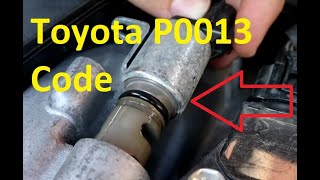
How to confirm: Check the engine oil dipstick for proper level and inspect the oil's condition. If it is dark, thick, or below the 'add' line, this is a likely contributor. This is the first and most important check. 🎬 Watch: A breakdown of P0013 causes and common fixes.
Typical fix: Perform an engine oil and filter change using the manufacturer-specified oil (SAE 0W-20). This should be done as the first step or at the very least, in conjunction with replacing the solenoid.
Est. part cost: $40-$80 - Damaged Wiring or Connector ⚪ Low Probability
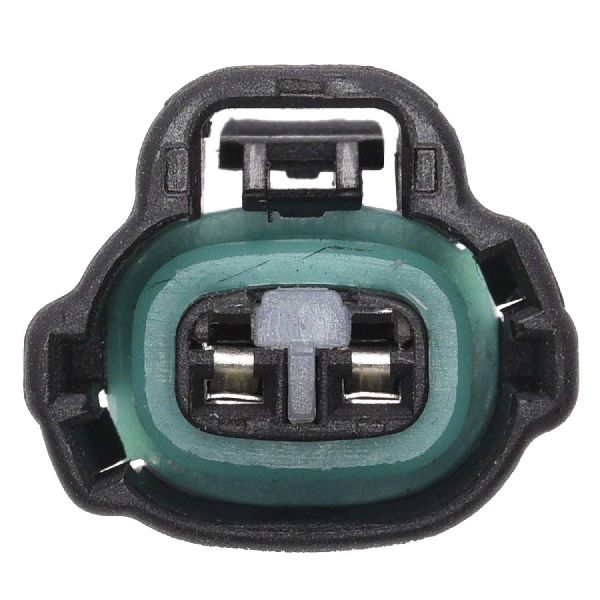
How to confirm: Visually inspect the wiring harness and two-pin connector going to the exhaust OCV. Look for any signs of corrosion, frayed wires, or loose pins. Use a multimeter to check for continuity between the ECM and the solenoid connector.
Typical fix: Repair the damaged section of wire or replace the connector pigtail.
Est. part cost: $10-$30
Rare But Worth Checking
- Faulty Engine Control Module (ECM): This is extremely rare. The ECM's internal driver for the OCV circuit can fail. This should only be considered after all other possibilities (solenoid, oil, wiring) have been definitively ruled out.
Diagnosis Steps
- Check Engine Oil: Verify the oil level is correct and the oil is clean. If low or dirty, an oil change is your first step. This resolves the issue in a surprising number of cases.
- Inspect Connector and Wiring: Check the electrical connector and wires going to the exhaust VVT solenoid (the one closer to the firewall/exhaust manifold) for any visible damage, corrosion, or looseness.
- Test the Solenoid Resistance: Disconnect the solenoid and measure its resistance using a multimeter. A reading between 6.9 and 7.9 ohms is expected. If the reading is significantly outside this range (e.g., OL or 0), the solenoid has failed electrically and must be replaced.
- Check for Power at the Connector: With the key on, engine off, use a multimeter to check for battery voltage at one of the pins on the harness connector for the solenoid.
- Replace the Solenoid: If the solenoid is confirmed to be faulty, replace it. It is secured by a single 10mm bolt. Ensure you are replacing the correct (exhaust) solenoid.
- Clear Codes: After the repair, use a scan tool to clear the trouble code and perform a test drive to confirm the check engine light does not return.
Parts You'll Likely Need
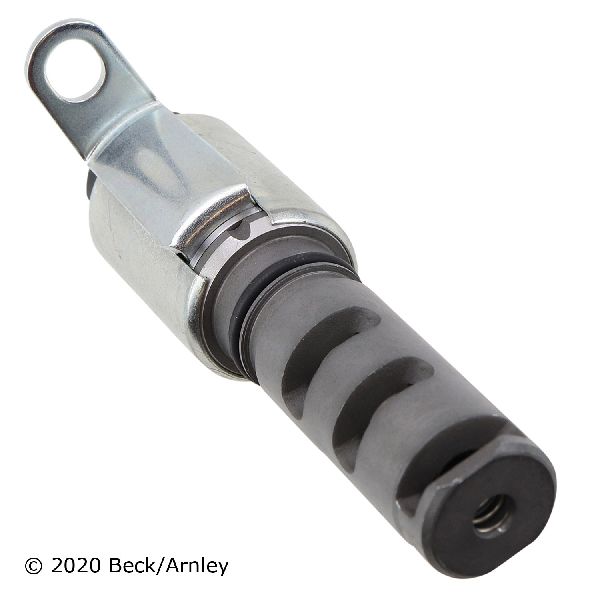
- Engine Variable Valve Timing (VVT) Solenoid / Oil Control Valve (Exhaust)
(OEM #15330-36011 (or 15330-0V010))— This solenoid is the most common point of failure for the P0013 code, either due to an internal electrical fault or mechanical sticking from oil sludge.
Trusted brands: Denso (OEM supplier), Aisin, Dorman
OEM price range: $90-$150
Aftermarket price range: $30-$70
Related Codes That Often Appear With This One
- P0014 — P0014 indicates 'B' Camshaft Position - Timing Over-Advanced. If the OCV solenoid is stuck mechanically, it could cause both an electrical circuit fault (P0013) and a resulting mechanical timing problem (P0014).
- P0010 — P0010 is the equivalent code for the Intake 'A' Camshaft Position Actuator Circuit. It may appear if a technician mistakenly swaps the faulty exhaust solenoid to the intake side during diagnosis.
Technical Service Bulletins (TSBs) & Recalls
- T-SB-0041-13: 'Brief Engine Knock/Rattle Noise at Cold Startup (1AR/2AR)' - While not a fix for P0013, this TSB is important context for owners of early 2AR-FE engines. It details the replacement of the VVT gear (phaser) to fix a startup rattle, a separate mechanical issue from the P0013 solenoid electrical fault.
Platform-Specific Known Issues
- On early production 2AR-FE engines (approx. 2009-2013), there is a known issue with the VVT-i actuator gear itself causing a brief rattle on cold starts. This is a mechanical failure addressed by TSB T-SB-0041-13 and should not be confused with the P0013 electrical code, though it involves the same system.
Mechanic-Grade Diagnostic Values
- Exhaust VVT Solenoid (OCV) Coil Resistance — expected: 6.9 to 7.9 Ω at 20°C (68°F). Failure: A reading of infinity (OL) indicates an open circuit. A reading near zero indicates a short circuit. Any reading significantly outside the specified range suggests the solenoid is faulty. 🎬 Watch: How to diagnose and fix VVT solenoid issues.
- Voltage at OCV Harness Connector — expected: Battery voltage (~12V) on one pin with Key On, Engine Off (KOEO).. Failure: No voltage suggests a problem with the power supply from the ECM or a wiring issue upstream.
- ECM Malfunction Threshold (Duty Cycle) — expected: The ECM sends a target duty cycle signal to the OCV. The code sets if the monitored actual duty cycle ratio varies significantly from the target for a set period.. Failure: DTC P0013 is set if the ECM detects the output signal duty ratio is 100% (indicating a short or open) when the target ratio is less than 70-80%.
Hidden / Shadow Codes Worth Checking
- Freeze Frame Data: While not a separate code, P0013 will store Freeze Frame Data at the moment the fault occurs. This data, viewable on a scan tool like Techstream, shows engine parameters (RPM, temp, load, etc.) which can help determine the driving conditions that triggered the code. (see via Any advanced OBD-II scanner or Toyota Techstream software.)
Scan Tool Commands That Help
- Toyota Techstream: Active Test: 'Control the VVT System (Exhaust/Bank 1)' or 'Operate Camshaft Timing Oil Control Valve' — This bidirectional command allows a technician to manually command the exhaust OCV to operate. While monitoring engine RPM or listening for a change in engine sound, activating the solenoid should cause a noticeable stumble or change in idle quality. If there is no change, it confirms either the solenoid is not activating, or the oil passage is blocked.
- Toyota Techstream: Utility: 'All Readiness' — After a repair, this function can be used to check the status of the system's readiness monitor without extensive driving. You can input DTC P0013 and check the judgment result to see if the system passes its self-test.
Wiring & Ground Locations
- Exhaust OCV Connector — On top of the valve cover, on the passenger side of the engine (closer to the exhaust manifold/firewall). It is a 2-pin connector.. This is the primary connection point for testing voltage, resistance, and inspecting for damage. A poor connection here is a common cause of circuit codes.
- ECM Connector C24 (Pin 6 and Pin 46) — The Engine Control Module (ECM) is located in the engine bay. Connector C24 is one of the main plugs. Based on wiring diagrams for the 2AR-FE, the two wires for the exhaust OCV typically go to pins 6 and 46 on this connector.. If voltage and resistance tests at the OCV connector fail, the next step is to check for continuity between the OCV connector pins and these specific ECM pins to identify a break in the wiring harness.
Real Owner Repair Stories
- Reddit user in r/AskMechanics (Vehicle not specified, but behavior is relevant) — Initial P0013 code with no symptoms. After replacement, car was physically bouncing at stops.
❌ Tried (didn't work) Replacing the VVT solenoid with a new (likely aftermarket) part.
✅ What actually fixed it The new aftermarket solenoid was faulty and caused a new code, P0014, and severe drivability issues, including a no-start condition. The mechanic had to reinstall the old, cleaned OEM solenoid to get the car running again, though the original P0013 issue returned. This highlights the risk of faulty new aftermarket parts. - NHTSA ODI #11139909 (Cross-model reference) — An owner reported that their vehicle stalled while driving, and a diagnostic scan revealed multiple codes including P0013, P0113, P1603, and P1605. This demonstrates that the P0013 circuit fault can sometimes be part of a broader electrical or stalling event.
OEM Part Supersession History
15330-0V010→15330-36011— Part number consolidation and potential design updates by Toyota. Both part numbers refer to the exhaust VVT solenoid for the 2AR-FE engine.
Heads up: While 15330-36011 is the most commonly cited number for this application, 15330-0V010 is also listed by some suppliers for the same vehicle. They are considered interchangeable for this repair. Always verify fitment with a VIN when possible.
Model Year Variations Within This Range
- 2013-2015 vs 2016-2018: The RAV4 received a facelift for the 2016 model year which included revised styling and interior updates. However, the 2.5L 2AR-FE engine and its VVT-i system remained fundamentally unchanged throughout the 2013-2018 generation. Therefore, the causes and fixes for P0013 are identical across this entire year range.
Diagnostic Flowchart
Other Known Issues on This Vehicle
Issues unrelated to this code that are worth knowing about as an owner of this generation:
- Torque Converter Shudder (U760E Transmission) 🟠 Medium — Common on 2013-2015 models. A software update was released to fix the lock-up logic, but if the shudder is already present, the torque converter may require replacement. (Ref: T-SB-0077-16 addresses shift feeling enhancements and may be related, though a specific TSB for the shudder on RAV4s is primarily addressed by a warranty extension program.)
- Brief Engine Rattle at Cold Startup 🟠 Medium — Affects some early 2AR-FE engines (approx. 2009-2013). The noise lasts for about one second after a cold start. This is caused by a faulty VVT-i gear assembly (camshaft phaser), not the VVT solenoid. (Ref: T-SB-0041-13 (or older T-SB-0012-11) describes the issue and the repair procedure, which involves replacing the camshaft timing gear assembly.)
- Sticky / Melting Dashboard 🟡 Low — Widespread in vehicles used in high-heat, high-humidity climates. The dashboard surface becomes shiny, sticky, and may crack. (Ref: Toyota issued a Warranty Enhancement Program (ZLD) to replace affected dashboards, but this program had an expiration date (typically May 31, 2017, or 10 years from first use).)
- Infotainment System Glitches 🟡 Low — Complaints include unresponsive touchscreens, system reboots, and Bluetooth connectivity problems, often surfacing after 40,000 miles. (Ref: Software updates were released by Toyota to address some of these issues, but may not resolve all problems.)
Used vs. New Parts: Buying Guide for This Vehicle
When a used part is the smart pick: A used OEM VVT solenoid from a low-mileage donor vehicle can be a cost-effective alternative to a new aftermarket part. Given that some new aftermarket solenoids can be faulty out of the box, a tested, working OEM part from a junkyard is a reasonable choice if budget is a primary concern.
Donor-vehicle mileage cap: roughly under 80000 miles for the part to have meaningful remaining life.
What to inspect on the donor part:
- Verify the donor vehicle's mileage if possible.
- Inspect the solenoid's filter screen for any signs of heavy sludge or metal debris. A clean screen is a good indicator of a well-maintained engine.
- Check the electrical connector pins for corrosion or damage.
- If possible, test the resistance of the used part before purchase to ensure it is within the 6.9-7.9 Ohm specification.
OEM-only on this vehicle (don't cheap out):
- For this specific repair, an OEM part is strongly recommended but not strictly necessary. However, if an aftermarket part is used and problems persist or worsen, suspect the new part first.
Aftermarket brands forum-validated for this vehicle:
- Denso (OEM supplier)
- Aisin
Brands owners have reported issues with on this vehicle:
- Unnamed or 'white-box' brands from online marketplaces have a higher reported failure rate. A real-world example showed a faulty new aftermarket part causing more severe symptoms.
Real Owner Stories
Aggregated from forums and TSBs cited above. Mileages and costs reflect what owners reported in those sources.
2018 Toyota RAV4 2.5L
Symptoms: Check engine light is on.
What fixed it: Replacement of the 'B' (exhaust) camshaft position actuator (solenoid) using a 10mm wrench.
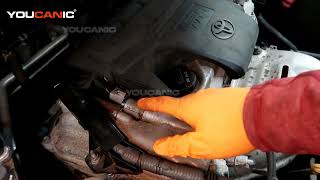
Source hint: YouTube - Toyota Fault Code P0013 B Camshaft Position Actuator Replacement by YOUCANIC
2013 Toyota RAV4 2AR-FE
Symptoms: Brief engine knock/rattle noise at cold startup lasting approximately one second.
What fixed it: Replacement of the camshaft timing gear assembly as per the technical service bulletin.
Source hint: T-SB-0041-13
2015 Toyota RAV4 2.5L — ~40000 miles
Symptoms: Unresponsive touchscreen, system reboots, and Bluetooth connectivity problems.
What fixed it: Software updates released by Toyota, though they may not resolve all issues.
Source hint: known_issues - Infotainment System Glitches
Related OBD-II Codes
Frequently Asked Questions
My 2013 RAV4 has a rattle for a second when I start it cold; is this related to the P0013 code?
Which specific part do I need to buy to fix the P0013 code on my 2.5L RAV4?
What should the resistance be for the VVT solenoid on a 2AR-FE engine?
Can low engine oil cause a P0013 code on my 2015 RAV4?
Is the P0013 issue common to other Toyota models with the same engine?
Does T-SB-0041-13 provide a fix for the P0013 check engine light?
Helpful Videos

We Have This Part in Stock


The information in this article is provided for general reference and educational purposes only. Vehicle specifications, procedures, and part compatibility can vary by production date, trim level, and region. Always consult your vehicle's factory service manual and verify part numbers before purchasing or performing repairs. Safety-critical components such as airbags, seat belts, and braking systems should be installed by a qualified professional.
- Toyota RAV4:
- 🧭 Diagnostic Flowchart
- 🎬 Helpful Videos
- 🛍️ Shop This Part
- What's Unique About the 2013-2018 Toyota RAV4
- Symptoms You May Notice
- Most Likely Causes
- Rare But Worth Checking
- Diagnosis Steps
- Parts You'll Likely Need
- Related Codes That Often Appear With This One
- Technical Service Bulletins (TSBs) & Recalls
- Platform-Specific Known Issues
- Mechanic-Grade Diagnostic Values
- Hidden / Shadow Codes Worth Checking
- Scan Tool Commands That Help
- Wiring & Ground Locations
- Real Owner Repair Stories
- OEM Part Supersession History
- Model Year Variations Within This Range
- Other Known Issues on This Vehicle
- Used vs. New Parts: Buying Guide for This Vehicle
- Real Owner Stories
- 2018 Toyota RAV4 2.5L
- 2013 Toyota RAV4 2AR-FE
- 2015 Toyota RAV4 2.5L — ~40000 miles
- Related OBD-II Codes
- Frequently Asked Questions
- 🎟️ Get 5% Off