

P0014 on 2015-2019 Ford Explorer 3.5L: Exhaust Cam Timing Over-Advanced Causes and Fixes
On a 2015-2019 Explorer with the 3.5L V6, P0014 is almost always caused by low/dirty engine oil or a sticking exhaust VCT solenoid on Bank 1 (firewall side). Start with an oil and filter change using 5W-20 oil. If the code persists, the VCT solenoid is the likely fix, with the part costing around $50-$100. Accessing the Bank 1 solenoid is tight due to its location against the firewall.
- Always check your engine oil first. A simple oil and filter change with the correct 5W-20 oil might fix the P0014 code.
- The most likely failed part is the Bank 1 (firewall side) exhaust VCT solenoid, which is a relatively inexpensive part but can be difficult to access.
- Use the solenoid swap trick: if you move the suspected bad solenoid to the other bank and the code follows it (changing to P0024), you've confirmed the solenoid is the problem.
- This code is a serious warning that your engine's timing is not being controlled correctly; ignoring it can lead to poor performance and potential engine damage.
What's Unique About the 2015-2019 Ford Explorer
The Ford 3.5L 'Cyclone' V6 engine family is known for its Variable Camshaft Timing (VCT) system being highly sensitive to oil quality and condition. Ford has issued multiple Special Service Messages (SSMs) and Technical Service Bulletins (TSBs) for this engine platform, acknowledging that small debris in the oil is a primary cause for VCT solenoids sticking and triggering codes like P0014. Specifically, SSM 48423 and SSM 47170 advise that before replacing the solenoid, a scan tool can be used to cycle it multiple times to attempt to dislodge debris. While this code can be an early warning for more serious timing chain issues on the related 3.5L EcoBoost engine, on the naturally aspirated 3.5L Cyclone, it most often points directly to oil health or a faulty VCT solenoid.
Symptoms You May Notice
- Check Engine Light is on
- Rough or unstable idle
- Engine stalling, especially at low speeds or when coming to a stop
- Reduced engine power and poor acceleration
- Decreased fuel economy
- Rattling noise from the engine on startup (less common, but indicates potential timing chain issues)
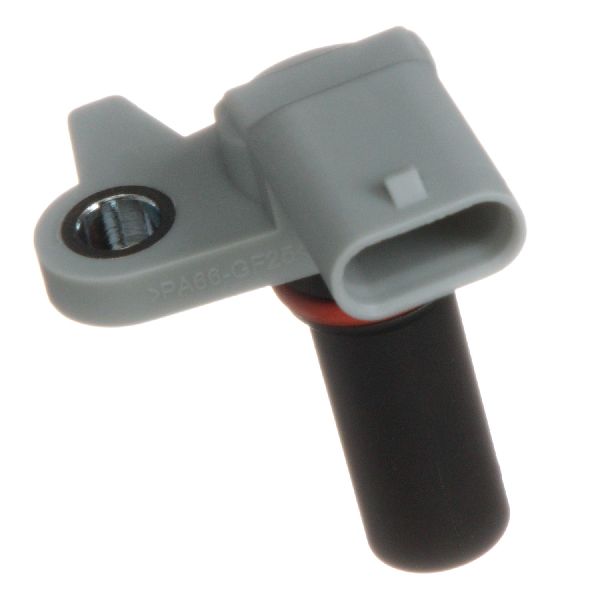
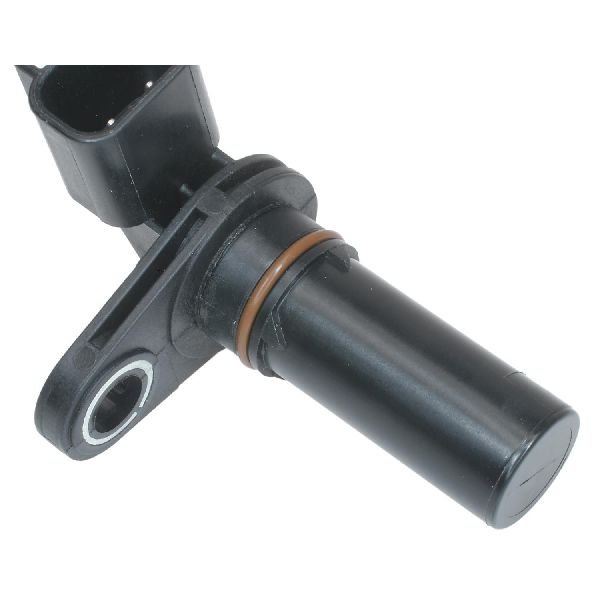
- Replacing the camshaft position sensor. The sensor's job is to report the camshaft's position. It is accurately reporting a problem with the timing; the sensor itself is almost never the cause of a P0014 code.
Most Likely Causes
- Low, Dirty, or Incorrect Viscosity Engine Oil 🔴 High Probability The VCT system uses oil pressure to function. Ford TSBs (like SSM 48423) confirm this system is sensitive to oil contamination, which can clog the small passages and screens in the VCT solenoids. Many owners report the code appears when the oil life monitor indicates a change is due.
How to confirm: Check the oil level on the dipstick and inspect its color and consistency. If the level is low or the oil is dark, gritty, or past its service interval, this is the likely cause.
Typical fix: Perform a complete oil and filter change using the manufacturer-specified oil viscosity (SAE 5W-20 for the 3.5L Cyclone V6). Some owners on forums recommend shorter oil change intervals of around 5,000 miles to prevent sludge buildup.
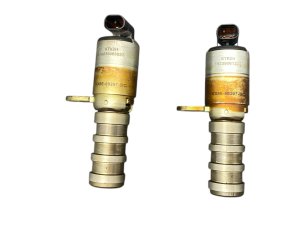
Est. part cost: $40-$90 - Sticking or Failed VCT Solenoid (Bank 1 Exhaust) 🔴 High Probability → Shop Engine Variable Valve Timing (VVT) Solenoid These solenoids are the actuators for the VCT system and are a common failure point. Debris in the oil causes them to jam, preventing them from correctly positioning the camshaft. The Bank 1 (firewall side) location is more difficult to access than Bank 2.
How to confirm: After an oil change, if the code returns, this is the next step. A common diagnostic technique is to swap the Bank 1 exhaust solenoid with the Bank 2 exhaust solenoid (at the front of the engine). If the code changes to P0024 (the same fault for Bank 2), the solenoid is confirmed to be faulty. A multimeter can also be used to check the solenoid's internal resistance, which should be between 6.9 and 7.9 Ohms.
Typical fix: Replace the Bank 1 exhaust VCT solenoid. Accessing the rear bank requires patience and may be easier with a swivel socket. Before replacement, some TSBs suggest using a scan tool to cycle the solenoid 10 times to try and clear debris.
Est. part cost: $50-$100
Rare But Worth Checking
- Stretched Timing Chain or Failed Cam Phaser: → Shop Engine Timing Chain While this is a well-known issue on the related 3.5L EcoBoost engine, it's less common on the naturally aspirated Cyclone V6 but still possible at higher mileage (over 100,000 miles). This is a much more serious and expensive repair. It is often accompanied by a P0016 code and a distinct rattling sound from the engine for 2-5 seconds on a cold start.
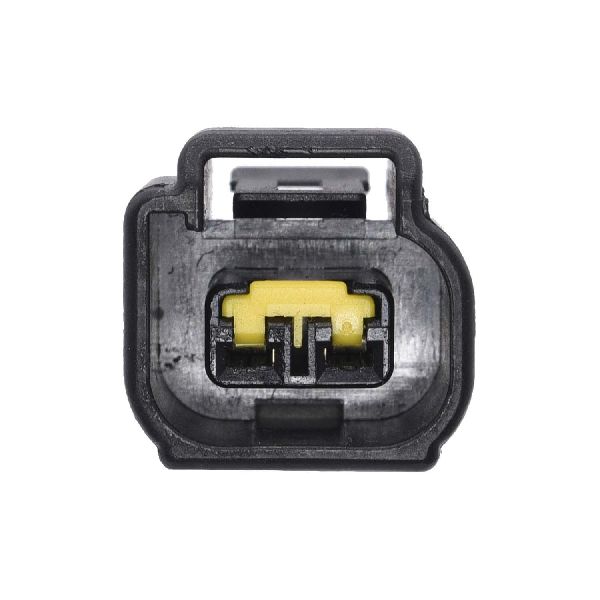
- Damaged Wiring or Connector: Damage to the wiring harness or corrosion in the connector for the VCT solenoid can cause it to malfunction. This is less likely than a failed solenoid and would typically be found during visual inspection when replacing the part.
Diagnosis Steps
- Check the engine oil level and condition. Top up if low or perform an oil and filter change if it's old or dirty. Use the correct oil (SAE 5W-20).
- Clear the trouble codes with an OBD-II scanner and perform a test drive to see if the code returns.
- If the code returns, listen for any engine rattling on a cold start. A rattle points towards more serious timing chain issues.
- If there is no rattle, the next logical step is to test the VCT solenoid. The easiest method is to swap the Bank 1 exhaust solenoid (firewall side) with the Bank 2 exhaust solenoid (radiator side).
- Clear the codes again and drive. If the code changes to P0024, the solenoid you moved is faulty and needs to be replaced.
- If the code remains P0014 after the swap, the problem lies elsewhere. Inspect the wiring and connector to the Bank 1 solenoid for damage or corrosion.
- As an advanced step, you can test the solenoid's resistance with a multimeter. A reading outside the 6.9-7.9 Ohm range indicates a faulty solenoid.
- If all the above steps fail, the issue is likely mechanical, such as a worn cam phaser or stretched timing chain, which requires professional diagnosis and repair.
Parts You'll Likely Need
- Variable Camshaft Timing (VCT) Solenoid
(OEM #AT4Z-6M280-C)— This is the most common component to fail, typically by getting stuck due to oil debris, which directly causes the over-advanced timing condition. This part is used for both intake and exhaust on this engine.
Trusted brands: Motorcraft, Dorman
OEM price range: $55-$120
Aftermarket price range: $40-$80 - Engine Oil and Filter — Low, dirty, or incorrect viscosity oil is the number one cause of VCT system faults. An oil change is a critical first diagnostic step and may resolve the issue entirely.
Trusted brands: Motorcraft Synthetic Blend, Mobil 1, Pennzoil
OEM price range: $50-$90
Aftermarket price range: $40-$70
Related Codes That Often Appear With This One
- P0024 — This is the same 'over-advanced exhaust cam' code but for Bank 2 (front of the engine). If seen with P0014, it strongly suggests a systemic problem like very low/dirty oil or low oil pressure affecting the entire engine.
- P0016 — This is a 'Crankshaft/Camshaft Position Correlation' error. If it appears with P0014, it increases the likelihood of a serious mechanical timing issue like a stretched timing chain or a failed cam phaser.
- P0011, P0012, P0015, P0021, P0022, P0025 — Seeing a full suite of VCT codes (over-advanced and over-retarded for both banks) almost certainly points to a global oil pressure or oil quality problem affecting the entire VCT system.
Technical Service Bulletins (TSBs) & Recalls
- SSM 50067 / 49821 / 48423 / 47170: Various Ford Special Service Messages confirming that P0011, P0012, P0014, P0015 and other VCT codes can be caused by small debris in the engine oil causing the VCT solenoid to stick. They recommend diagnostic procedures (like cycling the solenoid with a scan tool) before replacement.
Platform-Specific Known Issues
- Owner Experience: Oil Change Fix: Multiple owners on forums like explorerforum.com and f150forum.com report that the P0014 code appeared when their oil life was low. An oil and filter change with full synthetic 5W-20 oil resolved the code without any parts being replaced.
- DIY Repair Story: Solenoid Swap Confirms Failure: A user on a Ford forum with a 2016 Explorer 3.5L reported getting P0014. After an oil change didn't fix it, they swapped the rear (Bank 1) exhaust solenoid with the front (Bank 2) exhaust solenoid. The code changed to P0024, confirming the solenoid was bad. They replaced the faulty solenoid (part AT4Z-6M280-C) and cleared the codes, resolving the issue. They noted the rear solenoid was difficult to access but manageable with a universal joint socket adapter.
Mechanic-Grade Diagnostic Values
- VCT Solenoid Internal Resistance — expected: 6.9 to 7.9 Ohms at 68°F (20°C). Some service documents give a broader range of 5-14 Ohms.. Failure: A reading of 0 ohms (short) or infinite/OL (open) indicates a failed solenoid.
- VCT Solenoid Power Supply Voltage (Key On, Engine Off) — expected: Greater than 10.5 Volts (should be close to battery voltage).. Failure: Voltage below 10.5V suggests a problem in the power supply circuit, wiring, or a fuse.
- Engine Oil Pressure at Hot Idle — expected: Minimum 15 PSI.. Failure: Pressure below 15 PSI is insufficient for proper VCT system operation and can trigger timing codes.
- Scan Tool PID: VCT_EXH_ERR1 (VCT Exhaust Error Bank 1) — expected: Should be stable and hover near 0° (+/- 5°).. Failure: A large, consistent positive value (e.g., > 5°) indicates the camshaft is over-advanced, confirming the P0014 fault in real-time.
Hidden / Shadow Codes Worth Checking
- Mode 6, Test ID $81: This is not a DTC but a generic OBD-II test monitor for the VCT system. It tracks pass/fail counts and raw data for camshaft angle deviation. A high failure count or out-of-range value can confirm an intermittent problem before a DTC is set. (see via A professional scan tool or an advanced OBD-II app (like FORScan) that can access Mode $06 data.)
- P054A: Cold Start 'B' Camshaft Position Timing Over-Advanced (Bank 1). This is a more specific version of P0014 that isolates the fault to the cold start sequence, often pointing to oil drain-back issues or initial oil pressure problems affecting the phaser. (see via Standard OBD-II scanner.)
Scan Tool Commands That Help
- Ford IDS, FORScan: Pinpoint Test HK11 / HK12: VCT Solenoid Cycle Test — As recommended by Ford TSBs (SSM 48423, 50067), this should be used after an oil change but before replacing a solenoid. It commands the solenoid to cycle 10 times to dislodge small debris, which can sometimes fix the code without replacing parts.
- Ford IDS, FORScan: VCT Solenoid On/Off Test (Bidirectional Control) — With the engine idling, this command manually activates the solenoid. A noticeable change in idle quality or a stall indicates the solenoid and phaser are mechanically responding. No change suggests a stuck solenoid or an open circuit.
- Ford IDS, FORScan: Clear/Reset Keep Alive Memory (KAM) — This should be performed after replacing VCT components (solenoids or phasers). It forces the PCM to discard learned timing adjustments and relearn the operational characteristics of the new parts from a clean slate.
Wiring & Ground Locations
- VCT Solenoid Connector — On the valve cover, directly on top of the VCT solenoid. Bank 1 (firewall side) has two, Bank 2 (radiator side) has two. On the 3.5L, the exhaust solenoid often has a black or blue connector, while the intake may be grey or white.. This connector is the primary interface for the solenoid. Checking for battery voltage at the power supply pin (Key On, Engine Off) is a critical diagnostic step. Corrosion or a loose connection here will cause the solenoid to fail.
- Main Engine Ground — While specific ground points vary slightly, a key ground strap is typically located from the engine block to the chassis near the passenger side motor mount. A video guide for VVT solenoid replacement shows two ground wires being re-attached to a stud on the front (Bank 2) cylinder head.. A poor engine ground can cause a variety of electrical issues, including erratic sensor readings and incorrect actuator operation. While not a primary cause, it should be checked if other electrical tests are inconclusive.
Real Owner Repair Stories
- Ford F150 Forum user (2013 F-150 3.5L EcoBoost, ~110,000 miles (Note: EcoBoost, but same VCT system principles)) — P0014, P0012, P0022, and P0024 all appeared at once. Engine ran fine with no noticeable roughness.
❌ Tried (didn't work) The user had already replaced the timing chain and phasers at 80,000 miles, so those were ruled out.
✅ What actually fixed it The problem was diagnosed by a technician as oil sludging that had clogged the tiny oil screens within the VCT phasers themselves. An engine flush was performed to clean out the sludge, which resolved all codes.
OEM Part Supersession History
7T4Z-6M280-C→AT4Z-6M280-C, BL3Z-6M280-B— Part revisions for improved durability and performance. The solenoids are physically interchangeable.
Heads up: While physically compatible, it is highly recommended to replace solenoids in pairs on the same bank (intake/exhaust) or all four at once to ensure matched performance characteristics, as internal valving may have been updated between revisions.
Diagnostic Flowchart
Other Known Issues on This Vehicle
Issues unrelated to this code that are worth knowing about as an owner of this generation:
- Internal Timing-Chain-Driven Water Pump Failure 🔴 High → Shop Engine Timing Chain — Common after 80,000-120,000 miles. Failure can cause coolant to mix with engine oil, leading to catastrophic engine damage. (Ref: No recall, but a known design flaw. A weep hole provides an external leak as a warning sign before internal failure.)
- Electronic Throttle Body Failure 🟠 Medium — Can occur at any mileage, causing the vehicle to suddenly enter 'limp mode' with a wrench light on the dash. (Ref: Subject of customer satisfaction programs and recall 16B32 for some models. Failure is typically electronic and requires full replacement.)
- Rear Suspension Toe Link Fracture 🔴 High — Affects 2017-2019 models. Can lead to a loss of steering control. (Ref: NHTSA Recall 26S08 is an expansion of a previous recall to address this issue.)
- A-Pillar Trim Detachment 🟡 Low — Affects a wide range of 2011-2019 models. The exterior trim piece can become loose and detach while driving. (Ref: NHTSA Recall 24S02.)
Used vs. New Parts: Buying Guide for This Vehicle
When a used part is the smart pick: For this repair, only electrical pigtail connectors are suitable for used purchase from a junkyard if the original is damaged. All other functional components should be purchased new.
Donor-vehicle mileage cap: roughly under 100000 miles for the part to have meaningful remaining life.
What to inspect on the donor part:
- For a pigtail connector, ensure the plastic is not brittle or cracked.
- Check that the locking tab is intact and functional.
- Inspect for any signs of corrosion on the metal pins inside the connector.
OEM-only on this vehicle (don't cheap out):
- VCT Solenoid: While aftermarket options exist, Ford TSBs and mechanic consensus strongly point to using OEM Motorcraft solenoids (AT4Z-6M280-C or supersessions) for reliability. Aftermarket solenoids have a higher reported failure rate for this specific application.
- Cam Phaser: If a phaser is required, OEM is strongly recommended due to the complexity of the part and the high labor cost to replace it.
Aftermarket brands forum-validated for this vehicle:
- Dorman (for VCT Solenoids, though OEM is preferred)
- Standard Motor Products (SMP) (for electrical connectors/pigtails)
Brands owners have reported issues with on this vehicle:
- No-name, unbranded VCT solenoids from online marketplaces are frequently cited on forums as having a high rate of early failure.
Real Owner Stories
Aggregated from forums and TSBs cited above. Mileages and costs reflect what owners reported in those sources.
2016 Ford Explorer 3.5L
Symptoms: The owner received a P0014 code. After an oil change failed to resolve the issue, they performed a diagnostic swap of the solenoids.
What fixed it: Swapped the rear (Bank 1) exhaust solenoid with the front (Bank 2) exhaust solenoid. When the code changed to P0024, they replaced the faulty solenoid with part AT4Z-6M280-C.
Source hint: vehicle_specific_issues: DIY Repair Story: Solenoid Swap Confirms Failure
2015-2019 Ford Explorer 3.5L
Symptoms: The P0014 code appeared specifically when the oil life monitor indicated a change was due.
What fixed it: A complete oil and filter change using full synthetic 5W-20 oil resolved the code without replacing any mechanical parts.
Source hint: vehicle_specific_issues: Owner Experience: Oil Change Fix
Ford F-150 3.5L
Symptoms: The vehicle experienced both P0014 and P0024 codes simultaneously.
What fixed it: The simultaneous codes across both banks pointed to a shared oil problem (low level or poor quality) rather than multiple solenoid failures.
Source hint: fordf150forum.com thread cited in forum_citations
Related OBD-II Codes
Frequently Asked Questions
My 2016 Explorer 3.5L has a P0014 code; can I just swap the solenoids to test them?
Does Ford have any technical service bulletins for P0014 on the 3.5L engine?
What is the specific part number for the VCT solenoid if I need to replace it?
Is there a specific oil viscosity I should use to prevent P0014 on my Explorer?
I'm hearing a rattle on startup along with the P0014 code. Is this just a solenoid?
Why is the Bank 1 solenoid harder to fix on the Explorer than Bank 2?
Used OEM Parts in Stock
New Aftermarket Parts Available


The information in this article is provided for general reference and educational purposes only. Vehicle specifications, procedures, and part compatibility can vary by production date, trim level, and region. Always consult your vehicle's factory service manual and verify part numbers before purchasing or performing repairs. Safety-critical components such as airbags, seat belts, and braking systems should be installed by a qualified professional.
- Ford Explorer:
- 🧭 Diagnostic Flowchart
- 🛍️ Shop This Part
- What's Unique About the 2015-2019 Ford Explorer
- Symptoms You May Notice
- Most Likely Causes
- Rare But Worth Checking
- Diagnosis Steps
- Parts You'll Likely Need
- Related Codes That Often Appear With This One
- Technical Service Bulletins (TSBs) & Recalls
- Platform-Specific Known Issues
- Mechanic-Grade Diagnostic Values
- Hidden / Shadow Codes Worth Checking
- Scan Tool Commands That Help
- Wiring & Ground Locations
- Real Owner Repair Stories
- OEM Part Supersession History
- Other Known Issues on This Vehicle
- Used vs. New Parts: Buying Guide for This Vehicle
- Real Owner Stories
- 2016 Ford Explorer 3.5L
- 2015-2019 Ford Explorer 3.5L
- Ford F-150 3.5L
- Related OBD-II Codes
- Frequently Asked Questions
- 🎟️ Get 5% Off