

P0014 on 2014-2021 Mazda 6 2.5L SKYACTIV-G: Exhaust Cam Timing Over-Advanced Causes and Fixes
On a 2014-2021 Mazda 6, code P0014 is most often caused by low or dirty engine oil, or a failing exhaust Oil Control Valve (OCV). Start by checking your oil; if the level and quality are good, the OCV is the next likely part to replace, costing around $80-$150 for an aftermarket part. This is a common VVT system code and is frequently resolved with basic maintenance.
- Always check your engine oil first. Low or dirty oil is the #1 cause of P0014 on this car.
- The most likely part to fail is the exhaust Oil Control Valve (OCV), part number PE01-14-420A.
- Replacing the OCV on the SKYACTIV-G 2.5L engine requires removing the valve cover.
- While driving is possible, the vehicle's performance and fuel economy will be reduced until the issue is fixed.
- This code is for the hydraulically-operated exhaust camshaft; do not confuse it with issues related to the electrically-operated intake camshaft.
What's Unique About the 2014-2021 Mazda 6
While P0014 is a generic code, Mazda has issued technical service bulletins for this generation of SKYACTIV-G engines related to VVT performance. TSB 01-009/16, for example, addresses the related P0015 code (over-retarded) on 2014-2016 models, linking it to foreign objects affecting the oil pump or Oil Control Valve (OCV). This TSB is relevant because it confirms the VVT system on these engines is highly sensitive to oil contamination and pressure fluctuations, which are the primary causes of P0014. The fix often involves an oil change and potentially replacing a modified oil strainer (part PE7W-14-240) to prevent future debris issues.
Symptoms You May Notice
- Check Engine Light is on
- Rough idle
- Poor engine performance, such as hesitation or sluggish acceleration
- Reduced fuel economy
- Engine stalling in some cases
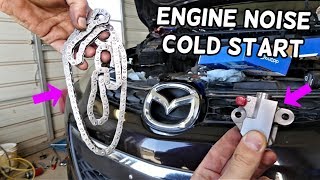
- Rattling noise from the engine, especially on startup 🎬 Watch: How to fix common Mazda engine rattle noises
- Replacing the camshaft position sensor first. While it's part of the system, the sensor is often not the root cause for this specific code; the issue is usually mechanical or hydraulic (oil-related).
Most Likely Causes
- Low or Dirty Engine Oil 🔴 High Probability The SKYACTIV-G's hydraulic VVT system relies on clean oil at the correct pressure to function. Sludge, low levels, or using the wrong viscosity (spec is 0W-20) can cause the camshaft phasers to respond slowly or get stuck.
How to confirm: Check the engine oil dipstick for level and clarity. If the oil is dark, gritty, or below the 'add' line, this is a likely cause. One owner on Reddit noted the code appeared when his oil level was so low it didn't register on the dipstick.
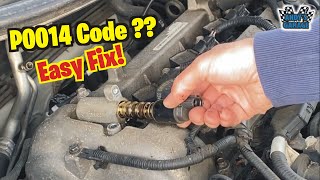
Typical fix: Perform an engine oil and filter change using the manufacturer-specified oil (Mazda recommends 0W-20 full synthetic). Clear codes and re-test. 🎬 Watch: A step-by-step guide to fixing the P0014 code
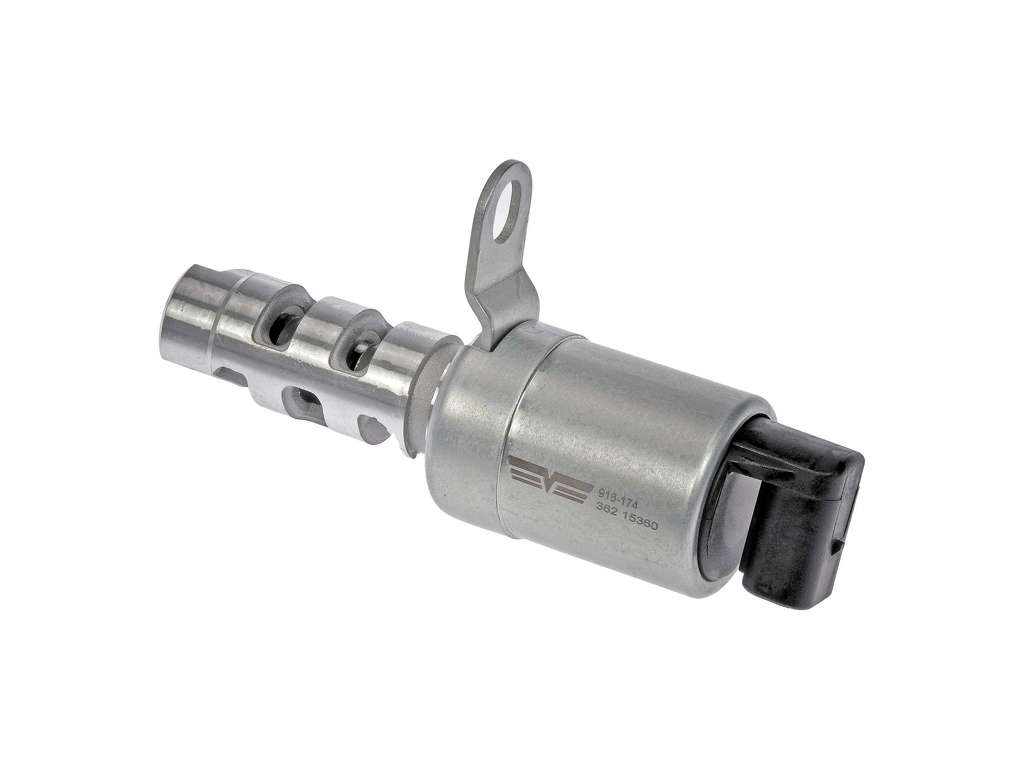
Est. part cost: $40-$80 - Faulty Exhaust Oil Control Valve (OCV) / VVT Solenoid 🟡 Medium Probability → Shop Engine Variable Valve Timing (VVT) Solenoid The OCV can become clogged with sludge or fail electrically, causing it to get stuck and over-advance the cam timing. A related TSB for these engines points to contamination affecting the OCV.
How to confirm: A mechanic can command the solenoid with a scan tool to check for response. It can also be removed (requires taking off the valve cover) and tested for actuation using a 12V power source. Visually inspect the screens on the solenoid for debris. Resistance should be 6.9 - 7.9 Ohms at 68°F (20°C).
Typical fix: Replace the exhaust Oil Control Valve. On this engine, this requires removing the valve cover for access.
Est. part cost: $80-$150 - Stretched Timing Chain or Worn Timing Components ⚪ Low Probability → Shop Engine Timing Chain While the timing chain is designed to last the life of the engine, severe neglect (infrequent oil changes) can lead to chain stretch. This causes a permanent discrepancy between the crankshaft and camshaft positions that the VVT system cannot compensate for, triggering the code.
How to confirm: This is an involved diagnosis. A mechanic would compare actual vs. desired cam/crank correlation with a scan tool. A physical inspection for chain slack by removing the valve cover or timing cover is the definitive check. This is typically suspected at higher mileage (>150k miles) or with a known history of poor maintenance.
Typical fix: Replace the timing chain, guides, and tensioners. This is a labor-intensive job.
Est. part cost: $400-$700
Rare But Worth Checking
- Failed VVT Actuator (Cam Phaser): The phaser itself, which is the gear on the end of the camshaft, can fail internally and get stuck. This is less common than an OCV failure but is a possible cause if other steps don't resolve the issue.
- Faulty Camshaft Position Sensor: → Shop Engine Camshaft Position Sensor While possible, a failing camshaft position sensor will often trigger its own specific codes (like P0365) in addition to or instead of P0014. It's an unlikely root cause for P0014 alone.
Diagnosis Steps
- Verify the code with an OBD-II scanner. Check for any other codes, especially P0017 or P0524.
- Check the engine oil level and condition. If low, dirty, or the wrong viscosity, perform an oil and filter change with full synthetic 0W-20 oil. Clear the codes and perform the drive cycle described in Mazda's diagnostic procedure (accelerate to 31 mph, decelerate to idle, repeat). This is the most common fix.
- If the oil is fine, inspect the wiring and connector for the exhaust Oil Control Valve (OCV) for any damage or corrosion. The OCV is located on the valve cover.
- Using a capable scan tool, monitor the desired vs. actual exhaust camshaft angle (PIDs: VT_EX_DES vs. VT_EX_ACT). A persistent discrepancy greater than 5-10 degrees at idle or during the drive cycle points towards a mechanical or hydraulic issue.
- Test the exhaust OCV. Command it with a scan tool to check for response. Alternatively, remove the valve cover, remove the OCV, and apply 12V power to check for a 'click'. Inspect its filter screens for sludge or debris. Check resistance (spec is 6.9 - 7.9 Ohms). 🎬 See how to test and fix an over-advanced camshaft
- If the OCV is functional, check engine oil pressure with a mechanical gauge to ensure it's within Mazda's specifications. Low pressure prevents the VVT system from working correctly.
- If oil pressure is good and the OCV works, the problem likely lies with the timing chain (stretch/slack) or the VVT actuator (phaser) itself. This requires a more in-depth mechanical inspection, likely by a professional.
Parts You'll Likely Need
- Exhaust Oil Control Valve / VVT Solenoid
(OEM #PE01-14-420A)— This solenoid controls the oil flow that adjusts the exhaust cam timing. It is a common failure point, often becoming clogged with debris or failing electrically, leading to an over-advanced timing condition.
Trusted brands: Mazda (OEM), Dorman, Walker Products
OEM price range: $300-$400
Aftermarket price range: $80-$150 - Engine Oil and Filter — Low, old, or incorrect viscosity oil is the most frequent cause of VVT-related codes like P0014.
Trusted brands: Idemitsu (often OEM supplier for Mazda), Mobil 1, Castrol
OEM price range: $60-$90
Aftermarket price range: $40-$80
Related Codes That Often Appear With This One
- P0017 — Crankshaft Position - Camshaft Position Correlation (Bank 1 Sensor B). This code often appears with P0014 because if the exhaust cam is stuck in an over-advanced position, its correlation with the crankshaft will also be incorrect. Seeing both together can sometimes point more strongly toward a stretched timing chain.
Technical Service Bulletins (TSBs) & Recalls
- 01-009/16 - While for P0015, it corroborates that VVT issues on 2014-2016 SKYACTIV-G 2.5L engines can be caused by debris in the oiling system affecting the OCV and oil pressure. It applies to Mazda3, Mazda6, and CX-5 models.
Platform-Specific Known Issues
- A related TSB (01-009/16) for 2014-2016 models with P0015 (over-retarded) points to a known issue where foreign material can get stuck in the oil pump relief valve or the Oil Control Valve (OCV), causing oil pressure drops and incorrect cam timing. This indicates a sensitivity to oil contamination in the VVT system that is directly applicable to P0014 faults.
Mechanic-Grade Diagnostic Values
- Exhaust Oil Control Valve (OCV) Coil Resistance — expected: 6.9 - 7.9 Ohms at 20°C (68°F). Failure: A reading outside this range, or an open/infinite reading, indicates a failed solenoid coil.
- Engine Oil Pressure (Mechanical Gauge, Engine Warm) — expected: Idle (650 RPM): > 7 psi (50 kPa) 1,500 RPM: 16.0 - 25.3 psi (110 - 175 kPa) 4,500 RPM: 43.6 - 62.3 psi (300 - 430 kPa). Failure: Pressure below the minimum at idle or outside the specified ranges at higher RPMs indicates an oil pressure problem (e.g., pump, relief valve, blockage) that will cause VVT faults.
- Scan Tool Live Data: Camshaft Timing Deviation — expected: Actual exhaust cam angle (PID: VT_EX_ACT) should closely track the desired angle (PID: VT_EX_DES) with a deviation of less than 5 degrees.. Failure: A consistent deviation greater than 5 degrees, especially after an engine revving procedure, points to a faulty OCV or mechanical issue, according to related Mazda TSBs.
- OCV Power Connector Voltage (Key On, Engine Off) — expected: Approximately 12V (battery voltage) on one of the two pins.. Failure: No voltage suggests a break in the wiring or a blown fuse, potentially the 'ENG BAR 15A' fuse.
Scan Tool Commands That Help
- Mazda M-MDS (or equivalent professional scanner): VVT Solenoid Bidirectional Control / Actuator Test — This command allows the technician to manually activate the exhaust OCV while monitoring the actual camshaft position PID (VT_EX_ACT). It's used to confirm if the solenoid is physically responding to commands from the PCM and if the camshaft phaser is reacting accordingly. A lack of change in cam angle during activation points directly to a failed OCV, blockage, or phaser issue.
- Mazda M-MDS: Guided Diagnostic Procedure (per TSB 01-016/19) — When P0014 is accompanied by low oil pressure codes (like P0524) or is suspected to be caused by intermittent oil pressure drops, this TSB outlines a specific test. It involves revving the engine to 4,000 RPM ten times to try and dislodge debris, followed by specific oil pressure checks at idle, 1,500, and 4,500 RPM to confirm the health of the oil pump and passages.
Wiring & Ground Locations
- ENG BAR 15A Fuse — Located in the main fuse box in the engine compartment.. This fuse is a common source of the 12V power supply to the VVT Oil Control Valves. If the OCV has no power at its connector, checking this fuse is a primary step before inspecting the wiring harness itself.
- Exhaust OCV Connector — On the top of the engine's valve cover, towards the exhaust manifold side.. This is the primary test point for checking voltage, ground, and resistance of the OCV circuit. Corrosion or damage to this connector can cause an intermittent or complete failure of the solenoid's operation.
OEM Part Supersession History
pe0114420→PE01-14-420A— Standard part number update and consolidation by Mazda.N/A→PE7W-14-240— A related TSB (01-009/16) for VVT issues calls for replacing the original oil strainer with this modified part to prevent debris-related oil pressure issues.
Heads up: This is not a direct replacement for all vehicles, but is a recommended upgrade when performing certain VVT-related repairs as outlined in Mazda TSBs.
Model Year Variations Within This Range
- 2018-2021: The naturally aspirated 2.5L SKYACTIV-G engine was updated with a cylinder deactivation system. While not directly linked to a higher incidence of P0014, it adds complexity to the valvetrain and engine control. Early versions of this system on other Mazda models were subject to a TSB for different issues.
- 2018-2021: A 2.5L turbocharged (2.5T) engine became available. This engine is substantially different from the naturally aspirated version, with a lower compression ratio and strengthened internal components, and its diagnostic path may differ. This article specifically covers the non-turbo engine.
Diagnostic Flowchart
Other Known Issues on This Vehicle
Issues unrelated to this code that are worth knowing about as an owner of this generation:
- Infotainment System 'Ghost Touch' or Rebooting 🟠 Medium — Very common on 2014-2018 models. The touchscreen digitizer fails, causing random inputs, or the system gets stuck in a reboot loop. (Ref: No recall, but firmware updates may help rebooting. The common fix for 'ghost touch' is to disconnect the touchscreen ribbon cable, forcing reliance on the commander knob.)
- Intake Valve Carbon Buildup 🟡 Low — A potential long-term issue for all direct injection (GDI) engines. While Mazda's design mitigates it better than some rivals, it can still occur, especially with frequent short trips. Symptoms like rough idle or hesitation may appear after 100k+ miles. (Ref: A TSB exists for a chemical decarbonization procedure, but it's not a recall.)
- Premature Rear Brake Pad Wear / Sticking Calipers 🟠 Medium — Commonly reported issue where rear brake pads wear out faster than the fronts, often due to sticking electronic parking brake mechanisms or caliper slide pins.
- Cracked/Torn Air Intake Hose 🟡 Low — The flexible rubber intake hose between the air filter box and the throttle body is known to crack over time, causing lean codes, rough idle, and hesitation.
- Failing High-Pressure Fuel Pump 🟠 Medium — Some owners report symptoms of the engine dying while driving and then restarting, which has been traced to a failing high-pressure fuel pump.
Used vs. New Parts: Buying Guide for This Vehicle
When a used part is the smart pick: For this specific repair, using used parts is generally not recommended. The primary failure components (OCV, timing chain) are wear items or are highly sensitive to contamination. A used OCV from a salvage yard may have come from an engine with poor maintenance, inheriting sludge or wear that will cause it to fail prematurely.
Donor-vehicle mileage cap: roughly under 50000 miles for the part to have meaningful remaining life.
What to inspect on the donor part:
- If considering a used OCV, insist on seeing the donor vehicle.
- Check the oil fill cap and dipstick of the donor car for any signs of heavy sludge or 'milky' oil.
- Avoid parts from vehicles that show signs of a major front-end collision or have been sitting for a long time with the hood open.
OEM-only on this vehicle (don't cheap out):
- VVT Actuator (Cam Phaser)
- Timing Chain Kit (Chain, Guides, Tensioner)
Aftermarket brands forum-validated for this vehicle:
- Dorman (for OCV/Solenoid)
- Walker Products (for OCV/Solenoid)
Brands owners have reported issues with on this vehicle:
- Unbranded, 'white-box' solenoids from online marketplaces are a significant risk due to inconsistent quality control and material specifications.
Real Owner Stories
Aggregated from forums and TSBs cited above. Mileages and costs reflect what owners reported in those sources.
2021 Mazda CX-5 Grand Touring (2.5L SKYACTIV-G)
Symptoms: Engine code P0014 appeared shortly after a dealer oil change.
What fixed it: The issue was traced to a double-sealed oil filter which caused a massive oil leak, leading to a drop in oil pressure that triggered the code.
Source hint: Reddit r/CX5 - '2021 CX-5 Grand Touring engine code - P0014'
2014-2021 Mazda 6 (2.5L SKYACTIV-G)
Symptoms: Extremely low oil level, exhaust camshaft position timing over-advanced.
What fixed it: The owner cleaned the VVT solenoid and replaced the camshaft position sensor after discovering the low oil level.
Source hint: Reddit r/MechanicAdvice - 'Fault code P0014 - Exhaust camshaft position timing over-advanced'
2014-2021 Mazda 6 (2.5L SKYACTIV-G)
Symptoms: P0014 and P0017 codes appearing simultaneously.
What fixed it: After trying sensor and solenoid swaps, the owner suspected a shifted reluctor ring on the camshaft.
Source hint: Reddit r/MechanicAdvice - 'P0014 and P0017 codes.'
2014-2021 Mazda 6 (2.5L SKYACTIV-G) — ~175000 miles
Symptoms: Permanent discrepancy between crankshaft and camshaft positions that the VVT system could not compensate for.
What fixed it: Replacement of the timing chain, guides, and tensioners due to chain stretch from infrequent oil changes.
Source hint: Article Context - Stretched Timing Chain or Worn Timing Components
Related OBD-II Codes
Frequently Asked Questions
Does TSB 01-009/16 apply to my 2014-2016 Mazda 6 with timing issues?
What type of oil should I use in my Mazda 6 to prevent P0014?
Can I check the Exhaust Oil Control Valve (OCV) myself on this engine?
Is a rattling noise on startup related to the P0014 code on my Mazda 6?
Is there a specific drive cycle I should perform after clearing the P0014 code?
Could my Mazda 6's P0014 code be caused by a low oil level even if the light isn't on?
Helpful Videos

We Have This Part in Stock


The information in this article is provided for general reference and educational purposes only. Vehicle specifications, procedures, and part compatibility can vary by production date, trim level, and region. Always consult your vehicle's factory service manual and verify part numbers before purchasing or performing repairs. Safety-critical components such as airbags, seat belts, and braking systems should be installed by a qualified professional.
- Mazda 6:
- 🧭 Diagnostic Flowchart
- 🎬 Helpful Videos
- 🛍️ Shop This Part
- What's Unique About the 2014-2021 Mazda 6
- Symptoms You May Notice
- Most Likely Causes
- Rare But Worth Checking
- Diagnosis Steps
- Parts You'll Likely Need
- Related Codes That Often Appear With This One
- Technical Service Bulletins (TSBs) & Recalls
- Platform-Specific Known Issues
- Mechanic-Grade Diagnostic Values
- Scan Tool Commands That Help
- Wiring & Ground Locations
- OEM Part Supersession History
- Model Year Variations Within This Range
- Other Known Issues on This Vehicle
- Used vs. New Parts: Buying Guide for This Vehicle
- Real Owner Stories
- 2021 Mazda CX-5 Grand Touring (2.5L SKYACTIV-G)
- 2014-2021 Mazda 6 (2.5L SKYACTIV-G)
- 2014-2021 Mazda 6 (2.5L SKYACTIV-G)
- 2014-2021 Mazda 6 (2.5L SKYACTIV-G) — ~175000 miles
- Related OBD-II Codes
- Frequently Asked Questions
- 🎟️ Get 5% Off