

P0014 on 2017-2024 Mazda CX-5 2.5L: Exhaust Timing Over-Advanced Causes and Fixes
On a 2017-2024 Mazda CX-5, P0014 is most often caused by low or old engine oil. Before buying parts, check your oil level and ensure you are using 0W-20 synthetic oil. If the oil is fine, the next most likely cause is a faulty exhaust Oil Control Valve (OCV), which requires removing the valve cover to replace. This is a common failure point that can get clogged or fail electrically.
- First, check your engine oil. Low, old, or incorrect (non 0W-20) oil is the leading cause of P0014 on this engine.
- If oil is not the issue, the exhaust Oil Control Valve (OCV) is the most likely part to have failed.
- The OCV (Part #PE01-14-420A) is located UNDER the valve cover, making replacement a 1.5-2.5 hour job that requires a new valve cover gasket.
- A reliable way to confirm a bad OCV is to swap it with the identical intake OCV and see if the code changes to P0011.
- Do not immediately replace the camshaft position sensor; it is rarely the cause of this code.
What's Unique About the 2017-2024 Mazda CX-5
Mazda's Skyactiv engines are known for being highly sensitive to engine oil quality, level, and viscosity. Many P0014 issues on this platform are directly caused by delayed oil changes or using oil other than the specified full synthetic 0W-20. Unlike many other vehicles where the Oil Control Valve (OCV) is an easily accessible external part, on the CX-5's 2.5L engine, the OCV is located underneath the valve cover. This makes diagnosis and replacement a more involved job that requires more labor than a simple bolt-off, bolt-on repair. The intake and exhaust OCVs are identical, allowing for a swap test to confirm failure.
Symptoms You May Notice
- Check Engine Light is on
- Rough idle
- Engine hesitation or stalling, especially at low RPM
- Reduced engine power and acceleration
- Decreased fuel economy
- A rattling or ticking noise from the engine bay upon startup or during operation
- Replacing the camshaft position sensor. While a sensor can fail, it is not a common cause for this specific over-advanced timing code on this vehicle. A failing sensor would typically generate its own specific electrical fault code (e.g., P0365) rather than a mechanical timing correlation code like P0014.
Most Likely Causes
- Low, Dirty, or Incorrect Viscosity Engine Oil 🔴 High Probability The Skyactiv-G VVT system is entirely dependent on clean oil at a specific pressure and viscosity to function. The system's oil passages are narrow and sensitive. Using anything other than clean, full synthetic 0W-20 oil can cause the VVT components, especially the OCV, to respond slowly or stick. Sludge from old oil can clog the micron-level passages in the OCV, leading to hydraulic regulation failure.
How to confirm: Check the oil level on the dipstick. Observe the oil's color and consistency; it should be translucent and flow easily, not black, thick, or gritty. Verify service records to ensure 0W-20 full synthetic oil was used.
Typical fix: Perform an engine oil and filter change using a high-quality, full synthetic 0W-20 oil and a new OEM or equivalent filter. Clear the code and drive to see if it returns.
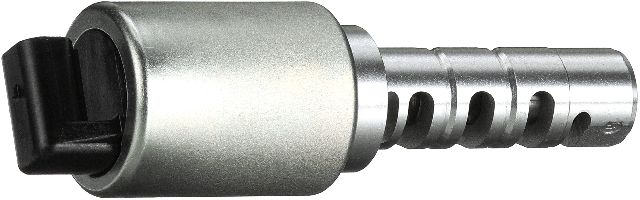
Est. part cost: $40-$80 - Faulty Exhaust Oil Control Valve (OCV) / VVT Solenoid 🟡 Medium Probability → Shop Engine Variable Valve Timing (VVT) Solenoid The OCV is a solenoid that can become clogged with sludge or debris from the engine oil, causing its internal spool valve to stick in the advanced position. It can also fail electrically over time. TSB 01-016-19, while for a related code, explicitly mentions that foreign objects getting stuck in the OCV can cause oil pressure drops and VVT issues, a relevant failure mechanism.
How to confirm: After confirming the oil is correct, the best diagnostic step is to swap the exhaust OCV with the identical intake OCV. Clear the codes and drive the vehicle. If the trouble code changes to P0011 (Intake Camshaft Position Timing Over-Advanced), the OCV is confirmed to be faulty. You can also test the valve's resistance with a multimeter (should be 6.9-7.5 ohms at 68°F/20°C). You can also apply 12V directly to the solenoid to check for an audible click and movement of the internal spool valve.
Typical fix: Replace the exhaust Oil Control Valve. Since this requires removing the valve cover, it is highly recommended to replace the valve cover gasket and spark plug tube seals at the same time. The OEM part number for the OCV is PE01-14-420A.
Est. part cost: $50-$400
Rare But Worth Checking
- Stretched Timing Chain or Failed Tensioner: → Shop Engine Timing Chain This is a major mechanical issue, though less common on these engines, typically occurring at higher mileage (over 100,000 miles). It usually presents with a persistent rattling noise from the front of the engine, especially on startup. This is a last resort after checking oil and OCVs.
- Failed VVT Actuator (Cam Phaser): The actuator is the gear on the end of the camshaft that physically changes the cam timing. It can fail mechanically by getting stuck or having its internal oil passages blocked. This is typically diagnosed only after a new OCV fails to resolve the code and is a more expensive and labor-intensive repair.
- Clogged Oil Passages: In engines with a history of poor maintenance or oil sludge, the small oil passages leading to the VVT actuator or within the cylinder head can become blocked, starving the system of the pressure it needs to operate correctly. This is difficult to diagnose and may require significant engine disassembly to clean.
Diagnosis Steps
- Check the engine oil level and condition. If it is low, dirty, or past its service interval, perform an oil and filter change with full synthetic 0W-20 oil. Clear the code and test drive.
- If the code returns, listen for any rattling from the timing chain area. A persistent rattle could indicate a more serious mechanical issue like a stretched chain.
- If oil is good and no rattles are present, prepare to access the Oil Control Valves (OCVs). This requires removing the plastic engine cover, ignition coils, and the valve cover itself.
- Locate the intake and exhaust OCVs on the top of the cylinder head. They are identical parts. Mark them clearly to avoid confusion.
- Swap the position of the exhaust OCV and the intake OCV.
- Reassemble the valve cover with the old gasket for testing purposes (or install a new one if you are confident the OCV is the issue).
- Clear the codes and perform a thorough test drive, ensuring the engine reaches operating temperature.
- If the code changes to P0011 ('A' Camshaft Position - Timing Over-Advanced), the OCV you moved from the exhaust to the intake side is faulty. Purchase and install a new OCV in the exhaust position.
- If the P0014 code returns, the OCV is not the issue. The problem may lie with the VVT actuator (phaser), a clogged oil passage, or the timing chain itself, which may require professional diagnosis.
- When performing the final repair, install a new valve cover gasket (OEM Part # PY01-10-235) and spark plug tube seals, and apply RTV sealant at the timing cover joints as specified by the service manual.
Parts You'll Likely Need
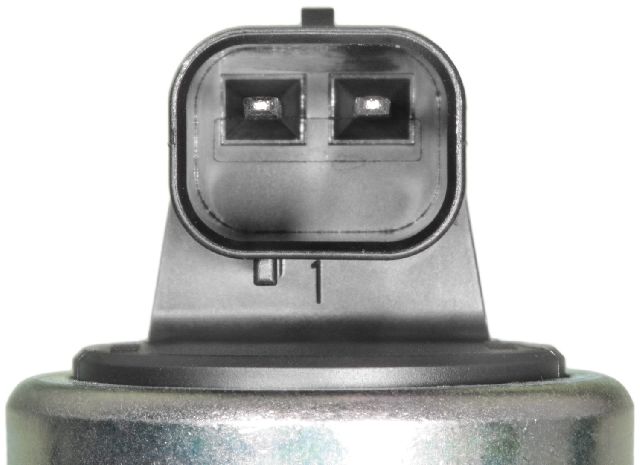
- Engine Oil Control Valve (OCV) / VVT Solenoid
(OEM #PE01-14-420A)— This solenoid controls oil flow to the VVT actuator. It is the most common part to fail for this code, often by getting stuck or clogged with debris. It supersedes part number PE0114420.
Trusted brands: Mazda (OEM), Beck/Arnley, Dorman, Standard Motor Products (SMP)
OEM price range: $315-$400
Aftermarket price range: $40-$120 - Valve Cover Gasket Kit
(OEM #PY01-10-235)— The OCV is located under the valve cover. The gasket must be replaced anytime the valve cover is removed to prevent oil leaks. The OEM part includes the main gasket and spark plug tube seals.
Trusted brands: Mazda (OEM), Fel-Pro, Mahle, Victor Reinz
OEM price range: $30-$50
Aftermarket price range: $25-$45 - Engine Oil and Filter — Low or dirty oil is a primary cause of P0014. An oil change is the first diagnostic step and is recommended during any VVT-related repair.
Trusted brands: Idemitsu (OEM supplier for Mazda), Mobil 1, Castrol, Pennzoil Platinum
OEM price range: $60-$90
Aftermarket price range: $40-$70
Related Codes That Often Appear With This One
- P0011: If the OCV swap test is performed and the valve is faulty, P0014 will be replaced by P0011.
- P0524: The official Mazda diagnostic procedure for P0014 advises checking if P0524 (Engine Oil Pressure Too Low) is also present, which would point the investigation toward a systemic oil pressure problem rather than a single component.
- P0015: A TSB for P0015 (Exhaust timing over-retarded) links the code to debris in the oil system, which is a root cause that could also manifest as P0014 under different conditions.
Technical Service Bulletins (TSBs) & Recalls
- 01-016-19 (Contextual): While for P0015/P0524, it describes rough idle from foreign objects in the OCV or oil pump, which is relevant to P0014's oil-pressure-based mechanism. It confirms that oil system contamination is a known issue that can trigger various VVT codes.
Platform-Specific Known Issues
- TSB 01-016-19, while for the related P0015/P0524 codes, highlights that debris can get stuck in the OCV or oil pump relief valve, causing oil pressure drops and VVT-related codes. This reinforces the critical role of oil cleanliness in these engines. The diagnostic procedure even includes revving the engine to 4,000 RPM multiple times to attempt to dislodge debris.
- A Reddit user with a 2021 CX-5 reported a P0014 code appearing months after a dealership service where the oil filter was double-gasketed, causing a massive oil leak. While the dealer claimed no engine damage, the subsequent appearance of the P0014 code suggests a possible link between the oil starvation event and later VVT system problems.
Mechanic-Grade Diagnostic Values
- Oil Control Valve (OCV) Coil Resistance — expected: 6.9–7.5 ohms at 20°C (68°F). Failure: A reading of infinite resistance (open circuit) or a value significantly outside the specified range indicates a faulty coil.
- Oil Control Valve (OCV) Spool Valve Functional Test — expected: When 12V is applied to the terminals, the internal spool valve should audibly click and physically move from the max advance to the max retard position. It should return upon removal of voltage.. Failure: No click or no physical movement of the spool valve indicates it is mechanically stuck.
- PCM Live Data Camshaft Timing Deviation (using M-MDS or equivalent) — expected: The actual exhaust valve timing (PID: VT_EX_ACT) should closely follow the target timing (PID: VT_EX_DES).. Failure: The code P0014 is set if the difference between the target and actual timing is greater than 20 degrees for approximately 5 seconds.
- Exhaust OCV Control Signal at PCM — expected: Voltage/duty cycle should vary based on engine RPM and load as the PCM commands timing changes.. Failure: No signal or a static signal when changes are expected points to a wiring or PCM issue.
Scan Tool Commands That Help
- Mazda M-MDS (or advanced equivalent): PID Monitoring: VT_EX_DES and VT_EX_ACT — This is the primary diagnostic function for P0014. It allows a technician to watch the PCM's commanded exhaust cam position versus the actual position reported by the sensors in real-time to confirm if a performance fault exists.
Wiring & Ground Locations
- Exhaust OCV PCM Pin — Pin 1AN on the Powertrain Control Module (PCM) connector.. This is the specific pin that sends the control signal to the exhaust OCV. It should be tested for continuity to the OCV connector and checked for a proper signal to rule out a wiring or PCM driver fault.
- Exhaust CMP Sensor PCM Pin — Pin 1U (signal) and Pin 1BH (sensor ground) on the PCM connector.. The PCM uses the signal from this pin to determine the 'actual' camshaft position (VT_EX_ACT). A fault in this circuit could cause the PCM to misinterpret the cam position and set a false P0014 code.
- Engine/Transaxle Ground Points — Key grounds are typically located on the harness on top of the transaxle, on the front of the transaxle case, and at the passenger-side engine mount.. Poor grounding between the engine and chassis can introduce electrical noise and voltage drops, potentially affecting the accuracy of sensor readings and the performance of solenoids like the OCV.
OEM Part Supersession History
PE0114420→PE01-14-420A— Standard part revision or change in manufacturer.
Model Year Variations Within This Range
- 2018-2024: Engines in these model years feature cylinder deactivation, which adds complexity to the valvetrain, including different camshafts and hydraulic lash adjusters that can disengage rocker arms. While no direct link between cylinder deactivation and P0014 is documented, this system introduces more potential failure points within the valvetrain and hydraulic oil circuits compared to the simpler 2017 non-deactivation engine.
Diagnostic Flowchart
Other Known Issues on This Vehicle
Issues unrelated to this code that are worth knowing about as an owner of this generation:
- Cracked Cylinder Head (Primarily on Cylinder Deactivation models) 🔴 High — A known but not widespread issue, primarily affecting 2018-2021 models with cylinder deactivation (CD). It can cause external oil or coolant leaks. The issue is less common on models without CD, but some cases are reported. (Ref: Mazda issued service alerts and updated cylinder head part numbers but no official recall. TSB for the turbo model (2.5T) addresses a similar issue with coolant leaks.)
- Carbon Buildup on Intake Valves 🟠 Medium — Common to most direct-injection engines. Can occur in 15-20% of vehicles after 60,000 miles, leading to reduced performance and efficiency. Requires periodic cleaning (e.g., walnut blasting) every 60,000-80,000 miles.
- Excessive Oil Consumption 🟠 Medium — More prevalent in earlier models of this generation (approx. 2017-2019), affecting an estimated 8-12% of vehicles. Can be caused by issues with piston rings or valve seals.
- Cylinder Deactivation (CD) System Issues 🟡 Low — Some owners of models equipped with CD (2018+) report concerns about vibrations or long-term reliability. A TSB was issued for a chirp noise from the automatic transaxle on CD models due to torque converter clutch wear. (Ref: TSB 01-001/23 addresses an oil leak from the front cover on CD models.)
- Prematurely Failing Rear Brakes / EPB Issues 🟡 Low — Some owners report grinding noises or uneven wear on rear brake pads, sometimes related to the Electric Parking Brake (EPB) system. (Ref: TSB #04-007-20-3713a and #04-004-21-3821 address rear brake noise and uneven wear.)
Used vs. New Parts: Buying Guide for This Vehicle
When a used part is the smart pick: For this repair, using a used part is generally not recommended for the Oil Control Valve (OCV) itself. Since the primary failure mode is clogging from dirty oil or internal wear, a used part carries a high risk of having the same issue or a very short service life. Used structural parts like the valve cover are acceptable.
Donor-vehicle mileage cap: roughly under 60000 miles for the part to have meaningful remaining life.
What to inspect on the donor part:
- For a used OCV, inspect the mesh filter screens for any signs of metallic debris or black sludge; if not perfectly clean, do not buy.
- Check the electrical connector for corrosion or damage.
- It is impossible to visually inspect the internal spool valve, making used purchase inherently risky.
OEM-only on this vehicle (don't cheap out):
- Oil Control Valve (OCV) / VVT Solenoid: While aftermarket is available, some vehicle platforms have reported issues with brand-new aftermarket solenoids being faulty out of the box. Given the labor involved in replacing this part under the valve cover, using an OEM Mazda part is strongly recommended to ensure reliability and avoid repeat repairs.
Aftermarket brands forum-validated for this vehicle:
- Idemitsu (Engine Oil - OEM supplier for Mazda)
Brands owners have reported issues with on this vehicle:
- Generic/unbranded VVT solenoids from online marketplaces should be avoided due to inconsistent quality control.
Real Owner Stories
Aggregated from forums and TSBs cited above. Mileages and costs reflect what owners reported in those sources.
2021 Mazda CX-5 2.5L
Symptoms: P0014 code appeared several months after a massive oil leak caused by a double-gasketed oil filter during a dealership service.
What fixed it: The owner linked the code to the previous oil starvation event; the context suggests checking oil-pressure-dependent VVT components like the OCV.
Source hint: Reddit (r/CX5)
2017-2024 Mazda CX-5 2.5L
Symptoms: Fault code P0014 (Exhaust Camshaft Position Timing Over-Advanced).
What fixed it: The code was triggered by an extremely low oil level; topping off or changing the oil is the priority fix.
Source hint: Reddit (r/MechanicAdvice - 'Fault code P0014')
2017-2024 Mazda CX-5 2.5L
Symptoms: P0014 code appearing intermittently around the same time as a thermostat issue.
What fixed it: The owner investigated a potential link between engine temperature management and VVT system faults.
Source hint: Mazdas247.com (P0014 code around time of thermostat code)
Related OBD-II Codes
Frequently Asked Questions
Does TSB 01-016-19 apply to my P0014 code on the Mazda CX-5?
Can I use any synthetic oil in my Skyactiv-G 2.5L to clear this code?
Is the Oil Control Valve (OCV) for the exhaust side different from the intake side?
Do I need to remove the valve cover to fix P0014 on my CX-5?
Could a recent oil leak cause this code to appear later?
Is there a way to clear debris from the OCV without replacing it?
Helpful Videos
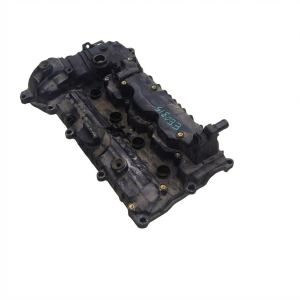
Used OEM Parts in Stock
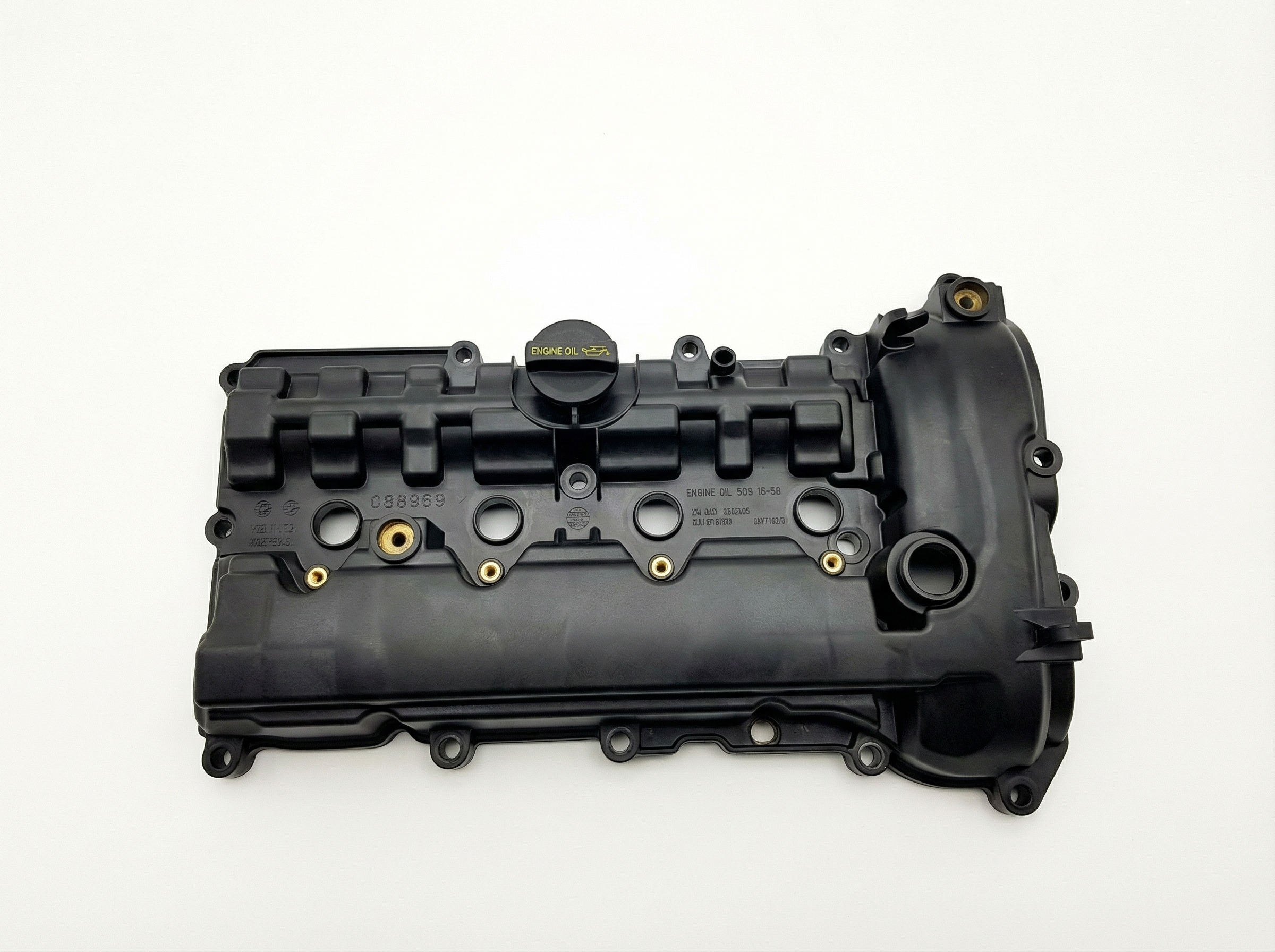
New Aftermarket Parts Available

The information in this article is provided for general reference and educational purposes only. Vehicle specifications, procedures, and part compatibility can vary by production date, trim level, and region. Always consult your vehicle's factory service manual and verify part numbers before purchasing or performing repairs. Safety-critical components such as airbags, seat belts, and braking systems should be installed by a qualified professional.
- Mazda CX-5:
- 🧭 Diagnostic Flowchart
- 🎬 Helpful Videos
- 🛍️ Shop This Part
- What's Unique About the 2017-2024 Mazda CX-5
- Symptoms You May Notice
- Most Likely Causes
- Rare But Worth Checking
- Diagnosis Steps
- Parts You'll Likely Need
- Related Codes That Often Appear With This One
- Technical Service Bulletins (TSBs) & Recalls
- Platform-Specific Known Issues
- Mechanic-Grade Diagnostic Values
- Scan Tool Commands That Help
- Wiring & Ground Locations
- OEM Part Supersession History
- Model Year Variations Within This Range
- Other Known Issues on This Vehicle
- Used vs. New Parts: Buying Guide for This Vehicle
- Real Owner Stories
- 2021 Mazda CX-5 2.5L
- 2017-2024 Mazda CX-5 2.5L
- 2017-2024 Mazda CX-5 2.5L
- Related OBD-II Codes
- Frequently Asked Questions
- 🎟️ Get 5% Off