

P0015 on 2015-2020 Lincoln MKZ V6: Exhaust Cam Timing Causes and Fixes
On a 2015-2020 Lincoln MKZ with a V6 engine, P0015 is almost always caused by a sticking exhaust VCT solenoid on Bank 1, often due to old or low engine oil. The most common fix is to change the oil and filter and replace the Bank 1 exhaust VCT solenoid. Bank 1 is the firewall-side cylinder bank, making this repair more labor-intensive.
- P0015 on your V6 MKZ points to an over-retarded exhaust camshaft on the rear cylinder bank (Bank 1).
- Before buying any parts, check your engine oil. Low, old, or incorrect oil is a primary contributor to this code.
- The most likely failed part is the Bank 1 exhaust VCT solenoid. Replacing it along with a fresh oil change is the most common repair.
- Do not immediately replace the camshaft position sensor; it is rarely the cause.
- Be aware that replacing the Bank 1 (rear) solenoid is a labor-intensive job due to its location against the firewall, requiring removal of the intake manifold.
What's Unique About the 2015-2020 Lincoln MKZ
The V6 engines in this generation of Lincoln MKZ use a Twin Independent Variable Camshaft Timing (Ti-VCT) system that is highly dependent on clean, correct-viscosity engine oil. Ford and Lincoln have issued multiple Technical Service Bulletins (TSBs) acknowledging that debris in the oil can cause the VCT solenoids to stick, making this the most probable cause. TSB SSM 48423 specifically advises attempting to clear debris by cycling the solenoid with a scan tool before replacement. Because Bank 1 is at the rear of the transverse-mounted engine, replacing this specific solenoid is more labor-intensive, requiring removal of the upper intake manifold to gain access.
Generation note: The 2015-2020 year range covers the second generation of the Lincoln MKZ. It includes the 3.7L Cyclone V6 (2015-2016) and the 3.0L GTDI V6 (2017-2020). The meaning of code P0015 and its primary cause—a sticking VCT solenoid due to oil condition—are consistent across both V6 engines in this timeframe, though some part numbers differ.
Symptoms You May Notice
- Check Engine Light is on
- Rough or unstable idle
- Reduced engine power and hesitation during acceleration
- Decreased fuel economy
- Engine may stall in some conditions
- Hard starting
- Rattling noise from the engine
- Replacing the camshaft position sensor. The sensor is usually functioning correctly by reporting the timing deviation; it is not the cause of the problem. A new sensor for a 2015 MKZ can cost between $70 and $139, making it a costly incorrect guess.
Most Likely Causes
- Sticking or Failed Bank 1 Exhaust VCT Solenoid 🔴 High Probability → Shop Engine Variable Valve Timing (VVT) Solenoid Ford/Lincoln has issued multiple TSBs (e.g., SSM 48423, SSM 50067) confirming that VCT solenoids on these engines are prone to sticking due to small debris in the engine oil. The screens on the solenoids can become clogged with sludge, impeding oil flow.
How to confirm: Check the engine oil level and condition first. A common diagnostic test involves swapping the Bank 1 exhaust VCT solenoid with the Bank 1 intake VCT solenoid. Clear the codes and drive. If the code changes to P0011 or P0012 (Intake Camshaft Position Timing), the solenoid is confirmed faulty.
Typical fix: Replace the Bank 1 exhaust VCT solenoid and perform an engine oil and filter change. It is critical to use the correct specification full-synthetic engine oil to prevent recurrence.
Est. part cost: $40-$90 - Low, Dirty, or Incorrect Viscosity Engine Oil 🟡 Medium Probability The Ti-VCT system uses oil pressure to actuate the cam phasers. If the oil is low, degraded, or the wrong weight, it cannot operate the system correctly, leading to timing errors. This is the most common root cause of VCT solenoid failure.
How to confirm: Check the oil level on the dipstick and inspect the oil's color and consistency. Check vehicle records for the last oil change date and the type of oil used. An oil change is the cheapest and easiest first step.
Typical fix: Perform an engine oil and filter change using the manufacturer-specified full-synthetic oil (e.g., 5W-30 for the 3.7L) and a quality filter.
Est. part cost: $50-$100
Rare But Worth Checking
- Worn Timing Chain or Failed Cam Phaser: → Shop Engine Timing Chain This is a more serious mechanical issue. It should be suspected if the engine makes rattling noises, especially on cold starts, and if replacing the VCT solenoid does not resolve the code. A user with a similar 3.7L engine experienced multiple VCT codes that were ultimately resolved by replacing sludge-covered solenoids, but a stretched chain was a concern.
- Wiring Harness or Connector Issue: A damaged wire or corroded connector for the VCT solenoid can prevent it from operating correctly. This should be checked if a new solenoid does not fix the problem. Inspect the harness where it passes over the engine for any signs of chafing or heat damage.
Diagnosis Steps
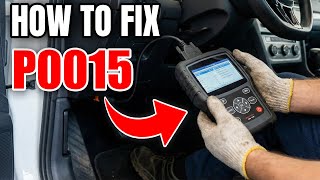
- Read the code with an OBD-II scanner to confirm P0015 is present. 🎬 Watch: A step-by-step guide to fixing the P0015 code
- Check the engine oil level and condition. If the oil is low, dirty, or overdue for a change, address this first. An oil and filter change may resolve the issue on its own.
- Using a capable scan tool, monitor the desired vs. actual camshaft position for Bank 1 Exhaust. Per TSB SSM 48423, command the VCT solenoid on and off (cycle it 10 times) to check for a response and attempt to clear debris.
- Inspect the wiring and connector at the Bank 1 exhaust VCT solenoid for any visible damage, corrosion, or loose connections.
- If the solenoid is unresponsive or the timing does not correct, swap the Bank 1 exhaust and intake solenoids. Clear codes and drive. If the code changes to P0011 or P0012, the solenoid is faulty and must be replaced.
- If the code persists after replacing the solenoid and changing the oil, the issue may be mechanical. Listen for any engine rattles that could indicate a problem with the cam phaser or timing chain, which requires professional diagnosis.
Parts You'll Likely Need
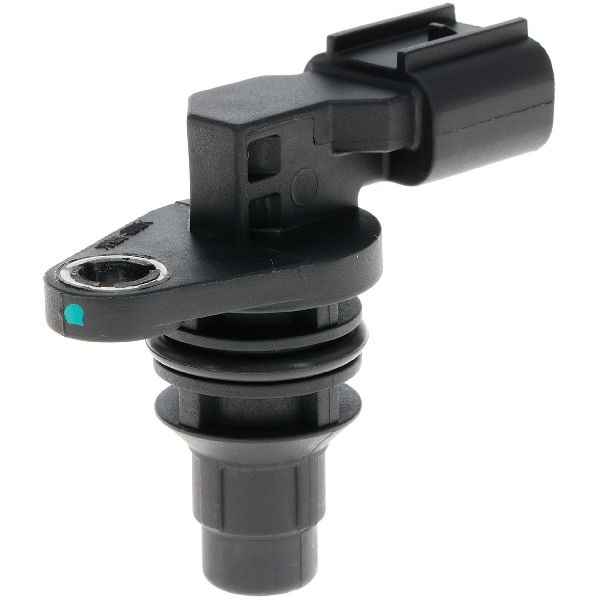
- Variable Camshaft Timing (VCT) Solenoid (Bank 1 Exhaust)
(OEM #3.7L V6: AT4Z-6M280-B (or -A); 3.0L V6: FT4Z-6M280-B (or -A))— This is the most common failure point for code P0015 on this platform, often sticking due to oil contamination as documented in manufacturer TSBs.
Trusted brands: Motorcraft, Dorman, Standard Motor Products (SMP)
OEM price range: $60-$100
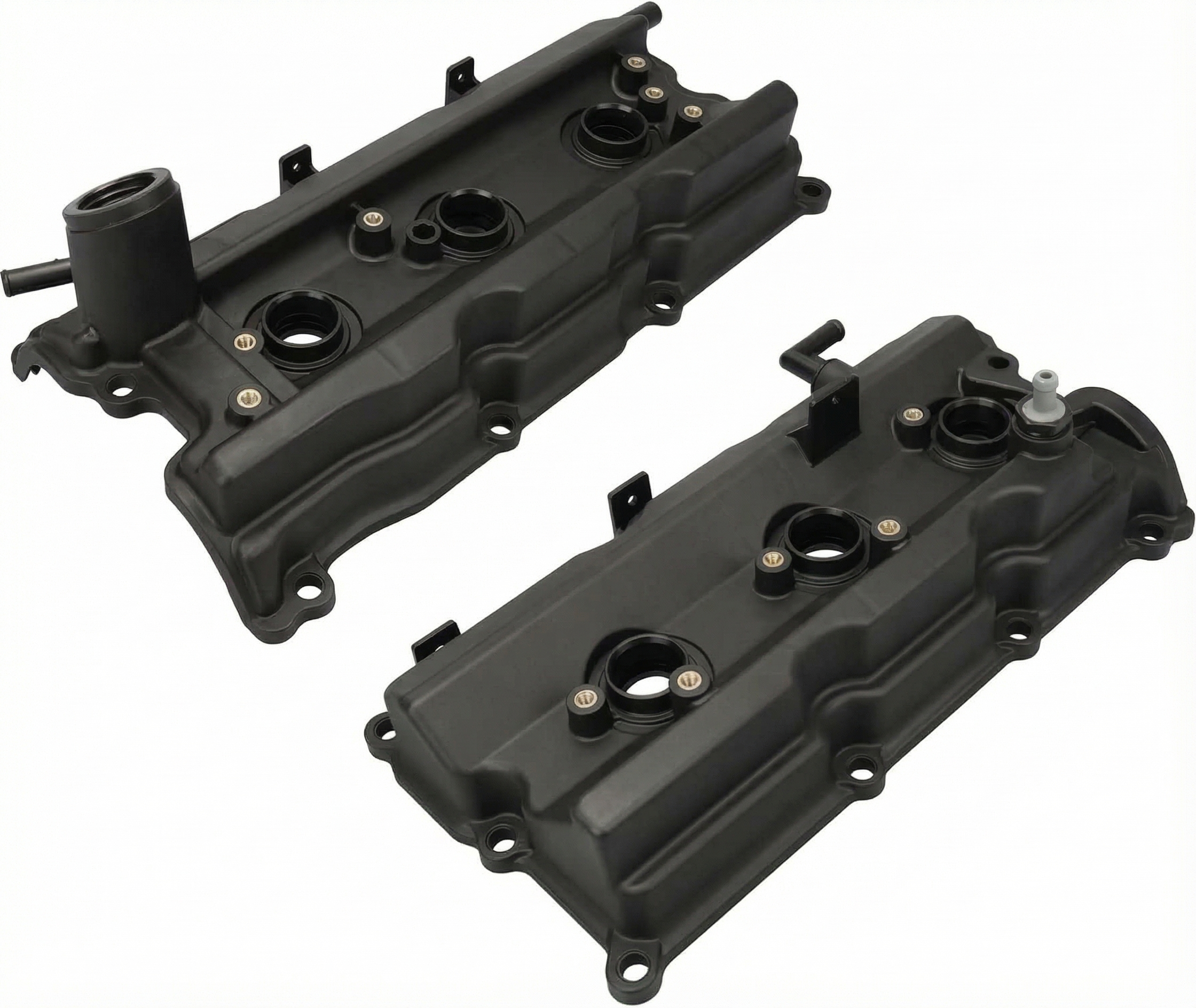
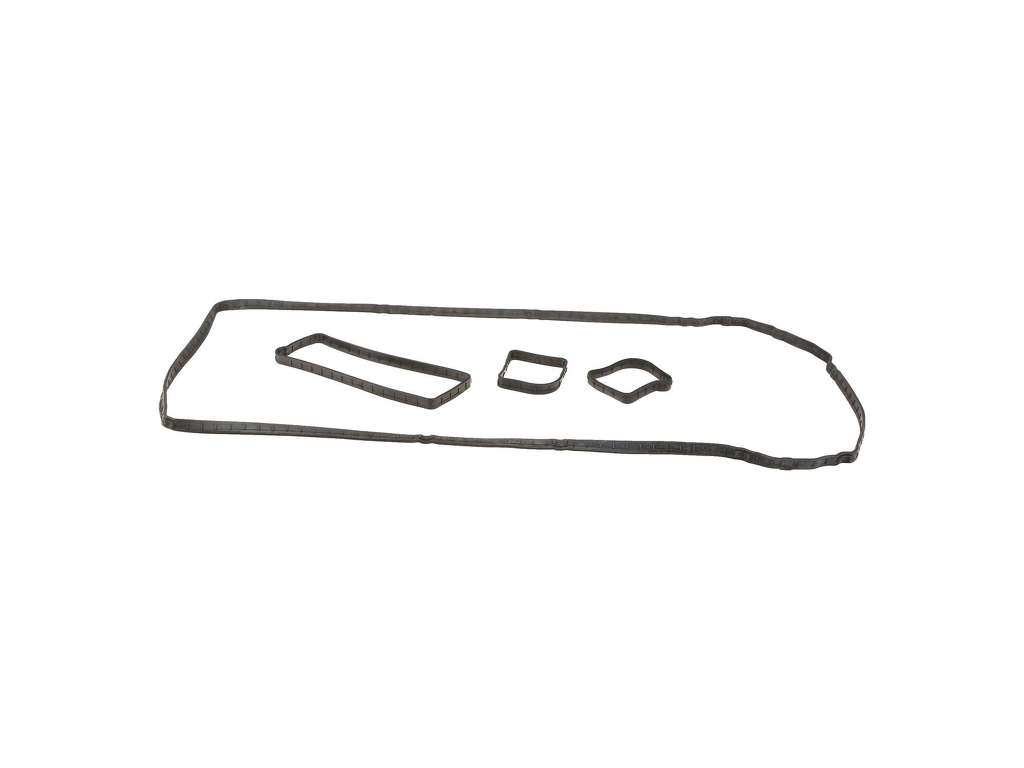
Aftermarket price range: $30-$80 - Valve Cover Gasket (Bank 1)
(OEM #3.7L V6: DL3Z-6584-C (example from MKX))— Accessing the VCT solenoid on the rear bank (Bank 1) requires removing the valve cover. The gasket is a single-use item and should be replaced to prevent oil leaks.
Trusted brands: Motorcraft, Fel-Pro
OEM price range: $40-$70
Aftermarket price range: $25-$50 - Upper Intake Manifold Gaskets — To access the rear valve cover on the transverse V6, the upper intake manifold must be removed. These gaskets should be replaced upon reassembly to prevent vacuum leaks.
Trusted brands: Motorcraft, Fel-Pro
OEM price range: $20-$40
Aftermarket price range: $15-$30
Related Codes That Often Appear With This One
- P0017 — This code indicates a correlation issue between the crankshaft and the Bank 1 exhaust camshaft. It often appears with P0015 because the over-retarded timing creates a mismatch with the crankshaft's position, which can point towards a base timing issue like a stretched chain.
- P0025 — This is the same over-retarded timing code but for Bank 2. If both P0015 and P0025 are present, it strongly suggests a global issue affecting both banks, such as low oil pressure or severe oil contamination.
Technical Service Bulletins (TSBs) & Recalls
- SSM 48423: Notes that P0015 may be caused by small debris causing the VCT solenoid to stick and advises using a scan tool to cycle the affected solenoid 10 times to attempt to clear debris before replacement.
- SSM 50067: A later bulletin that also calls out VCT solenoids sticking due to small debris as a common cause for this code on 2015-2021 Ford and Lincoln vehicles.
- SSM 47170: An earlier bulletin also noting that VCT codes can be caused by debris in the solenoid and recommending a specific diagnostic pinpoint test.
Platform-Specific Known Issues
- The location of Bank 1 on the transverse V6 engine is against the firewall, making access to the VCT solenoid and valve cover significantly more labor-intensive than for Bank 2. This requires removing the upper intake manifold.
Mechanic-Grade Diagnostic Values
- VCT Solenoid Internal Resistance — expected: 5.0 to 14.0 Ohms. Some sources cite a tighter range of 6.9 to 7.9 Ohms.. Failure: A reading of 0 ohms indicates a short, while an infinite reading (OL) indicates an open circuit. A reading outside the expected range suggests the internal coil is failing.
- VCT Solenoid Power Supply Voltage (Key On, Engine Off) — expected: Greater than 10.5V, typically battery voltage (approx. 12.6V).. Failure: Voltage below 10.5V points to a problem in the power supply wiring or fuse, not the solenoid itself.
- Live Data PID: VCT Exhaust Cam Error (VCT_EXH_ERR) — expected: At idle, this value should be close to 0 degrees.. Failure: A consistent, significant negative value (e.g., -5 degrees or more) at idle indicates the camshaft is over-retarded and confirms the fault condition the PCM is detecting.
Hidden / Shadow Codes Worth Checking
- Mode $06, TID ~$51-$54: This is a non-continuous monitor test result, not a separate DTC. Test IDs in this range for Ford often relate to the VCT system and can show the last measured camshaft angle error in degrees. This allows a technician to see how far out of spec the timing was, even if the fault is not currently active. (see via A professional scan tool capable of displaying Mode $06 test results.)
Scan Tool Commands That Help
- Ford IDS, FORScan, or equivalent: VCT Solenoid Cycle (Pinpoint Test HK) — As recommended by Ford TSBs (SSM 48423, SSM 49821), this command should be used after an oil change but before replacing the solenoid. It rapidly cycles the solenoid (e.g., 10 times) to attempt to dislodge small debris that may be causing it to stick, which can potentially fix the issue without part replacement.
- Ford IDS, FORScan, or equivalent: Monitor PIDs: VCT_EXH_CMD vs VCT_EXH_ACT — During diagnosis, graphing the Commanded (CMD) versus Actual (ACT) camshaft position while driving can reveal lags or unresponsiveness in the system, helping to confirm a sticking solenoid or phaser issue.
Wiring & Ground Locations
- G101 / G102 / G105 — These are primary engine and chassis ground points located in the engine compartment, often on the radiator support or inner fenders. On a similar 2014 MKZ, G101/102 are at the left front and G105 is on the right side of the engine compartment.. A corroded or loose main engine ground can cause erratic sensor readings and incorrect calculations by the PCM, potentially leading to false VCT codes like P0015.
- VCT Solenoid Connector — On the top of the valve cover for the respective bank. Bank 1 (firewall side) requires removing the upper intake manifold for access.. The connector itself can become contaminated with oil, or the wiring leading to it can chafe or break, causing an open or short in the solenoid control circuit. The power supply pin should have battery voltage with the key on.
OEM Part Supersession History
AT4Z-6M280-A→AT4Z-6M280-B— Updated design for improved reliability and resistance to debris for the 3.7L V6 and other Ford applications.
Heads up: While multiple solenoids may look similar, the intake and exhaust solenoids can have different part numbers and flow characteristics. Always verify the correct part number for the specific position (Bank 1/2, Intake/Exhaust) via the vehicle's VIN.
Model Year Variations Within This Range
- 2015-2016 vs 2017-2020: The 2015-2016 models use the 3.7L Cyclone V6, while 2017-2020 models use the 3.0L GTDI (twin-turbo) V6. While the P0015 code's meaning is the same, the specific VCT solenoid part numbers differ. The 3.7L typically uses AT4Z-6M280-B, while the 3.0L uses a part like FT4Z-6M280-B. The diagnostic principle remains the same.
Diagnostic Flowchart
Other Known Issues on This Vehicle
Issues unrelated to this code that are worth knowing about as an owner of this generation:
- Internal Water Pump Failure (3.7L V6) 🔴 High — Can occur as early as 50,000 miles, but more common around 100,000 miles. Failure can cause coolant to mix with engine oil, leading to catastrophic engine damage.
- Power Transfer Unit (PTU) Failure (AWD Models) 🔴 High — Common across many Ford/Lincoln AWD platforms. The 'lifetime' fluid overheats and degrades, leading to seal leaks and eventual gear/bearing failure. Recommended fluid change every 30,000 miles. (Ref: TSB 19-2017 (for some models))
- Electronic Throttle Body (ETB) Failure 🟠 Medium — Affects many Ford/Lincoln engines from this era, including the 3.7L V6. Can cause the vehicle to enter a 'limp mode' with reduced power. (Ref: Customer Satisfaction Program 16B23, TSB 10-21-6 (for earlier models but relevant))
- Heated/Cooled Seat Module Failure 🟡 Low — A common electrical issue where the control module under the front passenger seat fails, often due to a bad ground pin, disabling the seat climate functions.
Used vs. New Parts: Buying Guide for This Vehicle
When a used part is the smart pick: A used VCT solenoid is generally not recommended. The failure is caused by internal wear and contamination, and a used part carries a high risk of having the same issue or a short remaining life. Given the high labor cost to access the Bank 1 solenoid, the savings on a used part do not justify the risk of a repeat repair.
Donor-vehicle mileage cap: roughly under 50000 miles for the part to have meaningful remaining life.
What to inspect on the donor part:
- Verify the part number on the solenoid matches the required OEM number exactly.
- Inspect the mesh screens on the solenoid body; they should be perfectly clean, intact, and free of any sludge or debris.
- Check the electrical connector for any signs of corrosion, oil intrusion, or damage to the pins.
- If possible, test the resistance with a multimeter; it should fall within the 5-14 ohm range.
OEM-only on this vehicle (don't cheap out):
- Variable Camshaft Timing (VCT) Solenoid
Aftermarket brands forum-validated for this vehicle:
- Motorcraft (OEM)
Brands owners have reported issues with on this vehicle:
- Dorman: Multiple forum discussions across Ford platforms advise against using Dorman VCT solenoids, citing high failure rates and the need to repeat the repair. Given the labor involved for the Bank 1 solenoid on the MKZ, using a non-OEM part is a significant risk.
Real Owner Stories
Aggregated from forums and TSBs cited above. Mileages and costs reflect what owners reported in those sources.
Ford Edge 3.7L V6
Symptoms: The vehicle had multiple VCT codes (P0022, P0012, P0015) and was experiencing severe running issues.
What fixed it: After replacing coils and sensors did not work, the problem was solved by replacing all four VVT solenoids. The old ones were found to be covered in varnish with clogged screens.
Source hint: fordedgeforum.com: A user with a 3.7L V6 reported multiple VCT codes (P0022, P0012, P0015) and severe running issues. After replacing coils and sensors with no luck, the fix was replacing all four VVT solenoids which were covered in varnish and had clogged screens.
Related OBD-II Codes
Frequently Asked Questions
Why is the P0015 repair on my V6 MKZ so much more expensive than on other cars?
My mechanic mentioned TSB SSM 48423. What does it say about the P0015 code?
Can I just do an oil change to fix the P0015 code?
I swapped the Bank 1 intake and exhaust VCT solenoids, and now I have a P0011 code. What does this mean?
Is it a good idea to buy a used VCT solenoid to save money on the repair?
Besides this timing issue, what other major problems should I watch for on my 3.7L V6 MKZ?
Helpful Videos
Used OEM Parts in Stock
New Aftermarket Parts Available


The information in this article is provided for general reference and educational purposes only. Vehicle specifications, procedures, and part compatibility can vary by production date, trim level, and region. Always consult your vehicle's factory service manual and verify part numbers before purchasing or performing repairs. Safety-critical components such as airbags, seat belts, and braking systems should be installed by a qualified professional.
- Lincoln MKZ:
- 🧭 Diagnostic Flowchart
- 🎬 Helpful Videos
- 🛍️ Shop This Part
- What's Unique About the 2015-2020 Lincoln MKZ
- Symptoms You May Notice
- Most Likely Causes
- Rare But Worth Checking
- Diagnosis Steps
- Parts You'll Likely Need
- Related Codes That Often Appear With This One
- Technical Service Bulletins (TSBs) & Recalls
- Platform-Specific Known Issues
- Mechanic-Grade Diagnostic Values
- Hidden / Shadow Codes Worth Checking
- Scan Tool Commands That Help
- Wiring & Ground Locations
- OEM Part Supersession History
- Model Year Variations Within This Range
- Other Known Issues on This Vehicle
- Used vs. New Parts: Buying Guide for This Vehicle
- Real Owner Stories
- Ford Edge 3.7L V6
- Related OBD-II Codes
- Frequently Asked Questions
- 🎟️ Get 5% Off