

P0015 on 2008-2019 Toyota Highlander 3.5L: Causes and Fixes for Camshaft Timing
P0015 on a Toyota Highlander 3.5L V6 almost always points to a problem with the Variable Valve Timing (VVT) system. Start by checking your engine oil level and condition, as low or dirty oil is a primary cause. The most likely failed component is the Bank 1 exhaust Oil Control Valve (OCV), which costs around $100-$150 for an OEM part. This is a moderately difficult DIY job because the valve is located on the rear cylinder head (Bank 1) under the intake manifold, requiring significant disassembly
- P0015 specifically points to the exhaust camshaft on Bank 1 (the rear bank by the firewall).
- Your first and cheapest diagnostic step is to check your engine oil. Low or dirty oil is a primary cause.
- The most likely failed part is the Oil Control Valve (OCV), Toyota P/N 15340-0P020.
- Do NOT replace the camshaft position sensor; it is not the cause of this code.
- Replacing the Bank 1 exhaust OCV is a difficult DIY job (4/5 difficulty) because the intake manifold must be removed for access.
What's Unique About the 2008-2019 Toyota Highlander
The 2GR-FE V6 engine relies heavily on clean oil and proper oil pressure to operate its dual VVT-i system. This makes it particularly sensitive to infrequent oil changes, which can lead to sludge buildup that clogs the small passages in the Oil Control Valves (OCVs) or their filters. While many cars have easily accessible OCVs, the one for Bank 1 exhaust (which triggers P0015) is notoriously difficult to reach on the transverse-mounted Highlander engine, located on the rear cylinder head under the intake manifold and cowl. This location turns a simple part swap into a multi-hour job.
Generation note: This guide covers the second generation (2008-2013) and third generation (2014-2019) Toyota Highlander, both of which used the 2GR-FE 3.5L V6 engine. The fundamental causes and diagnostic procedures for P0015 are the same across these generations. A TSB (T-SB-0094-09) specifically mentions 2008-2009 models for potential VVT gear issues that can cause a startup rattle and set this code. For the 2017 model year, the engine was updated to the 2GR-FKS, but the principles of VVT operation and fault diagnosis remain similar.
Symptoms You May Notice
- Check Engine Light is on
- Rough or unstable idle
- Reduced engine power and poor acceleration
- Decreased fuel economy
- Engine may hesitate or stall
- A ticking or rattling noise from the engine on startup (in more severe cases, pointing to a VVT gear issue)
- Replacing the Camshaft Position Sensor. The P0015 code indicates the sensor is working correctly; it's accurately reporting a mechanical timing problem. Replacing the sensor will not fix the issue unless it has failed in a way that mimics a timing fault, which is uncommon for this specific code.
Most Likely Causes
- Low or Dirty Engine Oil 🔴 High Probability The VVT system is entirely dependent on hydraulic pressure. Old, sludgy, or low oil cannot operate the camshaft phasers correctly. Many owner reports on forums confirm that simply being low on oil can trigger P0015.
How to confirm: Check the oil level on the dipstick and examine the oil's color and consistency. If it's low, black, or thick, it needs to be changed.
Typical fix: Top up or perform a full engine oil and filter change using the manufacturer-recommended viscosity (typically 0W-20 or 5W-20 full synthetic). Clear codes and re-test.
Est. part cost: $40-$80 - Faulty Bank 1 Exhaust Oil Control Valve (OCV) / VVT Solenoid 🔴 High Probability → Shop Engine Variable Valve Timing (VVT) Solenoid These solenoids cycle constantly and can fail electrically or become clogged with debris from engine oil, causing them to stick. This is the most common failed part for P0015 after oil issues are ruled out.
How to confirm: You can test the solenoid's resistance (should be 6.9-7.9 Ω at 68°F). A more practical test is to apply 12V to its terminals and listen for a click. The most definitive test is to swap it with the identical exhaust OCV on Bank 2 (front, easier to access) and see if the code changes to P0025.
Typical fix: Replace the Bank 1 exhaust OCV. Due to its difficult location on the rear bank, this requires removing the upper intake manifold as shown in detailed DIY videos.
Est. part cost: $100-$180 - Clogged OCV Filter 🟡 Medium Probability A tiny, thimble-shaped filter screen protects the OCV from debris. This screen can become clogged with sludge or metal particles, starving the OCV of oil pressure.
How to confirm: The filter is located in the oil passage leading to the OCV, often inside the cylinder head behind a plug or banjo bolt. It must be visually inspected for sludge or metal particles.
Typical fix: Remove and clean the filter with brake cleaner or replace it. It is a very inexpensive part and should be replaced whenever servicing the OCV.
Est. part cost: $5-$15
Rare But Worth Checking
- Failing Camshaft Phaser (VVT Gear): → Shop Engine Camshaft Mentioned in TSB T-SB-0094-09 for early 2nd-gen models, this is a more serious mechanical failure. It often presents with a distinct rattling or ticking noise from the engine for a few seconds on startup. The gear's internal lock pin can fail, causing it to get stuck in a retarded position.
- Stretched Timing Chain: → Shop Engine Timing Chain While Toyota timing chains are generally robust, high mileage (150,000+ miles) can cause enough stretch to affect cam/crank correlation, potentially contributing to this code. This is usually a last-resort diagnosis after all VVT components have been checked.
- Faulty Engine Control Module (ECM): This is extremely rare. The ECM should only be considered if all other possibilities, including wiring harness integrity, have been exhaustively checked by a professional.
Diagnosis Steps
- Check Engine Oil: Verify the oil level is correct and the oil is clean. If low or dirty, perform an oil change and clear the code. This simple step resolves the issue in many cases.
- Scan for Other Codes: Check for any other related trouble codes that could provide more clues, such as P0014, P0012, or P0017.
- Inspect OCV Wiring: Visually inspect the wiring and connector for the Bank 1 exhaust OCV for any damage or corrosion. It is located on the rear cylinder head, which is difficult to see without some disassembly.
- Test the OCV: The most definitive test is to swap the Bank 1 (rear) exhaust OCV with the Bank 2 (front) exhaust OCV. They are identical parts. Clear the codes and drive. If the code changes to P0025, you have confirmed the OCV is bad.
- Inspect OCV Filter: While the OCV is removed, locate and inspect the small mesh filter for the OCV oil passage. Clean or replace it if it's clogged with sludge.
- Inspect Camshaft Phaser: If the OCV and filter are good, the issue may be with the camshaft timing gear (phaser) itself, especially if you hear a startup rattle. This is a much more involved job and may require professional diagnosis per TSB T-SB-0094-09.
Parts You'll Likely Need
- Engine Variable Valve Timing (VVT) Solenoid / Oil Control Valve (Bank 1 Exhaust)
(OEM #15340-0P020 (may be superseded by 15340-31020))— This is the most common component to fail for this code, either by getting stuck or failing electrically.
Trusted brands: Denso (OEM supplier), Aisin, Dorman
OEM price range: $130-$190
Aftermarket price range: $60-$120 - VVT Oil Control Valve Filter
(OEM #15678-46020)— This small filter can get clogged with sludge, restricting oil flow to the OCV and causing timing issues. It's a cheap part worth replacing when servicing the OCV.
Trusted brands: Toyota OE
OEM price range: $5-$15
Aftermarket price range: $3-$10
Related Codes That Often Appear With This One
- P0014 — P0014 is for 'Timing Over-Advanced' on the same camshaft. Seeing both may indicate an erratic OCV or a sticking cam phaser that is moving uncontrollably.
- P0012 — This code is for the intake camshaft on the same bank (Bank 1). If you see them together, it could point to a systemic oil pressure issue on that bank, like a failed internal valve cover O-ring seal.
- P0025 — This is the equivalent code for Bank 2 (front bank). If you swap the Bank 1 and Bank 2 exhaust OCVs for diagnosis, P0015 should turn into P0025, confirming the OCV is the faulty part.
Technical Service Bulletins (TSBs) & Recalls
- T-SB-0094-09 Rev1: Addresses a ticking noise and/or MIL ON with VVT codes (P0014, P0015, P0024, P0025, P0017, P0018) on 2008-2009 Highlanders, potentially requiring camshaft housing replacement if the VVT gear actuator is found to be faulty.
Platform-Specific Known Issues
- TSB T-SB-0094-09 Rev1 was issued for 2008-2009 Highlanders (and other models with the 2GR-FE) for a ticking noise and VVT codes, including P0015. The bulletin addresses a potential issue with the VVT gear actuator that may require replacement of the camshaft housing assembly in some cases.
Mechanic-Grade Diagnostic Values
- Camshaft Timing Oil Control Valve (OCV) Resistance — expected: 6.9 to 7.9 Ω at 20°C (68°F). Failure: A reading outside this range, or an open circuit (infinite resistance), indicates a failed solenoid coil.
- OCV Connector Voltage — expected: Battery voltage (~12V) with key on, engine off.. Failure: No voltage suggests a wiring issue, blown fuse (EFI MAIN, IG2), or a problem with the ECM's power supply.
- OCV Operation Check — expected: The internal spool valve should move with an audible click when 12V is applied to its terminals.. Failure: No movement or click indicates the valve is mechanically stuck or electrically failed.
Scan Tool Commands That Help
- Toyota Techstream: Active Test: 'Control the VVT System (Bank 1)' or 'VVT Linear' — This command allows a technician to manually command the OCV to operate. While monitoring live data for 'VVT Target Angle' and 'VVT Actual Angle' for the Bank 1 exhaust cam, the technician can see if the actual angle changes in response to the command. If it doesn't change, it points to a faulty OCV, clogged passage, or failed phaser. If it does change, the problem may be intermittent or related to wiring.
Wiring & Ground Locations
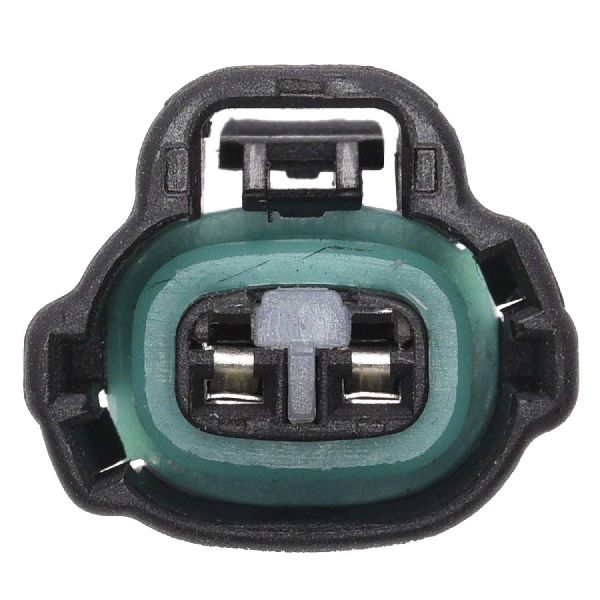
- Bank 1 Exhaust OCV Connector (OE1) — On the rear cylinder head (Bank 1), below the intake manifold. The connector has two pins: OE1+ and OE1-.. These pins connect directly to the ECM. A break or short in the wiring between this connector and the ECM will cause OCV control failure and trigger P0015 or related codes.
- ECM Pins for Bank 1 Exhaust OCV — On the Engine Control Module (ECM). The specific pin numbers are OE1+ and OE1-. For example, on a 2007 Camry with the 2GR-FE, these are pins E26-15 and E26-16.. These are the final termination points for testing continuity of the OCV circuit. A technician can test for resistance and shorts directly from these pins to the OCV connector.
- Engine Ground Points — The 2GR-FE harness has several key ground points. One is on the front cylinder head, and another is on top of the valve cover, often grounding to the strut tower bracket.. A poor engine ground can cause erratic sensor readings and incorrect ECM behavior, potentially leading to false diagnostic codes. While not a primary cause for a specific VVT code, ensuring clean and tight grounds is a foundational step in any electrical diagnosis.
Real Owner Repair Stories
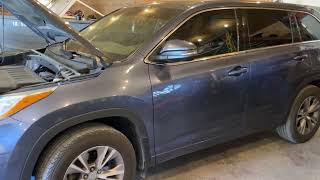
- YouTube user 'Code P0015 3.5 Toyota Highlander VVT Solenoid Replacement' (2015 Toyota Highlander 3.5L V6) — Check Engine Light came on with code P0015, along with a message to 'Check All-Wheel Drive System'. No other drivability issues were noted. The light was intermittent at first.
❌ Tried (didn't work) The owner first checked the oil level, which was fine.
✅ What actually fixed it The owner inspected the OCV filter screen located under the banjo bolt for the VVT oil line on the front bank (Bank 2) and found it was clean. Based on the P0015 code pointing to Bank 1 (rear), he proceeded to replace the Bank 1 exhaust OCV, which is the standard fix for this code when oil and filters are confirmed to be good.
OEM Part Supersession History
15340-31020→15340-0P020— Standard part number evolution. Toyota part numbers are often superseded. In this case, 15340-31020 is replaced by 15340-0P020.
Heads up: The parts are interchangeable. However, some dealer parts systems show the reverse, with 15340-0P020 being replaced by 15340-31020. The key is that both part numbers refer to the same physical part and are fully compatible for the specified applications.
Model Year Variations Within This Range
- 2017-2019: Starting in the 2017 model year, the Highlander received the updated 2GR-FKS engine. This engine features a more advanced VVT system (VVT-iW on the intake) that allows it to switch between Otto and Atkinson cycles for better fuel economy. While the fundamental principle of oil-pressure-actuated timing remains, the specific components and diagnostic parameters may differ slightly from the earlier 2GR-FE. However, the root causes of a P0015 code (oil quality, OCV failure) are largely the same.
- 2008-2009: TSB T-SB-0094-09 Rev1 specifically targets these earlier models for a potential VVT gear actuator fault that can cause a startup rattle and set VVT codes like P0015. This suggests a higher likelihood of the phaser itself being the root cause on these specific years compared to later models.
Diagnostic Flowchart
Other Known Issues on This Vehicle
Issues unrelated to this code that are worth knowing about as an owner of this generation:
- Rupturing VVT-i Oil Supply Hose 🔴 High — Common on early 2GR-FE engines (approx. 2007-2010) that have not had the updated part installed. Failure can occur at any mileage and leads to rapid, catastrophic oil loss. (Ref: Limited Service Campaign (LSC) 90K was issued, but has expired. The fix is to replace the rubber/metal line (Part No. 15772-31010) with an all-metal line (Part No. 15772-31030).)
- Timing Cover Oil Leak 🟠 Medium — A well-documented issue where the Formed-in-Place Gasket (FIPG) sealant fails, particularly at the T-joint where the timing cover, block, and cylinder head meet. It often presents as a slow seep or stain, not a major drip. (Ref: No recall, but it is a widely known issue. Repair is very labor-intensive, often requiring engine removal to properly reseal the cover.)
- Melting / Sticky Dashboard 🟡 Low — Affects certain 2008-2014 Highlanders, particularly in hot, sunny climates. The dashboard surface degrades, becoming shiny, sticky, and creating a dangerous glare on the windshield. (Ref: Toyota initiated a Warranty Enhancement Program (ZE6) for this issue, but it has since expired. The only permanent fix is dashboard replacement.)
- Water Pump Failure 🟠 Medium — A common wear item on the 2GR-FE, with failures (leaks or bearing noise) often occurring between 80,000 and 150,000 miles.
Used vs. New Parts: Buying Guide for This Vehicle
When a used part is the smart pick: For this repair, using a used part is generally not recommended for the Oil Control Valve (OCV) itself. It is an electro-mechanical part that wears over time and can be clogged internally with sludge from the donor vehicle. The cost savings are minimal compared to the high labor cost of accessing the Bank 1 OCV, making a failure of the used part a significant risk. A used part only makes sense for external hardware like bolts or brackets if they are lost or damaged during the repair.
Donor-vehicle mileage cap: roughly under 80000 miles for the part to have meaningful remaining life.
What to inspect on the donor part:
- If considering a used OCV against advice, pull it from a vehicle with documented, regular oil changes.
- Visually inspect the small screen ports on the OCV for any signs of sludge or metal debris.
- Test the used part with a 12V source to ensure the internal plunger actuates before leaving the salvage yard.
OEM-only on this vehicle (don't cheap out):
- Oil Control Valve (VVT Solenoid)
- Camshaft Phaser (VVT Gear)
Aftermarket brands forum-validated for this vehicle:
- Denso (OEM supplier)
- Aisin (OEM supplier)
Brands owners have reported issues with on this vehicle:
- While Dorman is a common aftermarket brand, some forum users and mechanics express a preference for OEM or OEM-supplier parts (Denso, Aisin) for critical, hard-to-access components like the Bank 1 OCV to avoid repeat labor. Unbranded, low-cost solenoids from online marketplaces are a significant gamble.
Real Owner Stories
Aggregated from forums and TSBs cited above. Mileages and costs reflect what owners reported in those sources.
2016 Toyota Highlander Limited AWD 3.5L V6
Symptoms: Check Engine Light with code P0015.
What fixed it: The owner sought a diagnosis for the timing and OCV filter after receiving a high dealer estimate.
Cost: $1,513-$1,514
Source hint: Reddit r/ToyotaHighlander - 2016 Limited AWD w/P0015 Code
2012 Toyota Sienna 3.5L V6 (2GR-FE)
Symptoms: P0015 code appeared immediately after a long trip.
What fixed it: The discussion emphasized verifying oil condition and level before replacing mechanical parts like OCVs or timing components.
Source hint: BobIsTheOilGuy - 2012 Sienna P0015 after long trip
Related OBD-II Codes
Frequently Asked Questions
Does TSB T-SB-0094-09 Rev1 apply to my 2008 Highlander with code P0015?
I have a 2016 Highlander Limited; how much should I expect to pay for a P0015 diagnosis?
Can I swap parts between banks to diagnose the Bank 1 Exhaust Oil Control Valve?
What oil viscosity should I use in my 2GR-FE to prevent VVT issues?
Is there a specific filter I should check for the P0015 code on my Highlander?
My 2009 Highlander has a P0015 code and a major oil leak; could they be related?
Helpful Videos
We Have This Part in Stock

The information in this article is provided for general reference and educational purposes only. Vehicle specifications, procedures, and part compatibility can vary by production date, trim level, and region. Always consult your vehicle's factory service manual and verify part numbers before purchasing or performing repairs. Safety-critical components such as airbags, seat belts, and braking systems should be installed by a qualified professional.
- Toyota Highlander:
- 🧭 Diagnostic Flowchart
- 🎬 Helpful Videos
- 🛍️ Shop This Part
- What's Unique About the 2008-2019 Toyota Highlander
- Symptoms You May Notice
- Most Likely Causes
- Rare But Worth Checking
- Diagnosis Steps
- Parts You'll Likely Need
- Related Codes That Often Appear With This One
- Technical Service Bulletins (TSBs) & Recalls
- Platform-Specific Known Issues
- Mechanic-Grade Diagnostic Values
- Scan Tool Commands That Help
- Wiring & Ground Locations
- Real Owner Repair Stories
- OEM Part Supersession History
- Model Year Variations Within This Range
- Other Known Issues on This Vehicle
- Used vs. New Parts: Buying Guide for This Vehicle
- Real Owner Stories
- 2016 Toyota Highlander Limited AWD 3.5L V6
- 2012 Toyota Sienna 3.5L V6 (2GR-FE)
- Related OBD-II Codes
- Frequently Asked Questions
- 🎟️ Get 5% Off