

P0016 on 2013-2016 Dodge Dart 2.4L: Crank/Cam Timing Causes and Fixes
On a 2013-2016 Dodge Dart with the 2.4L Tigershark engine, P0016 is most often caused by low or dirty engine oil due to the engine's known oil consumption issues, which led to a class-action lawsuit. Always check the oil level and condition first before replacing any parts. If the oil is correct, the next likely causes are a faulty camshaft position sensor, a failing VVT solenoid, or outdated PCM software.
- Always check the engine oil level first. Due to known oil consumption issues with the 2.4L Tigershark, a low oil level is the most common and cheapest cause to fix.
- If the oil level is correct, the next most likely culprits are a faulty camshaft position sensor or a dirty/failed VVT solenoid.
- Do not assume the timing chain has failed without first ruling out the simpler, more common causes like oil, sensors, and solenoids.
- A 'cam-crank relearn' procedure using a proper scan tool may be necessary after replacing either the camshaft or crankshaft position sensor.
- Check with a dealer for any applicable PCM software updates, as a reflash can sometimes correct false error codes.
What's Unique About the 2013-2016 Dodge Dart
The 2.4L MultiAir2 (Tigershark) engine is notorious for excessive oil consumption, a problem so widespread it resulted in a class-action lawsuit alleging defective piston rings. The MultiAir system, which controls the intake valves, is electro-hydraulic and extremely sensitive to oil level and quality. Because of this, P0016 is frequently triggered simply by a low oil level, which starves the variable valve timing (VVT) system, rather than an actual component failure. Chrysler issued TSBs (09-006-20 and 09-003-23) to formalize an oil consumption test. Owners must be diligent about checking engine oil more frequently than the recommended service interval.
Symptoms You May Notice
- Check Engine Light is on
- Engine runs rough or has a rough idle
- Poor acceleration and reduced engine performance
- Engine stalls, especially at low speeds or when stopping
- Engine is hard to start or cranks but won't start
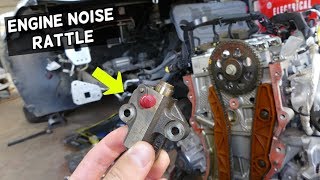
- Rattling noise from the engine, especially on cold starts 🎬 Watch: Hear what a typical engine rattle sounds like
- Replacing the timing chain before ruling out low oil, faulty sensors, or a bad VVT solenoid. A timing chain replacement is expensive and often not the root cause on this platform unless there is a clear history of running the engine with low oil.
Most Likely Causes
- Low or Dirty Engine Oil 🔴 High Probability The 2.4L Tigershark engine is widely known for consuming oil between changes, leading to TSBs 09-006-20 and 09-003-23 and a class-action lawsuit. The MultiAir VVT system is hydraulically operated and very sensitive to oil level and pressure.
How to confirm: Check the engine oil dipstick on a level surface at least 5 minutes after shutdown. Note the level and the color/condition of the oil. The fix is often as simple as topping off or changing the oil.
Typical fix: Perform an oil and filter change using the correct full synthetic 0W-20 oil that meets Chrysler MS-6395 specification. Clear codes and perform a test drive.
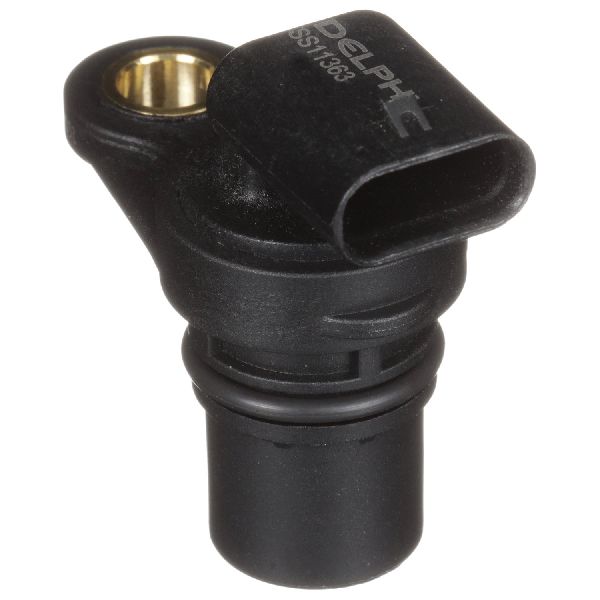
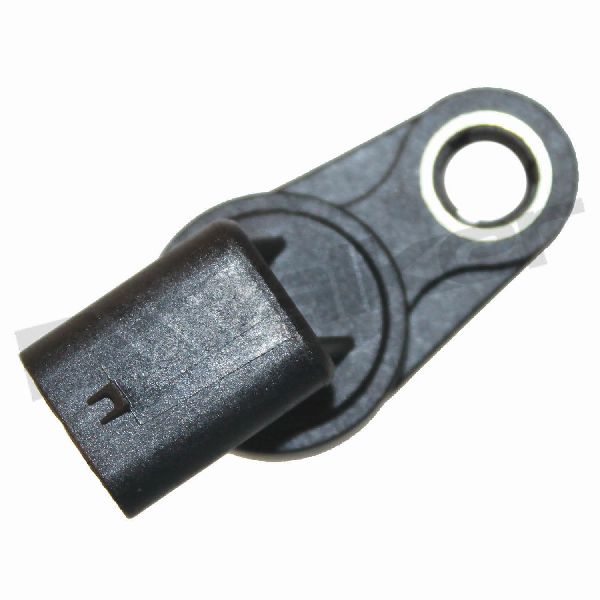
Est. part cost: $40-$80 - Failed Camshaft Position Sensor 🟡 Medium Probability → Shop Engine Camshaft Position Sensor Sensors are a common failure point. A faulty sensor can send incorrect data to the PCM, creating a false correlation code. Oil can also leak past the O-ring and contaminate the connector.
How to confirm: Test the sensor's circuit for proper voltage and ground with a multimeter. A professional scan tool can monitor the sensor's live data. Often accompanied by code P0340.
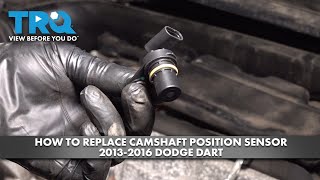
Typical fix: Replace the intake camshaft position sensor (Part No. 68080819AD). 🎬 See this walkthrough on replacing the camshaft position sensor A 'cam-crank relearn' procedure with a capable scan tool is often required after replacement.
Est. part cost: $25-$90 - Failed VVT Solenoid (Oil Control Valve) 🟡 Medium Probability The solenoid can get clogged with sludge from dirty or low oil, or fail electronically, preventing it from properly directing oil to the cam phaser.
How to confirm: Use a bi-directional scan tool to command the solenoid on and off while listening for a click. The solenoid can also be removed, cleaned, and tested with a 12V source.
Typical fix: Remove and clean the solenoid and its filter screen. If cleaning doesn't work or it fails electrical tests, replace the VVT solenoid (a common OEM part number is 4892930AA).
Est. part cost: $40-$120 - Stretched Timing Chain or Failed Tensioner ⚪ Low Probability → Shop Engine Timing Chain While designed to last the engine's life, timing chains can stretch due to high mileage or, more commonly on this engine, accelerated wear from chronic oil starvation.
How to confirm: This is a complex diagnosis. It often involves listening for a persistent rattle from the front of the engine and requires removing the valve cover to physically inspect for chain slack against timing marks.
Typical fix: Replace the timing chain, guides, and tensioner. This is a labor-intensive job and should only be done after all other causes are ruled out.
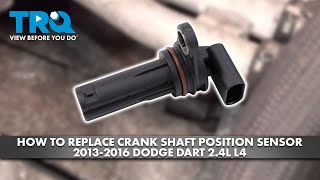
Est. part cost: $200-$450 - Failed Crankshaft Position Sensor ⚪ Low Probability → Shop Engine Crankshaft Position Sensor
How to confirm: Test the sensor's circuit and output signal with a multimeter or oscilloscope. A scan tool is needed for a relearn procedure after replacement.
Typical fix: Replace the crankshaft position sensor and perform the relearn procedure.
Est. part cost: $30-$100
Rare But Worth Checking
- Failed MultiAir Actuator ('Brick'): This is a known, though expensive, failure on the 2.4L engine (Part No. 05047980AA, superseded by 5047980AE). It often presents with multiple codes, including P1069, P1043, and cylinder misfire codes, in addition to P0016. Failure requires complete replacement of the actuator assembly.
- Outdated PCM Software: Chrysler/Dodge issued TSB 18-023-16 REV. C, which involves a PCM software update to address several powertrain diagnostic and system improvements for the 2.4L engine. It's worth checking with a dealer if any software updates are available for your VIN.
Diagnosis Steps
- Check Engine Oil Level and Condition: This is the most important first step for this specific engine. If the oil is low, dirty, or the wrong viscosity (must be 0W-20 meeting MS-6395), correct it, clear the code, and drive the vehicle to see if the code returns.
- Scan for Other Codes: Use an OBD-II scanner to check for any other related codes. Codes for specific sensors (like P0340) or oil pressure (P0520) can help pinpoint the problem.
- Inspect Sensor Wiring: Visually inspect the wiring and connectors for the camshaft and crankshaft position sensors. Look for damage, corrosion, or oil contamination, especially at the camshaft sensor connector.
- Test the VVT Solenoid: Use a scan tool to activate the VVT solenoid. Listen for an audible click. If no scan tool is available, you can remove the solenoid, inspect its screen for debris, and apply 12V power to see if it actuates. 🎬 Watch: How to replace the variable valve timing solenoid
- Test Camshaft and Crankshaft Sensors: If the wiring is good, test the sensors themselves. This can be done by checking their resistance with a multimeter against the manufacturer's specifications or by observing their live data stream on an advanced scan tool. Swapping the intake and exhaust cam sensors (if identical) can be a quick diagnostic trick.
- Perform Cam/Crank Relearn: If a sensor is replaced, a 'cam/crank variation relearn' procedure must be performed with a compatible scan tool to synchronize the new sensor with the PCM.
- Check Mechanical Timing: If all electronic components and oil-related issues have been ruled out, the final step is to check for a mechanical timing issue, such as a stretched timing chain. This is an advanced procedure that may require professional assistance.
Parts You'll Likely Need
- Engine Oil & Filter — Low or dirty oil is the #1 cause of P0016 on the 2.4L MultiAir engine due to its oil consumption habits and oil-pressure-dependent VVT system.
Trusted brands: Pennzoil, Mobil 1, Castrol (meeting MS-6395 spec)
OEM price range: $60-$100
Aftermarket price range: $40-$80 - Camshaft Position Sensor
(OEM #68080819AD (supersedes 5033308ab, 68080819ab, 68080819ac))— A failing sensor can send incorrect data to the PCM, causing a false correlation code. It's a common electronic failure part.
Trusted brands: Mopar, Standard Motor Products (SMP), Delphi, NTK/NGK
OEM price range: $50-$90
Aftermarket price range: $25-$60 - VVT Solenoid / Oil Control Valve
(OEM #4892930AA)— This solenoid controls oil flow to the cam phaser and is a frequent failure point, often getting clogged by sludge from poor oil condition.
Trusted brands: Mopar, Dorman, Standard Motor Products (SMP)
OEM price range: $60-$120
Aftermarket price range: $40-$80
Related Codes That Often Appear With This One
- P0340 — This code indicates a malfunction in the camshaft position sensor circuit itself, which is a common cause of the P0016 correlation fault.
- P0520 — This code for the Engine Oil Pressure Sensor Circuit is highly relevant, as P0016 is often triggered by oil pressure problems. TSB 18-034-14 REV. A was issued for this code, recommending sensor replacement.
- P1069 — This manufacturer-specific code points to a failure in the VVT oil supply system and is often a precursor to replacing the entire MultiAir 'brick' actuator.
- P000B — As noted in Manufacturer TSB #1807517, this code for Bank 1 Camshaft 2 Position Slow Response can appear alongside P0016 and P0335.
Technical Service Bulletins (TSBs) & Recalls
- TSB 09-003-23: 2.4L Excessive Oil Consumption XB1 Warranty Extension
- TSB 09-006-20 REV. B: 2.4L Engine Oil Consumption Test
- TSB 18-023-16 REV. C: Flash: 2.4L Powertrain Diagnostic and System Improvements
- TSB 18-034-14 REV. A: Addresses code P0520 - Engine Oil Pressure Sensor Circuit
- Manufacturer TSB #9003648: Notes that for vehicles with low mileage, P0016 or P000B fault codes may be active and require specific diagnostic steps for the VVT Solenoid and Phaser.
Platform-Specific Known Issues
- The 2.4L Tigershark MultiAir engine is well-documented to have issues with excessive oil consumption, which can cause this code to appear if the oil level is not checked frequently.
- The MultiAir actuator, known as the 'brick', is a complex and expensive component that can fail, causing P0016 along with other codes like P1069.
Mechanic-Grade Diagnostic Values
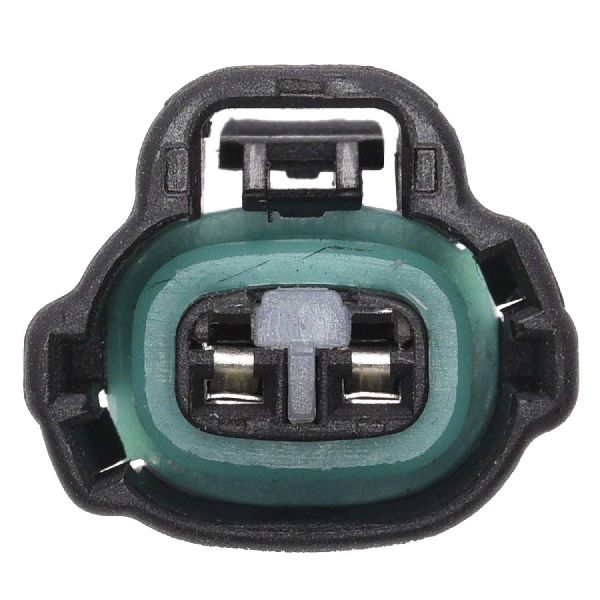
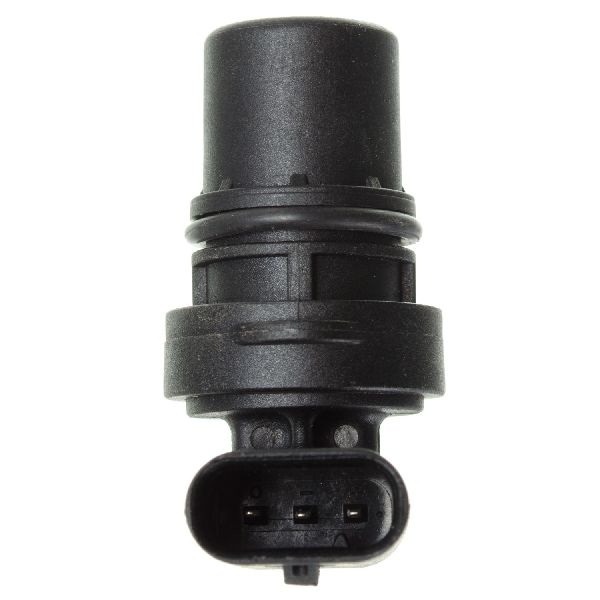
- Cam/Crank Sensor Connector Pin Test (Key On, Engine Off) — expected: The 3-wire Hall-effect sensor connector should show: Pin 1: 5-volt reference from PCM. Pin 2: Sensor ground (continuity to ground). Pin 3: Signal wire (no voltage when disconnected).. Failure: Absence of the 5V reference or a bad ground points to a wiring or PCM issue, not a sensor failure.
- Cam/Crank Sensor Resistance Test — expected: DO NOT TEST. These are 3-wire Hall-effect sensors and should not be tested for resistance with a multimeter, as it can damage the internal electronics.. Failure: N/A - This is an incorrect test procedure for this type of sensor.
- VVT Solenoid (Oil Control Valve) Resistance — expected: 8-12 Ohms is a generally accepted range for VVT solenoids.. Failure: A reading of 'OL' (Open Loop/infinite resistance) indicates a broken internal coil, while a reading near zero ohms suggests a short circuit.
- Live Data RPM Signal (During Cranking) — expected: A scan tool should display 100-500 RPM while cranking the engine.. Failure: A reading of 0 RPM while cranking confirms the PCM is not receiving a signal from the crankshaft position sensor or its circuit.
- Engine Oil Pressure (Hot Engine) — expected: Minimum of 4 PSI at idle; 25-80 PSI at 3000 RPM.. Failure: Pressure below the minimum threshold will cause the PCM to disable the MultiAir system and can set correlation codes. This indicates a potential oil pump failure or severe oil starvation.
Scan Tool Commands That Help
- wiTECH or capable aftermarket scanner: Cam/Crank Variation Relearn — This procedure is required after replacing either the camshaft or crankshaft position sensor to synchronize the new sensor's signal with the PCM. Failure to perform the relearn can cause the P0016 code to persist even with a new part.
- wiTECH or capable aftermarket scanner: VVT Solenoid Actuation / Active Test — This bi-directional command allows a technician to individually activate the VVT solenoid (Oil Control Valve) to check for a response. Listening for an audible 'click' from the engine confirms the solenoid is mechanically actuating when commanded by the PCM.
- wiTECH or capable aftermarket scanner: UniAir module adaptive parameters reset — This function should be performed after an oil change or replacement of any MultiAir components. It resets the learned adaptive values within the PCM related to the hydraulic valve actuation, ensuring the system operates from a clean baseline.
Wiring & Ground Locations
- Crankshaft Position Sensor Connector — On the front of the engine block, to the right side, located below the exhaust manifold.. The wiring harness is routed near the hot exhaust, making it susceptible to heat damage, brittleness, and melting. The connector's red locking tab is also notoriously fragile and can break, leading to a poor connection.
- Camshaft Position Sensor Connector — On the top of the cylinder head, near the rear, protected by a small heat shield.. Oil can leak from the sensor's O-ring and contaminate the connector pins, causing a poor signal. The connector has a brown locking tab that must be released to disconnect it.
- Main Engine Ground Stud — Located behind the driver's side splash guard, on the frame rail. A ground strap runs from the battery to this stud, and another strap runs from this stud to the transmission case/engine block.. This is a critical ground path for the entire powertrain. Corrosion on this stud is a known issue that can cause a no-crank/no-start condition and a host of electrical faults, including erratic sensor readings that could trigger a P0016.
- G100 / G102 — Located on the left front of the engine compartment.. These are primary engine compartment grounds. A poor connection here can affect the PCM and other critical engine electronics, potentially leading to false sensor codes.
Real Owner Repair Stories
- YouTube user 'Motor City Mechanic' (2013 Dodge Dart 2.0L (similar grounding scheme to 2.4L)) — No crank, no start. Car died at a store and would not restart.
❌ Tried (didn't work) Replacing the starter motor.
✅ What actually fixed it The root cause was a corroded main ground stud located behind the driver-side wheel well. The ground connection from the battery to the frame and from the frame to the engine/transmission was poor. Cleaning the 10mm and 13mm contact points on the stud with a wire brush restored the ground connection and the car started immediately. - NHTSA ODI #11289495 — An owner reported the vehicle shut off three times, resulting in a loss of power steering at low speeds. A scan retrieved code P0016, and a mechanic replaced one of the camshaft position sensors.
- NHTSA ODI #11598587 — A report describes a vehicle failing to accelerate as intended. A diagnostic scan retrieved DTC P0016 (Cam and Crank shafts signals error), leading to the replacement of the camshaft and oil sensors.
- NHTSA ODI #11325729 — An owner noted that the vehicle frequently required diagnosis, which returned codes P0016 (Crankshaft/Camshaft Position Correlation) and P0128 (Thermostat Rationality).
OEM Part Supersession History
5047980AA, 5047980AB, 5047980AC, 5047980AD→5047980AE— Revisions to improve reliability and address internal solenoid failure issues.
Heads up: The latest revision (5047980AE) is the recommended replacement for all previous versions of the 2.4L MultiAir Actuator ('brick').68080819AB, 68080819AC→68080819AD— Standard part revision for the camshaft position sensor.
Diagnostic Flowchart
Other Known Issues on This Vehicle
Issues unrelated to this code that are worth knowing about as an owner of this generation:
- Excessive Oil Consumption 🔴 High — Extremely common across all model years. A class-action lawsuit was filed alleging defective piston rings. TSBs 09-003-23 and 09-006-20 were issued to provide a formal consumption test procedure. (Ref: TSB 09-003-23; TSB 09-006-20)
- Transmission Failure (Automatic) 🔴 High — Common on 2013-2015 models. A recall (15V462000) was issued for the transmission control module (TCM) which could cause an unexpected shift to neutral. Another recall addresses a shifter cable bushing that can fail, preventing the car from going into Park. (Ref: Recall 15V462000)
- Brake Booster Contamination 🔴 High — Affects 2013-2014 models with 2.0L or 2.4L engines. A recall (15V800000) was issued because engine oil from the vacuum pump could leak into the brake booster, leading to a loss of braking assist. (Ref: Recall 15V800000)
- Premature Battery Failure 🟠 Medium — Frequently reported by owners of 2013-2014 models, with many needing to replace the battery multiple times in a few years.
- Thermostat Failure 🟡 Low — A common cause for the Check Engine Light with code P0128, especially in colder weather.
Used vs. New Parts: Buying Guide for This Vehicle
When a used part is the smart pick: For this specific repair, using used parts is generally not recommended for the key electronic and hydraulic components. The high failure rate of sensors and the oil-sensitivity of the VVT system mean a used part carries significant risk. A used part only makes sense for a purely mechanical, non-wear item like a connector pigtail or a heat shield.
Donor-vehicle mileage cap: roughly under 50000 miles for the part to have meaningful remaining life.
What to inspect on the donor part:
- For any electronic sensor, ask for proof the donor vehicle was running without a check engine light.
- Avoid parts from vehicles with front-end damage or signs of engine fire.
- Inspect sensor connectors for broken locking tabs, corrosion, or oil contamination before purchase.
OEM-only on this vehicle (don't cheap out):
- MultiAir Actuator ('Brick'): Given the expense and complexity, only a new OEM Mopar unit (latest revision 5047980AE) should be used to ensure reliability and avoid repeat labor costs.
- Timing Chain Kit: This is a critical, labor-intensive job. Using a high-quality OEM or OEM-equivalent kit is essential for engine longevity.
Aftermarket brands forum-validated for this vehicle:
- Cam/Crank Sensors: Mopar (OEM), NTK/NGK, Delphi, Standard Motor Products (SMP).
- VVT Solenoid: Mopar (OEM), Dorman, Standard Motor Products (SMP).
Brands owners have reported issues with on this vehicle:
- Unbranded, 'white-box' electronic sensors from online marketplaces should be avoided. Failure rates are high, and they can introduce new diagnostic headaches.
Real Owner Stories
Aggregated from forums and TSBs cited above. Mileages and costs reflect what owners reported in those sources.
2013-2016 Dodge Dart 2.4L MultiAir
Symptoms: Owner noted the location and replacement procedure for the camshaft position sensor to address performance issues.
What fixed it: Replacement of the camshaft position sensor.
Source hint: YouTube: CAMSHAFT POSITION SENSOR REPLACEMENT LOCATION 2.4 MULTIAIR DODGE DART
2013-2016 Dodge Dart 2.4L
Symptoms: Owner experienced symptoms requiring a sensor replacement and noted the necessity of a relearn procedure.
What fixed it: Replaced the camshaft position sensor and performed a cam/crank relearn procedure.
Source hint: YouTube: How to Replace Camshaft Position Sensor 2013-2016 Dodge Dart - 1A Auto
2013-2016 Dodge Dart 2.4L Tigershark
Symptoms: Engine running rough, stalling at low speeds, and rattling on cold starts due to chronic oil starvation.
What fixed it: Replacement of the timing chain, guides, and tensioner.
Source hint: common_causes: Stretched Timing Chain or Failed Tensioner
Related OBD-II Codes
Frequently Asked Questions
Is there a TSB for the excessive oil consumption on my 2.4L Dodge Dart?
What specific oil should I use in my 2013-2016 Dodge Dart 2.4L to prevent P0016?
Do I need to do anything special after replacing the camshaft sensor (Part No. 68080819AD)?
Can a software update fix the P0016 or related performance issues on my Dart?
Why does my Dart rattle on cold starts before the Check Engine Light comes on?
Is the 'MultiAir brick' related to the P0016 code?
Helpful Videos
We Have This Part in Stock


The information in this article is provided for general reference and educational purposes only. Vehicle specifications, procedures, and part compatibility can vary by production date, trim level, and region. Always consult your vehicle's factory service manual and verify part numbers before purchasing or performing repairs. Safety-critical components such as airbags, seat belts, and braking systems should be installed by a qualified professional.
- Dodge Dart:
- 🧭 Diagnostic Flowchart
- 🎬 Helpful Videos
- 🛍️ Shop This Part
- What's Unique About the 2013-2016 Dodge Dart
- Symptoms You May Notice
- Most Likely Causes
- Rare But Worth Checking
- Diagnosis Steps
- Parts You'll Likely Need
- Related Codes That Often Appear With This One
- Technical Service Bulletins (TSBs) & Recalls
- Platform-Specific Known Issues
- Mechanic-Grade Diagnostic Values
- Scan Tool Commands That Help
- Wiring & Ground Locations
- Real Owner Repair Stories
- OEM Part Supersession History
- Other Known Issues on This Vehicle
- Used vs. New Parts: Buying Guide for This Vehicle
- Real Owner Stories
- 2013-2016 Dodge Dart 2.4L MultiAir
- 2013-2016 Dodge Dart 2.4L
- 2013-2016 Dodge Dart 2.4L Tigershark
- Related OBD-II Codes
- Frequently Asked Questions
- 🎟️ Get 5% Off