

P0017 on 2013-2024 Mazda CX-5 2.5L: Exhaust Cam Timing Fixes & Causes
On the Mazda CX-5 with the 2.5L SKYACTIV engine, code P0017 is most often caused by a faulty exhaust Oil Control Valve (OCV), also known as a VVT solenoid. This is frequently triggered by low or dirty engine oil. Replacing the solenoid is a common DIY fix and the OEM part costs about $150-$280. An oil and filter change should always be the first step.
- First, check your oil level. If it's low or dirty, an oil change with 0W-20 synthetic may fix the problem.
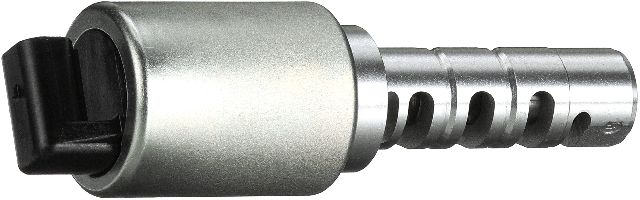
- The most likely failed part is the exhaust Oil Control Valve (OCV), also called a VVT solenoid (OEM Part #PE01-14-420A).
- Do not immediately assume you need a new timing chain. This is less common and should only be considered after addressing oil and OCV issues.
- Driving with this code can lead to poor performance, stalling, and potential engine damage. It should be addressed promptly.
What's Unique About the 2013-2024 Mazda CX-5
While many vehicles can get a P0017 code, the Mazda SKYACTIV-G engine is particularly sensitive to the condition and level of its engine oil. The VVT system uses oil pressure to actuate components, and issues like low oil level or contamination can quickly lead to a P0017 code by causing the Oil Control Valve (OCV) to malfunction or stick. Unlike older Mazda MZR engines which had more frequent timing chain and VVT actuator problems, the SKYACTIV platform is generally robust; P0017 issues are almost always related to the oil-controlled components rather than catastrophic mechanical failure.
Generation note: This guide covers two generations of the Mazda CX-5: the KE generation (2013-2016) and the KF generation (2017-2024). The underlying cause of P0017, related to the oil control valve and timing system, is consistent across both generations for the 2.5L non-turbo engine. Later KF models (2018+) introduced cylinder deactivation, which has been associated with some specific TSBs and a recall for rocker arm issues, but it is not considered a primary or direct cause of an isolated P0017 code.
Symptoms You May Notice
- Check Engine Light is on
- Rough or unstable idle
- Reduced engine power and sluggish acceleration
- Decreased fuel economy
- Engine may be harder to start
- Rattling or ticking noise from the top of the engine, especially on startup
- Replacing the camshaft or crankshaft position sensors first. While they can fail, the Oil Control Valve (OCV) is a much more common culprit for P0017 on this engine and should be inspected after checking the oil. 🎬 Watch: A quick 5-minute guide to fixing the P0017 code.
- Assuming a catastrophic timing chain failure immediately. While possible, low/dirty oil and a bad OCV should be ruled out first as they are far more probable and cheaper to fix.
Most Likely Causes
- Faulty Exhaust Oil Control Valve (OCV) / VVT Solenoid 🔴 High Probability → Shop Engine Variable Valve Timing (VVT) Solenoid The OCV is a sensitive electro-mechanical part that operates under high heat and pressure. It can become clogged with sludge from old oil or fail electrically, causing it to stick. This is the most common failure point for VVT-related codes on this engine. Forum users on Mazdas247 frequently point to this part as the primary culprit after an oil change fails to resolve the code.
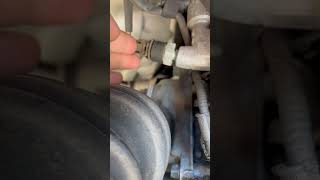
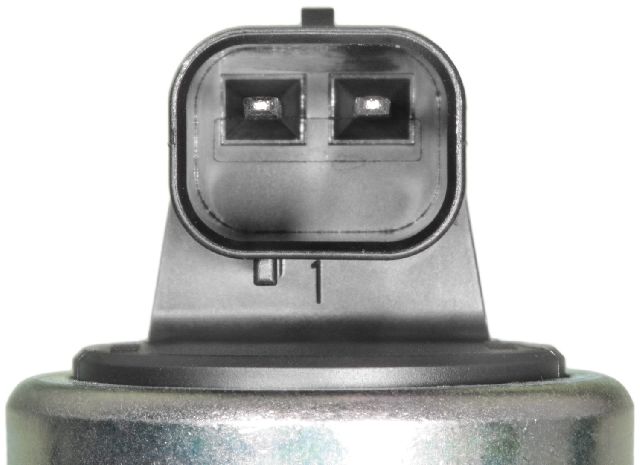
How to confirm: Inspect the OCV connector for oil saturation, which indicates a leaking internal seal. The valve can be removed and tested by applying 12V to see if the internal plunger actuates. A professional scan tool can also command the solenoid to operate while monitoring the camshaft angle. The exhaust OCV is the one located closer to the firewall on the valve cover. 🎬 See this video to locate the oil solenoid and pressure sensor.
Typical fix: Replace the exhaust-side Oil Control Valve. It is highly recommended to perform an engine oil and filter change at the same time.
Est. part cost: $150-$285 - Low or Dirty Engine Oil 🔴 High Probability The SKYACTIV VVT system is entirely dependent on clean oil at the correct pressure to function. If the oil level is low or the oil is contaminated, the OCV and cam phasers cannot operate correctly, leading to a correlation error. Multiple owner accounts confirm that being even a quart low on oil can trigger P0017.
How to confirm: Check the engine oil dipstick. The oil should be at the 'Full' mark and appear clean (light brown). If it is low, black, or smells of gasoline, it needs to be changed immediately.
Typical fix: Perform a complete engine oil and filter change using high-quality 0W-20 full synthetic oil. If the oil was very low, investigate potential oil consumption issues, which have been noted in some TSBs for related engines (e.g., TSB 01-011/22 for exhaust valve seals).
Est. part cost: $50-$90 - Stretched Timing Chain or Failed Tensioner 🟡 Medium Probability → Shop Engine Timing Chain While the SKYACTIV timing components are generally durable, they can wear over time, especially with high mileage (>120,000 miles) or a history of infrequent oil changes. A stretched chain or weak tensioner allows for excessive slack, altering the cam/crank correlation beyond the PCM's acceptable threshold.
How to confirm: This is an involved diagnosis. A mechanic can remove the valve cover to visually inspect for chain slack. A distinct rattling noise on startup that goes away after a few seconds is a classic symptom of a failing tensioner or stretched chain.
Typical fix: Replace the timing chain, guides, and tensioner. This is a significant repair, often costing over $1,500 at a dealership.
Est. part cost: $400-$700 - Faulty Camshaft or Crankshaft Position Sensor ⚪ Low Probability → Shop Engine Crankshaft Position Sensor Sensors can fail due to heat and vibration over time, but they are not a common failure point on this platform for this specific code. It is much more likely for the mechanical/hydraulic VVT components to be at fault.
How to confirm: If the engine runs perfectly fine but the Check Engine Light is on, a sensor fault is more likely. A mechanic can use an oscilloscope to check the signal patterns from both sensors to verify they are working correctly.
Typical fix: Replace the faulty sensor. The exhaust camshaft sensor is easily accessible on top of the engine.
Est. part cost: $40-$100
Rare But Worth Checking
- Clogged Oil Passages or Debris in Oil System: Mazda TSB 01-016/19, which addresses the related code P0015, notes that foreign objects can get stuck in the oil pump pressure relief valve or the OCV itself, causing a drop in oil pressure. The diagnostic procedure even includes revving the engine to 4,000 RPM multiple times to try and dislodge debris. If issues are persistent, the oil pan may need to be dropped for cleaning.
- Failed VVT Actuator (Cam Phaser): This is the gear on the end of the camshaft that the OCV controls. While rare on SKYACTIV engines, it can fail mechanically, getting stuck in one position. TSB 01-007/15 for the related P0012 code on similar engines points to VVT actuator spring shaft fatigue as a known failure mode. This is an expensive repair and is usually considered only after all other causes are ruled out.
Diagnosis Steps
- Check Engine Oil Level and Condition: Pull the dipstick. If the oil is low, top it off, clear the code, and see if it returns. If the oil is old or dirty, proceed to the next step. This is the most critical first step.
- Perform an Oil and Filter Change: Replace the engine oil and filter with high-quality 0W-20 full synthetic oil. Clear the code and drive the vehicle to see if the code returns.
- Inspect the Exhaust Oil Control Valve (OCV): The exhaust OCV is located on the valve cover, toward the firewall. Check its electrical connector for oil. If oil is present, the internal seal has failed and the OCV must be replaced.
- Test/Replace the Exhaust OCV: If the code returns after the oil change, the OCV is the most likely cause. It can be tested with a scan tool or by applying 12V, but given its high failure rate, replacement is often the most efficient diagnostic step.
- Check for TSBs: A dealer can check for any Powertrain Control Module (PCM) software updates related to engine or VVT control for your vehicle's VIN. Some TSBs address logic issues for setting VVT codes.
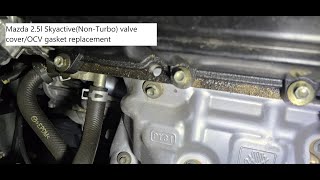
- Inspect Timing Chain: If all else fails, a qualified mechanic should remove the valve cover to inspect the timing chain for stretching 🎬 Watch: How to remove the valve cover to inspect the chain. or damage to the guides and tensioner. This is an advanced step.
- Test Cam/Crank Sensors: As a final step, test the signal from the crankshaft and camshaft position sensors using a multimeter or oscilloscope to rule out a faulty sensor.
Parts You'll Likely Need
- Engine Oil Control Valve (VVT Solenoid)
(OEM #PE01-14-420A)— This is the most common failure point for P0017. It gets clogged with oil sludge or fails electrically, preventing correct adjustment of the exhaust camshaft timing. It is also referred to as a 'Control Valve Solenoid'.
Trusted brands: Mazda (OEM), Denso, Dorman, Standard Motor Products (SMP)
OEM price range: $150-$285
Aftermarket price range: $60-$120 - Engine Oil and Filter
(OEM #N/A)— Low or dirty oil is a primary trigger for this code. An oil change is the first and most important diagnostic step.
Trusted brands: Mobil 1, Castrol EDGE, Pennzoil Platinum, Mazda Genuine Oil
OEM price range: $70-$110
Aftermarket price range: $50-$90
Related Codes That Often Appear With This One
- P0015 — This code, 'Exhaust Camshaft Position Timing - Over-Retarded,' points to the same system (exhaust cam) and is often caused by the same underlying issues, like a sticking OCV or low oil pressure. TSB 01-016/19 directly links P0015 and P0524.
- P0016 — This is the equivalent correlation code for the *intake* camshaft. Seeing P0016 and P0017 together strongly suggests a base timing issue, such as a stretched timing chain, that is affecting the correlation of both camshafts relative to the crankshaft.
- P0524 — 'Engine Oil Pressure Too Low.' This code directly supports the diagnosis of an oil-related issue. A Mazda TSB links low oil pressure to VVT problems, sometimes caused by debris in the oil system.
Technical Service Bulletins (TSBs) & Recalls
- TSB 01-016/19: Addresses rough idle with DTC P0015 / P0524, caused by debris in the oil system affecting oil pressure and VVT.
- TSB 01-011/22: Addresses oil consumption due to failing exhaust valve seals on some SKYACTIV engines.
- TSB 01-004/21: Notes that oil contamination can cause the oil solenoid valve (OCV) to stick, leading to improper oil pressure.
- Recall for 2018-2019 models: Addressed a software issue that could cause the rocker arms to fall out of place in engines with cylinder deactivation.
Mechanic-Grade Diagnostic Values
- Oil Control Valve (OCV) Coil Resistance — expected: 6.9—7.5 Ohms at 20°C (68°F). Failure: A reading outside of this range, or an open/infinite reading, indicates a failed solenoid coil.
- Oil Control Valve (OCV) Manual Actuation Test — expected: When 12V is applied to the two terminals, the internal spool valve should audibly click and move to the maximum retard position. When voltage is removed, it should return to the maximum advance position.. Failure: No movement, sluggish movement, or no audible click indicates a mechanically stuck or failed valve.
- Camshaft Position Sensor (CMP) Signal Voltage (Hall Effect Type) — expected: The signal wire should show approximately 5V with the key on, engine off. The voltage will pulse as the engine is running.. Failure: No voltage or constant voltage that does not change while cranking indicates a faulty sensor or wiring issue.
Scan Tool Commands That Help
- Professional Scan Tool (e.g., Mazda IDS/MDARS, Autel, Snap-on): VVT Solenoid Actuation Test / Output Control — This bidirectional command allows a technician to manually activate the exhaust OCV while the engine is running or off. By commanding it on and off, you can monitor the actual camshaft angle PID to see if it responds accordingly. A lack of change in the cam angle when the solenoid is commanded indicates a problem with the solenoid, oil pressure, or the VVT actuator (phaser).
Wiring & Ground Locations
- Exhaust OCV Connector — On the valve cover, on the left side (driver's side for LHD) closer to the firewall. It is a 2-pin connector.. This connector is the primary interface for testing the OCV's resistance and voltage supply. It is also a common point for oil leaks from a failed internal OCV seal, which is a clear visual indicator of a faulty part.
Real Owner Repair Stories
- Reddit user in /r/CX5 (2014 Mazda CX-5, 2.5L with 220,000 miles) — Engine started running badly and sounded horrible. Triggered a P0015 code (Exhaust Camshaft Position Timing Over-Retarded), which is closely related to P0017.
❌ Tried (didn't work) Initially suspected the camshaft position sensor but did not replace it.
✅ What actually fixed it The user was in the process of diagnosis, but a response from another user provided the likely fix path based on Mazda TSB 01-016/19: The Oil Control Valve (OCV) was the probable cause. The advice was that if only P0015 is present (without a low oil pressure code), the TSB recommends inspecting/replacing the OCV, cleaning the oil pan, and replacing the oil pump strainer due to potential debris. - Mazdas247 Forum user (2014 Mazda CX-5) — Significant loss of power, sluggishness, especially at highway speeds. No check engine light was on.
❌ Tried (didn't work) Cleaning the MAF sensor., Disconnecting and cleaning the oil-saturated VVT solenoid connector.
✅ What actually fixed it The user discovered the VVT solenoid and its electrical connector were saturated with oil. Another forum member confirmed a leaky OCV is a known issue and should be replaced regardless of whether it has thrown a code, as the internal leak indicates failure. The fix is to replace the faulty OCV, its O-ring, and potentially the valve cover gasket.
OEM Part Supersession History
PE0114420→PE01-14-420A— Standard part revision and improvement over time.
Model Year Variations Within This Range
- 2018-2024: Engines from 2018-onward may feature a cylinder deactivation system. This system has been linked to specific failures, including fallen rocker arms and broken oil control valves, per Mazda Service Alerts (e.g., SA-041/18, SA-015/19). While P0017 can occur on any year, a failure on a 2018+ model warrants a check for TSBs related to the CDA system, as it could be the root cause of the OCV failure.
- 2018: A specific TSB (01-014/19) was issued for some 2018 CX-5 and Mazda6 vehicles for code P0012 (intake side) due to improper PCM logic. While this TSB is not for P0017, it shows that PCM software updates have been used by Mazda to correct VVT-related code logic on this platform.
Diagnostic Flowchart
Other Known Issues on This Vehicle
Issues unrelated to this code that are worth knowing about as an owner of this generation:
- Infotainment 'Ghost Touch' 🟡 Low — Common on 2017-2021 models. The touchscreen registers phantom inputs, often when the vehicle is stopped. Many owners disable the touchscreen functionality via a ribbon cable disconnect. (Ref: A service program (SSPB6) was issued for Mazda3 models but not officially for the CX-5, despite having the same issue.)
- Intake Valve Carbon Buildup 🟠 Medium — A long-term consequence of all direct-injection (GDI) engines. Becomes a potential issue after 80,000-100,000 miles, can cause rough idle and misfires.
- Premature Water Pump Failure 🟠 Medium → Shop Engine Water Pump — Some owners report failure between 60,000 and 100,000 miles, earlier than the expected lifespan. Symptoms include coolant leaks and whining noises.
- Cylinder Deactivation Issues (2018+) 🟠 Medium — Early 2018-2019 models were subject to a recall for a software issue that could cause rocker arms to dislodge. Some later models have reported cracked cylinder heads, though this is less common. (Ref: Yes, multiple recalls and TSBs exist for early production models.)
- Cracked Cylinder Head (2.5T Engine) 🔴 High — A known issue primarily affecting the turbocharged 2.5T engine (not the standard 2.5L NA engine this article focuses on), leading to coolant loss and potential engine failure. Covered by TSB 01-002/23. (Ref: TSB 01-002/23)
Used vs. New Parts: Buying Guide for This Vehicle
When a used part is the smart pick: For the primary culprit, the Oil Control Valve (OCV), a used part from a low-mileage donor vehicle can be a cost-effective option. Since it is an external engine component that doesn't require internal disassembly to replace, the labor investment is low, reducing the risk of a used part failing. However, given the relatively low cost of a new aftermarket part, many owners opt for new.
Donor-vehicle mileage cap: roughly under 60000 miles for the part to have meaningful remaining life.
What to inspect on the donor part:
- Verify the donor vehicle's mileage.
- Inspect the part for any physical damage, cracks in the plastic connector, or corrosion on the pins.
- Check the small filter screens on the valve; they should be intact and free of metallic debris.
- If possible, test the resistance with a multimeter before purchase to ensure it is within the 6.9-7.5 Ohm specification.
OEM-only on this vehicle (don't cheap out):
- Timing Chain
- Timing Chain Tensioner
- VVT Actuator (Phaser)
Aftermarket brands forum-validated for this vehicle:
- Denso
- Hitachi (often the OEM supplier)
- Standard Motor Products (SMP)
- WVE/NTK
Brands owners have reported issues with on this vehicle:
- Unbranded, 'no-name' parts from online marketplaces. Users have reported issues with cheap solenoids failing quickly or being dead-on-arrival. While Dorman is a common brand, some mechanics have noted inconsistent quality compared to OEM or Hitachi.
Real Owner Stories
Aggregated from forums and TSBs cited above. Mileages and costs reflect what owners reported in those sources.
2016.5 Mazda CX-5 2.5L
Symptoms: Owner suspected the timing chain had skipped a tooth.
What fixed it: Inspection of the timing chain for stretching and potential replacement of timing components.
Source hint: https://www.mazdas247.com/forum/index.php?threads/2016-5-cx-5-2-5l-timing-chain-skipped-a-tooth.123879475/
2013-2024 Mazda CX-5 2.5L
Symptoms: Check Engine Light on; forum users noted the code often persists after a simple oil change if the solenoid is damaged.
What fixed it: Replacement of the exhaust-side Oil Control Valve (OCV) and a fresh oil change with 0W-20 full synthetic oil.
Source hint: Forum users on Mazdas247
Related OBD-II Codes
Frequently Asked Questions
Could the oil consumption mentioned in TSB 01-011/22 be causing my P0017 code?
I have a 2018 CX-5 with a rough idle; could this be related to the rocker arm recall?
Which Oil Control Valve should I replace for a P0017 code on my 2.5L SKYACTIV engine?
Is there a TSB for the VVT solenoid sticking due to oil issues?
My CX-5 has a rattling noise on startup along with the P0017 code. What does that indicate?
Does TSB 01-016/19 apply to the P0017 code?
Helpful Videos

We Have This Part in Stock

The information in this article is provided for general reference and educational purposes only. Vehicle specifications, procedures, and part compatibility can vary by production date, trim level, and region. Always consult your vehicle's factory service manual and verify part numbers before purchasing or performing repairs. Safety-critical components such as airbags, seat belts, and braking systems should be installed by a qualified professional.
- Mazda CX-5:
- 🧭 Diagnostic Flowchart
- 🎬 Helpful Videos
- 🛍️ Shop This Part
- What's Unique About the 2013-2024 Mazda CX-5
- Symptoms You May Notice
- Most Likely Causes
- Rare But Worth Checking
- Diagnosis Steps
- Parts You'll Likely Need
- Related Codes That Often Appear With This One
- Technical Service Bulletins (TSBs) & Recalls
- Mechanic-Grade Diagnostic Values
- Scan Tool Commands That Help
- Wiring & Ground Locations
- Real Owner Repair Stories
- OEM Part Supersession History
- Model Year Variations Within This Range
- Other Known Issues on This Vehicle
- Used vs. New Parts: Buying Guide for This Vehicle
- Real Owner Stories
- 2016.5 Mazda CX-5 2.5L
- 2013-2024 Mazda CX-5 2.5L
- Related OBD-II Codes
- Frequently Asked Questions
- 🎟️ Get 5% Off