

P0018 on 2016-2019 Ford Explorer 2.3L EcoBoost: Exhaust Cam Timing Causes and Fixes
On the 2.3L EcoBoost, P0018 indicates an exhaust camshaft timing correlation error. The most common causes are low/dirty engine oil or a faulty Variable Camshaft Timing (VCT) solenoid. Start by checking your oil; if that's fine, the VCT solenoid is the next likely culprit. The OEM part number is CJ5Z-6M280-A, costing around $30-$60. This is a known issue covered by Ford TSB SSM 49821.
- P0018 on a 2.3L EcoBoost means there's a timing problem with the EXHAUST camshaft.
- Always check your engine oil first. A simple oil change can sometimes fix this code.
- The most likely failed part is the exhaust VCT solenoid, which is relatively inexpensive and can be diagnosed by swapping it with the intake solenoid.
- Ignoring this code can lead to poor performance and risks severe engine damage if the timing chain is the root cause.
- A timing chain replacement is a complex, expensive repair that should only be considered after ruling out oil and VCT solenoid issues.
What's Unique About the 2016-2019 Ford Explorer
The key confusion with P0018 on this engine is the 'Bank 2' reference in the code's generic definition. For the 2.3L EcoBoost, which has no Bank 2, this code is repurposed by Ford to specifically target the exhaust camshaft timing. The companion code, P0016, would indicate an issue with the intake camshaft on the same engine. Many Ford Technical Service Bulletins (TSBs) like SSM 49821 and SSM 50067 point to the VCT solenoids being extremely sensitive to oil contamination, making regular oil changes with the correct 5W-30 synthetic oil critical on this platform.
Symptoms You May Notice
- Illuminated Check Engine Light
- Rough or unstable idle
- Reduced engine power and hesitation during acceleration
- Engine stalling, especially at low speeds or when stopping
- Decreased fuel efficiency
- Rattling or ticking noise from the engine, particularly on cold starts
- Vibration when the vehicle is in Drive or Reverse, as noted in TSB 20-2271.
- Replacing the camshaft or crankshaft position sensors without first checking oil quality or testing the VCT solenoids. The sensors are often correctly reporting a mechanical timing problem, rather than being the problem themselves.
- Immediately assuming a stretched timing chain without first performing the simple VCT solenoid swap test, which is a much cheaper and easier fix.
Most Likely Causes
- Low, Dirty, or Incorrect Viscosity Engine Oil 🔴 High Probability The VCT system is hydraulic and relies on clean oil at the correct pressure to function. The 2.3L EcoBoost can be sensitive to oil condition, and extended oil change intervals can lead to sludge and debris that clog the VCT solenoid screens.
How to confirm: Check the oil level on the dipstick and inspect its condition. If it is low, dark, sludgy, or past its recommended change interval, this is the first and easiest suspect to rule out.
Typical fix: Perform an oil and filter change using the manufacturer-specified full synthetic 5W-30 oil. Clear the codes and test drive.
Est. part cost: $40-$80 - Sticking or Failed Exhaust VCT Solenoid 🔴 High Probability → Shop Engine Variable Valve Timing (VVT) Solenoid Ford TSBs (like SSM 49821 and SSM 50067) note that small debris in the engine oil can cause VCT solenoids to stick, preventing them from correctly adjusting cam timing. This is the most common failure part for this code on the 2.3L EcoBoost.
How to confirm: A definitive diagnostic step is to swap the exhaust VCT solenoid (typically black connector) with the intake VCT solenoid (typically white connector). Clear the codes and drive the vehicle. If the code changes to P0016 (Intake Cam Correlation), the solenoid is confirmed faulty. A scan tool can also be used to command the solenoid and monitor its response.
Typical fix: Replace the exhaust VCT solenoid. 🎬 Watch: Step-by-step walkthrough for replacing the 2.3L EcoBoost VCT solenoid. The OEM part number is CJ5Z-6M280-A. It is often recommended to replace both intake and exhaust solenoids at the same time.
Est. part cost: $30-$60 - Worn Timing Chain, Guides, or Tensioner 🟡 Medium Probability → Shop Engine Timing Chain Over time, especially with infrequent oil changes, the timing chain can stretch, or the hydraulic tensioner can weaken. This causes timing slack that the PCM detects as a correlation error. While less common than VCT issues, it's a significant potential failure.
How to confirm: This is a mechanical issue requiring more in-depth diagnosis. A mechanic may listen for chain rattle on startup or remove the valve cover to inspect the chain guides and tensioner for wear or excessive slack. A user on f150forum.com with a similar engine found the timing had jumped a tooth after a repair, confirming this possibility.
Typical fix: This is a major repair involving the replacement of the timing chain, tensioner, and guides. It is a labor-intensive job that often costs over $1,500.
Est. part cost: $200-$400
Rare But Worth Checking
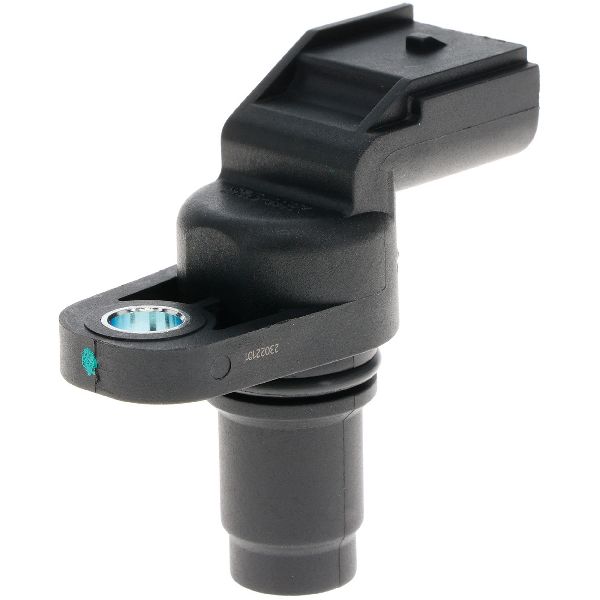
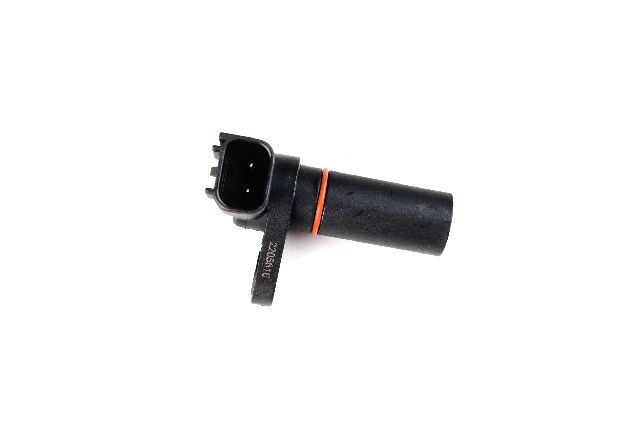
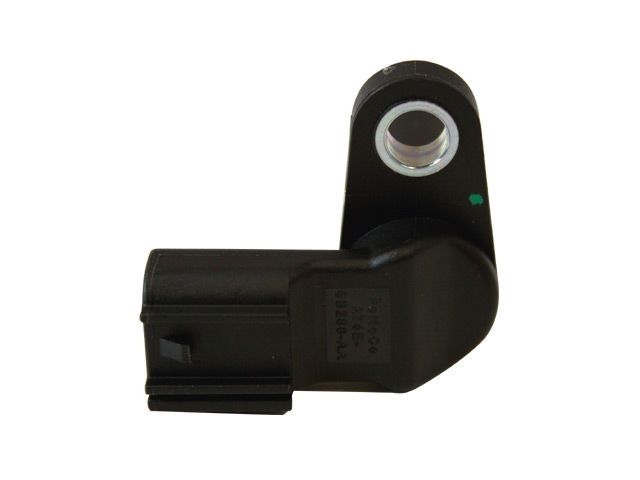
- Faulty Camshaft Position Sensor: → Shop Engine Camshaft Position Sensor While less common than a solenoid failure, the sensor that reads the camshaft's position can fail. A good way to test this is to swap it with the intake sensor to see if the code follows. The Motorcraft part number is often DU-103.
- Damaged Camshaft Phaser/Sprocket: → Shop Engine Camshaft The phaser is the mechanical component that the VCT solenoid controls. If it becomes clogged with sludge or mechanically fails, it can get stuck and cause this code. This is usually diagnosed after solenoids and sensors are ruled out.
- PCM Software Issue: On some Ford models, software glitches have been known to incorrectly trigger VCT-related codes. TSB 21-2224 was issued for 2020-2021 Transit models for this reason, indicating it's a possibility on related platforms.
Diagnosis Steps
- Verify Oil Level and Condition: Check the dipstick. If the oil is low, dirty, or past its service interval, perform an oil and filter change with full synthetic 5W-30 oil. Clear the codes and see if P0018 returns. This is the most critical first step.
- Scan for Codes: Use an OBD-II scanner to confirm P0018 and look for any other related codes. Note the freeze frame data for clues about when the fault occurred.
- Inspect Wiring: Check the wiring and connectors for the exhaust VCT solenoid and the exhaust camshaft position sensor for any damage, corrosion, or oil contamination.
- Test the VCT Solenoid: This is the most effective, low-cost diagnostic step. Swap the exhaust VCT solenoid (usually a black electrical connector) with the intake solenoid (usually a white connector). Clear the codes and drive the vehicle. If the code changes to P0016, you have confirmed the solenoid is faulty and needs replacement.
- Test the Camshaft Position Sensor: If the solenoid swap does not isolate the problem, you can perform the same swap test with the exhaust and intake camshaft position sensors. If the code changes to P0016, the sensor is at fault.
- Mechanical Timing Inspection: If all electrical and hydraulic tests pass, the issue is likely mechanical. This involves removing the valve cover to inspect the timing chain, guides, and tensioner for wear and slack. This step is best left to a professional or experienced DIYer as it is labor-intensive.
Parts You'll Likely Need
- Variable Camshaft Timing (VCT) Solenoid
(OEM #CJ5Z-6M280-A)— This is the most common part to fail. It gets stuck due to oil debris, preventing it from adjusting cam timing correctly. This is documented in multiple Ford TSBs.
Trusted brands: Motorcraft, Dorman, Standard Motor Products
OEM price range: $40-$70
Aftermarket price range: $25-$50 - Timing Chain Kit — If the chain has stretched or the tensioner has failed, a complete kit including the chain, guides, and tensioner is required to restore proper engine timing.
Trusted brands: Motorcraft, Cloyes
OEM price range: $250-$400
Aftermarket price range: $150-$250
Related Codes That Often Appear With This One
- P0016 — Crankshaft/Intake Camshaft Correlation. If seen with P0018, it strongly suggests a base timing issue affecting both camshafts, such as a stretched timing chain. If P0018 changes to P0016 after swapping VCT solenoids, it confirms a bad exhaust VCT solenoid.
- P0017 — Crankshaft/Exhaust Camshaft Correlation (Bank 1). This is the technically 'correct' code for this fault. Some scanner tools may report P0017 and P0018 interchangeably for the same issue on this engine.
- P0019 — Crankshaft/Exhaust Camshaft Correlation (Bank 2). Similar to P0018, this is another Bank 2 code that might be used by the software for a Bank 1 fault on this engine.
- P0011/P0012/P0014/P0015 — These are other camshaft timing codes (over-advanced/retarded) that are part of the same family of faults mentioned in Ford's TSBs (SSM 49821) and often point to the same VCT solenoid or oil-related issues.
Technical Service Bulletins (TSBs) & Recalls
- SSM 49821: Addresses multiple timing DTCs (P0011-P0025) on 2015-2021 Ford/Lincoln vehicles, often related to VCT issues caused by oil debris.
- SSM 50067: Similar to above, notes that various 2015-2021 Ford/Lincoln vehicles may exhibit P0018 and other VCT codes due to a sticking VCT solenoid. It advises technicians to try cycling the solenoid with a scan tool before replacement.
- TSB 20-2271: For 2016-2019 Explorer and 2015-2019 Lincoln MKC with the 2.3L engine, this addresses a vibration/rough idle when in Drive or Reverse.
Platform-Specific Known Issues
- Ford has issued multiple Technical Service Bulletins (TSBs) like SSM 49821 that acknowledge a range of camshaft timing codes (including P0018) can be caused by VCT solenoids sticking from small debris in the oil.
- TSB 20-2271 was issued for some 2016-2019 Explorers with the 2.3L engine for a vibration or rough idle in gear, which can be a symptom accompanying timing codes.
Mechanic-Grade Diagnostic Values
- VCT Solenoid Internal Resistance — expected: 5.0 to 15.0 Ohms. Failure: A reading of 0 Ohms (short circuit) or OL/infinite Ohms (open circuit).
- VCT Solenoid Connector Voltage (Key On, Engine Off) — expected: Approximately 12V (battery voltage) on the power supply pin.. Failure: Significantly low or no voltage suggests a wiring issue, blown fuse, or PCM fault.
- Scan Tool PID: VCT Advance Error (VCT_ADV_ERR) — expected: Should be close to 0 degrees (+/- 5 degrees) at idle in closed loop.. Failure: A consistent, significant error value indicates the PCM cannot achieve the desired cam timing, pointing to a mechanical or hydraulic issue.
- Engine Oil Pressure at Idle (Hot) — expected: Minimum of 15 PSI.. Failure: Pressure below 15 PSI at idle can starve the VCT system, preventing proper operation.
- Camshaft Position Sensor Signal (3-wire Hall Effect) — expected: Voltage should switch between approximately 5V and 0V as a metal object (like the reluctor wheel) passes the sensor tip.. Failure: No voltage switch, or voltage stuck high or low, indicates a failed sensor.
Hidden / Shadow Codes Worth Checking
- Mode $06, TID $51/$53: These Test IDs can reveal cylinder-specific misfire data that may not be severe enough to set a dedicated misfire code but can be a symptom of erratic timing. (see via A scan tool with Mode $06 capabilities, such as FORScan or professional-grade scanners.)
- Mode $06, VCT Monitor TIDs: Mode $06 contains test results for the Variable Cam Timing monitor, checking the phaser's response time and final position. A failure here can indicate a sluggish VCT solenoid or phaser before a P-code is triggered. (see via A scan tool with Mode $06 capability. The specific Test ID (TID) and Component ID (CID) must be looked up for the specific vehicle/PCM strategy.)
Scan Tool Commands That Help
- Ford IDS, FORScan, or other high-level bidirectional scanner: VCT Solenoid On/Off Command or Cycle Test (e.g., Pinpoint Test HK11/HK12) — This is a primary diagnostic step after checking oil. It directly tests the solenoid's electronic and mechanical function by commanding it to activate. TSB SSM 50067 advises cycling the solenoid 10 times to potentially clear debris before replacement.
- N/A (Manual Test): Disconnect VCT Solenoid Electrical Connector — If a rattling noise is present, disconnecting the solenoid connector while the engine is running will cause the PCM to command a default (zero advance) position. If the noise stops or changes significantly, it strongly points to a problem within the VCT system (solenoid or phaser).
Wiring & Ground Locations
- Exhaust VCT Solenoid Connector — On the top of the valve cover, typically with a black electrical connector to differentiate it from the intake solenoid's white connector.. This is the primary connection point for testing. Pin 1 is the 12V power supply, and Pin 2 is the ground-side control wire that is pulse-width modulated (PWM) by the PCM to operate the solenoid. Checking for power and signal here is a key electrical diagnostic step.
"I Checked Everything" — The Actual Cause
- In the context of P0018, the equivalent of a 'smoke test clean' scenario is when an oil change and VCT solenoid replacement/swap do not fix the code. In these cases, the root cause is almost always a deeper mechanical issue. The most common is a stretched timing chain that has created enough slack to cause a permanent correlation error that the VCT system cannot compensate for. Another possibility is that the timing was set incorrectly during a previous repair, causing the engine to be off by one tooth.
OEM Part Supersession History
CJ5Z-6M280-A→CJ5Z-6M280-A— No supersession found.
Heads up: This part number appears stable for the specified vehicle and engine. While other part numbers exist for similar 2.3L engines in different platforms (like the Ranger), CJ5Z-6M280-A is the most consistently cited part for the Explorer/MKC application.
Model Year Variations Within This Range
- 2016-2017 vs 2018-2019: There was a minor engine update for the 2018 model year. The 2016-2017 2.3L EcoBoost was rated at 270 hp, while the 2018-2019 version was uprated to 280 hp. This implies a potential difference in PCM software and engine tuning, though the physical VCT components remained the same.
Diagnostic Flowchart
Other Known Issues on This Vehicle
Issues unrelated to this code that are worth knowing about as an owner of this generation:
- Coolant Intrusion into Cylinders 🔴 High — A known issue on 2.0L and some 2.3L EcoBoost engines. A design flaw can cause the engine block to crack between cylinders, leading to coolant leaking into the combustion chamber. (Ref: TSB 19-2346 (for 2.0L but describes the issue), SSM 51754 (for 2023 2.3L))
- External Water Pump Failure 🟠 Medium → Shop Engine Water Pump — Unlike the V6 Explorer's internal water pump, the 2.3L EcoBoost has an external, belt-driven water pump. While considered more reliable, failures can still occur, leading to overheating. It is not the catastrophic design of the V6.
- Carbon Buildup on Intake Valves 🟠 Medium — As a direct-injection engine, the 2.3L EcoBoost is susceptible to carbon buildup on the back of the intake valves over time, as fuel is not sprayed over them to keep them clean. This can cause rough idle and misfires at higher mileage.
- Front Drive Axle Halfshaft Bracket Failure 🔴 High — A recall was issued for some 2014-2016 Explorers with 2.0L/2.3L engines for a support bracket that could fail, potentially causing a loss of power or park function. (Ref: Ford Recall 21S22)
Used vs. New Parts: Buying Guide for This Vehicle
When a used part is the smart pick: For this specific repair, using used parts is generally not recommended due to the nature of the failures. The only potential exception would be non-wear electronic items like a Camshaft Position Sensor from a verified low-mileage donor vehicle.
Donor-vehicle mileage cap: roughly under 50000 miles for the part to have meaningful remaining life.
What to inspect on the donor part:
- Verify the donor vehicle's mileage.
- Inspect for any signs of physical damage, corrosion on pins, or oil contamination.
- If possible, get a warranty from the seller/junkyard.
OEM-only on this vehicle (don't cheap out):
- Timing Chain Kit (Chain, Guides, Tensioner): These are critical wear items. Installing used timing components is extremely risky and can lead to catastrophic engine failure.
- Variable Camshaft Timing (VCT) Solenoid: The failure mode is internal sticking from oil debris, which is impossible to see. The low cost of a new OEM part makes a used one a poor value proposition.
Aftermarket brands forum-validated for this vehicle:
- Motorcraft (OEM)
- Cloyes (For timing chain kits)
- Dorman (For VCT Solenoids, often with design improvements)
- Standard Motor Products (SMP)
Brands owners have reported issues with on this vehicle:
- Unnamed, no-brand 'white box' parts from online marketplaces. VCT solenoids and timing components require precise manufacturing, and quality control is critical.
Real Owner Stories
Aggregated from forums and TSBs cited above. Mileages and costs reflect what owners reported in those sources.
2019 Ford Ranger 2.3L EcoBoost
Symptoms: P0018 code appearing specifically for the exhaust cam timing.
What fixed it: The issue was identified as a sticking VCT solenoid, often caused by low or dirty oil.
Source hint: Ford Ranger Forums (Ranger5G.com) thread on 2.3L EcoBoost P0018
2014 Ford Explorer
Symptoms: P0018 code present.
What fixed it: Replacement of a failed secondary timing chain after sensors were ruled out.
Source hint: Reddit r/AskMechanics user report
Ford F-150 EcoBoost
Symptoms: P0018 code appeared immediately after a timing chain repair.
What fixed it: Correcting the mechanical timing; the crank gear had jumped a tooth on startup.
Source hint: F150Forum.com thread for P0018
Related OBD-II Codes
Frequently Asked Questions
My 2017 Explorer 2.3L has a vibration when I'm stopped in Drive. Is this related to code P0018?
Does Ford have a technical service bulletin for P0018 on the 2.3L EcoBoost?
Which VCT solenoid should I replace for a P0018 code on my Explorer?
Can I just swap parts to see if the solenoid is bad before buying a new one?
What type of oil should I use to prevent VCT issues in my 2.3L EcoBoost?
Helpful Videos
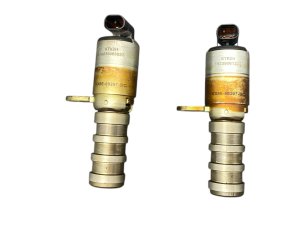
Used OEM Parts in Stock
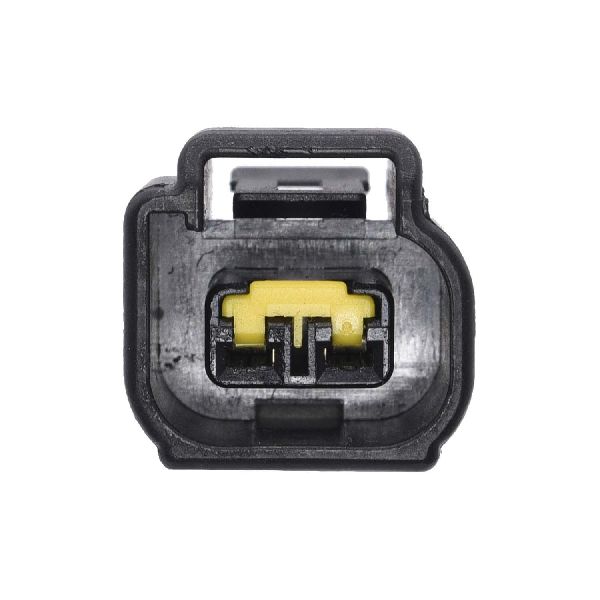
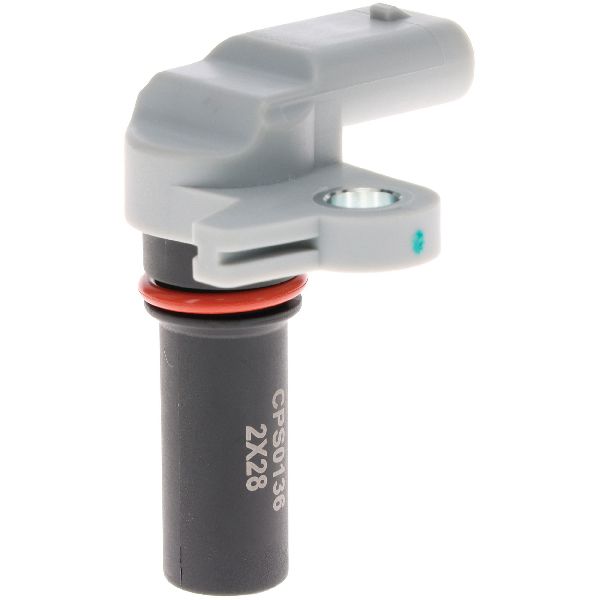
New Aftermarket Parts Available


The information in this article is provided for general reference and educational purposes only. Vehicle specifications, procedures, and part compatibility can vary by production date, trim level, and region. Always consult your vehicle's factory service manual and verify part numbers before purchasing or performing repairs. Safety-critical components such as airbags, seat belts, and braking systems should be installed by a qualified professional.
- Ford Explorer:
- 🧭 Diagnostic Flowchart
- 🎬 Helpful Videos
- 🛍️ Shop This Part
- What's Unique About the 2016-2019 Ford Explorer
- Symptoms You May Notice
- Most Likely Causes
- Rare But Worth Checking
- Diagnosis Steps
- Parts You'll Likely Need
- Related Codes That Often Appear With This One
- Technical Service Bulletins (TSBs) & Recalls
- Platform-Specific Known Issues
- Mechanic-Grade Diagnostic Values
- Hidden / Shadow Codes Worth Checking
- Scan Tool Commands That Help
- Wiring & Ground Locations
- "I Checked Everything" — The Actual Cause
- OEM Part Supersession History
- Model Year Variations Within This Range
- Other Known Issues on This Vehicle
- Used vs. New Parts: Buying Guide for This Vehicle
- Real Owner Stories
- 2019 Ford Ranger 2.3L EcoBoost
- 2014 Ford Explorer
- Ford F-150 EcoBoost
- Related OBD-II Codes
- Frequently Asked Questions
- 🎟️ Get 5% Off