

P0019 on 2015-2020 Ford F-150 5.0L: Crank-Cam Correlation Causes and Fixes
On the 5.0L Coyote V8, P0019 is most often caused by a faulty Variable Camshaft Timing (VCT) solenoid on the driver's side exhaust, usually due to dirty or low engine oil. Replacing the solenoid is a common fix, with the Motorcraft part (BR3Z-6M280-D or its successor) costing around $40-$90. Ford has issued multiple TSBs (SSM 50067, 48423, 47170) acknowledging this specific failure mode.
- P0019 specifically points to a timing correlation problem with the driver's side (Bank 2) exhaust camshaft.
- Before buying any parts, check your engine oil level and condition. Low or dirty oil is a very common cause.
- The most likely failed part is the Bank 2 exhaust VCT solenoid, which is relatively inexpensive and accessible to replace.
- Do not immediately replace the camshaft position sensor; it is most likely doing its job correctly by reporting the timing fault.
- A rattling noise on startup strongly suggests a more serious mechanical issue, like a failing timing chain tensioner, which requires a more involved repair.
What's Unique About the 2015-2020 Ford F-150
The 5.0L Coyote V8 uses a Twin Independent Variable Camshaft Timing (Ti-VCT) system that is highly sensitive to oil pressure and cleanliness. Ford has issued multiple Technical Service Bulletins (TSBs), including SSM 50067, 48423, and 47170, acknowledging that small debris in the oil can cause the VCT solenoids to stick, leading to codes like P0019. These TSBs specifically advise technicians to attempt clearing the debris by cycling the solenoid with a scan tool before replacement, highlighting how common this specific issue is. This makes a sticking VCT solenoid a more probable cause on this platform than a major mechanical failure like a stretched timing chain, although chain and phaser issues are not unheard of on the Coyote engine, especially at higher mileage.
Symptoms You May Notice
- Check Engine Light is on
- Rough or uneven idle
- Engine hesitation or stumbling on acceleration
- Reduced engine power
- Decreased fuel economy
- Engine stalling, especially when warm or at low speeds
- Rattling or ticking noise from the engine, especially on startup
- Engine cranks but won't start (in severe cases)
- Replacing the camshaft position sensor first. The sensor is a reporter; P0019 indicates a correlation *problem* that the sensor is detecting. The sensor itself is rarely the cause.
- Replacing the crankshaft position sensor. A failure here would likely cause more severe running issues and different codes.
- Assuming a stretched timing chain without first diagnosing the much more common and cheaper VCT solenoid failure.
Most Likely Causes
- Low or Dirty Engine Oil 🔴 High Probability The Ti-VCT system uses pressurized engine oil to adjust cam timing. Low, old, or dirty oil, or using the incorrect viscosity (5W-20 is specified for most 5.0L models), can't operate the VCT solenoids and phasers correctly, causing them to stick or respond slowly.
How to confirm: Check the oil level on the dipstick and inspect its color and consistency. If the level is low or the oil is dark, gritty, or sludgy, it needs to be changed. This should always be the first diagnostic step.
Typical fix: Perform an oil and filter change using the correct viscosity full-synthetic oil (e.g., SAE 5W-20) and a quality filter.
Est. part cost: $50-$100 - Faulty VCT Solenoid (Bank 2 Exhaust) 🔴 High Probability Ford has issued multiple TSBs (SSM 50067, 48423, 47170, and SSM 54366) indicating these solenoids are prone to sticking due to small debris in the oil. This is the most common component failure for this code, with many owner and technician reports confirming it as the fix.
How to confirm: Use a scan tool to monitor desired vs. actual cam position for Bank 2 Exhaust. You can also swap the Bank 2 exhaust solenoid with the Bank 2 intake solenoid. Clear the codes and drive the vehicle. If the code changes to P0018 (Bank 2 Intake), the solenoid is faulty.
Typical fix: Replace the VCT solenoid on the driver's side valve cover for the exhaust camshaft. The OEM part number is BR3Z-6M280-D, which has been superseded by BR3Z-6M280-E and then BR3Z-6M280-F.
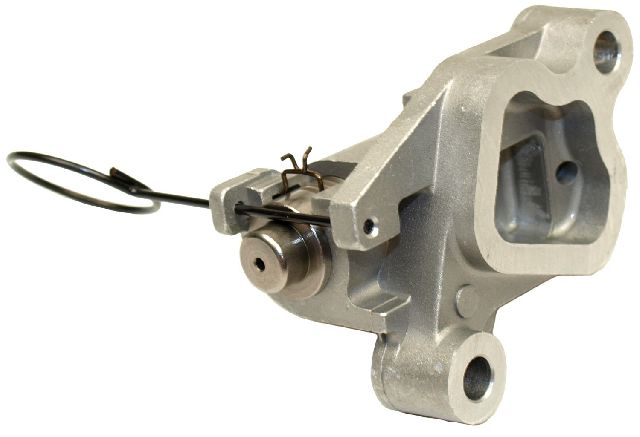
Est. part cost: $40-$90 - Worn Timing Chain / Failed Tensioner 🟡 Medium Probability → Shop Engine Timing Chain While durable, the timing chains on the 5.0L Coyote can stretch over time, and the hydraulic tensioners can weaken, especially with high mileage or poor oil change intervals. This is a known, though less common, failure point.
How to confirm: A persistent rattling noise on startup that goes away after a few seconds is a classic sign of a bad tensioner bleeding down pressure. Confirming a stretched chain requires removing the timing cover for a visual inspection, which is a labor-intensive job.
Typical fix: Replace the timing chains, guides, tensioners, and often the cam phasers as a complete kit. This is a major repair.
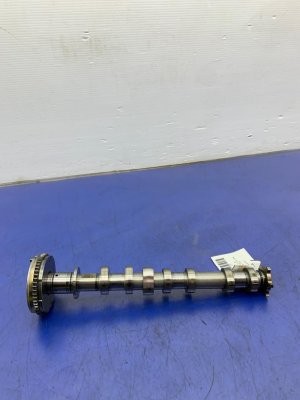
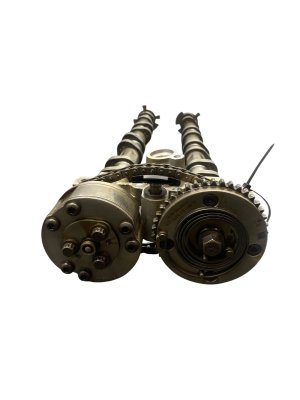
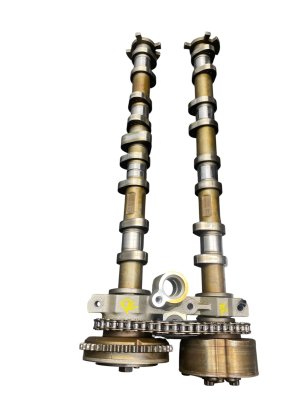
Est. part cost: $400-$800 for a full kit - Failed Camshaft Phaser (VCT Unit) ⚪ Low Probability → Shop Engine Camshaft The cam phasers themselves can fail, getting stuck in one position or failing to adjust timing correctly. This is less common than a solenoid failure but more common than a sensor failure. Forum discussions mention phaser failures, but usually after solenoids have been ruled out.
How to confirm: Diagnosis is difficult without a high-end scan tool (like Ford's IDS) to watch phaser command vs. actual position and see large, erratic deviations. Often diagnosed after a VCT solenoid replacement does not fix the issue. A stuck phaser may cause a loud ticking or knocking sound.
Typical fix: Replace the Bank 2 exhaust camshaft phaser. This requires removing the valve cover and timing components.
Est. part cost: $100-$250
Rare But Worth Checking
- Damaged Wiring or Connectors: The wiring to the camshaft position sensor or VCT solenoid can become frayed, corroded, or damaged, leading to an intermittent signal. Always inspect the harness before replacing expensive components.
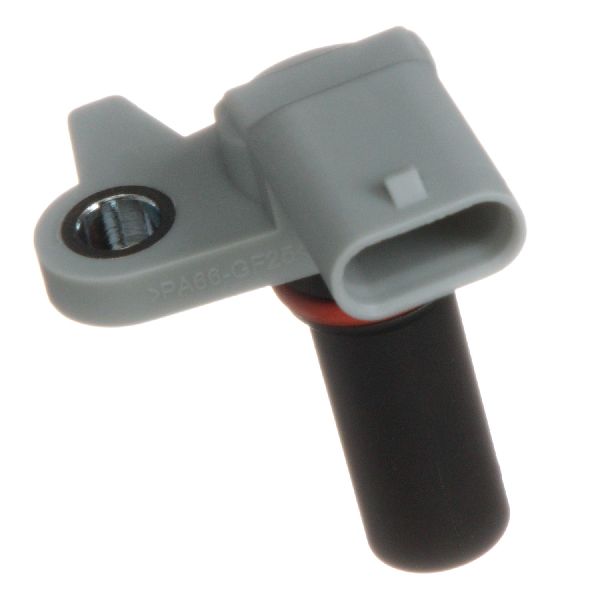
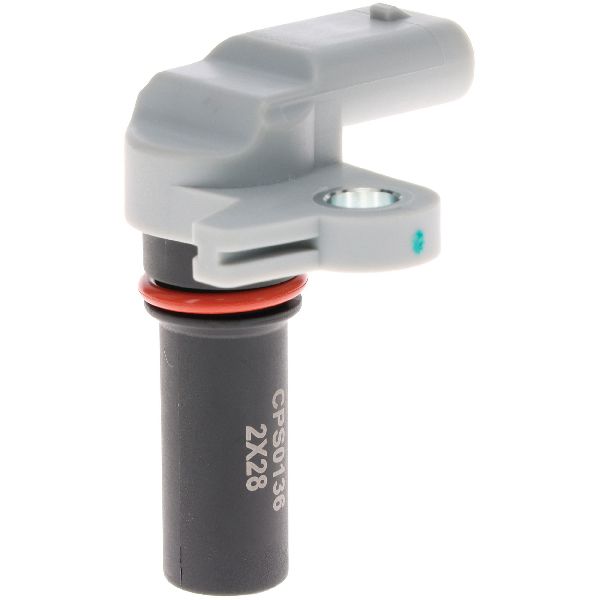
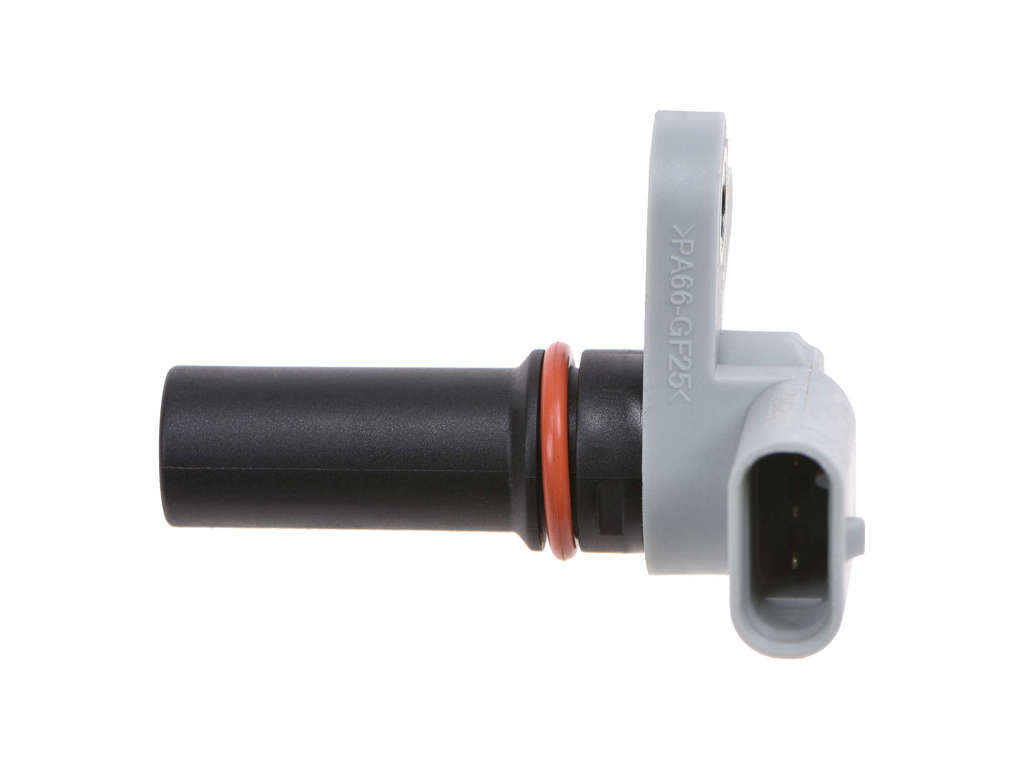
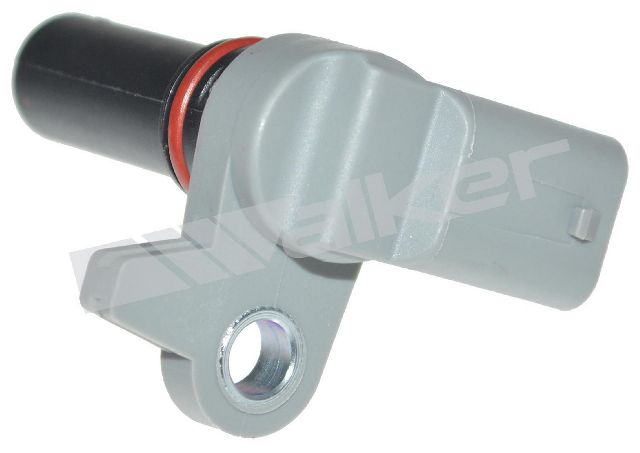
- Failed Camshaft Position Sensor: → Shop Engine Camshaft Position Sensor It is uncommon for the sensor itself to fail. The sensor is usually accurately reporting a mechanical problem, but a failed sensor is still a possibility. Misdiagnosing this is common.
- Slipped Camshaft or Crankshaft Tone Ring: → Shop Engine Crankshaft The tone rings, which the position sensors read, can physically slip or break, causing incorrect readings even if all timing components are mechanically sound. This is a rare but possible cause.
Diagnosis Steps
- Check Engine Oil: Verify the oil level is full and the oil is clean and of the correct viscosity (SAE 5W-20). If low or dirty, perform an oil and filter change. This simple step resolves the issue in many cases.
- Scan for Codes: Use an OBD-II scanner to confirm P0019 and check for any other related codes, like P0025 or misfire codes.
- Inspect Wiring: Visually inspect the wiring harness and connector for the Bank 2 (driver's side) exhaust camshaft position sensor and VCT solenoid for any signs of damage, corrosion, or loose connections.
- Test the VCT Solenoid (Scan Tool): With a capable scan tool, command the Bank 2 exhaust VCT solenoid on and off. Per Ford TSB SSM 50067, cycling the solenoid 10 times may clear debris and temporarily fix the issue, which confirms a sticking solenoid.
- Swap Solenoids (Diagnostic): A common and effective DIY test is to swap the exhaust VCT solenoid (rear of driver's side valve cover) with the intake VCT solenoid (front of driver's side valve cover). Clear the codes and drive the vehicle. If the code changes to P0018 (for the intake cam), the solenoid you moved is faulty and needs to be replaced.
- Check for Mechanical Timing Issues: If solenoids and oil are good, the problem is likely mechanical. Listen for a startup rattle, which indicates a bad timing chain tensioner. Further diagnosis requires removing the valve and timing covers to inspect the chain, guides, and phasers, which is a significant job.
Parts You'll Likely Need
- Variable Camshaft Timing (VCT) Solenoid
(OEM #BR3Z-6M280-D (superseded by BR3Z-6M280-E, then BR3Z-6M280-F))— This is the most frequent point of failure for P0019 on this engine, often due to sticking from oil debris, as documented in Ford TSBs SSM 50067, 48423, 47170, and SSM 54366.
Trusted brands: Motorcraft, Dorman
OEM price range: $70-$110
Aftermarket price range: $40-$80 - Timing Chain Kit
(OEM #HL3Z-6268-A (Chain example, full kit has multiple parts))— If the cause is a stretched chain or failed
Related Codes That Often Appear With This One
- P0018 — Crankshaft Position - Camshaft Position Correlation Bank 2 Sensor 'A' (Intake). If both intake and exhaust cams on Bank 2 are out of time, it points more strongly to a base timing issue like a jumped or stretched chain.
- P0025 — Camshaft Position 'B' Timing Over-Retarded (Bank 2). This code is often paired with P0019 and points specifically to a problem with the exhaust cam on Bank 2, further isolating the issue to that area.
- P0300 — Random/Multiple Cylinder Misfire Detected. Incorrect cam timing can disrupt the combustion process, leading to misfires across multiple cylinders.
- P0302, P0304, P0306, P0308 — Cylinder misfire on Bank 2 (driver's side). If the exhaust cam timing is off, it can cause misfires specifically on the cylinders in that bank. A forum user reported P0019 alongside P0302 (Cylinder 2 Misfire).
Technical Service Bulletins (TSBs) & Recalls
- SSM 54366: For 2015-2021 Ford/Lincoln vehicles. States that a wide range of VCT codes (P0011-P0025, including P0019) may be due to small debris causing the VCT solenoid to stick. It explicitly directs technicians to use a scan tool (PC/ED pinpoint test HK) to cycle the solenoid to attempt to clear debris before replacing any parts.
- SSM 50067: For 2015-2021 Ford and Lincoln vehicles. States that a wide range of VCT codes (P0011-P0025, including P0019) may be due to small debris causing the VCT solenoid to stick. It explicitly directs technicians to use a scan tool (PC/ED pinpoint test HK12) to cycle the solenoid 10 times to attempt to clear debris before replacing any parts. Causal part is listed as 6M280.
- SSM 48423: An earlier version of SSM 50067, covering 2015-2020 models. It provides the same guidance regarding sticking VCT solenoids caused by oil debris for the same range of DTCs.
- SSM 47170: An even earlier bulletin from March 2018 that also identified oil debris causing VCT solenoids to stick as the root cause for codes P0011 through P0025. It also recommends cycling the solenoid to clear debris before replacement.
Mechanic-Grade Diagnostic Values
- VCT Oil Control Solenoid internal resistance — expected: 7.0 - 15.0 Ohms. More precise sources cite 7.8 - 8.3 Ohms.. Failure: A reading of 0 Ohms (short) or infinite/OL (open circuit) indicates a failed solenoid coil.
- VCT Solenoid connector voltage (Key On, Engine Off) — expected: Approximately 12V (Battery Voltage) on the power supply pin.. Failure: Low or no voltage points to a wiring or PCM power supply issue, not the solenoid itself.
- Camshaft Position Sensor (CMP) internal resistance — expected: Approximately 200 - 600 Ohms.. Failure: A reading significantly outside this range suggests a faulty sensor. This is a secondary test if VCT issues are ruled out.
- Scan Tool PID: VCT_EXH_ERR_B2 (VCT Exhaust Error Bank 2) — expected: Should remain near 0 degrees at idle and during steady-state driving.. Failure: A large, persistent non-zero value indicates a correlation error that the PCM is detecting on that specific camshaft.
Hidden / Shadow Codes Worth Checking
- Mode 6, Test ID $81, Component ID $11-$14: This data tracks how often the camshaft angle has deviated from the PCM's target position beyond a calibrated threshold. It can show an emerging problem before a full DTC like P0019 is triggered. (see via A capable OBD-II scanner that can display Mode 6 test results.)
Scan Tool Commands That Help
- Ford IDS (or equivalent professional scanner): Output State Control / VCT Solenoid Actuator Test — This bidirectional command allows a technician to manually cycle the Bank 2 exhaust VCT solenoid. Per Ford TSBs, cycling it 10 times can dislodge debris. If activating the solenoid at idle causes no change in engine operation (e.g., no stumble), it confirms the solenoid is stuck, clogged, or has failed electrically.
Wiring & Ground Locations
- Bank 2 Exhaust VCT Solenoid Connector — On the rear of the driver's side (Bank 2) valve cover. It is one of two solenoids on that cover.. This is the primary connector to test for voltage and resistance of the most likely failed component. Damage to this connector or its wiring will cause the code.
- Bank 2 Exhaust Camshaft Position Sensor Connector — Located on the rear of the driver's side (Bank 2) cylinder head.. This is the connector for the sensor that reports the timing data to the PCM. While the sensor is rarely the cause, checking for 5V reference and good ground here is a key step in diagnosing a wiring fault.
Real Owner Repair Stories
- Ford Truck Enthusiasts Forum user 'Michael D Oliver' (2012 F-150 3.5L EcoBoost (Note: different engine, but identical P0019 cause and effect)) — P0019 code immediately after performing a timing chain replacement.
❌ Tried (didn't work) Replacing the Camshaft Position Sensor (CPS)., Replacing the VVT solenoid (though the old one tested bad)., Tearing the engine down a second time to re-do the timing job after suspecting a misaligned phaser.
✅ What actually fixed it A professional shop had to replace the cam phasers. The owner had misaligned the phaser on the camshaft twice because the oil passages and the dowel pins on the cam phaser are the same size, making it easy to install incorrectly. - YouTube user '2018 F-150 5.0L VCT Issue' (2018 F-150 5.0L) — Extremely rough running, backfiring through intake, stalling, and multiple codes including P0019, P0025, and various Bank 2 misfires.
❌ Tried (didn't work) The issue was recurring after a dealer visit for the same problem.
✅ What actually fixed it As a temporary fix, the owner disconnects the Bank 2 exhaust VCT solenoid connector and manually pulses it with 12V jumper wires from the battery. He notes that initially it doesn't click, but after a few pulses it frees up and begins clicking audibly. This temporarily resolves the severe running issues by un-sticking the solenoid. This confirms the solenoid is the root cause and needs replacement. - NHTSA ODI #11652279 — An owner reported that an independent mechanic retrieved DTC P0019, indicating a camshaft position correlation Bank 2 Sensor B, along with DTC P0025, indicating an exhaust camshaft position issue.
OEM Part Supersession History
BR3Z-6M280-D→BR3Z-6M280-E, then BR3Z-6M280-F.— Likely internal design improvements to reduce sticking and improve durability.
Heads up: A technician noted that newer replacement solenoids may have a larger connector top, requiring the purchase and splicing of new electrical pigtail connectors to fit.
Model Year Variations Within This Range
- 2015-2017 vs 2018-2020: The 5.0L Coyote engine was updated in 2018 (Gen 3). While the VCT solenoids are often the same part number across the range, the timing chain kits are different. Specific kits are sold for 2015-2017 models and different kits for 2018-2020 models, indicating physical changes to chains, guides, or tensioners that are not interchangeable.
Diagnostic Flowchart
Other Known Issues on This Vehicle
Issues unrelated to this code that are worth knowing about as an owner of this generation:
- Excessive Oil Consumption (2018-2020) 🔴 High — Common on 2018-2020 models. Ford defines 'excessive' as more than 1 quart per 3,000 miles. Often surfaces as early as 30,000 miles. (Ref: TSB 19-2365. The fix involves a PCM reprogram to reduce engine vacuum during deceleration, and installing a revised dipstick. In early cases (TSB 19-2058), long block replacement was the solution.)
- 10R80 10-Speed Transmission Problems 🟠 Medium — Widespread complaints of harsh/erratic shifting, clunking, and delayed engagement on 2018-2020 models equipped with the 10R80 transmission. (Ref: TSB 18-2274 was issued for a PCM reprogram to address shift quality on early 2018 models. Multiple class-action lawsuits have also been filed.)
- Engine Ticking / Typewriter Noise 🟠 Medium — Some owners report a persistent ticking or tapping sound from the valvetrain, often described as sounding like an 'old typewriter'. This can be related to various components including lifters or cam phasers.
- Warping Dashboard 🟡 Low — Reports of the dashboard material bulging or warping, particularly on the passenger side, due to sun exposure.
Used vs. New Parts: Buying Guide for This Vehicle
When a used part is the smart pick: For this specific repair, using used parts is not recommended. The primary failure parts (VCT solenoids, timing components) fail due to internal wear, sludge, and age. A used part from a junkyard carries the same risks as the part that just failed.
What to inspect on the donor part:
- Not applicable as used parts are not advised for this repair.
OEM-only on this vehicle (don't cheap out):
- Variable Camshaft Timing (VCT) Solenoid
Aftermarket brands forum-validated for this vehicle:
- Ford Performance (for VCT Solenoids, considered an OEM-level upgrade)
- Comp Cams (for timing chain kits)
- MMR - Modular Motorsports Racing (for timing chain kits)
Brands owners have reported issues with on this vehicle:
- Dorman (for VCT solenoids). Forum consensus is strongly against using Dorman VCTs, citing that OEM Motorcraft parts are similarly priced and more reliable.
Real Owner Stories
Aggregated from forums and TSBs cited above. Mileages and costs reflect what owners reported in those sources.
2014 Ford F-150 5.0L
Symptoms: Check engine light with P0019 and a P0302 cylinder 2 misfire code.
What fixed it: Diagnosis pointed toward a VCT system issue on Bank 2 (driver's side) exhaust cam.
Source hint: Ford F150 Forum thread titled '2014 F150, 5.0L P0302, and P0019 - Ford F150 Forum'
2017 Ford F-150 5.0L
Symptoms: Various VCT codes including P0019; technician noted multiple engines with similar timing issues.
What fixed it: Replacement of the cam phasers after ruling out solenoids, following Ford SSM guidance regarding debris-induced sticking.
Source hint: Ford F150 Forum thread titled '5.0 Phaser failures - Ford F150 Forum'
NHTSA Reported Incident
Symptoms: Diagnostic trouble codes P0019 and P0025 retrieved by an independent mechanic.
What fixed it: NHTSA ODI #11652279 describes a case where P0019 (camshaft position correlation Bank 2 Sensor B) and P0025 (exhaust camshaft position) were identified, though the vehicle was not immediately repaired at the time of the report.
Related OBD-II Codes
Frequently Asked Questions
Which VCT solenoid should I replace for a P0019 code on my 5.0L F-150?
My 2018 F-150 is throwing P0019 and consuming a lot of oil; are these related?
Does Ford have a TSB for P0019 regarding debris in the solenoids?
What oil viscosity should I use in my 5.0L Coyote to prevent VCT timing codes?
I hear a rattling noise on startup along with the P0019 code; what does that mean?
Can I test the VCT solenoid myself before buying a new one?
Helpful Videos
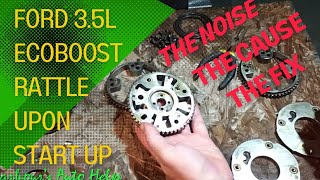
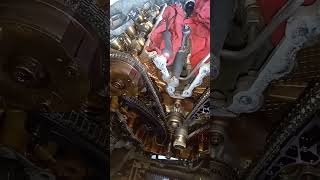
Used OEM Parts in Stock
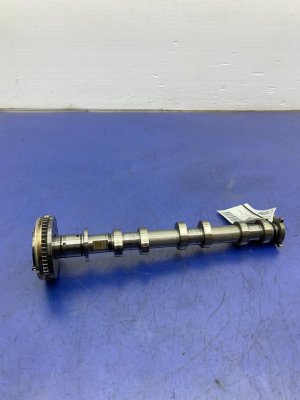
New Aftermarket Parts Available


The information in this article is provided for general reference and educational purposes only. Vehicle specifications, procedures, and part compatibility can vary by production date, trim level, and region. Always consult your vehicle's factory service manual and verify part numbers before purchasing or performing repairs. Safety-critical components such as airbags, seat belts, and braking systems should be installed by a qualified professional.
- Ford F-150:
- 🧭 Diagnostic Flowchart
- 🎬 Helpful Videos
- 🛍️ Shop This Part
- What's Unique About the 2015-2020 Ford F-150
- Symptoms You May Notice
- Most Likely Causes
- Rare But Worth Checking
- Diagnosis Steps
- Parts You'll Likely Need
- Related Codes That Often Appear With This One
- Technical Service Bulletins (TSBs) & Recalls
- Mechanic-Grade Diagnostic Values
- Hidden / Shadow Codes Worth Checking
- Scan Tool Commands That Help
- Wiring & Ground Locations
- Real Owner Repair Stories
- OEM Part Supersession History
- Model Year Variations Within This Range
- Other Known Issues on This Vehicle
- Used vs. New Parts: Buying Guide for This Vehicle
- Real Owner Stories
- 2014 Ford F-150 5.0L
- 2017 Ford F-150 5.0L
- NHTSA Reported Incident
- Related OBD-II Codes
- Frequently Asked Questions
- 🎟️ Get 5% Off