

P0019 on 2017-2020 Lincoln Continental: Crank/Cam Correlation Causes and Fixes
P0019 on a Lincoln Continental most often means the Bank 2 exhaust VCT solenoid is sticking due to dirty oil. The most common fix is an oil and filter change and replacing the Bank 2 exhaust VCT solenoid, which costs around $40-$120 for the part. This is a well-documented issue in Ford/Lincoln TSBs.
- P0019 specifically points to the exhaust camshaft on Bank 2, which is the cylinder bank near the radiator on a Lincoln Continental.
- Always check the engine oil level and condition first. A simple oil change is the easiest and cheapest potential fix and is required for proper VCT system function.
- The most likely failed part is the Bank 2 exhaust VCT solenoid, a known issue documented in multiple TSBs for this vehicle.
- On the 3.7L V6 engine, this code can be an early warning of a failing internal water pump leaking coolant into the oil, a severe issue requiring immediate attention.
- Avoid jumping to conclusions about expensive timing chain repairs until the oil, VCT solenoid, and camshaft sensor have been ruled out.
What's Unique About the 2017-2020 Lincoln Continental
For this generation of Lincoln Continental and its related Ford platforms, the Variable Camshaft Timing (VCT) system is known to be sensitive to oil quality and condition. Ford and Lincoln have issued multiple Technical Service Bulletins (TSBs) acknowledging that P0019 and other timing codes can be triggered by small debris in the engine oil causing the VCT solenoids to stick. The TSBs specifically recommend a diagnostic procedure where a technician uses a scan tool to cycle the affected solenoid 10 times to try and dislodge debris before replacing any parts. Additionally, the 3.7L Cyclone V6 features an internal, timing-chain-driven water pump; a failure of this pump can leak coolant into the oil, leading to this code as an early symptom of a severe problem.
Symptoms You May Notice
- Check Engine Light illuminated
- Rough or fluctuating idle
- Hesitation or stumbling during acceleration
- Reduced engine power
- Decreased fuel economy
- Engine stalling at low speeds
- Rattling noise from the engine on cold startups, often indicating a timing chain issue
- Replacing the camshaft position sensor when the actual fault is a sticking VCT solenoid or poor oil quality.
- Replacing the crankshaft position sensor, which is rarely the cause for a single-bank camshaft correlation code.
- Jumping to a timing chain replacement without first ruling out the much cheaper and more common VCT solenoid failure.
Most Likely Causes
- Low, Dirty, or Incorrect Viscosity Engine Oil 🔴 High Probability The VCT system is hydraulic and extremely sensitive to oil pressure and cleanliness. Multiple TSBs (SSM 47170, SSM 50067) confirm that oil debris is a primary cause of VCT solenoid issues that trigger this code.
How to confirm: Check the engine oil level on the dipstick and inspect its color and consistency. Oil should be at the full mark and not appear overly dark, sludgy, or milky (which indicates coolant contamination from a potential water pump failure on the 3.7L).
Typical fix: Perform an engine oil and filter change using the manufacturer-specified grade (e.g., SAE 5W-30 Synthetic Blend) and a high-quality filter, such as Motorcraft.
Est. part cost: $50-$100 - Faulty Variable Camshaft Timing (VCT) Solenoid 🔴 High Probability → Shop Engine Camshaft This is the most common mechanical failure for this code on these engines, as documented in Ford/Lincoln TSBs. The solenoids are prone to sticking from small particles in the oil.
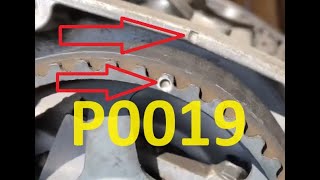
How to confirm: A professional can use a scan tool to command the solenoid on and off to check for a response, as suggested by TSBs SSM 50067 and 47170. A DIY method is to swap the Bank 2 exhaust solenoid with the Bank 2 intake solenoid. If the code changes to P0018 (Bank 2 Intake), the solenoid is confirmed bad. 🎬 Watch: A guide to diagnosing and fixing the P0019 code.
Typical fix: Replace the Bank 2 (radiator side) exhaust VCT solenoid. It is recommended to change the engine oil at the same time.
Est. part cost: $40-$120 - Stretched Timing Chain or Worn Timing Components 🟡 Medium Probability → Shop Engine Timing Chain The 3.0L EcoBoost and 3.7L Cyclone engines can experience timing chain stretch, especially at higher mileage or with poor maintenance history. This physically alters the cam/crank correlation. On the 3.7L, this is often accelerated by a failing internal water pump contaminating the oil.
How to confirm: A distinct rattling noise on a cold startup is a classic symptom. A mechanic can use a scan tool to monitor camshaft deviation data (e.g., VCT_EXH_ERR_B2 PID) to confirm excessive slack before disassembly. Visual inspection may show the timing chain tensioner is extended significantly.
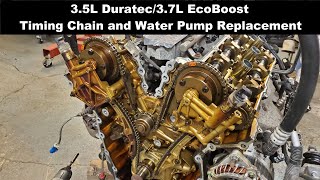
Typical fix: This is a major repair that involves replacing the timing chain(s), tensioners, guides, and sometimes the cam phasers. On the 3.7L engine, the internal water pump should always be replaced at the same time. 🎬 See this walkthrough for replacing the timing chain and water pump.
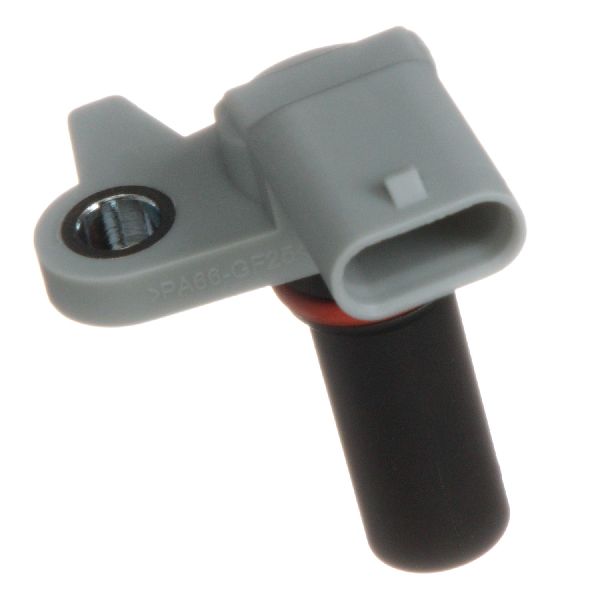
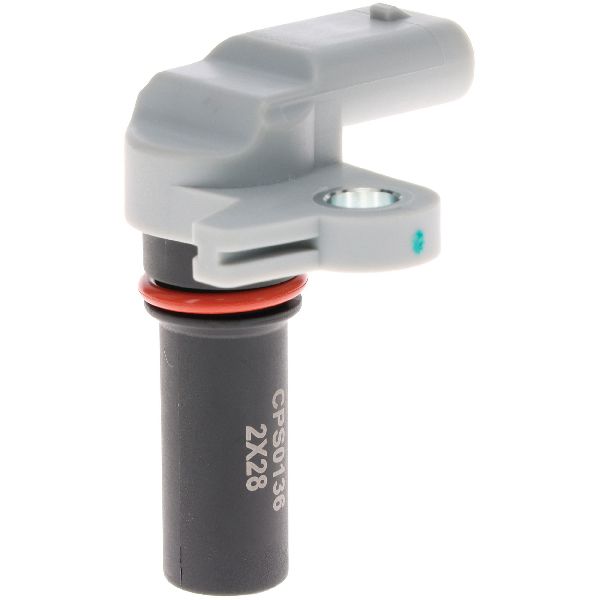
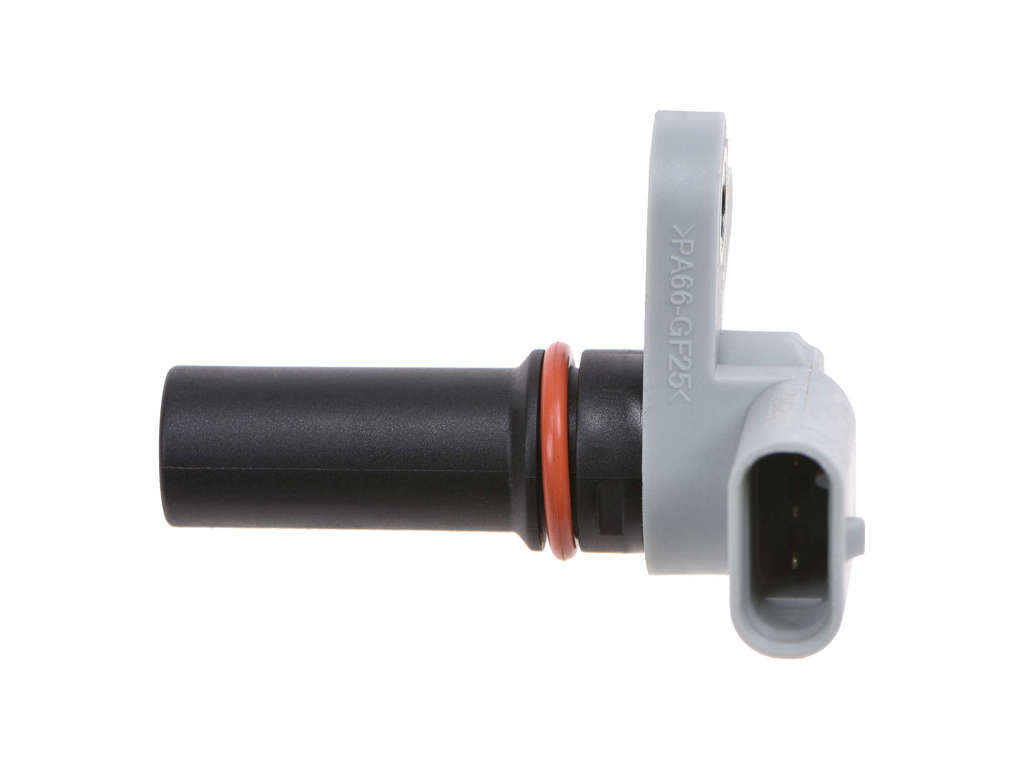
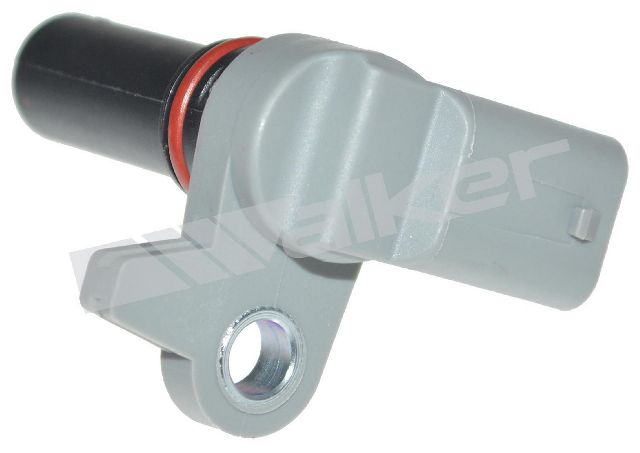
Est. part cost: $400-$800 - Faulty Camshaft Position Sensor (CMP) ⚪ Low Probability → Shop Engine Camshaft Position Sensor
How to confirm: Swap the Bank 2 exhaust camshaft position sensor with another known-good sensor (e.g., from Bank 1). If the code follows the sensor (e.g., changes to P0017), the sensor is faulty. A multimeter can also be used to test the sensor's resistance against manufacturer specifications.
Typical fix: Replace the Bank 2, Sensor 'B' (exhaust) camshaft position sensor.
Est. part cost: $25-$65
Rare But Worth Checking
- Failing Internal Water Pump (3.7L V6): → Shop Engine Water Pump This is a critical failure specific to the 3.7L Cyclone engine. The pump is located inside the timing cover and is driven by the timing chain. When its seal fails, it leaks coolant directly into the oil pan, destroying the oil's lubricating properties and causing rapid wear on all timing components, which can trigger P0019. Check the oil for a milky, frothy appearance. This failure mode is widely discussed in forums for platform-mate vehicles like the Ford Edge and Explorer.
- Failed Camshaft Phaser: → Shop Engine Camshaft The phaser is the mechanical gear at the end of the camshaft that is controlled by the VCT solenoid. It can fail mechanically, getting stuck in one position or breaking, which will cause a correlation code. On EcoBoost engines, phaser rattle on startup is a known issue that Ford has addressed with service actions like 21B10.
- Damaged Wiring or Connectors: A less common cause is damage to the wiring harness or connector for either the VCT solenoid or the camshaft position sensor. A forum member with a similar vehicle reported pinching the sensor pigtail during a valve cover re-installation, which caused a persistent P0019. Corrosion or broken pins can also lead to a loss of signal.
Diagnosis Steps
- Check the engine oil level and condition. If it is low, dirty, or appears milky, change the oil and filter before proceeding. This is the most critical and cheapest first step.
- Scan for any other trouble codes. The presence of codes for other camshafts or banks can help narrow down the diagnosis.
- Using a bidirectional scan tool, follow the procedure in TSB SSM 50067 by commanding the Bank 2 exhaust VCT solenoid to cycle on and off (typically 10 times) while the engine is running. A healthy solenoid will cause a noticeable change in engine idle or may even cause it to stall. This may also clear debris.
- If the solenoid test is inconclusive, inspect the wiring and connector for the Bank 2 exhaust VCT solenoid and camshaft position sensor for any damage, corrosion, or loose connections.
- As a definitive test for the VCT solenoid, swap the Bank 2 exhaust solenoid with the Bank 2 intake solenoid. Clear the codes and drive the vehicle. If the code changes to P0018, the solenoid you moved is faulty and must be replaced.
- If the solenoid is confirmed to be working, test the camshaft position sensor by swapping it with a known-good sensor from another location. If the code follows the sensor, replace the sensor.
- If all electrical and hydraulic components test good, the issue is likely mechanical. A professional should inspect the timing chain, guides, and phasers for wear, damage, or misalignment. This is a labor-intensive step.
Parts You'll Likely Need
- Variable Camshaft Timing (VCT) Solenoid (Bank 2 Exhaust)
(OEM #AT4Z-6M280-C)— This is the most common point of failure for P0019 on this vehicle, as confirmed by multiple Ford/Lincoln TSBs. It gets stuck due to oil debris.
Trusted brands: Motorcraft, Dorman, Standard Motor Products (SMP)
OEM price range: $70-$120
Aftermarket price range: $40-$80 - Engine Oil and Filter
(OEM #FL-500-S)— Low or dirty oil is the number one cause of VCT system faults. An oil change is a critical first step and a required part of a VCT solenoid or timing component replacement.
Trusted brands: Motorcraft
OEM price range: $50-$100
Aftermarket price range: $40-$80 - Camshaft Position Sensor
(OEM #DY-1154 (Varies by engine, verify with VIN))— While less common, a failing sensor can send incorrect data to the PCM, triggering a correlation code. It should be tested after the VCT solenoid is ruled out.
Related Codes That Often Appear With This One
- P0018 — This is the correlation code for the intake camshaft on the same bank (Bank 2). If seen together, it points to a problem affecting the entire bank, like a secondary timing chain issue, a failed cam phaser, or an oil supply problem to that cylinder head.
- P0017 — This is the same exhaust cam correlation error, but for Bank 1. Seeing both P0017 and P0019 strongly suggests a systemic issue like a stretched primary timing chain or severe oil pressure/quality problems affecting both banks.
- P0025 — This code indicates the Bank 2 exhaust camshaft is 'over-retarded'. It is often caused by the exact same VCT solenoid or phaser issue that triggers P0019 and is listed in the same TSBs.
- P0300, P0304, P0305, P0306 — These are misfire codes for the cylinders on Bank 2 (cylinders 4, 5, and 6). Incorrect valve timing on this bank can disrupt combustion and cause misfires on the affected bank.
Technical Service Bulletins (TSBs) & Recalls
- SSM 50067: Supersedes previous versions. States that P0011, P0012, P0014, P0015, P0016, P0017, P0018, P0019, P0021, P0022, P0024 and/or P0025 may be caused by small debris causing the VCT solenoid to stick. Recommends using scan tool pinpoint test HK12 to cycle the solenoid 10 times to clear debris before replacement.
- SSM 47170: An earlier TSB with the same guidance as SSM 50067, pointing to oil debris as the cause for a sticking VCT solenoid and a wide range of timing codes including P0019.
- SSM 49821: Another related TSB that acknowledges VCT solenoids can stick due to oil debris on these engine families.
Platform-Specific Known Issues
- On the 3.7L V6, a failing internal water pump can cause coolant to mix with the engine oil, leading to rapid timing component wear and triggering correlation codes like P0019. This is a severe issue requiring immediate and extensive repairs.
- Multiple Technical Service Bulletins (SSM 47170, SSM 50067, SSM 49821) have been issued by Ford/Lincoln for a wide range of vehicles, including the Continental, noting that various timing codes (including P0019) can be caused by small debris in the oil causing the VCT solenoids to stick.
Mechanic-Grade Diagnostic Values
- VCT Solenoid Internal Resistance — expected: 6.9 to 7.9 Ohms at 68°F (20°C). Some sources state a broader acceptable range of 6 to 12 Ohms.. Failure: A reading of 0 Ohms (short circuit), OL/infinite resistance (open circuit), or a value outside the specified range indicates a faulty solenoid coil.
- VCT Solenoid Connector Voltage (Key On, Engine Off) — expected: Approximately 12.6V (battery voltage) on one of the two pins.. Failure: No voltage suggests a break in the power supply wire from the PCM power relay or a blown fuse.
- Scan Tool VCT Advance Error PID (e.g., VCT_EXH_ERR_B2) — expected: Should hover around 0° with a tolerance of +/- 5° when the engine is warm and in closed-loop operation.. Failure: A consistent error value greater than +/- 5 degrees, especially 10° or more, indicates the camshaft phaser is not reaching its commanded position.
Scan Tool Commands That Help
- Ford IDS / Professional Bidirectional Scanner: VCT Solenoid On/Off Test (or similar name) — This is a primary diagnostic step recommended in Ford TSBs (like SSM 50067) to check if the solenoid is mechanically stuck. Activating the solenoid while the engine is idling should cause a noticeable change in idle quality or stall the engine. It can also sometimes dislodge debris, fixing the problem without parts replacement.
- Ford IDS / Professional Bidirectional Scanner: Monitor VCT PIDs (VCT_EXH_CMD_B2, VCT_EXH_ACT_B2, VCT_EXH_ERR_B2) — Used to observe the commanded versus actual camshaft position in real-time. A large, persistent difference between commanded and actual values (the 'error' PID) confirms a correlation problem before disassembling parts.
Wiring & Ground Locations
- Bank 2 VCT Solenoid and CMP Sensor — Bank 2 is the cylinder bank closer to the radiator. The VCT solenoids and Camshaft Position (CMP) sensors for this bank are located on the front-facing side of the cylinder head.. This is the physical location of the primary components related to code P0019. Damage to the wiring or connectors in this area from heat or oil is a possible cause.
- Grounds G104 / G106 — Located on the right side of the engine compartment, often near the strut tower or inner fender.. These are critical chassis/engine grounds for various electronic modules. A poor connection here can introduce electrical noise or unstable voltage to the sensor circuits, potentially causing false correlation codes.
OEM Part Supersession History
AT4Z-6M280-A→N/A— Part for Intake Camshaft
Heads up: This part is for the INTAKE camshaft on the 3.7L/3.0L V6. It is not compatible with the exhaust camshaft, which requires part number AT4Z-6M280-C.AT4Z-6M280-C→N/A— Part for Exhaust Camshaft
Heads up: This is the correct part for the EXHAUST camshaft on the 3.7L/3.0L V6 to address code P0019. It is not interchangeable with the intake solenoid.
Model Year Variations Within This Range
- 2017-2020 (Engine Specific): The location of the VCT solenoids varies by engine. On the 3.7L Cyclone V6, the solenoids are located UNDER the valve covers, requiring removal of the cover for replacement. On the 3.0L EcoBoost V6, the solenoids are on TOP of the valve covers and are accessible after removing the engine cover, making replacement significantly easier and less labor-intensive.
Diagnostic Flowchart
Real Owner Stories
Aggregated from forums and TSBs cited above. Mileages and costs reflect what owners reported in those sources.
2015-2019 Lincoln MKT
Symptoms: Persistent P0019 code immediately following a valve cover re-installation.
What fixed it: Found and repaired a pinched camshaft position sensor pigtail wiring harness.
Source hint: Go-Parts.com Forum - 'P0019 on 2015-2019 Lincoln MKT'
Related OBD-II Codes
Frequently Asked Questions
Does TSB SSM 50067 apply to my 2017-2020 Lincoln Continental for code P0019?
Why does the oil in my 3.7L Continental look milky, and is it related to the P0019 code?
How can I test if the VCT solenoid is causing the P0019 code on my 3.0L or 3.7L engine?
I hear a rattling noise on cold startups along with the P0019 code. What does this mean?
Can a damaged wire cause a P0019 on my Lincoln?
Helpful Videos
We Have This Part in Stock


The information in this article is provided for general reference and educational purposes only. Vehicle specifications, procedures, and part compatibility can vary by production date, trim level, and region. Always consult your vehicle's factory service manual and verify part numbers before purchasing or performing repairs. Safety-critical components such as airbags, seat belts, and braking systems should be installed by a qualified professional.
- Lincoln Continental:
- 🧭 Diagnostic Flowchart
- 🎬 Helpful Videos
- 🛍️ Shop This Part
- What's Unique About the 2017-2020 Lincoln Continental
- Symptoms You May Notice
- Most Likely Causes
- Rare But Worth Checking
- Diagnosis Steps
- Parts You'll Likely Need
- Related Codes That Often Appear With This One
- Technical Service Bulletins (TSBs) & Recalls
- Platform-Specific Known Issues
- Mechanic-Grade Diagnostic Values
- Scan Tool Commands That Help
- Wiring & Ground Locations
- OEM Part Supersession History
- Model Year Variations Within This Range
- Real Owner Stories
- 2015-2019 Lincoln MKT
- Related OBD-II Codes
- Frequently Asked Questions
- 🎟️ Get 5% Off