

P0021 on 2008-2022 Toyota Sequoia 5.7L V8: Causes and Fixes for Over-Advanced Cam Timing
On a 5.7L Sequoia, P0021 is most often caused by low/dirty engine oil, a failing Bank 2 (driver's side) intake VVT solenoid (OCV), or a collapsed oil filter from an improper oil change. Always check the oil first. Replacing the OCV is the most common repair, costing about $100-$180 for an OEM part and is a simple DIY job. A collapsed filter, often due to a missing support tube after an oil change, is also a very frequent cause.
- Before buying any parts for a P0021 code, check your engine oil level and condition. An oil and filter change is the cheapest and most important first step.
- The most likely failed part is the Bank 2 (driver's side) intake Oil Control Valve (OCV). A definitive DIY test is to swap it with the passenger side intake OCV and see if the code changes to P0011.
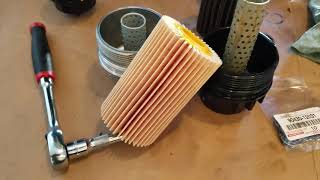
- Be extremely careful during oil changes. The 5.7L V8 uses a cartridge filter with a reusable center support tube. If this tube is missing, the filter will collapse and cause this code.
- The correct OEM part number for the VVT Solenoid (OCV) is 15330-38010. All four solenoids on the engine are identical.
What's Unique About the 2008-2022 Toyota Sequoia
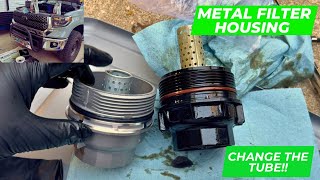
The 3UR-FE 5.7L V8 is a very reliable engine, but its VVT-i system is extremely sensitive to oil pressure and cleanliness. A unique and widely-documented problem on this platform is the use of a cartridge-style oil filter. If the small, perforated metal support tube inside the filter housing is accidentally discarded during an oil change, the new filter can collapse under pressure. This collapse restricts oil flow and is a very common cause of VVT-related codes like P0021, often immediately after an oil service. Some owners upgrade the original plastic filter housing to a more durable aluminum version (Part No. 15620-31060 or 15620-0S010 🎬 Watch: How to upgrade to the durable aluminum filter housing.) to prevent cracking, but the center tube must still be transferred.
Symptoms You May Notice
- Check Engine Light is on
- Rough or unstable idle
- Engine may hesitate or stumble during acceleration
- Engine stalling, especially when coming to a stop
- Reduced fuel economy
- Difficulty starting the engine
- Rattling or knocking noises from the engine in severe cases
- Flashing 'TRAC OFF' light may accompany the Check Engine Light
- Replacing the camshaft position sensor. While a sensor can fail, it is much more likely to set a specific sensor circuit code (e.g., P0345-P0349). P0021 is a mechanical timing correlation code, which usually points to an oil flow or mechanical component issue, not the sensor reading the timing.
Most Likely Causes
- Low or Dirty Engine Oil 🔴 High Probability The VVT-i system is operated by hydraulic pressure, and low levels or oil that is thick with sludge can clog the small passages in the Oil Control Valves (OCVs) and cam phasers.
How to confirm: Check the engine oil dipstick. The oil level should be between the two marks. Inspect the oil's color and consistency; if it is black, thick, or gritty, it needs to be changed.
Typical fix: Perform a complete engine oil and filter change. Use the recommended 0W-20 synthetic oil and a high-quality OEM or equivalent filter. If sludge is suspected, an engine flush may be considered, but should be done with caution on high-mileage engines.
Est. part cost: $50-$100 - Collapsed or Incorrectly Installed Oil Filter 🔴 High Probability → Shop Engine Oil Filter Adapter The 3UR-FE engine uses a cartridge oil filter with a separate perforated metal center support tube. If this tube is not reinstalled during an oil change, the filter element can collapse, severely restricting oil flow and starving the VVT system. This is a very common mistake made by quick-lube shops.
How to confirm: This issue often appears immediately after an oil change. Remove the oil filter housing cap and inspect the filter element for any signs of crushing or deformation. Confirm the metal support tube is present inside the housing.
Typical fix: Replace the collapsed filter and ensure the center support tube is correctly installed. It is highly recommended to use an OEM or high-quality aftermarket oil filter (e.g., Denso, WIX). Consider upgrading the plastic housing to the OEM aluminum version (15620-0S010) if the original is damaged or for durability.
Est. part cost: $10-$25 (filter), $30-$70 (housing) - Failed Bank 2 Intake Oil Control Valve (OCV) / VVT Solenoid 🟡 Medium Probability → Shop Engine Variable Valve Timing (VVT) Solenoid These solenoids cycle thousands of times and can become clogged with debris from dirty oil or fail electrically over time, causing them to stick in one position.
How to confirm: The easiest test is to swap the Bank 2 (driver's side) intake OCV with the Bank 1 (passenger's side) intake OCV. Clear the codes and drive the vehicle. If the trouble code changes to P0011 (Bank 1), the OCV is faulty. You can also test the solenoid's resistance with a multimeter; it should be between 6.9 and 7.9 Ohms at 68°F (20°C). 🎬 See this walkthrough for testing and replacing the VVT solenoids.
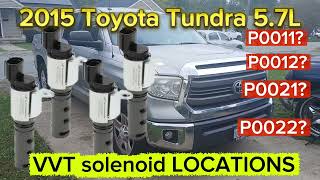
Typical fix: Replace the faulty Oil Control Valve. All four OCVs on the 3UR-FE engine share the same part number 🎬 Watch: Locate all four VVT solenoid positions on the 5.7L engine., making them interchangeable. It is also wise to inspect and clean the small mesh OCV filter screen located in the cylinder head below the valve.
Est. part cost: $100-$180
Rare But Worth Checking
- Failed Camshaft Timing Gear (Phaser): → Shop Engine Camshaft If the oil is clean and the OCVs are confirmed to be working, the mechanical phaser itself can fail or get stuck. This is a much more involved and expensive repair that requires removing the valve cover and timing components.
- Stretched Timing Chain or Failed Tensioner: → Shop Engine Timing Chain This is very rare on the 3UR-FE engine unless it has extremely high mileage or has suffered from severe oil starvation. It would typically be accompanied by rattling noises on cold start and possibly other timing correlation codes.
- Clogged Oil Control Valve (OCV) Filters: → Shop Engine Variable Valve Timing (VVT) Solenoid Each cylinder head has small, thimble-shaped filter screens for the VVT system. These can become clogged with sludge or debris, restricting oil flow to the OCVs and phasers even if the OCV itself is functional. They are located under a hex bolt near the OCVs and can be difficult to access.
- Swapped Camshaft Sensor Connectors: → Shop Engine Camshaft After major engine work like a head gasket replacement, it is possible to accidentally swap the electrical connectors for the intake and exhaust camshaft position sensors on Bank 2. They are located near each other and can be mixed up, which will cause a host of timing codes for that bank.
Diagnosis Steps
- Check Engine Oil: Verify the oil level is correct and the oil is clean. If low or dirty, perform an oil and filter change before proceeding.
- Inspect Oil Filter: Especially if the code appeared after an oil change, remove the oil filter cartridge and housing. Check for a collapsed filter element and confirm the perforated metal center support tube is installed correctly. This is a critical and common failure point.
- Scan for Other Codes: Check for any other pending or active codes that could point to a related issue.
- Swap the Oil Control Valves (OCVs): Locate the intake OCV on Bank 2 (driver's side, top of the cylinder head). Swap it with the identical intake OCV from Bank 1 (passenger's side).
- Clear Codes and Test Drive: Clear the DTCs with a scan tool and drive the vehicle. If the code returns as P0011, the OCV you moved is faulty and needs to be replaced. If P0021 returns, the problem is not the OCV.
- Inspect OCV Filters: If the OCV is not the issue, inspect the small, thimble-shaped filter screens in the cylinder heads. They can become clogged and restrict oil flow. They are located under a hex bolt near the OCVs and may require removing other components for access.
- Advanced Mechanical Diagnosis: If all the above steps fail to resolve the issue, the problem may be a failing camshaft phaser or, in very rare cases, a timing chain issue. This level of diagnosis should be performed by a professional.
Parts You'll Likely Need
- Engine Camshaft Timing Oil Control Valve (VVT Solenoid)
(OEM #15330-38010)— This solenoid is the most common part to fail. It gets clogged with debris or fails electrically, causing it to stick and create a timing deviation. All four solenoids on the 3UR-FE are the same part number.
Trusted brands: Genuine Toyota, Denso, Aisin
OEM price range: $100-$180
Aftermarket price range: $40-$90 - Engine Oil Filter and Oil
(OEM #04152-YZZA4 (Filter Kit))— Dirty oil is a primary cause of this code. More importantly, an incorrect or collapsed aftermarket filter is a known issue on this engine that directly causes P0021.
Trusted brands: Toyota OEM Filter, WIX, Mobil 1 0W-20 Synthetic Oil
OEM price range: $10-$15 (filter only)
Aftermarket price range: $8-$12 (filter only) - Oil Control Valve Filter / Screen
(OEM #15678-31010)— This small screen filters oil going to the VVT system and can become clogged with sludge, restricting oil flow. It's inexpensive and wise to replace when servicing an OCV.
Trusted brands: Genuine Toyota
OEM price range: $5-$15 - Oil Filter Housing Cap Assembly (Aluminum Upgrade)
Related Codes That Often Appear With This One
- P0011 — This is the equivalent code for Bank 1 (passenger's side). It may appear if you swap a faulty OCV from Bank 2 to Bank 1 for diagnostic purposes.
- P0022 — This is for an over-retarded timing condition on Bank 2. It can appear with P0021 if there is a severe oil flow problem, like a collapsed filter, causing erratic VVT system operation.
- P0012, P0014, P0015, P0024, P0025 — If a full suite of timing codes for both banks appears simultaneously, it often points to a systemic oil pressure issue, such as a collapsed oil filter, extremely low/dirty oil, or a failing oil pump.
Platform-Specific Known Issues
- A very common cause for P0021 on the 5.7L V8 is an improperly performed oil change. The cartridge oil filter housing contains a perforated metal tube that supports the filter element. If this tube is accidentally discarded, the filter will collapse, starving the VVT system of oil and triggering timing codes.
- A Reddit user with an '08 Sequoia reported getting P0012 and P0022 codes after a shop oil change. Upon inspection, they found a crushed oil filter because the center tube was missing. Replacing the filter and upgrading to an aluminum housing fixed the issue permanently.
Mechanic-Grade Diagnostic Values
- VVT Solenoid (Oil Control Valve) Resistance — expected: 6.9 to 7.9 Ohms at 68°F (20°C). Failure: A reading outside this range, or an open/short circuit, indicates a faulty solenoid.
- Techstream Live Data: VVT Target vs. Actual Angle — expected: The 'VVT Angle B2' should closely track the 'VVT Target Angle B2' during engine operation, especially when RPM changes.. Failure: A significant and persistent deviation (more than 5-10 degrees) between the target and actual angle, or a very slow response from the actual angle when the target changes, points to a problem in the Bank 2 VVT system.
- VVT Solenoid (Oil Control Valve) Activation — expected: Applying 12V directly to the solenoid's two pins should cause the internal plunger to click or move audibly.. Failure: No click or movement indicates the solenoid is mechanically stuck or electrically failed.
Hidden / Shadow Codes Worth Checking
- Mode $06 Data: While not a shadow code, Mode $06 on a generic OBD-II scanner provides the raw results from the ECM's last self-tests. For P0021, a technician can look at the test results for Monitor ID $21, Test ID $12 (for Bank 2). This shows the measured camshaft angle deviation and the pass/fail thresholds, which can reveal if the system is marginal and close to failing even if the Check Engine Light isn't on yet. (see via A professional scan tool or an advanced consumer OBD-II scanner with Mode $06 capability.)
Scan Tool Commands That Help
- Toyota Techstream: Active Test: 'Control the VVT System (Bank 2)' or 'Control the Camshaft Timing' — This bidirectional command allows a technician to manually command the Bank 2 intake cam to advance or retard while the engine is idling. By watching the 'VVT Angle B2' live data parameter, the technician can confirm if the phaser is physically capable of moving and if the OCV is responding to commands. If the angle doesn't change when commanded, it points to a stuck phaser, a bad OCV, or an oil flow problem.
- Toyota Techstream: Utility: 'Reset Memory' — After replacing a VVT component like an OCV or cam phaser, it is good practice to use the 'Reset Memory' function. This clears the learned values for the VVT system, forcing the ECM to relearn the operational characteristics of the new parts from a baseline state.
Wiring & Ground Locations
- Bank 2 Intake OCV Connector — On the driver's side cylinder head, at the top front. It is the solenoid closer to the center of the engine (intake side).. This is the primary electrical connection for the component that controls cam timing on Bank 2. Damage to the connector or wiring harness here from heat or previous repairs can cause an open or short, leading to P0021 or related circuit codes.
- ECM Connector A24, D74 — The Engine Control Module (ECM) is typically located in the engine bay. The specific pins for the Bank 2 Intake OCV are on these connectors.. For advanced electrical diagnosis, a technician would test for continuity and voltage at these pins to confirm the signal is being sent from the ECM and that the wiring harness is intact between the ECM and the OCV.
- Engine Block Grounds — Multiple ground straps and points exist on the engine block and cylinder heads, connecting them to the chassis and battery negative terminal.. While not a common cause, a poor engine ground can create electrical noise and voltage issues that can affect the operation of various sensors and solenoids, including the VVT system.
Real Owner Repair Stories
- Tundras.com Forum User (2013 Toyota Tundra 5.7L V8) — Rattling noise, sudden drop in oil pressure, multiple VVT codes including P0021, P0022, P0023, and P0024.
❌ Tried (didn't work) Initial diagnosis pointed towards major engine failure.
✅ What actually fixed it The owner had recently used a K&N brand cartridge oil filter which collapsed. Replacing the collapsed filter with a Wix brand filter and performing an oil change resolved all codes and symptoms. - Tundras.com Forum User (2014 Toyota Tundra 5.7L V8) — Engine running rough, multiple Bank 2 codes (P0018, P0019, P0021, P0022, P0024) and misfire codes appeared after a head gasket replacement.
❌ Tried (didn't work) Checking timing, replacing parts on Bank 2.
✅ What actually fixed it The electrical connectors for the intake and exhaust camshaft position sensors on Bank 2 had been accidentally swapped during reassembly. Swapping the connectors back to their correct positions fixed the issue instantly.
OEM Part Supersession History
15330-38010→15330-0S010— Standard part number revision and consolidation by Toyota.
Heads up: The two part numbers are generally considered interchangeable and functionally identical for this application.Plastic Oil Filter Housing→15620-0S010 or 15620-31060 (Aluminum)— Owners upgrade from the stock plastic housing to a more durable aluminum version to prevent cracking and stripping.
Heads up: Extreme care must be taken. The aluminum housing MUST be used with the correct length perforated center support tube for the Sequoia's filter. Often, the tube from the original plastic housing must be swapped into the new aluminum one. Using the wrong tube can lead to a collapsed filter and a P0021 code.
Model Year Variations Within This Range
- 2008-2022: The 3UR-FE (gasoline) and 3UR-FBE (Flex Fuel) engines are mechanically identical concerning the VVT system. The diagnosis and repair for P0021 are the same for both engine variants.
Diagnostic Flowchart
Other Known Issues on This Vehicle
Issues unrelated to this code that are worth knowing about as an owner of this generation:
- Cam Tower Oil Leak 🟠 Medium — Common, especially on earlier models (2008-2014) but can occur at any mileage. Often a slow seep rather than a major leak. (Ref: No official recall, but may be covered under powertrain warranty if caught early. Repair involves resealing the cam towers with FIPG (Form-in-Place Gasket), a labor-intensive job.)
- Secondary Air Injection Pump (AIP) Failure 🔴 High — Very common, particularly on 2008-2012 models and in colder/wetter climates. Failure often occurs between 80k-150k miles. (Ref: Toyota issued warranty extensions for this issue on some Tundra/Sequoia models. Failure triggers codes like P2440, P2442, P2445 and can force the vehicle into 'limp mode'. The root cause is often moisture ingestion into the pumps located in the passenger fender well.)
- Water Pump Leak/Failure 🟠 Medium — A known failure point, typically occurring between 60,000 and 120,000 miles. It usually starts as a slow leak from the weep hole.
- Cracked Exhaust Manifolds 🟡 Low — More common on the earlier 2UZ-FE, but can still occur on the 3UR-FE, causing an exhaust ticking noise that is most noticeable on a cold start.
- Power Liftgate Malfunction 🟡 Low — The rear hatch handle and power open/close mechanism are known to fail.
Used vs. New Parts: Buying Guide for This Vehicle
When a used part is the smart pick: For this repair, using a used part is generally not recommended for the electronic or wear-and-tear items. The cost savings on a used VVT solenoid (OCV) or sensors are minimal compared to the risk of installing a part with an unknown history that may fail soon. However, a used OEM aluminum oil filter housing from a junkyard can be a good value if inspected for cracks.
Donor-vehicle mileage cap: roughly under 80000 miles for the part to have meaningful remaining life.
What to inspect on the donor part:
- For a used VVT solenoid, check that the screen is intact and there is no visible sludge or debris.
- For a used oil filter housing, ensure there are no hairline cracks, especially around the mounting ears and drain plug.
- Verify the donor vehicle was not in a severe front-end collision, which could have damaged engine components.
OEM-only on this vehicle (don't cheap out):
- Oil Control Valve (VVT Solenoid): While aftermarket options exist, OEM (Toyota/Denso/Aisin) solenoids have the highest reliability and are strongly recommended to avoid repeat failures.
- Oil Filter: Always use an OEM or high-quality, reputable aftermarket filter (like WIX or Denso). Cheap, no-name filters are the primary cause of the filter collapse issue on this engine.
- OCV Filter Screens: These are inexpensive and should always be bought new from the dealer.
Aftermarket brands forum-validated for this vehicle:
- Denso (Often the OEM supplier)
- Aisin (OEM supplier)
- WIX (For oil filters)
Brands owners have reported issues with on this vehicle:
- Unbranded or 'white box' VVT solenoids from online marketplaces.
- Low-cost, unrated cartridge oil filters that are not specifically listed as compatible with the 3UR-FE engine.
Real Owner Stories
Aggregated from forums and TSBs cited above. Mileages and costs reflect what owners reported in those sources.
2008 Toyota Sequoia 5.7L V8
Symptoms: Check Engine Light with P0012 and P0022 codes appearing immediately after a shop performed an oil change.
What fixed it: Found a crushed oil filter because the center support tube was missing; replaced the filter and upgraded to an aluminum housing.
Source hint: r/toyotasequoia - Do your own oil changes! P0012 & P0022 Codes
2007-2021 Toyota Tundra 5.7L V8
Symptoms: VVT-i timing codes and a collapsed oil filter cartridge.
What fixed it: Identified that the perforated support tube was not transferred when upgrading to an aluminum filter housing; reinstalled the tube and a new filter.
Source hint: Tundras.com - Collapsed oil filter cartridge
2007-2021 Toyota Tundra 5.7L V8
Symptoms: Full bank of timing codes including P0021, P0022, P0018, and P0019 following a head gasket replacement.
What fixed it: Discovered that the intake and exhaust cam sensor connectors on Bank 2 had been swapped during reassembly.
Source hint: Tundras.com - Help Please! Problems after Head Gasket Replacement
Related OBD-II Codes
Frequently Asked Questions
I just had my oil changed at a quick-lube shop and now my Sequoia has a P0021 code. What could they have done wrong?
Can I swap parts to test if my Bank 2 Oil Control Valve is actually bad?
What specific oil should I use for my 5.7L V8 to prevent VVT-i issues?
Is there an upgrade for the plastic oil filter housing that often causes issues?
Are there any small filters I should check besides the main oil filter?
What is the correct electrical resistance for a 3UR-FE VVT solenoid?
Helpful Videos
We Have This Part in Stock


The information in this article is provided for general reference and educational purposes only. Vehicle specifications, procedures, and part compatibility can vary by production date, trim level, and region. Always consult your vehicle's factory service manual and verify part numbers before purchasing or performing repairs. Safety-critical components such as airbags, seat belts, and braking systems should be installed by a qualified professional.
- Toyota Sequoia:
- 🧭 Diagnostic Flowchart
- 🎬 Helpful Videos
- 🛍️ Shop This Part
- What's Unique About the 2008-2022 Toyota Sequoia
- Symptoms You May Notice
- Most Likely Causes
- Rare But Worth Checking
- Diagnosis Steps
- Parts You'll Likely Need
- Related Codes That Often Appear With This One
- Platform-Specific Known Issues
- Mechanic-Grade Diagnostic Values
- Hidden / Shadow Codes Worth Checking
- Scan Tool Commands That Help
- Wiring & Ground Locations
- Real Owner Repair Stories
- OEM Part Supersession History
- Model Year Variations Within This Range
- Other Known Issues on This Vehicle
- Used vs. New Parts: Buying Guide for This Vehicle
- Real Owner Stories
- 2008 Toyota Sequoia 5.7L V8
- 2007-2021 Toyota Tundra 5.7L V8
- 2007-2021 Toyota Tundra 5.7L V8
- Related OBD-II Codes
- Frequently Asked Questions
- 🎟️ Get 5% Off