

P0022 on 2009-2017 Chevrolet Traverse 3.6L: Over-Retarded Timing Causes and Fixes
On the 3.6L Traverse, P0022 is most often caused by low/dirty engine oil or a faulty Bank 2 intake camshaft actuator solenoid. An oil change with 5W-30 Dexos-spec oil is the first step. If that doesn't work, a new solenoid costs about $40-$90. However, this code can also be an early sign of a stretched timing chain, a major issue for which GM issued a special coverage program (#11340C) for many 2009 models.
- Always check your engine oil level and condition first. A simple oil change can sometimes fix P0022.
- The most likely faulty part is the Bank 2 intake camshaft actuator solenoid, which can be easily diagnosed by swapping it with the exhaust solenoid.
- Be aware that P0022 can be an early warning for stretched timing chains, a known and expensive issue on this specific engine.
- Do not replace the camshaft position sensor; it is rarely the cause of this code.
- If you hear a rattling noise, especially on startup, the timing chain is the probable cause, and you should seek professional service immediately.
What's Unique About the 2009-2017 Chevrolet Traverse
The GM 3.6L LLT V6 engine used in this generation of Traverse is well-documented for having issues with its timing chains stretching prematurely. This is a very common, and serious, underlying cause for timing-related codes like P0022. While the immediate cause might be a solenoid struggling with oil flow, the root problem is often the chains. GM's original oil life monitor recommendations were often too long, leading to oil breakdown that accelerated wear on the timing components. GM acknowledged this with Special Coverage Adjustment #11340C, which extended the warranty on timing chains for 10 years or 120,000 miles for many affected 2009 models.
Symptoms You May Notice
- Check Engine Light is on
- Rough or unstable idle
- Engine hesitates or stumbles on acceleration
- Reduced fuel economy
- Hard starting
- Engine stalling, especially when coming to a stop
- Rattling noise from the engine, particularly on cold starts, is a classic sign of a stretched timing chain
- Replacing the camshaft position sensor. P0022 is a mechanical timing correlation code, not an electrical sensor fault code. The sensor is usually working correctly by reporting the timing discrepancy. Do not replace the sensor unless it has failed a specific electrical test.
Most Likely Causes
- Low or Dirty Engine Oil 🔴 High Probability The Variable Valve Timing (VVT) system is highly dependent on oil pressure and cleanliness. Extended oil change intervals, which were encouraged by the original Oil Life Monitor, can lead to sludge that clogs the small passages in the actuator solenoids.
How to confirm: Check the engine oil level on the dipstick and inspect its condition. If it's low, dark, or sludgy, this is likely a contributing factor. An oil change is the cheapest first step.
Typical fix: Perform an engine oil and filter change using the manufacturer-specified oil, which is a full synthetic 5W-30 oil meeting the Dexos1 specification.
Est. part cost: $40-$80 - Faulty Bank 2 Intake Camshaft Position Actuator Solenoid 🔴 High Probability → Shop Engine Camshaft The screens on these solenoids can become clogged with debris from engine oil, causing them to stick or respond slowly. It's a very common failure point on the 3.6L V6.
How to confirm: The easiest test is to swap the Bank 2 intake solenoid (radiator side, top position) with the Bank 2 exhaust solenoid (radiator side, bottom position). Clear the codes and drive. If the code changes to P0025 (Exhaust 'B' Camshaft Position - Timing Over-Retarded), the solenoid is confirmed to be faulty.
Typical fix: Replace the Bank 2 intake camshaft position actuator solenoid. Many technicians recommend replacing all four solenoids at once as a preventative measure, especially if they are original.
Est. part cost: $40-$90 for one, $160-$350 for a set of four - Stretched Timing Chains 🟡 Medium Probability → Shop Engine Timing Chain The 3.6L LLT engine is notorious for premature timing chain wear, especially in the 2009-2012 model years. This changes the base timing between the crank and cams, which the VVT system cannot overcome. GM issued Special Coverage #11340C for many 2009 models to cover this repair.
How to confirm: This is a more involved diagnosis. The presence of other codes like P0008, P0017, P0018, or P0019 strongly indicates a timing chain issue. A mechanic can also measure the chain deflection or use a scan tool to check camshaft/crankshaft correlation data.
Typical fix: Replace all three timing chains, the tensioners, and guides. This is a major, labor-intensive repair. It is often recommended to replace the water pump at the same time since it is driven by the timing chain.
Est. part cost: $400-$700 for a full kit
Rare But Worth Checking
- Failed Camshaft Phaser: → Shop Engine Camshaft The phaser is the gear on the end of the camshaft. It can get stuck due to internal wear or debris, but this is less common than a solenoid failure. If a new solenoid doesn't fix the code, the phaser is the next suspect before the timing chains.
- Wiring or Connector Issue: The wiring harness or connector for the Bank 2 intake solenoid could be damaged, corroded, or have a loose connection, preventing the solenoid from operating correctly. Check for oil contamination in the connector itself.
Diagnosis Steps
- Check the engine oil level and condition. Top off or change the oil and filter if necessary. Use the correct 5W-30 Dexos1-spec oil.
- Clear the code with an OBD-II scanner and drive the vehicle to see if the code returns. Sometimes an oil change is all that's needed.
- If the code returns, inspect the electrical connector and wiring for the Bank 2 (radiator side) intake camshaft actuator solenoid for any damage or corrosion.
- Perform a solenoid swap test. Swap the Bank 2 intake solenoid (top) with the Bank 2 exhaust solenoid (bottom). They are identical parts.
- Clear the codes and drive again. If the code changes to P0025 ('B' Camshaft Position - Timing Over-Retarded), the solenoid is faulty and must be replaced.
- If the code P0022 returns after the swap, the issue is not the solenoid. The problem likely lies with the camshaft phaser or, more commonly, the timing chains.
- At this point, if other timing codes like P0008 or P0018 are present, a stretched timing chain is the most probable cause and professional diagnosis is recommended.
Parts You'll Likely Need
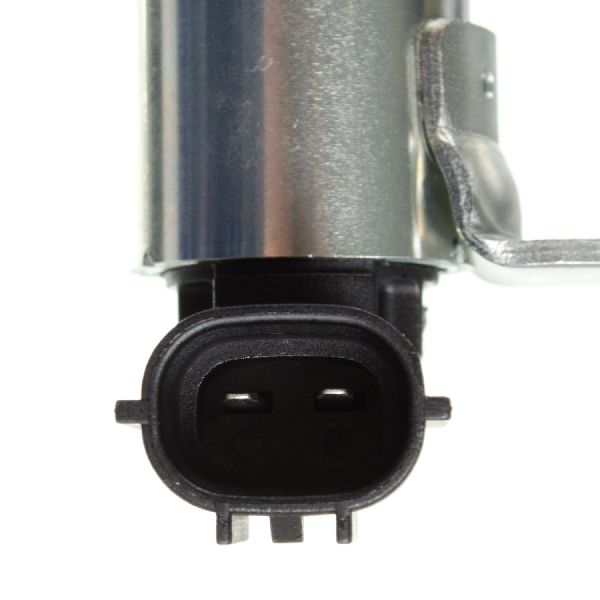
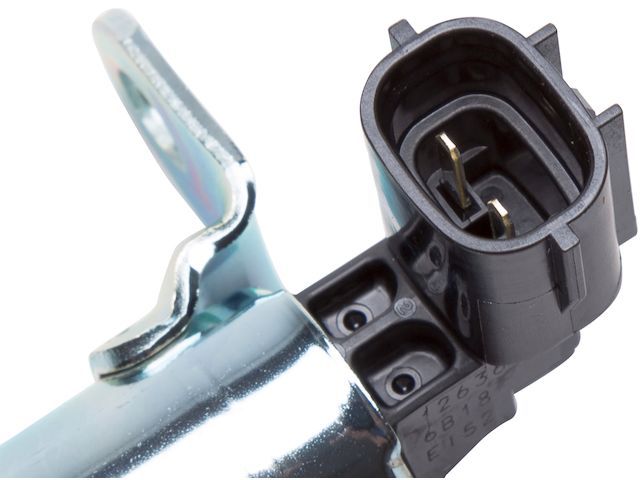
- Intake Camshaft Position Actuator Solenoid (VVT Solenoid)
(OEM #12655420 (Superseded by 12679099))— This is the most common part to fail, usually due to clogging from dirty oil. It's relatively inexpensive and easy to replace.
Trusted brands: ACDelco (GM Genuine), Delphi, Dorman
OEM price range: $50-$90
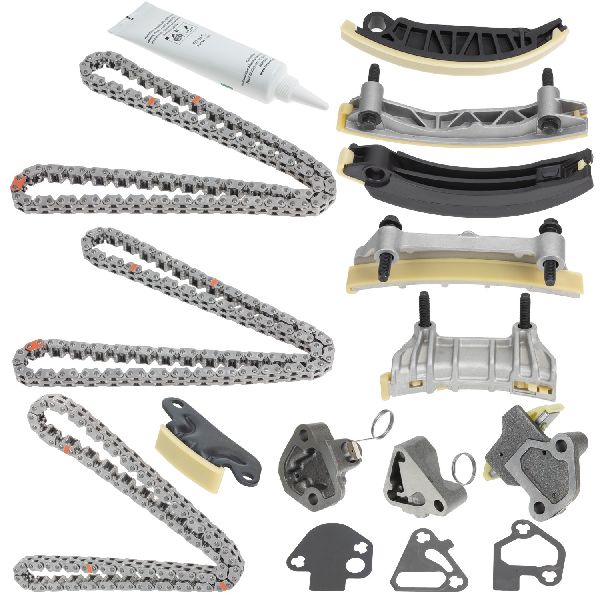
Aftermarket price range: $30-$60 - Engine Timing Chain Kit
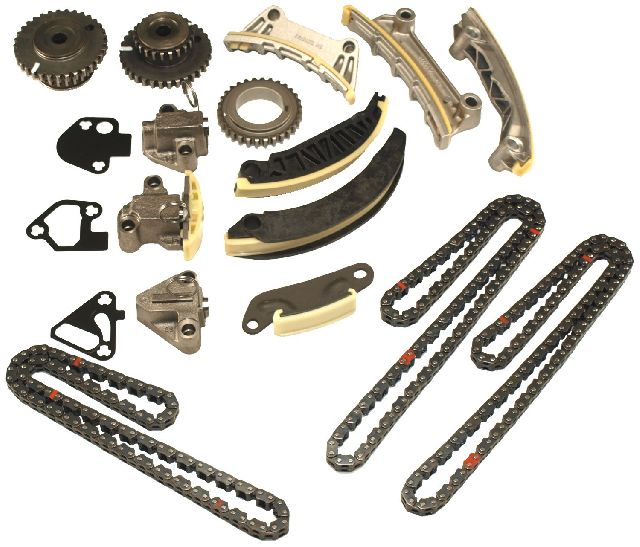
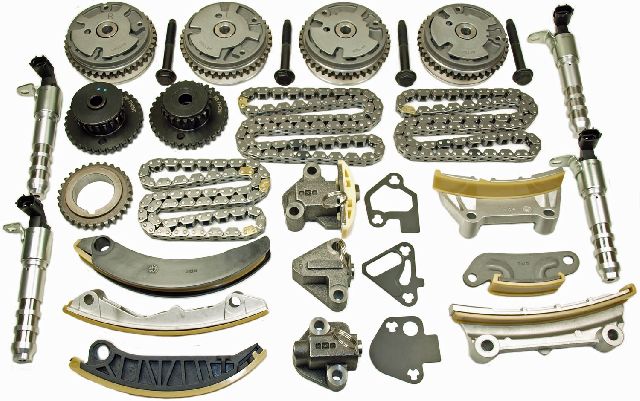
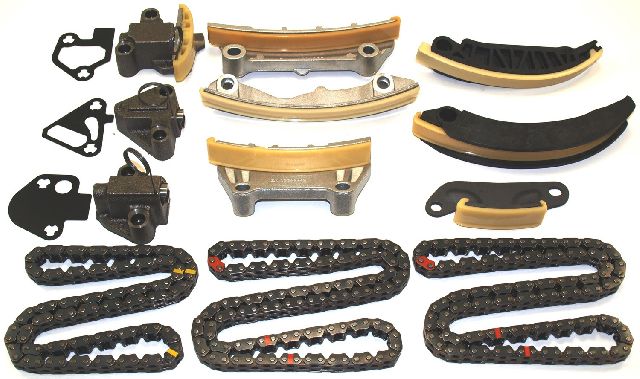
(OEM #12651450 (ACDelco kit part number))— A stretched timing chain is a very common and well-documented failure on the 3.6L LLT engine that causes this code. The repair requires a full kit including chains, guides, and tensioners.
Trusted brands: ACDelco, Cloyes
OEM price range: $400-$700
Aftermarket price range: $250-$500
Related Codes That Often Appear With This One
- P0011 — This is the over-advanced code for Bank 1. Seeing opposite codes on different banks can point to widespread oiling issues or erratic solenoid behavior.
- P0008 — This is a general 'Engine Positions System Performance Bank 1' code. When seen with P0022, it is a very strong indicator that the timing chains have stretched and the engine's base timing is off.
- P0018 — This code indicates a correlation issue between the crankshaft and the Bank 2 intake camshaft. It often appears alongside P0022 and points towards a base timing problem, like a stretched chain.
Technical Service Bulletins (TSBs) & Recalls
- 11340C: Special Coverage Adjustment for premature timing chain wear on 2009 Traverse models (among others). Extended coverage to 10 years/120,000 miles. Also included an ECM reprogram.
- 12-06-01-009G: This TSB provides information on diagnosing stretched timing chains and clarifies that for a simple stretch, only the chains, tensioners, and specific guides need replacement, not necessarily the sprockets or phasers.
- 10-06-01-008: While for a different issue (oil consumption), this TSB highlights issues with the PCV system that can contribute to oil degradation, which indirectly affects timing components.
Platform-Specific Known Issues
- Premature timing chain stretch is a significant known issue for the 2009-2017 Traverse with the 3.6L LLT engine. GM released updated timing chain kits to address the problem and issued Special Coverage #11340C for many 2009 models.
- Some early Technical Service Bulletins (TSBs) involved reprogramming the ECM for being too sensitive to minor timing variations or to change the oil life monitor calculation, though P0022 is more often a mechanical fault.
- The location of the timing chains requires extensive labor to access, often involving dropping the engine subframe.
Mechanic-Grade Diagnostic Values
- Camshaft Position Actuator Solenoid Coil Resistance — expected: 7 - 13 Ohms at 68°F (20°C). Failure: A reading near 0 Ohms (short), OL/infinite resistance (open circuit), or a value significantly outside the specified range. A failed solenoid may read in the mega-ohm (MΩ) range.
- Scan Tool: Desired vs. Actual Camshaft Position Angle — expected: Less than 2-3 degrees of variance at a steady, warm idle.. Failure: A consistent variance greater than 5 degrees for several seconds indicates the phaser is not reaching its commanded position.
- Solenoid Control Circuit Voltage (via backprobe) — expected: Using a scan tool to command the solenoid, the voltage should transition from greater than 2V (Command OFF) to less than 1V (Command ON).. Failure: Voltage does not change when commanded, or does not fall into the specified ranges, indicating a wiring issue or faulty ECM driver.
Scan Tool Commands That Help
- GDS2 / Tech2 (or equivalent professional scanner): Camshaft Position Actuator Solenoid Control / Output Control — This bidirectional command is used to manually energize and de-energize the solenoid. It confirms if the solenoid clicks (actuates) and if the control circuit from the ECM is working. It's a critical step after checking the oil to isolate the solenoid from a mechanical phaser or timing chain issue.
Wiring & Ground Locations
- G104 — On the rear of the driver's side (Bank 2) cylinder head.. This is a primary engine ground for Bank 2. A loose or corroded connection here can cause unstable voltage and erratic signals for sensors and actuators on Bank 2, including the VVT solenoid and camshaft position sensor, potentially triggering false codes.
- G106 / G107 — On 2009 models, G106 is at the left front top corner of the engine, and G107 is at the rear of the engine.. These are additional primary engine grounds. Verifying all engine-to-chassis grounds are clean and tight is a fundamental step in diagnosing any electrical fault, including intermittent timing codes.
- Bank 2 Intake VVT Solenoid Connector — On the top of the valve cover for the cylinder bank closer to the radiator, in the upper position.. This is the direct connection to the suspect part. Pin 1 is the ignition circuit (should have battery voltage with key on) and Pin 2 is the control circuit from the ECM (pulse-width modulated). Check for oil contamination within the connector, which can disrupt the signal.
OEM Part Supersession History
12655420→12679099— GM periodically updates parts to improve reliability or change suppliers. The new part is a direct replacement.
Heads up: The full supersession chain for the intake/exhaust solenoid is 12578517 -> 12628347 -> 12646783 -> 12655420 -> 12679099. All are interchangeable.Original Camshaft Phasers (pre-TSB 12-06-01-009F)→Updated Camshaft Phasers— Design change to improve durability.
Heads up: When replacing original camshaft phasers with the updated design, the camshaft thrust washers must also be replaced with a thinner version. Using the original, thicker thrust washers with the new phasers will result in zero camshaft endplay and cause severe engine damage.
Model Year Variations Within This Range
- 2009-2011 (LLT Engine): These earlier models are significantly more prone to premature timing chain stretch. A P0022 code on an LLT engine, especially if accompanied by a P0008 code or a startup rattle, has a very high probability of being a timing chain issue.
- 2012-2017 (LFX Engine): The LFX engine features redesigned cylinder heads and an improved 'silent' inverted-tooth timing chain design. While not immune, timing chain failure is less common. On these later models, a P0022 code is more likely to be an isolated solenoid failure or an oil pressure/quality issue.
Diagnostic Flowchart
Other Known Issues on This Vehicle
Issues unrelated to this code that are worth knowing about as an owner of this generation:
- Premature Timing Chain Stretch 🔴 High → Shop Engine Timing Chain — Extremely common, especially on 2009-2012 models. Can occur as early as 60,000 miles, often triggered by extended oil change intervals. (Ref: Special Coverage Adjustment #11340C; TSB 12-06-01-009)
- Cracked 3-5-R Transmission Wave Plate 🔴 High — Common on earlier models (approx. 2009-2012) with the 6T75 transmission. Failure leads to loss of 3rd, 5th, and Reverse gears. (Ref: Former special coverage was issued, but has since expired for most vehicles.)
- Power Steering Pump/Hose/Rack Failure 🟠 Medium — Widespread complaints of power steering fluid leaks, whining pumps, or loss of assist, particularly at low speeds. Most common on 2009-2012 models.
- Water Pump Failure 🟠 Medium — The water pump is known to leak coolant, often requiring replacement. The location inside the engine front cover makes it a labor-intensive job.
- High-Pressure Fuel Pump (HPFP) Failure 🟠 Medium — The HPFP on the direct-injected LLT engine is a known failure point, leading to codes like P0087, stalling, and hesitation. Failure can contaminate engine oil with fuel. (Ref: A special coverage program was available for some vehicles.)
Used vs. New Parts: Buying Guide for This Vehicle
When a used part is the smart pick: A used VVT solenoid from a reputable salvage yard can be a cost-effective diagnostic tool. If you swap in a used solenoid and the problem is resolved or moves to another bank, it confirms the diagnosis without paying for a new part upfront. However, due to the low cost of new aftermarket solenoids ($30-$60), most owners opt for a new part for the final repair.
Donor-vehicle mileage cap: roughly under 80000 miles for the part to have meaningful remaining life.
What to inspect on the donor part:
- Inspect the solenoid's screens. They should be perfectly clean, free of any metallic debris, and not torn or pushed in.
- Check the plastic connector for cracks or brittleness.
- Ask for the donor vehicle's mileage; lower is always better.
- Test the resistance with a multimeter before purchase if possible; it should be between 7-13 ohms.
OEM-only on this vehicle (don't cheap out):
- Timing Chain Kit (Chains, Tensioners, Guides): This is a high-labor, critical repair. The risk of premature failure with a no-name aftermarket kit is too high. Use GM Genuine/ACDelco or a top-tier OE supplier like Cloyes.
- Camshaft Phasers: Due to the complexity of the internal mechanism and the potential for design incompatibilities (like thrust washer differences), OEM phasers are strongly recommended.
Aftermarket brands forum-validated for this vehicle:
- Solenoids: Delphi (often an OE supplier), Dorman (offers redesigned parts), Standard Motor Products (SMP).
- Timing Kits: Cloyes is a widely respected brand for timing components, often considered equivalent to OEM.
Brands owners have reported issues with on this vehicle:
- Unbranded, generic VVT solenoids and timing chain kits from online marketplaces. These often have high failure rates, with solenoids failing electrically or timing chains stretching quickly, forcing a repeat of a very expensive repair.
Real Owner Stories
Aggregated from forums and TSBs cited above. Mileages and costs reflect what owners reported in those sources.
2009-2017 Chevrolet Traverse 3.6L V6
Symptoms: Swapped the intake and exhaust solenoids on the front bank... cleared the code and drove.
What fixed it: New solenoid fixed it after the code changed to P0025 following a solenoid swap test.
Source hint: traverseforum.com thread discussing P0022 and solenoid swapping
Related OBD-II Codes
Frequently Asked Questions
Is there a special warranty or coverage for the timing chain issues on my 2009 Chevrolet Traverse?
What type of oil should I use in my 3.6L LLT engine to prevent VVT codes like P0022?
Can I test if the Bank 2 intake solenoid is actually bad before buying a new one?
Why does my Traverse rattle on cold starts and throw a P0022 code?
Does the 2009-2017 Traverse require engine removal for timing chain repairs?
Are there any other components I should replace while fixing the timing chains?
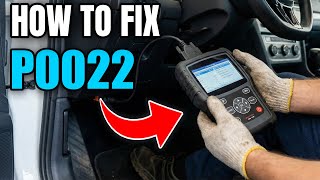
Helpful Videos
We Have This Part in Stock

The information in this article is provided for general reference and educational purposes only. Vehicle specifications, procedures, and part compatibility can vary by production date, trim level, and region. Always consult your vehicle's factory service manual and verify part numbers before purchasing or performing repairs. Safety-critical components such as airbags, seat belts, and braking systems should be installed by a qualified professional.
- Chevrolet Traverse:
- 🧭 Diagnostic Flowchart
- 🎬 Helpful Videos
- 🛍️ Shop This Part
- What's Unique About the 2009-2017 Chevrolet Traverse
- Symptoms You May Notice
- Most Likely Causes
- Rare But Worth Checking
- Diagnosis Steps
- Parts You'll Likely Need
- Related Codes That Often Appear With This One
- Technical Service Bulletins (TSBs) & Recalls
- Platform-Specific Known Issues
- Mechanic-Grade Diagnostic Values
- Scan Tool Commands That Help
- Wiring & Ground Locations
- OEM Part Supersession History
- Model Year Variations Within This Range
- Other Known Issues on This Vehicle
- Used vs. New Parts: Buying Guide for This Vehicle
- Real Owner Stories
- 2009-2017 Chevrolet Traverse 3.6L V6
- Related OBD-II Codes
- Frequently Asked Questions
- 🎟️ Get 5% Off