

P0022 on 2011-2017 Chrysler 200 3.6L: Causes and Fixes for Over-Retarded Camshaft Timing
On the 3.6L Pentastar V6, P0022 is most often caused by low or dirty engine oil. Before buying parts, check your oil. If an oil change doesn't fix it, the next most likely cause is a faulty Bank 2 (driver's side) intake VVT solenoid, which costs around $40-$80 for an aftermarket part. If a ticking noise is present, suspect a more serious rocker arm failure, which is a common issue on this engine.
- Always check your engine oil level and condition first. A simple oil change with the correct 5W-20 oil fixes P0022 more than half the time.
- Do not replace the camshaft position sensor; this code points to a mechanical timing problem, not a sensor failure.
- If an oil change doesn't work, the VVT solenoid for the Bank 2 (front) intake cam is the next most likely part to replace and is a relatively easy DIY job.
- If you hear a ticking noise from the engine, it could be the 'Pentastar tick' from a failing rocker arm, which is a serious issue that can cause this code and requires immediate attention.
What's Unique About the 2011-2017 Chrysler 200
The 3.6L Pentastar V6 uses a sophisticated Variable Valve Timing (VVT) system that is highly dependent on clean oil at the correct pressure. This makes the engine particularly sensitive to oil level, viscosity, and cleanliness. Owner and technician experiences show that starting with a simple oil and filter change resolves this code on the Pentastar more than 50% of the time. Additionally, this engine is known for two widespread mechanical failures that directly cause this code: 1) A 'Pentastar tick' caused by failing rocker arm bearings, which shed metal debris into the oil, clogging VVT components. 2) A plastic oil filter/cooler housing assembly that is prone to cracking, which can cause a loss of oil pressure to the VVT system.
Generation note: This range covers two generations of the Chrysler 200: the 1st gen (2011-2014) and the 2nd gen (2015-2017). The 3.6L Pentastar V6 was available in both. While the core causes for P0022 are similar, early model year (2011-2013) Pentastars had a higher incidence of a specific left cylinder head defect that caused misfires and other codes on Bank 2. This issue was so widespread that Chrysler issued TSB 09-002-14 and an extended warranty (X56) to cover repairs.
Symptoms You May Notice
- Check Engine Light is on
- Rough engine idle
- Engine stalling or hesitation on acceleration
- Reduced fuel economy
- Rattling or ticking noise from the engine
- Replacing the camshaft position sensor. This code indicates a mechanical timing problem, not a sensor failure. The sensor is accurately reporting that the timing is incorrect.
Most Likely Causes
- Low, Dirty, or Incorrect Viscosity Engine Oil 🔴 High Probability The Pentastar's VVT system is hydraulic and extremely sensitive to oil pressure and flow. Sludge or the wrong oil weight can easily restrict passages in the VVT solenoids and phasers, causing over 50% of P0022 codes.
How to confirm: Check the oil level on the dipstick. Inspect the oil's color and consistency. Ensure the oil used (e.g., 5W-20 or 5W-30 depending on year) matches the manufacturer's specification (Chrysler MS-6395).
Typical fix: Change the engine oil and filter using the correct type and weight of oil.
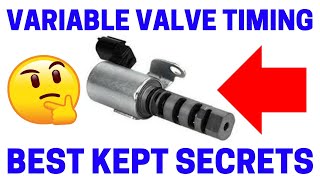
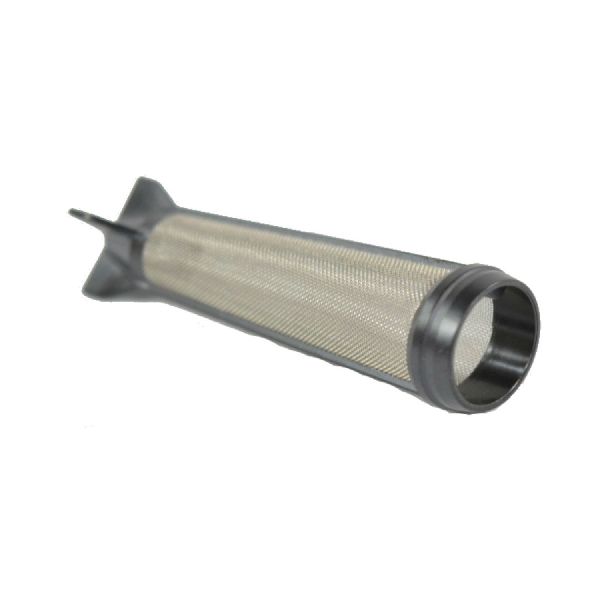
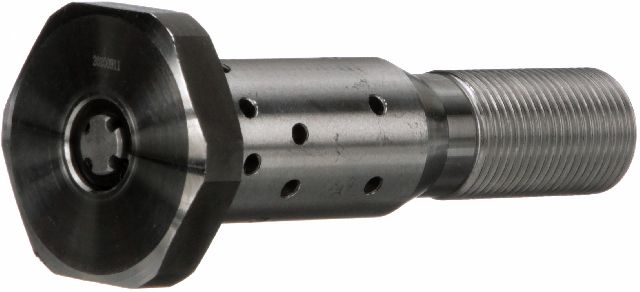
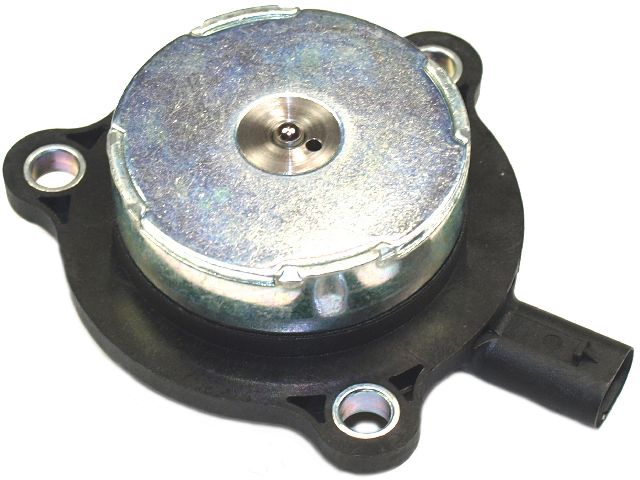
Est. part cost: $40-$80 - Faulty VVT Oil Control Solenoid (OCV) 🟡 Medium Probability → Shop Engine Variable Valve Timing (VVT) Solenoid The solenoid can get stuck or clogged with debris from the oil (often from failing rocker arms), preventing it from properly regulating oil flow to the cam phaser.
How to confirm: Swap the Bank 2 (front) intake solenoid with the Bank 2 exhaust solenoid. They are identical. If the code changes to P0025 (Bank 2 Exhaust Over-Retarded), the solenoid is faulty. You can also test the solenoid's resistance with a multimeter; it should be between 6.9 and 7.9 ohms at room temperature.
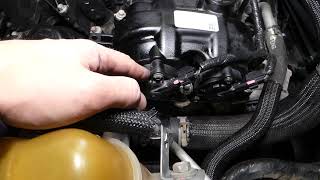
Typical fix: Replace the VVT solenoid for the Bank 2 intake camshaft. 🎬 Watch: Step-by-step guide to replacing the VVT solenoid.
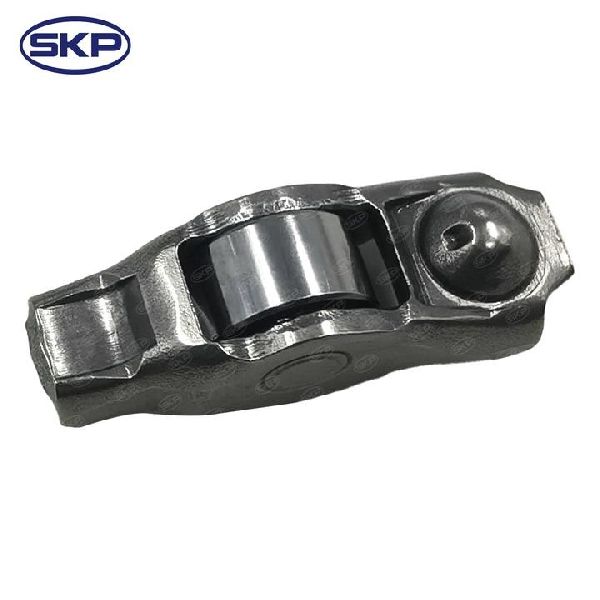
Est. part cost: $40-$120 - Failing Rocker Arms ('Pentastar Tick') 🟡 Medium Probability The 3.6L Pentastar is infamous for rocker arm bearing failure. Metal debris from the failing needle bearings circulates in the oil, clogging the fine screens of the VVT solenoids or the oil passages in the cam phasers, leading to this code as a direct result of oil starvation.
How to confirm: Listen for a distinct ticking or tapping noise from the top of the engine, especially from the Bank 2 (front) valve cover. The noise may be more pronounced on a cold start. A mechanic can remove the valve cover to inspect the rocker arms and camshafts for wear or scoring.
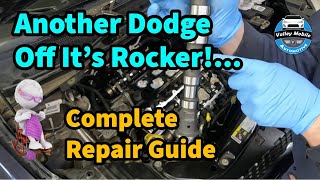
Typical fix: Replace all rocker arms and lifters on the affected head. If the camshaft lobes are scored, the camshaft must also be replaced. This is an extensive and costly repair. 🎬 See how to fix the Pentastar tick and replace rocker arms.
Est. part cost: $200-$600+
Rare But Worth Checking
- Failed Camshaft Phaser: → Shop Engine Camshaft The phaser itself can fail mechanically, getting stuck in the retarded position due to a broken locking pin or internal sludge. This is more common on higher mileage engines or if oil maintenance has been neglected.
- Stretched Timing Chain or Failed Tensioner: → Shop Engine Timing Chain While not a primary cause, a stretched chain on a high-mileage engine can cause the base timing to be off, contributing to this code, especially if seen with P0018.
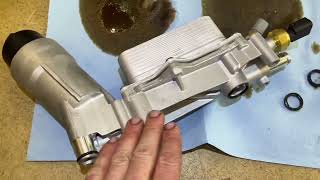
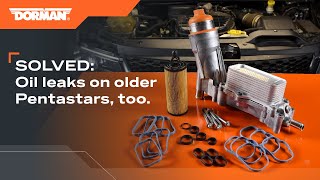
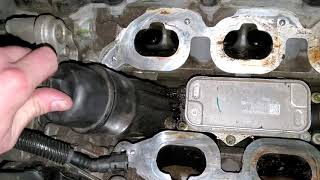
- Cracked or Leaking Oil Filter Housing: → Shop Engine Oil Filter Adapter A very common Pentastar issue where the plastic housing assembly cracks, causing a significant oil leak. This leak can lower overall oil pressure enough to starve the VVT system and trigger timing codes. 🎬 Watch: Identifying and fixing a leaking oil filter housing.
Diagnosis Steps
- Check the engine oil level and condition. Top off or change the oil and filter if it is low, old, or dirty. Use the manufacturer-specified oil weight (e.g., 5W-20 or 5W-30 per owner's manual). This resolves over 50% of cases.
- Clear the code with a scan tool and drive the vehicle to see if the code returns.
- If the code returns, listen carefully to the engine for any ticking or rattling noises that could indicate rocker arm failure.
- Use a scan tool to monitor the commanded vs. actual camshaft position for Bank 2. A significant and consistent lag indicates a mechanical or hydraulic problem. A consistent error of more than +/- 8-10 degrees for several seconds will trigger the code.
- Swap the Bank 2 (front) intake VVT solenoid with the Bank 2 exhaust VVT solenoid. Clear the codes and drive. If the code changes to P0025 (Bank 2 Exhaust over-retarded), the solenoid is confirmed to be the faulty part.
- If the code does not change after swapping solenoids, inspect the wiring and connector for the Bank 2 intake VVT solenoid for damage, corrosion, or oil saturation from a leaking valve cover or oil filter housing.
- If the above steps do not resolve the issue, the problem is likely more severe, such as a failed camshaft phaser, worn rocker arms, or a stretched timing chain, and requires professional diagnosis, potentially including a cylinder leakage test for 2011-2013 models.
Parts You'll Likely Need
- VVT Oil Control Solenoid (OCV)
(OEM #5184101AH (supersedes 5184101AG))— This is the most common part to fail after ruling out oil issues. It gets clogged or fails electronically, preventing proper control of the cam phaser.
Trusted brands: Mopar, Dorman, Standard Motor Products (SMP)
OEM price range: $50-$90
Aftermarket price range: $30-$70 - Engine Oil and Filter — Low, dirty, or incorrect oil is the leading cause of this code on the Pentastar V6.
Trusted brands: Pennzoil, Mobil 1, Valvoline
OEM price range: $60-$100
Aftermarket price range: $40-$80 - Rocker Arm and Lifter Kit — Required if the 'Pentastar Tick' is diagnosed. The failed rocker arms are the root cause of oil contamination and camshaft damage leading to the P0022 code.
Trusted brands: Mopar, Mahle, Sealed Power
OEM price range: $250-$400
Aftermarket price range: $150-$300
Related Codes That Often Appear With This One
- P0018 — This is a Crankshaft/Camshaft Correlation code for Bank 2. Seeing both codes together strongly suggests a base mechanical timing problem, like a stretched timing chain or a failed phaser, rather than just a solenoid.
- P0300, P0302, P0304, P0306 — These are misfire codes for Bank 2. A significant timing issue will cause misfires on that bank (cylinders 2, 4, 6). These codes were also the primary symptom of the 2011-2013 left cylinder head defect covered by TSB 09-002-14.
- P0520 — This code indicates a problem with the Engine Oil Pressure Sensor circuit. Since the VVT system is entirely dependent on oil pressure, a fault in the pressure sensing system or an actual low-pressure condition (e.g., from a leaking oil filter housing) can be related.
Technical Service Bulletins (TSBs) & Recalls
- TSB 09-002-14 REV. B: Titled 'MIL Illumination: P0300, P0302, P0304 or P0306 (X56 Warranty Extension)'. This bulletin outlines the diagnostic procedure (cylinder leakage test) for the known left cylinder head defect on 2011-2013 Pentastar engines and authorizes cylinder head replacement if leakage exceeds 25%.
Platform-Specific Known Issues
- The 3.6L Pentastar engine is known for a 'Pentastar tick' caused by failed rocker arm bearings. This failure can shed metal debris into the oil, leading to VVT-related codes like P0022.
- Early (2011-2013) Pentastar engines had a high rate of left cylinder head failures (Bank 2), causing misfires and other codes. This was addressed by Chrysler TSB 09-002-14 and an extended warranty (X56).
- The plastic oil filter housing assembly mounted in the engine valley is a notorious weak point. It frequently cracks, causing oil and coolant leaks that can lead to low oil pressure, which in turn can trigger VVT codes.
Mechanic-Grade Diagnostic Values
- VVT Solenoid (OCV) internal coil resistance — expected: 6.9 to 7.9 ohms at 68°F (20°C). Failure: A reading of infinity (OL) indicates an open circuit; a reading near zero indicates a short. Any reading outside the expected range suggests a faulty solenoid.
- Voltage at VVT Solenoid harness connector — expected: Approximately 12V (Battery Voltage) on one of the two pins with Key On, Engine Off (KOEO).. Failure: No voltage or significantly low voltage points to a problem in the power supply circuit from the ASD relay or a blown fuse, not the solenoid itself.
- VVT Solenoid Control Circuit Resistance to PCM — expected: Below 5.0 Ohms. Failure: Resistance above 5.0 Ohms indicates an open or high-resistance in the control wire between the solenoid and the PCM.
- Scan Tool Live Data: Bank 2 Camshaft Position Error — expected: Close to 0 degrees at stable idle and under load.. Failure: A consistent error of more than +/- 8-10 degrees for several seconds will trigger the P0022 code.
Hidden / Shadow Codes Worth Checking
- Mode $06, Test ID $81: This is not a 'code' but a specific monitor in the Mode $06 diagnostic data. It tracks VVT performance. For P0022, which is related to rocker arm failure, this data can help pinpoint the exact cylinder (e.g., 2, 4, or 6) where the mechanical fault is most pronounced before a hard P030x misfire code is set. (see via Requires a professional-grade scan tool or an advanced consumer OBD-II app (like Torque Pro) that can display and interpret Mode $06 test results.)
Scan Tool Commands That Help
- wiTECH or advanced bidirectional scanner: VVT Solenoid Actuation Test / VVT System Analyzer — This function allows a technician to command the VVT solenoid on and off while the engine is running or off. It's used to verify if the solenoid is physically responding to PCM commands. You can monitor the camshaft angle error PID while actuating the solenoid to see if it moves as expected. This helps differentiate a stuck solenoid from a wiring or PCM driver issue.
Wiring & Ground Locations
- Bank 2 VVT Solenoid Connector — On the front (radiator side) of the engine, plugged into the VVT solenoid on the valve cover for the intake camshaft.. This is the primary connector to test for power, ground, and signal integrity when diagnosing a P0022. Oil from a leaking valve cover gasket or oil filter housing can saturate this connector, causing poor connections or shorts.
- Bank 2 Camshaft Position Sensor Connector — Located on the rear of the Bank 2 (front) cylinder head.. The PCM uses this sensor to know the camshaft's position. While the sensor is rarely the cause of P0022, its wiring is critical. The pinout is typically: Pin 1: Exhaust CMP Signal, Pin 2: Sensor Ground, Pin 3: Intake CMP Signal, Pin 4: 5-Volt Supply. A wiring issue here could cause incorrect readings.
- G305 / G306 — On related Chrysler platforms, these major chassis grounds are often found at the base of the C-pillar or in the luggage compartment area.. While not directly part of the VVT circuit, a poor main ground for the PCM or engine can cause a wide range of erratic electrical issues and phantom codes. These should be inspected if multiple, unrelated electrical faults are present along with P0022.
"I Checked Everything" — The Actual Cause
- The diagnostic equivalent for P0022 is when the oil level is full, the oil is clean, and the VVT solenoid tests good both electrically (correct resistance) and mechanically (passes swap test), yet the code persists. In this scenario, the root cause is often an internal oil pressure issue that isn't visible from the outside. The most notable example on the 3.6L Pentastar is a loose or missing oil galley bolt/plug under the valve cover. This creates an internal leak, starving the cam phaser of the oil pressure it needs to operate correctly, causing it to be 'over-retarded' without any externally obvious fault.
OEM Part Supersession History
5184101AG→5184101AH— Standard part revision and improvement by the manufacturer.
Heads up: The parts are interchangeable, but 5184101AH is the latest recommended version.5184296AE, 5184296AF, 5184296AG→5184296AH— Likely an updated design to address the high failure rate of the needle bearings in the original rocker arms.
Heads up: When replacing rocker arms due to ticking, it is critical to use the latest revision (AH) and replace them as a full set for the affected cylinder head.
Model Year Variations Within This Range
- 2011-2012 vs 2013+: The manufacturer's recommended oil viscosity changed. 2011-2012 models originally specified SAE 5W-30. In 2013, Chrysler switched the recommendation to SAE 5W-20 for the same engine, likely for CAFE fuel economy reasons. For 2014+ models, manuals often state 5W-20 is preferred but 5W-30 is acceptable. Using the correct, clean oil is more critical than the specific weight, as long as it meets Chrysler MS-6395 spec.
- 2011-2013: These early Pentastar engines had a higher incidence of a left cylinder head defect that could cause various codes on Bank 2, including misfires (P030x) and potentially contributing to timing codes like P0022. This was addressed by TSB 09-002-14 and an extended warranty.
Diagnostic Flowchart
Other Known Issues on This Vehicle
Issues unrelated to this code that are worth knowing about as an owner of this generation:
- Left Cylinder Head Failure 🔴 High — Primarily affects 2011-2013 model years. Caused misfires on Bank 2 (cylinders 2, 4, 6). (Ref: TSB 09-002-14; Warranty Extension X56 (10yr/150k miles))
- Rocker Arm Bearing Failure ('Pentastar Tick') 🔴 High — Common across all model years, typically appearing after 60,000 miles. Leads to camshaft damage if not addressed.
- Cracked Oil Filter / Cooler Housing 🔴 High → Shop Engine Oil Filter Adapter — Very common failure across all years. The plastic housing cracks from heat cycles, causing major oil and/or coolant leaks.
- Transmission Failure (9-Speed Automatic) 🔴 High — Particularly common on the 2015 model year, which used a new 9-speed automatic transmission known for rough shifting, sudden shutdowns, and premature failure. (Ref: Multiple TSBs and software updates were released.)
- Totally Integrated Power Module (TIPM) Failure 🟠 Medium — Can occur on first-generation models (2011-2014), causing a wide array of difficult-to-diagnose electrical problems, including engine stalling.
Used vs. New Parts: Buying Guide for This Vehicle
When a used part is the smart pick: For a simple VVT solenoid replacement, a used OEM part from a low-mileage, verified-running donor vehicle can be a cost-effective option. The failure mode is often electronic or due to sludge, so a clean, tested part from a reputable salvage yard is a reasonable choice.
Donor-vehicle mileage cap: roughly under 60000 miles for the part to have meaningful remaining life.
What to inspect on the donor part:
- Inspect the solenoid's screens for any metal debris or heavy sludge; they should be perfectly clean.
- Ask for the VIN of the donor vehicle to verify it was a low-mileage car and not involved in a front-end collision that could have damaged engine components.
- If possible, test the resistance of the used solenoid before purchase; it should be between 6.9 and 7.9 ohms.
OEM-only on this vehicle (don't cheap out):
- Rocker Arms / Lifters: Due to the extremely high failure rate and subsequent design updates, only new OEM (Mopar, part number ending in AH) or high-quality aftermarket replacements (e.g., Mahle) should be used. Installing used rocker arms is a significant risk.
- Camshaft Phasers: These are precision-machined hydraulic components. A used phaser may have internal wear or be clogged with sludge from its previous life, making it a high-risk part to install given the labor involved.
- Timing Chain and Tensioners: These are wear items. Installing used timing components is never recommended.
Aftermarket brands forum-validated for this vehicle:
- VVT Solenoids: Standard Motor Products (SMP), Dorman (often a reliable choice for this part).
- Rocker Arms: Mahle, Sealed Power.
Brands owners have reported issues with on this vehicle:
- Avoid unbranded, 'white box' VVT solenoids and rocker arms from online marketplaces. These often have high failure rates and may not meet the precise tolerances required by the Pentastar VVT system.
Real Owner Stories
Aggregated from forums and TSBs cited above. Mileages and costs reflect what owners reported in those sources.
2012 Chrysler 200 3.6L Pentastar V6
Symptoms: Check engine light on with code P0022; engine had a distinct ticking or tapping noise coming from the front valve cover area.
What fixed it: Replacement of all rocker arms and lifters on the affected head due to failed needle bearings clogging the VVT system.
Source hint: vehicle_specific_issues regarding 'Pentastar Tick' and rocker arm bearing failure
2013 Chrysler 200 3.6L Pentastar V6
Symptoms: The car was experiencing rough engine idle and stalling during acceleration.
What fixed it: Changing the engine oil and filter using the correct weight and Chrysler MS-6395 spec oil resolved the issue, as the VVT system was sensitive to the old, dirty oil.
Source hint: diagnosis_steps and common_causes regarding oil condition
2014 Chrysler 200 3.6L Pentastar V6
Symptoms: Check Engine Light for P0022. Owner performed a swap test between the intake and exhaust solenoids on Bank 2.
What fixed it: The code followed the part and became P0025, confirming a faulty VVT Oil Control Solenoid (OCV), which was then replaced.
Source hint: diagnosis_steps and common_causes regarding VVT solenoid testing
Related OBD-II Codes
Frequently Asked Questions
Is the P0022 code on my 2012 Chrysler 200 covered by the extended cylinder head warranty?
What is the 'Pentastar Tick' I hear on my Chrysler 200, and can it cause a P0022 code?
Can I test the VVT solenoid on my 3.6L Pentastar before buying a new one?
Which oil should I use in my Chrysler 200 to prevent VVT-related codes like P0022?
Could a leak at the oil filter housing cause my P0022 code?
Helpful Videos

We Have This Part in Stock


The information in this article is provided for general reference and educational purposes only. Vehicle specifications, procedures, and part compatibility can vary by production date, trim level, and region. Always consult your vehicle's factory service manual and verify part numbers before purchasing or performing repairs. Safety-critical components such as airbags, seat belts, and braking systems should be installed by a qualified professional.
- Chrysler 200:
- 🧭 Diagnostic Flowchart
- 🎬 Helpful Videos
- 🛍️ Shop This Part
- What's Unique About the 2011-2017 Chrysler 200
- Symptoms You May Notice
- Most Likely Causes
- Rare But Worth Checking
- Diagnosis Steps
- Parts You'll Likely Need
- Related Codes That Often Appear With This One
- Technical Service Bulletins (TSBs) & Recalls
- Platform-Specific Known Issues
- Mechanic-Grade Diagnostic Values
- Hidden / Shadow Codes Worth Checking
- Scan Tool Commands That Help
- Wiring & Ground Locations
- "I Checked Everything" — The Actual Cause
- OEM Part Supersession History
- Model Year Variations Within This Range
- Other Known Issues on This Vehicle
- Used vs. New Parts: Buying Guide for This Vehicle
- Real Owner Stories
- 2012 Chrysler 200 3.6L Pentastar V6
- 2013 Chrysler 200 3.6L Pentastar V6
- 2014 Chrysler 200 3.6L Pentastar V6
- Related OBD-II Codes
- Frequently Asked Questions
- 🎟️ Get 5% Off